
The 3 Secrets to a 6-Figure Offer (You're Missing #2)
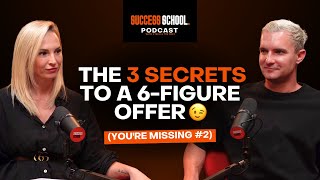
Tim Frey and Steph break down how to build a six-figure offer: niche tightly to a specific person and problem, write a clear promise with outcome and timeline like "add $10k/month in 90 days or refund," and design for cold audiences. A listener sold $25k on Meta ads.
Questions this video answers
Episode 90
Add $10k per month to your revenue in 90 days or we'll give you a full refund.
108 ads accounts
A client purchased a coach for 25,000 Australian dollars via Instagram.
Chapters
When you get started, like you said, everybody comes to you because they know you, they like you, they trust you. So there's usually people in your warm networks. But then because you have now a business where you've worked with a lot of different types of businesses, you tell yourself a story of, oh, but this works for everyone. And so niching down will feel like the hardest thing in the world to do because you'll be like, yeah, but this has worked for everyone before. If I cut everyone else out except for this one type of person, I won't be able to grow. Because to get me to this point, I've needed to work with everybody. But I can guarantee you that if you do not get clear on solving a specific problem and if you do not find a specific way of doing it, you will be kept out here. And eventually you will go backwards.
Welcome to episode 90 on the success School podcast. Super excited. Today we're going to be talking about offers and deep diving that. But before we get into that, guys, just a reminder. If you're new around here, please subscribe to the show. And if you want to see us in the visual, go to the YouTube channel. Steph, how you feeling?
I. I cannot believe that we're almost at episode 100.
Yeah, the big 100. What are we going to do for it? Oh, my gosh. I don't know.
I haven't even thought about it. We should do something special. Maybe we should. Maybe we should go naked.
Naked?
For the entire episode? Maybe not for YouTube.
That's commitment. Hey, Steph, just a question. Do you notice anything about me?
I do. I have noticed quite a few things. One, great shoes.
Great shoes, great pants.
Two, are you glowing?
Yes, I am going.
Yeah.
So, my personal update, guys. I don't shit on me here, fellas. I got a facial. So if you're not on YouTube, go on YouTube, check it out. Or on my reels. But, yeah, I got a facial. I'm glowing. I went into the. Wherever you sent me. Don't know the place.
Metastatic.
I just know it costs a lot of money. And they came at me with the machine, made a lot of noise, and it was like cold and hot and then acid coming out. And then it was just this crazy feel. And then the beautician said to me, oh, you look so snatched. And I was like, how fucking old is she? Yeah, that. She said snatched.
What did you.
So I asked her, she said, 24. And I was like, I don't know if 24 is too old or too young to be Saying snatched.
And then did you.
What does snatched mean?
Did you even ask her if she muzzes? Or is that ruzzing?
I think it's rizzing. Skibiding.
Skibidoos.
So do you think it looks good?
It looks so good. Your skin looks really snatched, which means young and I think tight.
Yeah. Okay.
Young Gibbon type guys, no judgment. Like, I love that you take care of your skin. Obviously, I am prone to a facial, but not as obviously as you right now, because your skin is better than mine.
You need a refund. What's your. What's your update? Tell us.
Well, actually, we sound so vain.
Yeah.
Just so you guys know. Just so you guys know, we. We look back through our calendar for the week and we decide we're going to talk to you about for our personal updates. But we've just had a vain week this week. Obviously.
Look at ourselves in the mirror all day, every day, like, damn, you look good. Damn, that jaw. So snatched.
I had a styling session.
Oh, wow. And I do these rich girl problems here. Styling sessions.
I see an incredible stylist. Her name is Courtney Mills. For anyone in Perth, you guys will probably be aware, she's amazing. And I'm going to be booking them more regularly, much to Tim's disdain. But I usually book them about twice a year, so as we come into summer and as we go into winter, because I like to update my wardrobe. I like. I really appreciate fashion. I love fashion. I like being on trend. Do not even. Stop it.
A refund for that, too. Got any meals? Give us a refund, bro. What are you. What are you doing?
And I just love it. And I love the way that, you know, when you put on a great outfit, you do feel different, you do feel more confident. And I think that that ties beautifully into business. Of course, because my personal always does. Because I think that, you know, people wear the power suits when they go on stage or whatever it is, right? And I do. I personally feel that the more that I step up into, you know, the identity of someone who takes care of themselves, who takes pride in their appearance, the more successful I tend to become or at least feel. And I think it's a confidence thing. So I personally am all in on styling sessions. I think they're so great. Once you buy a session with Courtney, guys, you get to have more sessions with her. It's phenomenal. They're really affordable. And I think it's so worth doing.
Discount code for Courtney so we can start clawing back some of this styling money that we're spending here. That's coming off my amex.
She books out months in advance. Incredible business. Incredible business.
Anyway, so she makes good offers.
What she does. Yeah, she makes.
That's a perfect segue. Really.
I mean, really. Let's dive in.
Yeah. So today we're going to give you guys some actionable tools, hacks, takeaways that you guys can go and implement your business. Today we're talking about offers. And the reason this came about is Steph and I, we've been in our inner circle program, which is our deep dive, one on one program within success school. And it's been great, but we've seen a lot of flaws and a lot of the flaws around offers and the offer. We're going to give you guys clarity on what that is and how to fix it in a second. But I just wanted to touch on this because I think it is arguably the most important thing to get right in business. And if you don't have a great offer, you're going to have a really hard time making money and making long term monies. Short term monies, you can make money with a bad offer, but long term. So, Steph, can you tell us about the concept of warm versus cold offers, why they work, why they don't work, and just the general discussion we've been having in the last couple of days.
I'm just going to cover up on like why we came to this decision. It's not because we went into inner circle and saw that people had crap offers because we knew what the offers were before we went into. That's not the case. The depth of it, that wasn't the case. The thing that is becoming alarmingly clear to us through looking at, I mean, Tim, how many ads accounts are you on? 108.108ads accounts. Doing our own marketing. Looking at what's happening, Tim and I, obviously marketing, you know, nerds, we nerd out on this stuff pretty hard. And we're just seeing a bit of a shift. That stuff, you know, things are always going to be changing. Marketing, it's never ever going to be a case of you're going to be able to do the same thing for the next five years and it's going to work. But one shift we have seen is that the more niche that you are in your message, the more niche that you are in who you're targeting in your offer, the better the results are for you. And so that was kind of where this started, this train of thought started. But you dive into defining offer for.
The Warm and cold.
Yeah.
Cool. So when you first get started in business, you've got an offer, it's probably pretty bang average. You've got a service and you're like, cool, I do this for this person, okay? And everyone's like, all right, cool, I get it. And people start coming to you because you do that, or you start getting referrals, or you start getting known word of mouth. And you really grow a business through word of mouth. But the problem is, is when you take that same offer and message to the broader market, no one is really interested in it because they don't have any know like and trust. So a no like and trust offer would be a warm offer. And it means that your marketing message or marketing or offer can be worse. And what I mean by worse is you're not bad at doing the service. I mean that it is worse in terms of market ability. Okay, then we've got a cold offer. And a cold offer would make sense if you put out an ad to a thousand people and your cold offer was really good, people would know who it's for, how long it takes to get a result, what the result is, is there a guarantee and is there a big promise on it? Okay, and these are some of the concepts here. Warm offer is you can be not as good at marketing or less clear on the offer. And a cold offer is something you need to be really good at and has to be very clear on what it does. Did I explain that well?
Nailed it. In fact, much better than I would have said the difference. I guess the reason that we're talking about this, guys, is because scalability of your offer is going to come down to how well you can market it at the end of the day. And let's say you're an accountant and you're happy with just being fully booked. Like, let's say a fully booked. You're making 20, 30 grand a month and you're really happy with that, and that's all you want to do. Perfect. You probably don't need to listen to the rest of this episode about offers necessarily. But if you are a life coach, if you're any kind of coach at all, you are probably in the boat like us, where you want to continue growing, having more impact. Hopefully you're a coach that got into business because you wanted to have impact. It's unlikely that you're gonna get fully booked and then be like, ah, this is just the amount of people I wanna impact and this is the amount of work I wanna do for the rest of my life. And so in that case, you are going to have to reach out to colder and colder and colder audiences over time. And as you get further out into colder audiences, you are going to need to improve the marketability of your offer. And so that's really what we are talking about today.
So I'll go through the first part of this in its niche and there's the three S's. So you need to have a specific person, a specific problem and a specific way of doing it. So I'll go into each of those. They're pretty self explanatory, but a specific person. So Steph's example there was an accountant. Maybe this accountant doesn't have a niche. Maybe they do. Maybe they work with service businesses, coaches, consultants, e commerce, like whatever it is. In my opinion, the more niche you are, the better. And you're gonna get booked out faster and scale f. So you'd need a specific person in a niche and then you need a specific problem. So this same accountant, what do they do for people? Are they just a general accountant? Are they a tax accountant? Do they help people save 10k a month on their taxes? What's the specialty of this accountant? Do they have one? I would suggest you guys have one. And then a specific way is you have to have a unique methodology or a unique mechanism. Okay, so if you go out there and you ask 100 personal trainers how they get results and 99 of them are going to say, I do diet and exercise, that's not very unique. And it's very hard for you to stand out. A unique mechanism is your unique way of doing something. And everyone has a unique mechanism. Sometimes when I present this inside successful people, like I'm not unique, I'm just X, Y, Z. But you have a unique way of doing something, you need to package that up and market it as a unique mechanism. And the unique mechanism is the way you get a result. And then imagine the same example, we go out to a thousand people and you have a specific niche, you solve a specific problem and you have a specific way of doing it. You're going to be far more successful with paid ads especially.
And I think some of the reasons why entrepreneurs don't do this is because when you get started, like you said, everybody comes to you because they know you, they like you, they trust you. So there's usually people in your warm networks, which is how we recommend all the businesses that come to us as startups to get started to leverage their warm networks first. But then because you have now a Business where you've worked with a lot of different types of businesses, you tell yourself a story of. But this works for everyone. Okay? And you will be. If you're listening to this podcast right now, you will be feeling like that is super familiar. That happens to me. And so niching down will feel like the hardest thing in the world to do because you'll be like, yeah, but this has worked for everyone before. And this does work for everyone. And if I cut everyone else out except for this one type of person, I won't be able to grow. Because to get me to this point, I've needed to work with everybody. And it will feel counterintuitive, but I can guarantee you that if you do not niche, if you do not get clear on solving a specific problem, and if you do not find a specific way of doing it, you will be kept out here and eventually you will go backwards because you will not be reaching out into new audiences.
Steph, do you want to tell us about our next part, the high level promise? And this is where people get really hung up on this and there's a lot of mindset mumbo jumbo that comes up.
It's like what you promise to do for somebody in the time that you're working together. Promises are becoming more and more prominent in marketing. If you're in the us, you basically can't sell anything without a promise. We are about 10 years behind the US typically. So you are going to see this come up more and more in Australia over the next few years. So a promise has an outcome, it has a timeline, and it has a guarantee. Okay. So the outcome might be something like add 10k per month to your revenue. For coaches, as an example, a container or a timeline will be the amount of time it takes you to do that. So let's say in this case of this example, you could do it within 90 days and then you could have a guarantee. So, for example, it would be add 10k per month to your revenue in 90 days or we'll give you a full refund. And then you basically build that using your unique mechanism. So it's plugging that unique mechanism as a process to guarantee your clients get the results. Now, let's just talk through the promise and the guarantee because this is where people get massively tripped up. Why do they get tripped up?
They get tripped up because, well, for a few reasons is they don't actually have the proof in their results. So they think they can't get the result that they're promising, which trips them up and then the other thing, I think it's just a fear factor. It's like, what will they think of me? What if I put this out there? People are going to think I'm a scammer, People are going to think I'm a fraud. But my take on this and Tim's take is just fucking send it and go as hard as possible. Make a big promise, make a big guarantee and work as hard as possible to deliver on that. Especially when you're under 50k a month, you've probably got a lot of time and you can just commit a a lot of time to actually getting them result. If you got to literally drag your client up a heel to get them a result, just do it and just commit to it. And at the end of the day, if you don't get the result and you really can't work with them, just give them a refund. There's no harm in that. But you may as well have a big stinking guarantee and a big result and then just go after it.
Yeah, guys, you're never going to know what's possible until you fully commit at the end of the day. So make a promise, figure out like, work as hard as you can to get five people that result that you promise. See if it works and if it doesn't work with them until it does for free or give them the refund. But you're never going to know unless you go 110% all in on this.
All right, guys, moving on to our news discussion today. So we do a news discussion. I want to give you guys just our take on what's going on in the world. Obviously the news is mostly bullshit, but there are some great articles in there that we can discuss and I thought this one was great. So the Australian housing market is predicted to increase by 20% in 2025 this year, which is great. Huge opportunity to make a lot of money. And I was watching a bunch of documentaries on this, this week on the Australian housing market and making money on this. This is not financial advice, by the way, but I guess, Steph, I'd like you to speak to like, business is a vehicle to gain wealth. And a lot of people are just like, business is a vehicle. So I don't have to work a fucking full time job. And then other than that I'm going to be working, instead of 38 hours a week, I'm going to be working 100 hours a week. But it is actually a vehicle to create financial wealth and security for yourself. So can you just speak to that a little bit, especially for you. We both came from nothing. How does it feel to build wealth from business?
Yeah, I guess the thing that surprised me most about having a business and building wealth is something I just did not know going into entrepreneurship was that you can basically use your business as collateral to borrow from. And that when you sole trader or company or the sole director of a company that, you know, whatever your business earns actually after a few years actually really massively allows you to increase borrowing power. And so it's been quite, I'm not going to say easy. We've worked really hard and we obviously make quite a, you know, we have quite a healthy income coming in personally, both what we pay ourselves and also, you know, what the company earns. But it's basically never been that difficult for us to get pretty big, hefty loans and we're really big. If you guys haven't read the book the Debt Millionaire, it's an incredible book that speaks about the power of, you know, good debt. And we're not scared of debt at all. We're not scared of loans. But it's been being in entrepreneurship has been huge for, for allowing us to build the asset portfolio that we have now.
Yeah, it just allows your money to go a little bit further from our perspective. Like hypothetical example, we earn a million dollars a year. Let's just say that's 100% profit. We can put that to use and get a 10% return. But in the housing market at the moment, you can get way more than that. I think our house has gone up multiple six figures in the last two years, which has been crazy. But if we weren't in the game, we wouldn't have got that. It's probably not a topic for this episode right now, but we can talk about depreciation and the devaluing of the currency, but it's a good hedge against that. But yeah, I just wanted to reframe and give you guys the outlook here that it could be good to start thinking if you're not already on what you could be using your business for outside of just it paying you a wage.
You don't want to be working for every dollar that you earn. Guys. Like, that's not. If you listen to this podcast, you're probably on some level values alignment with myself and Tim. And let's be honest, you guys don't want to work forever. I mean, we're happy to work forever, but like really genuinely lifestyle business. I want to work because we want to, not because we have to and that's a very big difference. And if you're listening to this podcast, I'm sure that you're probably in the same boat. And if you don't start thinking about making your money work for you. And I think we see a lot of people reinvest into their business and their self development probably in some pretty frustrating ways. Yeah, there are a lot of people who consistently are reinvesting in the same kinds of development over and over and over and over again. And nothing's. Guys, if you're investing in stuff and nothing is changing year on year is probably a good time to start thinking about maybe reinvesting in somewhere else. Like you don't need to probably buy then another mindset course after you've had 50 mindset courses. Like that's my.
That's ridiculous.
That's the one. They're the ones.
Right.
Which is fine. And it's and. Or the next messaging business coach when you've had 50 messaging businesses coaches before.
Or like the problem isn't messaging.
Yeah, totally. Like sometimes you take enough action. Right. So sometimes if you did a strategic analysis every year of where you invested your money, whether it was in self and did that pay off? Yes. No. And in what ways did it grow from an ROI perspective and if it did, then yeah, sure, reinvest back in things like that again. But if it didn't give you an ROI that was healthy for your bank account, then it's probably not worth reinvesting again. I would way rather you guys save the money and reinvest in the housing market.
All right guys, we're going to get over to our listener question now. And this is a great one for Steph, our ads queen over here. So this one's from Lucy. Has anyone run Meta ads and sold something for over 30k? And I feel like this is a bit of a mindset question and that's why I wanted to ask you here, what is the mindset of someone thinking that there aren't people that have 30k to spend on something? On Meta I'm going to challenge this.
Because her belief system wasn't that they're not on Meta. I think her belief system was that she should be spending all of her time on LinkedIn because the people she's contacting are on LinkedIn and they are on LinkedIn for sure. It's not a wrong thought, but it's a closed minded thought. The reason I believe it's closed minded is because everybody's everywhere. Meta literally has the most amount of people on it of all platforms ever created. And so almost every single person alive has a meta account, whether that's on Facebook or Insta or WhatsApp or wherever it is. Like, almost every single person has access to a meta account. And so if you think that the people who are on LinkedIn are also not spending time on Facebook, like, they're only on LinkedIn while they're at work and then they go home and they get on Facebook or Instagram or another platform, TikTok, Twitter, wherever. You have to be where they are all the time, not just some of the time. And that's what I love about meta. Like, LinkedIn ads are awesome. I've heard really good things about them. We don't run them personally, but I've heard good things about them. Heard they're expensive, but I've heard that they can work, but they're only going to work Monday to Friday. Really in between work hours. Outside of that, like, you want to be hitting them up, you want to be catching them in their personal time on the other platforms. And even the people that we know that do LinkedIn marketing, like, we know some big players in the LinkedIn space, they're running meta ads.
Yeah.
Because you need to retarget them when they're offline.
Yeah, yeah. I couldn't agree more. Steph nailed it there. I don't think it's about them being on a platform and not, I would assume that there are these people on all platforms, but someone or the mindset or someone that's going to spend 30k on a product or something. I would say yes, they would be more likely on LinkedIn, but if that's not working, I would definitely be trying different platforms. They might be on X as well. It could be on Twitter. Like really smart people are on Twitter. Usually I'm just assuming that people have money, are smart, but yeah, that is a true assumption.
You just invested in a coach.
Yeah.
25,000 Australian dollars on Instagram.
Yeah, on Instagram.
And I mean, case in point, that's what I'm saying.
Literally.
Yeah, that's exactly what I'm saying.
So I hope 25,000 is close enough there for you, Lucy, but 30,000, and that's from the horse's mouth. So if you got some value from this show, guys, hit that subscribe button on whatever platform you're at, whether that is on Spotify or Apple or wherever it is. Until next time, send us dm. Let us know that you got some value from it. Hopefully you guys know how to reach us by now. And we'll see you next week.
See you next week.










