
The 7 Figure Landing Page Template to Make More Sales
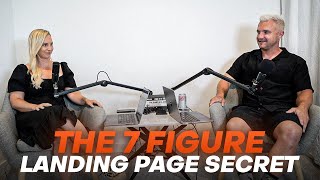
Episode 33 of the Success School Podcast (hosts Tim Frey and Steph) teaches how to build high-converting landing pages for coaches and service-based businesses. They emphasize sales-before-marketing, the five-second rule (headline must answer what you do, who it’s for, and outcome), and five core landing-page components: headline, benefits (then features), social proof, clear CTAs (avoid generic “Learn more”), and spelled-out next steps. They cover traffic sources (talk about your offer on social, DMs, lead magnets, email, ads), CRO quick wins (large visible buttons, explicit post-submit messaging, mobile optimization, readable fonts/colors), and tool recommendations (ClickFunnels, Squarespace, WordPress, Leadpages, Kajabi, ThriveCart). A downloadable landing-page template is referenced in the show notes.
Chapters
Some of you that are listening may have started your business in a blue ocean, but now you're in a red ocean where everybody is a competition.
People are super skeptical these days. You need to answer their questions. You need to answer the critical mind or the thing that's coming up being like, is this person bullshit.
There is literally no point in marketing in your business unless you're going to be able to close the sale. Because if you're driving a lot of traffic to an awful landing page, they're not going to convert. And you're just wasting time, you're wasting leads and you're wasting energy on that marketing spend.
Welcome to the Success School Podcast. We are on episode 33. Guys, this podcast is for you if you want to grow your coaching or service based business to six and high seven figures and beyond. So we're going to give you guys the tools, hacks and strategies to get there for free on this podcast. Steph, how are you feeling?
Lit up and excited to give you guys some insane value. The next few podcasts that we have actually got planned out are so high value. There is so much good, really actionable, tactical stuff that we're going to be sharing with you. And so I'm excited to dive in.
So we're going to kick off with a little bit of a life update. So we're just in Bali for our retreat and I was sitting at lunch with my friend Brennan and he said, why don't we bring him back tools with Tim, AKA caravanning with Tim. And he had a special request for pictures of me naked with a drill covering my, you know what, you know who in front of the caravan instead. How do you feel about publishing them online?
Just to be really clear, Brennan is straight. Not that it would matter, but I was surprised at his requests. Like, I mean, I.
Gay tennis.
Yeah, I would be very, very happy to see this photo, but I'm not sure that it's for public distribution, to be completely honest. But you know, like, if the people want this, that's what the people want. It kind of sounds like if only fans had like only tools, that's kind of like what would be the thing that would be happening there.
Should I start an only fans with tools.
Considering as so many podcast listeners here today are actually female entrepreneurs, I am like, like, yes. Yeah. Please don't think Tim's creepy. I promise he's not. It's Brennan that's creepy. We can blame Brennan for this.
So, Steph, what's going on with you?
So I have lost myself the Last few weeks.
That's an understatement.
I have lost myself the last few weeks. Tim has lost his wife. My dogs have lost their dog Mum the last few weeks. Because I have been completely obsessed with the fourth Wing and Iron Flame series by Rebecca Yarros. And this kind of.
Even the name is lame.
He's just mad because he's lost his wife for so many weeks. So I have been obsessed. I. I've always been into fiction novels and this has kind of that Harry Potter esque vibe that I loved when I was growing up. But for adults. So it swears it's got smuts. For any of you who don't know what smut is, it's kind of like adult. Yeah. Sexy stuff. Kind of like adult fiction that is kind of a little bit naughty. And it is so good. And it is taking the world by storm right now. It is apparently trending all over TikTok. They're actually making a TV series out of it. She's got three more books that still need to come out. So, Tim, you have many, many, many more opportunities over the next few years to lose your wife to these books.
Steph started reading it and I was like, so what is this actually about? And she was like, yeah, there's talking dragons and they fight and then there's love and this girl finds her love. And I was like, man, that sounds so lame. Like, this sounds like the worst book of all.
It's been call Walking Dragon. He's been calling me a nerd. But for anyone who's read it, drop a comment in the dms because I know that you know. Right? I know that you know.
All right, guys, so we're going to get into our lesson of the week. So I'm going to kick off today. I did see a quote that said there are no black belt moves. There are only white belt moves executed at a black belt level, which means it's all in the execution. I did say this at our business retreat with a little bit of a different context where, like, people come into a business retreat or they come into a mastermind or they come into something and they're expecting to be blown away with some crazy new strategy or some hack or some way to make sales. But honestly, once you learn the basics or the concepts of it, it takes quite a lot to surprise me. These days especially, it's more about just becoming a black belt at refining them and executing them. That's where the money is made in business, guys Become a black belt at execution. Don't always Go looking for brand new strategies.
Yeah. And I think that on that I think it's really important, like when Tim and I go into events and we go into masterminds or rooms or things like that, if we can walk away from a three or four day event with one really tactical, actionable thing that we can implement into our businesses where, like, that was so valuable. That was so awesome. I'm so glad I got that. It's going to change our lives. And if it can make us more money in our business, then absolutely phenomenal. Right. So I think sometimes people just perceive value a bit differently. But if you can learn one thing and that one thing can change the course of your business for the next few years, like, phenomenal.
Steph, what did someone say to you in Bali that was like super profound? Like just off the cuff?
Yeah. I think one of the things that I learned that our clients reflected back at me was the importance of just getting feedback and input from other people. Like, and I think that one thing that was really cool was that there was a couple of business owners in the room that were at the seven figure mark. But you know, I thought to myself, I was thinking, oh God, I hope they get something out of this. Like, you know, they're quite far ahead. A lot of the people, you know, that were also in the room were not, were. They're kind of either just under six figures or hitting that mid six figure mark. And I thought, I wonder if they're going to get anything out of this. And yet they were actually the people who I think took away the most, because even though people in the room may not have been there financially, at the same level, they have been masters of their craft for some of them for decades. We had accountants in the room, we had lawyers in the room, we had doctors in the room, we had health professionals in the room. We had so many different types of dog marketing, we had dog marketing people, we had wedding industry people, we had events people, we had so many different types of humans in the room that pretty much every single person in the room had some piece of value they could get from somebody else in the room. And so sometimes I think it's just so important to get into the room with other people because you can learn so much from someone else's area of expertise. One of the things that. Well, leading into my lesson of the week, I have been presenting in a lot of programs lately, which is I'm really honored about, and I've been able to go in and do a lot of keynote presentations and Things like that. And it's been really awesome. But one thing I noticed a lot of is that a lot of programs focus sharing information and educating their clients. And almost like teaching rather than what we do is coaching. And I think it was a really important thing to talk about. Cause I think a lot of people don't know the difference. A teaching or education based platform would be like just the successful curriculum. Right? It'd be like, here's all the information that you need to know in order to build a successful business. But the coaching element isn't just answering questions. Coaching is the ability to help somebody move out of their own way so that they can get the result. Because right now we could give you, and we are going to give you today, incredible strategies to implement into your business that you can use right now. But the problem is that you're going to come up with a heap of roadblocks. Whether that's, I don't believe there's a work for me. I can't do that. You know, I'm not good enough. I, you know, I'm an imposter. This, you know, is too hard. You're going to throw up a heap of reasons why you can't implement this simply and easily into your business, which is fine. We're human beings. This happens to everybody. And one of the things that we do in our program and something that I think has been reflected back to me by our clients a lot is that we really help our clients move past all of those obstacles so that they can find an aligned way to take action or so they can take our strategy and tweak it and change it so it suits them and what they believe to be true so that they can get past that they can take more action. And it was something that was, I thought, a really cool reflection for me. It's something that I learned this week. Was that real key difference between teaching and coaching?
Yeah, I think like if we make it a little bit simpler to understand, look at the difference between like a high school teacher and your basketball coach. So high school teacher is just going to teach you the curriculum and then they're like, cool, 3pm Have a good day. And then your basketball coach is trying to help you get better. Okay. So they're moving you through your blocks, giving you tips, strategies, hacks, those types of things. So Steph and I are both trainers or teachers and coaches. We are both. Okay. A lot of coaching programs out there are just training you and giving you information. The ones that are going to move you through your Stuff blocks or whatever that may be are the ones you want to go into.
Yeah, yeah, absolutely. So Tim has been making no secret of the fact that he has absolutely been nerding out so hard on CRO, which is conversion rate optimization. And part of our methodology to help our clients hit six and seven figures in our program successful is simplifying that lead capture. So when you someone inquires all the way through to becoming a client of yours, and there are three important steps to closing more leads, and of course marketing is one of them. But there is literally no point in marketing in your business unless you're going to be able to close the sale. Because if you're driving a lot of traffic to an awful landing page, they're not going to convert. And you're just wasting time, you're wasting leads and you're wasting energy on that marketing spend. And so this is why in success school we teach sales before marketing. Because we want to get that sales system locked in place so that when we turn that marketing tap on, you get leads and sales really quickly. So today we are going to dive into something that I think is probably the most important part of a sales process or the most important first step of a sales process, and that is how to build a landing page that has honestly made us millions. We're going to be sharing the key elements so that you can change yours literally today with the tactics that we're sharing and convert more leads to sales. And a bonus, we're actually giving away something that we only give to our clients usually, and that is our landing page template, which is going to be available for you in the show notes. Tim, can you talk us through because you've been nerding out so hard. Can you talk us through? Why do we even need a landing page? And does everybody need one?
I think you guys could all agree that business is becoming more competitive as the years go on, so you need the extra 1% as to stand out. So let's say your prospect has you and a few other businesses in mind and who they want to work with. They're going to do their due diligence. Got that right. And they're going to check out your website, they're going to check out your social media, they're going to check out all the stuff you've got, your lead magnets and all that. And if they know like and trust everyone to the same extent, you're all even. They're going to look for the more professional business. Okay. And the more professional business will have a really Strong landing page, or they'll have a really strong website. So professionalism is the main point here. That's why I really like it. The second point on why I think everyone. So that's my stance here, guys. I think everyone, regardless of what stage of business you are, should have a good website or landing page. I don't mean it has to be some professionally designed thing that costs you 100k, can be just a really good squarespace website, which we're going to go into later. But I think it's really important that you are alleviating and answering a few different questions on your homepage or landing page, like, what does it do? Who's it for? What are the features? What are the benefits, social proof, all that type of stuff. Because people are super skeptical these days and you need to answer their questions. You need to answer the critical mind or the thing that's coming up being like, is this person bullshit? Is this person real? Is this legit? So those are the main twos. Professionalism. And then answering a bunch of questions before they get into a sales conversation with you, you'll find that especially 2024 and probably getting more into the future, people want to have all of their questions answered straight away. So they want to go onto a website, they want to see what it is. Who's it for? Will it help me? How much is it? How does it work? How do we get started? And you need to answer all those questions in the landing page. That's what this podcast episode is about. We're going to be telling you guys exactly what you need.
Yeah. Because I think we're kind of in a phase of life where, you know, more and more people are getting on the Internet and more and more people are offering free calls and free strategy calls. And a lot of people know those things are often like sales processes. They don't want to bother getting onto a call with you unless they know that. That the thing that you're selling is the thing that they want to buy. Right. And so that's where landing pages come in so handy, is that it answers all those questions for them. So that when they're getting on the call, there's so much more bought in. But secondly, because there are more and more people getting scammed, there are more and more, you know, people who are getting into business. And for every single one of you, some of you that are listening may have started your business in a blue ocean, but now you're in a red ocean where everybody is a competition, there's more and more like social media managers. Five years ago, like you could have crashed, but now there's, you know, it's a low barrier to entry. Everyone's jumping into it, it's really hard to stand out. And so it is so important to have like the person who has a better landing page is going to build no like and trust so much faster for sure.
So if you want to see a good example of this, go to www.successcool.IO, click the apply button, especially if you want to grow a six or seven, seven figure business and your details and then have a chat with our lead advisor, Brendan Shameless Plug. So, all right. So Steph, what do people typically miss on a landing page or when they're creating one or building one?
The number one issue that we see when people are building landing pages and we've reviewed so many landing pages, like honestly, in the last, what just even the last three months since Tim's been learning about CRO, we've had so many clients ask us for reviews, which is so awesome. But also we regularly are the kinds of people who shop often for coaches, for services, for things. As we're always seeing landing pages. And one of the number one things that we see is the five second rule is not applied. And we actually did this really cool activity in Bali with our clients where we went through and basically, you know, you opened up a laptop and you had to shut it five seconds later and the other person that you were partnered with has to tell you who you are, what you did and what your offer was about within five seconds. The reality is that most people don't nail that. And in the first five seconds, your landing page has to answer, what does it do? Who is it for and how does it work? And if it's not at the top of your landing page, your headline, your key photo, your key message at the top of your website or your landing page doesn't answer those things. You've already lost them, you've already lost their attention. They're going to click off, they're going to go elsewhere and they're going to shop around. So that's the first thing. The second thing is we see is like not enough calls to action. So sometimes you have to scroll and scroll and scroll and scroll and scroll and scroll and scroll to get to the very bottom before there's a call to action. There should be buttons littered throughout your landing page so that people can take action. Your calls to action, for the most part probably should match. Okay, we like, we personally prefer matching call to actions. And then last but not least, the third thing I see that people do wrong all the time is they list out all the features of their program. So it includes one to one calls, it includes this, it includes that includes a Facebook group, it includes, you know, free Bali retreat, whatever it might be. But they don't list out the benefits. Okay? The benefits are probably more important to talk about than the features. So it's like, okay, you know, why would we throw in a Bali retreat? We throw in a free Bali retreat so that you can network and connect and so that you can take four days out of your business to get more work done than you would have in the previous six months to the prior. Okay? And so when we look at the. When we look at someone's website, a lot of the time they list out all the features, but it doesn't tell me why I need those things. Why do I need six one to one calls? Can't we get it done in two? Why do I need a community? I only want you, right? So really spelling out why those features are important and then listing out the benefit. And a really easy way to do that is to list out the feature like so one to one calls. And then the connecting sentence would be so that you can. Okay, so one to one course. So that you can do this with me in a, you know, quiet environment, whatever, right? So the so that you can will be the connecting piece to most of your benefits. What are the essentials, Tim? To a high converting landing page. So I've just spoken about what is often missed. What are the essentials?
I thought you'd never ask. I've been frothing at the bits for this question, but before I get into this, guys, I just want to preface this with the more popular, the more no like and trust you have, the worse your landing page couldn't be. You can really afford to be pretty bad with that stuff, especially if you have an engaged audience. You know, the least popular are the fresher you are, the more hot or good these things need to be. Okay, it's kind of like the opposite as well, because when you first get into business, you're like, man, I have no idea about copywriting or landing pages or these types of things. And that's the point where it needs to be the best, which is really hard to do. So I just want you guys to preface that. So you might be listening to this podcast, being like, yeah, mine works. It gets leads, yada, yada. But it could be better. So, you know, if you're getting 100 clicks to your landing page and you're converting like three. You know, if you could boost that by 5 or 10%, that would be double the inquiries, which is incredible. So these things are really important for you guys to do. So there are five major components of a landing page. The first one is the headline. Steph did mention the five second rule, which is super valid. A lot of the times you can alleviate that or get that done just with a really good headline. So an example of a headline, it needs to be, I do X thing for X audience and we get X outcome. Okay? So an example of that is, you know, we help you grow to a six and seven figure business with our business coaching program, okay. For coaches or service based businesses. So if I was going to work that into a really nice succinct headline, that would make sense because we're working with service based businesses or coaches, we're getting to them, to X outcome, which is six and seven figure businesses. And then we do it in a business coaching program. Okay? So that ticks all the boxes. So if someone jumps on our landing page, all their questions are going to be answered in that first little bit. If it's not answered, they're going to jump off the website straight away or the landing page. Okay? So it has to be very clear and very succinct on what you do next. As Steph did mention, there are features and benefits. So that's two and three. So I would put benefits first. So if you were going to sign up to my gym and your goal was fat loss or muscle gain, I would list out those things. Okay? So typically in the first 12 weeks in my gym, people lose anywhere from three to nine kilos. Okay. If I listed that up top, someone's going to read, cool, here's the headline of the gym, here's what they do. Sounds good. I'm going to keep reading. So you want to think about every step on your landing page or website. You're trying to sell the next step, okay? So you're selling it on the way down until they get to the call to actions and that's where they put in their details and then you contact them. So we've got features and benefits. Features of a gym is like, hey, I got an ice bath, I got brand new equipment, you know, a 24, 7. We've got all that kind of stuff, all the stuff that you guys would normally do on a landing page. It still needs that stuff. Also there will be a comparison. So they'll be comparing you to your competitors. There with features. But the benefits is where you're going to be selling people. Okay? So headline really good features and you just want to list those off in a nice succinct order after that. Depends where you put this. But social proof is very important. As I did mention in the previous segment, there is a high degree of skepticism in all industries at the moment, so you need to alleviate that. So at least five pieces of social proof. If you want a good example of this, you can go on my other website, www.helixsp.com. on our homepage, we have four before and afters, and they're like crazy ones. But as you guys will notice if you go on there, the names of my clients are clearly stated underneath. So it's not bullshit. So you can look them up, you can see they train at my gym. They're real people. You can message them, you can check it out. You can see how it was. A lot of people put up testimonials or Google reviews, and then they blank out the name of the person, which could be anyone. So people are thinking that deeply. So I have four before and afters, and then I have a bunch of testimonials all on my homepage. I think I have like seven or eight pieces of social proof, okay? So people know this is legit. And then lastly, guys, we have a solid call to action that inspires action. Okay, Learn more. Not gonna cut it. Okay, it's really not gonna cut it on a great landing page or a website. Okay, so we want a really strong call to action on this. Something that inspires action for you, Steph.
So, Tim, why. Why would learn more not work? Just talk me through. Like, I laughed, but. Because I know why. But you tell me, in your words, why would learn more be the wrong call to action?
Well, one, everyone uses it, and there is no way you're going to stand out by saying what everyone else says. Secondly, learn more is such a passive phrase. Like, if I am on a gym website and I'm ready to go and I want to lose fat and I want to build muscle, learn more is like, no, I'm already sold. I don't want to learn shit. Like, I don't want to go to. I don't want to go study, I don't want to do a degree. I don't want to do any of that Stu. I just want to get going. So can I book my first session or can I book a consultation or can I take the next step in my journey? That's super logical. So the next Step in their journey. That's logical for them.
Yeah, perfect. I think, like, the learn more thing, guys, just to, like, paraphrase what Tim said, is, like, people who don't want to learn, they want you to tell them they just want, like, they're buying. They're buying from you because they want the shortcut, and you have the shortcut. You're solving the problem for them. So don't make them have to, like, hustle to learn more when they're actually interested. Unless you're selling a university degree, in which case they might want to learn more. Um, but for the most part, they're not interested in learning more. Not even in business coaching, believe it or not. They just want our strategies given to them, which is so fine. And that's what we do.
So to summarize this section, guys, get out your pen, and I want you to write down headline features, benefits, social proof, call to action. I want you to go through your landing page or website and tick, tick, tick or cross, cross, cross. You can rank them on a scale of 1 to 10, 10 being great, 1 being not great, or you can ask someone else to do it as well. Okay? And you can go through and get a. They call it a heuristic analysis of your landing page. And then you're going to know where you need to improve right away. Okay? So ask a bunch of randoms, ask some strangers, ask some friends, ask some family. Or even better, you can ask some of your ideal clients to have a look and see if it makes sense. So, Steph, we've talked about the vital components of a landing page. So now they have a good landing page. Let's assume they've listened, they've wrote that down, and their landing page is good. How do you get people to your landing page?
Yeah, because the landing page is only as good as the amount of traffic that's getting driven to it. Obviously, there's no point, like, spending all this time on an amazing landing page and then not being able to divert any traffic towards it. So the first thing here is, guys and I see this is a really missed opportunity. So much on social media, but you have to actually talk about your offer. I don't know if you guys know that, but so often we're just kind of like, hey, like, you know, here's the education piece. And I'm all for that, because Tim and I, if you listen to any of our podcast episodes, we talk about a give, take ratio. So you have to give, take. It's kind of like a piggy bank. We want to give, give, give. We want to deposit a lot of good juju, a lot of good free tactics, action. All those things like deposit, deposit, deposit. It's a juju. If somebody knows the definition for juju, can you please send it through? Thank you. I think it means, like, energy. Like, good energy. Yeah. So you want to deposit the good juju, and then you want to fill that piggy bank right up. And then we want to take from it.
Okay.
When we take from the piggy bank or we're making withdrawal, what we're doing is we're just. We're like, talking about our offer now. Guys, the best way to talk about your offer on social media is to actually be passionate about it. And so the best way to bring your office on social media is to talk about a client result that just happened. That, you know, if someone's messaged you and said they had an amazing, like, amazing win or something really awesome has happened for them. Going, sharing that when talking through how you got it and then telling people about your offer and telling them to buy it. Okay. And then driving through to that landing page for the next action. Okay. So that's one way it's actually talking about your offer in Facebook groups, on social media, in your emails, like, wherever you can. Two people in real life networking talk about your offer. Right. People are going to drive to the landing page from there. The second thing is lead magnets. So I think that. I actually think the lead magnets might be the most underutilized way to get leads, which makes so much sense because it's literally called a lead magnet. And so to drive people to your landing page, like a lead magnet is a really, really great way because once they download that free resource of yours, you can either follow up with an email that says, check this out, or at the bottom of magnet, you can also have a button that connects them back to your landing page as well, which I love. We get a lot of traction to our landing page through our dms. That is probably our number one traffic source outside of Facebook ads. But I don't think we run that many Facebook ads direct to Lander, do we?
We do. It just. Yeah, it doesn't work as well.
Yeah, absolutely. So we drive a lot of our traffic from dm. So we might be chatting, and I'm gonna be like, look, I'd love to help you. Here's the landing page. Go have a little look, apply to enroll. Let's jump on a call and have a chat about how we can help. Right? So DMs are really good ads. Like Tim just said, to be honest, we're talking about pretty warm, like audience here for ads. So it's not as good and it's quite expensive to get a lead to go to a landing page. But at the same time, you can do it. It does work over time. If you optimize it. It is definitely a way of driving people to your landing page. And then last but not least, emails, now emails. Something I'm really intimid, I know also is really passionate about is the fact that let your landing page do the selling and don't sell in your email. Okay. Your email should just be to try and get them to click to the landing page. So let's say that I emailed you and I was like, hey, would you like some more sales? Then check this out. We can help you get more sales if you click the button below. Okay. I don't have to go and rewrite my entire landing page in my email because no one wants big walls of text and no one is going to read that landing that entire landing page and go, yeah, I want to sign up now and then have to go through to your landing page to then take the next action as well. Okay? So keep your email short and sweet. Then make sure that all the buttons direct to your landing page and you're going to drive quite a lot of traffic there that way as well. Is there anything I missed?
Yeah, just a really fun quick story about that. So, first day about Bali retreat, I asked everyone at the table to stand up, introduce himself and then humble brag about themselves. Okay. And you would, out of 70 people, you'd be surprised at how many people struggled with that. If you struggle with that exercise and then you're trying to talk about your offer online or brag about how good you are, you're going to struggle with that as well. Okay. So if you're someone that has trouble promoting yourself, you may have a hard time in business. You need to get over that shit. Because if you're not your number one biggest fan, no one else is going to be. Okay? So you need to be your own cheerleader with that one.
We talk about CRO conversion rate optimization. How do we conversion rate optimize our landing pages? What are some considerations we need?
Yeah, so a couple of big wins here. This is more so I've seen things go wrong. So their buttons are really small and they don't stand out. So I can't give you an exact percentage, but I know it's about 32%.
I can't give you an exact percentage, but it's 32%.
32.7% increase in conversions by having bigger buttons that stand out in color. So if the background is white and then the button color is in off white, it's gonna be really hard for them to see. This is really simple shit, as I'm saying it. But when you're on a website, on the mobile or desktop, the user experience is paramount and they really need to be really front and center so they can click the link, submit their details, whatever it is. So button size is most important. Then you wanna think about this from a user experience, customer journey point of view. If you're on a landing page and you're not spelling out or you're not seeing what is going to happen next, after they submit their details, they click the form or whatever it is, it instills a little bit of distrust in them and that's like from a subconscious level, they're not going to consciously be like, I don't trust this person. It's a thing in their head where they're like, oh, I don't know about this. Click off the page and then you've lost them. So all the information needs to be present. It doesn't have to be an overwhelming amount of information, but it has to be there. Okay, so you want to spell out what happens next. So for our gym page, what I've got is entry details below and our client success manager Sinead will give you a call. Okay. So they know if they submit that details, our client success manager Sinead is going to give them a call, they get an email from us, all that type of stuff. So we've spelled out exactly what's coming up next.
Can I jump in here? So you just recently changed it to, you know, our person, Sinead is going to get in touch with you. What was it before and what kind of changes have you seen since making that switch?
Yeah, so I was probably like, you guys, I had like a learn more button on there. Okay, the dreaded learn more button on my gym landing page or book a console. And then, you know, once they click the book a consult, the next page would be book a free trial. Okay. So they've gone from clicking book a consult to booking a free trial. And automatically they're thinking that that's not what I signed up for. I just want to speak to someone. And immediately, you know, they submit their details, they get all these emails from us and then it's just not what they thought they were gonna get. Which just builds heaps of distrust.
And then Sinead, Sinead starts calling and they're like, who's this freaking person calling me? I didn't know I was gonna get a phone call. Like, what's going on? And, and so there's all this stuff that's happening and they're like, whoa, whoa, hold on. I thought that there was a console. Like, I'm confused. I just wanted to learn some more. And so I know it sounds really like when Tim says it, like, hey, you know, details here. And our client success manager, Sinead is going to give you a call in the next, you know, 24 hours or 12 hours. I know it sounds really obvious and really simple, but it is, it has absolutely changed the game because the, the pickup rate on the phone calls has like gone to like 100% because people are expecting the phone call. Right. So you have to constantly pre frame what's happening next so that people are looking forward to it, almost looking out for and excited to receive it, rather than being like, oh my God, what is happening here? There's so much happening. I wasn't expecting this. Yeah, it's so simple.
So I want you to put yourself in your consumer shoes or your prospect shoes and then just go through your funnel or whatever that is once you set up this landing page and make sure it makes sense. Okay? So it has to make full sense. Really. Don't think about this from your perspective as the expert and you know exactly what's happening here because they know nothing about the process. Okay, so tell them step by step what's going to happen. My third point here is make sure that the user experience is optimized for both desktop and mobile. I have rarely seen it done well on both. Okay. They are two different platforms. So depending where you're hosting your landing page or website or whatever it is, make sure it is optimized for both. Mobile is going to be the one that you probably need to dominantly improve versus the other just because people use phone so much more these days. But make sure they're both great. They make sense. All the images line up, the text is good. You know, just make sure everything looks good because you're going to lose a lot of people there. So I've only been through three things on conversion rate optimization so far. This was a 240 hour degree that I did. So you can imagine where people go wrong with their landing pages. I'm giving you the easy stuff that you guys can get through straight away. And then lastly is big font and Font that matches heaps of times. I'll go through landing pages and they have like four different fonts. Some of it's cursive, some of it's white on a white background. Some of it just looks weird, some's hard to read. You can imagine getting on a website and you're seeing that or a landing page and you're like, how the heck am I even reading this offer? Like what the hell is going on here? And then you're gonna lose it straight away. So there are so many opportunities to lose people. You just need to really put yourself in their shoes and just consider these things.
For female entrepreneurs, the number one thing I see is that the like you guys focused so much on the design elements that you forget that people are coming to read the text. And so what we see so much of is like dark green backgrounds with white writing. Guys, please avoid white text. It is really, unless it's like headline text on a really dark background. It is really hard for human eyes to read white text on dark backgrounds or even worse, white text on like light pink backgrounds. Nearly impossible for our eyes to read. Okay. Especially blindies like me. So guys, you really have to make sure like the best thing you could do is like lighter background colors, darker text. Just like the same way the books are written, the same way that your mobile and your phone is optimized, same way that we're looking right now at a Google Doc. It's white with black writing. This is how our eyes are adjusted and used to be able to receiving text based information. And so really just making sure that we mirror that on our websites as well.
Yeah, I see so many crazy designs. In the female business, people write whole.
Paragraphs of text in cursive writing. Guys, it's impossible to read. Like I know it looks pretty, but it the most important part is they actually read what you're saying. Like it's so important they have access to be able to read the text really easily.
If I go on a website and I see that immediately, I'm not reading it. I'm like, no. Next off. Okay, Yeah, I don't have walls of text, so I just want to give you my must do and then Steph can give hers after that. So from reading all of this, my number one piece of advice for you is to go and show your website to at least five people and have them go through a step by step with a critical eye. Give them some things to focus on. So like font buttons. Does it make sense? Would you take action? Is call to Action. Good. And then just see what they say, note it down, make some changes. Okay.
And don't make that mean anything about you.
Yeah, right.
Like it's, it's constructive feedback. It's not criticism. It doesn't mean that you're crap. It doesn't mean that you're shit. It doesn't mean they're a failure. It just means that, like, we have work to do. Okay? So take it with a pinch of salt. Take some action. My must do from all of that is probably just to go and make sure that your text and your, like, the text is big enough and it's not white on. On other backgrounds. Like, just make it really easy for us to read. Because you spend all this time writing the copy, you actually want people to actually read it.
All right, guys, we're going to get into our listener questions segment.
My favorite thing about this week's listener questions is that they were actually on topic, which was so cool. So we. I'm going to ask you first, Tim. We had Genesee and she actually had asked in our free Facebook group. Do you have a recommendation of where to start with a landing page? So great, thank you. Jennifer asking, she said, is there a tool that helps you create a simple landing page and what exactly to add to it?
Steph, do you know Jenna's business?
I actually don't.
Okay, Jenna, we. For our future questions, guys, if you submit one, let us know what your business is so we can give you more context specific to your industry or your business or your niche. So I'm just gonna go out there and say there's a million pieces of software that you can use. I've used a lot of them, maybe not a million, but I've probably used about 30. So I'm gonna give you my top three. I think the overall best one is ClickFunnels. That's 99 USD a month, so about 150 Australian. You can make 20 pages with that. It's really easy to use. The mobile optimization is great. Looks great on desktop. Really simple. You can do custom URLs, all this kind of crazy stuff on there as well. And it's just really optimized to convert. So that's my industry leader. If budget is not a concern or 150amonth, AUD is great for you. Then I would suggest that we have lead pages and Insta pages. I think they're a little bit cheaper. They're not as good. Generally with these type of things, you get what you pay for. So if you think about a company that charges 29amonth or 39amonth versus 1 that charges 99amonth. Obviously there's going to be some features that are missing. Okay. And then ClickFunnels, they do have a ClickFunnels 2.0, which is this full, like CRM integration system which you don't need. So just go for their old version.
Yeah. And I think, guys, like, if you're just getting started with landing pages, and Jenna, if this is your first landing page that you're building out, what we probably recommend is just build it on your website platform right now. Like, you don't need anything fancy. You can build a really great landing page, a really simple landing page on your current website. And if you don't have a current website, I think what do we use? Mailerlite. They have them as well. Mailchimp have them. Like, if you're just. If it's just like something to, you know, capture leads, it's not an actual, like sales landing page, but you're just like looking for a small landing page so you can get a lead magnet out there. Those things are really great. But honestly, Squarespace is great. WordPress is great. Like you can build really good landing pages and a lot of our landing pages have been built on those. And so they are. That is so fine also. But ClickFunnels is definitely industry leader.
Okay, over to you, Steph. So we have a question from Jade L. I have a question regarding deciding which platform is best for your business. Tossing up between Kajabi and ThriveCart, determining if all the inbuilt benefits of Kajabi is worth this significant price point.
Yeah. So first and foremost, Kajabi and thrivecart are completely, wildly different business tools. Okay, so Kajabi, if anyone hasn't isn't aware of it, but I'm sure that you, you do know what Kajabi is. It is a website platform. It is a course builder. It has a CRM function built into it. So you can send emails, you can build landing pages, you can do lots of really cool automation integration throughout Kajabi. However, Kajabi is really expensive and we actually moved away from Kajabi in our business because we just couldn't swallow the cost of it every single month. I think it's something like US$500 a month or somewhere to that effect, which is honestly, like, unless you're using every single element and feature within Kajabi, it would not be worth having if you're just using it for a website or if you're Just using it for a course or if you're just using it for like the emails that go out, honestly, you have to be using it as one entire being in order to make that worth it for the investment. We were only using it for the course and so we moved to school. We love school. School was the best ever. School is the bomb.com, we've been loving that for the last eight months. And so you know, if, if, if it, depending on what you're looking for, you said website Jade, just please make sure that you're going to build courses. Please make sure that you're going to use all of the email functions and you're not going to use anything else. Otherwise it's not worth it. Thrive Cart, we have only just found this probably in the last six months and we are obsessed with ThriveCart. But something that you need to know is that ThriveCart is not a website building platform. So you've specifically asked which website platform is best for your business, Kajabi or ThriveCart? ThriveCart does have landing pages that you can build out. However, function like functionality wise, they're pretty limited. However, what Thrive Cart is, is a payment processing platform. So it's like stripe on steroids. Okay. What ThriveCart allows you to do that stripe doesn't is really, really flexible payment options. You can take random amounts of deposits, you can do free trials, you can do all sorts of really cool payment options through ThriveCart. It's really easy to take payment, it's really fast, it's really instant. And we've been using it for success school and we actually love ThriveCart. Thing I love about ThriveCart is $500. You pay it once, you never pay it again, which is the bomb dot com. So you just use it forever. And we have been, yeah, really loving Thrive Cart, but I would not recommend building my website on ThriveCart. So ThriveCart will be just like taking a payment through something.
Yeah. So just on that one, I would say if you were building a website for the first time, Squarespace would be my go to. I've used Squarespace before, I've used weeks, I've used a few of the other ones. So if you're in the DIY space and you want to build a website, I would say Squarespace is number one website. People may be cringing at me. And if you want something a little bit more advanced and you want to get some coding and stuff done, WordPress is where it's at. I know that high end website, people. There's another one up from there, but I'm not sure what it is. It's very Cody and technical, so probably not for this podcast at the moment. Anything else, Stephen?
Now, Squarespace is the perfect. I think, like, I built my first website on Square Place. You built your first website on Squarespace? Like, you know, we were able to build them ourselves. I'd never built a website before, and I built it using Squarespace. I'm not particularly technically, you know, proficient, so I think if you're just getting started, Squarespace is a really good app, a really good option for, for building a website, and it's really affordable as well.
As always, guys, as you got some value from the show, our number one thing we would like you to do. I know I give you a few things to do is just subscribe and follow. I know a lot of you guys are already there, but subscribing and following would help us greatly. We have a big mission this year to help as many people as we can via this podcast. And every like and every subscribe helps us get there a little bit faster. If you want help growing your business to six and seven figures, go to Success School IO. Okay? Www.successchool.IO as it sounds. And then click that Apply button. We will get you in contact with our lead advisor, Brendan, and he'll have a chat and see if Successful is right for you.
Thanks guys for being here and we'll see you next week.










