
The Habits That 497 of the Fortune 500 CEOs Do Every Day …
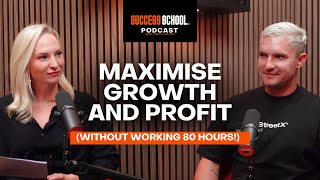
A Successful School podcast episode (Tim and Steph Frey) about setting up a successful week. They open with personal updates (cooking, joining a rifle club) then give actionable guidance: adopt a committed mindset ("lock in" / be a little "delulu"); create a daily power list of 3–5 needle-moving tasks; schedule deep work (phone lock boxes) ideally in the morning; maintain daily movement/exercise (noted as a common habit among top CEOs); track and review KPIs weekly (Monday accountability); prioritize working on the business (growth tasks) over day-to-day delivery; and use simple, fast sales processes with pre-qualification and sales calls for higher-ticket offers. They also discuss honesty online (cash-collected vs cash-projected) and when to outsource sales.
Chapters
We're giving out, like, participation medals for entrepreneurship, and it's no good. Guys, like, you have to be the best, or you have to at least think that you're best. When you started your business, you were like, I am good enough to do this. And then on day like 17, you were like, I don't know if I'm actually that good enough to do this anymore. You have to go in with a level of delusion that says, I can do it, I'm going to do it, and I'm the fricking best at it. And everyone needs this. And if you go in with that energy every single day, you will win the week.
You need to adopt the mindset that you're going to be a baddie. Foreign. Welcome to the Success School podcast. We're on episode 89. Today. We're talking about how to set up a successful week. But before we get into that, guys, my ass is on the line. Job's on the line here. We need some subscriptions, so if you're new here, hit that subscribe button and we want to see that number jump.
How many do we need?
As many as possible.
1 million maximum. Please share the show as well. Tell your friends to subscribe. Yeah, yeah, yeah.
Uh, Steph, how you feeling?
Super excited. I. I'm gonna lead in with my personal update. Oh, shit.
Taking the lead.
Just gonna do it this time. I. As you guys would well know if you've been listening to the podcast for a little while, I've been exploring some new hobbies. And one of the hobbies that I've been exploring a lot is cooking. Now, we've had a bit of a cooking kerfuffle the last few weeks, and I was nailing it. I was doing really well. You know, every steak that I was cooking was going to plan, and then one day, it just stopped working. I have my method, you know, I get the steak out, I pound it, I season it, I let it get to room temperature, I put it on the barbecue. It's amazing. Two minutes each side, blah, blah, blah, all the things. And all of a sudden, steak was very, very, very bad. Tough, chewy, gristly. Not good. High quality steaks from Bully Butcher and wa. And I was like, what am I doing wrong? And then you were teasing me. You were like, you've lost the touch. You know, this is no good. It was bad. It was really bad. No, honestly, it was inedible. Like, throwing the whole. Yeah, wouldn't even feed them to the dog. And I thought, my God, I've Really? I've lost the touch. And then you went and cooked on the barbecue because you didn't want me to ruin another dinner. And the same thing happened also.
Fucked.
And so we thought we'd lost the touch. We thought, we just need a holiday. So we went to Japan and came back, and still no good.
Steaks were good in Japan, by the way.
Steaks in Japan, very good. But tell me what happened with the barbecue. Well, I think he's trying to sabotage me.
I asked my dad, I said, hey, this is happening. And he said, maybe you need to clean it. And I thought, oh, that's a genius move. And clean the Barbie. Maybe that's it. So clean the Barbie. Took it apart. I used to actually do this for a job. I was an oven cleaner, believe it or not. And I used to clean barbecues as well and know how to clean a Barbie. So took it apart, took the burner out, and I was like, oh, wow, that burner looks really weird. It was rusted through. So I lit up the burner while it was rusted, and there was gas and fire going everywhere. So I thought, this isn't super safe. So I went to Bunnings, replaced the burners, fired that bitch up. It worked super well. Yeah, we cooked a steak last night. Voila.
Delicious. We are so fucking back with you back. Yeah, I think he was trying to sabotage me. He didn't want me to be better at cooking than him. And, you know, last night he proved that he's the goat. So I've got to. I've got to back it up tonight.
Boom, baby. Speaking of boom, I joined a gun club. That is my personal update. Segway joined a rifle club. And I went yesterday for my first attempted shoot. Didn't shoot. So I'm going to set the scene. I was driving 20 minutes from my house, driving down a dirt road. So you get on, and then there's like 20 gun clubs, all rifle rangers on the left. So I'm driving down a dirt road. The one that I'm at is at the end. So I go in, and they are militant as fuck, that. So super militant. And some guy's like, where's your badge? And I was like, the fuck? What badge? So he's like, get your badge out, put on your chest. You've got to be identified at all times when you're around the range. And I was like, cool. This is fucking crazy. So I went out in the range. There's like 20 benches. Everyone's got these huge rifles. I'm talking like, Huge. My rifle felt like I had a micro penis. And it's like it was so small compared to these rifles. And they're all really big and sick and, like, long and, you know, like, all the shapes. Very descriptive rifles. And then the guy was like, oh, do you have a bipod? And I'm thinking in my head, the. A bipod. Like, I don't even know what a bipod is. I'm such a noob. So it turns out I was underprepared. I didn't even have the right equipment. I couldn't even shoot on my first day in the gun club. So I got yelled out. It was very militant. I was underprepared, and everyone had a bigger gun than me.
Yeah.
The worst experience ever. My competition shooting career is off to a flyer.
It's off to a flying star. This is one of Tim's new hobbies. My favorite part was in the morning. He was like, is this the right outfit to we like, it's like the first day of school. Like, is this the right outfit? I've got all the right stuff. Just gets there and gets told to go home.
I've been buying shit for the day. Like, my first shoot, like, it was like, first day of school.
He was nervous. Yeah.
I was wearing my, like, shooting boots and my pants and my new outfit, and then I couldn't even shoot.
Couldn't even shoot. Oh, we'll try again next time. All right, what are we talking about today?
So we're talking about how to have a successful week, and I feel like.
You are the king of this.
Yeah, so I am the king of this, but you're the queen of this, baby. And you've been trained well. I'm just kidding, guys. That's not a sexist thing to come at me and send the. Send the feminist police on me. So we're talking about how to have a successful week, and we've got a bunch of points here. We're going to riff on them and go into them, and I'm going to give you the first one. So we were both listening to a podcast two weeks ago, Brian Mark's podcast. And there's an episode I think it is. I don't know it specifically, but I think it's 12:43 on the Brian Mark successful trainer podcast, and it's called Lock In. And basically, Brian Mark is abusing you for nine minutes, saying. Saying, lock the in. And I got heaps out of it. I listened to it, like, 10 times. I've listened to it on repeat. But he Makes a good point. And he said, if you really want what you say you want, you would lock the in and go after it every single day.
Yeah.
And that is the mindset that you need. And we talk a lot about success on the podcast. It is called the successful podcast. But if you want to create anything great in business, you got to lock the in every single day. So you got to wake up in the morning and you got to know subconsciously in your mindset that you are going to lock the in to get a result in that day. And if you have a mindset, anything other than that, your days and week and month and year and 10 years is going to get away from you and you aren't going to be successful. So you need to adopt the mindset that you're going to be a baddie that day, that week to achieve your goals.
Yeah. The first part is just like the belief, like, I'm going to do it. I'm going to get done. I'm going to do as fast as possible. It's going to be the best. And I think that so often most people just think, oh, if I just do it like 50, you know, I've had a good go. I think it's like, we tried. We're giving out, like participation medals for entrepreneurship, and it's no good. Guys, like, you have to be the best, or you have to at least think that you're best. In fact, you need to be a little delulu, which I think think is, you know, the. The concept that you will best resonate with is like, you have to be a little dulu. So if you're sitting there and you're like, oh, I just don't know if it's good enough. I'm good enough, or if I'm going to be able to do it, or, you know, I just am overthinking. I'm in a procrastination. Girl, you got to get your dalula on, or boy, whoever's listening, you got to get to Lulu on. You've got to get a little crazy. You got to get a little like, oh, my God, this is the best thing in the world. Like, when you started your business, you were like, I am good enough to do this. And then on day like 17, you were like, I don't know if I'm actually that good enough to do this anymore. You have to go with a level of delusion that says, I can do it, I'm going to do it, and I'm the freaking best at, and everyone needs this. And if you go in with that energy every single day, you will win the week.
Lock the fuck in, guys.
Lock the fuck in. All right, Tim, now that we're locked.
In, we're so locked.
We are so energetically locked in.
I'm vibrating in my seat.
Yeah, now we're charged up. All right, so energy's there, we're locked in. We're ready to show up. What do I do now?
You need a plan. You need a power list. So three to five items, needle moving things that you're going to execute for that day. And it can't be like, check my emails, doing social media, texting my mates. That's not a powerless thing. So it has to be things that are going to move the fucking needle in your business. Okay? So you need to list it out right on the whiteboard, right on a piece of paper. Do it in your notes, whatever you're going to do for that day. Some examples of powerless items is dm A hundred people set up a new ad set. Create your social media content for the week, schedule seven emails, have four sales calls, follow up with 10 people. Are you guys getting the idea yet? Things that are going to move the needle. So many times we see our clients send us what they're up to. They're just doing shit that doesn't matter. Guys, if you do low value tasks that don't move the needle in your business business, you won't have a great business. You've got to be doing stuff that's moving the needle at all times. And if you take anything from this podcast, lock the fuck in and do things that matter.
I think on the back of that, the number one thing is like, what did we just buy? We just bought phone lock boxes.
Yeah.
And we are not perfect by any means. Just so you guys know, like, we have phone addiction just like everybody else. And the biggest time suck in your business is procrastination and distraction. You need to carve out time for deep work. You need to be able to put your phone away, not open your emails and just actively work on a project for an hour or two hours or ideally four hours and ideally first thing in the morning because that's when your brain is freshest trying to make decisions. At the end of a day, once you're already tired, you've had a ton of stuff that's come up in the day and you're triggered and you're already distracted by everyone else's problems isn't going to help you move the needle forward. So ideally, scheduling meetings and catch UPS and everything else in the afternoon. And setting your time aside to stay focused and do deep work first thing in the morning is going to be the most powerful needle mover for your business.
All right, Steph, I know this is my area number three, but I'm going to ask you to talk about it because everyone's probably expecting me to talk about this, but we've got working out. You need to work out to have a successful week in business. Well, you don't, but 497 of the CEOs of Fortune 500 companies have a daily movement practice. Steph is not someone that's been a exerciser your whole life. How has it helped you in entrepreneurship and how has it helped you have successful weeks every week?
Yeah, guys, I'm the of person that, like, Tim had to drag me to the gym for like three years and I would kicking and screaming to a point where, like, I would fake going to the gym so I didn't have to go to the gym. I am not an exercise person. However, it is the, you know, it's not even that you have to do in the morning. It's that you have to do it because your mind is only as strong and sharp as your health at the end of the day. And like, your mind is your most powerful weapon. And if you are not feeding it, if you are not doing good things to it, if you're not giving it the energy that it needs, if you're not giving back to your body, to your health, your mind is going to suffer and deteriorate. And the number one thing that you can do for yourself from an energy perspective is just train. And it doesn't matter what that is. Like, it could be a fast, ashy binds power walk. It could be a little cross trainer sesh. It could be a bicycle. You could go and do boxing. It doesn't matter what it is. You don't have to go to a hardcore strength session like Tim and I do. It can be literally anything, yoga, but it gets the endorphins flowing, it makes you feel accomplished, and it is the, the best energizer for your day ever. And it gets the brain clear no matter what's going on.
Do you have a hardcore strength session? Is that what you call those? Like, is that how you describe your workout routine?
I don't know if you guys.
I would say it's a hardcore strength.
Well, you know, some people might think we're hardcore.
All right, I'm gonna go into number four. And it is non negotiable. For everyone is you need to be doing KPIs, okay? I don't care if you're making $0. You need to be doing KPIs on what you did last week. Like, a couple of weeks ago, we went through the Doge segment of like, what'd you get done last week? This is your report card to yourself. And I don't care if you've got one person in your business, you're making no money, whatever it is, you need to be doing KPIs. You know, a friend of mine reach out and they were not doing great in business and they sent me a dm and it was really whiny. And he says, tim, I know you talk about doing KPIs all the time, but there's nothing to KPI on. I said, that is the reason there is nothing to KPI on, because you're not tracking what you're actually doing. And if he had no accountability to what he was actually doing, therefore he probably actually wasn't doing much. So I couldn't really help him if he didn't show me what he was doing. I'm happy to help, but I need to see exactly what you're doing. So even if you are not making much money, you still need to be doing KPIs. And that's just like social media posts, how many emails you're sending, what's your reach? You know this example, they're not making any money, but like profit, revenue people, they reached out to how many DMS they send. Like, just the simple, we need to be tracking every single person. And then on that, if you are doing KPIs, you need to review them and do them consistently. So spend 5, 10, 15, 20 minutes, go through them with your partner, your significant other, a friend, whatever it is. But you need some accountability on the KPIs or a coach. Okay? So important to have a successful week in business is doing KPIs. Steph, how have you found the process of KPIs? And I've been very militant on it. And Monday morning I wake up, I'm like, get your KPIs done.
Like, let's go in the team chat, no matter if it's public holiday, it doesn't matter if you're having a day off, KPIs need to be done every Monday. Yes. How have I found the process?
Yeah, have you found the process? Has it been. Has it made you feel better? Is it like, cool, we got this down pat?
Look, guys, I think it's really Easy to get emotional in business. Obviously it's really easy to think nothing's working and to have scarcity and to worry that no one's going to buy your stuff or you made the wrong offer or whatever. Right. This is normal for any entrepreneur. The thing is that the data won't lie. So if you imagine this friend of yours that you were speaking to, if his KPI was to start a hundred DM conversations a week, there's just no way that a five to six weeks he wouldn't have landed a client. This is not, it's just not possible. Like he would have optimized it, he would have figured it out, he would have kept trying. Eventually someone would have responded. Eventually he would have figured out how to have a conversation, got him on a call, he would have sold him. Like it's inevitable that you will figure it out. And I think that the problem is that most people just aren't holding themselves to the level of account to the volume of action they actually need to take and the things that matter, which is actually the next point. And I think that yeah, most people just aren't focusing on the tasks that matter the most. And KPIs force you to do that.
Steph, anything we miss on how to have a successful week, you're locked the fuck in. You gotta do a power list, you gotta do your KPIs and you gotta train and eat well.
Yeah. Last one is just stop working in the business. Yeah, Very, very easy to just get on your emails and you know, f.
Around talk to us a little bit about working in and on the business and what the differences are.
Yeah, so your focus work or deep work would be working on the business. So that's like anything to do with marketing is really on the business. I would say in the businesses like client delivery, client work, emails, invoicing, you managing a team, all those things will be in the business. You know, fixing broken processes, optimizing DM scripts, setting up new ad sets, DMing a hundred people. These things are on the business because they're going to grow it. That's my interpretation is that yeah, for sure.
Working in the business is just doing the day to day. The delivery on it is actually stuff that's going to grow.
Absolutely. And most people get caught up in 20, 30 hours a week delivering. Guys, it's not sustainable if you're not hitting the income bracket that you want to hit right now. It's not going to be sustainable once you start hitting the income bracket to keep delivering at that level. So you need to find another way.
All right, we're going to get done your story and I'm going to ask you to intro this and give us the background on it because I think you actually know this really well than me. So we're talking about business owners lying online. And there was a famous one on Netflix recently that made a documentary.
Yeah, the Belle Gibson documentary. We haven't watched it and we tried to watch it. It was not our cup of teach. Yeah, we are so not into Australian television. It's just not our thing. But Bell Gibson, she faked her cancer diagnosis for money, obviously. Shit, move. Not cool. Very, very crappy. But it did get us thinking and it did get us into a conversation about why people feel the need to lie about their results in business. And, and the correlation is obviously she used it, this fake news story so that she could monetize it so that she could get famous so that she can make him some money. And she tricked people and she hurt people. It's really, really awful. But that's happening every freaking day online with coaches, with fitness coaches, with healthcare professionals, with literally influencers. Hundreds of thousands of people every single day, but especially in business, are lying about the results they're getting. And the problem is that people believe the lies. They buy in, they get burnt, they waste a heap of money and it's shitty and it's awful. So why do people lie online, Tim?
Like, obviously it's for a self gain and they feel like they're gonna be more reputable if they inflate their results to a degree. Therefore they're gonna have more financial success. But the problem with it, it always gets found out and it always gets found out as bullshit. And it puts you back further than it is the case in point. Our friend Bri messaged us and she said so. And so is making 50k months. How the fuck are they doing that? And when someone says they're making X amount of money, most of the time you need a check. Is it cash projected or sales projected or is actually cash received? And then a lot of people, and particularly coaches, they have their best ever month and they have all this cash projected and they have all this cash that they're, you know, hypothetically making. And then they say, yeah, I show people how to make 50k months or whatever it is, or whatever their biggest month ever is, and then the consumer will then just assume that coach gets that money all the time, so maybe they can help me get that money. And then I'm gonna sign up with them, which is just like really, it's just a big grift.
It is, it's, it's an exaggeration and it's unhelpful. And I think that the point that you're trying to make is like, you know, this person who probably hasn't yet had 50k month in cash collected. When we talk about, and I just want to be really clear to define this for you guys, cash projected is I made five sales this week and each sale was for $10,000, right. Therefore it's $50,000 of sales. However, a lot of that income is not going to get realized for the next six months because people are on payment plans, right? So cash collected Today, I've made $10,000, right. I've made $10,000 this month in actual cash that's hit my bank account. Now in successful our clients, we measure our clients on cash collected only. So we own our own revenue. So if you ever see us talk about revenue online, it's always cash money that hits our bank account. Okay? So if we're saying that we've had a $200,000 a month, we've had $200,000 of cash collected cash that's actually hit our account that month. And our clients, we get them to measure on that too. Because cash projected is not cash guaranteed. And people pull out of contracts all the time. You know, Covid hits and contracts are ended. Like you just have no idea what's around the corner. So that's not cash realized. So therefore it shouldn't really be counted right in in our belief system. The problem is that, and you're right, most people will advertise and gloat their best months rather than, you know, usually what happens is that you'll have a big month and then because you have often fluked a big month, you don't know how to sustain it. And so now the next three to four months, you'll end up usually trying to put in the processes and the things in place to make sure that you can continue having that month again and again and again. And then you hit a new peak. And that will happen over and over again. And so if you look at most business owners cash cycles, it'll actually be high cash month, lower cash months and then bigger high cash month and then eventually figuring out how to sustain them a little bit more consistently.
Why do you think they lie or exaggerate? Like what is your take on it? You know, like, yeah, you would have a different take to me, look, I think I'm very skeptical and cynical I'm.
Gonna talk about the female coaching space or the female.
I can't say anything.
The female business space. Because I think that ego. I read a lot of our clients compound marketing, and I think that this comes down to a concept called, you know, have. They do. And I think that a lot of people think that in order to be able to go online and help people to be a coach who helps somebody, that they have to be an aspirational identity. Most people think that an aspirational identity online these days is flying business class, being on super yachts, hanging out with multimillionair, having six figures dropping into your bank account every freaking two days or whatever it is. And it's unhelpful because most people aren't there. Like, honestly, the people that are actually doing that and it's real life are the top 1%, probably less than the top 1% of people. I follow a lot of people online who I find aspirational, incredible. Who are nowhere near some who are not even earning 10k a month. And I think that they're the best at what they do. They just haven't been realized yet. And that's exactly the person I want to be working with, to be honest. But I think. And they think that they need to have it in order to be taken seriously. But the problem is that when it gets found out, and it always gets found out, and people can tell and people can feel it and they tell other people. Other people. No. And it gets around. And Perth is small and Australia is small and the entrepreneurship world is speaking as it's no good for you. It breaks trust. And once trust is broken, it's very, very hard to get back.
Yeah, we always hear the stories. Bit of a controversial one, but, you know, some of the. You didn't mention the female girl boss world. And there's a lot of lying and inflating of numbers that goes on in there. Guys would just get called out.
Guys would call guys. I mean, guys call girls out anyway.
But you couldn't get away with it. As a dude doing some of the stuff that I see girls straight up lying about.
It's not to say.
Why is that?
It's not to say men aren't scammers. There are plenty of grifted men's coaching companies. Right. Of course. They just don't lie in that way. They don't lie about their revenue and they don't lie about their accolades. They lie about what they can help you, you achieve. Right. And it's a different thing. It's A different kind of grift. The reason that I think that women are coming through this time of needing to prove ourselves, and I think it feels like. And I think women naturally respond to, or I don't say copy, but maybe imitate or take a lot of inspiration from other women online. And they think if I just did that, then maybe I would also get X. Right. And so they start mimicking the same kinds of content or topics or wins. To be able to get the same outcome that X person is getting, it's just ultimately, it's super unhelpful. And you're right. In the male industry, it would not go down.
Yeah, you'd get rolled.
Yeah.
And how do you spot? Like, how do you tell.
Ultimately, guys, people are going to lie online. That's how it's going to be. People are going to grift. It's going to get worse with AI. Like, guys, this is going to happen. The best thing you can do is just protect yourself. If you are not 100% sure, and even if you are 100% sure, you should ask, get, ask, get proof. Ask for pnl. Ask for a screenshot. Ask for proof. Ask for something. Like, we have had people because we said people ask us. We've had people ask your pain. Yes, I just feed. No, I'm like, well, that's sweet. Have a look, bro. Like, absolutely. Because we have nothing to hide because we're really honest. And the reason we're really honest, because we're terrified of getting caught out if we weren't honest. Because we pride ourselves on honesty. Right. And so, guys, if. If someone won't show you the proof that the claims they're making are true, then that's a red flag. And, you know, anyone who's being honest online will be more than happy to share their results with you. I have no doubt.
Yeah, just, you know, we asked for proof. We were going to work with a PR agency once and I won't name names, I won't go into it.
This is a great story.
And we have PR friends and they're great. Like, shout out Heidi. Heidi Anderson's amazing. This is not her, by the way. But we were going to do some PR with someone and they sent us a bunch of proof and we did our due diligence. Steph messaged the proof.
Yeah.
And the proof said, fuck that. Stay away from that person. They're a scammer and I've never worked with them.
So they did this whole presentation and they had all these photos of all these people. They'd worked with and their names next to them, saying, like, we got this person this blah. And I thought. And I was so close to buying because I get sold really easily. And I messaged the person that they put on and I was like, hey, I heard you worked as so and so I'd love to know, like, how did the PR work for you? And she was like, I never did PR with her. Those people are scammers. Blah, blah, blah, blah. And I was like, oh, my God, imagine if I didn't reach out now. One of the things we always tell our client or like, potential clients in successful is like, here's five people who are in similar niches to you. Go and ask them about their successful experience. Like, we have nothing to hide because if it's not for you, please don't join. Like, the last thing we want to do is be kicking you out on day three because it's not a good fit, right? So which we do. Um, and so we want to make sure it's the right fit for you. We want it to be a freaky ass, amazing opportunity for you. So do your research and come back when you're 100% sure. Otherwise, don't join. You know, and I think that you need to go to the level of messaging the clients. You need to go to the level of asking all the questions. You need to go to the level of telling them, hey, I've been scammed before in these ways. What do you guys do to make sure that that doesn't happen in your program? Ask the hard hitting questions. You're a consumer. You're allowed to ask hard questions.
All right, we're gonna get into our listener topic this week. This is a great one. We've got our new sales manager over here, Steph Frey. So from Jess W. What is the best sales process for maximizing conversions? So she has a service business. They sell something, I would say a little bit high ticket month to month. So a little bit of context there. So, Steph, take us away with your newfound sales management skills of absolutely dominating what is the best sales process for maximizing conversion.
Simplicity is the number one thing here. And I have a thousand demonstrations or examples of ways in which I've seen really, really complex sales process processes play out. But I'll give you one example we recently have. We always are chatting with clients who are choosing between me, us, and maybe another business coach or looking at different options, which we love. Congratulations. It's good that you're doing your due diligence, finding who you want to work with. We recently had three people come to us that were choosing between us and another coach. And all three people ended up signing with us. And they signed with us because they said your sales process was so simple and efficient. I could book a call, have the call the next day, ask all the questions, and be in your program the following day. The other person they were speaking to had like a 15 minute call that you couldn't book for a week and then a Now like a 10 day gap between when you could book the next call because their salesperson was obviously so like busy or didn't have availability or it was dragged out and they didn't get all the information they needed. And so in that time that it took them to have a 15 minute call, we'd already had our first call, our second call, and a follow up email sequences and DMing them and having conversations with them and they signed with us. And so simplicity is the number one key here. And you know, to answer Jess's question, and I just recently ripped Jess's funnel from ear to ear. She's one of our inner circle clients. And in this particular funnel there was just a lot of complexity. There was a lot of like, oh, you can book a call here or you can send an email here, or you can do this here. It's like people just need simplicity. They need to be like, book the call. They need to be told exactly what to do, they need to know exactly what to expect. It needs to be easy. And the more barriers that you put into your sales process, like making them jump through extra hoops or open extra emails, the less likely you are to get a conversion.
So I just want to play devil's advocate here because I know a lot of people are going to hear that and be like, oh, cool, someone inquires, I'm going to send an email and hopefully they sign up.
No.
You know, someone's gonna be like, let's take out all the barriers. Let's not do any sales calls. Let's not do anything. Tell us why that wouldn't work.
Yeah, okay, so I could see how that would happen. No, so don't do that. Look, if you're selling something over a thousand dollars, my recommendation would be to get on a sales call. In this economy? Sure. Hopefully the economy turns around in the next 12 to 18 months and we can all go back to selling $5,000 programs on landing pages. Let it happen. God, please be good. But right now that is not the case. I would highly recommend getting on a sales call with people the reason you would have a service call with somebody is because you want to make sure that it's a match, win, win for everybody. The worst thing you can do is sign someone into your program, offer service, and realize that it's a bad fit for both you. It sucks. It's shit. Everyone's having a bad time. You get a complaint, you're getting bad reviews, you're having a nightmare. You have to now find a polite way to fire this person and try not to burn the bridge. It's a nightmare. Have the service call, find out if it's even the right fit, explain all the features and all the benefits. Help them to understand whether this is actually a solution to the problem or not. Okay. I hear you on the end of this podcast thinking to yourself, but I don't like to do sales calls and.
I understand you're a waste of time.
Yeah, it's a waste of time, but get the right people on. Awesome. Then you need a better pre qualification process. Okay, cool. Then you need better lead magnets that attract high quality leads. Cool. Then your marketing needs to improve if you're getting the wrong people on calls. Okay, People don't get through to our calls unless they've. We have a few hoops. Now, the reason that we have hoops, and I want to be really clear, we have hoops, by the way of like, we have questions, okay. That they have to answer to be able to book a call. Because we have demand, because we're not desperately trying to sign people so that we can feed our children tomorrow. Okay. We are at a point in business where, where we don't need to sign clients. We want to sign clients. And that's a very, very different place than a lot of people who might be listening to this podcast right now. If you need to sign clients, you need less barriers. But you do need a sales call. Okay? So get them on the call. You know, if you're pretty new to business, you need to be having a lot of conversations so people know who you are and they know that you're real and they know that you're a nice person. The more conversations you have at the beginning, the better the further you get into business. When you have clients and you are delivering and there's stuff going on in your business, you've got teams and you got stuff you got. You can't mess around and wasting time on sales calls. So at that point you start making more hoops, people to jump through. Did I answer your question?
You answered it. So I want to touch on A funny thing about selling, and we both saw a post on this today. It was hilarious. And it was like the selling on doc phenomenon. Okay, so how this looks like in a dream world, maybe fairyland, maybe your wildest dream is someone inquires with you, you send them a Google document and they pay you $15,000, okay? The likelihood of that happening for you is, is virtually zero. And that does work if you're famous. Okay? So if you have a rep, you've been in the industry 30 years, you're the goat. Like, amazing that you're probably not listeners of this podcast. You're on a private jet or a yacht somewhere and you're super famous, then you can sell on document, okay? That's how that works. If you're an everyday business owner making a couple hundred thousand or a million a year, that's probably not going to work from you because you don't have the trust, okay? You have to bridge the trust. You're not the goat, so it doesn't matter. And the fastest way to bridge the trust on a sales process is to have a call with someone, okay? You're on the phone, you're answering questions, you're finding out what their problems are. You're offering a solution that works and has worked since phones were invented, okay? Everyone's trying to reinvent the wheel and doing the least amount of work possible because I don't know, maybe it's lazy. Maybe someone on Instagram has said, you can do it, yes, you can sell in dm, but we're in a trust recession right now, guys, so you have to show that you know what the fuck you're doing.
My favorite part about this is, guys, you think it's hard, but it's not even hard compared to before they had phones. It was door to door salespeople.
Yeah.
Like, people were going around selling refrigerators door to door. So like, guys, it's easy in comparison to door. We get on zoom, we're in the comfies. You know, I've got my pajama pants on bottom, I got my business up top. It actually is so much easier than, than it ever has been in the history of sales to be able to make sales. So it's not that hard.
Yeah, people are like, man, I don't want to do sales calls. I shouldn't have to do sales calls. What is this fucking business thing? Yeah, that's business guys.
Business guys.
That's how it works.
Make a sales is business. One last thing to wrap this up. I get a question a lot when Can I outsource my sales? When's the right time to outsource sales? And I just want to speak from my own experience, because I outsource sales. I would say early, but late also.
Probably too early.
Yeah, well, probably too early from a skills perspective. Definitely too early from a skills perspective. But then how else do you learn the skills? Definitely too early from a skills perspective, but definitely probably too late from a workload perspective. So I had a program, and, you know, we had demand. So just to be really clear, demand is the answer. And when we say demand, it means that there are lots of people wanting to join your program and offer.
All the time.
All the time. Like, it's really consistent. Like, you have, like, daily inquiries. You have five or six inquiries every single week. People are reaching out, like, hey, how can I work with you? Hey, I need a business coach. Hey, I need this. If you don't have demand and you're not getting on. I think for me, I was spending about 10 hours a week on sales calls and I couldn't do any more.
More.
But there was more that wanted to be on calls, right? I couldn't do more because I had 90 clients that I was delivering to. I think it was like 40 clients at the time. 40 clients that I was delivering to.
Lying on.
Here we go. Yeah, yeah, yeah. Chloe would call me out. Chloe was my first ever salesperson. And so I hired Chloe. I had no idea what I'm doing. Bless her cotton socks, you know, she had some experience with sales. We just cobbled it together and figured it out. And I hired that person when I, yeah, had 10 hours of sale, I was losing. So for a lot of people, that's not the case. You're not ready to outsource sales yet. You also probably haven't done enough reps to give someone a process to be able to sell on your behalf, because you don't even know how to do it yourself and do it well yet. So at the point where you have a lot of demand, you don't have enough time and you're converting really high and you can create an sop. So a standard operating procedure for that sales process, that is when you can.
Outsource sales guys, you need to be a sales warlord if you're going to outsource sales because you're going to have to mentor and coach the person. If you can't mentor and coach the person, your sales process is going to suck. Hence why your conversion rate is going to go from 60% to 20% and then you're not going to know how to fix it because you don't know what is going wrong.
Yeah.
Which is why Steph is a sales manager now. And you're amazing.
Thank you so much.
All right, guys, we got some value from the show. Please let us know. Send us a dm. Also, if you're new around here, hit the subscribe button. Whatever platform you're on, we really appreciate it. And if you liked this batch of three episod, it was super fun and super engaging, and we'll see you next week.
We would love your feedback, guys. See you next week.










