
The Taylor Swift marketing strategy you need for growth
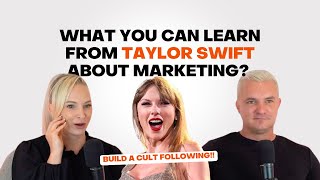
Tim Frey and Steph break down Taylor Swift's marketing playbook for business growth: build community with real connection tools, share measured vulnerability to earn trust, and create moments people want to talk about. The goal is higher lifetime value and organic word-of-mouth.
Chapters
We're talking about the Taylor Swift marketing strategy today.
I think that the most underrated thing that she's done well that you can use in your business is building a community. I don't care if you're an agency or a service based business or you do massages or whatever, you can build a community. You can.
I think the first part of it is you have to be an authentic leader and you have to lead from the front. I think Taylor Swift does that really well.
Foreign.
Welcome to the Success School podcast. Today we're on episode 61 and we are talking about the Taylor Swift marketing strategy that you can use in your business. We're going to give you some actionable insights on how you can do that. Steph, how are you feeling today?
Yeah, look, we're not big fans of Taylor Swift. No, we're not. We're not, not fans. We're just like, I'm sure that I love Shake It Off. If I had a favorite song, that would be it. But we're not big fans of Taylor Swift, but we are huge fans of what she's built and created and how she's done it from a business perspective and from a community perspective, from a cultural perspective, which. Super excited to dive into this today, but yeah, I'm feeling pretty good. How about you?
Yeah, I'm excited for the episode. Excited to mansplain Taylor Swift. Excited for some Swifties to come at me. Come at me, bruh. Yeah, troll me. See? See what happens.
We aren't, I'm gonna say we're not that well informed. So this is gonna be an interesting episode of just really opinions and hugely, hugely opinion based, but some really cool marketing stuff that I think you guys will be able to. And not. I'm not talking about the. You've already seen on Instagram. People are like, no, tell us marketing strategy. So smart. She has like these little things that flash in the, like, not that stuff, right? Like, it's not like, oh, she wears sequins on her dress on Instagram. Like, it's not that. So we're gonna really deep dive into the cultural phenomenon that is her, her and how she's built her brand rep and how you guys can start to build a bit more of a brand rep around your business like Taylor Swift has and create a movement like Taylor Swift has and how that's actually really going to impact and create huge momentum in your business and how we've actually utilized. Not to the same levels of Taylor Swift, of course, but some of the stuff that we have utilized that has helped us get here. We're going to break it all down for you today, so. Heck yeah, Tim.
All right, personal updates. So I probably, for the first time in 10 years, have had no niggles, aches or pains in my body, which is incredible. And I used to go to the Cairo physio all sorts of places every week. And I spend like 300 bucks a week just making my body work better. And the commonality was the gym that I used to own and the training style that we used to do. So I haven't had the training style and then I haven't had any issues with my body. So is there perhaps a cause and reaction going on here? Maybe, maybe not. But we have changed our training style, which I've been loving. So we're doing a quote unquote bodybuilding type split. We're doing some handstands, juggling functional stuff as well, like intertwined with this, which has been great. But yeah, I'm actually feeling great. My personal update is I feel and look the best due to the changes that I have made. Not that the old training was not good, but I think with the stress levels that we run, running a company the size of success school, adding in the hardest training ever seen known to man is probably not the best thing to do under recovered.
I think there might be two parts to this. I also think that the body needs different and new stimulus. And I think that we were doing, you know, the last style of training for 10 years, and I think that the body was just do a break and do something different. And I think there's a whole school of thought and science around that as well that I don't know. But I have heard that there is a whole school of science of, you know, and it's what your friend Keegan teaches is like that constant change, like change is really important for the body to have new stimulus constantly. And so I do think there's that huge added benefit of that on the body as well. But, yeah, you are looking phenomenal, my love.
Thanks, guys. If you're on YouTube, let us know where we're at. I did wear my really tight top for this today, just because he was.
Going to talk about it. Yeah.
Steph, what do you got on your finger? And tell us about your personal update. Besides a huge carrot ring I have, what else you got on your fingers? Those little dumplings?
Sausage fingers? Guys, I got the world's smallest hands, so. So I've got a really funny story about this, actually. It's actually kind of not appropriate, but I'm gonna.
We love inappropriate.
So I have an aura ring, and Tim has one too, and wedding ring where he. Yeah, it's. I've got another story about that. Many stories today, but I won't bore you with all of them. I've got an aura ring. What it does is it tracks your heart rate, sleep health, temperatures, all the things.
And what kind of temperatures.
Yes. Well, this is the funny story. So it's been great. We love it. We've had it on for about a week now. I really love the data that I get from it. It's really awesome. Definitely part of the Oura Ring club. Huge fan. Not sponsored. Willing to be sponsored. Send us a message.
Discount code Steph10.
We don't have one, unfortunately, but interesting story. I was out for dinner with some friends a couple of weeks ago, and obviously, you know, we've been on the fertility wagon, you know, doing some pregnancy stuff, and someone was like, oh, have you been doing temperatures? And I've been like, oh, no. Like, it's just. Honestly. And at this point, I'd already ordered my aura ring, and I actually. I was just about to order my aura ring, and the girls and I were talking, and they were like. I was like, look, it's just. It's really uncomfortable thinking about having to put, like, a thermometer up there, you know, to test the temperature. And they all laughed because I thought that this aura ring was something that you, like, put in, you know, and you're hoohoo. And they were all laughing so much. They're like, no, Steph, it's just your body temperature. Like, you just take your body temperature. And I was like, oh, my God, that is so embarrassing. I thought that I was gonna get this.
I was willing to volunteer.
Oh, thank you so much. And, like, it was so funny when I realized that actually your body temperatures thing, you need to measure. So safe and sound. I'm measuring my body temperature using this ring on my finger, which is really nice. I'm a huge fan of it. And I think that the lesson here is I actually thought that I was pretty unhealthy. Like, I don't know why I ran that belief system. Probably because we run, like, slightly higher stress levels than other people, I would say, running businesses. And, you know, even though we do travel a lot, even though we do prioritize a lot of health, I always think there's ways that I could be optimizing it. We hang out with some really healthy people, so in comparison to them, I always feel quite unhealthy. And what I found out through tracking on the Oura ring is that actually I'm well and truly in optimal range for everything all the times. And so are you. Actually. Tim and I always think that it's really important to track data. And so circling this back to business, I think sometimes you can think things are worse than they are, and then when you actually start tracking the data, you're like, oh, actually, this is actually doing pretty well. And I'm actually doing okay. And so just track your data. That was the lesson.
Awesome. I love that. So we're gonna switch gears, guys. Today we are talking about our Finger on the Pulse segment. So we did decide on a name. Our podcast manager was asking us, what is the name? Because I think in two episodes, we did two different names, but it's called Finger on the Pulse now. So we discuss a topic in pop culture, the news and media, and how it relates to you as a business owner. We're going to give you the insights, key takeaways, and unsolicited opinions on the topic. Thank you for the feedback on our Trad Wife episode. That was great. So we're talking about the Taylor Swift marketing strategy today. So there are a couple of things you can learn. And I'm going to ask Steph to kick us off today.
Why?
Because you closer to Taylor Swift than me.
Tim's like, good. No, today is gonna be hilarious for you guys. Tim is really not got his Finger on the pulse with Taylor Swift, so.
I don't like Taylor Swift, so I'm gonna come out and say it.
I don't like it, but we know that you guys do.
And we know that she blames men for her problems. She's the problem. She says it. I'm the problem.
It's me. Yeah. Hi. Anyway, we're not gonna sing, so. So Taylor Swift, I think that the biggest thing that she's done well. I think that the most underrated thing that she's done well that you can use in your business is building a community. And I want to talk a little bit about how she's done that and how that came to be, because, you know, and again, I don't really follow it, but I do know that there's still this, like, she's doing this world tour. People are flying from, you know, Australia to other countries. We were in Germany and we were getting on a plane, and there were girls from America that have flown to Germany because all the American shows were sold out to. To go see this show. And I was like, damn. Like, I Know people who are in Australia that are currently in Europe going to shows. Like people are really committed. They're going to multiple shows. 5, 6, 7, 8 shows. They're sold out everywhere. Because not just people are going once. People are going three, four, five, six, seven times. It's pandemonium. And the reason is not just Taylor, because Taylor's incredible. But they don't even get to talk to Taylor. They don't even really get to see Taylor. They love her songs, they love her singing, they love her dancing. I'm sure, yes, great, great, great. But they love each other more. And the whole thing that she did the smartest was she gave them a reason to connect and she gave them a way to connect. So rather than. We've been to lots of concerts and they don't give you a reason to connect with the person next to you. So we went to Blink182 actually when Taylor Swift was playing at the stadium just next door.
And Blink rules.
Blink is the best. But we saw all the girls outside. Like, even if you can't get to the Taylor concert, they do like, I think it's called like tailor gating, where they hang out the front and they just listen to the concert from the outside and they hang out with their friends and. And one thing they do really well is like we sat down at the Blink concert. We'll like sat down to the people next to us. And I thought we would be in some ways like minded, but I don't know how to really start a conversation with you. We started one anyway, but it was kind of awkward. Whereas at Taylor you're encouraged to start conversations. And the way she's done that is with the friendship bracelets. And so she's given them a reason to talk, she's given them a reason to connect. We went to Fiji and they had a lot of really cool little things that they did at the event that fostered community, that got people to talk to each other, that encouraged people to talk to each other, that rewarded people for giving information to each other. And I think that if you have a small community, one. If you don't have a community, build one and you can do it. I don't care if you're an agency or a service based business or you do massages or whatever, you can build a community. You can.
Yeah.
And you should.
How would a massage business do this? This. Everyone gets together, let's give each other rubs in the park. Park rubs, guys, it's an event. Let's go.
Park rubs.
You just get get you could get anyone giving you a rub.
Well, I'll give you an example. We have a coach actually who is in success school and she's a life coach. And for the last few years she's been doing life coaching and usually one to one. And recently she has had a mission that's been on her heart for a completely different thing. And within two weeks of launching this completely other thing that was more community focused, she's had like 200 people sign up to the wait list. Like, you know, it's been huge. And so it's not necessarily directly to do with her business, but she's building a community of people about something she's passionate about. And that's really how things start, both in business and without. Like her name's Kate. You know, if she gets known by 200, 300, 500,000 people, do you think that when they have something going on in their life they're going to. Even if it's completely different, who are they going to go to when they have something going on in their life they need a life coach for? They're going to go to Kate because they know her, because she's a leader in their community. It's just good business. It's just good. Human actually is what it really is. Talk to us. You've been the king of community building. So how does it work? How do you think that, you know, that people should start building communities? Because it can be quite scary.
Yeah, it kind of leads into our second point here. I've built cults and communities previously. It's one of my secret sources. I don't particularly know how I do it, like step by step, but I think the first part of it is you have to be an authentic leader and you have to lead from the front. I think Taylor Swift does that really well. She leads from the front. She wears it all on her sleeve. She just says it how it is. She tells people what to do, she encourages them and essentially she just, she is like the beacon or like a role model for a lot of people. So I think if you don't have a community, build one. If you do have a community, how can you make it better? I think this is worth spending time with a pen and paper and just asking yourself, like, how could I increase my community or increase the engagement or increase what people get out of it. And not just that, communities become sticky when people become sticky in the communities and sticky together, not just sticky to you. So even in success school we have this a little bit of phenomenon in the program. And it kind of happened after our Bali retreat. We had 80 people come to a Bali retreat. Everyone becomes thick as thieves in there, and they just essentially just love on each other for a week, which is incredible. But people stay in programs and communities for other people. Okay. And it's like, same with Swifties. Like, I'm sure some of the Swifties are going to other Taylor Swift concerts because other Swifties are going to be there. It just creates another dimension of stuff, stickiness to your company and your business, which is great. But also there can be a negative effect on this because if Taylor did something wrong, which she may, you know, one person can drag 10 out with them as well. So there's multiple sides to this sword. It's a great sword, and then it can be a terrible sword. So you always just need to be on the front foot of communities.
Yeah. And I think that the thing with community is that, like, one, you know, you telling everyone how good you are to try and get people into your programs or your offers or, you know, your courses or whatever it is that you have, you try to tell them, obviously you have a secondary gain, right, because you're going to get money from it. Whereas, like, if you have a whole community of people being like, oh, my God, like, Steph and Tim are the best, you have to join Success School or. Which you guys will see. That happens to us a lot online and. Or at our gym, it was the same thing. People went really hard to try and get their friends to come into the gym. And so other people becoming advocates and not because we pay them. We've never once rewarded an affiliate within our program. We probably should and could if we wanted to, but we do it back to them. We give back to our clients exactly the same way. Like, we refer our clients out to people all the time and get them business all the time. And so there's that reciprocity where we don't actually have to pay each other because we actually just genuinely value each other's services and programs and offers. And so it happens really naturally. And that's what happens when you build a lot of trust in a community. And Tim said it so perfectly before. You know, Taylor is vulnerable. Like, she's a really vulnerable person. You know, you don't see her changing her colors to fit in with what's going on. You don't see her getting, like, mass amounts of plastic surgery to fit. Try and fit in with what's hot. You'll see her going on stage with fluffy, frizzy hair and you know, her makeup dripping down her face and all those sorts of things because she's just a human being and, and she really advocates for being yourself and being the truest version of you. And she really encourages people to be that within her community and so they feel safe to do that. And that is why she has created what she has created. That is why she's selling out and selling out and selling out and selling out. And the average order, lifetime value for her client would be huge, Huge. So much money. Because people are going to multiple concerts whenever they can because they want to be part of this phenomenon. And I really believe that every single person that's listening to this podcast can create a phenomenon, not that to that size, but of raving fans and the benefit to your business. What are the like, what are the benefits of creating raving fans to a business?
Yeah, it is lifetime value is the big one. And then, you know, becoming a brand advocate is the second one. They just bring a lot of people to you or attract a lot of people to you. So lifetime value. And then there is just like a level of sticking power that's involved in this as well. So it's essentially it's lifetime value and then they just become brand advocates for the thing.
And then it's like reduced marketing spend because you're getting like more and more referrals. They sign up much faster. You're getting like a faster return on investment for the any marketing you're doing because people already know like and trust you because you're come recommended from somebody else. It's just honestly like having people talk about your business and being somebody that people talk about is honestly the fastest way to grow your business.
When I think about like a software company that's kind of done this a little bit, it'd be like Kajabi.
Kajabi did it really well.
Yeah, they kind of did this. They hit the female entrepreneur thing really well. They made it really nice and pretty and all this stuff is great. And then it hit that virality with that female business owner and then they.
Yeah, they did really smart too because of the affiliate. Like they did reward, if they do reward affiliate very well. And so they got the girl bosses in. They knew that that was a niche that wasn't being targeted. Clickfunnels was very dude heavy. And they were like, okay, let's do a clickfunnels, but let's make it better. Like we can build websites and stuff and easier and then let's make it simpler enough to use that. We can sell it to mostly females. And they really dominated that female market. First they got big, well known female influencers and like big coaches in that were, you know, affiliating for that and they made the affiliate really, really generous. So I think it's like of every month's payments go to the person who's affiliated. So let's. And Kajabi's like FYI, not cheap at all. And so like if you're paying 700amonth aud on Kajabi and you recommend somebody else, that means you're going to be getting 350amonth. Every month that that person stays in Kajabi you receive that. So if you do that with 10, 15, 20, 30, like this becomes something that basically you just get paid to talk about Kajabi, which is super smart, super, super, super smart for them until.
People wake up and they're like this is too expensive.
Yeah. So because I think that they've, I think they've messed up, they've messed up their pricing model. They've gone too high too fast and there are new like people, there are new things coming on the market. Like school. I've seen, I've seen system IO coming on the market looking pretty good. There's a couple of other ones that I think circle has also come on the market that's looking pretty good. So they get, they're getting people come on the market and, and cut under them. Yeah, I think they've, they've messed up their pricing model a little bit.
All right, we'll go into number two. We've touched on it in the first one. I guess the first one is build a community and do it well. Second one is vulnerability. We have touched on it. The point I want to make with vulnerability is that people don't buy courses. They buy people or they buy coaches. Okay, so sharing vulnerability helps build your know, like and trust. People don't want to do business with robots. They want to see them. They want to see what they're about. They want to see their mission, want to see the vision, they want to see their values, they want to see who they hang out with, their family. All that type of stuff comes into it. Where vulnerability goes wrong. I think Taylor does it well. But I've seen vulnerability go wrong. Especially in the coaching space when you get people on stories, crying and they just go like too vulnerable and they let you know every inch of their life and the details of it. I think that's a little bit far because you end up just looking at someone and being like they're a mess. I'm not gonna work with that person. But there is a way to do vulnerability well. Steph, what is kind of difference between doing vulnerability well and not doing it well?
I think if you're listening to this podcast and you're a coach or a consultant or you run an agency, I think that you can be vulnerable. About. Look, look, I don't even know if I like the word vulnerable. I think. And authentic. I think authentic is a better word. I think that vulnerable has gone too far. I think people are using vulnerability now to manipulate, and I think it's wrong. I personally think it's wrong. I think people are actively trying to pull out their wounded stories to get likes to go viral, to get shares, and it's being done for the wrong reasons now. And I actually don't think it's helpful for society. I don't think that vulnerability is something that we should be using as a manipulation tool to make money. That's the thing. I think that if you have something on your heart and you want to talk about it, and I don't think vulnerability needs to be sharing your innermost demons. I think it can be, hey, I have this opinion, like, Tim maybe is being vulnerable when he says that he doesn't really approve of the Girl Boss movement at the moment. And that's a vulnerable thing, because what makes that vulnerable is that, yes, it's a very firm opinion that he holds, but what makes it vulnerable is the fact that it can cop a lot of backlash and it will be polarizing for people. And so it's therefore vulnerable. He puts himself in a vulnerable position by sharing that opinion. And so I don't think all. I think where vulnerability goes wrong is where we think that it has to be highly personal, highly emotional, and very private stuff that we're sharing. And I think what it really is is actually going, hey, I'm gonna say something that's really on my heart, and I'm gonna say something that I really believe. And I understand that I'm putting myself in a vulnerable position by doing this, but I also know that it massively aligns with my brand values. I know that it aligns with the message that I'm trying to teach, and therefore, I can stand behind actually saying it. So I think where vulnerability goes wrong is that people are using it as a manipulation tool, and I think that it actually needs to be used to create a movement and to share a message rather than just saying sad stuff on the Internet to get likes and comments.
Yeah, I think that Being authentic and vulnerable online is a great thing because people can see themselves in you and your issues and the things you are going through. And that kind of humanizes you as well. Especially people who look up to on the Internet. You know, let's use the Instagram example. They got a hundred thousand followers and then all of a sudden they have a similar problem to you in some way or that you've experienced at some point in your life. It just really makes them more normal, makes them more relatable and humanizes them.
And so on the last point here, and it kind of ties into the top two, but it really is about giving people a reason to talk about you. One of the fastest ways to build no like and trust is to create content that people would talk about the dinner table that night. That to be somebody who people have conversations about when you are on somebody's mind and you are taking up real estate in somebody's mind. And most of the time you want that for good and not bad. But the speed in which somebody will go from knowing you to like, trust and purchasing from you is going to be much faster. And the way that you do that is to, you know, if you think about the stuff that you talk about with your, let's say, husband at dinner or partner at dinner every night, it's going to be the stuff that hit you in the heart online today. Like a quote that you saw, or somebody's doing something that you've always really wanted to do, or somebody share the same opinion as you that you haven't felt comfortable to share online yet. And it's always going to be that stuff. And that automatically puts you feeling like, I'm in step with this person, I am in line with this person, this person. And I have agreeable values. And therefore it's going to massively speed up the chance of you purchasing from that person. And so being somebody that people talk about and giving them a reason to talk about you.
Yeah. Awesome. I love that.
So, Tim, why do you think that people struggle to be talked about? Is it. You know what I mean? Like, I think that there are a lot of coaches online making a lot of noise, but it's not necessarily noise that stands out. It's not necessarily noise that gets them clients. It's not necessarily noise that makes them money. And so if there's a coach or a consultant listening to this right now, and they're like, okay, that's all well and good, like, I'm speaking online, I feel like I'm doing some, maybe some vulnerable Content or I know I need to do more of that. How can I get spoken about more? How can I be the kind of person that somebody resonates with? How can I speed up that no light trust factor? What would you say?
Yeah, it's funny. And I would give the example in success school here. I just created a program, took me nearly 100 hours, called compound Marketing and basically goes from top to bottom, like, what's your brand, what you stand for, what are your mission, what's your values? What do you want to be known for? All that stuff. And then sometimes we have people in the program, they're like, why is my content not hitting? And then I say, have you done compound marketing? And they say no, because they're like you said before, they're basically just making noise on the Internet and they actually don't know what they stand for. So if you don't know what you stand for, you don't need mission and you don't know who you're trying to attract. On a deep level, your content is always going to suck, okay? And you're never really going to get the traction because if you stand for everything, you stand for nothing. And people want to follow people that have a cause, they have an agenda and they have a mission or something that they want to rally behind. And that's how you rally people into your cause, that's how you build a community, that's how you build no lack and trust, that's how you build cult following. That's how you build all the good shit in business is when you know what you stand for. So I think where people go wrong is they don't spend enough time, pen and paper or in Google Docs or whatever it is just really nutting out what they actually stand for and what they want to be known for. Because then once you know those two things, you can put all your energy into creating and attracting that tribe to you rather than just putting shit out on the interwebs that actually doesn't get anywhere.
Totally. I'm gonna give you an example. I reviewed someone, an ad agency that we have in our program and she was like, yeah, you know, I get people like leads and stuff and like, you know that like low cost leads and like high quality. And I'm like, yeah, well it's what every ad age, right? So like what's the difference? And as, as you go through the line of questioning Compound Marketing, one thing that came up was a mission that's on her and something's really passionate about is helping women in business to be able to get more time back with their children. And she was like, imagine if they had, you know, automated lead funnels and lead processes that meant that they could spend so much less time on marketing because they just knew that every day they were getting leads in their sleep. And then they had like really cool campaigns and stuff like that on the back end to be able to, you know, generate sales calls and bookings for them so that they didn't have to spend so much time creating social media content. And she was like, in my ideal version, dream world, women would spend less time on that shit and more time with their kids. And I was like, so let that be your message. Like, where is that? I look at her content, I see none of that in her content. I don't see her speaking about that in her content. And I'm like, if you were that person for women who want that, they're going to hire that ads agency because you guys have a same values level system, right? And I was like, we want to see more of that in your marketing. We want to see more of your mission, your marketing. We see more of your values in your marketing. If you think that ads to landing pages suck because it's going to drive the cost up and you know, you're actually just delaying getting more leads or whatever it is. Like, say that online. Stand for that online, Be that person who stands for that because it's going to attract people in like, we know coaches that are like, we don't do sales calls and they attract people who don't want to Sales calls where the ones that are like, hey, we think you should do sales calls. We'll teach you how to do them really nicely, really well and really comfortably. And you're going to have a way higher conversion rate from doing a sales call for a couple hours a week. You're going to make millions really easily. And so be the person who stands for something, because if you stand for nothing, you won't attract anyone.
And if you stand for something, tell everyone who will listen what you stand for and you will build a brand just like Taylor Swift has, 100%. All right, guys, biggest take homes that I would like you guys to get from this episode is build a community and make it good. Give them something to stand behind, have a cause, have something that you rally behind and then share authentically online, not vulnerably.
Yeah, I love that. And just be who you really are. Like, we just want to see more real humans online. You don't have to be perfect. You don't have to be professional all the time, but who you really are, people are going to be attracted to your weirdness, your wildness and your quirkiness.
All right, thanks for listening. If you got something from that, send us a dm. Let us know on Instagram. If you're new around here, hit that subscribe button or leave us a review until next week, guys.
Sam.










