
The truth about passive income that they’re not telling you
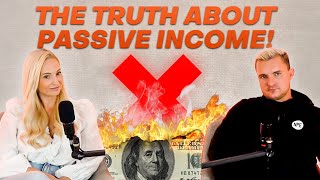
A Success School podcast episode (hosts Tim Frey and Steph) arguing that "passive income" is often misrepresented: real passive streams usually require substantial upfront work, skills, or capital. They review three common examples—affiliate marketing, low‑ticket courses, and YouTube—concluding that audience/brand, copywriting and presentation skills, or existing capital (e.g., real estate investing) are prerequisites to meaningful passive returns.
Questions this video answers
Episode 49.
They bought a house in Perth for just over A$1,000,000; in 18 months it increased by A$400,000.
A 50% recurring referral commission (described as '50% for life').
Chapters
As always, social media is making things seem a little bit more rosy and a little bit more gold plated than it actually is. Because passive income is not easy to gain, it is not easy to keep, it is not easy to manage to get to.
Is passive income a scam? No. But passive income is a scam if you think you're just going to passive your way to passive income. Because that's just not how it works.
With low ticket guys. It takes just as much work to sell low ticket as it does to sell high tickets.
Foreign. Welcome to the Success School podcast. We are on episode 49, is passive income a scam? That's what we're talking about today. Steph, are we so privileged to have you guys watching the show? So if you guys are supporting us from anywhere around the world, we really appreciate it. If that's on Spotify, Apple or YouTube, thank you so much. I think we've even had some listeners in Spain.
Oh, Hola.
All right, guys, let's kick off with our personal update. We've had some feedback that this is one of the favorite parts of the show, so we will continue with this. I have sold my gym. Let's give me a virtual round of applause. Holy. I can't even tell you how hectic the last two weeks has been, man. It has been a journey. Tears, laughter, a bittersweet feelings, Lots more tears. And then we'll add even more tears on top of that. Steph, how have you found it being in the co pilot seat?
Fascinating. Tim's like, ah, it's been hectic the last, you know, two weeks. I'm like, yeah, it's been pretty hectic the last, like nine years. So, yeah, owning a gym has been. It's been a cool. It's been a really cool experience and it's super bittersweet. Like, it's sad because our community is so phenomenal and, you know, we disbanded that and it was, it was a really tough decision to make. But on the other side, that has been a lot of freedom, a lot of clarity, a lot of really cool lessons, a lot of really awesome stuff that we've learned that, you know, I know that we're going to be able to help so many more people, you know, sell, buy even businesses. It's been a really cool learning experience for us. So, yeah, it's been amazing, but it's been quite the journey for you.
Feel like a complete entrepreneur now. I've sold a business for a lot of money, which is incredible. So Lambo time. Steph, what's Going on with you. What's your personal update?
Yeah, so my personal update is kind of connected to that, I guess. And this is for anybody who. I mean, this is really for anybody, to be completely honest. If you are in a partnership, if you have, you know, a significant other or wife or a husband or someone that's in your world that you work closely with, and I think it could be a business partner. But when one person in the relationship is crumbling and their world is shattering.
And you're talking about yourself.
I'm talking about you.
I don't crumble. I don't know what you're talking about.
Oh, yeah, just all the tears.
There is no crumbling.
Just all of the tears.
That's just like I'm expelling emotion.
Yeah. Nothing wrong with that. Tim. Calm yourself. So when there is. When one person is crumbling, and yes, it does go both ways, I crumble a lot more often than Tim. But the other person has to stay strong. If someone's feeling really big emotions in the relationship, it's really hard for me as an empath and as a woman not to, like, jump in and want to save that person or feel those things with them or really be there with them, like, make them feel seen and heard in that experience. But what Tim asked me to do, just before we went through the process of selling a gym and finding a buyer and shutting it down and all of the things Tim said to me, I need you to be strong for me. I need you to not dive into my stuff. I need you to not perpetuate the emotion. I need you to be the backbone for. Of the relationship for the next couple of weeks. You know, don't feed my worry, anxiety, emotions, or doubts. Just be strong. And I think that's a really beautiful thing to ask of each other. And I think, you know, especially in a business sense, like, one of you really needs to keep your head on. And Tim is usually that person. Just to be very clear, it's usually me that's losing my. My mind. And it's been really nice to be strong for you in this. In this period. It's been really lovely. And you've always been that person for me, so it's been really nice.
Yeah, it was definitely harder when you weren't like, two emotional people in a relationship. Fucking is not ideal, I'm sure.
People in a relationship trying to run a business together. Yeah, it's not a good. Not a good mix. Yeah.
All right, let's get into this. Passive income. Steph, is it a scam? Tell me about it. Tell me your thoughts, give me your overarching opinions.
So one of the things that our clients come to us with a lot is, you know, this idea that they'd like to have some sort of passive income. They'd like to have something that was ticking over in the background that was making the money without them actually having to work for it. And I get it, like, gosh, I mean, that sounds perfect. Like that sounds really good. Like that sounds like what everybody wants, I think in the whole world. But the reason that I think, you know, it's perpetuated a lot online right now, you guys will be seeing it everywhere on social media. You know, I made this much in my sleep. I made this much in passive income. And I just really wanted to talk about what it actually looks like because I think that as always, social media is making things seem a little bit more rosy and a little bit more gold plated than it actually is. Because passive income is not easy to gain, it is not easy to keep, it is not easy to manage to get to. And we wanted to dive into, you know, what that really looks like today and what passive income streams are and, and you know, which ones work and which ones don't. And also just kind of what really goes into passive income. Because I don't know, one person that's making passive income that hasn't worked for years to get to a position where they could make passive income. And so we wanted to dive into a little bit of that today. Tim, what's your thoughts on passive income?
Yeah, so I think it can be good if you're highly successful and rich prior to that. I think a lot of passive income works when you've got a lot of money behind you. So if you've got $10 million and you put that in something and it gives you 10, you know, like, obviously you're going to be making a million dollars a year, which is epic. But how do you get $10 million in the first place? There's no way to accrue or acquire $10 million passively unless you get it given be very rare. So, like, is passive income a scam? No, but passive income is a scam if you think you're just gonna passive your way to passive income because that's just not how it works. So anyone that's completed or achieved or created or built anything that's actually worth talking about or is a great success would have had so many trials and tribulations to get to that point. So many lessons, so many strengths, so many Weaknesses, so many issues, so many dramas, so much hard work to get to that point. So you know, let's give like a hypothetical example here. If you wanted to make a million dollars profit, which you could actually reinvest in something in a business, you'd be needing to make like, you know, we'll talk about that in a year. Like to make a million dollars profit, you need to be earning at least like two and a half million to have a million dollars. And then you've need to reinvest that million dollars and then if it returns you 10%, that's. Yeah, it's 100 grand, which is great. Hundred grand these days you can't retire off that. So there's nothing passive about it. Yes, it may help you a little bit. There's something passive about it, but it might help you a little bit. But it's not the be all and end. Like what Steph saying here is, it is perpetuated by social media.
Yeah, I think everyone thinks it's going to be easier and like what Tim's saying is like, yeah, it is passive. Like you will make that a hundred thousand dollars passively once you earn the first million. And I think that that's the point that I really want to drive home today. And I'm going to, you know, ask you a few more questions around this timber. The number one point that I want to drive home today, that I will say multiple times throughout this episode, is the fact that you have to earn it first. And so, you know, regardless of whether it's affiliate marketing, regardless of whether it's low tier courses, regardless of whether it's real estate, storage, stocks, investing, if you want to, you know, go into real estate investment for passive income, you have to buy lots of real estate, which means you have to have lots of money to buy lots of real estate and so, or do lots of saving and work really hard to be able to afford the income, to have to buy the real estate, to have the passive income. And so every single passive income stream that you see online requires you to do some level of work and really hard work, usually over an extended period of time to be able to generate the passive income. I'd love to use just one person as an example right now, and I'm not going to say who it is, but there's a person online who's making a lot of money and passive massive income right now. I think you know who I'm talking about. And I, I saw recently, like, I think she's making like $300,000 a month on like low ticket courses. And I saw recently that she said she's been doing it 15 years and this year was the first year that she cracked more than 60k a month. Yeah, 15 years of what's passive? Yeah, 15 years of figuring it out. 15 years of trial and error, 15 years of building audiences, 15 years of copywriting, of marketing, of sales language. 15 years of figuring out graphic designs and teams and hiring and ads and all of the things that have to go into actually making that passive income. 15 years. And then people are watching her right now and they're buying her stuff and they're going, oh my God, this is going to be me in six months. But that's not the case. And it's never going to be the case because anybody who's got something that they're doing passively has worked really hard for it.
Yeah. So I don't think there's anything passive about that business either because she's having to make the landing pages, she got to do the marketing, she's got to show up on video.
She has nine team members.
She has nine team members. There's nothing passive about it. Passive for me is waking up in this money in your bank account. Like that's what I think passive is, and that's by doing nothing for it. The example with us is, you know, we just bought a house in Perth for just over a million dollars and in 18 months it's gone up $400,000. That is passive. But it isn't. Because for us to buy a million dollar house, we have to have a million dollar business, basically. And then like the effort that's going into creating a million dollar business is literally. Steph's been at this 10 years, I've been at this 15. So that's 25 years of not passive work to get to this point, to make $400,000 passively. But then on top of that, we still have to pay the mortgage, we have to pay the interest. So is that actually really passive?
So if someone wanted to start thinking about having passive income, what would, what would you recommend they think about? Like what, what are, what are some of the things they need to consider when they're thinking, okay, because every single person listening to this podcast is going to be like, I want passive income. Because who doesn't? Like, Tim, you want passive income? I want passive income. Like our parents want passive income. You know, my mom gets passive income from Centerlink. If you want, get started right now. What, how would you recommend someone to get started in passive income?
I think the main thing we always come back to in success school in our programs and our coaching is skills. So if you don't have skills, you're going to have a very hard time making money. And if you're having a very hard time making money, you're never going to have anything passive. So I think the number one thing is, is to get the skills. If you want to get passive income online, I think the most important thing or you know, it's really underrated. It's like copywriting, marketing, sales copy, how to write hooks, how to create video, how to talk to camera, how to create podcasts, how to coach, how provide value, how to like, you know, give a really good customer service experience. All these types of things, they're thousand hours each and there was like eight things there. So what are we talking, 8,000 hours to become skilled enough to create a passive income?
Yep. I think that the first thing that they would need to look at if so if you're listening to this podcast and you're thinking about potentially having like passive income, one, you need to have a revenue stream that can generate you enough money to either do the passive income that you want to do. So for example, if you want to get into real estate or stocks or shares, you're going to need something to produce a lot of income for you to be able to do that. Now if you're listening to this and you have a day job, you're probably in a pretty good position. If you're in a well paid job and you can get your expenses down low enough to be able to start putting some stuff away so that you can start making passive income in the next five or 10 years, potentially, if you're in entrepreneurship and you're not paying yourself, you know, it's going to be, you're going to find it quite hard to generate passive income initially because you, for those sorts of endeavors like real estate or stocks and shares and things like that, you are going to need some, you know, income to be able to go and buy those things so that you can get the return on investment and get that passive income happening. For anybody else who's thinking, thinking about building passive income online. Yes, Tim, I totally agree. I think that Tim and I can 100 agree that they're most underrated skill that you need in business is copywriting and especially like sales language and understanding sales language. But second to that, I would say that the next thing that you have to do if you want to make online income passively, you have to know how to Build audiences. And in today's day and age, what that looks like is knowing how to grab and hold people's attention. And so we are living in, literally in an attention economy where, you know, if you can capture somebody, we have a couple of clients in our program who always go viral all the time. And it's because they've become the kings and queens of attention. Attention economy. So they understand how to capture people's attention, how to hold them, how to make them feel something in five seconds, how to move them from one state to another online. And if you can build audiences and you can move audiences with copywriting, with language, with video skills, presenting, with speaking, then you'll be able to grow and create passive income really, really rapidly.
Yeah, so a little bit of an off tangent here and a point. So I was doing a pop up ads call in our group yesterday and one of our clients got on and she said, yeah, check out my ads. I copied Kayla, it's Times. And I kind of thought and I was like, it's a really shit strategy for ads because you're copying someone that's famous and what someone that's famous has that you don't is to have a brand. Which means when someone has a strong brand, they could sell basically anything and they don't have to be good at business and the product doesn't even have to be good. And this is no offense to Kayla, it seems, because obviously she's successful as shit. But as we've seen, the bigger the brand, the bigger the audience, the bigger the know like and trust out there, the worse you can be at certain things in business. So copying someone that's famous with the ad strategy is completely different. And I think like Steph was talking about building an audience and like copywriting, etc. I think building an audience and having an audience is one of the most underrated things you can do in business. And if you really want to have a passive life, you need to build a big audience.
Yeah.
Or your product has to be so fucking good that it sells itself. And rarely people get to the second one where the product is so good that it sells itself. So the other option here is build an audience. If you don't know how, you need to start researching it.
The thing with building a product that's so good that sells itself as well is that like, you know, I have a few. A friend of mine who is the founder of Mermaid Hair and the minute she made the product that was so good that it sold itself. You know, Bondi Bruce jumped in and they copied the same thing. So the thing is that when you do create a product that's so good, other people are going to figure out that it's so good. Then you're going to have competition pretty much straight away. I think building an audience is the most underrated hack of, of being able to. And I think the passive income streams that we're going to go through for you guys and kind of break down our thoughts on them, most of them at some level require you to have people to sell to 100%.
So we're going to get into three passive income streams. We're going to give our thoughts on them. So I will start with you, Steph. Affiliate marketing, what are your thoughts on that?
So just to break this down, affiliate marketing is effectively selling other people's products or services to your audience and then making a kickback from it. So one of the best affiliate marketing. There's actually a couple of really good ones out there. But I'm going to use kajabi as an example because I think it's a really great one. I can't remember exactly what the percentage is, but every time. Is it 50% for life?
Yeah.
That's crazy. So if you recommend somebody. So we have a client in our program who helps people do kajabi build outs, so websites, course launches, those sorts of things. And every time that she goes and helps someone, like that's her business. Every time she goes and helps somebody do kajabi build outs, obviously she recommends that they sign up an account, she gives her referral code, and so they get their first month, I think half price or something like that with her referral code. But the genius thing about it is that she then gets 50% of every month's fee for the entire time that that person is using kajabi. Which is crazy because kajabi is expensive. So if, you know, if you're looking at like 700 Australian dollars per month, I think it's around that. So she's getting $350 per month and she's got, you know, let's say she's got 30 clients that are sitting on kajabi right now. Yeah, yeah, your girl's making bank on passive income. I'm pretty sure she recently bought herself a holiday because she was like through passive income. So 100% like affiliate marketing is. I think it's personally probably the best way. She doesn't have a big audience, but she just has a. She has a service that she, within that service sells a product on behalf of somebody. Else like clickfunnels has a pretty good. Yeah, clickfunnels also has a pretty good one as well. Affiliate marketing level go high levels is pretty healthy as well. So there, if you're using a system and you sell build outs on that system, genius. Really easy way for you to make passive income. And honestly in today's economy and in today's environment, done for you. Services are just like so, so, so powerful right now. If you want to make really good money, yes, it's a little bit of work. But the passive income that you can make on the side on this like is genuinely so good. I think affiliate marketing can be great. What are the downsides to affiliate marketing?
Yeah, so like is it actually passive though? Because if said person who we're talking about took her foot off the gas with business and that it dried up.
Well yeah, because she would have the people that she perpetuates that money anyway because like as long as they stay on Kajabi, she continues to make money.
Yeah.
And the best part about it's so smart because they've got sunk cost bias. So if they paid her $10,000 to build out their entire Kajabi stuff, they're not going to want to move off the platform because they've got that sunk cost and then they're going to keep paying the monthly fees. I think it's genius and it's one of the rarities. And so because there's a lot of affiliate marketing that we're going to dive into now that I actually don't think is very good and I think is, is a bit, you know, off. But I think that that version of it, if you are doing build outs, for example, if WordPress did a, if you're a website designer and WordPress did affiliate marketing like genius, like that would be a really, really natural thing. So the one thing about affiliate marketing that I think that people do wrong really quickly is that people try and affiliate with people with no audiences. So for example, if we got our clients to be affiliates of success school and to go out and try and sell people into success school and get a kickback from us, what that would require is for our clients to have big audiences of small business owners and entrepreneurs. Now they may have one or two and that might work. But as a long term strategy you really want to tap into someone's audience that has a really big concentrated audience of what you sell. So if you are planning to sell your course through affiliate marketing, you're going to want to tap into people with huge Audiences, not just small little ones and twos and threes. You really want to tap into people with massive audiences. So if you're trying to grow your business by using other people's word of mouth to grow your business, you really want to tap into big audiences for that. So number two that we have here on passive income, low ticket courses, this is the number one thing that our clients come to us wanting to sell passively is low ticket products. So courses products, you know, it could be digital digital products, mini courses, small courses, PDFs, eBooks, any of those sorts of things. What would your advice be and what are your thoughts on basic making passive income that way?
So we're big on the master of one and success coordinates basically just now one thing and do it super well. Problem when you start adding low ticket courses, they have their own energy that's required for their success. So yeah, I could go and build a course right now on Facebook ads and sell that out. But if there's no one actually driving the sales of that, it's not going to go anywhere. So you would have to have an ad strategy and then even if you did have an ad strategy, that ad strategy would stop working and then you would need to change creative copy, targeting, all that type of stuff. So there's nothing passive about that. So it would work passively, these low ticket courses. Once again, if you had a massive audience and people were going through your Instagram, your social media website, whatever it is, finding it and then buying it without you doing anything. But it basically only works if you're famous or you're really good at ads.
And you create a lot of content. Like, you know, the people who are spouting low ticket courses right now on Instagram, you know, they've got big audiences, but they're still showing up every single day making content to sell that stuff to sell on their stories. They're showing up, they're writing new ads, they're creating new copy. There's no version of you making a course and then it just selling passively without marketing it. Like you'd have to market it. You need a sales process. You know, a lot of people who are making, you know, passive income, like I said, have team members and yeah, that's fine, but you still have to manage those team members. You have KPIs first team members. And so guys, we don't want to say passive income doesn't work because it can. We just want to help you get a really realistic understanding of what it actually takes because it's not as simple as everybody makes it out to be.
As soon as you start adding in other stuff, it gets a little bit complex and you'll find you'll lose mojo and momentum. So like one product, one offer, one service, one target market, one main marketing.
Channel, one year with low ticket guys, it takes just as much work to sell low ticket as it does sell high ticket. Just a different funnel. But it, it requires if you to make the same amount of money, it require the same amount of work, if not more to be able to sell that.
So Steph, talk to us about number three. So we're talking about making money on YouTube. So is that passive or is that active? Or like, tell us about the mechanics.
We did it, we did a bit of research on this topic before we jumped on, because we've never really sold anything that we would see as passive. And that's because Tim and I work for everything that we have to this day, even our low ticket courses. We have to actively show up to sell and so, and write emails and push out marketing campaigns and have focus on. Yeah. And so because of that, you know, we have to do a bit of research because we were like, okay, well what do people believe passive income really is? And people are saying, oh yeah, we're making money on YouTube. So, you know, I think it's. Once you get over a thousand subscribers, I think that YouTube starts to pay you for every video that you create and every $92 per viewer.
No, per video, like a hundred thousand.
Okay, cool. So, you know, you can again, and this comes back to the fact that like, and Instagram does the same. Instagram does pay you per view once you get to a certain point. But the thing is that you have to again, build the audience now. Building an audience takes so much work. Okay, so if you guys think about right now, your social media audience that you've got on your social media, how long is it taking you to get there and how much work have you had to put in to get that following? It's been like a lot of work. Like, gosh, Tim, you've been at this for ever. 10 years, 15 years, you're at 7,000 followers. It's hard work, to be fair. For a lot of the time you weren't trying to grow your audience, but it takes a lot of hard work, guys. And so if you, you know, we were watching a guy called Hamza recently who's making a lot ofmoney on YouTube and with like low ticket courses and what he's been become incredible at is script writing, recording Presenting, script writing, recording, presenting and getting himself in rooms with the right people. All of which are skills that take thousands of hours to learn. And so these are things that you know when it comes to these, like making money on YouTube. Yes, you can, once you get there. And YouTube is probably one of the slowest platforms to build on.
100%.
Yeah.
So if you think about affiliate marketing, low ticket courses, making money on YouTube, to have any of those things work, you need one thing, and that one thing is you need a brand and you need an audience. If you do not have a brand and you didn't have an audience, you're not going to make any of these passively at all. So I just want to throw in another one here and we'll just chat about this. I think like probably real estate. And we're talking about once you have the money and you are like at a financial point of view where you can invest in real estate, that's pretty passive for me. So like we haven't really done anything besides power bills to make, make $400,000 in the last 18 months, like realistically. So I think like once you have the money, investing it in something like that could be good. This is not financial advice, by the way. This is just my personal opinion on this. You know, buying precious metals, dollar cost averaging in the stock market or cryptocurrencies or whatever that looks like for you can also be a good option. They are very passive things that are just going to move and change according to the markets. You don't really have to do anything for it. These other ones, like these actual business ones and these online making money stuff require a lot of effort, guys. A lot of fucking effort. Affiliate marketing, massive effort. Low ticket courses, more effort, I would say, than high ticket courses. And then making money on YouTube, man, you have to be a great presenter. You got to be in your, you got to have your head in the ring for years to get any good at presenting. So like, first thing is like, you know, we have a little bit of an audience and Steph and I sometimes get 100 views on a video, you know? Yeah, like 100 views on a video. Like I'd say we're relatively successful.
Yeah.
And then you've got some people that are less successful, quote unquote, worse on video. Can't talk and they can't present and then they want to make money on YouTube or online. Like not going to happen.
Yeah, guys, it's just like honestly, passive income, you know, real estate and like stocks and shares, like that's where most people. That's where most wealth has been created. That's where most people create their wealth is in those places. It takes a little time to get to the point where you can afford to start playing those games. But once you get to that point, and again, like, if we can push one thing, guys, you just have to have skills. And so many of the skills that you need to be successful in life, in any arena, in any arena of life, being able to influence people. And so that's writing, that's sales, that's marketing, and you can do that. Like, we have friends that work day jobs that are just really skilled in those areas that we have one friend that's making, you know, millions of dollars a year in a day job because he has the skill of influence. And so if there's anything that you have to work on right now, if you're listening to this podcast, you're like, I do want to get to a point where I have the money to create more passive income. Or, you know, I do want to develop my skills so I can build an audience. And I really, really, you know, in the next five to 10 years, I dream to or I desire to have passive income. The thing that you have to be working on is your influence, and that comes down to how you can read, write, and speak. And if you can speak and write really, like, really powerfully and really emotively and you can really dig into helping people solve the problems that they're experiencing, you will amass mass audience really quickly, and then passive income is just going to be a breeze for you.
Yeah. So if you're struggling to grow your brand, you're struggling to grow your audience, look to your skills. So can you write? Can you present? Can you talk on camera? Are you doing those things consistently? You will build an audience that way. All right, summary for you, Steph?
Yeah. So summary for me is that passive income is not as easy as it is made out to be on the Internet. So if you are struggling with passive income and you're frustrated and you're wondering, why is this not working for me? How is everybody else doing this? It's because they've done the replacement reps, and then they're getting online and making it seem simpler than it is, and it's not as easy as you think. So if you feel like you're not getting anywhere, hopefully this episode helps you to understand that. It just may take a few more years of you getting the skills and doing the reps, but anyone can do it. You just got to get the skills and do the reps. That's it.
All right, guys, if you got some value from this episode, please share it with a friend. Don't forget to like and subscribe on whatever platform you guys are on. Obviously, reviews are always appreciated, so we do love those. And send me a message. Message EAL Timfrey, if you love the episode.
Thanks, guys.
Thanks.










