
Use THIS Email Method To Generate 412% More Sales
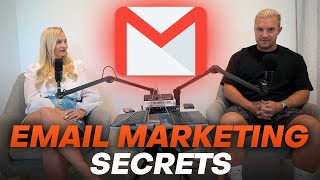
Episode 31 of the Success School podcast (YouTube: "Use THIS Email Method To Generate 412% More Sales", Feb 18, 2024) features Tim Frey and Steph explaining an email-marketing system they credit with a 412%+ sales increase across their businesses. Key points: why email is essential (owned audience, higher open rates vs social), frequency (they send three emails/week: one podcast link + two value emails), nurture ratio (give many times, ask monthly), monthly offer cadence (5–7 emails across 3–4 days using varied subject lines), re-engagement using a short 'nine-word' email, subject-line importance, short punchy copy, simple segmentation (single list for most small businesses), and list-growth tactics (organic freebies, Facebook groups, paid ads at ~$2–$4 per lead). They also discussed mindset, handling unsubscribes, and webinar attendance tactics.
Chapters
Ads really do, like pour fuel on this fire so that you can get it bigger and bigger and bigger, faster. But if you don't have the cash or the capacity to use ads right now, you can do a lot of it for free. We've seen our clients do that.
People know bullshit. They know that you're sending an email and they're reading an email for a reason. Okay? There's no illusions around that. People know that they're listening to a podcast for a reason. We're going to give you stuff and then one day, hopefully you'll join Success School. There's no hidden thing there. Like everyone knows.
Foreign.
Welcome to the Success School podcast. We are back with episode 31 and today we're talking about email marketing. We're super excited for this episode. It's going to be super actionable. There's going to be tons of takeaways and there's going to be stuff that you can implement on this podcast into your business right away to get a result. Steph, how are you feeling this week?
Yeah, great. We came back a couple of weeks ago from our Bali business retreat and I'm still on such a high from that incredible experience. And really a lot of like, our conversations actually centered around email marketing while we were there and how much we can add value and how much more you can be doing with your marketing. And so I'm really excited to bring this to you guys today. But before we dive in, Tim, will you give me your lesson of the week, please? I love your lesson of the week this week.
So, yeah, this lesson of the week is, is quite funny. It's very typical for me just to jump into something headfirst without actually doing any research into what is involved. And my latest exploit is caravanning. So Steph and I have a very nice caravan and we thought it would be great to take it to the Gibb river, which we're doing in June, July this year. But essentially when you get a caravan, or I just thought you get a car and you get a caravan, you put them together and you go caravanning. But there is much more to it than that. So this just little caravanning expedition or experience, I've had to get an electronic brake controller, an Anderson plug, who fuck knows what that even means. I've had to get a 12 pin adapter for my caravan, tires, suspension, airbags, and then literally everything under the sun I've had to get for this thing just to take it, just to be able to tow it. And it's just funny because it is so us just to like dive into an idea without actually knowing what is involved in the idea. So my lesson here is if you're going to spend 300 grand on something like a caravan and a car, just probably know what it entails, start to finish.
I don't even think there's a lesson, to be honest, because I think it's one of those things that like, you're not going to learn the lesson because this is not the first time you've done it. Not necessarily spent this much money not knowing what you're doing, but, but, you know, jumped into things 10 first, like motorbiking, like shooting, like lots of things, lots of hobbies that you get into that you just have no idea. You're like, that sounds cool, let's do it. And there's no, like, you're just like, I want to do it, so I'm going to do it. Which I don't actually even think I want you to change because I think that makes our life really fun.
Yeah, it's kind of like live on the, you know, live on the edge of your seat. Yeah, live on the seat.
It's very spontaneous.
Yeah, yeah. It can get quite stressful.
Just live on the seat.
Yeah, just live on the sea. Yeah. Steph, what's your lesson of the week?
Oh, my.
Listen.
Of the week is a little bit of a bugbear of mine at the moment. So sorry to take it from being quite fun to being a little bit like ranty. Sad times ranty. But something that's really frustrating me at the moment that I'm seeing in the, I think probably mostly in the coaching world, but anyone who produces any kind of course, really. I think that obviously what has happened right now is that we have seen a change in the economy and what that means is that people are, a lot of people are spending less money and because it's not as easy to sell things as it was before, I'm seeing a huge shift in people going, especially, like I say, course creators, especially coaches going, oh, well, you know, I'm finding it really hard to sell my high ticket now, so I'm just gonna create a low ticket membership instead. This is my bugbear, because this is not the answer. This is an answer. It solves a problem, a very minor problem that is, but is not a long term good solution for you. And I'll tell you, I have a thousand reasons why. I'm gonna tell you the top three really quickly because this is only my lesson of the week and this is not a whole Podcast episode about this, but one the long term damage of your business. First and foremost, it's really hard to go high ticket again after going low ticket. So if you want to take that course that you've just, you know, you made a course, you were trying to charge three grand for it, now you've turned into like a $99 a month membership. It's really hard to get that course back up to the same value that it was before. Okay, so the long term play is not good to the you have like triple, quadruple, 10 times the amount of work because you have 10 times the amount of people to manage. So I know that it's probably going to be less touch points in terms of you're not going to have one to ones and things like that, but it means that you're going to have 10 times the amount of onboarding, 10 times the amount of, you know, billing queries, 10 times the amount of people not getting results or not showing up and not being able to get the help that they need, 10 times the amount of emails, 10 times the amount of messages, 10 times the amount of, you know, people getting out of your program or renewals or any of those things, like, it actually creates just as much admin, like a lot more admin. So while you're dropping that one to one component of coaching, you're adding a huge element in admin. Now I do think that memberships have a place in our society, but I think you need to build them for the intention of building a membership and not just because you don't know how to sell your high ticket. Selling high ticket, if you are selling high ticket, which is like, in my opinion, it's like $3,000 plus if you're selling high ticket, you need to learn how to sell high ticket. And all economies. In all economies. Okay, that is my piece of advice for you. My lesson of the week for you, not for me, but for you, is that low ticket isn't always the answer. When you are wanting to, you know, make a bit of extra money in a time where it's a little bit hard, you need to focus on upskilling on sales, you need to focus on upskilling on marketing so you can actually continue to sell your high ticket. And if you put all of the energy that you put into building this low ticket offer into actually upskilling to sell high ticket, you would sell your high ticket item.
Yeah, I like to look at this as just a bit of a season. So what's happening in the current economy is A season. Again, I don't use that word that's so busy. It's like, this is my season. But honestly, like the economy is literally just a season. It's going to pick back up, interest rates are going to drop, there's going to be affluent times around the corner and then once you've, I'm going to say, cheapened your brand by bringing in a low ticket thing, it's going to be really hard to go the other way. I've literally thought about this in the last few weeks. I didn't discuss this before the call and I haven't discussed it with Steph, but I was thinking like, in terms of like fitness in the gym. It's one of those expenses that people tend to cut. Like all gyms are hurting around the world at the moment. And the worst thing I could ever do was take is take my $99 a week membership and make it 79, 69 or 59. Because when the economy turns, people pick back up and they start training again. I'm going to have a capacity issue very quickly. We're going to have a full gym and then we're going to have nowhere to go. What do I increase my price by 30% again? How much drama have I created there where I can just wait it out? Like, times are not great, it's not bad. We're not hurting by any means, but some gyms are going in that direction and then they're, they're fighting people on price, which is a terrible thing to do where you could just be upskilling, you could just be getting better, you could just be improving the 1 percenters. So when the economy does turn, it is going to get better and better and better and you're going to like change more lives, honestly, because the more you charge, the more impact you can make and the more people are bought in. But on top of that, you're also going to have a bigger payday.
Yeah, it's something that I'm really passionate about at the moment. I just, I've seen a lot of people go, I'm not making the money I need to make. I'm going to go low ticket. And I'm not against low ticket. I want to be very clear. I have friends who run memberships, I have friends who run memberships and that really their number one goal is impact based memberships. And that's cool. Like that is so fine. But that is not the reason why people are dropping into membership now. They're dropping into membership because it's easier to Sell than high ticket. And I just don't think that is the. That's not the right reason to do it. Yeah, well, that is actually not. We're here to talk about that. Although I feel like we could have talked about that for an entire episode. Look, today's episode is really about an email marketing method that we use which has generated us more than 412% in increase in sales, which is insane. And it's probably no secret to you, if you've been listening to our podcast for a while, that we are a huge fan of email marketing. Okay. And this shocks me to say because four years ago I would have told you that I hate sending emails and I feel like sending email to spare me. And I've said that to Tim so many times over my business career. But since we've taken email marketing seriously, since I've really understood it, when I really learned it, we've started really understanding what it takes to be a good email marketer. We have seen an increase across the board in both businesses, so both Helix and both in brave endeavors of over 412% in sales. And we wanted to share with you the email method that we have used to generate that increase.
Awesome, Steph. I'm super excited for this podcast. But before we dive into it, why should we even email market? Like, what's the point?
Yeah, like, I think I get it. I think, I think email marketing is kind of like that forgotten. The forgotten marketing method which people just overlook or don't. Can't be bothered or whatever. I think people, I think the reason that there are a lot of reasons why people don't grow email list is they don't know how to grow an email list. And so if you don't know how to grow an email list, then yeah, email marketing is not going to be very appealing for you. But we will talk a little bit about that today. But the reason why you need to use email marketing is because, and you will have heard this a thousand times over. I am not the first person to say this and I'm not going to be the last. This is the only list that you own, okay? Your Instagram account can get shut down tomorrow. Your Facebook account can get hacked. We've had people, we had friends whose Facebook ads accounts have been hacked and they haven't been able to run Facebook ads. We've had websites go down and Google Ads accounts get blocked and all sorts of stuff, but with email, none of that happens. Okay? It is a list that you own. It is a list that you own forever and it you have full control over it. I also want to talk about the fact that in 2023, 10.8 billion with a B billion dollars was made using email marketing. So if that's not reason enough for you to start using email marketing, I don't know what is. But I will throw another statistic at you because I think it's really important for you and I really want to drive this point home. Okay? 90 HubSpot did a survey last year and 99% of email users open their emails once a day. What the heck? Like, and if you're listening to this, you will know because you open your emails once a day, right? So we are actively in there every single day, which means it is such an incredible place. Now I want to talk about the psychology of opening emails as well. When you go to open your emails, you're not just opening them casually on the toilet like you do with Instagram or Facebook. You don't open them just quickly in between the ad break. Okay? When you open your emails, you're usually working. You're in a completely different frame of mind. You're in your business brain, you're, you're doing brain. You're in your get shit done brain. And so if you open an email in that period of time with that focus, you got nowhere else to be. You are actively going, I'm going to check my emails. Now. That means that you have so much more chance to hook and, and convert that person into a buyer. On top of that, only 3%. So many facts, but I'm really freaking passionate about this. Again, only 3% of your audience on Instagram are going to see your going to see your post. But 26% on average people are going to open your 26% of the people on your list are going to open your email. That means that you have math 13% increase on or 23% increase on on your opens like on people actually viewing it. It is just an absolute non negotiable if you're in business. It is a non negotiable if you're in business.
So if you want to get that 26% to 50%, you can apply for success school and I'll teach you how in the program. Okay? So if you want to double that open rate, I have a bunch of training on email marketing and I'd love to help you out with that.
I do have one more thing to add.
Go for it.
I think that building an email list is a huge benefit. The bigger your list gets and I Want to give you an example. I have a coach who has a very large. A friend of mine and a mentor who has a very large list. I think maybe like 50,000 plus, 80, maybe 80,000 plus. And it's a huge list. Right. And Alex Hormozi, when he was doing kind of his, his big launch of, of his last book, if he went through on the book launch, he was like, if you can sell, you know, lots of my books, then I will come and I will present in your mastermind. I think that was the offer, right? Yeah. And our coach got like, I don't know, I don't know how many books sold, but using his email list. 10,000 books sold from his email list. And so Alex Hormozy came and presented in the mastermind that we're part of because of that. So not only does having an email list help you to sell stuff, but it helps you to build the connections. Like, now they know each other, now they're connecting, now they can leverage. He can leverage that connection, he can leverage that network. You know, people will pay you to send email blasts to your list. Like, there are so many opportunities that continue to come from building an email list. And the most important one is if you ever intend on running Facebook ads, building a list or building an audience of a lookalike list of your email list is like a phenomenal way to get into the eyeballs of people who are on your list and people who are like them. So, yeah, I'm a big fan and honestly, four years ago I wouldn't have been. So, guys, if you're not already email marketing, if you're not taking it seriously, I cannot employ you enough to do so. Tim, before we go into like, you know, actually our method to generate 412more sales, what are things they need to know before they start email marketing?
Yeah. So I want to put you in the psychology of someone you know. I know this is a little bit high level, but the psychology of someone you know, if they hand over their email for something. So if you hand over your email to Steph and I, so you've seen an ad of ours, you've downloaded something, you've joined our Facebook group, you've been a client, past or present. Like, however you got on our email list, you are remotely interested in something to do with growing your business. Okay? So you're not just some random person. Like, you are there for a reason. So if you think about the psychology of the prospect or the person on your email list, they're in more of A receptive state to take on what you're selling or, or the information that you're giving on email. Okay. So they're not like some pie in the sky, some cold person off Facebook, Instagram or someone in the street. So if you think about it from that lens, they are remotely interested in what you do. So what you sell them or you give them an email can be a little bit more advanced because they already have a little bit of that no like and trust factor, which is great. So a lot of the time in email, rather than just sending out like random stuff, like here's my day, you know, this is what I do, like nurture campaigns, et cetera, people in email are a little bit more likely to buy in my opinion. So you being a little bit salesy is not going to be a bad thing in email because they have shown interest in your thing. I think a lot of the times people have an email list and they're scared to make sales on the email list or ask for the sale or make an offer because they're like, oh, you know, they're on my email list. Yeah, they're on your email list for a reason. Yeah. Otherwise they would unsubscribe. Okay. And unsubscribes happen, by the way. I'm not trying to say they don't, but just think about it. They are there for a reason. They're probably after a little bit of price, they're probably after a little bit of a solution. They're probably after a little bit of how does your stuff work for me? And if you can answer those questions in an email or a series of emails or emails over 10 years or 5 years or 3 years or whatever it is, you're going to do very well in business. So I just want you to think about this from like a holistic, like high level psychological point of view is like, why are people on your email list? Because they want to know more about you and your product and offer. So the second thing is if someone opts into the email list for my gym, for example, so they download an ad or they sign up to email list or they go through our website, they are actively looking for fitness, muscle strength, fat loss or whatever it is. So you know that's the outcome they want. So it would make sense to serve them content around what they signed up for or what they're interested in. So in your business right now, I want you to think about what you do, how people get on your email list and what they want and what the outcome they need as they are on your email list.
Okay, yeah, I love that. And I think, like, that just to add to that, I think, you know, when you really think about the end user, rather than just like, what am I sending as an email today and what outcome do I want? I think when you think about, like, why, if you ask yourself the question, why are they on my list? Like, how did they get here? Like, why are they here? And in our world, it's like, because they're having issues with sales, marketing and systems. That's typically it. What outcome do they want? Well, they want to have more time, freedom, more financial freedom, more lifestyle freedom. Awesome. If we can serve them any kind of information that's gonna solve any one of those three problems or help them get to any one of those three outcomes, that's gonna be phenomenal for them. It's gonna be really, really high value. So it is so much easier when you think about the end user in mind rather than trying to create content or send emails because you wanna make a sale. Yeah.
All right. So they've been sold on why they need more email by you.
Very passionate about that.
Thoroughly. So, you know, some questions we get asked Steph about email marketing is how many emails should I actually be sending? I get this a lot in successful, like, what's spam? Yeah, how much is spam? What if I'm annoying people?
Yeah. Isn't it spammy? I don't want to be like, I think the interesting thing is, guys, is that people are most scared about getting unsubscribes, which I find hilarious. I find hilarious because, like, who cares? Like, that's okay. Like, and don't look. First of all, don't look. We never look.
Yeah.
Second of all, like, never look. I don't think I haven't looked at my email unsubscribes in years. But second of all, just because someone unsubscribes doesn't mean anything about you. And I'm going to say that again. Just because someone unsubscribes, it doesn't mean anything, anything about you. So it's not just because someone unsubscribes and then you immediately think, oh, my God, they hate me. They think I'm spammy. They're never going to buy from me. That is bullshit. And I'll tell you why it's bullshit. Because our clients unsubscribe from our email list.
My best friends have unsubscribed from my.
Email list and that's fine. And I've Unsubscribed from my best friend's email list. Yeah, it's fine. Like, it's just business. Like, I don't need to receive that email. She's my best friend. I'll message her if I have a problem. But it's not a big deal, guys. Like, it is just the way that it is. It doesn't mean that people hate you. It doesn't mean anything about you. You have unsubscribed from lists. If you're listening to this right now, you have unsubscribed from list from people that you still like. And that's okay. So just because someone's unsubscribing doesn't mean they hate you. First and foremost doesn't mean they think you're spammy. First and foremost doesn't think that they think you're salesy or pushy or any of those things. You think those things about you. And that is why you are perpetuating that into your email marketing. But that is not true. So the work for that specific thing is, first of all, don't give a shit about the unsubscribes. Those things are going to happen. You need to be cool with it. Okay. And to stop checking. But how many emails should I be sending? That's the number one question that we get when we start talking about email marketing. The first thing is, people ask is like, how much is spammy? In an ideal world, I believe that you should be sending at least one email a week. Okay. And I think that's really easy to do. And we're going to tell you a little bit more about how we do that today. But in an ideal world, a minimum of one per week would be where I would be sitting. Okay. I really believe that you need to nurture your email list. So we talk about nurture. I don't like, we're not really. We don't really do sequences in our world too much. But like, I don't really believe in, like you. You can do a nurture sequence. I think those things can be important. But when we talk about nurturing, what we're talking about is like depositing. So we want to think about your email list and your email subscribers is like a piggy bank, right? And we want to, we want to give lots of value before we take a withdrawal, before we take money out, right? We want to put lots of coins in before we take coins out. And so if we think of your email list that way, you want to give, give, give, give, give, and Then make an ask like, hey, would you like to buy my stuff? Right? Give, give, give, give, ask. And that ratio for us in our business is typically, we do. I think it's eight give emails a month, so two a week. And then we usually ask once a month. That's usually how it works for us. Now you guys could do three a month. And then an ask does. I don't know, like, what your world looks like or how it works for you, but you don't want to be sending an email every week just selling your stuff. Like, especially if you're in the coaching world. Especially, like, it shouldn't just be everything. Can you can. Every single email we send has an opportunity for them. We have a call to action. Don't get me wrong, the call to action is like, if you need help with this, book a call that 100% goes out in every single email. But we don't go into every single email being like, hey, this is successful, and you should buy our program at Successful IO. Like, that's not.
We do that on the podcast.
We do that obviously, just here, just now. Subliminal message. But. But we don't. We don't do that in every single email. We give, give, give, and then we say, hey, if you need some help with this, feel free to book a call. And then at the end of the month, we might go, hey, just letting you know, we have this really cool program called Successful. We think you should sign up if you want to know it, like, book a call, you know? So I think that a lot of the time people go into email marketing thinking it's like email sales. And email marketing is the same as social media marketing. You wouldn't sell in every single post, so you shouldn't sell in every single post in your email either. Anything else to add?
No, you've nailed that.
Love it. Where do most small businesses go wrong when it comes to email marketing? What are you. What are the biggest mistakes you see?
Yeah, so I think they just go missing in general. So they'll be able to list 100, 200, 500,000, 10,000, a hundred thousand, and then they just won't email. And then one day they'll come out of the blue and they'll be like, hey, buy my shit. And then it's like, well, where's this person been for the last six months? And it's like, they've fallen off the face of the earth. And now I'm hearing about them, now they want me to buy my shit. So I think, like, consistency is Key. So Steph kind of said like one email a week. You know, it's a little bit chill for me. I like to go hard at things. So if I were in a selling phase, I'd maybe doing three, four a week.
Correct. If you're in a selling phase, like seven in like three days would not be rude.
Yeah, yeah, yeah, yeah. So ramp it up a little bit more, you know, one a week's rookie numbers. So you want to pump that shit up. 3, 4, 5, however much that is. And then, you know what I find in a selling phase is using scarcity in it. So if you have limited spots, you know, first emails, like our 10 spots. Second email's got seven, you know, third email, I've got five. And then there's a little bit of a countdown in those emails, okay? So the second major issue is people fuck around with the segmentation of email lists. So they'll get all these subscribers from different lead magnets, different websites, clients, non clients, whatever it is, and they put them into like 47 different lists. And then they're sending hundred emails there, 90 there, 20 there, 30 there. And then you've got like, you've spent seven hours segmenting your list for like one email campaign. And it's just. Shit's crazy where we just have one email list, okay? And we send everyone the same email clients, everything, okay? So we send offers to our current clients already. Do you know why? Because our clients tell their friends that success school is running an offer, okay? And that builds your business, okay? So if you're messing around with segmentation, scrap it. You know, you, you can tell someone. Tim Ferrari told you and he told you. It's fucking waste of time. An email marketer could come on here and debate me on this. That's cool. But I think for every small business under seven figures, you're probably wasting your time with segmentation on it. The third thing is emails are generally too long, okay? I've got this massive long love letter style email that's paragraphs. I literally open the email and I. My eyes are hurting from how much text there is and I'm just overwhelmed. I don't even want to. I said the word over.
I don't even said the word.
I don't even want to read this thing. So I just deleted immediately. So I've opened it and I've deleted it. So your message just didn't come across. They want to be short, sharp, funny, punchy, witty, easy to digest. I can just read a line. There's a space. Cool. My eyes can get a little bit of a break from the email overload here, and then you can just keep reading through it in a nice succinct fashion.
Yeah, guys, get to the point. Honestly, it's like, why are you bobbing into the inbox? Why is it important? And what's the minimum they need to know? Yeah.
And the next part where it goes wrong is to have a weak call to action. So at the bottom of the email, you know that they've produced this amazing email. The copy is great. They're telling a cool story. I'm so engaged. And then they're like, reply, yes, if you like me. Just something like, really weak. Yeah. Or just no call to action.
No call to action at all. Like, just like, here's an email.
Yeah, but if you're. If you're trying to get someone to book a call with you and you know the emails about marketing, you say, cool. If you're. If you like this and you're interested in growing your business with marketing, you know, here's my form to book in a call or whatever. It is like something a little bit more punchy than, like, if you like me or not even, like a call to action. People pretty. No bullshit. They know that they're. You're sending an email, and they're reading an email for a reason. Okay. There's no illusions around that. You know, people know that they're listening to a podcast for a reason. We're going to give you stuff, and then one day, hopefully you'll join successful. You know, there's no. There's no hidden thing there. Like, everyone knows that there's no, like, cloak. But, like, obviously we're here to give you guys massive value, and that's fine. And if it just stays that way, that's cool too. Like, our mission is to help people, but they know in terms of email that they are there for a reason. And then lastly, guys, is your subject lines are weak. Okay. When I see subject lines go wrong is that they basically put a novel in the subject line. There's like 10, 14, 15 words, and they just can't even be read. It needs to be short, sharp, punchy. It has to be a little bit secretive. What's the word I'm looking for here?
Well, a couple of things. It should inspire curiosity. Curiosity looking for. Yeah. And I think the other thing it needs to do is it needs to be a personalized email. Subject lines work really well. Now, you need to think about it this way, guys. If no one opens your email, you Spend all this time crafting an email that no one is going to read. Like, literally no one. Right? So the only thing that really matters in your email is the subject line. Because if the subject line is there, if you think about the way that you like, if I think about the way that I consume emails, if the subject line hasn't hooked me, I just delete it before I even open it. You'd be the same. Everybody listening would be the same. So if you're the same as that, then you've got to think that, like, the subject line has to be something that's going to make me open the email. So I need you to really, like, put yourself in the driver's seat here when it comes to, like, writing subject lines. Like, what would I open? What kinds of emails? And maybe even start to practice taking notice of the kinds of emails that you open. And when you open an email, out of curiosity, maybe just copy and paste that subject line and add it to a note on your phone so that you have a heap of subject lines to pull from when you actually go to write emails. Because, like, that's the same thing I do with social media. If a post stops me in my tracks, if a Facebook ad stops me in my tracks, I'll take a screenshot and I'll add it to a bank where I'm like, I know that that's in there. So when next time I go to create a social media ad, this one stopped me in my tracks. So maybe we should create copy or, you know, or. Or an image like this. So I think that, yeah, with subject lines, it has to be something that makes them want to open it.
Yeah, Two examples here. And just last two questions on this or points. So all you need to do is just Google subject lines that do well. Okay. And then you're going to get revolutionary. It's this thing called Google. And then secondly is we just watched this, you know, weirdest shit documentary on Netflix about cats, and I just got me thinking about. Think about these two subject lines. So my cat did this today versus my cat died. If you think about the curiosity of one, it's just like a shock factor of it. Which one would you be more willing to open or interested in opening? Even though it does sound terrible. So you can use a little bit of a shock factor in it.
Yeah, shock factors definitely work for sure.
All right, so, Steph, do you want to tell the listeners our method that has increased our sales by a very specific 412% in the last two years across our businesses?
Absolutely. You guys have been very patient hanging out for this. While we rant about email marketing. We are very passionate and we just really want you guys to have a win. Okay, so the email marketing strategy that works really well for us is really simple. We send three emails a week. Two. Three emails a week. The first one is our podcast episode. The other two are value based emails. Okay, so we send three emails every single week to our list as part of a nurture. Like things, we share information, we share value. Then once a month, we do a monthly offer. Now, like Tim said, when we do a monthly offer, it's usually like a sale of some sort. So it's like a freebie or an add on or it's specific to a type of problem that we're solving. And so we would probably send five to seven emails across three or four days. Okay, so that week, that monthly offer isn't just one offer email. Because if you miss the headline or the subject line, no one's going to open it. So no one's going to see your email, which sucks. So you want to give yourself the best opportunity once a month for people to open your emails. And so the hack here, and we've spoken about it before, is that it's basically the same email. We do change the email up a little bit with different subject lines because all we're trying to do is get them to see it. When we do offer emails, they're very short. Okay? They're very, very short because we're driving them to a landing page. Because the landing page does the selling. Your emails should not do the selling. Your sales page should do the selling. Your email. It's just pointing them to the sales page. Now that goes for any kind of marketing. Okay, don't write an huge sales letter in your Instagram post. Write a short, snappy post that gets them to your sales page. So your sales page can do the selling. Yes. Same with your Facebook ads. It's exactly the same process. You get a catchy ad, drives your sales page to the sales page, do the selling. Okay? So the same thing happens in email marketing. And then, so we do three emails a week. Nurture. We do every week of the month. Then we also do a monthly offer. So that'll be five to seven emails over maybe three or four days. And then if you need to resuscitate your list, if you've got what we might call a dead list, you haven't been emailing them for a while. You want to see what they're up to. You want to see who's interested in your stuff still. Are they even still there? We highly recommend doing a nine word email, which might look something like, hey, Steph, do you still need help with business in 2024? That would be a nine word email. And then people are going to reply, they're going to say, yes, I'm still interested in getting some support. You know, what have you got going on right now? And then now you're into a sales conversation where you can either drive them to your landing page, get them on a call, see how you can help them. And that's how it works. That is literally the email marketing strategy that has made us millions of dollars. Do you have anything to add?
I think that the nine word email is probably the most powerful place to start if you have a list. You know, this is all hypotheticals about if we have a list, what would you do to grow a list is what I'm thinking here. So, you know, the easiest way for us to grow a list has been with paid ads and just offering some kind of lead magnet in exchange for their email address and then adding to them to our list. I think our list is about 8,000 now, you know, after not that long of pushing the strategy. So it's very possible to do, especially if the lead magnet is great. You know, if you're anywhere under a hundred or three hundred or five hundred, you should be popping a lot of emphasis on growing your list. Okay. As Steph has given you, you know, the sell of a lifetime on why it's important for you to grow an email list, you guys should be spending a lot of time on it. It might be one of the most important things you do from a marketing point of view is grow an email list. And I'm not understating that at all. You know, I know, you know, a lot of people that have massive audiences on social media, I'm talking like half a million on various platforms, they don't have an email list and they can't sell shit because the algorithm doesn't favor their posts when they talk about selling stuff or their stories, etc. So if you want to sell stuff, the email list is the best way to do it. Even if you have a half a million followers. You just got to work out how to get your audience if you do have social media following onto your email list. Okay? That is the challenge on that.
So I think, like, the thing here, guys, is that Tim's just. I want to be really clear. We started our email list from zero, okay? So I just Want to be really clear, like four or five years ago when I started business coaching, There was no one on my list. I probably 30 people, probably like 30 people who I'd worked with before. We had no one on our list. We have grown this list over the past five years. Now if we've grown this in the past five years to 8,000 and now we actually know where doing and we.
Figured it out, it's only been the last year.
It's. Yeah, I'd say it's only really been like, I'd say up until probably, honestly probably two years ago, 18 months ago, I probably had like two or 3,000 people on my list. Okay. On, on the, on this email list. So it has, it has grown really rapidly and now we expect it to like double here on year. You know, in a couple of years time we'll have 50, 50, 60,000 people on our list, which is so insane a lot of you are going to be going, yeah, but I don't know how to run paid ads. First of all, if you're in successful now you do. So go please check out the ads trainings that Tim has run to teach you guys how to do this. But if you're not in successful and you're listening to this and you're thinking, okay, but I don't know how to run ads. I don't have budget to run ads. You actually don't even need to to start building your list. You can get a list of up to 2 or 3,000 people without running a single ad. And we know this because our clients have done it. So all you need is one really well, one really good freebie. But I would actually create probably three or four and just go and have a look at any of my social media posts the last few weeks where I go, hey, comment below if you want my blueprint for, you know, making sales. Or comment below if you want my scorecard quiz so you can know your next right step. Um, all of these little freebies that I've got. Then we message all of those people with a link to the thing. They sign up to the email list to get the thing. And it's that simple. You could do this a hundred ways you could do this. You know, on your stories you could say, who wants a copy of my, you know, cheat sheet? I did it just this morning. I said, who wants a copy of my seven figure marketing plan? And I put a poll up and people who are voting yes, we're sending them a link. Okay, so it's really, really simple and that's just tapping into your organic audience. On top of that, Facebook groups are an incredible place to share freebies and say, hey, guys, I just want to help out. Here's a freebie. I think it'd be really beneficial for this Facebook group. Let me know if you want a copy. And then you send them all the link to the thing. There are three. I've just given you three ways to grow your list for free that don't include ads. But if you want to ramp this up. So I did it that way, they got me to 2 or 3,000 people. Then in like a year, we went to 8,000 people because we used ads. Okay. So ads really do, like, pour fuel on this fire so that you can get it bigger and bigger and bigger, faster. But if you don't have the cash or the capacity to use ads right now. Also, it's cheap ads. Just to be very clear, we don't spend a lot of money on ads, but it is cheap as.
But I mean, we do.
I mean, we do, but I mean, not really for the. How much do you think it costs us to get an email?
Like, two to four bucks.
Two to four dollars. Which is crazy. Like, I know that. Like, yeah, I can see that. You know, that does add up for sure. Yeah, yeah. But over years, we've done that. So I think. And with the. With the money that we have now as well. But I do think that you can do a lot of it for free. You can do a lot of it free. And we've seen our clients do that. Amazing. Well, I think that that is email marketing in a nutshell, guys. We love talking about email marketing. I hope that we've convinced you that you need it. We are going to dive into some listener questions. Tim, do you want to kick off first? The first listening question we have is from Anonymous. She has asked. I'm hosting my first webinar tomorrow, and I'm having a bit of imposter syndrome. I'm feeling nervous that those who signed up won't attend. Do you have any advice or a pep talk?
Yeah. So we'll look at this from a mindset point of view, and we'll look at it from a tactical point of view. So if you're hosting your first webinar, I would be going all out to contact the people that have signed up for it to make sure they're attending. So I'd be sending a message on Instagram. I'd be sending an email an hour before I'd be sending an email 12 hours before, I'd be literally pulling out all stops to get as many people on that webinar as possible. If you're just leaving it up to fate for these people to show up, you're probably going to have a bad time with a webinar. Okay, that'd be my first thing. Second thing, from a mindset point of view, if you're, you know, worried and you're consciously aware of imposter syndrome and feeling nervous, etcetera, I encourage you to ask yourself, what are you really nervous about? Are you nervous about people not showing up and what that means about you? I know Steph did touch on that before, but, like, what would it actually mean about you if people didn't show up? Would it mean that you're a bad operator, or would it mean that you just maybe need to improve your processes on getting people on the webinar? Or maybe they just had something come up in their life where they couldn't get on the webinar? Maybe it actually doesn't mean anything about you and you're making it mean something about you, which is usually what happens in small business. Everything that goes wrong in our business is a direct reflection on us. It means we're shit, we're bad, we can't do it. We don't know what we're doing, Everyone hates us. Insert excuse or thing that people say about themselves in their head. So my advice here for you is to not make it mean anything about you and just make it mean that it's a learning experience. Okay? A learning experience. Business is the ultimate and the hardest learning experience that you'll ever go through. It's like getting kicked in the head every single day and never getting at, you know, slap on the back, like, good job, well done. You rarely get that in business. Every day is just this massive learning experience where you just got to get better, grow, get better, grow, and then one day, maybe 10, 15 years. I'm not trying to make this sound grim, but business isn't for everyone. Maybe you reach your rewards down the track.
Yeah, I love that you've nailed imposter syndrome so much. The only other thing I would add here is just, like, what reason have you given them to attend? So outside of all the, like, tech stuff, like, definitely have all the reminders going out, but, like, one of the reasons that, like, one of the things that we often will do is, like, if you show up live, we. You go in the draw to win, like, a 300 or $500 prize at the end. And so those sort of things get people showing up. Like, those sorts of little tactics get people actually showing up. And last but not least, guys, like, if you have imposter syndrome like, you are. You are great at what you do, otherwise you wouldn't have gone into business to do it right. At some level, you believe that you're better than other people are doing it. That's why you started a business. So you have to tap into that energy when you're jumping onto something, like a webinar.
All right, question two is from Bonnie W. What are your rituals for reframing when everything turns into a pile of. You know those weeks when your phone breaks, you don't have any clean undies, and your dog ate your client work? Great question, Steph. What do you think?
Funny. This made me laugh. It's so great. Oh, look. I think those weeks happen, and I think that sometimes we just. I think the biggest issue I see from an energetics point of view is that people push forward in weeks like this. And I think that sometimes it just has to be. I think they fight it. Like, they're like, oh, it shouldn't have been this way, and I wish it was different. And. And, you know, I really wish I didn't have to do this. And, oh, my God, like, I feel so bad because I haven't done all things I said I was going to do and, like, I just shouldn't have been this way. And they get really caught up in that, like, almost like, victim mentality, victim state of being. Like, this is happening to me, and it's so hard. And I think that the reframe here is like, okay, this has happened. So acceptance is my first. Is my first level. It's like, there's no point getting down about it. We are where we are. Acceptance. And then, okay, what do I need to do differently now that this has happened, that this is just one of those weeks? What needs to happen now? Okay, so next week I'm gonna have to readjust my week so I can get more done because this week went to shit. So I think this is like, that level of acceptance. And when you take acceptance, it's like we're no longer fighting the emotions of it anymore. We've accepted this is the way that it is. I'm not trying to fight it. I now need to now just make a different decision. Tim, what do you reckon?
Yeah. So, Bonnie, I had my wisdom teeth that we have talked about it, and how I got through that period in business was I gave myself a power list. I know I've gone through this topic on the podcast, but it doesn't matter if I, you know, I've had my, my foot cut off, I went into surgery, my dog bit me, me and Steph had a fight, someone quit my gym, we had a shitty email from a success call. It wouldn't matter because I have my power list and I get it done regardless. Okay? So I give myself three to five items that I have to do every day that's non negotiable. When they're done, I can switch off, I can do whatever I want. I can worry about, you know, dog eating, my client work or whatever you said, or clean underwear, all that type of stuff. But the most important thing I need to do every single day is complete my power list. If I know I've got three to five things done every single day, you know, that's 21 a week. That's, you know, let's do the math on that. You know, the thousand or ten thousand a year, whatever that is, it doesn't matter on my mental state, I'm getting it done anyway. So rather than jumping into the feelings or the shit going wrong or worrying about it, because that's life. Like shit happens every single day in life, especially in business. If you're in business, it's going to be that more shit's going to go wrong than just a regular life. So you just need to know that that's going to happen every single day and it's unavoidable. It happens to everyone at every single stage. If you're at 6, figure 7, figure 8, figure 9, figure 10, figure 11, figure, the problems just get worse. Every single.
Get bigger.
Yeah, they just get bigger. Like instead of a thousand dollars, it's like IBM's leaving you or Apple's leaving you or like they are massive issues. Not like, you know, your underwear not being clean. So like, look at this from like a holistic point of view. Start getting into the powerless process. Go back to like the podcast that I wrote on Powerless, check out my Instagram, talk to me about it. But that's what I would prescribe for this issue.
Nailed it. Absolutely perfect, Tim. I love it.
All right, guys, so don't forget to subscribe or follow the show. That's the number one metric. And we also do like when you message us. So let us know, give us some feedback on the show. Stephanie.
Tim especially likes. I love it, but Tim especially likes it. He's like, we're getting so many messages today.
Thank you. For the one person that messaged me, I really appreciate it. We're up to 39 subscribers on YouTube. So keep that coming and actually jump pretty quick. Like we're. Yeah, up nine.
We appreciate you.
So by we, I mean I so on the real Tim Ferre YouTube account. And then lastly, guys, if you get some value from this and you think you're ready to scale your business from six to seven figures and grow with sales, marketing and scale, please apply for success school. Go to www.successful.IO. fill in the application form. We'll see if you're a good fit and then you'll see if you like us and our team. We'll jump on a call, we'll talk through your process, we'll let you know how it works, and then we'll see if you're a good fit for the program. Thanks, guys. We'll see you next week.
See you next week. Sam.










