
We Share Our 5 Biggest Business Fails (So You Don't Have To Make The Same Mistakes)
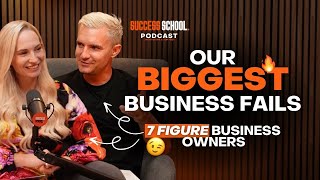
Episode 101 of the Success School podcast (YouTube) with hosts Tim Frey and Steph. They open with personal updates and then discuss five major business failures they experienced and what they learned: (1) scaling too fast / launching new offers instead of fixing one core offer, (2) lacking a bench / not preparing for team turnover, (3) no time off / not enjoying the business, (4) copying others instead of building a business aligned with your values, and (5) closed-mindedness to proven tactics (e.g., tracking KPIs, running ads, calling leads). The episode ends with a listener question about when to hire full-time and practical hiring guidance (hire when you’re dropping balls and can afford it; prefer outcome-based hires and hire for ROI).
Chapters
We made the mistake. We thought we were having a revenue dip or a revenue problem. And what you do in that situation, obviously every business coach has ever given you this advice is you make a new offer and you launch a new thing to your audience. But what if you just need to fix and make the one offer better rather than launching a new offer? I would just want you guys to reflect and stand back and think, like, do I need to launch something else? Do I just have to make my one thing better?
Foreign.
To the Success School podcast, we're on episode 101. So we're into the next set of 100. So it'd be funny to go back and listen to episode one and how bad that was compared to you. Yeah, it was just me. I was probably talking about offer or something. Like, it'd be funny.
Yeah, I think we were actually doing it. We had this, like, really structured curriculum.
Do you remember?
You were like, I'm gonna go through the success school curriculum.
Yeah, like, step by step.
Funny.
Steph, how you feeling?
Yeah, lit up. Excited. Love, love, love, love these conversations.
Yeah. So we're on a three episode series celebrating our hundredth episode. Today. We are going to still keep it real. We're talking about biggest fails and what we learned from them. So you guys obviously can learn from them. But the thing with fails and fucking shit up in business and getting it wrong is you kind of need to go through it yourself. Like, we can talk about it and then you'll be like, all right. Tim and Steph spoke about that on the podcast and then it actually happens to you and then you learn from it. But it's a fun one. Do you want to give us your personal update?
Not a super, like, happy.
They've been getting sadder.
No, they're not getting sadder. I think last time I spoke about blue blocks or something. So something I've come to terms with recently is that the. The bigger business gets, the more discomfort you experience. And we actually spoke about this on last episode as well. I thought that it was relevant to bring up as my personal update. I've stepped into a new role and at first I thought, you know, whatever. I think be easy, it'd be easy. I feel like it was one of those situations. It's a Dunning Kruger situation. You go and you're like, I'll be awesome at this, whatever, no worries. And then you learn a heap of shit and you realize you know absolute nothing about this role. And then now you're managing a team and you're supposed to lead this team of people and you know nothing about the thing and you're on a rapid upskilling journey and everything feels really uncomfortable because you're learning rapidly, you're making some mistakes, you're ultimately letting people down. And it's a lot of pressure. And I've been there for a little while now, a couple of weeks of just feeling this, like real discomfort because I'm really stretching myself and I'm at the edge of my comfort zone. I am learning a lot very rapidly. I am having to be okay with being very bad at things and with not knowing the answers, with things going wrong and little fires popping up around while I optimize the processes. And there have been a couple of times now where I've thought to Tim, like, I just want to outsource it. I don't want to do this. I've gotten a tears in an afternoon where I've, you know, almost just. I've had this kind of mantra in my head repeating, going like, oh, like, just run away. Like you don't even want this business. Right. Like the thoughts become very, very loud when you're experiencing discomfort. But it's just part of the job.
It's where a lot of people go wrong, though. They outsource stuff they don't understand.
Yes.
And I've been Steph's like, oh, let's outsource. I'm like, no, we don't get it, so we can't outsource it. Therefore we're always going to get wrecked because we don't understand the process of it, which is super important to outsource the process. It's like people outsource Facebook ads and they don't understand Facebook ads and then they get pissed off when an agency rips them off for six months because you just don't get it.
Yeah.
So my personal update. Bit lighter, bit bigger, bit more uplifting.
You are so amazing.
Speaking of uplifting, I was really concerned about the suspension on our Ram 2500. Yeah, really concerned about it. So we're going on a big caravan trip and obviously like this like legal towing limits with suspension upgrades. And I didn't want to be illegal and then I didn't want to put you guys at risk, so I had to get a lift on the Ram 2500. So I got a big lift on it. And now the Ram looks even cooler and even bigger. It looks amazing. Such a cool looking car. Very legal, very legal. But it looks amazing and I'm stoked. And I thought this might be The Lambo year. This might not be the Lambo year, but I can just make these small investments in our safety, obviously with, you know, the higher towing capacity.
If you guys are not picking this up. Tim doesn't give a about the towing capacity and only wanted the lift because he likes being extra tall in his vehicle. Can you. Can we get into it? I haven't actually tried getting in since we've had the lift.
Yeah, it's a bit harder to get in. I've obviously got small manitis where I need to have big everything because I'm, you know, overcompensating for something, you know, which is funny. I haven't heard that.
We went to the gym this morning, and he was like, I've got to move your car out way because I want to take the ram because it's lifted.
And ain't nothing wrong with that.
Gonna get your lift in.
Okay, so a big jacked American truck.
Got your big jacked American truck with your big guns at the big gym. Okay, so today we are unpacking our five biggest business fails. These ones have cost us time, money, and momentum. Plenty of momentum. Plenty of money.
So many tears.
More time as well.
How many times we cried about these, dude.
So many tears. But more importantly, we're gonna give you some tips on how to avoid them. And, you know, how to. Again, you won't. So, you know, just listen to it. Listen to it. See what you take. Maybe you've experienced.
You're like, they're a bit dumb.
Yeah, yeah, totally. We think it's not that big a deal until it happens to you, and then you're like, oh, damn, this is big. All right, so before we dive in, guys, if you haven't hit subscribe, just do me a favor right now, pause the podcast, go and hit subscribe.
Share the show. Don't be a ho.
Yeah. Now let's dive in. The five biggest fails. What do they need to know about those before we dive in?
Your best business lessons come from your mistakes. Success hides the cracks. Failures show up where you need to fix things. Nothing is ever wasted. If you learn and apply, you're not behind. We've all stuffed it up, and you can recover more quickly than you think. I think you need to reframe it. And you've probably heard this a hundred times, but failure isn't failure. Failure is feedback, and it's an opportunity to get better. And I know a lot of people get really upset when things don't go well, us included. But if you just frame it as you're learning, you're growing, you're getting better. It just makes it far more bearable. You will fuck up in business. And we're gonna share our five biggest fuck ups from the last couple of years. Fail. Number one was scaling too fast without one solid offer and we made the mistake that, you know, we thought we were having a revenue dip or a revenue problem. And what you do in that situation, obviously every business coach has ever given you this advice is you make a new offer and you launch a new thing to your audience. But what if you just need a fix and make the one offer better so the one offer people talk about it, refer it to and you actually grow the one offer that you have rather than launching a new offer. So we've launched, I don't know, three things now, the last 18 months. Three things. Seriously? Probably could have just not launched the first one or it did four things. Yep, five actually.
Yeah, it's going for the people who on their podcast over the last 18 months have said do one thing, do.
One thing and probably simple solution to all of this was just make the one thing better. And actually the fifth thing we did was make the one thing better, which we just have recently done. Yeah, we've improved success called the Mastermind. We've relaunched the modules for the the fourth time, added in a 12 week on ramp, one to one KPI, tracking, coaching, accountability, all the stuff. Accountability, all the stuff. We like finally fixed the offer two years later and we've just been launching these mini offers to try to band aid the solution. The cool thing is I think accelerator has been amazing the other three shit. But you know, it's been a cool like lesson for us and I would just want you guys to reflect and stand back and think like, do I need to launch something else or do I just have to make my one thing better?
Yep. I think it can feel really hard like it's this weird sunk cost bias thing where sun cost bias can come up in two different ways. It can come up in the first way which is like you put so much work into it. So you're not going to let it go.
Yeah.
Or it can come up like I've put so much work into this that I just don't even know what I would do to fix it. So I don't know how to fix this. I'm actually just going to let it go and I'm going to do something new and shiny instead because this feels really fun over here. And I think that we were definitely in the second one of like, yeah, it's pretty good. Like 80% done is good enough and successful. The Mastermind has been phenomenal, don't get me wrong. It just hasn't been to the standard that we would need that we wanted it to be. And instead of fixing it, we thought that we could just launch new stuff. And I think we're guilty of being like any other entrepreneur with shiny object syndrome and other people are doing this stuff and blah, blah, blah, blah and whatever. Yeah, we are perfect. What I will also say is that it's very different from zero to a million than it is from where we're scaling. We scale from 1 to 3. And I think that from 0 to 1 you really need one offer, like one core offer. There are some exceptions to the rule, but for the most part, guys, if you're scaling from zero to a million, you need one core offer, right? And maybe like a way of retaining them, but from 1 million to 3 million and probably from 3 to 10, I imagine it. It's a case of really either optimizing those offers to make them even more of a heck yes for people. The way that we've been optimizing success school is we are going way harder on trying to get our clients results. So we've added in everything from SOPs for their team to carry out. We've simplified modules, we've simplified trainings, we've added in AI bots, we've added in monthly release workshops where we're telling you exactly plug and play templates on how to do exactly what we do every single month. We've added in extra retreats, we've added in one to one onboardings and trainings for a 12 period to make sure without it in accountability like we've just gone and gone. Okay, what are all the problems our clients come to us and they have when they're in the program for six months. And how can we fix all of these problems to make sure that they get a result regardless of if it's in the first 12 weeks or in the first six months or in the first nine months. And how can we help them to reach activation points that keep them growing and seeing the value of working with us? And if they're growing and seeing the value of working with us, they're going to rave about us online, they're going to refer their friends. We've had four referrals in the last.
Four weeks at a highest resign rate.
Highest resign rate of all time. Yeah, we're retaining more than 60% of clients at the Moment like, it's wild. And those things happened because we worked on optimizing the offer and rather than just tacking on new things and why.
We did this is the invisible hand. And we'll talk about this, as I heard Hormozy talk about it initially. But you can spend more on marketing, you can spend more on ads, you can make more content, you can send more emails, you can do the things. But if your product or your program or whatever it is or your service has a bad rep, you're eventually not going to be able to outrun, run all the negative press about what you do. Not that we have an invisible hand. We just never want an invisible hand about successful. So we were like, cool. How do we just make sure people have a fucking epic experience with us? Every single person. So let's just get that done so that just never happens to us. And a lot of the times, a lot of people do have invisible hands floating around and there's a lot of hearsay about people, coaches, services out there. And you need to be aware of it. Guys like, these things can happen. You wouldn't even know what's happening. Imagine, like, someone is reaching out to their friend and they're asking about your service and then the friend is like, yeah, it's pretty shit. Don't do it. You wouldn't even know they had that conversation. And you wouldn't even know that prospect was available to be a prospect of yours. You've just missed out on it because your service isn't where it needs to be.
So point one is create an offer, make it amazing, and don't launch another offer until your first one is absolutely incredible. Yeah, perfect. Fail number two, no team, no bench. Every time, almost. I feel like still learning this one, still learning this one. This has been an ongoing lesson for us and I think it happens to everybody. You know, I had a team member go on maternity leave, we knew for six months and did nothing until the month before. Like, why would you do that? Yeah, there have been times like that we've made those sorts of mistakes, guys. Like, if you can feel that someone's going to leave, you can feel it. You can feel when somebody's tapping out. You can feel when somebody's no longer interested kind of in being the business. You can kind of see when a team member is starting to tap out, right? They've changed their energy. They're starting to be more preoccupied over here. You need to build your bench. And when we're talking about building your bench, we're talking about I think sport. No, we're talking about sport like, you know, you have your players on the field and then you've got your bench. Because if one of your players gets injured or goes down or chucks a tanty or gets a red card, they're going to come off the field and you need to replace them immediately because you can't be a man down. Right. And your business is exactly the same. So you need to build your bench, you need to have players waiting in the wings. You need to have. For most businesses, and especially in the coaching space, if you are having sales team or, you know, client success managers or wherever, you're going to need a place on your website where people can pretty much always apply or you're going to have to have ads running pretty regularly. You're going to want to have a system in place for onboarding to make sure that if you do have a high turnover role, and there are just some industries with high turnover roles. Guys, like, if you're in the beauty industry, that means that you are in the maternity leave industry. Okay. And so what that means is that you're going to, like, you're going to constantly need people, so you need to have really good recruitment and onboarding processes because you're going to have high turnover. And that's not because you're a bad boss, that's because women get pregnant and they go on leave. And if you're in a heavily female based industry, that's going to happen a lot.
Yeah. I was at the hairdresser the other day. Not our normal one, but the other one. And she was like super frazzled. And I asked her, I was like, what's up? And she was like, oh, I'm manager today. Because our manager called in sick. Two girls, two other girls were off sick and then two girls were on maternity leave. And I was like, what the. Like five of their team members were off on a single day?
Yeah.
And I was like, how often does that happen? She said, every day there's two people off sick. And I was just thinking you're gonna have to have like 20 more team members just to have like a functioning business there. Yeah, that's crazy. But you obviously don't have a bench and they need a bench and the business can't afford a bench. But yeah, it was like super stressful. I couldn't even imagine that.
Talk about the bench.
I'll give a soccer analogy. It's like if you watch like competitive soccer or football around the world, the seasons are getting longer and longer and Longer and longer. So there's more games, they're more competitive games. Sometimes they're playing three times a week with Champions League and their league and whatever it is. And what happens with more games is more people get injured and when more people get injured, the stars go down and then the bench kind of like come into play. The real winners of most leagues or seasons is it's not like the best starting 11 of any soccer team. It's the best bench because the bench finished the season and the first 11 start the season. So you need to have a good 1st 11 and you also need to have a good bench because they're the ones that are going to finish the season okay until the bench get recuperated again. So if you think about like you're a professional soccer team, like what does your bench look like and if your best three go down, who's going to replace them? You don't have to have like a bench ready to go, contract signed, whatever it is, but you have to have an idea on who is going to replace them or have a way to fill your bench.
Yeah, I think that's the second point, guys. You may not need to have this person. Like, we always have our feelers out. And I'll give you a couple of examples. Sales team, high turnover. Teams high turnover. Mostly because I have really high standards and we're looking for the right people. Right. And salespeople are really good at selling themselves. And so it can be a bit smoky mirrors. It's a bit of a cat and mouse situation with salespeople. And so what happens is that we are now starting to get our hands into a lot of different networks where salespeople hang out. And because of that, we're meeting lots of different people. These people have connections from deals they used to close with. And so it's getting easier and easier to recruit these roles for ourselves. Right. But when we first started, we didn't know anybody. So, you know, we just put an ad up on Seek and people applied.
And get some shit.
Yeah, you get some stuff and you hope that someone who, you know, sold telephones and Vodafone is enough to sell your stuff. Right. So part of the game is like over time you just start to get into more networks. If you can feel it's a high turnover role. But there are other roles. Like Tim, we have a couple of client success managers in our business. If we were to have a couple of good sales months, we know that new client success manager is going to be something that is on the horizon. For us to hire. So what we are doing right now is we're just keeping it to ground. If someone pops up, up even in another role that we're hiring for or we suddenly get gifted or we hear about somebody who was in their business but just quit or is shutting down or is maybe looking for a different life type of work, we would be on that like white on rice. Like it would be so fast because we know that in the near future there is a role coming up in our company and that we are going to be recruiting for this thing. So don't wait until you need to recruit for it. Start kind of feeling it out beforehand because there are a lot of people who are in your world right now who actually will be perfect for the role you're rocking.
There's nothing wrong with throwing out a cheeky message of being like, hey, would you ever like to work together? You know, to some people, you know, it's a good strategy. We've used it just recently.
Yes.
And it's created some interested parties.
Yeah.
Fail number three is no time off, no enjoyment. So I probably had this, you know, come to me three months ago. I was just like, I'm in the grind hole at the moment with business. Like I'm doing like 12 hour days, seven days a week, just getting it done. I don't complain because mama didn't raise no. But like I had the thought. I was like, man, am I actually doing anything with my life here? Like I'm. Yes. I go on cool holidays and you guys see on the gram, it looks epic and whatever. But I was like, man, is this it? Like, is this just what my rest of my life is going to be? Just in the hormozy regen, like just working hard, just grinding it out. And I was like, this can't be it. So for me, I like set off like one, two o' clock every day. I switch off now. Enjoy my afternoons. We aim to travel every six weeks. I know that sounds great. I'm sitting on my high horse over here saying do that. But business has to be about enjoyment as well. Not just like, like getting away and enjoying it, but also in the process of it. And I see it less about getting as much done as fast as possible now in business. And I'm more like, I just have my time every day, have a good go of it. I try to enjoy the process. I try to enjoy every minute of it rather than just seeing it as if I'm like, tick and flick, complete as many tasks as possible, grind till the, you know.
Well, something that I've noticed about you, if I can reflect, is that you used to wake up on a Monday morning and write down what you do on Sunday, but you'd write down all of your tasks for the week. And then Monday, you basically just be like from 7am to like 7pm you'd be like, I'm gonna get my entire task list done for the entire week on Monday. And then you would like dunk on.
Every and be like, I'm the best.
Yeah. And you'd like come out for dinner and be like, well, guess what, man? Tired. This is done. But then you proceed to work the entire week anyway. So like, it didn't make a difference whether his to do list was done. That was like just a sense of achievement thing, right? And so now the sense of achievement is it's knowing that. That the work is a never done and that if you just switch off it to a like one. We try to switch off by 2 or 3pm at the very latest. Spend time with our dogs. You love to get active in the front lawn and mow and your mental health lawnmower and go out there and do your gardening stuff or whatever. And it's nice to just like go and be a human and remember that you're not just some big business person that businesses all day and just, you know, it's, it's. You have to switch off guys. Like, there has to be balance. Okay. Number four is we built it the way everyone else built it. And we've done this so many times. I think sometimes, sometimes when it gets hard, you look for easy. So when it gets hard, you start to look for who's doing it better than we're doing it. That seems to have it done easier. But the problem with easy is that it's very sexy and very easy to sell. Right? Everyone wants easy. So we've copied quite a few models or considered or at least paid for programs where we've really heavily considered building out new models. And part of the reason why we jumped around offers is because we got enticed by these. No sales calls, no team models. When we were in the middle of building a team and we felt like it was hard and it doesn't work for where we're going. Like, we don't actually want no team. And that's the reality because we believe that team equals freedom. And we don't want to have to work every single day for the rest of our lives in the business because that doesn't align with the values that we're trying to build, but we also don't want a massive team where we're making 3 million.
We don't know them.
Yeah, we don't know them. We don't have connection with them. Where we've got. We don't want middle management like that. Like that's not something that's going to happen in our company. And that's what a lot of people teach. Like a lot of people now will be like, you guys need an operation manager, you guys need a sales manager, you guys need a. But that's not the business we're building. And so it's just so important that you build it the way you want to build it because it's enticing. Like we could build it like Jay Wright and we could have this huge, you know, team, right? And we could build it like Maria went and we could have this low ticket passive income course and we could build like everybody, like the guy that sells on docs. We can build it like so many different people, but none of those actually align with where we're going. One of our clients, Cass, is really good at this. Like she is probably one of the most lived values business owner I've met. She wants to build a million dollar business. She's in no rush to build one. She will not sacrifice her lifestyle freedom to get there. So she will not work more than 25 hours a week, she will not miss a European summer, she will not not travel. And she makes sure that those things stay priority over the income and the income will come over the. And it hasn't consistently grown year on year over the last few years because she's building it her way and I think it's just really important that you build it with your values in mind.
And fail number five is not being open to try new things. So yeah, at many stages in our entrepreneurial career, and this would be funny because I am like call the fucking leads guy. But we have have been not open to calling the leads. We didn't call the leads. And believe it or not, Steph was anti Facebook ads for a while. He was like, I just need Instagram organic, Instagram organic is the way. And then there were times where we didn't track our KPIs and we were the annoying clients that weren't doing their KPIs and we just weren't open to trying things on any advice from people that gave us advice and it was very good advice and they said call the fucking leads. Do the KPIs track things, do the Things and we just wouldn't do it because we were closed off to the idea. We said, we don't need that. It doesn't work. And honestly, those three things are probably the best three things we've ever done in business. Track KPIs, do ads and call the leads. They're like, if I were to sum up three things and maybe send emails. But yeah, yeah.
And it's wild because they're things that we rejected doing. The other one that I rejected doing was like, I didn't want to hire someone to do sales calls because I was the best. And why would anyone buy a program? Not from the person on the call. Like, all this bullshit. Like, I'm the worst at sales. I should not be taking sales calls. When I get on sales calls, I'm like, oh, I just end up giving advice because I'm a coach and that's what I'm good. And that's what I'm supposed to do. Right. I didn't want to hire support coaches in any of the programs because I thought, like, I'm going to rip you off. Yeah, they're going to rip me off. They're going to steal clients. And I want it to be me that my clients get results from because there's so many things that you will get advice to do that you will be blocked on doing. But our advice is just to bloody try it. Like, you will never know if it's going to work for you if you don't. Just put five seconds of bravery in front of you and just try the damn thing.
All right, guys, just to summarize the fails, so don't scale too fast without a solid offer. Number two is build a team and have a bench. Number three is take time off and actually enjoy the process of what you do. Number four is don't build a business the way everyone else has. Build it your way. And number five is be open to trying new things. We're going to get into our listener question today, and this one is from Amanda. When did you know it was time to hire someone full time?
I don't know if we've ever hired someone full time.
Yeah, that's not how we roll.
Yeah, interesting thing, we don't hire the way that most people hire. By the way, guys, one thing that I think is super interesting about the way that we run teams is that we hire not based on hours, but based on outcomes. And I think that everyone, personally, I think everyone should hire this way. I'm obviously biased, but we believe in lifestyle freedom. We Want our teams to have lifestyle freedom too. We don't care how many hours it takes you to get the result. We are non administrative. We don't want to track your hours, we don't want to look at your invoices. Like we just want to know that the result was hit. So the results being hit. There's no reason for us to check in. If the results are being hit, then we'll check in. And so we don't hire full time. We hire based on outcome. So you have to get X outcome. Take as long as you take, but get the outcome done. But the easy answer to this in my opinion is when you start dropping the balls.
Yeah, yeah. My answer would be when you have the financial means too. So I always think you should be paying yourself a wage, some kind of wage. Doesn't have to be a lot. And then with the leftover money, I would look to reinvest that in the business. Most of the time everyone's first hire should be a full time virtual assistant. Second from that, someone to help with delivery. Third from that, someone to help with sales. Fourth from that, marketing help. And then fifth is someone to help with leadership trip stuff. So that would be my kind of like hiring matrix or order that I would do. But honestly it's when you can afford it, you need to get really good with cash flow, managing money, knowing your numbers, that kind of stuff. Everyone should be trying. I know like more KPIs, but like how much money you're making, how much profit, how much room you have to grow when your bills are hitting every month. Like that kind of stuff really does help out tremendously. So we're in the process of making a new hire in our company and obviously like we track our cash flow every week. I know exactly to the scent how much money we make every week. I get it in my inbox on a Monday. And that's in terms of profit. So I can plan our next hire. I know who our next hire is. I know how much we have to spend. So I think like getting really clear on knowing your numbers. Speak to your accountant, pay yourself first, guys. And then obviously with whatever leftover look to invest if you can afford to.
Every hire that you make should either make you money or free your time up so that you can make money. That's the golden rule. This is where middle management is like the worst. It's like the worst kind of hires. And you shouldn't be hiring middle management until you're way, way, way, way, way have heaps of profit in the company. Because you should either hire a virtual assistant to save you heaps of time so that you can go out and do more sales and marketing activities so that you can have more clients. Right? That's the way. And then you hire someone for delivery, like you said, because you have lots of clients and now you need to deliver. That's how it works. Okay, but so many people end up hiring people, like, for just, I don't know, like nonsense things that just don't, like, move the needle. You know, they think like, oh, it would just be really nice to have some help with this. You know, I'm going to get a marketing person on. And it's like, yeah, but unless that marketing person is driven towards an outcome and you have that outcome directly, marketing means nothing, but doesn't make you say sales. Right? So if you're going to hire a marketing person, there actually needs to be a sales goal attributed to it. So they need to not only make back their own wage in the role, but they also have to make back the super, the bass, the gst, the payroll tax, the. All the other things. Right? So when you're hiring, the best things that we always love to do when we're looking at hiring is to ask ourselves the question, what kind of ROI are we going to have on this? Like the cost benefit analysis of. Of the role? How much is it going to make us versus how much is it going to cost us? And is that worth having in the company? Or are we just scaling for scaling sake?
All right, guys, that was a great episode. So episode 101, if that was better than episode one, let us know. If you're here for the first time, don't go back and listen to episode one. It was fucking awful. I think they get okay after episode 20 and probably when I joined 50. Yeah, yeah, just bit before Steph. But if you got some value, guys, don't forget to hit that subscribe button. Obviously. Tell your friends we love as many earballs as possible and we'll see you next week.
See you next week, Sam.










