
What Can We Learn From The ‘TradWife’ Trend?
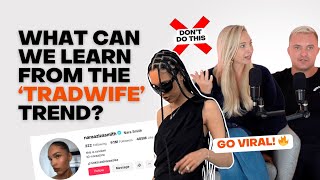
Tim Frey and Steph examine the viral tradwife TikTok trend through a business lens, exploring how masculine and feminine energies shape systems, role allocation, and hiring. They discuss what entrepreneurs can learn from the trend's social media growth and the power of polarity.
Questions this video answers
Episode 57.
August 18, 2024.
About 10 million followers (as stated in the episode).
Chapters
A lot of the things that will make you successful in business are going to be more masculine and energy. So things like being very structured with your time, making fast decisions, tracking KPIs and all those sorts of things. If you spend eight or nine hours of your day in that energy and then your husband comes home from work and then you're supposed to now move into a wife, it's really hard to let that energy go. So what will happen is you can be very controlling in your business, which is natural, but then you're probably carrying that controlling nature into your relationship at the end of the day as well. So, you know, tell him how to put shit in the dishwasher correctly. You kind of start micromanaging the house just like you kind of micromanage your business.
Welcome to the Success School podcast. We're on episode 57. Today we're going to be experimenting with a little bit of a new format. So if you love this show, let us know. Send us a DM on Instagram. You guys know where we're at. So we're going to get into our personal updates. I'll start with mine. So I've always been of the notion that moving to Europe would be amazing to live. And I've probably had this, I'd say, wet dream for Europe for 10 years. And we kind of finally got into the spot where we sold the gym. We don't really have anything tying us to Perth, so we went over there and then we were like, sweet, we're moving to Montenegro. There's no tax. It's really simple, you know, it's great. Life's beautiful, Culture, culture, really nice. And then after a couple of days, Steph and I were like, set on this. We're like, we're moving to Montana.
Yeah. We were so sad.
And then I woke up a couple of days later and I was like, I don't know about moving to Montenegro. And I didn't tell Steph, and I think she had the same feeling as me. And I'm like, what am I trying to find or get in Montenegro or Europe or traveling around that I'm not getting in Australia? We kind of just put it down to like, tax was kind of like one of the main reasons. And then I was like, all right, sweet. So what does Montenegro not have? And I was like, cool. They've only got one lane roads. And if you don't think that's an issue, imagine an entire country with one lane roads. You know, their shops were closed like four days in a row. So we Couldn't even get any food. Obviously we don't speak the language, the medical system, like, there's a bunch of other pros. And I was thinking, to save on tax, am I going to sacrifice my quality of life and the convenience of my life just for tax? And then I was thinking, all right, so there's a reason why there's no or low tax in Montenegro and there's high tax in Australia because the quality of life is much better. So essentially I'm just paying the government to live a better life. So then I was like to Steph, are we sure about this? And I think Steph had had the same discussions as me. And I thought, you know, maybe if I'm trying to make these crazy life decisions about where to move, save on tax, get rich, you know, get Lambos, all these types of things, maybe I need to like, fully consider what is actually involved in this and maybe live there for a prolonged period of time. We've been really close to moving to Bali like 100 times.
We could take the dogs, we'd be there in a heartbeat.
Yeah, but yeah, for similar reason to that as well. So my personal update is I'm staying in Perth.
We're not moving to Europe.
Yeah, I do love living in Perth, actually. And like coming back even in winter, I'm like, it's not that shit. Like, it's nice. There's heaps of stuff you can do in Australia you can't do anywhere else. Yes, the government bend us over on tax and, you know, whatever. But my personal update is I'm in Perth. So if you want to come hang.
So Tim's personal update is literally no update.
Yeah, no update. I'm in Perth. Just my thoughts. I'm sick.
That's my favorite one so far.
They get worse everywhere. Next we're going to be talking about my toes.
There is a good story there, to be fair. No, no, no.
So can tell us.
I. My personal update is I'm obsessed with cooking. So I think really on the trad wife trend. Let's talk about it. Something that is going to relate to you in business, if you're watching this or listening to this, is the fact that the reason that I have avoided cooking for pretty much our entire relationship is because I had a belief system that I was bad at it. And because I was bad at it, I just didn't give it the time or energy because I just thought, like, what's the point? It's going to be shit anyway. And we're going to have to order Takeout. So there's just literally no point in learning this. And I created this like, belief system that I was bad at it and that it was inconvenient and that it was too hard. And for the last five or six years, you know, I've been, I've really fluctuated in my weight because I haven't been able to get my food under control because we, we've where we were eating out a lot, you know, for a very long period of time. And even though I was making good choices, you can't control obviously everything that's going into the food that you're buying. And so I for, you know. And honestly, ever since I've started cooking my own food, weight has just fallen off and it's just staying off. And it's been the most effortless it's ever been.
Much better be your husband by myself.
Yeah, yeah, yeah. It's just, it's actually been crazy. When I talk about weight, guys, I'm talking about five or six kilos. It's not like major, but obviously it's enough to make me feel uncomfortable in my body. And so the cooking thing, this concept of cooking, nourishing food, and the more that we move closer to, you know, really trying to have a family, the more I realized, like, I really wanted to be the cook for our family. I really wanted to create nutritious food for our family. And what I learned and I guess the biggest lesson for me has been just it. Like anything, it's a process. And if you have a system, it actually is really easy. I just didn't have the system for cooking. Like, I just was like, didn't have recipes, was always looking last minute for recipes to cook. You know, wasn't pre planning my shopping, wasn't pre planning what meals we were going to have for the week. Like, it took me an hour yesterday or on Sunday to plan out all of our meals for the week and then all the ingredients that we would need and then took me another hour to go shopping for them. And then obviously I need to cook every day, but I enjoy that now. And it's a really cool way for me to take some downtime out of work. And so I put on Jack Johnson. Tim's going to get very sick of Jack Johnson very, very soon because I put on Jack Johnson and I cook every day and it's wholesome and it makes me happy. And I'm actually very good at it.
Yeah, you are.
I mean, very good at it.
The food's amazing.
Blink twice and there is it is good. There is a lesson for you in this. There is something right now that you are not doing in business because you are telling yourself you're not good at it or it's too hard. But I actually, genuinely believe, and I believe from the bottom of my heart, you just don't have a system in place that makes it easy for you to do it, and therefore it's hard, and therefore you don't feel like you're good at it, and therefore you don't want to do it. And for some of you, that's social media content, and for some of you, that's going to be podcasting or speaking on came camera or whatever it is. The system is everything. The system is literally everything. Take my word for it from this experience.
So Steph's trying to, like, big dick me with this and teach you guys a lesson in her data. So I'm going to give you guys a lesson. All right, so my story about not moving to Europe, the grass is greener where you water it.
Oh, there it is.
Not on the other side. Boom. Okay, so fuck that with the. Try to big dick me with a lesson. I'm going to give you guys an even better one.
Tim's just going to talk about himself next week.
We got toes.
Hope that you get a lesson from it. I am really excited to dive into these new topics. We have been really feeling like. Well, actually, do you mind if you have a bit of backstory on this? So the other day, we were listening to one of our favorite podcasts that we've listened to for years now, and even though it's in the fitness industry, and we haven't really been in the fitness industry for the last couple of months, it was still one of our favorite podcast listeners, too. And it really kind of helped us in so many times of need. And they've been running for years now, and they recently shut their podcast down. And we realized that it's because their podcast was so niche. And, you know, I was like, why would they shut it down? It was so good for them. They developed all of their networks, all of their audience that they built. They sold out gyms. They sold gyms. Like, they did so much stuff with this one podcast. It was so incredible for them. And when we really thought about, why would someone shut down a podcast that was that successful, it really came down to because there's only so many things you can talk about in the fitness world. Like, you really do get to a.
Point, talk about Snatch, like, three.
Yeah, you can't talk about, like, you know, progressive overload. Too many times before, like, it gets kind of boring. And so after five or six years, I guess they just ran out of topic and out of steam. And it really encouraged us to reflect on. We talk about business, obviously, and business is cool, but it's kind of cool. It's pretty cool. But I think, like, it would get repetitive.
Yeah, for sure.
Like, I think that it would become, like, so many times we talk about selling in DMs, there's only so many times we can talk about leads and sales. Only so many times we can talk about, you know, all the things that we talk about in business. And we don't want to be a podcast that goes away after five years.
That's not for us here for the long haul.
We are here for.
We are committed to you forever, ever, till everyone dies.
And so we thought, so beautiful.
So long.
So long. And so we thought, well, what can we do to. One, keep it spicy and interesting for us. Two, to give you guys a peek behind the curtain of some conversations that we maybe have behind closed doors that we don't fully, I guess, articulate online. And three, to still give you the business stuff, but make it relevant to what's happening in the world. And so, Tim, tell us, what are we doing?
Yeah, I was hoping you weren't going to throw.
Do you want me to do it?
So our new segment is called the Pulse Check. Okay. The Pulse Check.
The Pulse Check.
In that voice. So essentially, we're going to be giving our insights and predictions into the biggest stories in business, tech, pop culture, and what you can learn from it to build your empire. Steph and I both believe that having your finger on the pulse with what's going on in the world is very important to building a successful empire. You can jump on trends, you can talk about trends, you can use them to your advantage or disadvantage. You can see what's coming. It's basically become, like, really fucking worldly. Okay. Which is great for business as well. So essentially, every week, we're going to come to you with the Pulse check and something that's going on. We're going to give our take. We're going to be how it's relevant in business and maybe how you can jump on it. Okay. Steph, did I nail it?
I think you absolutely nailed it, and I hope that. And I guess, guys, you will start to see how this is going to unfold as we go into it today, but we would love to know if this is something that you want as well. So Once we listen to the entire episode in full for the full.
Still going to give you the business shit, by the way.
We are 100%. We're just going to add in this little segment and we might do it weekly, we might do it fortnightly, but we're definitely going to add in the segment because these are conversations that we're having at home all the time. Because Tim really does keep his finger on the pulse and we talk about this stuff in the background and it really does shape the way that we live our lives, the way that we change our lives and the way that we push forward with business when we can see. See on the horizon where the world is moving. And so we really want to keep you guys updated on the pulse check as well. So super excited to dive in. So, Tim, what is our.
You hit me with this. I'm going to ask you first because this is your area.
Oh, Lord.
So today we're talking about trad wives. So we're talking about trad wives in business. So, Steph, what is the tradwife craze? Give us the backstory, give us the context. Give us, like the 4, 1, 1. What's going on?
Right, so there is this girl and I'm gonna. I'll link it below because I can't remember her name right now, but she is basically blowing up on TikTok. She's probably one of the most viral things that' on TikTok right now.
I actually. 10 million followers.
10 million followers.
There's a story in that. There's a lesson in that.
Yeah, yeah, yeah, totally. They're like, there's so much to learn here about business and, you know, growth. But she's basically blown up on TikTok. I don't actually have TikTok, but it's carrying over to all other platforms. You know, it's being written about in Mamma Mia. It's, you know, it's starting to infiltrate mainstream news because she's this woman and she's ex model and her husband's an ex model and he happens to be Mormon. And so they've married and she's decided to. And I don't. Look, it's hard to know. It kind of feels like a liver king situation. She appears to be living a life where she has gone back to the traditional, you know, way of living where wives, you know, cooked all their food from scratch and did everything from scratch and just really lived a housewife life and looked after the children and didn't work. And it's the reason it's been so huge in pop culture is because it challenges this independent female narrative that we have going on in society and culture right now. It challenges that. And because it challenges that, it's polarizing. And because it's polarizing, it's gaining so much momentum now. There are lovers of this concept, the hashtag tradwife concept. There are haters of this concept, and that is why it has become such a big deal. But Tim and I have been exploring it so much. We've really been watching this unfold for the last couple of months. There are things about it that have triggered me, and we've had conversations about that, and there are things about it that I actually love. And so we've been really using it as a baseline for a lot of the conversations we've been having in our life recently about gender roles in a male, female business that we both run and, you know, gender roles in the house and. And how they can play out. And it's just been really fascinating for us. And it's been a conversation that has been coming up a lot in our world in business, because the way that men do business and the way that women do business are very different and honestly should be very different. And so it's been a really fun and exciting and interesting topic to dive. And we wanted to share with you guys today a little bit about how it might apply to you if you are a female in business or even a male in business, and you have a wife.
So, Steph, hit us with, like, you talked about the gender roles there. What is the masculine, feminine dynamic in business? What are the different gender roles? Just, like, in your words.
Yeah. I just want to hit off with the fact that, like, I love the trad wife trend. I love parts of it. And I also think that, you know, it doesn't always apply to everybody. You know, I think that we live in a society where potentially, you know, one income is not enough for a household, and especially when you have multiple children involved. And so I think that there is a need in most households, and especially in Australia, for women to work and a desire to. For a lot of women also, myself included. And so, you know, I think that while she has thrown out work and I mean. I mean, really, though, has she? Yeah, yeah, like, exactly. Has she? Because she's spending all this time making content, I'm sure she's monetizing it at some level. So while she has thrown out this concept of, like, you know, you don't really have to work and you just stay at home, all day baking. And I love aspects of it, and I think in business where we see this dynamic play out is that to be in business naturally a lot of the things that will make you successful in business are going to be more masculine and energy. So things like being very structured with your time, making fast decisions, not second guessing yourself, you know, being able to be quite cutthroat in, you know, hiring and firing decisions and sometimes need to remove emotion from those things and, you know, tracking KPIs and all those sorts of things. There are quite a lot of elements to running a business that are naturally more masculine by nature. And we've spoken about this before in podcasts previously, but if you spend eight or nine hours of your day in that energy, let's say you're working eight or nine hours a day in that energy and then your husband comes home from work and then you're supposed to now move into a wife, it's really hard to let that energy go. And you, you know, so what will happen is you can be very controlling in your business, which is natural, but then you probably carrying that controlling nature into your relationship at the end of the day as well. So you're, you know, trying to, you know, tell him how to put shit in the dishwasher correctly or, you know, trying to do things for him because you don't think he can do it well himself. And, you know, you kind of start micromanaging the house just like you kind of micromanage your business. And it happens really subtly and very slowly over time to the point where, you know, we kind of almost bring this masculine, domineering energy into our relationship also. And so I think that where we have enjoyed it, I think masculine female roles in business, like, you know, Tim does take care of a lot of the masculine stuff in our business, the finances, the management of the money. The KPI's manages quite a lot of team members. And I do typically take on more of a, I guess a female role in terms of, like, I do a lot of client nurture coaching. I like to really create a lot of time and space to be creative and write amazing stories for social media. You know, think about things like this podcast and research the topics for this. And so it's been really nice since we stepped in, into each other's kind of, I guess, more natural, energetic roles, I would say.
Yeah, for sure. Yeah, I agree with the points. I think it's cool for the awareness component, like, you may have heard these things before, you may have not. And we obviously chat with A lot of entrepreneurs, a lot of female entrepreneurs, and they do carry this masculine energy into their relationships, which does cause problems. So, you know, if you've got too much of anything in a household, it will cause a problem. So if you've got, like, masculine female, masculine male, there's going to be a lot of head butting, which can cause issues in relationships. So it's been, you know, the tradwife thing for me has been quite funny because I feel like in the last five to seven years, it's been very, you know, quote unquote, feminist online, which is fine. But it's kind of funny seeing it swing the other way and how much backlash it has had. I think there is merit in both sides. I think there's merit in the tradwife thing, like, maybe not to the fullest extent, and then there's merit in the feminist thing, maybe not to its fullest extent of what they're pushing on the agenda. I think, like, taking little pieces of it and maybe coming back to a center point is great. I just wanted to hit on the masculine feminine dynamic a little bit more in business. And I feel like when I've really taken on the masculine tasks and Steph has done more of the feminine stuff in business, it's gotten a lot better, especially for couples in business. So couples listening to this, this may be a key point if there's a little bit of contention in your business between both of you. I think just looking at the roles in which you do, and if you're just by yourself in business and you're in a relationship and you're taking that masculine energy home, this could be something that's going wrong in a relationship. Okay.
And I wanted to touch on this really, really quickly. One of our clients this week was holding off on hiring a va, and I asked her, what is the hold back here? Because, like, I couldn't wait to offload shit that I didn't want to do to a va. I said, what is the hold up here? Like, why don't you want to. And she said to me, she. She said, oh, I, you know, family live by. Is it Mike Malkowitz?
Yeah.
Book, which is called Profit First. And she said, I love that book. I live by that book. And he said, don't hire anyone in your business until you're already earning $250,000 a year. Now, I don't believe any piece of advice is right or wrong. I'm sure that in his world that makes total perfect sense. He also may be talking about hiring a Full time employee at standardized, you know, American or US or Australian rate with leave entitlements and super and all these things. Right? And so obviously if you guys listen to this podcast for a while, you will know we're big advocates of hiring offshore VAs. And despite the fact that we cop a lot of flack for that on the regular. And so, you know, I assume that he probably wasn't thinking or speaking to exactly that. I also said to her, Mike Markowitz is a man and he just has a little bit more energy than we have. And I did touch on this lightly. I can't label all women in one energy. You might be listening to that. This is not for me. That's cool. That like this is all to take like bits and pieces of pinches of salt. Like I watched the Tradwife thing. At first I was really like ignorant and offended by it. Over time I was like, maybe I would like to start slowing down and cooking more. Maybe I would actually be the kind of mum that would love to bake bread from scratch. Maybe I would like to be the kind of woman that puts dinner on the table for my amazing husband who works so hard in my household. And maybe I would like to be the kind of woman who does those things. And also to be the kind of woman who runs a multi seven figure company with her husband and can like smash like, you know, goals and work and get her shit done and have impact. And I think you can do both. And so I think it's about finding that beautiful balance between the two. But I said to her, look, you know, Mike Marwitz is a man. And what I've learned from working with Tim so closely since we've owned a business together is that Tim just has so much more energy than me. And the reason that he has more energy than me is because he is so much less emotional than me. And that's okay. There's nothing wrong with being emotional. It is inherently female to have more emotions. And so it means that I tend to overthink things. And when I'm overthinking things, it means that it slows me down. So Tim has a lot more energy in a day because he doesn't overthink things. He does just take a lot more action. He can get a lot more done. And he doesn't get as tired because he's not as worn down by all the feelings that he's experiencing. And I, I don't think that when we're taking advice and not to say that you can't take Advice for a man or you can't take advice from a female. But I think you really need to think about as women, we do have different thresholds and tolerances than men do. And I think it's really important to make sure that we always are taking advice with a grain of salt. Like at the end of the day, you know, for this client, hiring a VA is the right next step for her. Her business is already. It's making, you know, probably about 150 grand a year. And it really is the right next step because her doing the shitty little tasks is actually stopping her from being able to grow the business regardless of what Mike Malkowitz says. So I think regardless of male, female getting the advice, that's not the point that I'm trying to make here. The point is that you guys have to learn how to listen in. And I think that this beautiful reference in pop culture around the tradwife thing was a really good indication for me to learn how to listen in. And since then, I've become basically a professional chef. And it's been amazing. Been amazing. It's been so good and I've loved it.
So I think we've touched on a few things. So we've touched on the masculine feminine dynamic in business, which is great. We've touched on the energies and hiring and different roles and stuff which are all catered to different skills and, and strengths in business, which is epic. I just want to touch on what she has done. Well, the tread life. What's her name?
I think it's Nala.
Nala? Yeah. So I'll go first and I'll give like what I think she's done well from a business point of view with this whole like campaign. On the marketing, I think like the polarization, we did touch on it earlier, but if you think of anyone who's really, quote unquote, cracked social media in the last couple of years, they're pretty polarizing. So we think of Joe Rogan, we'll think of Andrew Tate, we'll think of Donald Trump, we'll think of trad wife. They all have an opinion or a philosophy or a worldview that's very different to what everyone else is saying, therefore it picks up more trend. And it's kind of like if you just agree and follow the crowd and do what everyone else is doing, it's very hard to stand out. Not saying it's a strategy to go be fucking crazy on the Internet and do wild shit, but I'm saying there's something in this. And if you want to stand out, you're going to have to do something different. So Steph and I always chat and I'm going to give his chat out to a Holly Loxton.
Holly Locks. And we love Hole.
Yeah, she's incredible. I love following her social media. If you don't go follow it. I love watching her stories. It speaks to me. It's different. It's crazy. It's a little bit wild. She's a common dinner conversation topic in our household because she is different. Okay. We don't talk about the same people that are posting the same shit over and over and over. Talk about solutions, features, benefits on social media because at the end of the day, it's a little bit boring, which is fine, it's cool to do for a brand. But if you want to stand out and you want to have polarity and you want to really crack it and you really want to infiltrate someone's mind, or in terms of branding and marketing and sales and these types of things, being polarizing is a little bit of a superpower.
Yeah, for sure. And I think just to add to that, like, so you know this girl in the Tradwife. Yes. She's obviously created an entire mission which is around being basically the opposite of what is trending in society's culture of feminism right now. And the second thing, she's done really well. If you go and watch any of her videos, they're always structured the same. Literally, the structure is the same. Every single process, it's a process. It's like, oh, we ran out of sun cream today, so I decided to make some from scratch. Or like, oh, we ran out of bread, so I decided to make some from scratch. And like, it's always the same. You know, my husband, it's his birthday and he wanted this, so I decided to make it from scratch. Like, it's always the same thing. So if you get a winning formula, don't change it, don't change it. Like, keep working with your strategy. Like, I think so often we see people who try to be so different, you know, in their strategy or change the strategies up so much that, you know, I think one of our mentors recently said to us, the more you change, the more risk you take. And so you want to change little elements, not whole elements. Because anything in business, if you're making changes, make them small, incrementally over time so that if. If something does pick up because of the change that you made, you can see what actually worked. Whereas if you make 10 changes at once, let's say she was. She changed up, you know, the kitchen that she was working in or she changed up the, you know, the start point, or she started focusing more on fashion. If her audience started going backwards, she wouldn't know why that thing was because the change was so big. And then to go back would feel hard. She didn't know what she needs to change to get back there. So I think it's one of those things where people like, they want to throw the baby out with the bathwater, but incremental changes are better. We've lived that just by the way we've lived smiling. Yeah, we're smiling because we've lived it.
Just one more story on this. So we were in Montenegro a couple of weeks ago and with our friends Keegan's place and he had a bunch of guys there with him. You know, it sounds like a cult, but they're all training and they were drinking raw milk and doing eggs.
Kind of as a cult.
Yeah, kind of a cult. We were there, we were involved, we were doing all those things as well. And they were all insta famous. And I was like, why do they all have like 100,000 plus followers? Every single one of them. And I was like, there's something in this. Like, what's going on? So we were sitting at dinner and Steph posed the question is like, how did you all crack the code? It's a process. So they're all in this. It's called Uncommon Success. They have a social media process for creating videos and content that goes viral and they all follow it like TradWife did.
Yeah.
And you guys can go check them out. They're all Uncommon Success guys or Keegan. But essentially they have a process for social media. Like the trad wife has a process for social media. You need to find a process, you need need to stick to it. And then if it works for you, maybe try teaching someone else and see if that works as well. Then you'll know it's an actual solid process rather than just a one hit wonder. There are a bunch of people that claim they can make people go viral, but there's no proof of it. But this was actually the first crew of people I've seen that have done it.
The reason I think it worked is because they're all in the same niche.
Yeah.
And they all very much specialize in, I wouldn't even say health and fitness. It's actually even more specific. It's like their fitness or body strength. It's all like the same sort of stuff. So they've cracked what goes viral in that corner of the world. Okay. Which is why they've all been able to replicate each other's content really easily. The second thing I think that was really valuable about when I asked them that question was they all spent three to six months figuring out how they were different. It didn't come naturally. It doesn't come naturally. You're like, I want to teach, like, for business. Like it does. Honestly, Tim and I think we still. We cracked it two weeks ago. Like, it takes so much time, and it doesn't take long, but you have to have a lot of focus. If you can't tell someone how you're different to somebody else, if we're just another business coach on the Internet and say, business coaches, if we can't articulate how we're different and exactly why our philosophy works, and we haven't got a philosophy, and we haven't got systems to back up everyone getting to that philosophy. Like, theirs is like, we want you to grow to 100,000 followers and be able to make, you know, I think it's like 50k a month. That's their whole thing, Uncommon success, right? And so they have this philosophy, and then because they have the philosophy they have the people who are in that niche, they've been able to develop the systems to actually make that happen. And they spent three to six months, every single person, figuring out, what is my philosophy, my personal philosophy, how is it different to what else is on the Internet? And then creating content that really articulates. And this is what we're teaching our clients in compound marketing now, that really articulates that point of difference so that you can create content that does actually stand out. And I think that that is the secret superpower here. Most people just put business together that they see content as an afterthought. Like, I want to sell the thing that I'm doing, but I'm just going to throw some shit together in 20 minutes and post it on my social media and call it content. And that's why you guys want to go viral. But even oftentimes, when you do go viral, it's for all the wrong reasons. It's for the wrong thing. Like, this is one chick that we follow that we know for a long time, and she went viral for painting a deck.
And.
And so, like, she never was able to monetize the audience because it wasn't actually for what she sold. You want to go viral for the thing that you want to sell, not just for a thing, because of a trending audio or because it was a catchy video. Right. And so, like I said, that's what we build out in our compound. Marketing for our clients is like, really spending this time to figure out who you are, what you stand for, what your point of difference is, what your unique mechanism is, and being able to position that in your content marketing so that, yeah, you have more likelihood of going viral, but you actually don't even need to go viral because, like, Holly Lockston, the right people are going to be attracted to you. But, guys, I hope that you enjoyed.
Yeah, that was fun.
This new. We enjoyed it. I hope that you guys enjoyed this new style of episode.
We don't care if you didn't enjoy.
Well, no, what we would love to know is, like, did you enjoy it? We want to. We do this for you, actually. Believe it or not, we do this for you. We do love it, but we do it for you. Yeah, we do love it. So tell us, like, did you enjoy it? Should we take it out? Is it like. No. We don't want to hear about what's going on in the world. We don't want to hear your views and opinions.
We got a lot of opinions.
We've got a lot of opinions that we probably don't share so publicly.
Yeah.
Not because they're bad, but just because I think we're really moving into a phase where it is important and we.
Do think it's important.
Yeah.
I think, like, the masculine, feminine thing is very important to touch same. And if you haven't heard it before, that might be new news to you, but it matters for a relationship.
Yeah. Yeah. Anyway, guys, let us know your thoughts. We love today's episode. We hope that you did. Any feedback is so welcome. Message us privately on Instagram. Give us your feedback. We would love to hear about it.
I'll reply to you. Steph won't, so send me your feedback. Steph's DMS are crazy, but it was.
Lovely to hang out and thanks so much.
All right, guys, see you next week.










