
What is your fear of AI costing your business?
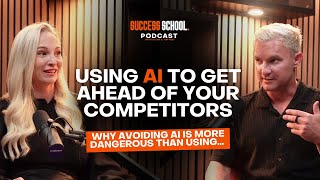
A conversational podcast episode (Success School Podcast, ep. 85) hosted by Tim Frey with guest/co-host Steph discussing how AI is changing small businesses in 2025. They cover practical uses (copywriting, sales scripts, podcast/video editing), broader disruption risks (creative industries, virtual assistants), and advice for small business owners to start experimenting with AI tools and stay informed.
Questions this video answers
Episode 85.
March 2, 2025.
Tim Frey and Steph.
"In the next 12, 18, 24 months" (speaker claim).
Speaker said Deep Seq 'have launched a model... for a fraction of the price. They say $6 million versus 600 on open AI.'
Chapters
AI And I'm going to put a bold statement out there in the next 12, 18, 24 months will fully take over. So for small business owners to sit there and think that it's not going to take over and they're just going to sit back and be like, this thing's going to blow over. It's not. Welcome to the Success School Podcast. We're on episode 85 today. Super excited to have you guys here. Today we're talking about AI and its impact on society in 2025. Steph, how are you feeling?
I am excited to talk about this topic because I have been divided up until now on the topic of AI. I've been scared, I've been excited, I've been divided. And so I'm excited to, like, talk about it and get started.
It feels rehearsed. Oh, scared, excited, Divided.
Yeah. Feels like I should be in a. In a music video.
Yeah. That was like infomercial music video rehearsed.
It was genuine. I'm excited to talk it. How are you?
Good. I'm pumped. Personal update. We had our best month ever in January, and it was very hard. That is my personal update. It was. It was balls to the wall for the team. We were working super hard working, like. And although I did love the impact we had and all the clients we brought on and. And how our bank account looks, I really did love that. But it was like, for a little bit, it felt like too much and the work life balance was destroyed.
Yes.
So I kind of thought to myself, is it worth it? Is fast growth worth it? Like, we did speak about it on your last podcast episode, about your own thing and explosive growth, but I was like, what if we do this every month? I'd be fucked.
Yeah.
I wouldn't even enjoy my life. So January was epic. But let's turn it down a little bit.
That's what I'm saying, right? Yeah, yeah, yeah. So putting a cap on. Yeah, I actually had.
We're not shutting it down. Don't worry.
A couple of our clients have also experienced something similar this last few weeks. I would call it being a victim of your own success. And so, you know, there is a sacrifice to having fast growth and having a lot of clients on at once. It's very exciting. And it's usually what we want. And then you get it and you're like, oh, shit, is it what I want? I don't know. And so it's a really interesting thing that happens, but I always remind myself, it's just a season. These are seasons. January is our big season for our company, and next year we'll look at doing it differently and better. My update kind of on the back of that is on boundaries of a different take on boundaries, though, and it's about saying no. One of the tasks on my to do list that was on there twice this week was actually about saying no to a speaking gig that was coming up. And I. I find it very hard to say no to things like that because every time I've spoken, we've had big impact, got new clients. It's been good for business, but I actually don't love doing it. I don't love the process of speaking. I don't love the process of. I really overthink.
You're so good at it.
Thank you. I really overthink the process of creating present medications, and I get really nervous. It's very destabilizing for my nervous system. You know, I have huge adrenaline dumps afterwards. It's a big cost for me, this big outlay. I don't just go in and riff on stage. Like, I put months of effort into something like that. I would usually present on stage, and this person asked me to speak, and it was a good opportunity. So I'll just put that in inverted comments. It was a good opportunity. I could tell it wasn't paid. I promised myself at the end of last year, no more unpaid speaking gigs. And then, of course, God lands you an unpaid speaking gig that looks like a good opportunity. We have had our biggest month ever. We are a little on the energetically worn outside. There's this speaking opportunity that's come up, and I know what it's going to take for me. And I had to say no because I made myself a promise. And I think sometimes there's the less of anybody. And like, I'm a big. I think this year, my whole thing is I do what you say you're gonna do. And I think I really developed that last year properly. I say I'm gonna run 5Ks, I'm gonna run 5Ks. If I say that I'm only gonna take paid speaking gigs. I'm only gonna take paid speaking gigs. And it felt hard to say no, but I'm really proud of myself for doing it.
What if they offered you $1? Is that, you know, technically?
I think that it needs to be an equal amount for the amount of effort that I'll put in. I don't know what that price point is. I don't think I could be a speaker that's like, oh, it's gonna be $6,000 as a flat fee. I think the situation and my energetic time and resources at the time of the request. But yeah, a dollar would still be a no.
Okay, cool. So if you guys know now it needs to be more than a dollar.
At least two dollars to get stiff.
Speak to you guys. I'll do it for a dollar. So let me know where you guys want me to speak. I'm just kidding.
YouTube.
Hor. So today guys, we're going to cover AI. So we've got four particular areas that we're covering. How AI is shaping the future of small business, the real ways that small business are saving on hours practical AI tools today and where AI is headed. So AI has been a bit of a foreign concept for Steph. She's been a little bit allergic to it.
I have been.
I'll give you guys a bit of a background and then we can dive into some questions. So I don't know specifics, but on November 11, 2023, AI was launched in terms of OpenAI. That was a joke. You missed it. I'm talking really specific here in terms of their date steps. Didn't get it. But that's cool. We're going.
You're so clever.
AI was launched through open AI. So they started with their first models. They've been, you know, inventing and then all of the other companies, so we've got Google met, then we have the new Chinese company that I'll go into in a minute. Deep Seek, they've been inventing and they've basically been one upping each other. The end goal is AGI, which is AI General intelligence. Okay. Or artificial general intelligence. And that's basically. It'll have the same capabilities as you are. I. Okay. So it's basically a human that is in a computer and can do whatever for you. So that's the end goal. So they're building up these models to get to that level. And recently a Chinese company called Deep Seq has come out and they have launched a model that is as good as OpenAI's best model model. But they've done it for a fraction of the price. They say $6 million versus 600 on open AI. So it's super competitive in the market, which is great for us because it's driving the cost down. So the open AI are charging 200 bucks a month, deep seats, doing the same thing for free, which is cool. And the language models and processing power is getting cheaper. Chips are getting cheaper, which is great for us, but it's kind of Wiping out a lot of jobs, which we're speaking to now. And we're going to kind of go into that. That was kind of your fear, Steph.
This was like, so, you know, Tim's like, yeah, so we're have this artificial general intelligence is going to be as good as you or I. And my immediate gut reaction is, what the fuck? That's terrifying. Like, that's so scary. And so, so my fear is around, yeah, like this, this. And you said, like, they're trying to one up each other. We know that when humanity does this, we grow rapidly, like in the space of, you know, a couple of hundreds of years, you know, we've gone from basically living in caves to living in skyscraper buildings and flying jets and all this stuff. And so we know that AI is going to get better fast because they're trying to one up each other so they can be the best, which is the coolest part of humanity and also the most destructive part of humanity. And I'm really excited to dive into this. So, Tim, how has AI changed the way that businesses operate in the past 12 months?
I think primarily it's been made popular through ChatGPT, or language models. Essentially what that is is they've uploaded the entire Internet on these language models and they can recite information to you, which is incredible. It started with text and now it's gone to video and they can do a bunch of other stuff. But I think with small business, I think that the most powerful thing I've seen is essentially ChatGPT can come back to you and recite and write and write copy and create articles and do links and do social media captions and reply to emails and that type of stuff. I think that's like the mainstream uses of it at the moment. I think it's really exciting for small business, especially because, you know, if we talk about the copywriting angle here, I know AI doesn't produce the best copy, but the copy is good if you know how to prompt engineer. I think a lot of people do struggle with copywriting because it is such a skill. So especially for our clients, what I've seen the best use case it has been copywriting, just in terms of getting some okay copy out there. Although you do see some shockers where they're using crazy words that you'd never use in real life and they don't know how to format it properly. And you've got the hyphens and you've got the dot points and it's very clearly AI. Yeah, I'll kind of ask you this before I get into my first question for you, but do you look at someone that uses AI clearly online when they use it in their captions or posts or emails and do you think worse of them? Because this came up online.
Yes, this came up online recently. Look, I'd be lying if. If I see really bad AI. Yeah, I think it's a little lazy. Yeah, I think that.
What about just a hyphen?
No, hyphens are fine. Like, if I could say someone's put a bit of effort in. And so like we got an email from one of our business coaches yesterday that had obviously used AI. It wasn't obvious in the way that it was like, you know, they use the wrong American spellings and you know, it was like really crap. It wasn't crap. It was just obviously AI bolded words and stuff like that. That makes it a little bit more. Makes a little bit more clear. And so. But I didn't think anything less of him. I thought, yeah, cool, he's being effective as we all do, because it's not like I don't use it like we all use it. So I think it's a matter of taking the time to get to know it, taking the time to learn it a little bit so that it doesn't feel so repulsive if someone reads it.
Yeah, yeah, yeah, I agree. So Steph, what's a surprising way AI has helped your workflow? So, like day to day for you? Like, how has it helped you?
Yeah, one of my favorite things about AI is actually not so much the copy stuff. Like mostly you use it for that. I think for our company, it does help with the copy sometimes. The things I love so much about AI, the thing I use it for so much is like sales. Honestly, so much sales stuff. One of our clients came on a call the other day and she was like, I'm having these free 15 minute calls with people and I just keep giving away all my free stuff. And I was like, cool, like, would you have a call script? She was like, no. And so I went in like, we have a really optimized AI. It's really good. And so we went in, I went in and I typed out like, you know, give me. She's a this type of person. She does this kind of work. She does this, this and this. Write me a 15 minute script. And it came out like almost perfect. Like, so now she has a phone script that she can use so that she gets everything she needs and sells them onto the next thing. And it's instant before AI we would have written the world's worst script. Not for her, but for our own business. Used it, repulsed people. It would have sucked. It would have not worked. We would have had to refine and refine and refine and try different things. And try different things. Or pay someone to teach us how to do it. Now, in 30 seconds, I have an entire script that's great for somebody to use that we can, you know, help our clients use or we can use for ourselves for our own business. The sales stuff for me has been really awesome. Like sales pages, sales processes, even putting in transcripts from certain parts of sales calls and getting feedback on them. Like, that stuff has been phenomenal for me. I think it's the best.
How have you got it to work better for you? So in terms of like prompting it?
Totally. So a couple of ways. One, you built me a really good chat prompt which, which we have given to our clients is, you know, how to basically build it so that it knows everything about you. Your offers, your course, your background, all that sort of stuff. Your idle client, their pain points, all those things. Two, you have to know who you want to model stuff from. So for example, if you're doing sales stuff, you may want to model from one of the best sellers in the world. If you were doing mindset stuff, you might want to model off of Tony Robbins. If you. So it's like getting AI to think through the lens of somebody who's a big deal is the easiest. Like, I've personally found it to be the easiest way. So for example, if I wanted to like write a presentation that was about judgment as an example, and I wanted to write it through the lens of Tony Robbins, I would say, hey, write me a presentation, a 15 minute presentation for this type of person on judgment through the lens of Tony Robbins. What would he say? And it just spits out and it's like, very good, very, very good. And obviously then you change it. You put it into your own words, you put your own, you know, things in that you know, that you teach because you're an expert at what you do and you don't want to copy just Tony Robbins because it's never going to work for you in the end, at the end of the day. But yeah, that's the way that I mostly use it. And I want to be really clear. I am anti. I've not been anti. I. But I've been slow to AI so this conversation today for me is like, I am only really just dipping my toes in to this world at the moment. But you are like, I'm in full send. Yeah, you're all the way in. So, Tim, what is the biggest misconception that small business owners have around AI?
I think there is a bit of a fear around it, like you've alluded to. And I think that people are ignorant to how fast it is taking over. I think that AI, and I'm going to put a bold statement out there in the next 12, 18, 24 months, will fully take over all virtual assistants. I think they're going to take over replying to emails. I think it's going to take over content creation. I think it's going to be calling people, like, literally voice conversations.
We've seen it, we've seen the voice conversations and guys, oh, my fucking God. It's actually crazy. Like, I would never have known that it was AI. It's wild.
So the biggest misconception is people think it sucks. And it is evolving so rapidly and they've got so many amazing minds. So you gotta think about everyone that comes out of college now in America. They don't wanna work in engineering or medicine or whatever. They wanna work in AI. So they're getting. The smartest people in the world are all going to these companies and making these models better and better and better.
Getting paid a fortune, Getting paid so.
Much money because it's the next gold rush. So for small business owners to sit there and think that it's not going to take over and they're just going to sit back and be like, this thing's going to blow over. It's not. You're going to have to get around this and you're going to have to start using this in your businesses.
So when you say takeover, because that's a terrifying word.
Yeah, like Skynet, like takeover, like full Terminator mode.
They will boss us around. Yeah, Talk to me. Like, what do you mean really by takeover? Like, like, as a small business owner, you know, should I be worried or should I be excited? Tell me about how you're framing that.
So, example, they're using AI in podcast editing at the moment. So basically we could upload our raw footage into an app and it's going to spit out clips, it's going to split out audio tracks, video tracks, everything's edited, it's going to take out all the words and like, one stop, shop, edit your podcast. That's pretty crazy. And they've got that for sales calls, they've got that for email. They've got. And that's right now, they have that. Imagine in 6, 12, 18 months and once we reach artificial general intelligence, imagine what's going to happen when you've got someone like you or me working in your business 24 hours a day that doesn't sleep, like with the same.
Okay.
Or smarter than us.
I get it. I hear you, I hear you. And I think that the thing that I'm going to. I'm going to be the theory person and you can be the exciting person because I think this is a good conversation. Yeah, that's amazing. On one hand, phenomenal. And on the other hand, people are not going to, they're going to lose jobs, they're not going to have, you know, businesses are going to go under, people will suffer. And are we just gonna end up like. To what end? Like it's all just for profit, Right?
Yeah.
So I think that's where it feels. Ick. Yeah, it feels like we're just generating these things to just take out the human of interaction and the human of businesses.
We're talking about it in the profit, you know, archetype or metric of it. But think about in the medical. They're putting AI in curing cancer. They're talking about creating vaccines with whatever vaccines now that can cure cancer. Custom to your genome, to your DNA, to all the other things. So we're like, we're focusing on the bad aspects and a few people are going to lose their jobs or a lot of people. But that's why we have governments and we pay them big money. They're going to pay us. There's going to be jobs and things. They're going to replace all the bad shit as well. Yeah, obviously they're going to replace jobs and people are going to have to upskill and get better and use it and work out how to use it in the business. But there are so many amazing applications, applications for AI that are going to be outside of, you know, Sally losing her job or having to pivot their business.
Okay, so what industries are going to be the most disrupted by AI?
I think anything in the creative sphere is going to be severely disrupted from AI. So I think like photo design, graphic design, website design, marketing, copywriting, email, social media.
Will there still be a need for human, human placement within those things?
I think the best of the best will be fine and they're going to be able to use this stuff to their advantage for their businesses as well. But like, you could use AI, but like also there is only a small amount of people that are adopting this stuff because like you said, a lot of people are like, AI, I'm not going to use that.
Yeah.
But eventually, like in enough years it's going to be undeniable that it's great. I think it's going to be out there and being used for three, four, five, six, seven years before it's common adoption. That it's out there.
Yeah.
Because there are the fear mongers that are like, I'm not doing this shit.
And I think that a lot of people can get ahead. Like so with that in mind, you know, the people who are in the creative space, we have, we have creative clients. We have quite a few of them actually. People who are in website design, agency businesses, all these sorts of things. Because it is going to be probably six or seven years before it becomes mainstream. Before everyone's like, oh, like crypto. Before it becomes mainstream. Do you think, like that the earliest adopters. So let's say if we have a client who does website design now and she starts using the AI to really like speed up their process, their, you know, finalization or delivery, their onboarding, whatever, that they'll almost be able to cash in for the next five to six years and get really far ahead of all of their competitors.
Yeah. Yeah.
Okay, cool. Yeah. With that in mind then. How can small businesses stay ahead of.
The curve without going into a full time job? I think you need to be keeping up to date with what's getting released. So subscribing to AI YouTube channels, watching clips, changing your algorithm on TikTok, Instagram, Facebook, whatever it is, to AI news. So you know what's coming up because companies are inventing these tools that you can use. Like I said, with the podcasting on the video or the email or whatever it is, they're inventing this stuff all the time, but you just don't hear about it in your little algorithm or whatever's going on for you, therefore you can't use it. So a lot of the time in successful, sometimes when I mention a tool, that's the first time our clients have heard about this tool. But I'm hearing about it because I have all this stuff in my algorithm and I'm super into it. So I guess you could say we're ahead of the curve, but you really need to be tuned into where the information is getting released and what is getting released and what will be a benefit to you. And just testing this stuff, just using it in your day to day.
I would say, guys, and if you're listening to this and you're feeling a little scared, I just want to be really clear, we don't think that we're not going to be disrupted by this either. Like, we think the coaching industry is going to be heavily disrupted by AI. And so it's not that we're immune to this. Like, we are. We put ourselves in the same ranks as pretty much everybody else. The website designers, the agencies, the VA is, the, you know, whatever. Like, we are in the same boat. But what we, what we're choosing to do is stay ahead. What we're choosing to do is to educate our clients. What we're choosing to do is to harness the power of AI to help, like, everybody right now. And then as things progress and things change over the next few years, we get to make new decisions. And so I think that don't be scared into inaction, don't be scared, like, oh my God, it's going to stuff everything up. So I may as well just shut down now. Like, don't sit in that place. I think it's really important for you to be thinking about this. Like, okay, I'm just going to start step by step, which is my next question to you. I'm just going to start step by step, and as I start to use it, if it helps, then yay. And if it doesn't help, or, and I think it will help, once you know how to use it, then I can start integrating these little bits and pieces and you don't have to think about five years out and is the world going to end with AI? How can a small business owner get started? Like, what's the first step?
I think just going on YouTube and watching videos, just getting a good understanding of how it works. It's not like, obviously I don't know the science of AI. I'm not in the back writing the code and the tech and all these types of things, But I watch YouTube videos, I know how to use Claude Deep, seek all the different apps. I think just working out what your use case is for your business. So if you want to write a email newsletter, start working on that and seeing how you can use it, optimize it, make it better, make it good, make it not look like AI, make it essentially great and start watching videos and committing 20 minutes a day, 10 minutes a day, 5 minutes a day to it, because it is here to stay. It isn't going anywhere. So I just think watching YouTube, changing your algorithm, getting ahead, because I feel like this thing is the next gold rush. I think it is the big money maker. I think you guys are gonna kill if you really harness this. And I don't mean just using bad chat GBT here, guys. I mean like investing in it. Start with chat gbt, but then start looking at tools like, what can I use for my videos? What can I use to top up my podcast and get heaps of clips out of it? What can I use to DM set for me? Can I get AI to build a voice bot? Can I get it to build a text bot? Like, what are the actual functional capacities of AI and how can I use it in my business? Because all of your businesses have different use cases. You just need to start. And I think that's the main thing here, is you have to start.
I'm excited to dive into next week's episode because next week's episode we're going to talk about personal brand and the rise of the personal brand. And I think that, you know, in this episode we've talked about AI and what it's going to do, and I think it's going to change the way that businesses operate. And I think that in order to stay relevant as a human being, it's going to be more important than ever to dive into some personal brand stuff. So next week's episode is going to be really fun as well, and we're super excited to talk about that.
Awesome. If you guys got something from this episode and you enjoyed it, please let us know. Hit that subscribe button as well. We have thoroughly enjoyed having you guys here today.
Thanks so much, guys. We'll see you next week.










