
What We WISH We Knew Before We Started In Business
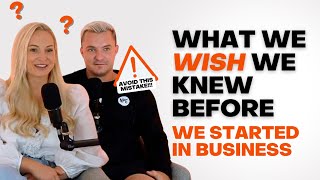
This content was created by Tim Frey. This content was uploaded by Tim Frey. This is a YouTube video titled "What We WISH We Knew Before We Started In Business" featuring a conversation between Tim Frey and Steph Gordon. The video, created on July 7, 2024, discusses the challenges and misconceptions of entrepreneurship, personal development, and the importance of mindset and branding in business. Tim and Steph share personal anecdotes and advice for aspiring entrepreneurs, emphasizing the hard work and dedication required to succeed.
Chapters
One of the biggest misconceptions we see, and we've seen all the time, is people just start a business and they think they're going to be successful. That is so far from it. It takes a tremendous amount of work, thousands of hours. I don't think you can do it on two hours a day. I don't think you can do it on a weekend. I don't think you can do it in your spare time.
You cannot do this entrepreneurship thing without mindset work. The people who have done no self development, they see themselves differently in their mind's eye. So they see themselves driving lambos. They see themselves owning a building with their name on it, and they already believe that they can do it. Visualize themselves there every freaking day.
Welcome to the Success School podcast. We're on episode 51, what it takes to build success in your business. A little bit of a mindset episode today. 1 I'm very excited to riff on. Have no idea where this is going to go, but I'm sure it's going to be epic. Steph, how are you feeling?
Oh, I love this topic. I could talk about this topic for all day. So we're going to try and keep it succinct. So we're going to dive straight into personal updates, and then our personal stay are hilarious. I think personally, it's like the beauty regime of the free household that you're about to hear about today. So you go first.
Yeah. So if you're seeing some beauty guys, just let us know on YouTube.
Yeah, if we look beautiful, let us know. Drop them in the comments.
So I got my wisdom teeth out a couple of months ago because I was going to get braces before I got my wisdom teeth out. The surgeon said to me, hey, Tim, you should go and speak with the orthodontist because you might need some more teeth pulled. And I said, nah, it's all good. I'll just get them out and then I'll go to the orthodontist. So I had my wisdom teeth out. Worst fucking weeks of my life, I must say. After that, it was so painful. I went to the orthodontist, and he said, you need to get another three teeth removed before we can put on braces. I was like, for fuck's sake. I have just classic Tim move. That is the ultimate Tim thing.
Two lots of hospital fees, two lots of anesthetists, two months, two lots of everything.
So I go back in and the surge. I walk in the surgeon and he goes, oh, you again. Yours was one of the most brutal wisdom teeth removals I've ever done. And I was like, for sake? Yeah, dude. I felt like I'd been nearly killed. So anyway, I have another surgery coming up, another three teeth removed, then I'm getting on braces as an adult, 33 year old man. So my want to do this was I want to become an 11 out of 10.
And he's so humble, guys, like, so.
Humble, you know, I was like, how can I get better looking? Here we go. Let's get these teeth sorted.
Yeah, get the teeth sorted. And then I'm excited to see Tim smile. Tim does the old lips together, pursed, smooth. He's wearing it right now. It's very beautiful. And I've never really seen him really, really smile. I've tried to get him to do it for me. I'm like, what's it gonna be like to just like show your teeth, you know? Like, I can't wait to see it. I'm super excited. So my personal update, similar in the beauty vein. I went and got some Botox and some filler just in my lips. I got a little chop up here and there.
Got them duck lips. Yeah.
About to go on the, on the Gibb River Road. And I want to look like I just woke up like this, you know, Even though it takes a lot of work to look like you just woke up like this.
And.
And I came home and I said to Tim, I was like, you are so lucky. You don't have to do that shit, man. Because, like, it is painful. Like I was sitting there with this woman and she's just like. They're so nonchalant, you know, that the injectable people, they're like, so, like, this is just obviously their job. They do hundreds of people every week. And I'm sitting there and I'm trying to be like, big strong girl. And, you know, I'm trying to be.
A big strong bitch.
I'm trying to be a Smile. No. But ended up being crying like a little bitch. I was laying in that chair. Me and her were just making conversation. I was trying so hard to be like, strong and, you know, not be a little white girl. And my eyes were just streaming and she had to just keep giving me tissues to keep wiping. I was like, I'm all good. It's really, it's.
It's fine.
It's not even painful. I came home and I said to Tim, I was like, you're so freaking lucky. And he was like, such a little bitch.
So we're talking about success today. In business. And before we get into that, Steph, what are some misconceptions about success in business? You know, you'll probably hit this on the head in the first point, but yeah, give us yours.
I actually think that at some level, and this is just between you and me, guys, so you and me and hundreds of people, that the entrepreneurship world has just been totally misrepresented. Like, I think that a lot of people think that it's going to be easy. And a lot of people think that, you know, I'll just become an entrepreneur and I'll make millions of dollars and I won't have to work again and I'll be able to travel around and live a laptop lifestyle. And, you know, I'll never have any stresses because I'll be financially free and independent and it's going to be amazing. And who would ever work for anybod body? And, you know, fuck workplaces and fuck the nine to five and all of this stuff. And in theory, that is great, but the reality is it is really tough to get to your business to a point. To do that, you have to take a lot of risk, you have to make a lot of jumps. And the thing that no one tells you about entrepreneurship that they don't talk about enough is just how much of a fight it is with yourself. 90% of the game is just overcoming your own bullshit. And even, like to the point where you, like, quit your day job. It's like quitting your day job is one of the hardest first steps. Most people, it's the first step that is the most scary. It's the biggest risk. It's the, the biggest change of belief systems and values. And, you know, everyone's going to tell you you're crazy and you really have to go against everybody else's, you know, opinion and really back yourself and go all in. And it's terrifying. Taking away the safety net. And there's so much like, even just that jump alone is so big and so hard. And anyone who's done it will tell you, like, it is painful. It's really painful to make that jump. And if you think about making that jump and then just think about making that like seven times a year in business, that is how often you are going to experience a level of pain or fear or doubt or unsure or frustration in your business. And the person that you are constantly going to bump up against is you. It's just 24, seven self work.
All right, so if you haven't been through this, I want you to, like, actively try to think about it. So how hard do you think it is to build a seven figure business? Like, what would you have to do? So how many hours would you have to work? How many clients would you have to see? How many rejections would you have to get on sales calls? How much marketing would you have to do? The networking? Just think about like literally what goes into that, because it doesn't happen overnight. And then imagine 10 times the amount of effort that you just imagined and that'll give you a ballpark of the amount of effort it goes into building a seven figure business. Okay. And if you want less results, yeah, you can do less work. But I think one of the biggest misconceptions we see, and we've seen all the time, is people just start a business and they think they're going to be successful. That is so far from it. It takes a tremendous amount of work, thousands of hours. I don't think you can do it on two hours a day. I don't think you can do it on a weekend. I don't think you can do it in your spare time. This has to be maximal commitment for a very long time to become successful.
Yeah. And the reason I wanted to have this conversation is because I just think that if you're listening to this podcast and you are experiencing hardship, if you're listening to this podcast and you're experiencing maybe a downturn in sales or you're having a hard time or you're experiencing something really hard in business right now, we really want to just be here for you in this exact moment and be like, girl or boy or bro. We get it. Like, we get it. It is hard. And I'm sorry if someone sold it to you like, it wasn't going to be hard because it's really hard. It's actually much easier to have a day job. It's actually much easier to follow the prescribed route that society has set for us of school, university, job, career, retirement, cruise ship. Like die. Yeah, die. It is much easier to follow that preordained path, is much simpler for you to do that. The hardest thing you will ever do is to work in your own business. And so the reason we want to talk through this episode today is we want to break down for you what it looked like for us in the first few years and some of the lessons that really helped to get us through that. I might just kick off really quickly with my first year in business, especially coaching, if you don't mind something that I was having a conversation with one of my girlfriends. Brianna the other day, and I was like, man. She was like, I remember when I first signed up for your program Purpose and Profit mastermind years ago, Steph, and I had my sales call with you and I was like, oh, really? That was like before we had even hired a salesperson. And I remember she was like, back in that day, Steph, you had 60 clients and those 60 clients all had one to ones every two months. So I was doing 31 to ones a month. I was doing 10 sales calls a week. I was also running all three of the group coaching calls that we were running every single week. I was doing the webinars, the presentations, the masterclasses, the marketing, the bookkeeping. I was doing all of the things and my work weeks, like minimum 50 to 60 hours a week. Minimum, like absolute minimum. Like I worked seven days a week and most days I work 10 hours a day. So I would say like at least 70 hours a week, most weeks to build that business to the point where then I hired somebody. And then, you know, she helped out with sales, which is amazing, but it took a really long time. And we were at lunch the other day with one of our very good friends and clients who's also a coach, and she was like, I'm just really feeling because of my first year in business and I've only got. How many clients did she say she had? I think she has like 20, 20 clients. And she was like, I'm just disappointed because it's growing slower than I expected. And I just wanted to slap her fucking fork out of her hand because I was like, excuse me, you have no idea. Like she's literally working like 15 to 20 hours a week on her coach.
You got on Easy Mode.
Yeah, man. She's done a really incredible job. And that is because she has had all the templates and systems and tools and stuff that of course have come from us. But the thing is that, like I didn't have those tools in those templates and those races. I had to figure that all that shit out of my own. I was doing 70 hour weeks. And so when someone comes to me like, I'm disappointed that I only have like 13 or 15 or 20 class. Like before that, my first year business, I was charging 50 bucks an hour for one to one coaching. I think I had like 20 clients that entire year. And I remember being thrilled. I remember being thrilled when I made $5,000 in sales from my first group coaching course, which I sold for 12 weeks. So $5,000 for 12 weeks was what I got paid And I was thrilled. And I see so many entrepreneurs now, they'll be pissed off with earning that. That would be frustrated that they did like that. They will be like, oh, other people are earning so much more. Why don't I have a 20 grand launch? Why don't have a 40 grand launch in their first year in business? And I'm like, guys, I was stoked with five grand for my first launch. I was like, honestly crying. I could not believe that people paid me $5,000 to do this thing that I already wanted to do. Like, how lucky am I? And I want to help you guys to reframe in your head the expectations that you are being sold versus the reality of what it actually takes.
Yeah. And just to meet Steph there with the story. So my first 12 months as a personal trainer, I had zero clients. Let me say that again. I had zero clients.
What were you doing?
I was literally walking around the gym floor having conversations with people, giving out exercise demonstrations. And then I was inviting them in for a consultation or whatever, like, you know, do you want to train with me? Type thing. And I was, no, no. Why? No, no.
Why do you reckon that you couldn' sign a client that first year?
So everyone at this Gym, there was 12 other personal trainers and me, everyone was on steroids and I was the only one that was not. So the fitness industry is very much about how you look, of course. And back in the day, I was 19. I was, you know, like skinny as a feather and weak as a little. Like, obviously no one wanted to train with me because I'm not very inspirational. And then, you know, I started working out, start training with the boys, starting slapping on some muscle. We got a little bit cooler. I could look at someone in the eye, have a conversation with them. I wasn't super weird about it. And then it got better. My second year and $30,000 my third year, earned 60. And then I think I earn 60 to 75 for the next seven years. And then I got to the six figure multi. Six, very high six, you know, and then I went up from there. But I think like my first seven years, my maximum income for the year was 70 GS, which is fine because I was living like young, dumb and full of the other thing. And I remember, like in my second year, one of my clients, they paid me for a step has lost it. They have paid me for like 10 sessions in full, which was like 300 bucks cash. And I remember going home and I lived with my friends at the time and my rent was A hundred dollars a week. And I was like, boys, I'm fucking loaded. I got 300 bucks cash. And I was walking around the house with the $300 in my hand, shaking it around like a fucking big baller. Yeah. And I just remember those days, they were like so much simpler. And we make like massive sales now. Like, massive. Like some huge weeks, like six, seven figure weeks sometimes. And I just think back to that moment. I was like, those were the days, you know?
Yeah, it's. It's crazy, guys. Like, I think a lot of entrepreneurs and I get it. Like, you know, in story there, Tim did start young. You know, he started young. And I know that a lot of you haven't started young. I know that a lot of you are starting right now. And you have mortgages and you have real bills and you don't live with five friends and pay 100 bucks in rent. But when I started, I had a mortgage and bills and a day job and, you know, I had all those things too. And so I get it. Like, it's a lot to have to cover, but you really have to want to go all in on this. Like, you really have to choose it.
Steph, what do you wish you knew when you first started? Give me like 1.1 main one.
You cannot. Well, you can, but I would not recommend it. You cannot do this entrepreneurship thing without mindset work.
Why?
Because it's all mindset. I saw a quote recently that was like, your business will never outgrow your level of personal development. And as much as I kind of do agree with that, I do agree that personal development underpins so much of it. I do also know a lot of really successful people who have done no self development and are pretty toxic and run pretty big businesses. But the commonality between those two people are people who do a lot of self development, people who do nana is that the people who have done no self development, they see themselves differently in their mind's eye. So they see themselves driving Lambos. They see themselves owning a building with their name on it. They see themselves being, you know, the number one real estate agent in Australia. They already see themselves there. They already see themselves at the finish line. They already believe that they can do it. They visualize themselves there. Every frickin day they look in the mirror and they tell themselves, you're the fucking best. You got this, you're gonna crush today. Get out there, make it happen. And because they see themselves like that every day. That's why they get there. Whereas if you're running a Business. Right now you're listening to this podcast and you're like, the first thing that you say about your business when you go to tell people what you do, you're like, yeah, I'm a mum of two and I do some copywriting on the side. Okay, cool. So if you are pigeonholing yourself as a mum of two as your number one main identifier, then it makes sense. Your business isn't going to grow super fast because the identity that you've tapped into, like, you know, in society is really hard to break free of, is that moms and work don't really go so easy together. And I know that we, and I personally, am going to break the fuck out of that cycle and that belief system. But, like, I think that so much of it comes down to if you believe you can or you believe you can't, you will be correct. And so if you believe that you don't have what it takes, or you're not as good as that person down the road, or you're not as good as the people on social media, and. And someone else is in there walking into Google with their shitty little app. They've never fucking done anything like this before. And they're going in, they're pitching their service because they believe they can. They're going to win every single time. And so the biggest thing for me with mindset work was just that belief system that, like, I can. I can do this. And for me, a lot of, like, my mindset work comes down to, if I can see someone else do it and I can see the path that they've laid, I will fucking go after it. Tim doesn't need that. Tim doesn't need to see that path, but I do. So I need to see someone doing it. I need proof of concept.
I.
Once I see proof of concept, I'll get it, like, no problem. Tim doesn't need that, which I find so fascinating.
Yeah, so Steph raised a good point there, and she said, you know, the mum that you know, she's a copywriter on the side, and there's a point I want to make here is like, you have to fake it till you make it. And you need to go out there and literally, if this is the example and this is your business, you need to say, yeah, I'm a copyright. I'm the best fucking copywriter there is, like, full stop. And you need to believe that doesn't have to be wholeheartedly, but you have to show and there has to be a confidence around that you believe that when I first started as a personal trainer at zero clients, I said I was best personal trainer with zero clients, okay? Because that was my fucking energy. And that served me well because it eventually did pay off. And that confidence does still to this day ruminate around. You know, we got into this business coaching thing. Like, what do you think I'm saying in my head about my quality of business coaching? I'm not like, I'm an okay business coach. In my head, I'm like, I'm the fucking best. And I literally live that to this day, every single day. And people can feel that as well.
With one of our team members the other day, and I was like, this is literally the best business coaching program in the market. And we're so. We believe that and we're so sure of it. That's not to mean that we don't work on it. It's not to mean that we think it's a finished product. It's not to mean that we think that there can't be improve. They can and we will. But we have to believe that. Otherwise, if we don't believe that, how the fuck are we going to instill that belief system into anybody else? It starts with you.
So the thing I wish I knew when I started was to build a brand. And I know people didn't do that prior to social media, but now I think it is so damn important that you guys build brands and you have to have a presence. You have to have a. Have to have a personal brand. But you need to have a brand that has credibility, has name, and you need to be building that to a lot of people if you want them to have massive success in business. You have to build a brand based.
On building a brand. How do you build a brand?
I think the easiest way to build brand is personal brand these days. And it's essentially just sharing what you're up to, what you're doing, providing value, giving people little tidbits, hacks, advice, that kind of stuff. I think easiest place to build a brand is personal Facebook. I think it's a really good way to start because you're already going to have a bunch. You know, I think the average is about 400 friends people have. You're already going to have an audience there. Obviously they're not going to be all interested in what you're doing or selling, but they will support you because they are your friends and family, which is incredible. And like, that support means the world, especially when you first start. So I think build a brand, start on personal Facebook, then you can roll that to other social media platforms. But you know, we know a guy, Matt, Matt Smith, and he has built a brand on personal Facebook and I think he's done over $7 million as personal Facebook is his main marketing channel.
And I'll be really clear, Matt has a really weird niche. What's his business?
He like has digital marketing for roofers.
Digital marketing for people who put roofs on. I like that. Think about how niche that is. And he's built a seven figure business on his personal Facebook because he just became friends with all the roofers and then just put up content talking about roofing stuff. And then they were like, this dad talks my language. Literally, like, and it's crazy. Like he's hilarious. Because as well, like a personal Facebook just feels a little bit more like, like friends personally. Like they're your friends. Right? Like that's literally what it is. And so whereas Instagram feels a bit more like a performance because, you know, people follow you. And so it's almost like if you think of it like a stage show, like the audience is watching you. Whereas with personal Facebook, it's almost like you're inviting people in to be a friend and you can kick them out any minute. And you know, I know that Matt talks about like crushing skulls and all this stuff. Like, you know, and it's really like interpersonal and really fun and yeah, like it's, it gets to be a really good time. Like I really have enjoyed personal Facebook the last couple of months as well.
All right, Steph, let's talk money. How much did make in your first year and how many hours did you work a week?
Man, I thought I was so rich in my first year of business. I was working full time in my first year in business. So I worked a day job. And my day job was nowhere near where we lived at the time. I think it was about, it was like a 45 minute drive every day each way. Plus I went to CrossFit in the mornings sometimes. Sometimes I just drove out of the driveway and around the corner.
That's such a funny story. Steph used to sit in the driveway and say she was at CrossFit and she would lie to me about it.
Because I didn't want him.
What else is she lying about?
CrossFit was hard. Hard. It was really hard. So anyway, long story short, but I used to work full time. So I would leave for CrossFit at like 5:30 in the morning and then I would go straight to work and then I would get showered at Work, and I would perform my whole day. And I think I got home by like 6, 6:30 a night. And then every night I would sit down for a couple hours and I would. In my lunch break, I would do work. At night I would do work. And that was how I kind of built my first side hustle. And on weekends, I would work all weekend. And in that first year, I think I made like 50 or 60 grand. I had quit my day job nine months. So nine months into that first year of business, I quit my day job and I jumped into business. Tim saved us financially in that jump, which I'm so grateful for, and Helix actually saved us in that jump, so really grateful. So not. Not a lot of money. Not a lot of money and all of that. Like, guys, there was none of that left over. Like, that 60 grand that I made that year. Went back into the business. I probably spent 80 grand on the business that year and made 60. Like, I definitely ran at a loss that first year.
Yeah. So I made no money and I worked all the hours. I think, like, you know, once I've been on my 15th year now in business, I think up until last year, I worked seven days a week every day for 14 years, basically. And then recently I've started having some days off, which has been great, but it's not after. It's after 14 years. And during that 14 years, I literally, when I say I studied every single day, I studied every single day in that time. So that's copywriting, sales, marketing, all that kind of stuff.
Nutrition, fitness, hydrophy. Like, oh, my God, there was like.
Nothing you weren't studying, like two degrees, every certification under the sun, nine business coaches. It was. It's been literally full time. So, you know, when people say overnight success, I laugh my ass off, you know, because it's just been. It's been anything but overnight success. So I think, you know, the point we're trying to get at, you have to put in massive hours for this. Like, there are ways around it. If you are skilled, you have an audience, whatever, but, like, there is hard work ahead of you and it's going to take years. And when we say years and you're not cut out for years, then maybe you need to, you know, ask yourself, this is. This is for you, because it's going to take some time. Steph, when did you crack financial and lifestyle freedom?
Eight months ago.
Yeah.
Yeah. Honestly, I feel like I really cracked. I think we cracked financial freedom a couple of years ago. Financial freedom for us is all of your business Expenses are covered and you still have ample coming through the door to like your bank account is building every single month. So for us, US financial freedom, I think probably, probably when we moved into our last house around there was probably where I really started feeling it. So it's probably about three, three and a half years ago. Yeah, that was when I think that we finally cracked financial freedom. But we definitely did not have lifestyle freedom at the same time. I was still working 70 hour weeks at that point for sure and burning out and gave myself an autoimmune disease and all sorts of stuff. So, yeah, finance is great. Lifestyle not good. I'd say that lifestyle freedom really only cracked. Yeah, like eight or nine months ago to have both. So the money still comes in, the bank account still grows, but I don't have to work as many hours now. We still choose to work a lot. And the reason that we choose to work a lot, we actually just love it. Like, we love it. And when we say work, like I was saying to Tim, I was like, Yeah, I work 20 hours a week. He was like, you probably work more than 20 hours a week. And I was like, no, I don't. And he was like, yes, you do. And we started talking about it and there was just stuff that I didn't see as work. Yeah, like I don't see upskilling and you know, doing my copywriting course that we're doing at the moment as work, I see that as like, like I'm interested in it, I want to learn it, so it's fun. I don't see, you know, doing a viral reels course as work. I don't really even see making reels or content as work. Like, it doesn't, I don't hate it. You know, I quite enjoy it. Like work for me would be like having to do I hate, which there's not much of in our business. And so for me, like, yeah, probably eight months ago for lifestyle and financial freedom. What about you?
Yeah, so just to be real with you guys, I work seven to seven, basically every day, mostly 12 hours a day, seven days a week. I obviously have breaks in there, but like I'm on seven days a week. So I don't want to sugarcoat and be like and do whatever the you want. Financially, I can like and without sounding ridiculous and tall, poppy and all that, like, you know, in the last three months, we've definitely got you money. In terms of lifestyle freedom. We have the flexibility to do whatever we want, whenever we want, but we choose to work because we love to work as well. So I could take a day off, two days a week, four weeks, like, whatever it is. I could 100 do that if I wanted to. But honestly, I love working and I love growing and I love learning. So it's, it's honestly a part of my identity is growth now. So I'd say, like, one of my three major values would be love and connection, which would be Steph and the dogs and our future family. And second one is probably like, growth. Like, that's probably one of my, like, major things that I love doing.
Yeah. And I think it's like we don't have any goals, which is really interesting. And something that I think is probably worth chatting about is like, we don't have a lot of goals. We're not growing for growing sake. We're not like, oh, we want to get to a $10 million business and then have a fucking $5 million exit. And, and la la la, yada yada yada. We grow because we grow in areas that we're really interested in and because we want to have more impact on people. Our biggest driver and everything that we do is impact. And so we are on a, on a journey of self actualization, I guess. And so we do have the capacity and like, what else we can do is sit around and like, what, like suntan. Like, there's stuff we can learn, there's. There's ways we can be better. We want to be the best, we have to keep chasing being the best. And, and so it's something that we're constantly, you know, working on. But again, we love, love to do it so it doesn't feel like work.
All right, so let's get into three pieces of advice that they need to know in their first couple of years of business. I'll do one, you do two.
Sure.
So my first one would be like, I've kind of mentioned it's going to be way harder than you ever thought. But, you know, don't give up on it. Honestly, your skills are just not where they need to be. And I don't mean that with any disrespect. I mean, you just haven't put enough time into it to have the skills to have the business or the life of your dream dreams. And that is meant in the most subtle and sincere tone. It's not a having a go, but you're probably from a skills point of view as a business owner, you're just not where you need to be and you just have to get better and that's okay.
The Minute you accept that and work on it, you get better really quickly. So that's awesome for me, one of the things that no one told me, I will tell you. And it doesn't happen to everybody, but it happens to most of us. You will lose friends, and that's really. It's really painful, and it's really hard, Hard to do that. And so if you're experiencing people not supporting you the way that you expected to, and, you know, not cheerleading you the way that you expect to, and they could be people you really love, like your family, your friends, your husband, your partner, your wife. You know, you have people who just really don't support you on the journey like it is. That is going to happen, and it happens to all of us. You are not broken. It is not you. You're not messed up. You haven't messed anything up. Like, as you grow, you will change. And most of society is just, just so adverse to change that they just want to keep you where you are. Because if you change, then that sometimes shines a light in all the ways in which they aren't. And so that can get quite toxic quite quickly. So if you're experiencing a turnover in friendships, my biggest piece of advice for you will be focus on where the support is coming from, not where it's not. As I was going through this phase, I had a lot of friends who were like, you've changed and you're different, and kind of stopped hanging out with me. Yeah, I got a lot of that. It was really tough. But then at the same time, as those friendship doors were closing, new friendships were opening. And. And I've got some incredibly amazing women who have been in my circle since I first started my business, and I'm so lucky to have met those women on this journey. And I just think, like, focus on where the support is showing up for you. Don't get caught up in where it's not showing up, because that just drags you backwards.
And my last piece of advice here, things I wish I knew when I started, was focus on your brand. So your brand is not. Not your logos, your colors, your fonts, your website is what people say about you, okay? And you have the power to change the narrative about yourself. You know, when you show up for a call or a zoom or a meeting or whatever, are you whining? Are you complaining? Do you lack leadership? Are you like someone that generally is. You don't want to hang out with because that is going to affect your brand? And then as soon as someone asks, hey, are you going to go work with X? They're going to be like, oh, I got a little bit of a weird vibe from them. I'm not going to work with them. So your brand is not all those types of things. It's what people say about you, okay? And honestly, it's one of the most important things in business. I have fucked up many times in the last 15 years is my personal brand and my brand or the brand of my business. And I haven't even given it any thought or context until it was too late. So if you're listening to this podcast, I want you to really start thinking about your brand and what that means to people, the effect it has on people, what you stand for, what your values are, all those types of things. Think about it before you start going any further in your business because you want to start shaping the narrative, shaping the story and shaping the brand.
One final thing on that point, you might be in a business where, you know, people can get disappointed really easily with your product or your service and that sometimes this happens in done for you businesses where people can be a little bit high maintenance, I guess, your brand, when people are saying things about you like, you have to know, this doesn't mean that you can't make a mistake, right? This doesn't mean that you can't fuck up too. And I have made heaps of mistakes. We've let tons of people down. We've done all sorts of things like, of course, because we're human and everybody else, you're going to experience this too. They will forget what happened, but they won't forget how you treated them. And so if you make a mistake, own it, apologize, fix it, it's fine. Don't make it mean anything about you. It's just part of it. We all make mistakes as part of learning, but your brand is how. It's the story that comes after the fuck up. The brand doesn't get actually affected by the mistake. It gets affected by the response to the mistake. So you can make a mistake, admit you made a mistake, fix the mistake, apologize, and you will be fine. But if you make a mistake and then you try and make it somebody else's fault because you don't want to accept the mistake, then that's going to get around. People are going to hate you for it. And that's when, you know, bad news and bad juj, you know, starts to take over your brand. So your brand is what people say about you. And that really comes down to what Tim was saying about values. It's about knowing that when these things happen, this is how I show up and this is the value that I stand by. That becomes your brand and that becomes what people say about you.
All right, Steph. So you know, very doom and gloomy type episode. We're just fucking real talking, you know, hashtag real talk over here. When does it actually get easier?
Yeah. So there's this concept that it takes 5,000 hours, 10, 10,000 hours to get good at something. Math numbers evade me. This concept that it takes 10,000 hours to get good at anything. And honestly I didn't really like, I didn't really obviously know that and I didn't really care about it. I never really listened to it because obviously I didn't even know what the number was. But it's true because every single entrepreneur that I know that has worked full time in their business for five years full time being 30 to 40 hour weeks is an absolute minimum. At year five, that's when shit unlocks. Like, that's when stuff really starts to unlock. And I did the math on that one time. I'm not going to break the math down for you, but I did use a calculator and I figured out that if you do 30 to 40 hours a week and you do them every week for five years, that's when you will hit 10,000 hours. And I was like, that makes so much sense because if I've asked all of my friends who are millionaire like, or who have million dollar businesses and all of them said at year five, that was when they really felt like everything slid in and unlocked. So that was when it was for me as well. What about you, Tim?
Yeah, I think, honestly I think it's once you reach a certain level of skill and I know with bashed on about this, but you actually really need to understand marketing and you really need to understand sales and you really need to understand doing a fucking great job at what you do. Once you get those three things, the delivery of the sales and the marketing, I think business becomes a lot easier and you probably will think you can sell. It's like the Dunning Kruger thing. You just, you don't know what you don't know and then you realize you don't know and it's like your whole world comes crashing down. So once you've reached a level of mastery where you know you can move and take things on the chin and business and navigate situations and problems and nothing really derails you, that's when it gets easier.
Yeah. So guys, I love that, Tim. I Love these conversations because. And the reason we wanted to have it is we wanted you to see yourself in our stories and we wanted you to understand that, like, you might be comparing yourself to where we are now, but it's taken us a really long time to get here. And. And if you're in, you know, your first year and you haven't made a sale or you've made some sales, you're doing better than Tim did. If you're in your first year and you know you've signed 20 group coaching clients or one to one clients or whatever, you're doing better than you did in my first year. So just a reminder that, like, sometimes we position ourselves in comparison against people who are really far ahead of where we are and think that we're not doing well enough. I just wanted to give you guys a bit of a reality check about what it actually looks like for us because I think it's really easy to look at us here and go, oh, well, they can, you know, work 20 or 30 hour weeks now, but it wasn't like that for a really long time. And so if you're in the hard stuff right now, we see you. We have been there. Keep pushing through. It does get easier. Focus on upskilling, focus on skills. If you focus on skills, you'll make more money. Life will get easier. I promise. It will unlock block much faster than you expect.
All right, guys, that was a fantastic episode. And if you guys got some value from it, please subscribe to the show. Follow the show Leave us a review. Do all the things. Send us a message at both our Instagrams, at Real Tim Frey and then at Steph Gordon.
He doesn't ask for much, does he?
No.
Follow the show subscribe Share Message We've.
Just been dropping value bombs. It's the least they could do. This is the best business podcast in the world.
I feel like any entrepreneur, like, anyone, listen, any marketer will be like, just one CTA, bro. Just, just one CTA.
I am a marketer and I'm doing three CTAs. I'm breaking the rules, guys.
Thank you so much for listening. We'll see you next week.
Thanks, guys.










