2024 State of the Center | Woodwell Climate
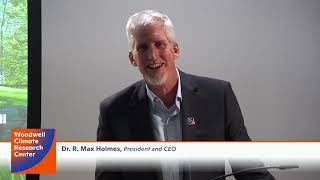
Hybrid ‘State of the Center’ event (Woodwell Climate, Jan 30, 2024) presenting organizational growth, strategic priorities, major projects and policy engagement. Leadership reported rapid institutional growth (doubling budget and staff expansion), program highlights (Permafrost Pathways, Fund for Climate Solutions), publication and grant metrics, new partnerships and MOUs (e.g., DRC Ministry, International Center for Reindeer Husbandry), expanded COP presence and DC engagement, and applied science efforts in permafrost monitoring, tropical forests/DRC climate economy, climate security case studies, and community-led Arctic adaptation.
Questions this video answers
126 staff (current), projected 135–140 in 2025.
74 papers (about 20% in top journals).
70 proposals submitted, 34 funded (~50% success rate).
58 proposals funded for a total of $6.6 million; ~ $115,000 per award; two rounds per year.
A 3‑year $5 million grant from google.org (Dr. Anna Lillidol, Tracking Arctic Permafrost thaw with Geo AI); a 4‑year $2 million NSF grant (Dr. Chris Neal, coastal water quality sensors).
Chapters
All right.
Good evening, everyone, both here in the room and joining us online. I'm Heather Goldstone, Chief Communications Officer at Woodwell Climate, and we're really excited to welcome you all for our first hybrid event and to have folks back in the auditorium for this state of the center. Thank you all for joining us again. My job tonight is very brief. I have two things really to tell you right now. The first is for those of you in the room to please silence or turn off your cell phones. That would be greatly appreciated. The second is just to tell you that you are in for a ton of great information. Over the next hour, we've got a suite of folks who are going to tell you about some highlights from 2023 and how that's really propelling us into the coming year. And then there will be an opportunity for questions, and that' for those of you here in the room and those of you online. So if you're here in the room, try to remember your questions till the end. If you're online, you have a little bit of an advantage here. You can drop those questions in the chat at any point online, and we will refer those to the room when we get to Q and A. So without further ado, I'm going to welcome Dr. Gail Greenwald, Chair of the Board of Directors of Woodwell Climate, for some welcoming remarks. And we're off to the races.
Hello, everybody. It's lovely to see you all. It's been terrific meeting many of you for the first time and also meeting many people who I met on Zoom at one point or another over the past couple of years, but finally got to meet in person. So thank you so much for coming. I am charged with a couple of things, the first of which is wanted to welcome or introduce a couple of the other board members who are here. Vicki Lowell, raise your hand.
Vicki.
And Todd Hines, raise your hand. Our other two board members who are here. So if you haven't met them, please find the time to introduce yourself before you go home tonight. We always do a land acknowledgement, and so I want to start with that as well. Woodwell Climate Research center is located on the traditional and sacred land of the Wampanoag people who still occupy this land and whose history, language, traditional way of life and culture continue to influence this vibrant community. As my colleagues on the board know, I always try to add a little extra color to our land acknowledgments when we do our meetings. So I'll just also add very briefly here, the Wampanoag. That term means People of the first life, which I think is pretty cool in this eastern part of this region. And they've been here for over 12,000 years. There's the museum over in Ashpee, which is still on my wish list. Has anybody here ever been to the Wampanoag Museum?
Yay.
That's still on my list to go to. And it's closed for the winter, but hope to go back and visit in the spring. So that's it from me. We've got a very full program this evening and I'm looking forward to it and hope you all enjoy it. And so with that, I will turn it over to Max Holmes, who is the president and CEO of Woodwell Climate.
Thank you, Gail, for those comments. Thanks to all of you for coming tonight, giving us an hour or two or three of your time. We very much appreciate it. We'll try to put on a good show for you. I want to thank not just the people in the room, but the people out there in cyberspace and also the people who will watch this recording down the road. You're all, importantly all, and we're grateful for all of you. In addition to sort of thanking the people that Gale already did, I wanted to single out a few people, and that is some of my predecessors who had the position of the president of Woodwell Time at Research Center. We have two in the room, John Holdren. Don, thank you, John, for being here. Steve, thank you very much. Online, I believe we have Phil Duffy. Phil, if you're here, thank you very much for the White House now. And while not in person and not online, I'm in frequent communication with George Woodwell, including earlier today. So if I screw up with these four people as advisors, I have absolutely zero. Excuse me. I'm tremendously grateful for their support, for their advice and encouragement, and for being here tonight. This is an amazing time in the history of the Woodwell Climate Research Center. In the past few years, we've doubled our staff size, we've more than doubled our budget, and we've greatly amplified our impact. And our goal here today is just to share some of the highlights from the past year or so, and it gave you some indications of some of the things we're thinking about for the next year. This is not a comprehensive listing of everything we've done over this time period, but I hope these highlights, and I think these highlights will give you a sense of sort of the amazing diversity of activities and achievements that have been happening here at Woodwell recently. Before I hand it off to Wayne Walker, our Chief Scientific Officer. And we'll have several people up here telling the story. I'm sort of making introductory comments, but before I hand it off, Wayne, I wanted to just sort of quickly list or recap some of the places that we've spent some time in the last year spreading the word, telling our story, reaching new audiences. Some of the places are places that we've always been, for example, cop, and you'll hear a lot more about that down the road. But our presence is growing at cops. We're very active at Climate Week in New York. Our present fair is growing each year, but we're also getting to some places that are new, or at least places we haven't routinely gone to. So Davos during the World Economic Forum, saraweek, a big energy conference in Houston that happens each year. Ecosperity Conference in Singapore, south by Southwest Festival in Austin, TED in Vancouver and elsewhere. Mountain Film in Colorado, Sun Valley Forum in Idaho. And this is just some. And this is in addition to all the sort of typical scientific conferences that our scientists go and speak at and contribute to and so on. So we've been busy. We've also been growing our partnerships and one of the ways that we achieve impact is by partnering with other organizations. Many of you have probably heard of our partnership with Wellington Management that's about five years in the works and that continues to grow and have and to flourish. We have a new partnership funding actually from google.org that I'm super excited about. It's Arctic focused project AI doing some really neat work, just getting off the ground. But a really cool thing about that is in addition to the financial resources that google.org has provided, we also have 15, I think they call them Googlers fellows, full time employees of Google that will be working with us, bringing their expertise in computer science and a whole different range of things to help us understand the Arctic and hopefully broader than that. Another new partnership or collaboration that you'll hear more about later, but I'm super excited about is with odni and I didn't know what those initials were until quite recently. The Office of the Director of National Intelligence. That's not a group I ever imagined the Woodwell Climate Research center working with, but I think it's a super impactful work down the road that we'll have with them. We've recently signed three new MOUs, one with the Ministry of the Environment or the Democratic Republic of the Congo. You hear a lot more about that down the road. And I'm super excited about our expanded work in the DRC another with epom, our long term partner in the Amazon in Brazil. We've renewed that MOU and a brand new one that's different than the others but just shows illustrates the diversity of the sort of partners we have is with the International center for Reindeer Husbandry. We just signed that a week or two ago. So this great diversity of partners getting our story out in a great diversity of places and I think you'll just, hopefully that just gives you a sense of some of what you're going to hear over the next hour. Now, I began by thanking all of you in the room, our friends and supporters and I want to end by thanking our staff broadly. So there's, I think we're at 126 people now. There are some of us that get up on stage and you see our photos and read our names, but there are many more people that you haven't heard of that contribute vitally to the mission of this place. And I want to thank all of them for what they do every day in advancing what we do here at Woodwell. And if you bump into somebody who works at Woodwell Climate Research center as you're walking through town or in this building and you don't know them, thank them for what they're doing because they're helping us achieve this incredibly important mission. With that, I will hand it off to one of those incredible people, our Chief Scientific Officer, Wayne Walker.
Thank you so much, Max. Good evening everyone. It's great to have you all here. As Max and others have mentioned, it's been a while since we've had a crowd like this. And also thanks to everyone online, I'm going to be providing you with an overview of our Strategic Plan, the story of our growth over recent years and our efforts to build capacity in our systems and in our people to support that growth now and into the future. Beginning then with our strategic plan in 2022, we conducted a comprehensive inclusive strategic planning process that included staff, operational science program leadership together with engagement of our Board of directors. The Strategic Plan was improved in October of 2022. As part of that process, we defined our mission, our vision, our values. The plan builds on the great strengths of this institution. Our rigorous cutting edge science, our passionate world class staff and our strong reputation and brand. The Strategic Plan focuses on three primary areas that you see listed here. Operational and workplace excellence, impact of our science and sustainable funding. I'm going to be speaking about the first two topics in terms of operational workplace excellence. And I'll be speaking on behalf of our chief operating Officer Corey Martin, who cannot be here this evening. And I'll also be speaking about the impact of our science. But later on in the program, Max will say a few words about sustainable funding where operational work and workplace excellence is concerned. I'd like to begin by talking about our growth over the past several years in terms of both our finances and our staff. Max has already alluded to this a little bit. What you see here is a financial overview over the last five fiscal years beginning in fiscal year 2020. Blue bars represent revenue, orange bars represent expenses. There's a lot of information here. But what I'd like you all to take away, we focus on the blue bars is simply the dramatic growth that we've experienced over the last five fiscal years from 2020 through to the present, as Max mentioned, really a doubling of our budget. You can also see an interesting spike there in 2022 that's associated with the TED audacious grant, the large TET audacious grant that we received that funds our Permafrost Pathways project, which I'm sure many of you are aware of and you'll be hearing more about a little bit later on. In terms of expenses, you can see, not surprisingly, they've very much tracked revenue through time. And you can see if we remove that spike, we see the steady Trend looking at 2024 as well as 2023. We've continued to grow as we brought on more and new exciting projects in addition to Permafrost Pathways. The relatively small expense bar that we're seeing here is reflective only of the first quarter, and we're well on track in terms of expenses this year as well. Pivoting then to staff growth here, we're looking at six years going back to June of 2019. You can see in the first three years of this chart, 2019 to 2021, relatively modest growth. Little over 50 staff members in 2019. Few over 60 staff members in 2021. Then in 2022, again with the beginning of permafrost pathways, we see staff start to increase, and that has only increased since then on both, of course, the science side as well as the operations side, as we've expanded to meet the needs of our growing scientific staff. As Matt's already mentioned, as of right now, 126 staff members given new grants that we know are coming on board over the near term, looking to 2025, we expect to be in the 135 to 140 staff person range next year. This pie chart tells the tale of the distribution of our staff over the last five years or so. Like many organizations here and elsewhere, we've adopted a flexible hiring approach. Initially, this was really as a response to Covid. Not surprisingly, however, since COVID we recognize the benefits of this approach as it allows us to cast a much wider net, recruiting top tier staff from around the world, while also focusing increasingly on diversity. The pie chart shows a number of things, but first and foremost I'd like you to look at the yellow portion which reflects the number of our remote staff. You can see just over 50% of our staff is located elsewhere outside of Massachusetts. Roughly a half dozen people located internationally, the rest throughout the United States. You can see the balance local to Massachusetts, about 34% on site here, essentially every day in the building on the campus, another 15% hybrid, meaning they're here two to three days per week. One ongoing challenge is of course, how to ensure that our core values and institutional culture remain embedded in our day to day operations. Given our growth, given that roughly half of our staff is in fact remote. Suffice it to say, we've learned a lot over the last several years like so many organizations, and we're continuing to learn and adapt as we as we work amidst this new reality of vodka of diverse hiring. Finally, I'd like to wrap up this portion with some highlights of our efforts over the past two years, really to build critical capacity in both our systems and our people, to support our expanding scientific base. As the graphic shows, there are six key areas where we're working to build that capacity. This has been an immense amount of work, as you might imagine, and I'm only going to be able to share a few examples across these various areas. First of all, in terms of organizational design, the recent growth, not surprisingly, has afforded us an opportunity to take a hard look at our org chart, including our leadership and our management teams. Among other things, we've established a president's office. We've invested in a full time laboratory manager where finance and HR systems are concerned. We have or are in the process of upgrading our core software systems to improve overall efficiency, including our financial, our performance management and our expense management systems. In terms of optimization of space, obviously we're a growing institution, not just remotely, but also locally. And that means we need to keep an eye on our space here on campus. And so we've hired recently an architectural firm who has done a comprehensive review of our space needs. Among other things, identifying needs associated with storage in our laboratory, keeping an eye on our desk space, moving forward and doing some scenarios, modeling with us to plan ahead for anticipated growth over the next several years. Finally, where climate justice and diversity, equity and inclusion are concerned, we recently appointed a Climate Justice Specialist to support more fully integrating climate justice work across the institution. And we've also invested new resources to support our DEI initiatives, which includes opportunities for involvement and support from staff across the center. In summary, I would just say that while our dramatic growth has certainly come with its share of challenges, we've worked very hard to turn these challenges into opportunities that are now laying the foundation for a future of growth and success. And as Max has mentioned, that foundation would not be possible if not for the hard work of a very dedicated and committed staff that we have here at Woodwell. At this point, I'd like to pivot to the portion where I put my Chief Scientific Officer hat back on and talk a little bit more about the impact of our sign. As so many of you know, here at Woodwell we undertake our science very much with a purpose, with an eye toward the measurable impact that our research results can have on the climate crisis. We measure our impact in a variety of ways and I'd like to spend a few moments now just summarizing what we've accomplished over the past year, including in terms of our publications in the peer reviewed literature, our policy briefs and climate risk assessments, our efforts to secure external grant funding, as well as some highlights from our internal Fund for Climate Solutions. Beginning then, with publications in the peer reviewed literature. As you can see, over the past year our scientists published 74 papers in the peer reviewed academic literature. Roughly 20% of those have appeared in what we would consider the most prestigious of academic journals. I have four examples here on the screen, with research ranging from the Arctic to the tropics, including our work to document how rapid Arctic warming is leading to diminishing lake area across the northern permafrost zone, and our efforts to better understand the drivers and impacts of Amazon forest degradation. We also produce a range of policy briefs and climate risk assessments. Here at Woodwell. In 2023, we published five policy briefs on topics ranging from principles and safeguards for natural climate solutions, protection of mature and old growth forests, and the relationship between climate change and US national security risks. We also published 11 climate risk assessments spanning a diversity of jurisdictions and municipalities across the globe, from regions like the Canastra in Brazil to cities like Brockton, Massachusetts, right here in the center's own backyard. Externally funded grants, whether from government entities or private philanthropy, are of course the primary source of our research dollars. In 2023, we submitted 70 proposals externally, of which 34 were funded for a really impressive success rate of around 50%. Just to highlight two prominent examples, 1Max already mentioned a three year $5 million grant from google.org to Dr. Anna Lillidol for the project Tracking Arctic Permafrost thaw with Geo AI to inform climate action and a four year $2 million grant from the National Science foundation to Dr. Chris Neal for the project Connecting Coastal Communities with Continuously Measured Sensor Based Water Quality Data. Now I'd like to spend a few minutes talking to you about a really special program here at Woodwell, which is our Fund for Climate Solutions. The Fund for Climate Solutions is an internal competitive granting program that provides twice a year what is really a critical means for responding to time sensitive research opportunities, but also making strategic seed investments in projects with potential for important scientific and policy impact that might not be fundable otherwise. Since the inception of the program in 2018, we funded 58 different proposals for a total award value of $6.6 million. We give out roughly $115,000 per individual award, a little over half million per round. As I mentioned, there's two rounds per year. I'd like to highlight a couple of examples of the impact of this program, but across the 58 funded awards there's many more examples than I have time to describe this evening. But first I'd like to mention a line of research involving Dr. Rich Birdsey, Seth Gorlick and myself focused on informing and influencing U.S. policy and rulemaking around maternal growth forest and robust area management on U.S. national Forests. Two FCS grants led to two peer reviewed publications which you see here on the right one focused on the Tongass National Forest in Alaska, one focused more broadly on US Federal lands. Both of these bring attention to the climate mitigation potential of the largest trees in these globally significant forests. These papers and other outreach by our scientists and our fellow collaborators have contributed to recent efforts by the Biden Administration to ban logging roads in much of America's largest national forest, which is of course the Tongass, as well as efforts again by the Biden Administration to protect old growth forests across the wider national forest system. Another line of Research, Dr. Tanya Roy Choudhury has been working to understand the impacts of COVID crops on soil microbial communities which are important the carbon cycling and storage and agricultural soils. This work remains ongoing, but it's recently led to Tanya's recognition as the 2023 inaugural winner of the Cristiana Figueres Prize. This prize is awarded to scientists who have used microbiology to help further our understanding of climate change and apply it to climate change solutions. So we congratulate Tanya on this much deserved aw. In closing then, I'd like to mention our Permafrost Pathways project, the largest single project here at Woodwell Climate Research center, which developed out of a series of modest grants from the Fund for Climate Solutions and is now one of the center's three strategic initiatives. Dr. Sue Natali, senior Scientist here at Woodwell is the project lead. Sue was recently appointed by US Secretary of Interior as a member of the new Federal Advisory Council for Climate Adaptation Science. Sue will now provide us with an overview of the Permafrost Pathways project.
Sue.
All right.
Hi everyone. Thank you for being here. It's nice to see you all. So I'm Sunna Talley, I'm the lead of the Permafrost Pathways project. As Wayne said, this developed from a number of Fund for Climate Solutions proposals projects and then the full award started really in April of 2022 when I was able to give a talk at the TED Conference on the TED stage. Working with our founding partners, our project is addressing the local to global impacts of permafrost thaw. I'm just going to start very briefly with the motivation for this work and then give some updates that over the past couple years of this project, because of the accelerated warming that's happening across the northern region at a rate that's up to four times faster than the rest of the planet, this once permanently frozen ground that you can see here called permafrost is starting to thaw. When that happens, you can see some extreme and catastrophic ground collapse. As you can see in this picture, these landscape changes are irreversible on a human timescale. They're also important because they can greatly accelerate climate warming due to the large store of permafrost of carbon that's stored in permafrost. Even when permafrost thaws, even we don't have these very extreme collapsing events, even very gradual thawing events, say millimeters per year ground sinking are threatening Arctic communities. As you can see from this picture, this is a low lying community located in Alaska's Yukon Kuskokwim Delta and you can literally see some land here going underneath water as that ground collapses and destabilizes. This has really important impacts on critical infrastructure. This summer in one of the communities that I worked in, one of the schools shut down at the start of the school year because the school back the school had collapsed. Water filtration systems have been Collapsing homes, roads, sewage systems, barge airport, access roads. Communities are having to make really difficult and critical decisions about how and where to live in order to protect indigenous ways of living and also to keep their community and people safe. So some of the work that we're doing to address this. So We've partnered with 10 Alaska Native tribes to better understand the impacts of permafrost thaw and other climate changes. We're working with them to collect data that's needed to support adaptation decision making and also to use the lessons Learned with these 10 communities to help guide federal policy related to climate adaptation. Recently, in the past year, two of our partners, two of our tribal partners have made the decision to relocate their entire communities. With these communities, we've been working with the tribe and with federal government agencies to assess relocation sites in order to find suitable and stable ground, but also to try to figure out what does it mean when a community needs to relocate and who makes a decision about where you need to go and what are those criteria? Because right now nobody knows. There's a lot of people working in this space, but there's no central governance framework. So this is a big part of the work that we do. Importantly, these decisions and these discussions must be led by impacted community. And so we're doing this by bringing together community leaders, elders and youth, government agencies, high level policymakers, to develop a framework for the co creation of climate adaptation policy that will. We're working directly with these communities, but really this will be relevant for the entire United States. I want to point out that our work on Arctic climate adaptation and resilience is not just focused on Alaska. Our partners at the Arctic Initiative, John Holdren and his team, have been involved in Arctic resilience work for decades and they are leading this effort, among other policy efforts with the permafrost Pathways project. So as Max mentioned, we signed an MoU with the International center for Reindeer Husbandry. Through this work, we're working to understand the impacts of land use, land degradation, including permafrost thaw and climate change on indigenous reindeer husbandry lands to help guide land use policy. In addition to these very extreme impacts of permafrost thaw that are happening in the Arctic, Thawing permafrost will affect everyone in this room and everyone on the planet. Because permafrost holds a massive amount of carbon and for context, I often like to, we either say it's twice the amount that's in the atmosphere, it's also three times the amount that's in every tree and every forest. On the planet. As that permafrost thaws, that carbon can be released to the atmosphere as carbon dioxide and methane, causing more warming and more thaw. Major problem here is trying to figure out getting an accurate assessment of how much carbon will be released, when will it be released in the form of CO2 or methane. This is a huge component of our project. One of the things we're doing about this to address this knowledge gap is we're installing carbon flux monitoring equipment across the Arctic to monitor carbon emissions. And then we're using these data to assess the current and also the future carbon balance of the Arctic. This is a map showing the current distribution of all of the places across the Arctic where people are measuring carbon dioxide and methane. The yellow circles are places where permafrost pathways has either directly installed these, what we call flux towers, or provided equipment or technical guidance to collaborators on the ground. Our goal is to fill in all of the gaps on this map, areas that aren't represented by the current network, including the Canadian High Arctic and many areas of Russia. In this coming year, we'll be installing four new towers, mostly in Canada, one in the U.S. russia remains a challenge. What we've learned from these data so far, first of all, is about this area has been a carbon sink for thousands of years. That's why there's so much carbon in the ground. But right now, about third of this northern region has already shifted to a carbon source. And even more that's not even accounting for wildfire. If we count for wildfire, much of this area is already a CO2 source to the atmosphere. That's really important. We're at this critical juncture in time where this entire system is shifting from carbon sink to carbon source. We're also modeling to look at the effects of permafrost thaw on future climates. When we account for this abrupt ground collapse, this very gradual thawing, and also the interaction between fire and permafrost thaw, which is a really important process. We found that the impact of permafrost carbon on global climate may be three times greater than was estimated in the last United Nations Climate Report. It's really critical that we get the science that we're doing here and with our partners into the hands of decision makers and to the policy community. This past year, we've been actively working to do this with our partners, bringing our work to national and international policy arenas, such as the UN Climate Conference in Dubai. We've been providing input to federal agencies and federal policy. As Max mentioned, I was recently Appointed to the Climate Adaptation Science Advisory Council. We've been also sharing information through smaller targeted meetings with policy experts and decision makers. The goal of all of this is to support just and equitable climate adaptation and mitigation policy as it results to climate change in the north, which is really related to everyone on the planet. Thank you. Next will be Glenn.
Good evening everyone. So I'm going to talk to you a little bit about the work we've been doing in the last year in the Democratic Republic of Congo, particularly focusing in on two important issues, climate risks, future climate risks and carbon markets. And this work over the last 12 months has been a, a joint endeavor between the Tropics Group and the Climate Risk Group and the Government Relations Group who provide an enormous amount of operational and management support for this engagement with the DRC government. So you know, by and large, well, there's a large group of us at the center who are obsessed with things called natural climate solutions. Essentially natural climate solutions are a variety of land management opportunities to protect, manage and restore landscapes to sequester carbon. And tropical forests form a big part of these solutions. So what we're really kind of interested in is what are some of the mechanisms, what some of the challenges around conserving these tropical forest landscapes. Another area that we've become increasingly obsessed with are these novel financial mechanisms that are promising to yield tens of hundreds of millions a year to invest in natural climate solutions. This is really important because natural climate solutions offer about one third of all of our cost effective near term opportunities to manage the global carbon budget and stay within the 1.5 or 2 degree warming threshold. Now the DRC is home to a vast amount of forest. About 70% of the Congo Basin is found in the DRC, which is why we're very sort of interested in the drc, its forests and the role that it has to play in providing these natural climate solutions. It's a country about the same size as the usa, east of the Mississippi, or about the same size as Western Europe. Yet the infrastructure is very fragile and very limited. There's not a road that joins it from north to south or east to west. A lot of the transport is on the Congo river, which runs from the coast in the west into the interior, really around the north. It's an economy that's largely driven by smallholder slash and burn agriculture, about 60% of GDP. So about 90% of deforestation is actually driven by small farmers just hacking out a small amount of forest every year for subsistence living. So what we're interested in are what are the costs of conserving these forests? What are the mechanisms by which we can drive some sort of change? And that's what we've really been engaging on since around about 2008. We opened up a small programme office in about 2013 and that's really been a home for a lot of our science based initiatives. And essentially here we're using science as a vehicle for engagement on policy and practice. This has largely been focused at the provincial level, thinking about how provincial governments play their role in enacting national policy. But this has also been important in bringing the messages about the challenges for provincial government up to the national level. So the national government also understands the investments that are needed to try and make transformational change on the ground. How do you put some of this very high level policy into practice? A lot of that work's been mainly focused on our traditional work in the biophysical science. Measurement, monitoring, reporting of land use, land cover change, carbon stocks in forests, carbon fluxes in different land cover types. But also, given that I'm an environmental economist, I've been very interested in the sort of economic and social aspects about what are the costs of conserving these forests and what are the bottlenecks for engaging local communities, getting them the benefits they need to make some sort of transformational change and drive the green economy agenda. So what's this green economy? Well, essentially it's a strategy to achieve sustainable development. It's about how do we drive low carbon growth, how do we maintain some sort of resource efficiency and also manage social inclusivity so development as if people and nature actually matter. As part of this engagement, we've got increasingly involved in national and international policy engagement through the DRC government, through support to their national delegation in the cop. And one of the critical issues about natural climate solutions is they don't just sequester carbon, they do an awful lot more. So many of these natural landscapes, they also provide critical ecosystem service functions. They actually stabilize the climate by not just sequestering carbon, but also providing like an air conditioning cooling effect. They regulate water, they regulate soils, and those provide huge benefits to agriculture and economic and productive sectors of the economy. So all of this environmental policy needs to somehow get out of the Ministry of Environment, but also into the hands and into the actions of partner ministries. There are huge costs involved in doing this. And you know, where are we going to get the money from? Well, you know, a lot of excitement is there around these carbon markets, both through the sort of international compliance markets and also these new voluntary carbon markets. And so we're interested in the costs and the opportunities, but also the risks associated with making huge investments in countries with very, very poor infrastructure. And I think probably many of you who are interested in this subject have heard about the controversies over carbon markets over the last 12 months or so. And what we're interested in is how can science help to change this narrative, align values and create some sense and raise prices to a level which really makes sense for local people to engage and for nations to really benefit, to invest in this transformational change to a green economy? A lot of that certainty can be achieved by, as sue said, getting the right science into the hands of the people that make decisions, sharing it widely amongst all the practitioners and all the stakeholders. So we've got a common understanding of what we're trying to achieve, what the costs are, what the benefits are, what the values are to different people in the supply chain. A critical aspect of this is understanding future climate risk. And this is something that is really relatively underappreciated in this whole market. And the problem is with risks, if a credit is perceived as being risky, it'll only ever get a low price and credits at the moment are way below the opportunity cost for local people to get involved. So there's not really an incentive for people to get involved and to scale this market at the local level. So how do we change that dynamic, do more of this science and we get it into the hands of the right people. So we undertook an exercise over the last 12 months which has really been focusing on future climate risk and how this intersects with key financial mechanisms that are promising to deliver the sort of finance at scale that we need to grow this green economy. Through this workshopping process, we've co developed knowledge with the Ministry of Environment, but we've also had a process which has drawn in other sectors of the economy. So Ministry of Agriculture, Plans Finance, also taken part in these workshops to understand the implications of future climate risk on their operations, productivity of agriculture, etc. Etc. So, you know, we identified a variety of priorities. Our climate risk team undertook these analyses and produced a variety of maps and data and statistics which can help to inform policy decisions not just about mitigation, but also about adaptation. And, you know, here's an example looking at drought risks in the drc. And I think you can see on the, on the panel in the right gives, you know, this sort of historic baseline we're working from, and we can see these sort of incident, incidents of severe droughts, you know, across the country in A period up to from 1970 to 2000. But as we move towards mid century in the middle and the left hand panels, you're seeing increasingly there's more and more regions which being exposed to more and more prolonged and severe drought. So obviously that has then implications for agricultural productivity, infrastructure design integrity. So we need to think about what's going to happen, where it's going to happen, what the magnitude of the effect is, and then we can start thinking about cost effectively addressing these challenges. So here's a picture from Mbandaka in central Congo where we have our program office. This is the high street. This is just last week. This is the first time in living memory anybody can remember the high street being flooded like this. And this is as a result of extraordinary rainfall in the headwaters of the Congo river, you know, creating this sort of huge rise and flooding in unexpected places. Something I might be missing a slide. Anyway, so the. What's next? So in the coming sort of 12 months, as Max indicated, we've signed an MOU with the Ministry of Environment to help support them with gaining access to some of this science and applying it to critical policy decisions. And what's happened over the last 12 months simultaneously is there's now a national initiative to think about developing a new climate economy, which is essentially a whole of government approach to adopt some of the recommendations that are coming out more out of the Ministry of Environment about climate adaptation needs and climate mitigation. So if we can get these carbon markets to work based on the technical frameworks that the Ministry of Environment put in place, where are we going to spend the money and how are we going to spend the money? Well, we're going to spend it on doing things differently in agriculture and infrastructure design and supporting investments in climate resilient technologies to keep the country productive. So that's what's on the cards for the coming 12 months. And we've also been asked to join a new presidential Advisory council led by a special envoy of climate change for the DRC government to provide that information and access to the best available science to developing this new climate economy initiative. So, you know, we're excited about the next 12 months and beyond. So I'd like to now hand over to Alex who's going to talk about our climate security work.
Thank you everyone. As Glenn mentioned, I'm in the climate Risk group and I've been the project lead for our climate security work the past few years. This has been in partnership with the center for Climate Insecurity. And if you're wondering what Climate security means it's the idea that climate change can act as a threat multiplier. This means that if you have existing tensions or conflicts, climate change will add an extra layer of stress on top of that. And these may be existing tensions or things that are still percolating. They may be within a single country, or they might be regional, extending beyond country borders. And I'll give some examples of what we've been looking at. But first, I would like to acknowledge General Gordon Sullivan. He was the Army Chief of Staff and he was also within our President's circle here at Woodwell, and he helped kick off some of the connections that really got our climate security work started. So we began in 2021 with three different case studies. The first looked at the India, China border region. Here we looked at glacier melt in the Himalayas, the increased chance of glacial lake outburst floods, and also rivering and flooding in the Indus and Brahmaputra river basins. And in the background of all of this is the long standing tension between India and China. Next we looked at North Korea. And here we looked at flooding and how that impacts critical infrastructure in urban areas, but also nuclear infrastructure. And we also looked at the combination of flooding and temperature and drought and how that impacts agriculture in the country. North Korea is consistently ranked among the most food insecure nations globally. And what we found is that in 2040, there will be a 40% more likelihood of rice yield failures in that time period, further exacerbating the likelihood of these food crises. And next we looked at the Arctic. Not only did we think about the increased chance of wildfire in the region, but also thawing permafrost and how that threatens critical infrastructure in the area. In some of the photos that sue showed earlier, you can see exactly how that happens when permafrost degrades and how that offsets everything that's built on top of it. We also looked at sea ice loss in the region, and this animation shows minimum sea ice extent. And this has been rapidly degrading in recent decades. And where sea ice once expanded or took over most of the Arctic Ocean, we now see it sticking around mostly in the Arctic Archipelago. And when you think about who are the Arctic nations and who's interested in this, the major players are the U.S. canada, Russia, and also China, who is trying to make a name for itself as a near Arctic nation. And so one of the consequences of this dramatic sea ice loss is that the Northwest Passage is now becoming more navigable and Russia is now promoting the Northern Sea Route as an alternative. What's timely about this example is not only does it show how these local consequences can have global impacts, but we're also in the midst of another global shipping disruption with severe drought in Panama causing quite a drastic reduction in traffic in the Panama Canal. And then on top of that, the recent attacks on the Red Sea ships that have been passing through. Our most recent case studies, we worked on these this past year and this was funded by the Fund for Climate Solutions. We looked at Turkey and in 2021, Turkey experienced its worst wildfire season on record, burning up and down the Mediterranean and the Aegean coastline. In this analysis, we looked at changing wildfire danger. Most of the country is under high wildfire danger, except for just part of it that receives quite a bit of rainfall throughout the year. We also looked at changing precipitation and streamflow patterns and how that impacts freshwater supply for major metropolitan areas. And also on the Tigris and Euphrates rivers. And what is the impact on hydropower generation. Now these rivers also connect Turkey to its downstream neighbors who have already accused the country of hoarding water sticking in the same region. We next look at Iran and we really focused on this idea of water bankruptcy. What this photo shows is Lake Hamoun. It used to be a seasonal wetland and it's now a barren salt plot. In the recent years, Iran has severely depleted both its surface and groundwater resources. And we project this into the future, also looking at changes in their water demand. This is compounded by the fact that Iran is pursuing agricultural self sufficiency and very intensive agricultural practices. And so what this map shows is how agriculture is combining with security dynamics that are already at play in Iran. And the first thing you might notice is a lot of brown on this map. What that means is that rain fed wheat yields in 2040 are going to be reduced compared to present day, in some cases up to 40%. What these diamonds indicate are protests over water and agriculture issues in recent years. Where you see them clustering in the western part of the country and also major metropolitan areas. That's where you've had a lot of discontent already over water and agriculture. And where they're overlaid with brown, it means that they're just going to be exacerbated even more in the future. So we found that this work has been met with an incredible appetite for science backed and science informed security analysis. As Max mentioned, this has piqued the interest of the Office of the Director of National Intelligence or the odni. This past fall we were invited to brief them with the risk team, the government relations team who has also been incredibly involved in this work. And max on these recent case studies. In September, we, in collaboration with the center for Climate and Security, organized two different briefings in D.C. one that was targeting executive branch agencies, and we had interest from the State Department, the climate envoy, usaid, US Institute for Peace, among others, and then a congressional briefing that drew from 27 different house and Senate offices across the aisle. Now that we've finished these two case studies and these briefings this fall, we're back in the brainstorming phase. And together with the center for Climate Security, we're very excited for next steps and eager to continue this partnership, whether that's looking at regional geographies or thinking more along sectors and themes such as health or migration. And with that, I will turn it over to Dave McGlinchey.
Thank you, Alex. And I will echo briefly the comments from everyone who has thanked you all for being here and gotten nostalgic about filling this auditorium. Friends of the center, it's great to see you all. So, as Alex said, my name is David McGlinchey. I am the chief of government relations here at the Center. As you are all familiar with and you've heard excuse me, multiple times this evening, Woodwell, since its inception, has a history and a focus on delivering science into the hands of policymakers and decision makers. And we've been, if I say so, extraordinarily successful at doing that in recent years. However, we have decided that putting the science into the hands of policymakers is important, but being involved after that is also important and actually shaping the outcome, shaping the legislation, shaping the regulation, having an influence on what that science turns into. And so I'm going to speak to you this evening about how that more assertive approach has played out, both with our engagement in UN processes and also in US Federal policy. So you've already seen in previous presentations, pictures from cop. Again, I'm probably repeating something that many of you are familiar with, but I'll tell the story again that Woodwell Climate Research center, in its current, in its original iteration as the Woods Hole Research center, was involved in launching the United Nations Framework Convention on Climate Change, which, of course, is the vehicle under which the COPs the Conference of Parties are held every year, COP28 was held in Dubai. And previously, for those who are familiar with the COP process, there were, quote, unquote, big cops. There were ones that drew particular attention from the public, from the media. Given the urgency of the issue, given the attention that the world has on climate change, every COP is significant. Now this one in Dubai was big, both in terms of size and also in terms of substance and importance. The previous largest cop was last year in Egypt. That was about 50,000 attendees. This cop I heard varying numbers, but it was north of 75,000 attendees. Woodwell is also stepping up our presence in our work at COP. This year we had 17 scientists, policy experts and staff members in Dubai and for the first time in our organization's history, we also had a pavilion. This was a significant investment, one that's been discussed in previous years, but it was a step we decided to take given the importance the attention that is on this annual climate conference. The picture on the left and the top are taken in our pavilion and the space hosted more than 50 events, presentations and meetings and enabled an unprecedented level of engagement with our partners, with donors and with delegations with country level delegations. Among many luminaries, we hosted a former Prime Minister of Iceland. We hosted the Presidential envoy from the DRC for the New Climate Economy, which you heard Glenn referenced earlier. And we hosted two US Senators, Senator Ed Markey of Massachusetts and Senator Lisa Murkowski of Alaska. Similar to our early engagement in UN climate policy discussions, Woodwell has been involved in the federal climate conversation since the very first climate hearing in the Senate in 1986. This past year we took a huge step forward and again made a big investment by hiring a Washington based government relations director, Laura Utley, in the red on the left of the picture. The first time the center has invested in a full time DC focused presence and an important step forward in our continued and consistent engagement with both Congress and federal agencies. A lot of our time this past year was spent on the climate relevant portions of the upcoming Farm Bill. After the huge climate progress contained in the Inflation Reduction act we see or we saw the Forestry and Conservation titles or sections of the Farm Bill as the next big legislative opportunity to move climate action forward in Washington. We also published policy briefs, submitted public comments and connected with more than 50 congressional offices and committees. The pictures you see here are from one of my favorite events of the year and this was our second annual Capitol Hill Fly in which was held in September. The event was designed to bring scientists and policy experts to meet directly with lawmakers and their staff in Congress. We talked about investing in natural climate solutions. We talked about helping US Communities better adapt and prepare for climate risk and impacts. We talked about the relationship between climate fire and healthy waterways. I will just finish by highlighting a recent event, a recent achievement of the center which I am particularly proud of. Woodwell collaborated with Massachusetts Senator Ed Markey's office to write legislation that would add natural climate solutions to the list of high priority research and extension topics for the U.S. department of Agriculture. I said at the beginning of my remarks that we were going to get more involved in actually directing the outcome of the policy engagement. And this, I think, is the best example of that. We actually worked with the office to write the language. We secured co sponsors, and I am incredibly proud to say that this bill was introduced in both the House and the Senate with Republican and Democratic co sponsors. Huge achievement for the center. And our goal over the coming calendar year is to incorporate this legislation into the Farm Bill when it is passed. We're going to move to questions and answers now and I will hand the floor over to Heather.
Okay, we just threw a lot at you. There's got to be questions. I know we've already got some questions that have been coming in in the chat online as well. But I've got a microphone. So if you've got a question, raise your hand and I'll bring the microphone to you so you can ask your question.
Well, will you let us know when to start writing letters to get this bill passed?
We'll do that.
All right. Any other questions?
Okay.
This isn't like you guys. I know Woodwell's community and there are always questions, comments, thoughts you want to go to.
Here we go.
Vicki.
I don't have a question. I don't have a question.
I just wanted to point out those of you who still love to go to meetings tomorrow night at the Falmouth Forum in Woods Hole. They're going to have a discussion why we care about the Arctic. And Sue Natalia will be one of the featured speakers there. So just wanted to make sure everybody was aware of it and then other speakers from the other institutions and science institutions in Woods Hole. So it should be really very worthwhile evening.
All right.
Thank you for that, Vicky. Yes. Plug for the Falmouth Forum tomorrow night for those who are in Falmouth and can dive deeper into the Arctic.
All right.
I think we do have some questions from online, right, Pat? So if you want to.
Yes. So Margaret Becker asks this question is about the Arctic, although it applies throughout.
I am a senior who lived my.
Early life in the tundra.
When our grandchildren ask if they should have children, what should we tell them?
I'm going to hand this small question to you, Max. Do you think your voice can hold out for a few minutes here.
Before I give you a yes or no answer to that one? I'll tell you a little bit about my sort of perspective for the future, which I say has shifted over the recent year or two. And it's become more hopeful. And I use the word hope differently than I use the word optimistic. Optimism. Hope is when you can see a path to get to a place you would want to be and a place where you would want your children to have kids and your grandchildren and so on. And I can see how to get there. It's not easy and it's not assured, but the solutions are out there. Woodwell Climate Research center scientists are helping to plot the course. Lots of other smart and caring and dedicated people, scientists, investors, business people, government officials are also helping to plot that course. So my answer to this person asking if they or their kids should have grandchildren would be yes, and teach them well and talk to your neighbors and vote and do everything you possibly can to make this planet a place we all want to live now and tomorrow, and we can do it together.
Okay, I would say that's the perfect note to end on. But I think we have one more question from our online audience and if that spurs any more questions here in the room, we can jump to those we do.
Yes. Michael Fanger asks, what can sue and.
Glenn envision on how we might scale.
Our adaptation work in the future using.
Young people in a Peace Corps type program?
I'm not sure it's an interesting question because I feel like I do think it's really important we are working and providing leadership opportunities for indigenous youth leader. I think solutions related to adaptation. I think it's really critical that they start at home and we have that expertise of the folks who are on the ground. I could see maybe a modified Peace Corps type of program, or rather than sending someone from another place to come in and kind of learn that place and bring the solutions to provide the support for folks who are there on the ground who have that knowledge, who have that leadership ability to give them the resources. So I think that's where I would lean towards, particularly for the Arctic. But Glenn, I don't know if you want to add to that.
Well, just to build on what sue said, A major part of our work in the DRC right from the beginning was passing on this knowledge not just to the decision makers, but also to get involved in teaching and training for the next generation coming up. Because one of the big challenges for a country like the DRC is the yawning lack of capacity to implement and manage these very complicated new policies and meet all these additional complexities of just Trying to drive some sort of development in the nation, you know, in this context of a changing climate. So it's absolutely critical and giving people hands on, especially young people, hands on experiences. It would also be a critical part of that, training the next generation to be able to manage all these problems. So, you know, part of actually what we're going to continue in the DRC as part of this new climate economy initiative, is working with the President's special envoy on a DRC Institute for a New Climate Economy, which is essentially looking at how to scale that capacity within the DRC to do some of this critical science, which helps to inform and manage policy. And part of that institute's mandate, I hope, will be focusing on teaching and training and creating these opportunities for youth. Maybe some sort of Peace Corps type program would be really, could be quite transformative. And I think that's probably a great idea to take to that forum.
Okay. All right, there we go. This is the Woodwell audience. I know. All right, one here and then we'll go to you.
It wasn't talked about tonight, but I know the Science on the Fly program is pretty expansive. I'd like to hear Max talk a.
Little bit about that.
Yeah, thank you, Tom, for the question. So I'll be brief. I could go on a long time about this. My own science is a lot of it's focused on Arctic, but all of its focus, most of it's focused on water, rivers and what we learn by studying the changes in river chemistry and discharge, what that tells us about changes in watersheds, how that links to climate change. I love being on rivers as a scientist. I also love being on rivers as a fly fisherman. For a long time, I thought there must be a way of bringing these communities together. And this project, Science on the Fly, is the way that we've done that. And I won't go into the whole story, but I'll say it's four or five years old. We have 150 volunteers around the country and around the world sampling their rivers, the rivers they love. These are fly fishermen and women sampling these rivers, sending those samples to our labs here for chemical analysis, tracking change in chemistry over time, seeing what that means about the health of the watershed. It's a really cool project. It's engaging a new audience. We're learning science as well as engaging this new community in the science. And it's a community that is politically diverse. They have different views about science, they have different views about climate change. They all care deeply about the health of the rivers. So there are lots of benefits there. And in fact we got into offices on Capitol Hill that we otherwise wouldn't if we didn't have this shared passion for understanding, protecting rivers. Happy to talk more another time.
All right, we had another question over here.
Hi, I'm Vivek Soni. I'm a first time visitor here. I've known about actually the Woods Hole Research center for a long time. But one thing that stood out to me, I see everyone doing their own research in different areas. But when we think about climate, we think about 1.5 degrees centigrade and then we think about a cumulative GHG number. And as I was talking to some people, there was one thing that seemed to be missing which seems to be a comprehensive view on how all this comes together. And I point to, I see maps of forests, I see, you know, forest carbon maps, I see soil carbon maps. But I think it may be useful and very informative if you could have one map that shows all carbon impact oceans, land. And then so people really get a sense of where things are. So I just put it out there and, and I, if I have to ask a question, I would ask why hasn't something like this been done before?
Max, do you want to take a.
Stab at that one?
Thanks for the comment and the question at the end. I think, you know, while you heard snippets, pieces of the work we do here, we do think holistically, globally. We think about forests and soils and we do put together lots of global scale maps. But you're absolutely right, most of the maps we put together don't focus on specific areas of the ocean. But it is certainly an incredibly important part of this linked system. I'm not sure if there have been maps put together that cover it all or not, but it's a worthwhile idea, certainly. And thank you for your first visit to the Woodwell Climate Research center and your.
All right, we've got another question from our online audience.
Yes.
Carol Chittenden asks what are Woodwell's plans.
If there should be a change of.
Administration a year from now?
I suspect that's probably. We keep doing our work and we keep doing our work and we tell our, we lead with science and we tell our stories to whoever. Well, listen. And we've been around for multiple different administrations and regardless of who's at the top, there are people in other places in the government that want to work with us, need to work with us, need to understand the science. So we keep going. Regardless of the pressures we face in different areas.
All Right. On that note, Max, if you have a few closing words for us, I think we will wrap things up for our Q and A there. For those who are here at the center, we do have coffee and cookies upstairs and some time to continue conversations there as well.
Yeah, just a couple more comments and I was reflecting back on that first question from somebody online about what I advise somebody's children to have grandchildren, you know, and then I started to think, well, God, I have an 18 year old son and a 14 year old daughter. And while I don't want grandchildren anytime soon, I do want grandchildren and I want to do everything I possibly can to make it a world again where they can thrive and where children and future generations can thrive. That's what we're about here. That's what our mission is, to make a sustainable planet, a beautiful planet. A planet where we all want children, grandchildren and future generations to enjoy this amazing place that we all enjoy ourselves right now. That's why we need everybody to help. Wayne spoke. He mentioned our three areas of our strategic plan. Impact of our science, Operational excellence. Sustainable funding. We can't do this without funding and we can't do this without you. Many of you are supporters of ours. We thank you very much for that. Many of you connect us to your friends and neighbors and others who can help join the team. We thank you for that. And as I said a moment ago or a few minutes ago, we only do this together. Thank you for being part of the Woodwell team.
More from Tod










WHRC's Sustainable Science Speaker Series - Dr. Toby McGrath speaks on Sustainable Fisheries
