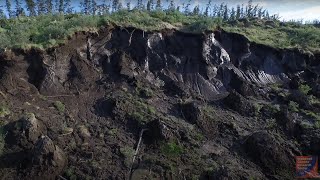
A short narrated YouTube video (by Tod Hynes) framing permafrost thaw as a critical, under-accounted source of carbon emissions that undermines current Paris Agreement targets. It argues that permafrost contains a huge, vulnerable carbon reservoir (larger than fossil fuels, forests, and atmospheric carbon), which is releasing CO2 and methane as it thaws and is accelerated by tundra fires. The speaker calls for rapid collection of pan-Arctic observational data and development of models to scale those observations, coordinated with policymakers via a partnership between Woodwell Climate Research Center and the Harvard Kennedy School Belfer Center, and urges partners/funders to invest before the next round of Paris commitments.
Chapters
Climate change. It's clear what the challenge is. Carbon from human emissions is building up in the atmosphere and heating our planet. But if we can limit our emissions enough, the worst case can be averted. The 2015 Paris Agreement was a giant step forward. 195 countries set goals for limiting carbon emissions and promised to report on their progress. But even if they are completely achieved, the targets set so far will not get the job done, not by a long shot. To begin with, those targets are only a start on the deeper cuts needed. Compounding the problem, the climate models used to estimate the required reductions in the Paris Agreement left out a critical factor. A massive reservoir holds more carbon than there is in all the known fossil fuel stores on Earth. Twice as much carbon as there is in our atmosphere. Three times as much as there is in all of our forests. And this reservoir is not secure. It is emitting carbon into the atmosphere at an ever increasing rate. What is it? Permafrost. Global warming is causing this frozen Arctic soil to thaw, releasing carbon dioxide and methane. Tundra fires accelerate the thaw and make the problem even worse. The science on permafrost carbon was not yet well enough understood, so leaders in Paris could not take this critical factor into their planning. The result? Current emissions targets will not meet the challenge. What can we do about this? Two things. Collect the best data and turn that good information into good policy. Scientists need to better understand the dynamics of permafrost thaw. How exactly is it happening? How rapidly are greenhouse gases from thawing permafrost entering the atmosphere? Armed with this new information, leaders can plan the emissions reductions we actually need. The Woodwell Climate Research center, internationally recognized as the leading applied climate science organization, is partnering with the Arctic Initiative at Harvard Kennedy School's prestigious Belfer center to accomplish these goals. The Woodwell sector will build a panarctic monitoring system for permafrost carbon emissions. This means deploying remote sensors where they are needed and creating robust computer models to scale these new observations. Harvard Kennedy School's Belfer center for Science and International affairs will leverage its experience working with policymakers to help ensure that this vital new science is part of the next round of climate commitments. But we need to move fast. A new round of Paris agreement commitments is coming. Reliable permafrost data need to be ready as soon as possible. Or even more time will be lost before this critical factor can help determine how much the world needs to cut its emissions. Humanity faces an existential crisis. Left unaddressed, climate change will cost many trillions of dollars and countless lives. No one will be untouched. There are many actions that need to be taken to avoid the worst. Getting our arms around Permafrost is only one, but it's an important one. And the needed investment is modest compared to the stakes. We need partners to make that investment with us. We need you join us in this vital mission.