Climate Justice OR Climate Just Us? A Moral Case for Putting Equity at the Center of Climate Action
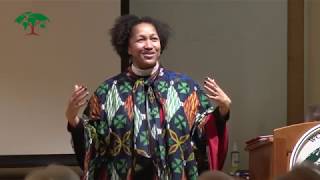
Reverend Mariama White Hammond argues climate change is a spiritual crisis requiring equity at its center. She weaves personal stories from East Palo Alto and post-Katrina New Orleans with a claim that we lack will, not information, and calls for creativity, collaboration, and courage in response.
Chapters
Thank you everyone, for joining us. I am Alison Smart. I'm the Vice President for Strategy and Advancement here at the Woods Hole Research Center. And thank you all for joining us tonight. It's my honor to introduce tonight's speaker, Reverend Mariama White Hammond. Pastor Mariama has a long history of activism and community engagement. She is currently a fellow with the Green Justice Coalition and serves on a number of boards, including the New England Grassroots Environmental Fund, Union Capital Boston, and the Moral Movement Massachusetts. From 2001 to 2014, she was the Executive Director of Project Hip Hop, which stands for Highways into the Past, History, Organizing, and Power. At Hip Hop, she used the arts to help young people find their voice and create artistic pieces on issues ranging from juvenile incarceration to funding for public transportation. She speaks throughout the country, and in 2017, she was the emcee for both the Boston's Women's March and the Boston People's Climate Mobilization. I want to tell a quick short story about how those of us at WHRC met Mariama and why we're so excited to have you here tonight. A little over a year ago, a few of us from whrc, along with a handful of colleagues in the religious academic community, had a vision. The vision was for the science and faith communities to come together and work collaboratively on an issue that both had been long been working on independently, climate change. The vision was that the power of this partnership would be simple and self evident. There's widespread recognition that the scientific community and the religious community tend to look at things differently. One might say the two have different worldviews and many times disagree on issues. But joining hands and working together to address the challenge of climate change would speak volumes about its importance. And this community of leaders would be very hard to ignore. So much to our excitement, Cardinal Sean o', Malley, the Archbishop of Boston, liked the idea and was willing to lend his name and the convening power of the Catholic Church to bring in faith leaders from across the state. Different communities, which he did. And on a February evening, about 50 people from many different communities met to discuss the idea. All the pieces were in place, all the right people were in the room, and all had good intentions and high hopes for the group. But there were no guarantees that a unifying vision would emerge and inspire us to put the work in that would be needed to create something truly unique and effective. And as the meeting progressed, there wasn't that unifying vision yet. Until Reverend Mariama stood up and started speaking. And she made an impassioned case that this group had a unique opportunity to converge on the moral dimensions of climate change and pursue a mission that has equity and environmental justice at its core. So keep in mind, this was a room full of people whose job it is to inspire people every day. And Mariama inspired each and every one of them. And it was an amazing thing to see. I think it was then that I turned to my colleague Dave McGlinchey and I said, we have got to get her down to the center to speak. So I'm really delighted that she's here tonight. Just want to say one more word about the coalition because it is so new. And I want to read to you what is on the brand new website for the faith sciencealliance.com the purpose of this coalition of scientists and faith leaders is to advocate for public policies in Massachusetts that address the ecological and moral emergency of climate change with bold, swift and substantive action. Our advocacy will be grounded in principles of justice and equity because climate change disproportionately harms those least responsible for it. Low income communities, communities of color, children, and future generations. In support of our advocacy, we seek to educate the people of Massachusetts on the urgency of the climate crisis and our shared responsibility both to reduce greenhouse gas emissions and to adapt to the changing climate. It's with pleasure that I introduce Reverend Mariama White Hammond.
So I want to spend a little bit of time talking to you, but ultimately what I really would love to do is engage in some conversation. I believe that the solution to the crisis that we face is not one person sharing an idea, but many people.
Bringing ideas and hearts together.
So I'll share a little bit about how I see this and what I've been thinking, and then we'll talk together. Now, I know I am talking to a scientifically astute crowd, and so I thought a little bit about that and how I structured my conversation today. And so I just, I want to take a second before I get started to thank all of the staff here. I know that Phil definitely wasn't able to get here. He sent me a text yesterday when his flight got canceled because of the snow storm here.
So.
But it's been great to work with Allison and to work with Dave and to meet Emily and sort of the whole crew of people here, Melissa, that have been making it possible for me to be here. And so it's great to be here before you. And I'm really thankful to the work of this institution.
And I got to get a little.
Tour today and even go and see the lab.
So it was cool to be able to see all the amazing work that's coming out of here.
So I'm going to do, I'm going to say share two things. I'm going to share a hypothesis that I have that I think is verging on a theory and, and then share my own story.
And then create space.
For you to share some stories and some of your own thinking about how.
We do this work.
So my hypothesis, which I believe is almost at the point of theory, I think I've got enough evidence for it, is that the problem with the human response to climate change is not scientific, but spiritual. And I say that because we don't lack information. We have tons of amazing data, much data being put out, even right here. I just saw some amazing maps today that tell us exactly what is happening, that tell us why it is happening, where it is happening, how quickly it is happening, and that it's happening even faster than we were told it was happening before. So we don't have a problem about lack of information. We also don't really have a problem around lack of solutions. Now, yes, do we have more solutions that are needed down the line? But we have plenty that we could be moving on right now that we aren't really moving at. We could at least stop doing the things that are making stuff worse. That is a plenty good place to start. If we wanted to take climate seriously, we could stop cutting down forests, we could stop making bigger and bigger cars, we could stop buying bigger and bigger houses and using bigger and bigger items that are more and more carbon intensive. So we could, at minimum, stop what we are doing right now. And yet we don't. What we lack is will. And the question is, why now? There's a lot of people that have actually put out a variety of different reasons that people have said about why.
We don't do it.
One is that we feel disconnected from each other. We say, why should I do something if somebody someplace else is not going to do?
You know, there's all sorts of fancy economic terms for the. You know, I think the freeloader effect is a better term.
But the idea that if I don't, if I do something and other people aren't going to do it, there's no point in what I do. And so maybe that sense that we don't feel connected across the globe plays a role in it. I would say that that's true. I think there's some piece of it that is hubris. We think that, like any minute now somebody's going to figure out the solution so we're not actually going to have to sacrifice. The solution's going to drop from the sky and it's going to fix everything, and then we're going to go, whoo. So glad that didn't happen. One that I like maybe a little bit more is the reality of addiction. As somebody who works as a spiritual leader, you have people go, I don't.
Know what's going on, or, yeah, no, I don't think I have a problem. And you're like, everybody else in your life thinks you have a problem.
So maybe, maybe, just maybe, there's something to this. And you see how many of our countries say things like, well, we can't afford to do X, when really the question is, can you afford not to do X? And so, in many ways, I see that as what I see all the time with families that have cycles of dysfunction or individuals that are working through addiction, where people come in baffled over.
Something that's really pretty obvious within the first 15 minutes of a conversation.
All of these, I think, are important things to look at. There's lots of psychological studies that have come out, and I read these, and the brain science, et cetera, et cetera. But I would say I think it boils down to the fact that we.
Have lost touch with the basic reason that we exist.
And I would say that all of our spiritual traditions, even folks who would not consider themselves part of any religious tradition, we really sat down and took a moment to realize that we are a species. And even though we are supposed to be the smartest animals on the planet, we have lost the basic notion that at the end of the day, the most important thing we are called to.
Do is to make sure that the next generation survives.
That is what all animals do. Animals whose thinking is not as, in theory, evolved as ours, make sure that.
Their young survive to live another day.
And I believe that is because we have lost touch with that basic premise that the end of the day, the.
Most important thing is the basic unit of life.
And the idea that it must continue into the future. Maybe we think we are just so smart and so amazing, we'll figure it out. But at the end of the day, I think we have lost touch.
With.
The fact that any economy, any economic system or political system that doesn't guarantee.
The flourishing of future generations is a bankrupt system.
So I want to talk really quickly about my own journey to this issue, because I think there may be things that resonate with others and maybe shed.
A little bit of light on this.
So I was a kid of the 90s. I was in high school in the 90s. I remember when folks first started talking about the hole in the ozone layer. I remember that was really pretty mind blowing. I know a lot of the young people, like you cannot, but like the idea that we as humans could actually.
Do something that would affect a layer of the atmosphere that I could not see and maybe hadn't even known existed.
Before I went to my science class, that idea that we had the ability to make that kind of impact was actually mind blowing. And I remember as a young person thinking, oh my gosh, we have to.
Do something about this.
So the big deal, I don't know if anybody. There are a lot of people in this room. I speak to young people a lot of time where they're looking at me.
Like, oh, wow, you're old. Did you remember this?
And I remember they put out the list of the chemicals we needed to get rid of and the chlorofluorocarbons. And we were like, all about it. And it was the 90s. And one of the big things is that aerosols were the big issue. Now, I don't know if anybody had the bad hairdos of the 90s, but they were not sustainable without aerosol hairspray. I begin to think that maybe it was an act of God to like, get me to let go of why I wanted bangs that were like that hot. I just. Anyway, I burned most of those pictures, so I don't have you.
There's no evidence that I was wearing those horrible hairdos.
But anyway, I was at an all girls school. And so it was like this big thing to say to people.
Gotta let go of aerosols and move to spritz hairspray.
And we did. And you could see the little dots of spritz because we put so much of it that the. What? Yeah, it wasn't as good as aerosols. But anyway, over about a three to five year period, people mobilize, they organize, they remove these chemicals mostly from most of our products. And it felt like a huge success. But I remember shortly after I got involved in that, I went to the environmental club in my school. I remember it was called Cow.
I think it's a bad name.
There was a lower school version that was called Caf.
So there was like Cow and Ca. Yeah, bad names.
Anyway, I went to it and I remember going in excited because I'd gotten sort of energized around this campaign, around the ozone layer. And I remember walking in the door and I went to a predominantly white Predominantly affluent school. And I walked in and I was the only person of color there. And I remember people talking about, you know, saving dolphins and polar bears. And this was the 90s in Boston, and I was living in a neighborhood where violence was at an all time high. This was. Now we get, you know, concerned. If 60 to 70 young people died at this time, we, we were topping.
300 young people dying as a result of gun violence.
And I lived in the epicenter of much of that because there were a number of gang territories around my neighborhood. And I remember just feeling a stark disconnect with how people could be caring so much about polar bears that they had, like, never, ever seen. And they were less than two miles from the epicenter of violence in Boston. And so after being at one meeting, I walked away with the notion that, you know what? They don't have other issues to work on, so let them care about the polar bears. I've got to focus on why people in my neighborhood don't have access to quality education and why so many people are led in a path of violence. And before, we believed that taking drugs was actually a public health crisis. When my community was struggling with drugs, we. We treated that as a criminal justice issue.
And many, many, many people were being locked up.
And so I walked away. You know, I signed up for a few things here and there. I signed a few petitions here and there. But I had the mentality that I think many people of color have had, which is environmentalism is for white people.
That don't have other problems to deal with.
And so that's most of what I probably was thinking through high school until I went to college. I went to college at Stanford, and I had to get a job off campus to help cover the cost. And I remember seeing something that said, do you want to tutor students? It was great. I thought to myself, I can do something that aligns with my values and that I care about and also raise enough money to cover my books every semester. And so I got on my bike and biked down to an interview at a place called College Track in East Palo Alto. How many people have been to Palo Alto?
Okay.
And how many people have been to East Palo Alto? Okay. So if you've been to Stanford, if you've been to Palo Alto, you know, there's this beautiful palm drive. I mean, there were all these, like, rumors on campus about how much money they spent per palm tree. I think I heard as low as like, $100,000. I heard as much as like a million dollars. Who knows?
What's really true.
But anyway, it was this beautiful drive and it projected all of the grandeur of the Stanford campus. And you would go through it and then go under the train overpass and then you'd end up in Palo Alto and you'd be down Circuit Java. And it was. I mean, it was amazing. Tree canopy, beautiful. Now they have EV charging stations. And that was at the height of like, I mean, remember that before, you know, Starbucks was getting pretty big at that time, but you could get like a double Frappuccino with an extra shot of espresso in multiple places. And Palo Alto. And so it was beautiful. And so you would ride from Stamford down this drive and pretty good continuity. And then you'd hit this bridge. Calling it a bridge is actually really hyping up its self esteem. It was a small overpass over a ditch that sometimes was a river during the rainy season. And suddenly you would go from this amazing tree canopy to just concrete. I mean, it was so stark, you almost wondered if people should try to do something about it. So at least it wasn't so obvious.
The disparities between Palo Alto and East Palo Alto.
And there would be a sign saying welcome to East Palo Alto. And it was like there wasn't a.
Tree to be seen.
And so I would bike there every day, cross this overpass and feel the tension. And sometimes I'd like literally feel angry at how obvious it was. But as I was working with the young people there, some of them were getting involved in this campaign to stop a cement plant from being built in East Palo Alto. Most of the folks were opposing the cement plant because East Palo Alto already had high asthma rates. They already had a number of polluting facilities in the community and felt like we, we shouldn't have to take one more thing. And so as young people started getting involved, I started getting involved. I sort of followed their lead. And people started going to city council hearings. I started going to them too, and started really making me rethink my own assessment of how involved I needed to.
Be around environmental justice issues.
In fact, that's where I first learned the term environmental justice. Even though I had grown up in Roxbury, which is an environmental justice community, when I was younger, it's not something we actually talked about. And so my consciousness began to shift as I got more engaged around that campaign. I think the real turning point for me, though, is after I left college, had worked on many issues. I mean, many issues. I was like, there wasn't a cause.
That I did not feel strongly about.
Even before I went to college. My first boycott was in the seventh.
Grade against Coca Cola for their engagement in South Africa.
So I came back, came back to Boston and came to take over an organization I had been involved with in high school. Project Hip Hop. And Project Hip Hop used to take young people to the south every summer. We'd do a civil rights tour. I don't know why I would do this every year. I would pack a group of high schoolers into three vans and drive them 5,000 miles from Boston all the way to New Orleans and back. At the end of every time, I'd be like, I'm never doing this again. But by the next year, I could only remember the good parts and I had forgotten all of the, like, crazy, what are you doing out of your cabin anyway? We drive all the way down and back. And New Orleans was a pretty special place for us. Louisiana was a pretty special place for us because many of the young people that I worked with were young people who had been involved in the criminal justice system.
And so we had this strong relationship.
With the folks there because they were working on a lot of the same issues and because they were arts based.
Much like we were.
So I remember one summer we were preparing, and this summer actually we were going to do a tour across the North. But anyway, we got young people would submit their applications, we would do interviews, and then we would choose the 15.
Young people for that summer project.
And I remember getting a call on the day after we had finished all the interviews. In fact, the day that we were going to make the slide selections from a caseworker who said, I have this young person that will be perfect for your program. I said, yeah, well, don't worry, we do it every year because we're done with the cycle for this year. She said, no, no, no, I think he would be perfect.
I really, really think you should consider. I said, look, if you get him.
Here today.
We'Ll think about it.
We'll give him an interview at least, right? She got him there. You know, he'd thrown his application together as best he possibly can. Clearly in like the hour he had.
Between when she told him about and when he had to show up and we interviewed him. And he crushed the interview.
I mean, it was. We used to have this scale and he was like 10, 10, 10. He talked about how he saw hip hop as a tool that could be.
Used to mobilize people.
He talked about his own experience. The reason he couldn't have come any.
Sooner is that he had just gotten out of juvenile detention two days earlier.
And he talked about the things that had gotten him into a challenging place and how he felt like those same.
Skills he could use to uplift the community.
And so I remember we were like.
Yeah, we have to take this young person.
He was amazing. His name was Kareem Buri. And he started coming to trainings and then we had this retreat again. Me with a bunch of young people.
Trying to get them to go to sleep, whatever.
But he was really amazing. We asked young people to bring in something that symbolized something about who they were. And he brought a picture of his grandmother. And he talked about how he both honored the reality that she had given up so much to immigrate from Jamaica so that he could have a better life, but also the challenges because she couldn't understand why he couldn't just do well in school and walk a straight and narrow path. He didn't understand the challenges he was facing or the things he was up against. And so they also had this tension between them that often happens between first generation young people and the people who've given up everything to try to give.
Them a different opportunity.
He identified a lot with DJ Theodore, who was the guy who invented scratching. And the story behind that is that he was in the basement working with records and his mother was like yelling down. So he held the record because he was trying to listen to her yelling and it scratched. And that's when he realized that he.
Could make a scratching sound by just holding the record back and forth.
And so Kareem talked a lot about this, like, identification with music and art.
And hip hop and the creativity that.
Flew out, that flew out of that. So I was really excited because I saw our young people bonding and I felt like this was going to be.
A really, really powerful summer.
And so I remember dropping them off and telling them, look, our next meeting is on Wednesday. Please don't be late.
That is my birthday. I'm not staying late. I'm going out to dinner with. At that time, he was still my boyfriend. Now he's my husband.
And so I woke up that morning and, you know, I had the, you know, happy birthday text. But I also got a call around.
8 o' clock that Kareem had been out and stabbed at 2 o' clock in the morning because the ambulance did not get there in time. He had died. So every year on my birthday, I think of him.
I think of how amazing he is, how amazing he was, how much the world has lost because he is not in it. So that Summer was challenging. It was pretty challenging, but also beautiful because young people said, we're going to dedicate our summer to Kareem. And whenever they were sort of not quite pulling it together, we talked about what we needed to do to honor his legacy. And they created some beautiful things. And we had some beautiful moments of really processing. I mean, unfortunately, most of the young people in our program, that was not.
The first time they had lost somebody young.
But I remember I got to the end of the summer and realized that.
I had never personally taken the time to grieve.
I was so busy being there for other people, trying to keep things moving, that I got to the end of the summer and realized how deeply exhausted I was. So I decided that we should shut down for a week, send the staff.
Home, let people decompress, let people work through it, not least of which me, myself.
And so I did that. And I remember that as we were closing up for that week off.
We.
Started hearing about the storm that was headed for New Orleans on the Gulf Coast, Hurricane Katrina.
And like many of you, I remember both the natural disaster and then the.
Completely unnatural disaster afterwards, as white people.
Were looking for food were called survivors.
And black people doing the same were called looters.
As people were asked to live in inhumane conditions at the Superdome. As many people question, why did people not leave? Why didn't they evacuate? And what they didn't realize, which I knew because my best friend had literally moved out of New Orleans the week.
Before this happened, is that they had.
Evacuated about two to three weeks earlier. Many people spent all of the money they had to go to put extra gas in their car to go get a hotel room to buy extra supplies. And if you're living paycheck to paycheck, there just wasn't enough time to save up more money to do it again. And so I watched, and I felt so sad. So sad, not just at the loss of Kareem, but so sad at the.
State of the world.
And I remember one story that probably hit me the most was when they talked about a jail in New Orleans that didn't have an evacuation plan. They had no protocol for what to do if the levees broke and the water was rising. And so the guards were leaving.
And.
Prisoners were still in their cells because.
Nobody knew what the protocol was.
And eventually someone said, we just can't leave them.
So they let folks out to then try to figure out how to get around.
At that time, my cousin was incarcerated. And I remember, like, feeling so deeply, like, what? What Would I have done? What would I have felt that was someone I love who was caught in.
A cell, who just drowned to death because there was no protocol about how to save them.
So I ended up deciding that we would postpone the beginning of our school time program. And I got on a plane and.
Went to Gulfport and spent two weeks volunteering, supporting, working on the Gulf coast, mostly in Gulfport, Mississippi, but also New Orleans. And that's when my heart broke open.
That's when I suddenly started to realize that there, the lines between all of the issues that I cared about, in terms of juvenile incarceration, in terms of poverty, in terms of affordable housing and the climate crisis, there wasn't a line between those things. That those issues would converge, and they would converge in painful and terrible ways. And that many of the people that I cared about, many of the people that I was so focused on that I didn't have time to work at environmental issues, they would pay the highest price of anyone. So I started beginning the process of asking myself what is my responsibility to address this issue and to name that. This isn't about storms and about sea level rise.
This is about life, human life, and.
Quite frankly, the relationship of human life.
To lots of species that we have completely disregarded, but without whom we would not be able to live.
I remember hearing about phytoplankton in the ocean that produce a lot of the.
Oxygen that we breathe, but we're not even able to see them.
And my own consciousness started to go deeper because I realized that we don't just disregard the other human beings that we share the planet with because they speak a different language or their passport is different, or their skin tone is different. We don't just disregard them. We disregard all the other life forms.
That make it possible for us to live and breathe.
And as my broken heart began to.
Realize that.
Came to a different understanding.
Of what we are called to in this moment.
I am deeply appreciative of all the science that is happening here and elsewhere. We absolutely need it. We need to understand this problem at a fundamental level. We need to be able to think.
Through what we can do to address it.
But I come to believe that if we are really going to address the.
Climate crisis, we need an evolution of the human heart. We have got to become better than we have ever been in order to face this moment.
We've got to lean in and love each other so fiercely that we are.
Willing to change in deep and fundamental ways. That is required if we want to have any chance of overcoming what is potentially the most imperiling situation we have ever faced.
And so it's become my life's work to challenge us to recognize this moment, this crisis, as an opportunity to become.
The people we have always maybe imagined we should be, but have never quite had the courage to become.
We will see lots of systems that.
We have relied on fall apart and cease to serve us, even as they already are. But that means we have an amazing opportunity to create the systems we hope for as we watch the systems that have already existed be unable to answer the call of this moment.
I tell young people a lot that we are called to exercise three Cs in our lives in ways that we.
Have never done before.
The first is creativity. Creativity beyond belief. Because the truth is, we don't know exactly how to walk out of this. We don't know all of the systems that we will need. We don't know how to build them. We don't know how to create them. We will only get to that point when we are creative in ways that.
We haven't even imagined.
And then we also need to be.
Collaborative, because no one of us has the answer.
The solutions to this crisis will come when my knowledge and your knowledge and the knowledge of someone that we don't.
Even know unite in ways that create new opportunities. And so we must work together. And finally, we will be called to be courageous because we are walking into what is relatively unknown.
And we will do all the work we can to do all the scenarios and calculate the percentage chance, and then.
We will have to make a leap together. But after I've worked through all the.
Pain and the uncertainty, and I'm sure many of you get, like the Daily Climate readers, so you have these moments.
When you're like, oh, my gosh, how could it be any worse than I thought?
On the other side, I find a.
Joy and an excitement about the opportunity to create and live into a world that's better than what I even thought was possible.
I'm even thankful, depending on the day and the moment, for the occupant of.
The White House.
Because I think he has made it crystal clear to us that there's some things we need to.
Deal with that we have not quite.
Worked through, I think he's helping us to see how connected these things are. Now, I do joke about this. I have always prayed for that. And I did not think that this was the package God was going to send that answer. And if I could go back, I would be a little bit more instructive in My prayer of exactly what I was looking for. But that being said, I look at this moment and the opportunity that is.
Before us, and I actually feel an amount of hope that is beyond belief.
Because at least on my side, this.
Is Black History Month.
So I spent a lot of this month reflecting on the fact that I had ancestors who were brought here in.
Chains to live in horrific conditions, many.
Of whom probably knew that they would.
Never in their lifetime see a change.
And yet they prayed and they hoped.
And they imagined that my life would be different than theirs.
And so here I stand with far.
More privilege than they ever could have even imagined possible. So who am I to be hopeless in this moment? I know how daunting it is.
But.
I think the reality is we have an amazing opportunity to lean into each other and to become the people we have been waiting for.
So that's my proposition to you. And I hope now we'll have some time to dialogue. If you think that's totally crazy, feel.
Free to just say so.
But let's talk, let's share.
Let's imagine this new world together.
I have a Sierra Club colleague who lives in Tarpon Springs, Florida, Bob Murphy, and he's interested in climate justice. And one of the issues he addresses that most people don't talk about is we have many people in this country that don't have enough energy to support their basic lifestyles. And we need to have some people actually use more energy and perhaps create greenhouse gases, whereas those of us that are more affluent need to cut back. And I was wondering if you have any. What policies or methods you think we could implement that idea?
Yeah. So I actually have a bunch of things that I, you know, I've been really thinking about. I'm part of a group of folks who are starting to have some conversations around the Green New Deal and how we'd make it practical. I know everybody's really excited about it. One small challenge that we've been thinking a lot about is the previous New Deal's main goal was to increase consumption. If that's what we do, we're going.
To have a little bit of a problem.
So how do we lift people out of poverty? Really, one small challenge that we've been thinking a lot about is the previous New Deal's main goal was to increase consumption. If that's what we do, we're going.
To have a little bit of a problem.
So how do we lift people out of poverty, really begin to support people in a different way, get them excited about this possibility without increasing consumption? So I think there's a few things.
I think we need to be really thinking about.
So one of them is co living. We have a major affordable housing crisis, and then we have tons of people with extra bedrooms. We also have seniors who are growing old and need support than have to pay somebody to come in and provide that support. And so I. One of the things I want us to really, really think about is could we begin to not have two people with four bedrooms, four people with eight bedrooms? Like, we need to really begin thinking about how we begin living together more closely, which I also think, quite frankly, if we begin to do that in ways that allow more dialogue across the spectrum in many different ways, age, race, political view, that would also revolutionize the level of connection and unity that we have in this community. I know that's a big ask, but for example, right here on the Cape, you got a huge housing crisis. How many people in this room have a bedroom in your house? That is, nobody is living in it, right? So we do really need to begin thinking about how rather than building tons of new houses, how are we maximizing the space that we already have? One of the ways that that really worked in Europe is when there was a major heat wave in Europe, thousands of seniors died because particularly, you know, I looked at particularly the numbers in Paris. You have a lot of older homes that do not have air conditioning. You had a lot of people who had compromised immune systems and the inability to sort of deal with that level of heat. And their kids didn't live with them because their kids couldn't afford. Their kids had kids of their own and couldn't afford to live in the city or wanted to have more space. And so people literally died alone in their homes. And so out of that came a movement of, you also have young people who are going to school in Paris or getting their first job and can't afford to buy anything or even afford to rent anything in that market. So you had a bunch of people with leftover bedrooms that probably could use somebody else to be able to check in with them and help them, you know, get groceries and etc. And you have a bunch of people who are locked out of the market because they could not afford it. So you started this. There's a whole movement that started and there's now organization doing the same thing in the Boston area. But you had a whole movement that started saying, why don't we begin matching these folks, folks? And so I think that's one example. And I know that sounds. People are like, oh my Gosh, I'm.
Going to take someone in my house.
Right. I know it's a big step, but that's the kind of thing that we need to start thinking about. And it starts making it possible and affordable for young people to live in communities where there is good work and good amenities, et cetera, while also making.
Sure that seniors are not by themselves if they need some support.
But also, I think generations are far too divided. And that collaboration has got to go across the wisdom of people who've lived in a different time when we didn't have all this stuff and people who have some technological awareness of where we are right now.
Amazing ideas, I think could also come out of it.
So that's just one example of where we start to think differently if we say, what are 10 different issues that we have? And where are there possibilities of two.
Or three of them being addressed together in one intervention? So that's just one example I would use.
Yeah.
Kind of on that point. Thank you, by the way. You're very. Yeah. And so much more like so many ways. So thank you. It's really an honor to be able to be here and listen to all of your experience and all of your wisdom. And on that point, there's a gentleman who's running for God representative, state representative, maybe Joshua Mason is his name, and he's working on legislation like that.
And he's.
That's a affordable housing solution. He works on a lot of affordable housing issues in the mid Cape, mostly. My name is Megan Perry. I'm a student at Cape Cod Community College. And I'm facing exactly that thing. So if anybody has a room, let me know because I need a place to go. And, you know, I know I don't, you know, want to blow anybody up, but there's lots of other students who I know have the same troubles. And so if anybody's interested in maybe starting a coalition, go to four Cs. I mean, go to Mass Maritime, go to the local colleges, because there are a lot of students who are trying to stick around, but they can't. Like, we don't have choices, you know, because science is not easy to learn, especially if, you know, you're not used to doing science. And, you know, even on that, getting intergenerational communities to be together. Oh my God. Like, that's why systems fail. Because you don't, as a mom or a dad, want to deal with all this energy that your kids have all the time. You need people. That's why parents go nuts. Like, it's so important that's why the village really works.
Right? And I mean, I think that's. You're naming a number of places where systems that we had before, they're just not there now. You know, I. I can't tell you how many of my friends are like now moving. I. Two friends in the past four months who are now moving home because they can't raise kids by themselves. Now. I think it's great that they're going to be with family.
Right?
But there could also be models in which people create family. So for instance, I grew up here. My dad's mom was in Philadelphia. My mom's mom was in Ohio. But through our church, we grew up with a bunch of people that we.
I remember one time a friend of mine was white. How many aunts and uncles do you have?
Right? Because it was a tradition in our church that you called someone aunt and.
Uncle when you chose to make them family.
My parents never had to pay babysitters. That was just not a thing that happened because people moved kids around to different people's houses. I mean, you know, we had this big basement. So like some people would just drop us off and there'd be like 11 of us running around. And then like the little one would get. Be like, I'm gonna go. And we'd be like, no, we're gonna all get in trouble. You know, like, we have these systems of like co raising children together. And now we have a lot of kids who are like, socially awkward because they don't spend enough time with other children. Right. So I think one of the things that is really exciting to me is how we could look at these issues not simply as climate issues, but in ways that strengthen the fabric of communities.
I can tell you how many friends are struggling about how much time they spend at work versus how much time they spend with their kids.
So if we were allowing people to work from home, now I just want to just name. We also need to bring.
Bring it down the total number of hours we expect people to work.
Shut it down at some point. Like, I just want to say that I do believe there needs to be moments in our lives where you're not.
Answering email and you're not expected to be on. So that's a side note.
But I also think as we begin to allow people to work where they live and not have to commute as much, the hour you spend in the car going back and forth to that job is an hour you could be.
Spending with your children. I think people are starved for that time.
But more and more of it is being spent commuting and doing other things, being in traffic.
You know, I don't know how many people saw on the Globe. Boston is now officially, like, number one for traffic.
I can't.
I can't do it. I mean, I just. I literally am in there.
Like, people are sucking my life away on this highway. So I do live in the city.
And I commute by public transportation.
But anyway, I think we are missing many opportunities to not just address the.
Climate crisis, but to make our lives substantially better.
And so I use the example of there was a bill in Illinois, which I was really impressed with, where they were going to do an energy efficiency program. They needed to decide who they were going to train to do the energy efficiency program. I don't know who came up with the idea at first, but the strongest correlation between who will end up in prison is children who age out of the foster care system without immediately transitioning to. So if you can get somebody into college, if they can get into some other thing where they're rooted, that is the only, you know, one of the.
Best ways that they can avoid going to prison.
But people who age out of the foster care system, Iloi, which I was really, like, impressed with, where they were gonna do an energy efficiency program, they needed to decide who they were gonna train to do the energy efficiency program. I don't know who came up with the idea first, but the strongest correlation between who will end up in prison is children who age out of the foster care system without immediately transitioning to. So if you can get somebody into college and have no other thing that they're connected to or rooted in routinely.
End up in prison.
And so what they said is, if we're going to do an energy efficiency program, why don't we train children who are aging out of foster care to get these jobs first? And what was amazing about that is usually energy efficiency stuff is environmental people, and they can get into some other thing where they're rooted. That is one of the best ways.
That they can avoid going to prison.
But people who age out of the foster care system and have no other thing that they're connected to or rooted.
In routinely end up in prison.
And so what they said is, if we're going to do an energy efficiency program, why don't we tumor advocate folks? But suddenly you got a bunch of folks who cared about foster care and then a bunch of people who cared about criminal justice reform to deciding onto a bill that was about energy efficiency. And so when you took it to the state house and talked about the dollars that were being invested, the ability to say to your state rep, this is going to lower bills for people, it is going to address the climate crisis, and it is going to prevent us from having to incarcerate young people. And it's all the same dollars. That's a much better sell than each of you both going up trying to get money for the energy efficiency program and the aging out of foster care program and the, you know, so I also think bringing those issues together has not just the possibility of literally making our communities and our lives better, but it's also easier to sell for folks who may not necessarily see this as.
Their most important issue.
And it brings together people who maybe would not traditionally work together but now are starting to see common cause around.
Things that address more than one challenge at the same time.
So, yeah, so I, we've got a request if somebody's got an extra bedroom, let's begin that conversation. But I actually think, you know, this is a structural problem that could be addressed in a way that doesn't train children who are aging out of foster.
Care to get these jobs first.
And what was amazing about that is usually energy efficiency stuff is environmental people and some consumer advocate folks, but suddenly you got a bunch of folks who cared about foster care and then a bunch of people who cared about governmental justice reform to deciding onto a bill that was about energy efficiency. And so when you took it to the state house and talked about the dollars that were being invested, the ability to say to your state rep, this is going to lower bills for people, it is going to address the climate crisis and it is going to prevent us from having to incarcerate young people. And it's all the same dollars. That's a much better sell than each of you both going up trying to get money for the energy efficiency program and the aging out of foster care program and the, you know, so I also think bringing those issues together has not just the possibility of literally making our communities and our lives better, but it's also easier to sell for folks who may not necessarily see this as.
Their most important issue.
And it brings together people who maybe would not traditionally work together, but now are starting to see common cause around.
Things that address more than one challenge at the same time.
So, yeah, so I, we've got a request if somebody's got an extra bedroom, let's begin that conversation. But I actually think, you know, this is a structural problem that could be addressed in a way that doesn't increase.
Our carbon footprint and Also makes our communities stronger.
I do want to mention back, you are raising a very important point, which.
Is that some people are consuming a lot and some people are consuming a lot less.
And in this process of equalizing, both on the sort of local and national.
Level, but also on the international level.
You know, I'm not saying I think China should not do more, but I do get frustrated when Americans are like, well, we're not even the biggest emitters. I'm like, yeah, for the last two years, but if you look to the last 200, we probably should stop talking now. Right. So I think, you know, also being clear that we not have a narrow view of what people are doing. Right, right. You know, just because you have like a Prius and some somebody else over the lifetime, some people have been emitting a lot less.
And we need to hold people accountable first who have the most ability to change before we hold people who are living on the margins responsible.
So I do have one room if you want to talk to me after.
We're starting it right here.
And another thing that is amazing what you're saying. So I grew up in Spain and we used to go with my grandparents to this village and people knew each other and children could go, we could go anywhere we wanted. And it was like, not everything was perfect, but there was that sense of community that in New England is just like really hard, you know, like very hard to connect with other people. We just started with this young people couple that started. They had an initiative to create like what you're saying, like create a place where we could actually address all people being isolated, having farm, you know, with agriculture, you know, permaculture, and just address all those issues that you're saying and we're just throwing ideas together is, you know, we just research and we're reading a book. So it's a book club. If anybody also wants to know more, you can give me your email and we can, you can come to the next meeting. It's open and it will be in the Cape and is to try and imagine a different future that we can do. And I think like we can, you know, like, I mean, I feel like I have a lot to learn, but there's a lot that we can do too.
Yeah. And I think when I look at what I'm most excited about, like I work on all of it, carbon tax, this and that, like all of that stuff. But where I get excited is communities that have said, like, we'll advocate for those things, but we are also going.
To revolutionize Here, where we are.
So there's a community called Thunder Bay in Canada that, like, we're like, we're going to run a whole slate of people for city council. And they were talking about focusing on local businesses, like not having as many chains, really having people that were local running businesses and supporting those businesses because they would be the ones most likely and more willing to respond to what the community was saying.
Right.
Talking about trying not to move goods from thousands of miles away, but creating more artisanal communities, creating more walkable communities, creating opportunities for people to be in.
Relationship with each other.
And I think, you know, again, we have this challenge where there's been a dichotomy between, like, you just need to take individual action to buy your own EV and you're like, et cetera, or you have to work on like federal and international legislation. Right. I'm not knocking either of those. Both of those are important. But I do believe that the sweet.
Spot is some creative local solutions so.
That people can see it right in front of them. It's not something that's happening somewhere else. Right. But it's not also happening at the level of the individual in one household. Great work, but there's limitations to what we can do. We can't create systems at the individual.
Household level, but we can at the neighborhood level.
Like the new work that's being done.
To say, like, what if people didn't have individual cars?
What if you recognize that for everybody in the neighborhood, you probably need for 40 houses, if you had 11 cars.
That would be sufficient for everybody.
Right. And so people start the work of negotiating and sharing. Eleven cars should suffice for all. You know what I mean? Especially if you have public transit options. I look at my neighborhood, for instance, we are right down the street from the train and everybody still has an individual car. Even in my own house, we have three washing machine units for four people. It's not possible that we're really creating that much. Right. And so beginning to rethink doing the negotiation. And I said this to my first floor neighbor, I said, when your machine breaks down, do not buy a new one. Let's just talk.
I think we can make it with two units, two washing machines between three floors of people.
Right. So that kind of stuff, that becomes possible at a more communal level and.
At more of a collective level.
But you can really do the work.
To begin negotiating those things out on a block in a community. I'm very excited also by the number of particularly women who are running for office.
I think that Our political systems should be the aggregate of our collective desires.
And that's not really what I experience most of the time where I am interacting with government.
And so the problem is not to have less government or we could talk about those things. But I think the reality is we.
Need to have more responsive government, a.
Place where we can have good conversations. Which also means, on a side note.
I do a lot of work around facilitation. We need to evolve the public meeting.
Structure because the, like, let me get.
Up and yell, and then I'm gonna get up and yell, and then I'm gonna get up and yell, and then I'm gonna say something to piss you off to make you want.
That's not a productive way to solve issues. So I don't know how many of you go to public meetings. Maybe the Capes public meetings are so.
Much better than Boston's public meetings.
But we need a system that allows us to air what we experience and.
Then create space for us to work together and imagine solutions. And unfortunately, most of our public processes do not drive us to the place of deep dialogue towards solutions. So that's another thing. But anyway, Other thoughts?
Questions? I know I saw a couple of people.
This is changing the temperature a little bit, but something that you said made me start thinking about how in certain crises, like I remember reading that after the. Maybe a couple decades after the explosion at Chernobyl, human beings can't live around there anymore, but the wildlife has really taken off, and they're just amazing. Maybe they don't live as long, but they're really flourishing now that we're gone.
They're doing a lot better. Right.
And when there were wildfires and then landslides around Big Sur in California and the road was blocked off, all the, you know, people started seeing mountain lions and started seeing animals that they had never seen before because people weren't able to go through it. It made me start to think that. And I don't mean to be sentimentalizing about nature, but we think of the, you know, the human brain is.
A.
Bunch of neurons and other physical things working together to create a certain system. Who is to say that the planet, you know, isn't a giant system? And you got a bunch of scientists here. A giant. It seems to me that the planet has a certain kind of brain that is trying to survive.
Right.
However it can. And we have to have more humility to not think that we are the masters and we should do whatever we can to try to fix things.
Yeah.
But we should also sometimes get out of the way.
Right.
And I don't know how that's related to all these human justice things, but maybe you can tell me how those things are connected.
Yeah. So, I mean, objectively, if you just look at it from a pure, like.
You know, people go, oh, we're trying to save the planet. No, we are not.
The planet is going to survive. Like, it might have more water, blah, blah, blah. We are trying to save ourselves. Like, if we aren't clear about that, because I just. No, the planet will be all good. The question is whether or not she will allow us, like, whether or not the planet will change so substantially that our lives are no longer sustainable here. And we will also take a bunch of people down with us, a bunch of insects, a bunch of other mammals, et cetera. But objectively, the way I look at it is the planet is in a.
Abusive relationship with us.
And at some point, I can't be mad. I'm like, girl, you need to get rid of him. And that would be us. So when I say we're trying to have an evolution, it's like, I don't know anybody who's been in an abusive relationship and the person their abuser transformed.
That's what we trying to do. We are trying to be the first abuser to transform and shift in this relationship.
But there could come a point at which she's like, clearly you can't get it together, and I'm moving on. Right. And so I mean that it's very real that the planet is completely justified in deciding that the problem is us.
And we need to go.
Because the truth is, the problem is us. Now, I would like us to not have to go. So I'm hoping we're going to get it together. We're going to be who we should be. I have faith that we can do better, but I'm not going to deny that she has the right to get rid of us right now. Based on how we've already been and.
Our lack of motivation, it seems to do better.
So, yeah, I mean, I think the challenge for me and how I see it is like, if you can't even act right with the other people in your species, what likelihood do we have to be in right relationship with the.
Phytoplankton in the ocean?
And so for me, the justice work is the right thing to do. But it's like, if you can't get that together, what hope do you have of being in a different kind of respectful relationship? So I tell people, I don't do environmental justice. Work. I do ecological justice work. And that's because ecology is about systems. The discipline of ecology focuses on the relationships between things. And our problem is not the environment. Our problem is the relationship between the living beings, the most problematic which of.
Which is the human being.
And so we got to get right. We got to get it together and get right. But she gonna be okay? She will be okay. She will be, you know, another ice age. She's been through some ice ages. She's been through amoebas turning into us. I mean, she'll be okay. She keeps surviving. The question is whether or not we.
Will continue to be here.
I think we'll make this the last question, and then if people want to talk to you afterwards. Thanks.
All right, before I get rolling here, anthropologic damage to the planet is ancient. Plato whined about it. So we're a little late to the party, but hopefully not too late. I'm a member of the Religious Society of Friends. You all know us as Quakers. Isn't that a wonderful name? The Society of Friends. Ain't nobody in charge, but we teach what we call the Five Testimonies. And there's an acronym for it, Spice Simplicity, which is not Anti Consumption, but In Favor of Wise Consumption. Peace. Don't need to go into that. Integrity. That's a large bit of what you're talking about here, injecting integrity into our relationships. I think. See, community. Community is a big part of what you're talking about. And a lot of our dysfunction is that we are not communal and equality. So we have to address questions like if we reduce consumption, how do we do that in some sort of equal fashion that doesn't further disadvantage the disadvantaged? So I guess I could close by saying the Quakers are ready for this, but I'm not sure we're doing enough.
Well, I think. I mean, part of the work that I do is that I do spend a good chunk of my time talking to the faith community. And one of the reasons is. And I'm like, you all say you believe in something big. If we can't get on the train, how do we expect other people to? I mean, if the people who say we believe in miracles can't get our stuff together and be part of the solution, then how do we expect this to move forward? And so I think the reality is, having studied many religious traditions, I come out of the Christian tradition, but there is enough for us to tap into. In every tradition, it is the question of whether or not we want to be transformed. And the reality is that many of us are part of faith tradition because we just want to belong, but we.
Don'T necessarily want to be transformed.
And that is the reality for all humans, is that we want other people to do differently. We're really clear about why this problem is, you know, somebody else's problem. But all of us to match this moment will have to embrace a kind.
Of transformation, which I believe on the.
Other end.
Will actually, I'm not going to deny that the process is a little rough. I'm just going to be honest. As someone who embraces the process, I don't want to be like, and it's.
So beautiful all the time.
Sometimes you're like, why God?
But you know, I have to say, like, most of why I am in the place that I am is.
To.
Be honest with you, when my life has put me right up against suffering.
Broken my heart, and made me a larger hearted person than I could have been if I hadn't been up against that.
And so I think.
I do know the Quaker tradition a little bit. I was active in afsc, so I learned a lot of the beauty in it.
But I think the, the truth is.
That for every single one of us, the question is, are we willing to push forward to the maximum level of transformation that is possible for us? And I'll be honest, that work is hard. If you choose to walk with people who are suffering, you will feel the pain of suffering. You will have days when you feel like you are losing. You will have times when you lose people that you don't think should be lost. You will have times when you lose fights that you know were righteous. And I just wouldn't want to live any other way. And so, you know, we kind of need to do it now. It's not just a nice thing, it's not just a, like, courageous thing. It's an absolutely necessary thing.
But I thank you for offering that because it's not like we have to.
Walk into this blindly.
We have lessons for centuries, millennia, going.
Back to teach us how. And now we need at scales that we never have before to embrace that, to walk into it. And the one last thing I will say is, what keeps me going is that I spend as much time as I can with young people. I imagine I'm very in touch with what my ancestors did for me. And my desire is to be an ancestor to someone else.
I can't promise that the world is.
Going to be better, but I can promise them that I like hell to do my best to make it better.
And so I encourage you to, if there are not any young people in your life on a regular basis, go.
Out and find some be in relationship.
They will inspire you, they will challenge.
You because they will tell you what they really think.
But.
I am deeply grateful for the.
Children.
In my life who allow me to love them and who love me in return. Can't imagine that I could do this work without them. So thank you to all of you. Increase our carbon footprint and also makes our communities stronger.
More from Tod










WHRC's Sustainable Science Speaker Series - Dr. Toby McGrath speaks on Sustainable Fisheries
