Dr. Gro Harlem Brundtland's speech accepting WHRC's Lawrence S. Huntington Environmental Prize.
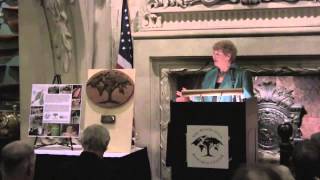
Dr. Gro Harlem Brundtland accepts an environmental prize and argues for sustainable development rooted in public health. She led the 1980s World Commission on Environment and Development and now warns that climate change, biodiversity loss, and inequality demand science-based pricing and stronger global governance to fix markets and subsidies.
Chapters
Thank you. It's a great honor to be here with all of you tonight and many friends and contacts, but also some of those who were mentioned earlier, who I have worked with. So, of course, the Woods Holes Research center is in itself a remarkable institution whose scientists have made many significant contributions to the knowledge base that is so critical for making informed decisions about protecting the environment. We all share the Huntington Prize, honoring the outstanding leadership of your chairman Emeritus, recognizes leaders who see the interrelationships of global systems and think on a planetary scale. That's what I have seen in your background documents. Now, this has been an overarching theme of my career. Many people and ideas have shaped who I am, what I think and what I have done. But the concept I always seem to come back to is the need for a holistic approach to society, cultures, the economy and the environment. I have always been responsive to holistic thinking all through my upbringing. But it was clearly my year at Harvard School of Public Health that decisively shaped my mind in this respect. Once when I was prime minister, in fact, I had a very intense exchange with an opposition leader during question time in Parliament. In response, in the end of several remarks, I exclaimed, yes, all is indeed linked to everything else at that time, 20 years ago. My comment was immediately criticized, even ridiculed by some for being evasive and unclear of the opposition, of course, but the journalists who like to write what the opposition wanted, so they used it against me. Now, interestingly, today it is often quoted with great respect, even with admiration. So this profound realization that all is linked to everything else, and therefore what we need is a holistic approach to our greatest challenges, I believe is rooted probably both in my upbringing, but also in my training as a physician. That's when I gradually came to understand the links between human beings and the communities and societies that we create, as well as with the environment in which we live. This approach to environment and development, this holistic approach, is inspired in my mind by public health. So it is preventive medicine at its core. I believe that this approach should also guide our relationship with nature, with our planet. I think this perspective is one reason, Maybe, why nearly 30 years ago, I was called upon by the Secretary General of the United nations to create and lead an independent commission to address major challenges, major global challenges. Threats to the environment and natural resources, increasing population pressures, poverty and lack of development. For the first time, in fact, we were tasked with assessing the world's most critical challenges. Not in isolation, not one by one, but holistically. At least. This is how we read Our mandate, Jim and I, and the commissioners that we asked to serve. So I did take on this challenge side by side with Jim McNeil, who is over here, who was my clear choice as Secretary General of our World Commission on Environment and Development, and who is now an Honorary Director on the Board of the Woods Hole Research Center. Jim made seminal contributions to to our report and was indeed indispensable to the Commission's work. In the early 1980s, when the Commission was being formed, the risk of permanent damage to our environment was a relatively new idea. I'm sure some of you here will feel you already knew, but frankly, if you speak generally, the long term consequences were not fully in any way acknowledged during those times. At that time, the issue of sustainability was seen by developing countries as a luxury, something for rich countries to care about and worry about, but which had no relevance to the poor and the so called at that time, underdeveloped world. Today, of course, this same cleavage is still with us as global leaders are expected to find a path that is realistic, is just and equitable. That's the only way to have hundred and some ninety nations agree on something serious. The idea, however, that resources are unlimited and that our environment is not dangerously affected by our combined human activities should now be behind us. Whether north and south, whether rich or poor, we now know in the Commission's report our common Future. We warned that global trends that were already underway, climate change, decertification, forest degradation, water scarcity, declining biodiversity and increasing dependence on dirty and dangerous sources of energy, were not only unsustainable, but posed a grave threat to the well being and security of future generations. Those warnings were of course taken up at the Earth Summit in Rio de Janeiro in 92, which was one of our several recommendations that the world gather together in a summit five years. From the report came out the UN conventions on climate change, the Convention on Biodiversity and also Agenda 21 affirmed the direct link between environmental health and human development. The process, of course, from 92 still lives on. Rio 20, the 20th anniversary of the landmark conference took place last June. I'm sure not only me, but several of you here were there. Its purpose was to take stock of progress made since the Earth Summit and help move us forward towards a green economy. Now that concept tried to become something overarching. It didn't succeed though, because the same cleavages about how you define it are still with us. And while the world has improved in some areas, such as the gradual healing of the ozone layer and the number of people who have been lifted out to Abject poverty. The vision of sustainable development at a global scale remains unmet. In particular, environmental degradation continues and in some cases is accelerating. So I think all in this room, we all need, we urgently need to step up the pace of change at the time. Now, when you go back in history, you realize there were many positive signs during the 90s, but in many ways, to be brief, many things happened during the 90s that were positive trends, but in some way 911 was kind of the end of that more optimistic phase. It's worse after 911 and you have to give another speech to tell why. But at a time now when economies are teetering while ecosystems are under siege and inequality within and between countries is soaring, we need now to realize that these are symptoms that share many of a root cause. As short sighted and often narrow interests have superseded common interests, common responsibilities and common sense. The only durable solutions to today's crisis are those that also position us technologically, socially and politically to solve our longer term problems more holistically. That means finding opportunities and summoning the resources, even in these trying times to make the most of them. The UN Secretary General has made sustainable development a top priority for his second five year term, which began last year. His high level Panel on Global Sustainability, on which I had the honor to serve, presented its report early last year. Now we made clear that that the current global development model is unsustainable. We can no longer assume that our collective actions will not trigger tipping points that as environmental thresholds are breached, risking irreversible damage to both ecosystems and to human communities. So third, we all need to recognize that the drivers of that challenge include unsustainable lifestyles, production and consumption patterns, and the impact of population growth. Now, as the global population grows from 7 billion to 9 billion by 2040, with the emergence of 3 million, a million billion new middle class consumers over the next 20 years, the demand, 20 years from now, the demand for resources will rise exponentially. By 2030, the world will need 50% more food, 45% more energy and 30% more water, all at the time when environmental thresholds are throwing up new limits to supply. These thresholds are most clear for climate change, which affects all aspects of human and planetary health. We do continue to improve how we measure our lives and the consequences of our choices. But we have failed abysmally in setting the prices right here in the US Gasoline is practically the cheapest fluid that money can buy. The US should be taking the lead. And I remember my discussions with Ruckelshaus in the Commission the poor guy was explaining to us that in the us, although what we were saying was right, it was plainly impossible. And now, you know, this is 30 years ago now, and it still is impossible now, now. So the US should be winning, you know, should be taking this lead. But winning a seat in Congress seems too often to require that you declare war on science, on math, and on common sense. That is one of many reasons why we have a marketplace that does not reflect the full ecological and human costs of transactions. One where price signals fail to make transparent the consequences both of action and of inaction. So we called for doing this, even though we did call for it 25 years ago as well. But that's also interesting. The messages from our common future stands, and you just have to follow it, even if one didn't in the past 25 years, in many ways now. So pollution, including carbon emissions, can no longer be free. Subsidies should be made transparent. They should be phased out for fossil fuels, which happen in many places in the world. We must build new ways to measure development beyond gdp. And that's easier to say than to do, we have seen, but it's necessary science, and that's the other third pillar. Science must point the way to more informed and integrated decision making, not only on climate change, but also on biodiversity, ocean and coastal management, water and food scarcities, as well as planetary boundaries. We need to define the scientific threshold that can set a safe operating space for humanity, and only science can have that happen. Throughout the 20th century, economic growth was measured by the accumulation of physical, financial and human capital without regard to changes in natural capital and without taking social risks into account. In the 21st century, the goal must be a green economy, a pattern of economic growth which truly leads to improvements in people's lives, but without harming the environment. Now, this means taking advantage of the vast potential to increase resource productivity, especially with respect to energy and to water, and to reduce waste. It means investing in sustainable technologies that will create jobs and support the poor, improve health and education and build more resilience and equitable societies. And it also means investing in women. Well, I fought hard on that panel to convince this last panel, there's 23 people there, that this had to be said by this panel. The next increment of globe. And we succeeded, but it was hard. The next increment of global growth could come from the full economic empowerment of women. Half of humankind's collective intelligence and capacity is a resource we can no longer afford to lose out on. We must now stop, therefore, all discrimination against girls and women. And by instead empowering women, we will unleash the largest untapped potential for sustainable development. This transformation to not only a green, but an inclusive economy will generate millions of new jobs and lift millions of people out of poverty. In Norway, it is clear that a policy of inclusiveness, investing in all of our people, combined with sound resource management policies, was the strategy that led to continuous and sustainable growth. Women are a vital force for growth, as I said, and countries and companies with higher levels of gender equality have faster growth and better performance. A recent analysis found that the very high participation of women in the workforce generates a larger part of Norway's GDP than the whole of the petroleum sector does. Too often people I meet dismiss the economic performance of Norway as something that somehow came down from heaven with the petroleum resources. But think a little. Take a look at some other petroleum rich countries, one quagmire after the other. Take a look at the countries that lock up their women behind shields, veils and walls. So much poverty, opportunities lost, lives on the fringes in humiliation and frustration. Growing up with illiterate mothers, so hard to overcome for any child is still what many societies offer new generations. Good governance and empowerment of women do go hand in hand. Because energy, women and also energy. And let me link the energy to the women again. Energy fuels human progress and lies at the heart of every country's core interest. Not only Norway, every country. From job creation to economic competitiveness, from providing cleaner air to empowering women. This is why the Secretary General has focused so strongly on sustainable energy for all. His initiative to help ensure universal access to modern energy services, to double the use of renewable energy, and to double the rate of improvement of energy efficiency globally by 2030. So I'm happy that the UN General assembly recently declared 2014-2024 the Decade of Sustainable Energy for all. This action underscored the importance of energy to sustainable development and the need for increased deployment of renewable energy and energy efficient technologies. Simply put, development is not possible without energy and energy. Sustainable development not possible without sustainable energy. Twelve years ago, the United Nations Millennium Goals were set, but energy was not mentioned. In fact, that was an oversight, but I was in the process. It was hard enough to get agreement, I can tell you. But when you look at it, you know it really. But the most important thing, when the Sustainable Development Goals that were identified to be pursued in Rio, it was hard fight to even get them in there. But it's there. It's hard to follow them up now. But as important as creating a new goal for energy is to recognize that energy is important for all MDGs. When you look at all of them, none of them can be pursued without access to renewable or to, you know, responsible energy. So the Secretary General has said energy is the golden thread that connects development, social inclusion and environmental protection. So when you look at all people, rich and poor, energy means many things. The ability to read at night, to travel to a job, to keep life saving vaccines refrigerated. In sub Saharan Africa and South asia, an estimated 200,000 health clinics lack electricity. I've seen several of those. And women give birth at night beneath dim, dirty, dangerous kerosene lamps. It is hard to believe that the decade into the 21st century, 3 billion people still use wood, dung and coal for cooking, heating. And more than 1 billion people have no access to electricity. So exposure to indoor air pollution, the smoke from these fires and lamps, is one of the world's biggest public health problems, causing more than 2 million deaths a year. Premature ones, mostly of women and children. And that is three times as many as die from malaria. So in the global economy, while all this is still the situation, our appetite for fossil fuel is undiminished, even as the warning signs of a warming planet multiply. So we need to do much more, both at the local, national and international level, to hasten the energy transition that is going on. And this requires investment. Limited public funds. Now we know more than I understood 25 years ago that they are limited. They will continue to be limited compared to the needs. They should be used strategically to unlock greater private investment flows, share risks and expand access to the building blocks of prosperity, including modern energy services. Every year, private Companies invest about 3, no 5 trillion in energy infrastructure projects. If you were able to realign even a small amount of this to sustainable energy, it would go a long way towards changing our course more quickly. For 30 years, I'm sure many of you have noticed that the business community, when they met in Davos or generally stuck to the well known mantra that change will happen if everything just is is left to market forces. I have been exposed to this too many times in my life. Simplistic, but that was much of the mantra. But markets alone cannot spark the changes that are needed. Business investors, activists and scientists cannot alone change the way we produce and use energy. They can anticipate change, they can facilitate it. They will profit from it now speaking business, but they cannot drive it. Business needs now, and much more than before, calls for more government action to inspire innovation and the solutions to reach a sustainable world. Public policies are needed to stimulate markets to remove barriers, level the playing field and establish clear objectives and targets for renewable energy and energy efficiency. So we need to undo the old fashioned policies that create the wrong incentives and keep us locked in unsustainable ways of doing business. A good example is fossil fuel subsidies, which are estimated to cost between 350 and 500 billion worldwide dollars depending upon the oil price. How you calculate these are resources that could be channeled and should have, and we already said it 25 years ago, to clean low cost, sustainable energy technologies. It's a waste of large amounts of money that's happening to ensure that vulnerable groups are not hurt. As subsidies recede, we can look to countries like Indonesia that have implemented poverty alleviation and social protection programs in combination with subsidy reforms. It can be done now. I am frequently asked by people, why 20 years after Rio, are we not succeeding in changing our ways and building a sustainable future? And they say, is the reason political? Is it social? Is it technical? And I have to say I believe it is all three. We are facing a challenge larger than our present systems of governance are able to adequately address and act upon in most countries around the world. But above all, it is our still too limited ability for effective global governance that is the crux of the matter. Some people argue that we should learn from the way we dealt with the threats to the ozone layer. You know, why don't do it the simple way we did with the Montreal Protocol? It served to curb the emissions of those ozone depleting substances. Now is that a good example? When you look at the big picture, probably not. What was different? Well, for one thing, people were scared. Rich people in rich countries were scared. Their politicians became scared because people were scared of being hurt by the sun rays. Nobody thought we could stop the sun rays. I'm afraid that today rich people are still not sufficiently scared of global warming. They still think they can in some way get away from it. Secondly, that time there were alternatives to the ozone depleting substances that we had been using until then. They could simply be taken into use. And marketing the alternatives was profitable for many in the business community. In the case of climate change, business as usual is still more profitable than most alternatives. Sad to say, but true. And thirdly, the number of sources in the Montreal Protocol was limited. Identifiable control was possible. Climate change has billions of sources. Then there is the key issue of equity. The average American that stops us. We know that to get a global deal, the average American is responsible for 19 tons of CO2 emissions a year. The average Chinese responsible for 4, the average Indian half of that. I have had many conversations with leaders over the years and experts on how one can justify to ask someone else to help solve the problem that we all are hit by. When, you know, what is the basis for asking Chinese or Indian leaders to agree that Americans have the right to emit much more CO2 than they do. It's a very hard sell. And most of the answers I've heard to that question are in fact, from a moral or philosophical point of view. Not pretty. Not pretty at all. And of course I'm aware Angela Merkel of Germany, when I think she. She was environment minister, you know, before she became the Chancellor of Germany, so she knows the issues. So in a visit to India, it's only like six or seven years ago, she answered a question from the audience or from the press that indeed the only equitable and fair future would be that the right or the, you know, the amount of pollution coming per person, per head should be the same whether you are an American or a German or an Indian. Oh, there was an uproar, and it was afterwards, it was watered down elegantly. But I never forgot what she said because I understand where her logical scientific brain and her logical environmental minister brain made her say what she felt inside her, really from her heart. But we are far away from that, as you know, because greenhouse gas emissions are closely linked to economic activity, to having a job, to being paid and to be able to eat. Now, yes, we are confronted with an ineffective international set of institutions because the countries of the world are not willing to do together what's necessary among living international institutions that we know today. In fact, only the European Union. And I say that although it is so badly criticized because of the difficulties they are now facing with the euro, with the crisis in many European countries, it still is the only institution that comes close to having the muscle to adopt and impose effective decisions, even when some countries oppose them inside the group. But let us assume now that European leaders reduce their emissions to zero. That would not really help that much in averting climate change. Why? Because it's a small, very small part of the total global output of emissions and getting smaller every year as the others increase and as the Europeans have improved theirs. So as we speak, however, what is that? What would be the sum of national policies? That's been an idea that has been floating. Why don't do it nationally? We can declare, like people said after Copenhagen, we can each declare the policies we are willing to do because we couldn't agree so we declare and we look at each other now, what will happen when the Chinese reduce their dependence on coal and oil? It will make perfect sense from an economic risk management perspective. But the same goes for usa. It would make perfect sense. Fiscal measures that will reduce the use of fossil fuels will make sense economically if the carrots and sticks are wisely applied. As we speak, several countries and regions are now voluntarily applying mitigating measures such as taxation and cap and trade. South Korea, Mexico, seven regions in China, Japan, Australia and seven regions in China. Doing this, Japan, Australia, California, Quebec, next door, British Columbia and many others to the Woods Hole Research Centre. Let me say again, thank you very much for the honours of this prize because while the situation may look grim and I'm sure I have conveyed that it doesn't look very good, I do believe in humanity. And after all, I've always been basically an optimist. I always. And also in the middle of all of that, I've always believed that, after all, in America, I'm here in America and I can tell you I've always thought that Americans will follow and ultimately lead. You know the famous quotation of Winston Churchill who said, and I quote, americans can always be counted on to do the right thing after they have exhausted all other possibilities. So I believe we are now at that point, so all of us, young and old, I mean, this is the challenge to America. But I still believe. I still believe, but all of us, and now I'm speaking globally, young and old, must work to promote a greater sense of shared responsibility, not only as citizens of our respective countries, but as equal members of an increasingly interconnected global community. We all feel it and sense it. I think a greater sense of shared responsibility is essential to prepare for a future that is safer, also more prosperous and more secure. Thank you very much. Thank you. Thank you.
More from Tod










WHRC's Sustainable Science Speaker Series - Dr. Toby McGrath speaks on Sustainable Fisheries
