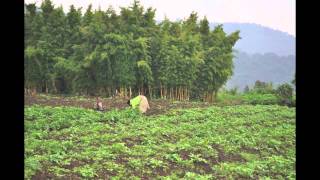
A short recorded talk by Dr. Richard A. Houghton (Woods Hole Research Center) about changes in land cover and their climate implications. He describes historical and ongoing deforestation and reforestation, quantifies tropical forest loss (~28 million acres per year) and estimates that land-cover-change CO2 emissions account for about 15% of human-caused carbon emissions, and emphasizes feedbacks between climate-driven disturbance and terrestrial carbon storage.
Questions this video answers
28 million acres per year
About 15%
Chapters
Hi, my name is Skee Houghton.
I'm a senior scientist at the Woods Hole Research center, and I'm studying changes in land cover over the surface of the Earth because those changes affect the Earth's climate.
On my walk to the center each morning, I pass through mostly oak forests. The stone walls in the forests tell me that these lands were once sheep pastures. The farms were abandoned when farmers moved.
West about 150 years ago.
Eventually, the forests grew back, but the stone walls remained. Elsewhere on Cape Cod, forests are being lost again. They've been converted to residential and commercial lands. And today in the tropics, forests are.
Also being lost at a rate of.
28 million acres per year. That's the size of the state of Ohio every year. Changes in land cover are important for lots of reasons. The major reason for this work is.
To determine the emissions of greenhouse gases that result from changes in that cover.
The loss of forests, largely in the tropics these days, releases carbon dioxide to the atmosphere. With deforestation, the carbon held in plants.
And soils is lost to the atmosphere.
When plants are burned or soils cultivated. The emissions of carbon dioxide today, as a result of land cover change account for about 15% of the carbon released.
To the atmosphere from human activity.
The other 85% of the release comes.
From combustion of fossil fuels for energy.
These emissions of carbon dioxide determine how much and at what rate the Earth will warm. But lands not only lose or gain.
Carbon in response to direct management, deforestation or reforestation, they also gain or lose carbon in response to climate change.
Climate change is not simply an increase in temperature, but it's an increase in droughts, fires, storms, hurricanes, floods. Because the warming of the Earth intensifies.
The hydrologic cycle, the cycling of water.
The events driven by climate change in turn, affect the amount of carbon held on land. Dying forests lose carbon. Growing forests absorb accumulate carbon. Using satellites, we can document the changes.
In land cover, both from management and from the warming itself. Feedback between climate and carbon storage may accelerate the rate of global warming.
So far, the lands of the Earth.
And the oceans have taken up about half of the carbon released through human activities. Whether that uptake will continue or not determines to what extent we can manage the carbon cycle and to what extent we can limit the extent of future climate disruption.