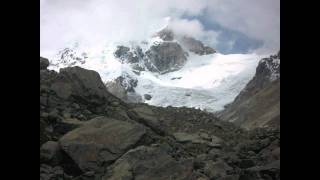
Dr. Robert G. Spencer studies how fossil fuel pollution affects glaciers in Alaska and Tibet. Combustion byproducts accumulate on ice and accelerate melting, releasing carbon stored in glaciers back into the atmosphere and speeding up climate change.
Chapters
Hello, my name is Robert Spencer. I'm an assistant scientist at the Woods Hole Research Centre, and my recent work has been focusing on glacier biogeochemistry. When we think about glaciers, we hear a lot in the media about glaciers thinning, glacial recession and how these systems are changing into the future. One aspect of this that's really received little attention is what this means for downstream ecosystems. That is the rivers that flow out of glaciers and often the coastal water bodies, coastal ocean, that these systems are draining into. In recent years, we've been studying glaciers in the Gulf of Alaska, and there we found that the carbon that's deposited into glacial systems is predominantly derived from recent anthropogenic activities. A lot of this material is coming from fossil fuel combustion by products which are then deposited into the glacial systems. When they melt, they're then exported into downstream rivers and into the coastal ocean, whether they're degraded by microbial communities, which then put this material back into the atmosphere, and so the carbon is cycling very quickly. So, following on from our work in Alaska, we were interested whether this process of fossil fuel combustion byproduct deposition was global. I was fortunate enough to work with colleagues in China and we got access to a number of glaciers on the Tibetan Plateau. These glacial ecosystems in this region comprise about 15% of global ice coverage, and so it's a large area. And they're also adjacent to major zones of pollution such as China, India and the Middle East. Currently, we're still working on the samples we brought back from Tibet. However, the little bit of data we've got so far is supporting what we've been finding from glaciers in Alaska, that this depositional flux of fossil fuel combustion byproducts, therefore seems to be a global phenomenon. This has big ramifications for the global carbon cycle, as what we are examining is a new carbon flux derived predominantly from fossil fuel combustion activities and glaciers provide us with a unique window to examine this process.