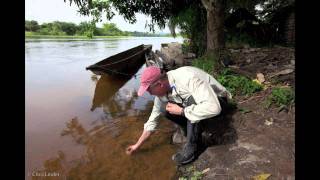
Short interview/transcript excerpt where Dr. Robert Max Holmes (Woods Hole Research Center) describes research on river discharge and chemistry as indicators of watershed change, with emphasis on Arctic rivers and a broader Global Rivers Observatory project sampling large rivers worldwide to quantify carbon flux from land to ocean and its role in the terrestrial carbon balance.
Chapters
Hi, I'm Max Holmes. I'm a senior scientist at the Woods Hole Research Center. I study rivers around the world. I like rivers for lots of different reasons, but perhaps most importantly, because the discharge and chemistry of rivers can tell us about things that are happening in their watersheds, and changes in discharge and chemistry can tell us about changes occurring throughout the watersheds of rivers. In the Arctic, we work on the.
Six largest rivers, the Yenisei, Lena, Ob and Kolyma Rivers in Siberia, the Yukon river in Alaska, and the Mackenzie river in Canada. And they're particularly interesting because climate change warming is the greatest in the Arctic, and the watersheds of these rivers are particularly sensitive to warming. So we're seeing some big changes already.
More recently, we started working on large rivers around the world in this project we call the Global Rivers Observatory. As part of this study, we're now working on the Amazon river in South America, the Ganges and Brahmaputra Rivers in India and Bangladesh, the Yangtze river in China, the Congo river in Africa, and the Fraser river in Canada.
In all these rivers, we're interested in the flux of material waters and chemicals from land to ocean, and again, how those fluxes may be changing over time and what that tells us about changes on land. So already we're working on many of the largest rivers on Earth, but there are certainly many that we're not working on. And we spend a lot of time looking at the maps of the watersheds of the world, thinking about interesting additional rivers that we might like to try to start to work on. We analyze lots of different chemical compounds in the river water samples we collect, but much of the focus is on carbon compounds because the rivers integrate the processes occurring in their watersheds. We'll get a very good handle of some of the changes occurring on land based on the work that we do sampling on rivers.
There's been a lot of work over the years at the Woods Hole Research center on the terrestrial carbon balance, but a relatively new direction of our research is looking at the flux of carbon down rivers to the ocean. And it turns out that can actually be a really important flux, really important variable in the terrestrial carbon balance. So we're now working on big rivers around the world to try to, number one, get better estimates on the carbon flux per from land to ocean, and then to put that into the context of the terrestrial carbon balance.