Findings from IPCC Special Report on the Ocean and Cryosphere in a Changing Climate
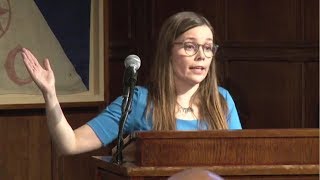
Government and scientific leaders discuss the IPCC's new report on oceans and ice. Sea levels are rising, permafrost is thawing, and ocean acidification is accelerating. The panel outlines what countries need to do at COP to protect vulnerable communities.
Chapters
Well, good evening and thank you all. And thank you, Ted. And I'll briefly, well reiterate Ted's welcome. We really appreciate your taking the time to be here and your interest in what we're doing here tonight. And I'll mention I'm the head president of Woods Hole Research Center. We're co hosting the event this evening with of course the Explorers Club, but also the United nations foundation and also the International Climate Cryosphere. The event is about the latest report from the Intergovernmental Panel on Climate Change. This was released sometime this morning. I know it wasn't out as I was looking for it. As of midnight last night it wasn't there. I spent the afternoon speed reading the 42 page summary for policymakers. So that's as far as the actual report. That's the depth of my knowledge, although I have of course a strong background in the overall science. So what we're going to do is have a discussion of the key messages from the report and perhaps most importantly, the implications of those key messages for most of the folks in the world who don't happen to live in the cryosphere, which of course is the frozen part of the world. But before we do that, we have the honor of having opening remarks by a head of state, and that is Kathryn Jacobsdotter, who is the Prime Minister of Iceland. And she kindly agreed to spend a few minutes with us, make some opening remarks on her view of this issue and the report in particular. I'll just say some brief biographical information about the Prime Minister. She's been in that role since 2017. She was the chairman, became the chair of the Left green movement in 2013. Before that was the Vice Chair and prior to that had several ministerial posts in Iceland. She also, I believe at one time worked as a journalist. So we're honored to have you. And please join me in welcoming the Prime Minister of Iceland, Katrin Jakobstaltar.
Thank you very much. Dear guests, ladies and gentlemen, it's actually a great honor for me to address this event. The summary of the IPCC special report on the ocean and cryosphere in a changing climate was announced today in Monaco. Key scientists involved in this work have made the effort to come here to present its findings to us. And it is very important that the latest message of science is heard here in New York in the Climate Action Summit Week. And I am here because of the Climate Action Summit and of course the General Assembly. This report is built on the science we need to guide us in adapting to a changing environment and most importantly to Avert a planetary disaster. So, again, thanks for your efforts. And the findings of the new IPCC report need to be known, and not only known, but also understood by me and all of my colleagues in governments and politics around the world. And this report touches off on two issues that are specifically relevant for Iceland with regard to climate change, the sea and the ice. Let me say a few words about these topics and then conclude with a thought on how science is relevant to politics, to policies and politics and action. Because we need to listen to science, need to act based on science and facts, and the stakes could not be higher. Over 70% of the surface of this planet is covered by water. And we tend to think of climate change sometimes in connection with atmospheric temperatures. But that is just a small part of the story. With our emissions. We are tinkering with the fundamental working so of planetary systems, temperatures, heat flows, chemical cycles, food chains, air, land, water, life on Earth. The impact of climate change is maybe less visible to us in the ocean than on land, but it is no less profound. The oceans take up around a quarter of our carbon emissions soak up 90% of the excess heat, and this has a big impact on the sea. Heat waves in tropical seas cause coral bleaching. Sea ice is receding rapidly in the north. Ecosystems move towards the poles with warming trends affecting fisheries and livelihoods. The northernmost ecosystems, however, have nowhere to go. With over 2 degrees of warming, the Arctic as we know it will change beyond recognition. The change in chemistry is no less important. Ocean acidification is real and serious threat to marine life. And today's ocean's acidity is already greater than at any time in the previous 3 million years. And it is getting worse. And it is a silent threat as well, invisible to us. And this report brings it forward, allowing us to see the looming catastrophe that we must avert. Now. An Icelandic proverb says half of our homeland is the sea, because we are an island surrounded by sea and our economy is greatly dependent on fisheries. We see, and we actually see this happen. We see warm water species moving into our waters. We see other species moving up north out of our waters. Acidification is a special threat in cold polar waters, where the change happens more quickly, with some of the most rapid changes happening north of Iceland. And we really do not know yet what the effect will be on the marine life and fisheries in Iceland in the future. And today, actually, my government is announcing increased efforts for studying ocean acidification. But we cannot have acidification except by curbing carbon emissions. And the interesting bit is when I go out to my grocery store, I sometimes meet fishermen and they tell me they actually see the change happening in the ocean. They tell me they see it, they see the difference in species and they can actually sense what is going on. So this is already happening and it's happening at a very fast pace. And then about ice and that word that I cannot pronounce, cryosphere, is that okay, sorry. The frozen areas of our planet that cover about 10% of its surface. But it is here that we may be finding the most visible impacts of climate change. The great thaw should be of great concern to the unfrozen 90% of Earth. It will raise sea levels, change water cycles, affect hundreds of millions of people directly and all of us in some way. And I think actually that Iceland is the only UN member state, as far as I know, that takes its name from, from the cryosphere. Glaciers cover over 10% of Iceland. Mighty glaciers and smaller caps of ice on high peaks are a cherished feature of the Icelandic landscape. And they are retreating. And we feel a special responsibility there to give voice to the world's glaciers. And last month we actually had a goodbye ceremony where I participated for awk. A very not maybe so well known glacier, but it's well known in Iceland. And the Oak has now lost its status as a glacier. Scientists counted over 300 glaciers in Iceland in the year 2000. And 17 years later, 56 of them actually were gone. And this is not a nerdy statistic. This is a countdown to disaster. Warming over 2 degrees Celsius will almost certainly mast most mid latitude glaciers in the Alps, New Zealand, the Rocky Mountains and other places. Himalayan glaciers, often called the third pole, will shrink greatly in a two degree world, affecting the water supply of big parts of humankind if we do not act. The great ice sheets of Greenland, our neighbor Icelanders gave Greenland its name and it's not very accurate, but the great ice sheets of Greenland and West Antarctica will reach the point of unstoppable bleeding, locking in sea level rise of up to a dozen meters or more. Now a billion people live within 10 meters above sea level. Many are already feeling the effect of higher waters and more vulnerability to storm surges and disasters. So I think we should listen to that message of our retreating glaciers. And actually when you stand on a glacier, you can hear it. You can hear, I don't know the correct English words, but you can hear the movements in the glacier when they are retreating. And it's really reminding us that nature is giving us a very clear message. To conclude a few words about science because we have entered an era where humans are a dominant force in shaping nature. Our actions affect key chemical and biological cycles on Earth, transform entire ecosystems, and there is no doubt about that. And those who claim that sunspots are to blame for recent climate change or some other factor that is not us have long since lost the plot. We cannot spend much time debating those who choose to close their eyes. Science, you must understand the science. And here the role of the IPCC is invaluable. You take the best available results of scientific research and give it to us in an understandable language. And this allows us, who are politicians, to take decisions based on facts. Some voices despair at the findings of recent IPCC reports. But I would ask us not to despair, but to listen and understand and embrace hope. Because if we humans can have such a dramatic impact on the life of this planet, then it is also within our powers to change course and limit that damage. We can accelerate the ongoing change towards clean energy. We can plant trees instead of burning forests. We can use nature based solutions to soak up carbon from the atmosphere. We can maybe most importantly change the thickness of our economic system so it rewards green growth. Clean solutions, not pollution, not unchecked consumption and waste. The solutions are here, within our reach and it is the work of politicians to grab them and use them. And of course, all of us, we should listen to the message of science, of bleaching coral reefs and retreating glaciers. And we should also listen to the voices of the young generation who has been speaking so loudly to us at the UN Climate Action Summit this week and bow to ensure that we hand over to them a world not of despair, but of hope. Thank you very much.
Well, thank you Madam Prime Minister for those wonderful remarks. I'll say if all heads of state were as well informed and as enlightened as you are and as open to science based policies, we wouldn't need to be here. And among other things, I'd be out of a job. But thank you once again. I guess that's a good excuse. So, okay, before we get to the substance of the report, we're going to just spend a few minutes talking about who is this Intergovernmental Panel on Climate Change and how does it work. And Monica Dean is going to say a few words about that. Monica is with the United nations foundation where she works on energy, climate and environment. Thanks very much.
Hi everyone. Thank you so much for joining us today on what is a very momentous occasion in the IPCC's 30 year history. This special report which was released at 5am this morning Eastern time, which is why it wasn't on when you checked at midnight. Concludes our special report cycle for the sixth assessment cycle of the IPCC. This is currently the most ambitious report cycle the IPCC has ever undertaken in its 30 year history. And so we started this cycle with this special report on 1.5 degrees of global warming which was released a year ago. And just a month ago we released a special report on climate change and land. And following this special report, in about a year you will see the next assessment cycle of all climate science which will be released over the course of 2021. Now this special report is quite the undertaking and I am very pleased to be joined today by three fantastic authors who volunteer their time in order to produce these reports. But they are representing a larger cohort of nearly 104 authors from 36 countries around the world who have worked for the last two years to assess over 6,000 different sources of literature and review 31,000 government and expert comments on the draft report. Over the course of the last five days they have gone sentence by sentence with member delegations of 195 countries to approve a 42 page summary for policymakers which is a high level summary of the underlying five chapters of this report. And it is with great honor that I am here today to introduce and be joined by my colleagues from the ipcc. So thank you very much for having us and I look forward to the discussion.
Thank you, Monica. So we'll now turn to the substance of the report and what we're going to do is have just brief opening remarks for four scientists, three of whom are authors on this report. We're going to start with Professor Ben Orlove who's here at Columbia. He was the lead author on the Mountain Regions chapter. He's an anthropologist by training, senior research scientists at the International Research Institute again here at Columbia, and a co director of the center for Research and Environmental Decisions. Thanks so much for joining us.
Before I really jump in, I'll say first of all, I'm not the lead author. There are many lead authors so it's easy. We get paid in titles rather than money. But anyway, it's nice to have that. And I also would like to just give a shout out to the sled there. I just want to recognize that the technology of sleds really was developed by indigenous people around in the Arctic there are different patterns of sled that the Sami had through forests and that the Inuit had through more open territory. That hard to imagine how the Exploration of the Arctic, the reach to the North Pole would have taken place without that. The first expedition that overwintered in Antarctica was accompanied by two Sami dog handlers from Norway. So the kind of joint production of knowledge from indigenous and local people around the world has supported science and vice versa. And we see that at the ipcc. So ready to start, I guess with the slides? Do I ask someone who'll advance them or to talk about the. That is, the deck's up there and we go through it. Is that. I'm not sure I see it here. Sure, sure. So we go visit. So next slide, please. So high mountains. Many parts of the world look like this. You see how the moisture is concentrated at the top and coming down that valley you can see a river and how people have channeled water to irrigate their fields, support themselves. So long as the glaciers are in balance. As long as the glaciers are in balance, the river can more or less stay in its bed. It doesn't flood and there's enough water for irrigation. This, I believe, might be Nepal next. So as the Prime Minister called out that there are certainly risks to the glaciers, particularly at the low and middle latitudes. The difference between the. This mentions here, if emissions continue to increase strongly and I think the report works hard to distinguish it draws on a great deal of science that says we've seen some changes. If we continue with high emissions, there'll be high warming and here are the consequences by 2100. And on the other hand, if we move to the full goals of the Paris Accord and have lower emissions, here's what will happen. And in fact, there's twice as much glacier loss between now and 2100 with high emissions as there is with low emissions. And this is certainly of consequences for plants and animals that they. Much as the fish can move, fish who remain below sea level or ocean fish do can move north in the mountains, move upslope. So we've seen impacts. We're seeing heavily impacted reindeer populations, salmon fisheries. These are important economically and culturally. Often are impacted and we hear a whole variety of activities. Recreational activities and tourism is something that many people enjoy and provide income to mountain communities. Cultural assets include everything from UNESCO World Heritage sites to. There are parts of the world where there are sacred mountains. There are pilgrimages that have changed in the Andes because. Because the glaciers have retreated and the indigenous people can hike up to them. And even in the Alps in the western United States, people feel very strongly that their white mountains remain white threatened loss of glacier on Mont Blanc, the highest Peak in the Alps if Mont Blanc were no Mont Blanc, if the White Mountain were not white, this would matter to people above and beyond the income streams that are derived through tourism. Next slide and just going back I think to the previous slide there is the certainly discussion of natural hazards. We track those and see many of them seems changing and increasing the water availability is hugely important. People require water for drinking. The irrigated agriculture is important. It's a basic subsistence of people in many mountain areas and large basins. The prosperous agriculture in California, many millions of farmers in South Asia, particularly in the Indus Valley really require on glacier mouth contributes to it. So the lower warming, the less extreme warming that's consistent with 1.5 would allow food supplies to be more secure and rural livelihoods to be maintained and government economy, national economies would survive. And so we end here with solutions and I'll just point out solutions on different scales. So transboundary water management means getting different countries together to cooperate on the basin river basins that they share or perhaps coordination between different states or provinces. Integrated water management can often be on a smaller scale if you want to. You've got a reservoir and you want it to flow for flood protection, but you also want to manage irrigation and drinking water. You really need to integrate resources in a number of different ways. Would elect the Prime Minister. I love glaciers, would love to talk about them, but I think I've told you enough.
Thanks very much, Ben. Next we'll hear from Professor Rob Decanto. Rob is professor of Geosciences at UMass Amherst. He was a lead author on the polar regions chapter. Rob is perhaps best known, at least I know him best for his work on what we call ice sheet dynamics, which means the behavior of the large land based ice sheets on Greenland and Antarctica and how those ice sheets affect sea level rise. So Bob, thanks for joining us.
Thanks for the introduction, Phil. Really happy to be here. Was very impressed by the Prime Minister's knowledge. We almost don't have too much to say. So I'm taken a little off guard because I didn't want to just go through a set of bullets. You can all read the spm, it's online. Regarding the polar regions, there's one figure that I asked Monica to load and if we could go forward right there, so you don't need to be able to see the little tiny numbers on this. This is our first figure in the summary for policymakers. So this is our sort of composite view of our projections. So this is what our current understanding of the theory computer models based on Our best understanding of the physics of the climate system, the chemistry of the Earth system, how ice flows, how the atmosphere moves, how the oceans circulate. In what's in store for the future. There are a lot of different components that this report looks at. It's the acidity of the ocean, it's marine heat waves, it's sea ice in the Arctic Ocean, it's sea ice around Antarctica. Toward the bottom on the left are lines. And as we move from left to right, we're going into the future in time. And you can see that all these lines go up, a few go down. On the top right, you can see a red line going down. That's ph. So as we go down, that's the oceans acidifying. Now, the blue line is a world where we mitigate emissions, strong mitigation, where 2030, we're starting to really get our act together. By 2080, we're actually sucking carbon dioxide out of the atmosphere. And as I've been doing a lot of interviews, even on the road, on the drive down from Massachusetts today, reporters keep asking me, is there some good news in this? Because I think a casual glance at the report, it really sounds like all gloom and doom. Sea level, I think, is to me, because that's what I work on. I study the polarized sheets, how they move, how they flow, how they respond to climate change, what happens to them as the oceans warm. I think this is the poster child for some actually potentially really good news. So the bottom, the very bottom diagram that is bigger than all the others, that is the sum of the contributions to sea level rise from mountain glaciers all over the world. Up in the alpine regions we just heard about, if all of them melt, they could contribute about 40cm or so to sea level rise. But they're rapid, they're contributing quite a bit to sea level rise that we're observing today. The Greenland ice sheet roughly contributing about the same amount as the mountain glaciers today, but it's a much bigger reservoir. There's a little more than 7 meters of potential sea level rise locked up in that ice sheet. Antarctica is eight times the bigger than Greenland in terms of its potential to cause sea level rise. Today, Greenland is contributing to sea level rise at about twice the pace of Antarctica. But Antarctica is so vast and is really special because so much of the ice on Antarctica is actually sitting on the rock, it's bedrock, the continent that is actually below sea level. So the ice sheet itself, much of it is bathed in ocean water. And today, for complicated reasons, the water around the fringes of Antarctica is warming. It has not so much to do directly to human caused changes, but changes in the winds. But what we're seeing happening is that some warm water is getting up around the edges and the underside of the ice sheet, and that's causing dynamic changes. The ice sheet is actually flowing faster into the ocean. Greenland is melting and contributing to sea level rise, mainly because the air in the summer is getting so warm. It's just simple runoff like you see after a snowstorm. And the next day it's nice and warm out, it melts. Those are the processes dominating Greenland's contribution to sea level. Antarctica, there's something else going on. And that something else again is the fact that the ice sheet is in contact with the ocean. If the ocean warms, it has the potential to behave in such a way that it could actually contribute very, very fast. Rates of sea level rise not so much in the near term, a few decades from now, maybe not even in the year 2100, but going beyond that, we're worried that some instabilities in the flow of the ice sheet could be triggered. That could do something terrible. Today we're measuring sea level rise in millimeters per year, a little more than 3 millimeters per year. And that doesn't sound like much, but it adds up maybe an inch a decade. And what we see is that even that slow, steady rise in sea level is increasing the frequency of flooding events all over the world. That Michael Oppenheimer will talk about, I think, in a few minutes. Now, to go back to that bottom right hand picture, and this extends from essentially from 1950 there on the bottom left, going out to the year 2300. The red curve is sea level rise under a high emission scenario. And what's new in this report, based on the new science just in the last five years, we think now that Antarctica has the potential to contribute much more sea level than we were thinking just five years years ago. Our projections are suggesting perhaps 80 centimeters or so of sea level, with the potential for even more than a meter by the year 2100. In a high emission scenario, when you get out to the year 2300, sea level rise of multimeters. Now, what's important to note is that if 80 centimeters doesn't sound like a lot to you, once you get just into the 22nd century, we're talking about beginning to measure sea level rise not in millimeters per year, but in centimeters per year. So if you're a coastal engineer, you're trying to figure out where to build a nuclear power plant, even potentially a wind power installation, any coastal infrastructure that's going to be tough to deal with. Now, the good news and where I'm going to end is the blue line. And the blue line is the highly mitigated case. And you can see that even though there is going to be ongoing increase in sea levels, coastal impacts that we're going to have to deal with, because regardless of what we do with emissions, there's going to be sea level rise. It's going to keep rising. You don't turn the ice sheets around in decades or even centuries. But you can see it's a much, much rosier picture with perhaps less than a meter of sea level rise, even centuries out into the future. And that's something that I think we can all probably deal with and tolerate. So I'll end this piece of sea level here. The big picture, higher estimates, mainly based on the potential for Antarctica to do something scary again, because Antarctica is special. It is bathed in ocean water around its edges, unlike Greenland. Our understanding is really improved about what Antarctica might do in the future. And it suggests that it could do something very scary. But if we limit emissions, the blue versus the red, I think is what I'm trying to tell the world. There's still a lot of good news in this story. Thank you.
Thanks very much, Rob. It's now my pleasure to introduce Michael Oppenheimer. Michael is one of two coordinating lead authors on the sea level rise chapter. He's a professor of geosciences at Princeton, a distinguished scientist, winner of numerous awards, a prominent and effective spokesperson for science, for climate science, also has played prominent roles in international climate policy. So thank you for joining us, Michael.
I'm very happy to be here. Although in Monica's introduction, when she started reciting how many 36 million review comments and endless sleepless nights and all that, I really feel like going to bed right now, frankly. But I'll do what I can. Just to pick up on Rob's presentation. I'm generally an optimist and I hope the optimistic view is the right one to take it, certainly the more efficacious one to take because it doesn't pay to be paralyzed by gloom and doom. On the other hand, I have to say my own reaction to this report was, gee, there's a lot for us to do. There's a lot for us to do on emissions reduction. That's what everybody knew that in advance. But there's a hell of a lot for us to do on the adaptation front where I think we've actually fallen further and further behind. So let me get to that in a minute. Let's have the next slide. So some of the high line messages, the acceleration you heard about, sea level has been rising for the past century. It's accelerating, it's accelerating through the ice sheets, as Rob said. And the important thing to realize about that is that as Rob pointed out, we really have two distinct futures. One of which the acceleration just continues indefinitely as you fall off the right end of that graph. Another one of which where you see sort of an almost a stabilization of sea level out a few hundred years. So there are two messages in that. One is we're making decisions now which commit us to a very long sea level rise, no matter, and there's going to be significant sea level rise no matter what we do. But the other one is, well, there's a trade off or adaptation and emissions reduction are complementary. The more emissions reduction you do, the easier it will be to adapt. And if you think that adaptation is a snap of the fingers, you should consider the absolutely miserable job that some governments do in some places at adapting to current risk. You can see that every time there's a big flood event, it's okay. Some places do a good job. I'd say most places in the world have already fallen behind. And if it's going to accelerate, we're just going to, you know, we're going to fall further and further behind and it's going to be tougher and tougher and I don't think we catch up. And I think the accelerating world of high emissions is unmanageable for the coast and it will be a continual process of spending a lot of money on protection and ultimately withdrawing. On the other hand, the stabilization scenario, as Rob suggested, a half a meter to a meter of sea level rise, in my book that's manageable if it takes place over a few hundred years. If it took place in 50 years, it would be a lot of trouble. If it took place in 100 years, it would still be a lot of trouble.
Trouble.
Now, I'm going to emphasize one thing because I don't want to take up a lot of time and that's the changes in extreme sea level events. Sea level just doesn't sit there. It goes up and it goes down. It goes up and down. The tidal cycle. In some places that's quite large. In this neck of the woods, it's less than a meter either way. Some places it's quite small, it's a fraction of the meter. There are also the effect there's also the effect of storms along the coast. When a tropical cyclone in this neck of the woods, a hurricane comes by, it raises the sea level for many reasons. And because it's raised, it pushes the sea level inland and that's coastal flooding. Now the effect in the future is going to be when there is storm surge, it'll be riding on top of a higher sea level. So it just pushes it up and the storm surge goes further inland. When there's an unusually high tide, like it's called a king tide around here, that does the same thing, it pushes the sea level up and it goes further and the water goes further inland. So what we're going to have in the future is that the frequency of high water levels at the coast which cause flooding in land, the frequency of return of a given height of water will increase no matter what the height of water was in most places, almost all places around the world. And the benchmark for a typical flood in many countries is the so called hundred year event, which is an event which has a return probability of 1% per year. And if you take that event and you roll forward to 2015, which is only 30 years from now, then in many places around the world, including much of the east coast of the United States, including many of the small islands in the Pacific, the return period becomes annual. Think about that. If you go further to 2100, and that by the way is in either extreme of the emissions pathway, this is something that to the uncertainty within, the uncertainty of our calculations is going to happen. If you roll forward to 2100, then most places around the world, most places that we have data for along the coast are going to experience that kind of multiplication in the frequency of return of high coastal water. And therefore, unless we're very good at defense flooding along the coast. So that to me is the way that we're going to feel sea level rise first in most places. And that tells me that whether you think governments are going to succeed at cutting emissions or not in order to get us down, whether you think governments are going to succeed at cutting emissions or not in order to get us down to the Paris like blue curve, we got to do a lot on the adaptation front or else we're just going to be again falling for further and further behind. Now, this report analyzes some of the things you can do. You can build hard protection like the 10 surge barrier for instance, or in some cases just a bulkhead or a seawall. That is expensive, but it's effective. That means that in a Place like this with a high density of wealth, it's worth doing in a strict economic sense. But it also means that at many places, perhaps most places around the world's coast, it's not worth doing because there's not enough value in those areas. Now that's putting aside ethical and moral considerations. And governments, mostly not for ethical and moral considerations, for political reasons, will go in and put hard defenses at many places along the coast anyway. But there are other things we can do which are less expensive. We can gradually, can't be done overnight, pull people out of these regions and discourage development in these regions. That's one thing that's not happening in most places. It happens some places because governments hate to retreat. They hate the idea in this country at least they hate the loss of revenue from pulling people off the real estate because nobody's paying real estate tax anymore. Local governments despise retreat, yet they're going to have to do it. And by the way, these comments on government are my priority. Personal comments. IPCC for obvious reasons, doesn't criticize governments. But I have no such compunctions. And then we can learn to live with the flooding. In a lot of places around the world there are now attempts to adapt by for instance, raising buildings or making buildings floodable or building infrastructure that can take floods now and then. And even in this city we're considering plans for accommodation. After the last big flood with Hurricane Sandy, several of the states that were involved in the region started buying off, buying people off their land basically and letting them retreat. Unfortunately, just to put a little political reality, in some cases the state of New York anyway resold the land to people who had the resources to raise houses and build, you know, strong houses. So nothing is ever clear cut. But the point is we have tools that are our disposal. We know what we have to do. This is not new. What it needs is for governments to focus on protecting their people, getting the job done while they're cranking down on emissions as quickly as possible.
Thank you.
Thanks very much, Michael. Next hear from Dr. Max Holmes. Max is a multi talented guy, among other things, senior scientist Deputy Director at Woods Hole Research Center. He's been a program director at the National Science Foundation. And Max especially wanted to make sure I mention that he's a fellow of the Explorers Club. So please welcome Max Holmes.
Well Phil, I was going to thank you for that introduction, but I'm not going to do that anymore. Thanks to all of you for being here tonight. It's a real privilege to say a few words And I'm going to be brief so we can get to the discussion phase of this talk. I have one slide, if you can put it up. It's a picture of a dune. No, it's a picture of permafrost. So I'm going to talk about one of the specific areas that's covered in the report. Permafrost. So permafrost is 1. Frozen ground is typically or technically defined as ground that's at or below the freezing point of water for two or more years consecutively. But in practice, this ground has been frozen for hundreds or thousands or tens of thousands of years. And about a quarter of the Northern hemisphere land area is underlain by permafrost. And if you remember panel L of Rob's slide, that multi panel slide that we showed up there, panel L was permafrost. And if you think back in your photographic memory, you'll see that under, let's say, business as usual or a high emissions scenario, by 2100, we're slated to lose something like 70% or more of near surface permafrost. Good news, if you want to call it good news. If we get our act together in a hurry, we may only lose something like 30%, but that's still a big number. We're going to lose a bunch of permafrost over the remainder of this century. And that has implications both locally and regionally, in Arctic as well as globally. And I'll talk just briefly about some of the local impacts of the loss of permafrost or permafrost thaw. And then I'll say a few more words about sort of the global implications of permafrost thaw. So local impacts.
1.
Permafrost is just a wonderful surface to build on as long as it stays frozen. But as it thaws, it becomes a terrible surface to build on. So already we're seeing big impacts on human infrastructure in the Arctic. You see buildings that are literally sinking into the ground as the permafrost below them thaws, roads that are buckling. And these things are only going to accelerate. Permafrost thaw is already having impacts on Arctic ecosystems. Around the Arctic, you see things that are called drunken forests. So forests growing on permafrost, the permafrost thaws, and instead of the trees upright, they're leaning over and tipping over, just like the buildings are sinking into the ground. And there are all kinds of implications or impacts already that we're seeing on ecosystems related to permafrost and other cryospheric. Changes in the Arctic. And it's also permafrost thaw is impacting the people that live in the Arctic, and particularly the indigenous people, and it's impacting their way of continuing to live as they live for many thousands of years. As their landscape is changing and the ground is thawing and subsiding, their ability to continue with their traditional way of life is being impacted. But I want to talk a little bit now about a little bit more about not just the impacts locally and regionally in the Arctic, but the global impacts of thawing permafrost. So a few numbers to remember. Right now, There are about 850 billion tons of carbon in the atmosphere, and that's just carbon dioxide. That's increased Certainly something over 40% over the last 150 years because of human activities putting greenhouse gases into the atmosphere. But 850 billion tons in the atmosphere. In all the vegetation on Earth, that's mainly forest, there are around 500 billion tons of carbon in all the permafrost. And all the fossil fuels left in the ground that we could get to. Should we continue down that road? So that's coal, oil and natural gas are around 1200 billion tons. And in permafrost, the thing that doesn't get nearly as much attention, around 1500 billion tons of carbon. So almost twice as much as in the atmosphere, three times as much as in all the vegetation on Earth, and more than all the fossil fuels left in the ground. So what's going to happen to that carbon? It's built up slowly over thousands and thousands of years. So over the longer time frame, the Arctic has pulled carbon out of the atmosphere and it's accumulated because when plants die in the Arctic, the plant growth may be slow, but the decomposition, the rotting of that material is even slower. So it's just frozen away in a freezer in the Arctic. But as the permafrost thaws, bacteria start to consume that organic matter, that carbon as an energy source. And byproducts of that process are carbon dioxide and methane, potent greenhouse gases. So how much will be released into the atmosphere? The report goes into some detail talking about that. This is an area of very active scientific research. It's one of the areas where there's considerable uncertainty. But in the, let's say, best case scenario, we get our act together over the remainder of the century, we're talking about tens of billions of tons of carbon released. And in sort of the business as usual or high emission scenario, we're talking something over 100 billion tons. So it's multiple years worth of, of anthropogenic carbon emissions right now. And another way to put that into perspective, all the human activities in the United States are currently putting around 1.4 billion tons, I think, of carbon into the atmosphere. So, yeah, there's a potential. There's not much good news in the permafrost story. There's an awful lot of carbon locked up there. Some of it's going to end up in the atmosphere if we have to look for a sliver of good news. The good news, or what keeps us all going, I think is the best case scenario, while not good, is a hell of a lot better than the worst case scenario.
So thanks very much, Max. So next we're going to have a brief panel discussion with the four scientists you just heard, plus one other whom I'm going to introduce right now, and that is Dr. Jennifer Francis. Jen is a senior scientist with us at Woods Hole Research Center. She's been with us for about a year. Prior to that, she was at Rutgers University for quite some time. Jen studies how rapid change in the Arctic affects weather systems in mid latitudes. You've probably heard the term polar vortex, which is a misuse of a meteorological term, but this refers to the phenomenon I just described of rapid changes in the Arctic triggering serious consequences for mid latitude weather. So, Jen, could you join us and could the scientists all. Jen is a senior scientist with us at Woods Hole Research Center. She's been with us for about a year. Prior to that, she was at Rutgers University for quite some time. Jen studies how rapid change in the Arctic affects weather systems in mid latitudes. You've probably heard the term polar vortex, which is a misuse of a meteorological term, but this refers to the phenomenon I just described of rapid changes in the Arctic triggering serious consequences for mid latitude weather. So Jan, could you join us and could the scientists all join us up on stage? Thanks very much. So, Jeff, as soon as you get your microphone on.
So.
So you haven't had a chance to talk yet, so I want to put you on the spot, Join us up on stage. Thanks very much.
Give this a hello. Is this working? All right. Okay. Well, thanks everyone for all that terrible news. I'm afraid I don't have a lot of good news to try to counteract that with, but what I did want to say is I think one of the things this report does really well and one of the reasons it's so important is because it's really highlighting the changes that are going on in two really important parts of the climate system, the oceans and the polar regions. And I want to focus on Arctic sea ice the most because that's where I've been spending most of my career, working just to sort of cut through the chase on the numbers and the graphs. So far, we've seen the Arctic sea ice disappear by 75% in only 40 years. In terms of volume, I mean, it's just a breathtaking pace of change in this critical part of the climate system. And that has a lot of implications. I like to think of Arctic sea ice as a threat multiplier, because as this very white surface on the Arctic Ocean disappears, it means that a lot less of the sun's energy is being reflected back to outer space and instead is going into the Arctic Ocean, warming the Arctic Ocean, melting more ice, and setting up a vicious cycle of melt and absorption that is causing the Arctic to warm two to three times faster than just about anywhere else on the planet in it. And the reason I call it a threat multiplier is because that extra warming is accelerating the permafrost thaw that you just heard about, and it's also accelerating the melt of the surface of Greenland that we just heard about. So this is a really important change that's happening in the climate system. And as Phil mentioned, the other aspect of this rapid warming of the Arctic is what the topic of my research, it's also a very new and still somewhat controversial topic, is how the rapid warming in the Arctic is affecting weather patterns down here where we all live, especially the increase in extreme weather events, which have doubled since the 1970s. And we think that the effect of the rapidly warming Arctic, in a nutshell, is to cause weather patterns to become more persistent. And so when you have persistent cold or persistent hot or persistent rain or whatever it is, that can lead to extreme weather events. And so, in terms of good news, or trying to put some positive spin on this, one of those graphs that Rob showed was for sea ice for the future. And it also has a scenario in the lower emission scenario where we don't lose all the sea ice in the summer. Right now, we're on track to lose it probably in the next 20 to 30 years in the summertime. Most scientists who study it think that it could happen any year now, but there is a chance that we could preserve some of the sea ice if we can get our act together. Thanks.
So let me start with a couple questions. Since you talked about ice, I want to start with a couple questions about ice. And let me turn from, for A moment, from sea ice to land ice. And I think Michael and Rob, you both mentioned that projections of sea level rise have been revised upwards, I think more than once in the last several decades. And I think, Rob, you said this is because of better understanding of what happens to the major land ice sheets. And I guess I want to ask you sort of a cultural question. What does that tell you? What does that say about our ability to understand climate change and to predict its consequences?
So the fact that we didn't have it right 30 or 40 years ago, I think the science is evolving and especially around the Antarctic ice sheet. Again, Antarctica had been a very difficult thing for us to deal with in computer models. And again, it just all boils down to the fact that the ice sheet is so big and so massive and the continent has been glaciated for, in some places, more than 30 million years. Those glaciers have been eroding the land. In some places it's been subsiding. It has a big ice sheet sitting on top of the continent, pushing it down into the mantle. And so Antarctica is sitting parts of it. The West Antarctic Ice Sheet, which is small compared to the East Antarctic Ice Sheet, but still could raise sea levels by 4 meters, is essentially, it's a huge ice cube sitting in a bowl of seawater, where the bottom of the ice sheet in some places is more than 2 km below sea level. The ice sheet is so big and massive and tall and thick that it's able to stay sitting on the bed. But that means the edges, again, are surrounded by seawater. Greenland, we understood the physics 30 or 40 years ago that we haven't even really changed the models of Greenland much. And the predictions haven't changed much because we understand how snow and ice melts by the sun. It's these really interesting physics of big and massive and tall and thick, that it's able to stay sitting on the bed. But that means the edges, how the ocean and the ice sheet interact on Antarctica that have been giving us a lot of trouble, again, are surrounded by seawater. Greenland, we understood the physics 30 or 40 years ago that we haven't even really changed the models of Greenland much. And the predictions haven't changed much because we understand how snow and ice melts by the sun. It's these really interesting physics and the theory and the modeling has evolved even in the last decade, quite a bit. It's really the Antarctic ice sheet and our better understanding of what's going on down there that has really driven this uptick in the projections and is Pointing out that there's an uptick that's happening today. Sea level is accelerating. As Michael said, in part, that's Antarctica. How the ocean and the ice sheet interact on Antarctica have been giving us a lot of trouble. And the theory and the modeling has evolved even in the last decade quite a bit. It's really the Antarctic ice sheet and our better understanding of what's going on down there that has really driven this uptick in the projections and is pointing out that there's an uptick that's happening today. There could be some instabilities in the ice sheet system that could be triggered if it gets warm enough down there. When we start to see a lot of. If we start to see the summers get warm enough so that there is melt water on the surface of the ice sheet, then we're worried that some of these instabilities could be triggered. For Greenland, that's what's already happening. Sea level is accelerating. As Michael said, in part, that's Antarctica. There could be some instabilities in the ice sheet system that could be triggered happening. That's not such a big deal for Greenland because that ice sheet is mostly sitting on. If it gets warm enough down there. When we start to see a lot of. If we start to see the summers get warm enough so that there is melt water on the surface of the ice sheet, then we're worried that some of these instabilities could be triggered. And for Greenland, that's what's already happened above sea level. And a lot of that meltwater refreezes, we get steady melt from Greenland. But for Antarctica it's a different story.
So I want to ask a follow up question. I'll direct it at Michael.
The rather substantial uncertainties that adhere to the question of the stability of the.
Ice sheet happening, that's not such a big deal for Greenland because that ice sheet is mostly sitting above sea level and a lot of that meltwater refreezes, we get steady melt from Greenland. But for Antarctica it's a different story.
So I want to ask a follow up question. I'll direct it at Michael.
The rather substantial uncertainties that adhere to the question of the stability of the ice sheet, particularly Antarctica and that have been around really for the questions have been asked for 50 years or more probably will be around for some time. It's going to be hard to narrow those long term projections and there are different views in the community. And one of the pieces of progress that IPCC has made was to allow a rather diverse set of methods to be assessed in terms of trying to make predictions, particularly Antarctica and that have been around really for questions have been asked for 50 years or more probably will be around for some time. It's going to be hard to narrow those long term projections and there are different views in the community. And one of the pieces of progress that IPCC has made was to allow a rather diverse set of methods to be assessed in terms of trying to make predictions for what the ice sheets will do. So you will find for the first time, right, with the so called process based model, mechanical models which describe as best we can what the ice is going to do. Several other approaches, three others which have been used to estimate what the ice will do and this will help IPCC and so what the ice sheets will do. So you will find for the first time, right, with the so called process based model, mechanical models which describe as best we can what the ice is going to do. Several other approaches, three others which have been used to estimate what the ice will do and this will help IPCC avoid the criticism that it's only telling part of the story and not giving a full avoid the criticism that it's only telling part of the story and not giving a full rendition of the views in the community. I think that's a major step forward, not just for IPCC but for decision makers.
So Michael, I want to again follow up and just put you on the spot a little bit. A few minutes ago we heard Monica talk about the IPCC approval process. I know you've seen it a bunch of times. I've seen it a bunch of times. And specifically what she said is that.
Views in the community, I think that's a major step forward, not just for IPCC, but for decision makers.
So Michael, I want to again follow up and just put you on the spot a little bit. A few minutes ago we heard Monica talk about the IPCC approval process. I know you've seen it a bunch of times. I've seen it a bunch of times. And specifically what she said is that in the summary for policymakers, this 42 page document, literally every sentence in that document summary for policymakers, this 42 page document, literally every sentence sentence in that document has to be approved unanimously by diplomats from 195 countries. And obviously that tends to result in weaker statements. And how much do you think that's affected? The document has to be approved unanimously by diplomats from 195 countries and obviously that tends to result in weaker statements. And how much do you think that's affected what the IPCC has said over the years.
Well, first let me say I've been in an author of one kind or another on all the major assessment reports and two special reports. I've been in this from the beginning. And IPCC was an experiment and its objective was to keep the government what the IPCC has said over the years. Well, first let me say I've been an author of one kind or another experiments from arguing about the science at the diplomatic negotiations. That's basically the way I view the goal and that has been achieved to a remarkable degree. It doesn't mean we've made a lot of progress on the diplomatic side, but it's taken science off the table, which is good. So the question is, though, the price of doing that was to get the governments intimately involved in writing of the summaries. For policymakers, that sounds like a bad deal. It sounds like a deal with the devil. After all, for scientists, scientists are innocent and pure. Governments are evil. Well, in fact, though scientists may be innocent and pure, not quite true. But they don't know how to write in plain English. And governments may have all kinds of ugly motivations, but they know how to write a message that policymakers will understand. So my experience, having been at six of these approval plenaries, is that five out of six times the document came out a lot better than it went in. And that the conservatism that you might think is inherent in the document, if there is conservatism, which I think there is, is more on the part of the way scientists behave. They're cautious. It's less on the part of the way governments behave. The governments most of the time turn a document which is jargon filled and poorly written into something that they are willing to read. That's a good thing. And this by the this plenary was the best one I was ever at for from that point of view, the cooperation and working together.
Great.
Thank you. So I want to go up in elevation and ask Ben a question about high mountain regions. And you talked a lot about the societal consequences of the changes that we're seeing in the high mountain regions. And one thing I don't know if you mentioned, but I'd like to give you the opportunity if you want, is to talk about geologic risks, I.e. landslides, avalanches and so forth. And was that covered in the report?
And what does the report say about it?
The report does cover that. And so we attend quite a bit to natural hazards. You saw that picture of the permafrost and that's really a lot of the Permafrost has relatively little relief. You've got big areas with fairly similar circumstances and mountains topography is everything. Elevation is always changing. So the risks are different. From distances of 10 miles you could have different. And so we're trying to summarize all of that and we did find the clear message is that landslides are more frequent and larger. And in fact permafrost is part of that. There's high mountain permafrost as well as high latitude permafrost. So that's actually something I saw myself in Bhutan. I had the fortune to spend several days with a yak herder and he was talking about how there are certain places, certain narrow passes they used to go through in the afternoon and they no longer do because boulders come rolling down. The final release of the boulders comes often in the afternoon sun on south facing slopes. And that occurs on a larger scale. It also can happen that if you've got a valley that a glacier's come ramming down a valley, filled it with ice and then is the glacier melts. The steep sides of the valley are exposed and they often have not well consolidated material. And that also comes. So there's a lot of landslides. Avalanches are changing the snows. As you get less as the snow season is shorter, you sometimes get moister snow so you get wet snow. Avalanches that don't travel as far, but they're more destructive where they do reach. There's the whole question of floods and those we see glacier lakes increasing in number, but there's really not enough evidence yet to say that we can detect the patterns of change in glacial lake outburst floods. And hugely important for the people who live there and also of importance as we try to transition to low carbon economy. Hydropower seems great, but you're often in mountain areas, you're building reservoirs and hydropower plants in the valleys and those are often the ones that get hammered by the floods. The landslides can interrupt rivers and then create very short term lakes that just dam up behind a landslide and there's really then it comes rushing down. So that's yet another concern as we try to move to a very potentially valuable sort of renewable energy.
Great, thank you, Ben. So since you mentioned permafrost, I want to direct follow up question about permafrost to max. Max, you gave us some impressive numbers for the amount of carbon stored in permafrost. You also cited estimates of future emissions of carbon from the following permafrost. So I'll ask you two difficult questions. One is first of all, how well do we know what's actually happening today in terms of emissions from permafrost? And then my second question is, okay, so what's the end game? Meaning we all know that in order to stabilize climate and to preserve prosperity, we need to have no more net greenhouse gas emissions going into the atmosphere. So how do we handle that if permafrost becomes a significant source of emissions? I know I'm putting you on the spot because I don't think there's a good answer to that question, but thanks for those questions.
Sure.
We'll talk about it later.
The situation right now. So I'll back up a little bit and think of the longer term. Over the past tens of thousands of years, as I said, the permafrost has been accumulating carbon, Arctic has been accumulating carbon, pulling it out of the atmosphere, storing it in frozen ground. Right now you can find some studies that say that the Arctic is a small net source of carbon to the atmosphere. You can find find some other studies that say it's still pulling some carbon out of the atmosphere as plant growth is accelerating. The way I think of it is it's roughly in balance, but the teeter totter is tipping toward a source and it's a potentially very big source given the amount of carbon that's locked up in permafrost. What's the endgame? What does that mean for the future of all of us and everything? There are things we know what's driving climate change right now. It's fossil fuel combustion, it's land use change, deforestation. Those things are directly under human control. They're not easy to control. But if we get our act together, we can pull back on our use of fossil fuels. We can keep forest standing, we can restore forests where they've been degraded. It's under human control. Permafrost is being impacted indirectly through the other things that, that we're doing to drive climate change. There aren't really direct controls on permafrost. Once that ball gets rolling, it's a self reinforcing cycle where permafrost thaw leads to carbon release, which causes more warming and more permafrost thaw, and on and on. So the answer to your question is once this gets out of the cage, it makes it really hard to stop. Even if we get our act together on the things that are directly under our controls. And that just adds motivation, I would hope to getting our act together in a hurry, controlling what we could control and keeping permafrost frozen.
So what I want to do we have some closing remarks by another dignitary but I would really like to give folks in the audience a chance to answer a few questions. So let's do that now. And can you when you ask your question just stand up and shout out.
So folks on your question is once this gets out of the cage it makes it really hard to stop even if we get our act together on the things that are directly under our controls. And that just adds motivation I would hope to getting our act together in a hurry controlling what we could control and keeping permafrost frozen.
So what I want to do we have some closing remarks by another dignity but I would really like to give folks in the audience a chance Panel can hear I see a hand up in the way back. To answer a few questions so let's do that now. And can you when you ask your question just stand up and shout out so folks on the Brown University.
Panel.
Can hear I see a hand up in the way back.
Which you're totally familiar with. Put out a report recently where DoD U.S. department of Defense is the world's largest producer of greenhouse gases. Between 2001 and 2017 they contributed 766 million. Okay Michael, question for you. Brown University of Watson Institute which you're totally familiar with put out a report recently where DoD U.S. department of Defense is the board largest producer of greenhouse gases.
Of CO2. In the comments.
Yeah, I think the number is around 7 or 8% of US emissions come from the military in all its operations manifestations. You know from what I understand the.
Military has made they contributed 766 million metric tons of CO2.
Can you comment 8 efforts to @ least think about becoming more Yeah, I think the number is around 7 or 8% of US emissions come from the military in all its operations manifestations energy efficient to think about alternatives probably in the non battlefield aspects of their operations. And at least the military I know is very concerned about the adaptation question for instance for their coastal facilities. If you want to dig inside the European US Government and five fine. You know from what I understand the military has made departments that think less about greenhouse gas emissions and efforts to at least think about becoming more energy efficient to think about alternatives probably in the patient than dodge it would be very easy. So that wouldn't be probably my first thing to worry about but it is a big chunk and they're thinking about it is all I.
Know. Briefly mentioned for.
Afghanistan it takes.
A lot of fuel to get the trucks to get the fuel to the bases. You're using a lot of fuel. Just moving fuel around by land and.
Efficiently. Question over.
Here. Next.
Question.
Thanks. That's.
Loud. I'm Monica Medina. I write a blog called Our Daily Planet. Some of you may have heard of it. And my question is, I want to make sure I understood you correctly, Michael, when you said that hundred year floods will become annual floods under the business as usual scenario in terms of sea level rise and storm surge by 2050. Did I get that.
Right? Under both the high and the low and everything in between and the same thing. It's many places. And then for 2100, most places where we have stations, you can tell what's going on. But I heard murmuring somewhere that that means what's the point of cutting emissions? The point is, aside from everything else bad that could happen in the high versus the low scenario, that that's just when they crossed the hundred year back benchmark. But the hundred year benchmark, the 100 year storm, the hundred year event is arbitrary. In the high scenario, things get much worse over time because various places just slip towards. Instead of the hundred year event happening one year, you actually get it every day in some places because the hundred year event is a high.
Tide.
Right. So it just lifts the high.
Tide. It's not even the king tide, it's the high.
Tide. Yeah, the message area. Unfortunately we didn't think enough about that. The message message is not it doesn't matter which scenario you're in. It's just one measure of what the impacts will be and not a terrifically good.
Weather. So quick follow up, because I was a DOD during Hurricane Sandy when we stood up in a situation room to pump out the tunnels which would have collapsed if we just like not thought about it, but started to pump. What does this mean in terms of extreme weather events that are coming, coming and hardening? Is hardening the only way, the best way? Because it seems to me that's a really hard thing to do, really expensive and pushes water somewhere.
Else. Well, in that instance, I don't want to address a tunnel, but there are generically four things you can do. You can retreat, take people and infrastructure out of areas that are flood threatened. You can accommodate, which means do things like raise buildings, make them floatable, learn how to to live with the water, which is done in a lot of parts of the world. You can build the hard protection which is expensive, that's what you talk about there. And worthwhile in many places. Or you can do advance, which is why the nation of the Netherlands exists. They built into the water and then protected themselves. Every place in the world will consider some slice of those.
Options. We only have time for one.
More question because we have closing.
Remarks. Hi, my name is Steve Bakar from Taylor, climatologist from Queens.
College. And it's good to see Rob. We've written some papers together and.
Michael, do you remember we were on.
The Al Gore show a couple bunch of years.
Ago. Anyway, I have a question for the two of.
You. So is mine. It's okay. Anyway, I have the question for.
The two of you, since you're working.
On sea level changes, as I do, and your reports mentions that sea level.
On the upper range should be a little over a.
Meter.
Right. But some of the literature seems a little bit more pessimistic, and it's already pessimistic enough. You know the Bamber paper that came out just a couple months ago.
I think you're a co author on it. Right. Okay.
So. And then the James Hansen paper a few years before that talks about multimeter sea level rises. So what do you think about that? And so you have included it in the.
Report. Yes, that's the remark I made before. The results of the Bambr study are in the report. The 2300 results are on the figure in the SPM. The rest of them for 2100 are in the chapter. It adds a depth and texture to the estimates that using the process based models alone isn't quite sufficient in my.
View. I'll follow up and just say that when you look at these diagrams, for example, that figure that I showed, there's our best guess, the median through these estimates of what might happen in the future. And then you see that there's some shading around them. And that's the uncertainty in this case. This is an important point. That uncertainty is what we call the likely range. And statistically it's somewhere between the 17 to 83 percentile of that level being reached. What we're not showing is the 95 percentile or the 98 percentile or the 99 percentile. So the top of that range is not what could happen. And again, thinking about Antarctica, Antarctica is that wildcard where if we had shown the 95 or the 99%, it would be much, much higher than the certain range. Some of the other quantities that were on that plot, These projections, the 95 percentile, a low probability of a high magnitude thing happening would be closer to the likely range. And Antarctica is a wild card. So that range is where the science is today. There have been a few studies that are outside that likely range, and there's a possibility that something worse could happen and those outcomes can't be ruled out. And that's actually in great detail described in this report so that policymakers know that this is our likely range, but there could be something way up.
There. So thank you for your questions and please join me in thanking our panelists. So we're going to close with some remarks by Mr. Julio Cordano. Julio is deputy lead negotiator for climate in the Chilean government. And as you may know, Chile is hosting the annual conference of the parties this year in December. So this is a very, very busy guy and we really appreciate, Julio, your taking the time to speak to us tonight. So thank.
You. Thank you very much. And thank you very much for the invitation to speak. I guess a little loud. I guess the first thing I need to say is that I really feel humbled by the level of the event. I'm very honored to speak after the Prime Minister spoke and after all these, you know, prominent scientists that have taken the floor before me. And as you were rightly pointing out, I'm the coordinator for the negotiations team of the. Of Chile, which is the incoming presidency of COP25. And we have the task of bringing negotiations forward in this crucial moment where we see that science is leading or giving us a vision that ambition is not enough. I think I saw some problem with microphone. Maybe I just. Okay, so if I can. Do you hear me.
Now?
Okay.
Nope. Okay, I think you can hear.
Me. Can you hear.
Me?
Yeah.
Good. So, as I was saying, we have the very difficult task of really to bring together the international community around the debate about ambition, the debate that is fueled by the knowledge that is coming from the scientific reports and the scientific group. The special report on the Ocean and the Cryosphere released last night, of course, is a major piece in our work in Chile. We have tried to take this very seriously. Science is a very fundamental piece of our policy. And the President of the Republic, which is of course our political master, as they call it, he has brought together three ministries that are going to be leading the way into the cop, which are the Minister of Foreign Affairs, Minister of Environment and Minister of Science. The three of them are leading the way. I belong to the Ministry of Foreign affairs, but we are very closely coordinating with the Ministry of Science. And the Ministry of Science has put together a science commission that is going to be helping us through the process towards COP25 and be able to send a strong message about how crucial it is to Sit or to stand from the science in order to project our policies and set our goals for the future. This is very important in this year because many of you probably will know that we are working on a very, very short and narrow window of opportunity. After the the parties agreement was adopted in 2015, it was decided that by 2020 parties would update or increase the ambition in their nationally determined contributions, which is documents where parties present their contributions to the global goal reflected in the Paris Agreement. And we are precisely in that moment, it's 2019, parties are thinking about the national financially determined contributions. They are thinking about the numbers that have put in those documents were presented back five years ago already. So the situation has changed. The scientific community has given us more evidence which many of us have carefully read through the summit for policymakers. And now is the time where we need to look back and understand how much is needed, how much more needs to be done in order to put us on track for the Paris Agreement being completely complied with. And so we are working on those NDCs and also on the long term low emission developments strategies as they, as they call it, or LTS, which aims at 2050. 2050 is an important year because 2050 should be the year where we achieve carbon neutrality. Chile has already set a goal. We intend to present our new and enhanced NDC by the cop. And we have already said that we are going to be withdrawing, we're going to be closing out, closing down all the coal power plants by 2040 and we will be carbon neutral by 2050. We are trying to lead by example and this is a major step in our process. More than 50% of the energy that is consumption of energy in Chile comes from coal. So it's a major, major step forward. And you know, one of the other things that we have been doing is, is that here in New York in the recent days we, as you have heard, there was a climate summit on Monday and Chile was leading the track on mitigation. And we managed to put together an alliance of 66 countries that are willing to submit more ambitious NDCs. And we hope that that's going to be the basis for, for an even larger and broader alliance that we will be presenting in COP25. And this is again, we're working on that window of opportunity and we're partnering up also with the United Kingdom that is going to be a host of COP26 that is very much aligned with the same ambition. And we hope that by cop 26 we will be able to say we have a very substantial co alliance of countries that are willing to increase their ambition and hopefully address the enormous amount of work that we need to do. And when we're talking about ambition, we need to say that we are building it on top of what is the alternative cost of not having that ambition. And that is very important because what the science is telling us is not something that to be afraid of or, or to have nightmares about is something that we need to see what would happen if we don't do what we need to do. And that is precisely the speech about ambition. We need to increase our action, we need to increase our ambition precisely because we don't want that to happen. And that's the optimism that is underlying in these very gloomy visions of the possible future if we don't do, if we stay in the business as usual pathways. And the cryosphere, of course, is a very telling example of what could happen if we don't do what we need to do. And this is why, you know, we see that the information that is coming from research, it is a very important information that can convince many countries, convince many communities that making committing to climate action is important, is unavoidable if we really want to ensure that we are having a prosperous world for the future generations. And at the same time, you know, COP25 is the conference of the Parties to the United Nations Conventions on climate change. And that's a very, very well defined space in the United nations that we need to take into consideration. I need to say this because I am a diplomat and I need to make these kind of remarks. There's another treaty, there's another international treaty that also governs the Antarctic, which is the Antarctic Treaty. And most of the environmental protection under the Antarctic Treaty belongs to that legal framework. So what we can do from the UNFCCC United Nations Framework Convention on Climate Change is raise awareness. You say, you know, Antarctica and the poles and the glaciers and the crispy in general belong to the same climate system that we're trying to protect. And therefore this is what would happen if we don't reduce our emissions and we don't advance to our low carbon economy. So as long as there's another legal framework working on this, at the same time, it is extremely relevant that we talk about this issue. And this is why in COP25 in Santiago, for the first time in 25 years of implementation of the convention, we will have a Crisfield Pavilion. That is an effort that we have put together with many partners with the icci, with many country donors, we, our own National Institute of Antarctic Issues is also contributing to making this possible. And the idea is to have a space precisely to talk about cryosphere issues and see the connections that there are between Antarctica, the Arctic, the glaciers and the cryosphere in general. To see what are the connections and what are the opportunities to increase our climate action and ambition. I will, I guess so. The last thing I need to say is that it's an open invitation. This is an extremely interesting conversation that we have just heard. I learned a lot. And of course we will need to go over the summary for policymakers of the special report on the crisphere and the ocean in the crisphe. But this is a conversation that needs to be ongoing and we need to bring that in the coming years. So we really populate this window of opportunity for increasing ambition with the evidence that will allow us to not only to feel sure that we're doing the right thing, but also to convince others that this is something needed. And therefore, this is an open invitation to continue discussing, hopefully to bring all this extremely rich exchange to Chile, to bring it to the cop 25. As I was saying before, we will have this Cryosphere Pavilion. This is the first time in the history of the convention. So this is again, all invited to come to Chile to continue this discussion. And again, thank you very much for the opportunity to.
Speak. Thank.
You. Well, thanks so much for those remarks. And more importantly, thank you for the efforts, your efforts and the efforts of your country to increase ambition on the part of other countries in reducing their emissions of greenhouse gases. So that concludes the formal program. Ted, would you like to say a few words of.
Conclusion? Okay.
Great. Thank you. Hard to know how to add to that. That was absolutely spectacular. And basically, I want to thank you all for letting us be the venue to have this incredible discussion. So the UN Foundation, Woods Hole Research Center, Scientific Committee on Antarctic Research, and the International Cryospheric Climate Initiative. I mean, what a powerful group to come together and to go this.
Deep. This immediately is a real gift for all of.
Us. So we are incredibly grateful and we thank all the presenters and all those institutions and all of you for.
More from Tod










WHRC's Sustainable Science Speaker Series - Dr. Toby McGrath speaks on Sustainable Fisheries
