Turning the Tide: Climate Progress, Peril, and the Path Ahead
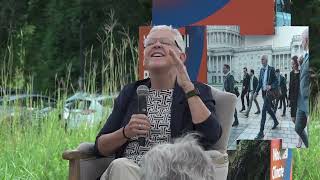
Gina McCarthy, former EPA Administrator and first White House national climate advisor, discusses her career in environmental policy and reflects on major achievements like the EPA endangerment finding that enabled greenhouse-gas regulation. She critiques federal rollbacks while expressing confidence in states, cities, and businesses to drive climate progress, citing momentum from the Inflation Reduction Act.
Questions this video answers
July 22, 2025
2013 (appointed during the Obama administration)
2021
Chapters
Thank you all for being here this evening. My name is David McGlinchey. I am the Chief of Government Relations here at the Woodwell Climate Research Center. I am thrilled that you've joined us this evening to hear from, of course, our president, Dr. Max Holmes. It's a mixed crowd, Max. Maybe there's difference between when he said.
President, I was looking around going.
And.
This is starting well.
As Max suggested, many of you are probably also here to hear from our esteemed guest, a true trailblazer of American climate policy, Gina McCarthy. Gina held environmental leadership positions in Massachusetts and Connecticut state governments before becoming the Assistant EEPA administrator in 2009. And then in 2013, the EPA administrator under President Barack Obama. Her remarkable leadership at EPA advanced regulations that reduced greenhouse gas emissions and protected public health. In 2021, she became the first White House national climate advisor. Lots of applause, well deserved. Here at Woodwell, we have worked for 40 years to generate scientific insights and then to take that science and use it to inform policy decisions. We work at the United nations level and we work with policymakers at the national and sub national level around the world. We also work extensively with the US Federal government. So we know firsthand how even small changes in US Climate policy can have enormous impact, both positive and unfortunately, negative. I can't think of anyone more qualified to speak to us this evening about the opportunities and the challenges facing US Climate policy. Please join me again in welcoming our guests.
So if you didn't already know, Gina's kind of a big deal. Thank you so much, Gina, for spending some time with us. And as we discussed earlier, we're going to spend a little bit of time in the past, learn a little bit about you and some of what you've done, but even go kind of.
Earlier.
Yeah. Like how you actually ended up here. Then we're going to talk a bit about the present and there's probably quite a few things that we can discuss there. And then we'll go to the future and try to kind of think about.
You can see it totally clear, right?
Yeah. Good. Yeah. So she's going to tell us how we get from here to there. So you're in for a wonderful evening on that. As we typically do these things, you know, she and I'll throw some questions out and Gina will say whatever she wants to say. And we'll do that for 30 or 40 minutes. Thought that was coming. And then we'll open up the questions.
Am I at risk?
I was. That thought crossed my mind. But I think they probably haven't figured out if we'll see. So, yeah, so think about questions because you'll have the opportunity to ask them. But yeah, let's start in the past. And whenever I'm around amazing people, I kind of wonder how in the hell did they get to where they are? And was it. Did people see that from the start? So tell us about 10 year old Gina. What was 10 year old Gina like?
Probably a big pain in the butt at 10 years old. I grew up in Canton, Massachusetts, which I still sort of live near and around because I'm in JP now. I've really gotten to be a fashion statement at Jamaica Plain. That is my fashion statement. You know, I grew up at a great family. I grew up. I think the reason why I have sort of walked the path I've walked is that, you know, if anybody remembers what it looked like like 60 years ago, which is easy for me to envision Since I'm 71, it was horrible. The environment was terrible. I went to a Catholic school where the nuns would run to shut the windows when the plastics factory across the street was beginning to run their little operations. If I could say I was always outside, which I still, every time I can, other than when I'm in Washington, I want to be outside. So nature was important to me. And it just sort of naturally happened that I got excited about these things. I did great in grammar school. I was an absolute hellion in high school because I was bored to death about the discussion topics like Latin, agricola, agricolae, feminine farmer. That's all I remember. And then I went to UMass Boston, which really was the big change for me. This was in. My first two years were in the city of Boston, where it was located because it did not have a campus. I adored it because you got to wander around the city and then every once in a while you went to class. Perfect for me. And then they moved into UMass. The campus got developed on the harbor and I went there. I adored it there as well. But my biggest memory is when my husband Ken, who wasn't my husband then, but we hung around. We actually had an algebra class in the Combat Zone and it was on the second story and all you could hear the entire class was the music from the strip joint below. It was hysterically funny. So to me, this was my life. It was like, can you focus? No, I can't. What do you want to do? I have no idea. And so I went to UMass Boston. I really went there on anthropology because my field is human beings. That's what I think of every single day. And I carried that through every job I had. Don't tell me the numbers, tell me the people. Don't talk to me about climate change, talk to me about health, talk to me about jobs, talk about economic vitality, you know, talk about the clean energy that gets me there and gets me excited. And so that's what I learned in school. And to me, anthropology just was an eye opener for me. And it began to make me really understand that, you know, I went into government, you know, right away at DEP and in Massachusetts, then I went to Connecticut and then I went to epa. And every step of that way, what I did right, if I can boast a bit, is that I learned who to deal with and how to deal with them. Even when I was did 9 million hearings in Congress. Believe me, John, you know, this 9 million of them asking me the most insane questions I've ever heard in my life. I would be able to sit there and thank them for their question. And when they were rambling on, I'd go, it's this little smile. That was my secret. That was it. It carried me through every committee hearing that I ever went to because I didn't, I didn't argue with them. I just did the best I could do to inform them from my perspective, and I made sure they understood that was it. And so I loved government. I loved when we talked about it. I loved when we could humanize it and remind them just as much as it was reminding me that I was here for the people of the United States of America. I wasn't here for anything else. That's why I was brought on board. And that's what I loved and just dwelled on every step of my life. And it continues with my obnoxious husband and my children and my many, many grandchildren. It's all about people.
Boy, there's so many places, directions we can go there. But I wonder, let's go to the time that you were running the EPA and maybe share some stories there, some of the things that you're proudest of that you accomplished there.
Yeah, EPA was the most fun job I ever had, actually. I went there, first of all, in the Air program to take care of some of the challenges we had. We did some really big things. I think that I'm really. Yeah, EPA was the most fun job I ever had, actually. I went there, first of all, in the Air program to take care of some of the challenges we had. We did some really big things. I think that I'm really proud finding was one to basically actually make sure we could regulate greenhouse gas.
Raise your hand if you know what the endangerment finding is. So it's not a high percentage. Some do, but. So, yeah, describe what that is.
Basically it says it was bolstering and putting into action what happened in 2007 when it was Mass. Versus the Environmental Protection Agency. And it was basically, it went all the way to the Massachusetts Supreme Court. And the argument was that greenhouse gases impact the health and safety of people in the United States. And that was, you know, not done before. And that got done in 2007. I was a little bit of a part of that, but many people were. And when we went to epa, we made it actionable because in order to be able to regulate greenhouse gases, you needed to have that as a statement, as an underpinning for legal purposes. And so I did greenhouse gas emission reductions the whole time I was there. I think the thing that made me the most proud at EPA was the people at epa. I've never seen people that are as conscious of their job and consistent in doing their job. I mean, I had the best team ever. I will never be gifted with a group like that again. I mean, you're talking about 15,000 people, and everywhere you go, the only thing they talked about was what they could do for everybody, how to make things happen, how to fix problems. And it was, you know, it was not an easy job, as you can imagine, because there's a lot of people and there's a lot of challenges. But it was absolutely the most wonderful job of my life because it made me realize that the laws we have and the regulations we're developing and implementing with a foundation for people in communities and cities and states, they were the way in which you could provide uniformity to what the expectation was for you in your life, in your community. And that's a big deal. That was a big deal to me, and it was wonderful. My husband actually hated the job that I had because I only saw him once in a while. But then now that I see him often, he's rethinking that.
Sherry Holdren may have a similar perspective. So this is maybe a good segue from sort of this not so distant past to the present, because the endangerment finding is. Yeah, we're starting to hear about that again. Could you talk a little bit about that and where things are and where they may be headed?
Well, I think the best perspective to put on this is the fact that this administration is interested in denying that climate change exists. Okay, whatever. It seems unbelievable now to actually have a president doing that. And so I think, you know, it's very challenging to sort of revisit things that are old history and that make absolutely no sense. And it's what the major disappointment for me is Congress, frankly, both sides, I love my Democrats, they're awesome, but strategically I don't know what they're doing. But the Republicans, it's just really disappointing because in my entire time in Governor, revisit things that are old history and that make absolutely no sense. And the major disappointment for me is Congress, frankly, both sides, I love my Democrats, they're awesome, but strategically I don't know what they're doing. But the Republicans, it's just really disappointing because in my entire time in government I actually didn't. I was called into question numerous times by the Republicans and yapped at endlessly, but I never saw it. I actually didn't. I was called into question numerous Democrats, times by the Republicans and yapped at endlessly, but I never thought Republicans. It may not have ever been visible to everybody that a deal was made, but we understood our job, right, was to make everybody's lives a little bit better. And I loved it. But now once again, we're in the throes of somebody that doesn't want to admit that climate change exists. And so we are going to end up going through the whole idea again as to whether or not greenhouse gases pose a significant hazard to health and the environment. My understanding is that the he who shall not be named administrator at epa, because I don't want to be struck dead saying his name, he is going to put out some type of basically effort to repeal and replace the endangerment finding. I think it's going to be just a repeal and not a replacement. And the reason to do that is because then the agency loses its authority to regulate greenhouse gases.
Is it as easy as that? He has the power to repeal it. Is there anything anybody can do?
Yeah, everybody's gonna sue the hell out of him, which is great. But all, I mean, and everybody's suing everybody about all this stuff. It's just so disappointing because it takes so friggin long. You know, if you have an issue like this, it should be immediately stopped, but then it's going to go to the Supreme Court and then what happens? So all of the normal, basically places where you could stop bad things from happening are very difficult to see right now in terms of how you can get around them or under them or over them. It's very difficult but having said that, because I'm not here to be Debbie Downer, I know I might look like Debbie Downer. Having said that, I don't think anyone's gonna give a shit what they say. I shouldn't have said shit. Rewind the camera. Because everybody friggin knows what's happening, you know, so I'm not going to flip out about it other than for the first 10 minutes, you know it's going to happen. And I still have huge faith in the people in this country and I still think that this administration is going too far too fast. We're seeing some of the disbenefits of that already. And I think we will be able to keep moving forward. And I think it. Because I know that states are. I know that states, cities are. I know that businesses are. They're not waving their hand saying, hey, I'm doing good things. They're just getting good things done. So we have to be satisfied with that while we challenge through the legal measures or through our public discourse how badly we think folks are behaving on the Hill and how much they have to just pull up their big boy pants and start doing something.
To that end.
I said big girl too.
Maybe more thoughts about that. And you described how not many years ago politicians with very different views could sit down together and argue, but figure out how to come together and make some decisions and come up with agreements. And obviously that has changed. You have thoughts about why it's changed, but even more importantly how you get back there.
You know, we're in a very, I think, odd moment in time. And I say that because the President is odd, you know, and you know, our ability to get around that is very limited because as far as I can see, most people in Congress are terrified of him on the Republican side. That is the only reason why all those normally educated human beings would ever go down the road that they took. And I try not to get discouraged by it because I know it was like it's three votes, but honestly, for crying out loud, what are we going to do from here? Are we going to wait for next year in hopes that we won't have three? We'll just have more Democrats in and then what do we do? We'll flip it back to what used to be and then wait around for the next four years or two years to flip it back. There has to be some kind of reckoning among folks in Congress that they have to stand up for their own constituencies. The bill they passed is not standing up to the Republican constituencies. That put them into office. It is an outrage against our health and our humanity. And we have to start talking about that without having to wait to see those end results happen. But you know it as well as I know it, you know that that bill is a disaster for the Republicans, and yet they passed it. What the hell is going on? What. What happened to them when they put their hand on the Bible, like all of us had to do and swear that we would do what was right?
What did. What did? Like, how did.
I don't know what. The only thing I know is that I have never had a president like this who was willing to be so nasty to individuals to call them out. I've never seen anything like that. I've just never understood why. And maybe throughout history this is true, that the leader of a country would be able to manipulate his servants the way they're acting. And it's terrifying to me because I only thought that happened in fairy tales or past history. And this is hardly a fairy tale.
So, shifting gears a little bit, right before we started, somebody leaned over to me and said, is there anybody under 50 here? And I looked around, I said, well, not a lot, but in fact there are. And most of them are up there. And we have a bunch of interns here at Woodwell, you know, undergraduate.
You have scientists too, that are under 50. I hate to tell.
We have a few sprinkled around, but I wonder if. If you could speak to them a little bit. I mean, what do you say to people who are kind of at the start of their careers and wanting to dive into this stuff and recognizing all the challenges we face, and yet they want to make this world a better place.
Well, good luck with that. That's not true. Look, our country has never been perfect. It's been better than it is today. But I think you guys know, young people are it. I hate to put a whole lot of pressure on you, but, you know, all of us over 60, you know, we can yap a lot, but. But we have to build your future. I think that's what drives me so crazy, is that I have kids and grandkids, you know, And I honestly believe that what we are seeing today, it must be a blip on our radar screen. A big, obnoxious, yellow haired, dark face blip. But it must be a blip on our radar screen because, you know, I don't want young people to give up on us. We had difficulties when we were their age and we fought through them. We found the way to collaborate. We did really good Things. The world has changed dramatically over the past 50 years. And what I'm seeing is really interesting. I try to be in contact with a lot of the business community because they matter. And what I am really seeing, honestly, is that they are doing nothing that is consistent with the way in which the Trump administration wants to lay it out. They are doing the things that are better for their business. And we have an opportunity to quietly encourage them to keep doing that work moving forward. And so I don't want people, you know, young people, to think that we've all lost our marbles, too. Some of us have, some of us haven't. But we will regain our footing. You know, we're the United States of America. Don't tell me that this isn't anything but a blip on the radar screen, because it is, and it has to be, and we have to make it so. And that's something that I don't think the young people can do. It's something all of us need to participate in and call it out.
So in a minute, we'll open it up to questions, but. So you got out of government not so many years ago, and then you decided, I'm just going to kick back and relax. And we were able to pry you out to come down and talk. Now, what have you been doing recently? How are you spending your days doing.
Goddamn things like this all the time? No, I do a lot of different things. I mentioned that I do work with Bloomberg because I think it's really important, especially for young people, actually, to understand that even when the federal government doesn't do its job, we have layers of authority that we can use and we have to use. And so that includes state government, that includes cities. And so we're organizing governors and cities to really step up big time at this moment. And I think it also includes the business community. You know, I have this long list of really good things that are happening that people know about that I'd love to pull out, but it would take some time. My pants are tight. No, just kidding. It would take some time because there's lots of good things happening. There are a lot of good things. And so I'm spending time not just with Bloomberg, but with the business community. I do work at two investment firms, one that is working in the Global south to figure out how we can address both the food and water challenges there. I'm working in another that's looking at a variety of companies that are doing good things. I'm on the board of a few of them. So that I can keep, hopefully, helping them move forward. And that's, I mean, that's just a variety of different companies. And I'm hanging out with my kids and my grandchildren and I don't know what else. I'm happy, though. I try to be happy every single day. It's good stuff. It's all good stuff.
Questions from the audience. We'll bring a microphone your way.
Are you literally from Harvard or do you just hang out with.
No, I went to Harvard Graduate School of Design, and my daughter and I went to Penn. That's when she was your intern.
Penn. Who knows anything about Penny? Go ahead.
I know, unfortunately, Trump and Musk went to Penn, so that's an embarrassment. But my big question is how much power do the states have? I know they're doing lots of suing. How much powers do the states have to resist this federal, you know, crap from Trump about getting rid of all the regulations relative to environment and one specific case, California. And they're, you know.
Well, I know that in California, when Trump got rid of a regulation, they redid one. And so, you know, I worked for the state for a long time, and I've done bylaws for communities as well. You can regulate at the state level. It's even harder than if you do one that contains lots of states and then makes you vulnerable to the federal government. There's no problem with doing that. And that's exactly what the states are going to do. They can regulate it. They have their own authority, and sure, I'm sure they'll be sued by the federal government, but go ahead. In the meantime, they act and they take action. You know, I am not seeing communities across the United States, and I'm traveling a lot, abandoning what they think they need to deliver for their future. They are not abandoning that. They are trying to find a way to continue to move forward, to regulate what they should regulate, and then to basically invest in the things beyond that that you need to have happen. And that takes the business community and it takes all kinds of statewide leaders, but states can regulate and towns and cities can regulate, and. And we're going to support them every step of the way.
So climate change is a global problem, is it?
It is definitely a global problem and a local problem and a very local problem.
But it'd be interesting to hear your thoughts about how the global community is reacting to policy needs and clean energy needs and climate, given the current situation.
Yeah, it's, it's, it sort of makes me laugh, but it's so embarrassing to be the United States of America right now. It's awful. You know, I've been asked, I get asked to do things like there's a whole group across the EU that's looking at, you know, how to, how to do levies and how to then dispense the money across the world and blah, blah, blah. And I get asked to be on it because I'm from the United States. It's embarrassing to be from the United States for America right now, internationally, you know, I've lived here forever. I will always be here, you know, and I love the United States. It's just what kind of a laughingstock. Everybody in the EU is scratching their heads and then they're asking me to be on various groups so that there can be a representation of the United States, you know, which of course I can't represent them. The same thing at the COP coming up, you know, that's what America is all in is doing. We're going to be the United States. We're building the US Pavilion. It may say Bloomberg Philanthropies, but that's not, you know what I mean? So it's very difficult. But at the same time, you know, none of no country has been, you know, always at a high point, you know, so I try to explain to them that even though we are in a difficult moment at the federal level, there's a lot of really good things happening. And honestly, there really is. It's not made up. It's just a bit under the radar screen because businesses and others are smart enough to know that they want to get stuff done and less advertisement at this point in time is fine for them. So it's embarrassing. China is an interesting one. I do the US China discussions as well, and I'm going to get on a call trying to explain something about what the United States is up to these days. But China is. And unfortunately, I think you're going to see this in a news report, because I did a CNN thing yesterday, I just said, china's eating our lunch. And it is. I shouldn't have said it in such a colloquial way that will probably be notable, but they are. And the interesting part in work with China, which we were very successful in working with China on many things, John, as you know, they want many of the same things that we do. They actually want the same things that we do. They want a good opportunity for their people and their country, and they want to be strong, they want to be independent. And it's exactly the same thing that the United States of America wants that right now we just don't seem to be grabbing as well as we could. We'll get there.
Given that the US is pulling back on leadership in climate change, is it a good thing that other countries are stepping up and filling the void?
Yeah. Yeah. No. You know, when we fall apart, they stand up. And there are times when those countries have difficulties and we step up, you know, the discussions continue. It's not like everybody's in isolation. We all talk to each other all the time. We do work that really is focused on what are you doing next? How can we help? What are the policy constraints? What are the challenges? And we do have to keep working together. It's just a shame that we don't have a federal government that wants participate. On the other hand, if it were this federal government, I'm happy they don't.
Hi. Gina Umass, Boston grad here as well.
Yes, go Beacons.
Anthropology was my minor. My major was political science. So maybe that's where I erred in my life. I don't know.
You don't think you do? I don't think you're doing too badly. No, I'm doing good.
I work with climate tech and blue tech startups. So anything that goes in the water, either salt or fresh, and we worked with close to 100 startups now from all over the world. Some of the work is virtual. But I'm wondering if you've got some particular. For the startups that are in the US that we work with. Some words of wisdom.
So what's going well? I mean that's a lot of companies.
A lot of companies. They're. What's going well? We. Well we cover all of bluetack so we don't. We don't work in a particular sector of it. Sunset are doing well. UUVs, underwater vehicles, anything that supports a lot of the scientists research, for example, things that support things that the Navy or the Coast Guard might need. Community resiliency, different cements that cities can use for their ports. Aquaculture. Seaweed. Seaweed's big, but the.
Is kelp another word for seaweed?
Kelp's another word for seaweed. Okay.
Because I hear that a lot. Just check it. Just checking myself.
And I guess my question is a lot of the startups here in the US are looking to Europe and thinking about maybe going to Europe for the next few years. We would love them to stay because startups, whatever their company is, they bring jobs and they help the community. Any words of advice that I can share with them? Anything you're seeing in the, particularly in the private sector that can fill those gaps.
I don't focus on it, to be honest with you. I don't focus a lot on startups I have in the past, but it means so many come and go so quickly. That is a lie. That has to be a total lie. 85% survival rate. That's better than my family now. That's great. That's awesome. You know, I don't know that I can give you any words of wisdom. I think it's great. I mean, but if people have decided that they can better grow their company somewhere else, they have to do it. You know, I just hope we'll be more welcoming in the future. I do think there are actually some organizations like your own that really help with that. And I would ask you to think about whether or not there can be more collaboration around this because I feel like many of these organizations, they're very focused on their outcome when it would be great if it could be focused on a larger outcome. Come. That's. That's what I would hope for.
Does it work?
Okay, first of all, I want to thank you very much for the phenomenal conversation. And my professional career was built about, around and many of us in my age group around environmental regulation. So as go regulation, as environmental regulation grew, jobs grew. And now with the dismantling of environmental regulations, the big concern I have is whether or not what you're saying about business and others and states who feel the need will also amount to new jobs with the dismantling of environmental regulations. Do they need to be reassembled in order to bring back jobs? Do who need to be reassembled? Does eat. Does the, does the federal government need to reassemble environmental regulations? You bet they do. You bet they do. Well, you know, when I was talking about business, you know, I think for. Honestly my brain is focused on clean energy primarily because I feel like the more clean energy movement can happen.
The.
Better off we are. Right. It brings more stability. But that's what, remember I was talking about. We don't want to go back and forth and back and forth. That's what I was thinking about. We need to reinstate strong environmental regulations and look at it from the perspective of where we are now, not what got dismantled before. But as you know, it takes a long time to do regulation. You know, we were talking about this with the endangerment finding. I mean, the reason why I don't think they're going to do repeal and replace is they're just going to do repeal and they're going to wait for everybody to sue them. And that's going to take another couple of years for all that to play out. So I just worry that. That it will be a very large task to continue to build that safety net that we had before and move forward. But we have to. We really don't have any other choice. The good news is that I think a lot of the people at epa, I shouldn't say I think I know a lot of the people at EPA that develop those regulations are most likely developing the next one because they're wicked smart and they like it, and they don't like to have their regulations called into question. So it wouldn't surprise me at all if we were much better prepared at the outset to actually move those forward. I know these people, and they are relentless.
Could you talk a little bit about the Inflation Reduction Act? What it is, what it does, where it is right now, what you think will be left of it.
Okay. The Inflation Reduction act was work that we tried to do and we did during the Biden administration when I was White House national climate advisor. And I loved the White House so much that I left the day after the bill got passed. The White House isn't fun. It's intense. And I'm like, oh, isn't it? It's like, ugh, pound my head against the wall. But. So we had a group that worked across all the federal agencies, and we did that with the understanding that we could develop a system in the Inflation Reduction act that would allow us to advance clean energy in a way that would, you know, reduce costs for families, grow lots of jobs, you know, and provide much more security. And so the Inflation Reduction act was a long list of opportunities that we had available to us to advance technology solutions and beyond that would actually start generating that momentum to clean energy and diminish our reliance on fossil fuels over time. It was not about, you can't do fossil fuels. It was about, how do you entice that transition to happen? And I think we did a hell of a job. I don't know what anybody else thinks. It was a really great bill. It took a long time to do and get through, and the bill was passed, and I think it set the stage for what continues to happen. Now, I do not believe that the Inflation Reduction act has done anything other than to set a pathway to clean energy and shown its benefits. You know, far too long we've talked about what we stop, not what we build. Government has this propensity to calculate by punishment. In terms of regulation instead of regulating by opportunity, you know, optimism. And the Inflation Reduction act was exactly that. It was a momentous success. And for a period of time, until the next administration, it worked like a charm. The interesting thing is that it's continuing to do that because it made people realize that we had an opportunity in our world that was just, couldn't be left behind behind. It was just too friggin cool, you know, and businesses grabbed it and despite the fact that they're not raising their hand, they're still doing it. If you look at what's happening in friggin Texas, Texas was the bane of my existence when I was at epa. Right now the amount of clean energy there is staggering, just staggering. I mean, in California, you're talking about Wyoming, you know, look across the United. I like that. Wyoming, look across the United States and realize that all of this continues to happen. And it's for one reason and one reason only. And it's because it makes a difference in people's lives. So you will never catch me sitting up here saying climate more than perhaps one time, because climate doesn't matter. What matters is the impact of benefits, the impact from climate and the benefits of making a difference on that impact. Right. And so it's just an amazing opportunity that I see before us. And I'm looking at, listen, I've got in my pocket a Data on almost 40 states that will tell you that clean energy is winning and there's only one reason for it and it makes their lives better. And that is exactly what we have worked for for 40 years of our lives, plus. Right, John, that's what you have done and that's what I've done. Well, I'm not admitting the next 30. So that's, that's what it's all about. And it's still working.
Back to audience questions. Is one over here somewhere?
Can you hear me?
Yeah.
I work in communications at the Harvard School School of Public Health. So my job is trying to translate the research that the academics are doing to the public. But I've always been really passionate about environmental communications. And I was wondering if you could share your thoughts and perspectives on the role of communications in getting out, like environmental awareness, motivating people to make environmental choices, especially across party lines.
You know, I actually did a fair amount of work at Harvard as well. I created something called the Climate Health and the Global Environment Office and we were all about communication. Communication matters big time. You have to reach people, you have to give them an opportunity to learn. I don't say we need to educate them. Them people are educated, but we got to keep working forward. And I loved it. I think it matters a lot. I've also done some work at Tufts, which is a little bit different. And the reason I'm bringing it up is that at Tufts Fletcher School, where I also do some work now as a fellow, you know, you get together with the international students now, and it's. And it's hard to get them to focus because they're so worried about whether or not any of them are going to see an ICE agent come in. And there's realism to that. It's a reality. So I do a lot of work. I talk to them. But I think one of the things I've tried to do my entire life in terms of communication is to be very clear about what the opportunities are and the benefits are. In very clear and concise language. But also make people understand what you can't do and why. Because we all want a future that we want to live in right away. We all have very different visions of what that future looks like. And so you can't dismiss people who might think differently about what their future ought to be. And the most important thing you can do is to continue talking no matter what. I think it's very difficult nowadays to have that happen when we're so polarized. But we have to pull ourselves to together. And frankly, I know we all think we're wicked smart. I certainly do. But we're not always as smart as the other person or right in terms of what their answers are. And I think that's the key to your question. It's not really about communicating. Oh, Strangers in the Night. It's not I lost my Child exchanging lenses. It's not just about how you communicate. It's about your ability to communicate with other people. That's what brings us together, and I hope that's what will continue to bring us together.
Question over here. Who has a microphone?
Hi. I think I.
So.
Okay, sorry. John's next. You can go next.
Oh, I think I might be the youngest person here, but I'm very interested in environmental law and climate justice. And my question is, how did you stay motivated throughout your entire career, despite the statistics of about the negative direction that the climate is still going? How are you able to stay optimistic and feel like you were ever doing enough?
Well, we used to always go for beers afterwards. Never underestimate alcohol. You know, I never thought that I had to win everything. That's not the point. It's about fighting the Fight. Right. And so I just, you know, I think that in my career I've done, I think, well at personalizing issues always and at building relationships. You know, I had to build a relationship with Joe Manchin. If you think that's easy, you are incorrect. Now I would suggest that right now I probably have none because we do things like that. But you got to sit, you got to go where people are and develop relationships there and recognize that you're not always right at what you think is right. And so I did everything humanly possible to meet in a mid ground and a little bit further, if I got that, I was happy because what I really found with regulations in government, which was the most interesting thing for the business, in my relationship with the business community, I found that if you can get them to agree even to halfway, two years later, they're three quarters of the way there because they found a niche for themselves, they, that was beneficial to them. And so I think we forget and try to get the nth degree and that's in my life, that's never been a successful strategy. It's been what can we do together, how far can we go? And then recognizing that once the ball is rolling, it continues to go and it builds momentum and, and I've really found that always to be the case. I've never missed that.
So now I was behind a post, you couldn't see me. So I have to stand up.
All right, I'll go over here.
So, as was mentioned earlier, these issues, climate and others, toxics and so on, are international. They're global issues. And the world, much of the world looks to the US for leadership in the thinking about these things, or at least they had.
Yes.
And so the question is, how do we persuade? What action needs to be taken to encourage the country to become signatory to international and global conventions like the climate accord. But importantly also like the international negotiating committee for a plastics treaty, which will, will meet again early August, hopefully with signatory. How do we persuade the US to sign that as well as others?
This is a great question to end on. I have no clue. So we come full circle, the big reveal. I don't think you can really anticipate that there's going to be much change in this administration. The only thing that we can do is what we're all doing, which is to actually join as a player from the United States. And that's what we're doing. I mean, we still have voices that can be heard, but it is a sad day when you, you can't get the United States of America to stand up to treaties which have been in place for decades, and rightly so, but others will hold the ford. You know, I really feel like we have conversations a lot with the folks from the EU and they really feel like that at some point in time they sucked too. So, you know, there's an ebb and flow in life and I'm hoping this is a. I don't know if it's a small ebb or a small flow. Either one I'll take.
Let's go. One more question in the back.
Thank you. Thanks for your really interesting and valuable perspective. I really agree totally with your point that we need to depolarize and increase conversations across different political perspectives. I'm curious how you would recommend doing that and also how that might be effective at the highest levels of government where we're clearly witnessing in a massive rollback of everything that you work to do and everything that most of us here probably have worked to do over decades. I just don't think you can expect to have much change at the federal level. I'm not seeing it. I don't know how that would happen. The only thing I do know for sure is if you've read the Build Back Better bill. There's an O before. What's that called? Obb. What's the O?
One.
Oh, shit. None of you people know this. The Build Back Better bill, which we'll call it, is that. Is that. You know, I think the thing I worry, the thing that gives me hope, Let me give it, let me end there, is that it is so bad for communities that it will clearly become a significant problem for them in the existing Republicans party. And I'm saying existing Republican Party because I honestly believe it's really good to have a two party system. I don't want all Democrats. They would become totally obnoxious. I want Democrats and Republicans. All my life I've been able to work with Republicans. They don't have 10 heads. They're not evil, they have different views. And many of us have no idea what life looks like in many of the states that are heavily Republican. We have no idea because we sit here in these beautiful surroundings and I go home to my Jamaica Plain and look at the pond and then think about, you know, what do we do? So I think one of the things I would encourage us to do is to travel, go elsewhere, talk about people with differing opinions, figure out if we can start an opportunity for 10 people to get together and talk who don't agree with each other, because we don't have to, to keep the United States of America strong. What we're doing now is weakening it. So we all have to agree in every state that despite our differences, we are a unified country. We cannot let that be our epitaph. We have to work together. And I don't care what other people think. I will listen to them. I will assimilate their ideas, and I'll do my best to think about how we can do better for both of us.
Us.
That's how it works. So thanks for the question.
Gina, thank you so much for spending the evening with us. Thank you for all coming. Thank you for all supporting the work that we're doing here. Thank you to all the staff members in the audience for doing a really tough job in a really tough time and keeping at it day after day. And I'll say it for myself, but I think I can say it for everybody else. The support that we get from you, the emotional support we get from you is critically important, as is the financial support that we get from many of you. Critically important.
Don't look at me.
And Gina. Fantastic. You, evening. I know you're incredibly busy. I know you want to spend time with your husband and kids and grandkids. So the fact that you're down here for the evening to spend time with us and everyone here means an awful lot.
It's been a joy. It's been a joy. Thank you for having me here.
And I'll just say that earlier this evening, afternoon, Gina was meeting with a group of our scientists, and we were talking about a lot of these same issues and just in a sort of a smaller setting. And I said something to the order of the like, gina, you've got to come back in four years and we'll kind of compare our notes and see where we are then. And your response, if you remember which, we'll know.
One year.
One year. So Gina will be back in one year to see where we are at.
That, because life is going to change in one year. That's it.
More from Tod










WHRC's Sustainable Science Speaker Series - Dr. Toby McGrath speaks on Sustainable Fisheries
