Webinar - Amazon Fires: Science & Solutions
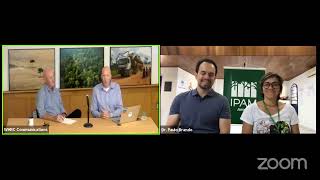
Dr. Michael Coe, Dr. Annie Alencar, and Dr. Paolo Brando explain what's driving Amazon fires. About 7,000 square kilometers burned in 2019, releasing roughly 140 million metric tons of CO2. Deforestation and land speculation are the main culprits, and the panel discusses policy and land-tenure solutions.
Chapters
It.
Hello and welcome to the inaugural webinar from the Woods Hole Research Center. We are trying out this new platform to share our science with our interested audience. So thank you very much for joining us today. Today we're going to speak about Amazon priors and the science behind what's going on in Brazil and the rest of the Amazon. My name is Dave McGlinchey. I am the senior director here for communications and government Relations. I'll be moderating the event and fielding your questions. For people joining us, if you can look to the bottom of your screen.
There'S a Q and A button as.
Our speakers introduce themselves and give a brief overview of what we're going to talk about. You can submit questions through the Q and A function. We'll receive them and then I will take hand them off to the appropriate scientists. So without further ado, I'd like to introduce our panelists today. On my right here, I have Dr. Michael Koh, who is the director of our Amazon program. Mike has a long career studying the Amazon, studying the interaction between agriculture and rainforest there. And many of you may have seen him last night on PBS NewsHour in did a great special on the threat of deforestation to the Amazon and the interaction with agriculture. So I encourage you to look that up and watch it. We'll also be sharing it on our social media pages. Coming to us from Brazil, we have Dr. Annie Alencar, the director of science for Etom, the Amazon environmental Research Institute, a longstanding partner of the Woods Hole Research center, doing incredible work in the Amazon. And we're so glad that she's able to join us. And next to her we have Dr. Paolo Brando, who holds physicians with whole research center and also EPAM. And Dr. Brando testified yesterday morning to the Brazilian Congress about what can be done and how we can avoid fires.
Like we've had this year in the future.
So with that, I'm going to hand the floor over to Dr. Koh. He's going to speak briefly, kind of give an overview of the topic. Then we're going to hand it off to Brazil to hear from our guests.
There, and then we'll open the floor up to questions. Mike thank you, Dave, and thank you everybody for joining us. So I guess the question is why is the Amazon important to us and the rest of the planet? And the short answer to that really is forests are a huge part of the climate system. Two ways that forests shape the climate. One of those is through carbon. Talk about that a lot. Almost all the carbon stored on Land is in forests, and the vast majority of that is in tropical forests. And the Amazon is one half of all tropical rains worth on the planet. So there's a lot of carbon already stored in the Amazon. Something like equivalent to 10 years of global carbon emissions are stored in the Amazon. The other thing that forests do with carbon is they remove it from the atmosphere. They distort, but they're pulling it out at all times. Something like 30% of all carbon emitted by humans on the planet is being pulled out by forests. And most of that, again, is in the tropics. And again, half of that. Another point about forests is they don't just. It's not just by the carbon. It's also essentially they're giant air conditioners. What they do is they, while they photosynthesize, they're taking water out of the soil and they're taking sunlight and they're turning that into water vapor. And about two thirds of all sunlight and rainfall are converted back to water vapor by tropical forests. So that process cools the land surface. If you remove the forest, you heat it up immediately, something like 5 degrees C or 10 degrees Fahrenheit. So if we do forest a chunk of land in Brazil Today, tomorrow it's 10 degrees Fahrenheit warmer. And that's permanent if you are putting something like that. In addition, that water vapor greatly. That water vapor creates rainfall locally and thousands of miles away, of course, that supports agriculture, urban water supplies, biodiversity, and hosts of things that humans and animals and plants need water for. Therefore, continued deforestation is leading to runaway climate change, more frequent crop failures in Brazil, and even greater economic uncertainty globally as these problems cascade outward. Summing up there, forests then are really not just responding to climate, but they're actually creating what is the importance of these fires that we're seeing over the last few weeks. Ani and Paolo are going to talk a great deal about that in a moment. But really what we're seeing now is it means we're heading in the wrong direction. Land is being deforested. Trees are being stacked up and burned. The spires escaping into forest that wasn't deforested and destroying those. So recent numbers show that something like 7,000 square kilometers of land were forced in Brazil this season alone. That's something like two times the size of Rhode Island. That's the land that's burning. What we're not entirely sure yet is how much of forest, how much of the existing forest land is burning in addition to land. 54. But what we do know is that A substantial amount of CO2 is being released. Maybe as much as 140 million metric tons of CO2 will be emitted to the atmosphere from these fires that we're seeing. So these fires are showing us where deforestation is taking place and it's converting those forests to CO2 almost immediately. So what do we do now? As I mentioned, tropical forests really are the only large scale tool available to us, one of the only tools available to us to avoid and mitigate global climate change. CO2 from the atmosphere and they cool the land directly. But keeping those forests standing or restoring where we can is really the simplest and cheapest mechanism to avoid catastrophic climate change and mitigate the impacts of ongoing change. Something like 20% of the Amazon's already been deforested. We really can't afford to lose more. What we need to do is redouble our efforts to end deforestation. One of the things that's important to get to that anti deforestation is understanding who is doing it for us. Once you know who, you can come up with personalized ways to help them anti deforestation. Thank you.
Thank you, Mike. All right, we're going to hand it over to Brazil. And Dr. Alencar, if you could start maybe by telling us about the relationships.
Between.
And the fire that we're seeing in the Amazon.
Thanks, Dave. So we at epam, in partnership with Woods Hole, have been working with this fire issue in the Amazon for the past 25 years. And something that is very interesting is that most of our work has been focusing on the relationship between deforestation and the susceptibility of the standing forest to fires. I mean, to forest fires. So this reveals a lot to us in terms of how fire occurs in an environment that is not actually, how can I say, adapted to fire. So the Amazon forest is an ecosystem where fire is rare in the landscape. So it's not like other ecosystems that you have there, for example, in California or in Florida, where fire is part of the ecology of the landscape. And I'm not going to talk about that because I have Paulo Brando here by my side, which is a specialist on this. But I'm just going to talk about the relationship between human use of the land and fire. So, so in 95 we conducted together with Woods Hole a big study to understand how is the use of fire in the Amazon and that we interviewed several producers at that time. We also mapped, we used remote sensing to map their properties in terms of which type of fires they were catching in those properties. And the main results of that study indicated that 50% of the area burned was accidental, basically didn't have to happen, you know. And just I don't know if everyone is aware of all the types of fire that exist in the Amazon, but maybe it should be important to explain a little bit that. So when you talk about fire in the Amazon, we talk about. We are talking mostly about deforestation fires. Basically is the fire that happens as the last stage of the process of deforestation, which begins with the cut of the forest. So they cut all the forest, let it dry for a period of one, three to three months, depending on the time, the length of the dry season, depending on the area in the Amazon that this forest was cut. But in general it's like that. So people cut the forest, take out all of the trees, the trees are piled there and let it to dry for one to three months on average. And then they burn. So this is like how deforestation fires occur. And this usually is the majority of the fires in the region. Also there are the maintenance fires which are the fires that people once one pasture area, pasture field or agriculture old agricultural field was established long time ago. People sometimes want to clean this area and we call that clean. So they set fires as to maintain the area. So it's like a maintenance fire. This is also a common fire in the Amazon, but it's not as common as the deforestation fires. Then we have the forest fires, which are rare, should be rare because the Amazon resist to fire. In a certain point of view, we are changing that. But Paulo is going to explain that. So the forest fires, they are common. They are becoming common, more common in the Amazon because humans are changing. We are changing the way that the forest acts as a barrier to fire. And also because we are changing the. We have a lot of influence on the climate, as Mike explained. So climate change and local climate change has influencing the susceptibility of the forest to spread fires. So this would be the third type of fire and we have a fourth. We would always like to talk about the fourth type, which is the fire that escape from deforestation fires and also from maintenance fires landscape to other agricultural areas. So having that in mind we every year at epam we. How can I say we track how fire hot pixels are increasing along the year. Because we. This is how we like to do. We like to study fire, isn't it Paolo? And this year something called our attention. We had a peak of fire hot spots in mid August. And that is very uncommon. Is that peak, something like that peak we had in 2010 when we had one of the worst droughts in my period of life that the Amazon faced. So something else was happening. And then we remembered that, that in the beginning of July we had that major issue related to the spike of deforestation that was pointed out by impi, which is our National Institute of Spatial Research. And they are the official, they give the official numbers of deforestation and they were presenting a number of alerts, deforestation alerts, and how they were increasing a lot from if compared to last year. And there was a lot of commotion to that. And basically that was a prediction that we would have a high fire season this year. And that confirmed in August we did have a spike in the number of hot pixels and confirming that this was very related to deforestation. We did a technical note on that. In this technical note, basically we compared the deforestation. We made a relationship, we investigated the relationship between deforestation, area deforested and number of hot pixels. And it was a straight line. And then we included the number of days without rain, which is an indicator of how dry is that year. And in fact, we are not going through major drought as we had in other periods. I guess Paolo maybe is going to talk about this. So this takes us to the point that, okay, deforestation is increasing a lot again in the Amazon and maybe we'll be reaching the rates that we had in the beginning of, in the late 90s and, and beginning of 2000. And this is the point, I mean, this is what is a little bit scary to come back to those, to that trend. And then we get the rates of 20 years ago. Paolo.
I can't hear you, Dave, but I am assuming that you were asking me to say something about fires in Amazon.
Paulo, Sorry about that. We didn't switch it over. Yes. So thank you so much, Ani, for that. And Paolo, if you could tell us first of all, just briefly about your experience yesterday testifying to the Brazilian Congress, how that was received, and then about your fire research as well.
Yes.
So before I talk about the testimony in Congress, I think it's good to go back about a couple months ago, actually, when we saw the first spikes in deforestation, as any mentioned. And there's a lot of confusion about those numbers because they were criticized by several parts of society. They were not necessarily measuring those deforestation rates. So the numbers were challenged and the debate was not about whether Amazon deforestation was increasing, but whether the numbers were trustworthy. And fast forward a couple months. We started last month seeing these reports from partners from IPAM, from scientists that probably fires this year in 2019 were very high. And Annie and her team, together with several partners, put together an analysis that solid showing what was actually happening. And what was actually happening was the result of the deforestation that started early in the year. So it was just piling up all this dead material, all these dead trees were being piling up in open fields. And then suddenly people started burning, creating the biggest bonfire since 2009. So then the media got all the attention and there's a lot of confusion what it was burning for how long that it was burning, the ecological impacts of these burns and the responsibles for the fires that were seen in 2019. And then based on the reports analysis that EPAM and WHOC put together, then it became clear that the problem was with deforestation. It was the byproduct of deforestation or the last step of deforestation. It was not related to a major drought in the Amazon. Because if you look forest fires in the Amazon, fires burning live forests that are alive, that occur mostly in dry years, because tropical forests, healthy tropical forests, they are very, very resistant to fire. Usually they create this microclimate that fires cannot move through the understory. So you have a very healthy forest and a non drought year, very hard to burn a tropical forest alive. You have to cut down and dry it up and then burn as a bonfire. Right. So EPAM showed that the problem was deforestation was not climbing. And I think because of that clarification, in all the confusion that was being thrown in the debate, some initiatives in the parliament started to surge. And we needed to qualify the debate and clarify the policymakers, the deputies, Congress, and it was created a big coalition, they in Congress to discuss the Amazon sustainability of Amazon and Forbes. And then we had parts of the civil society, parts of scientists presenting data about what was happening in the Amazon, not only with regard to fires, but everything else. So and the message when I went to Congress yesterday, it was to try to qualify that debate, to put some numbers on the debate that could lead to clarity and decisions that can move forward towards sustainability of the region. And pretty much that deforestation is driving a lot of the environmental issues in the Amazon. As Mike said, this change in the regional climate is creating more flammable forests because the edges of this forest with deforestation are very vulnerable to fires and deforestation. Usually the fires that are being seen in these deforestation areas, they may escape into primary forests. This year, if we had a major drought, it would be one of the worst firestorms in history for sure. According to our models, right we had a lot of source of ignitions in these open fields, but these fires are not escaping into primary forests and into healthy forests. In the future, this is very likely to happen. The Amazon is becoming over time more vulnerable to fire, more likely to burn because of global climate change, because of deforestation, change in the way the hydrological cycle works in the region, and because people are still using fire in the landscape a lot. So all this together is just increasing the flow mobility of the systems. And we are in a point that we have to remove the match the fires that start these big forest fires. And we're doing the opposite. And I think this is one of the reasons that the entire world start paying attention. What is happening in Amazon? Dave, we can't hear you.
Yeah, we can't hear you.
Not yet.
How about now?
Yes.
Yes.
Okay, great, great. I think I may mention that this is our inaugural Woods Hole Research center webinar. So thank you for. Thank you for bearing with our learning curve. So we got a couple questions queued up. The first One is for Dr. Kohler. You talked about the cooling function of the rainforest. There's a lot of mention in the popular media about the Amazon rainforest as the lungs of the Earth. But you don't like to use that term. How do you distinguish between those two?
Yeah, thanks. The issue with the lungs, Earth, it's saying that the oxygen that forests are creating, the important part here, turns out that they really aren't creating oxygen. It's net zero. They're taking in CO2, they're putting on oxygen and respiring. Net effect is oxygen isn't being affected by forests. And by using that term, it's also taken away from the fact that what's really important here is carbon. The direct climate. Yeah, it's really the climate and the carbon. The fact that they're storing carbon, they're keeping carbon, they're taking at it. The fact that they're cooling the atmosphere, that's really important. I'm much more happy with talking about them being air conditioners. I think we should not think about them as long because it really does alter the understanding.
All right, we have a question for Paolo. Maybe a couple questions in a row for Paolo. The first refers to the CNN debate last night on climate change with the Democratic presidential candidates. And there was a discussion of engaging other countries in reducing their greenhouse gas emissions. So the question is, what role can the United States or other countries play in engaging the Brazil government. Brazilian government through reduce forest fires in the Amazon? And that's a question From David Dow. Thank you for submitting that.
I'm going to give a very brief answer and if anyone wants to jump in, feel free. So when you look at what is happening in Brazil right now, the Amazon is connected into the global market. What happens in the Amazon is influenced by buyers in China, in Europe and Even in the U.S. brazil and U.S. compete for the biggest market for soybean, for example. So if someone stops buying grains and soybeans from the us, we will impact what happens in the Amazon. So the same with Europe and China. So when you have these big international agreements, it's very important that there is some overseeing what's happening in the Amazon. At least a common agreement of sustainability across different nations and what is acceptable and what is not over time. Brazil sustainability damazon in the agribusiness sector has been increasing a lot over time. And so what is very important at the moment, it's just that the US and other countries make sure that they understand that they are great business people growing soybeans and cattle in Brazil from people stealing land and doing horrible things for the environment. And I think all these nations, Europe and US and even China have the power to make it very clear and to create incentives for the people who are doing a good job in following the law, which is very difficult because they're restrictive Brazil. So the US putting some pressure for Brazil to follow the law and Brazil to differentiate who is doing the right thing and who is just committing a crime. It's very important because if you put these two groups to the same group, the same bag, we lose decades of environmental efforts and gains towards a more sustainability in the Amazon.
Can I comment on that?
Yes, of course.
So just for you to have an idea, around 50% of our emissions, who.
Is doing the right thing and who is just committing a crime?
It's very important because our Brazil national emissions are related, directly related to deforestation, land use change. So for us, I mean, and the other 20% is related, you put these.
Two groups to the same group, the same bag, we lose decades of environmental efforts and gains towards a more sustainability in the Amazon.
Can I come to agriculture, which is already 25, 4% is related to agriculture. Comment on that.
Yes, of course.
So just for you, which is already established, which means that around 74% of our emissions are related with land use change in the rural areas or activities. To have an idea, around 50% of our emissions, our Brazil national emissions are related, directly related to deforestation is land use change. So for us, I mean, and the other 20% is related occur in the rural areas of Brazil. So Brazil is the seventh emitter in the world, greenhouse gas emitter in the world. So to agriculture, which is already 25, 4% is related to agriculture. For us internally, we have to do something. If you want to contribute to mitigate global climate change, Brazil has to focus on reducing greenhouse gas, which is already established, which means that around 70 gas emissions that come from our rural area, which basically comes from deforestation and also reduce 4% of our emissions are related with land use change in the rural areas or activities that occur in the rural areas of Brazil. So Brazil is the seventh emitter in the world, greenhouse gas emitter in the world. So greenhouse gas emissions that come from bad practices on agriculture production and carrier region production. So we need to invest in a more modern way of producing food. For us internally, we have to do something and also conservation strategies to keep our forest standing. And this is very important for Brazilians. And of course, if you want to contribute with the to mitigate global climate ends up being very important for the world as well. I think how Americans in general can help this process is actually asking from where your food is coming from a change. Brazil has to focus on reducing greenhouse gas emissions that come from our rural area, which basically comes from deforestation and also reduce. I mean, I think this engagement of the general public of if my food is coming from people greenhouse gas emissions that come from bad practices on agriculture production and carrier region production. So. So we need to invest in that are like having good practices in the production or not. I mean, so I think this is a way to engage the society in one issue that is very important for them in a more modern way of producing food and also conservation strategies to keep our forest stem and for us as well.
All right, thank you so much. And there's a follow up question from Scott D. To achieve.
And this is very important for Brazilians.
And of course achieve those goals that you were just describing. What's the role of policy in Brazil to address wildfires and to achieve the goals you were just talking about ends.
Up being very important for the world as well. I think how Americans in general can help this process is.
Just going to say that usually there are a couple ways, right? If you have a federal government with some policies that do not necessarily decrease deforestation, forest fires in Amazon, there are several state nets in the society that can slow that down, at least turn the table. And in this case it's a little bit about engaging the private sector that have been doing the right Thing for a while.
It is actually asking from where your food is coming from. I mean, I think this engagement of the general public of if my food is coming from people that are like having good practices in the production or not. I mean, so I think this is a way to engage the society incentives.
To keep doing this. You have the civil society, the engagement is being blocked a little bit, but you still have the vote in one.
Issue that is very important for banks.
You still have parts of the society engaging and turning and for us as.
Well.
And the table sometimes. And we also have the state governments that many of which are committed to reduce deforestation and keep.
All right, thank you so much. And there's a follow up question from Scott D. To achieve those goals that you were just describing, what's the role of policy in Brazil?
Sustainable practices.
Can I comment? Yeah.
To address wildfires and to achieve the goals you were just talking about.
Yesterday we released another technical note which basically focus on explaining or indicating where this fire is happening. I mean, which type of land tenure the fire is happening. And this brings us to some, gives us some hint on what we can do, I mean, as important.
Just gonna.
Say as government, as Brazilian government to actually inhibit this type of fires and illegal deforestation in legal fires. So one number that calls our attention is that one third of the forest of the fire pixels that we usually.
There are a couple ways, right? If you have a federal government with some policies that do not necessarily decrease deforestation, forest fires in the Amazon, there are several state nets in the society that can slow that down, at least turn the table. And in this case, it's a little bit about engaging the private sector that have been doing the right thing for a while.
It is secret where computed in this period happened in areas there are incentives.
To keep doing this. You have the civil society, the engagement is being blocked a little bit, but you still have the votes. You still have parts of the society.
Engaging and turning like public lands, public forests that were not yet designated to a specific use or tenure. So they.
Those are like the table sometimes. And we also have the state government.
I don't know how to call that in English, if you have that in us. But some are government areas that were not designated yet.
It could become that many of which are committed to reduce deforestation and keep.
A protected area, or could become a settlement area. But here in the Amazon, more sustainable practices. Can I comment? Yeah. We have those areas and this area is big. So which means that yesterday we released another technical note which basically focus on explaining or Indicating where this fire is happening. I mean, which type of land tenure the fire. Most of the deforestation. Most, not entirely. The deforestation that is happening in this area is illegal. So people are going to these areas and establishing. Cutting the trees, put them down to actually grab these areas. So this is like land is happening. And this brings us to some. Gives us some hint on what we can do. I mean, as land grabbing, land speculation. So we can say that about one third as government, as Brazilian government to actually the fires are related to land speculation. And this process of expanding the agricultural frontier. Like the Old west style. So this has to be inhibit this type of fires. And illegal deforestation. And illegal fault with police force. I mean, the government has fires. So one number that calls our attention is that 1/3 of the forest of the fire pixels that we were computed in this period happened in areas there are like. Have a very strong pulse in terms of combating like public lands, public forests that were not yet despite this type of thing. Because this should be. I mean, right away should be combat. The other thing is that. I mean we need to have policies that give more designated to a specific use or tenure. So they. Those are like. I don't know how to call that in English, if you have that in us. But some are government areas that were not designated yet. It could be, as Paulo said to producers in the Amazon. A protected area could become a settlement area. But here in the Amazon we have those areas. And this area is big. So which means that to actually. I mean, you don't have. It's not necessary most of the deforestation. Most, no, entirely the deforestation to expand. To keep deforesting to expand our production system. We have a very still very low. How can I say. Density that is happening in this area is illegal. So people are going to these areas and establishing. Cutting the trees, put them down to actually grab these areas. So this is like land head density of cattle. So we had grabbing land speculation. So we can say that about one third of the fires are related to land speculation. And this process of a very inefficient carrier ranch practice. Of expanding the agricultural frontier. Like the Old west style. So this has to be tackled by. With police force. I mean, the government has to. And if we increase that by a little bit. For example, if. If you are. If you have half head per hectare in a pasture field. And if you increase that to one or one and a half head. You'll be having a lot. Increase a lot of our production. Without having to expand to have a very strong Pulse in terms of combating fighting this type of thing. Because this should be. I mean right away should be. Should be combined. The other thing is that I mean we need to have policies that give more dispatcher field into the forest. And this incentive, as Paulo said to producers in the Amazon has to be done with policies. And to incentivize that.
A question from David Mahoud asks about.
To actually, I mean you don't have. It's not necessary to expand to keep.
Deforesting the relationship between these fires and indigenous protected areas. Following on your point Ani about to.
Expand our production system. We have a very still very low. How can I say density head density of cattle.
So we have protected areas. What's happening there? And are these areas.
We have a very inefficient cattle range practice. And if we increase that by a little bit. For example, if you are for sure the protected areas in the Amazon, which are about 50% I guess of our region is under some type of protection. We have took. If you have half head per hectare in a pasture field and if we increase that to one or one and a half head, we will be having increase a lot of our production without having to expand main categories of protected areas in Brazil. One designated foreign dispatcher field into the forest. And this has to be done with policies and to incentivize indigenous territories. So indigenous communities live there. And this end.
A question from David Mahoud asks about the relationship between these fires and indigenous protected areas. Following on your point Ani about have.
The way of their livelihood systems and which is very integrated with the natural resources and the forest as well. And also we have other types of protective protected areas which we called conservation units which are like.
You have protected areas. What's happening there? And are these areas a part of the solution?
For sure, the protected areas in the Amazon, which are about 50% I guess of our region is under parks extractive reserves Ecological station is under some type of protection. We have two main categories of protected areas in Brazil. One designated foreign. So those are like different categories. So these areas have been under attack lately. And those were a very important strategy used by the government to. To actually inhibit land grabbing indigenous territories. So indigenous communities live there and they have the way of their livelihood systems which is very integrated with the natural resources and the forest as well. And also we have other types of protected areas which we. We called conservation units which are like you have like. So when. Because when you go to a public land and you say okay, this is gonna be indigenous territory or this is gonna be national park. I mean, it doesn't matter. You don't have any incentive to invade this area to be and try to sell this area afterward. Parks, extractive reserves, ecological stations, because the land has no value, you won't get the title. So those are like different categories. So these areas have been under attack lately and those were a very important strategy used by the government to actually to inhibit land grabbing. So these areas, this type of conservation. So when, because when you go to a public land and you say, okay, this forest has been in the past very effective to reduce the pressure over the forest due to land speculation, unfortunately, these areas have been under attack. It's going to be indigenous territory or this is going to be national park. I mean, it doesn't matter. You don't have any in this recent government due to, I mean, the incentive to invade this area and try to sell this area afterwards because the land has no value, you won't get the title. So these areas, this type of conservation, they have been questioned and we are very worried about that because has been in the past very effective. A lot of communities live in these areas and they. They need to use the natural resources the way that they use and they give a very important sieve to reduce the pressure over the forest due to land speculation. Unfortunately, these areas have been under attack. Service. These areas as a whole give a very important service in this recent government due to. I mean, they have been questioned and we are very worried about that because a lot of communities live in these areas and they need to use the natural resources to the community, to the society as a whole. For example, Paulo, the way that they use and they give a very important. To help me here with some. In the south of the Amazon, we have an indigenous territory called the Xingu indigenous territory. And it's basically an island of forest in the middle of deforestation area. Please correct me. There is a service. These areas as a whole give a very important service to the community as to the society as a whole. For example, Paulo will help me here with some. In the south of the Amazon, we have an indigenous territory called the Xingu indigenous territory. And it's basically an island of forest in the middle of the difference in temperature between this park and deforestation area. Please correct me. There is the air inside the park and outside the park of about 5 degrees, isn't it? In surface temperature, which indicates that this park has an ecological function there to help reduce the climate. The difference in temperature between this park and the air inside the park and Outside the park of about 5 degrees, isn't it in surface temperature, which indicates that that is being generated in areas that are completely all the forest. This park has an ecological function there to help reduce the climate discomfort.
Just to 11:45 our time, because we're getting a flood of questions now. Thank you so much everyone who's sending in questions. Mike, I'm going to pass this one over to you. It's a question from Alex Smith and.
He asked that is being generated in areas that are completely all deforested.
To 11:45 our time because we're getting a flood of questions now. Thank you so much everyone who's sending in questions. Mike, I'm going to pass this one over to you. It's a question from. Are you concerned the Amazon force is reaching a tipping point? If so, how close are Alex Smith and he asks are you concerned the Amazon force is reaching a tipping point? If so, how close are we and.
What would that mean? Yeah, you know, that's a question a lot of people are wondering. It's a tough one. I am concerned because what we are seeing is that the climate in the southern Amazon is becoming warmer and drier that is less conducive to a rainforest. Are we? And what would that mean? Yeah, that's a question a lot of people are wondering. The reasons have been pointed out. It's now more susceptible to fire once it burns. It's a tough one. I am concerned because what we are seeing is that the climate in the southern Amazon is becoming made by other things. So what I'm really concerned about is how that boundary between what is now the savannah and the rainforest will be changing in the next decade or two decades. I think we're going to see, we're already seeing that it's substantially warmer and drier in this region than it was 10 years ago and 20 years ago. So in that warmer and drier that is less conducive to a rainforest for the reasons that have been pointed out, it's now more susceptible to fire once it burns, it's invaded by other things. So what I'm really concerned about is how that boundary trajectory is not changing. Deforestation doesn't help it. Between what is now a savannah and the rainforest will be changing the next decade or two decades. I think we're going to see, we're already seeing that it's substantially warmer and drier in this region than it was 10 years ago and 20 years ago. So I am very concerned about this. Where the agriculture frontier and the remaining rainforest and how it will be altered in the coming decades. I'm less worried about the idea that the entire Amazon system would collapse at some point. I think that the trajectory is not changing. Deforestation doesn't help, just makes it worse. So I am very concerned about this, where the agriculture, this agricultural frontier, the remaining rainforest, and how it will be planetary circulation to drive a very, very high rainfall rate of northwest alters in the coming decades. I'm less worried about the idea that the entire Amazon system would collapse at some point. I think Amazon is not likely to be affected in a near term, but that boundary area, maybe hundreds of kilometers, is at risk. Thank you.
It's possible we're getting more questions now. You can hear us. So I want to pass the same question over to our planetary circulation that.
Drives a very, very high rainfall rate. Northwest of Amazon is not likely to be affected in any near term. But that boundary area may be hundreds of kilometers is at risk. Thank you.
It's possible we're getting more questions now that you can hear us. So I want to pass the same question over to our colleagues in Brazil. Do you have anything you want to add about the fears of a tipping point? Your research on forest dieback?
Yeah.
Colleagues in Brazil, do you have anything you want to add about the fears?
So this is, this is a very, very, very important question. And I would say with our research that we don't know what the tipping point is. What we can say with all the research is that we are getting closer and closer to the tipping point. So some studies put the numbers in 40%, 20%, whatever the number is, may be getting closer to us because the pressure over this forest is just increasing over time. A couple of decades ago was mostly logging, and then came deforestation. Deforestation gained an area of over 760,000 square kilometers. So it's a gigantic area. And now we have an increase in temperature, we have shifts in precipitation, we have people removing more and more timber, you have people killing animals, which have an important effect on the dynamics of this forest. So it's just piling up lots of pressure on this forest. Now, whether it's self collapse, I don't think it's going to happen suddenly, but it is going to be this massive, massive process that is happening in the region, reducing the resilience of the system and the capacity to respond. These are very complex ecological questions. So putting a number is very difficult. But we can say that for sure that the probability of reaching a tipping point is getting closer and closer and closer by the decade, by the year as we continue to put all this pressure over the systems.
So we have time for one more question. We have a number of questions we haven't answered. We will try to reach out and send these answers to you directly because they're great questions. We want to make sure that people get the information they're looking for. But this last question is kind of a broad based. Justine asks are there important updates on the status of the fires this week? Essentially where are we? We've been hearing a lot in the news in United States about these fires. But where do things stand now?
The fires they continue to because they are deforestation fires. So people already have cut out the forest in the past months and the fires continue. They don't have the same spike that they had before, but they continue to increase. But now we have some policies. The government took action and actually prohibited fire use for the next 60 days, I guess like one or two weeks ago, which helped to at least send a message to people out that the government will be watching that. And that was a very important message. Also we have here that the police that the army and the state government started also to act on the trying to fight those fires, those big fires and also to act in the root of the problem, which is deforestation. So so for example, I guess this week the government of Para, together with Obama and other agents of the federal police went to a big like an area that was like 5000 hectares that was deforested in the mid of Parais bomb and other agents of the federal police. Wait, so they were all together there and just already started the process of how to say judicialization of this. So which I think is a very important message to give to the producers. Because I mean it's not that you have to, if you want to deforest, if you want to set fire, go and ask license for. I mean some producers in the Amazon have the right, actually they can if they want, they can deforest and they can burn, but they have to ask for a license to do that. So it is very important that they do that.
Yeah, basically that just one point about what is happening, but it is in the next week and a half we're going to see or two weeks whether fires are spreading into the forest, sustaining forest and burning large forests. Because this is the peak of the dry season in some parts of the Amazon.
What do you think? We'll see. What's your prediction, Paolo?
Yeah, so my prediction is that based on past studies that these fires escape mostly degraded forests, forests that are open at logging or opened by the boundary with agricultural fields. So this change the source changing a lot. Yeah. Or that they were burned before. So that is mostly where the deforestation or the forest fires will happen. But of course, you have parts in Accra and some other regions that are becoming more susceptible to fire over time. So even in non drought years, you may get some fires that are in common and larger than before. What is very key now is to reduce the source of ignition to fire, because there are many, many in the landscape still.
All right.
I want to thank our panelists today. I want to thank everyone who tuned in to listen. We really appreciate you joining us today. We'll be sending some material out, including a recording of this presentation so that you can go through it more carefully if you'd like. I also encourage you to visit our social media pages. We'll be posting links to the PBS NewsHour special that I mentioned that Dr. Koh is featured in, as well as a clip of Dr. Brando's testimony yesterday to the Brazilian Congress. Thank you, Epam, for everything you're doing in Brazil. And we will be back soon, hopefully with another webinar on more withhold research center science.
Thank you.
Thank you.
More from Tod










WHRC's Sustainable Science Speaker Series - Dr. Toby McGrath speaks on Sustainable Fisheries
