Webinar: Climate Action - Bridging Science and Activism
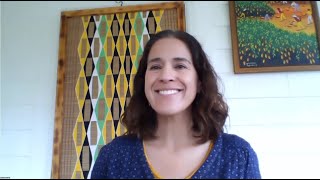
Scientists and youth activist Jonah Gottlieb discuss climate action after California firestorms. Marcia Macedo explains how the Amazon is 20% deforested with rising fire risks, while Gottlieb describes founding the National Children's Campaign to push for policy change through youth storytelling.
Chapters
Hi, everybody, and happy Earth Day. I'm Heather Goldstone, Chief Communications Officer for Woods Hole Research center, and it really is my pleasure to welcome you today, not to the center or to any big traditional Earth Day sort of event, but right into our living rooms, into our homes, from for a celebration of this very special 50th Earth Day. And while it is an Earth Day unlike any other, thanks to COVID 19 and the restrictions that we are all living with right now, I hope it can be a celebration of past successes as well as a marking of the challenges we still have yet ahead of us and also the opportunities that we have ahead of us. For those not familiar with Woods Hole Research center, we are an organization of renowned climate scientists who work with partners from academia and the private sector and all parts of society to identify pressing research needs, do relevant science, and then make sure that science gets into the hands of policymakers and change makers in order to bring about the sorts of shifts that we need to to address climate change. And so I'm very happy with who we're able to bring to you today for a discussion of this year's Earth Day theme, Climate Action. And we'll hear from them in just a little while. But first, I wanted to both recognize the fact that of course, we are not all in the same place together when we are, quote, unquote, gathering today, we are gathering virtually. And I was thinking about this last night when you enter a Woods Hole Research center event, say in our auditorium, 100, 200 people, which is about what we've got here today, and numbers still climbing a little bit. But you walk into an auditorium for an event and of course, one of the first things you do is you look around the auditorium to see if you know anybody, to see who else is there. And so in that spirit, I would like us all to get to know a little bit more about who's in the auditorium, our virtual auditorium here today. And we will start this with a little poll. This should pop up on your screen and ask you how old you are. An easy question, but I'm really curious to see, in part, if the answer today is a little bit different than it has been for some of our other webinars, because one of our participants today is Jonah Gottlieb, founder of the National Children's Campaign. What I'm seeing coming back as everyone has voted and we've got about almost 90% of you have sent in your answers so far. About half, almost half, 49% over the age of 65, about 20% in the 50 to 65 range, about 13% in your 30s or 40s, about 16% in the 1929 range and 3% under 18. I'm going to take moderators prerogative here and just say a special shout out to my own children who are I know are watching today in that under 18 age range. Hi guys. Thank you all for sharing that information with us about who we're in the room with today. The other thing that I would like to ask you, and this will help get familiar with some of the features of Zoom as well, is down at the bottom of your screen. You should see the option to raise your hand. And first I would love to know how many of you are old friends of Woods Hole Research center here for your 10th, 50th, whatever it is, Woods Hole Research center event and feeling that you're among friends when you're at a Woods Hole Research center event, seeing a couple of dozen hands going up. Oh, that number is jumping way up. We're up to 50 or so participants who have raised their hands, friends of Woods Hole Research center. And it's so good to see you and so important on a day like Earth Day to be with friends and like minded individuals as we address the issues of climate change. But I'd also like to see how many of you are less familiar or are new to Woods Hole Research Center. So if you've only encountered Woods Hole Research center maybe in the past few weeks through our webinar series, go ahead and raise your hand now as well. And those of you who already raised your hand, you can keep it up. We'll pretend we're in the auditorium and everybody's got their hands still up. This is fabulous. So we've got somewhere in the range of 30, 40, 50 people perhaps who have just become acquainted with Woods Hole Research center in the past few weeks as a result of our webinars. And then how many of you are completely new to Woods Hole Research center and this is the first time that you've joined us for an event and we've got hands going up and down here. It's a little hard to know just how many in that that last category. But if you are completely new to Woods Hole Research center today, this is your first time joining us for an event. Thank you so much for joining us. We're really glad to have you here as we I'm going to actually go ahead here and now a little bit different than in the real world. In the virtual world. I can actually, I think put your hands down for you and relieve you of the need to hold your hand in the air. So we'll go ahead and put the hands down. As we were getting ready for today's webinar, we started realizing that Woods Hole Research center has this depth and breadth of expertise and not only knowledge, but also wisdom and ideas to share with the world. And we wanted to tap into a little bit of that breadth and diversity. What we actually have done is over the past several days, we have asked our staff and our board members to join us on Zoom calls or to pick up their phones and record videos of themselves answering one very specific question. And that is, what does climate action mean to you? And so I'm now going to show you a smattering of results. And this is not every response that we got. We got variable video quality thanks to Zoom, but also got a lot of great responses, more than we could possibly fit into our final video. But what I'm happy to share with you now is a montage of ideas about climate action from Woods Hole Research center staff and board members, starting with our founder, George Woodwell.
The climatic disruption is serious. It marks the end of this civilization unless we manage things appropriately. Managing things appropriately involves abandoning fossil fuels right now, very rapidly. It also involves using the big, great large flows of carbon, natural flows of carbon, of the biotic systems of the Earth, to remove carbon from the atmosphere and store it safely in life. We can do it. It's a new green world, and it's coming very fast. My name is Max Holmes. I'm the deputy director and senior scientist at the Woods Hole Research Center. And to me, one of the most important climate actions a person can take is to vote and to encourage others to do the same.
To me, climate action is acting as if the truth is real. It's not an additional bonus we can.
Choose to do if we care. It is a fundamental necessity if we.
Want to live in a compassionate, humane society.
I think climate action means thinking about our collective future as humans relying on Earth. But for now, it means doing what you can when you can. Climate action is everything from a protest to deciding which light bulb to buy at the hardware store. There are a lot of personal choices every day we can be more intentional about, from transportation to energy efficiency to our diet. But to me, honestly, the most important climate action we can take is to vote. Let's get people into office that get it and care about our future generations. So please be intentional about your decisions. Vote, spread the word, and let us live life and enjoy Earth to the fullest. My name is Nolan Kitz and I'm.
A research assistant at the Woods Hole Research Center.
In environmental economics, we often think about.
The costs and benefits associated with actions.
That we do take. And when I think about climate action, I think it's important to understand that there are costs associated with not doing something. And in the case of climate change, we can't afford to not do anything.
Hi, I'm Anastasia. I'm a research assistant at the Woods Hill Research center and I contribute to wetlands research projects. To me, climate action means recognizing that every day we make many, many decisions and we have the opportunities in those decisions to prioritize sustainability and reducing greenhouse gas emissions. And it also means recognizing where and how we have privilege and using this privilege to advocate for ourselves and those without as much of a voice for a better future.
I am Lindsey Scott. I'm a research assistant at the Woods Hole Research Center. To me, climate action means governments taking an active role in adequately and efficiently regulating the fossil fuel industry and moving the energy sector towards clean green infrastructure.
Hi, I'm Rich Birdsey, and as a senior scientist at the center, my role is ensuring that policies and practices about using forests and wood products as natural climate solutions are based on sound science, not rhetoric and politics. On a personal level, I plant trees, lots of them, every year.
I'm Chris Neal. I'm a senior scientist at the Woods Hole Research center and an avid birder. And climate action, to me is very personal. It means preserving by all the means. My colleagues are eloquently describing a world in which, at this time of year, I can walk out into a quiet and dark field, hear the contact calls of migrating tropical birds winging north, and have faith that this magical phenomenon will be there forever.
My name is Paula Beckerly. I'm a development associate at the Woods Hole Research Center. For me, climate action personally, is whatever I can do. My part in guaranteeing a livable planet for my children and my grandchildren, including using solar panels, having an electric car, a hybrid car, and any effort that I can make.
Hi, my name is Lee Davis and I'm the HR Manager at Woods Hole Research Center. And climate action to me and my family, means that we are no longer fertilizing or doing anything for our lawn. For me, with my job, although I can't, I mean, I couldn't do the science because that's not what I'm trained in. But supporting the people who are doing the science feels like it is an impact to climate science as well. Employee care is really my number one thing. Hi, I'm Anna Lil Hidal and I'm a research associate at the Woods Hole Research center, and I'm here in Homer, Alaska. Climate action to me is when a community such as Homer comes together to.
Identify and also implement solutions that works for them. And climate action is therefore a process.
That both strengthens a community and inspires others to follow.
On a personal level, I have already with my wife, built this zero net energy home that is solar powered and we have an electric vehicle. And during this Covid time, we're finding all kinds of ways to reduce our consumption even more. As a professional scientist and as a board member of Woods Hole Research center, the work I've been doing just demonstrates how essential it is that we reach a period before 2050 when the capacity of natural systems, forests and wetlands remove more carbon dioxide from the atmosphere than we put in from our fossil fuel use.
Hi, I'm Glenn Bush. I'm an environmental economist here at Woods Hole Research Centre. And climate action means for me at home with my family, trying to follow these principles of reduce, reuse and recycle. So we try to think very carefully about all of our consumption choices and our travel choices and to try to do the very best we can, just on a personal basis, to do better. And it's hard work at times, but in my work as an economist, I'm really interested in how to encourage not only people like myself, but others to do the same. And so I'm really interested in how we break down climate science into national conversations and local conversations to connect all of it to social and economic values of people to help build relevance in their lives and to help them find pathways to make these adjustments themselves at a very local level and also in terms of national policy.
So, hi, I'm Tom Lovejoy. I'm a director of the Woods Hole Research Center. And one of my specialties is the interaction between biodiversity and climate change. And so I know it's really important to keep climate change below 1 1/2 degrees to have a manageable planet biologically. And basically, we need to manage this planet as the combined physical and biological system that it is. And if we get aggressive about restoring ecosystems, we can pull a significant amount of that carbon back. In the context of this terrible pandemic which we're now experiencing, the simple question, how are you? To me at least, takes on new levels of meaning. And while I feel very fortunate that my basic physical needs are met, which is of course not true of a lot of folks right now, it's hard to feel truly secure when the future seems so uncertain again, as it does because of this pandemic. But if you think about it for a moment, the same is true actually, because of climate change, that is, the future seems very uncertain. Certainly it won't look like today. Research that we've done here recently, for example, shows that within 20 or 30 years, parts of the world will become difficult to inhabit because of things like extreme heat, water scarcity, food scarcity, and so forth. Now, the societal consequences of those physical changes are difficult to predict, but it seems likely that things like migration, political instability, social unrestricted, and so on do seem likely, if not certain. To me, climate action is about gaining safe and secure and predictable future. Returning to Covid One thing this epidemic reminds us of is that science can help us to understand and prepare for and even manage our future. So it is more important than ever to support science and to support public policies based on that science. Thanks very much.
So that's a little bit of what we heard from our scientists over the past several days, including Closed there with words from our president and director, Phil Duffy. And I think you're going to hear a lot of those same themes that were just highlighted in that montage in the conversation that we're about to have. I'm really pleased to be joined by two people here today for a conversation about climate action. Marcia Macedo is an associate scientist at Woods Hole Research Center. She is a member of our Amazon research team and the director of our water program. And Jonah Gottlieb is a youth activist and the founder of the National Children's Campaign. Welcome to both of you and thank you, and happy Earth Day.
Hi, Heather. Thanks. Great to be here. Happy Earth Day. Nice to see you, Jonah.
Thanks, Heather. Yeah, good to see you both.
Marcia, I wanted to start with you and just go back a little bit. In your personal story, how did you first get interested in Amazon research?
I get this question a lot and I answer it a little bit differently every time. And recently I've been thinking a lot about my grandparents, actually. I'm Brazilian and my father is from just outside Belen, which is a city at the mouth of the Amazon River. And my grandparents, since I was a little kid, would always regale me with stories about the Amazon. You know, they talk about the world wildlife. My grandmother in particular was a big storyteller. She talked about the wildlife, food, medicinal plants. And so, you know, they were really trendsetters in a way. I mean, long before it was a designer superfood in your local smoothie bar, they were Having acai every, every day and, you know, every scraped knee and sore throat, they were, they were trying to get me to treat it with copaiba and anjuraba oil, which are, which are made from Amazonian trees. And I hated it at the time, but, but I think it's really cool now. So I think from a very young age I had this idea about the cultural and biological richness of the Amazon. And, and When I was 11 or 12, I had the opportunity to go there for the first time. My parents took me and my little brother on a riverboat trip up the, up the Rio Negro. And from that point forward, I was just absolutely hooked. It was, it was love at first sight. So the rest is just details. I took tropical ecology in college. I ended up studying monkeys 15 years later in the Amazon and then became interested in issues of deforestation and kind of bigger picture issues.
So the history obviously of studying the Amazon and issues of deforestation and the health of the Amazon predate your career. And this being the 50th anniversary of Earth Day, I thought it would be nice to put what we know about the Amazon and where the Amazon now is into that kind of half century perspective. If we were to go back 50 years and look at how the Amazon has changed between the first Earth Day and today, what would we see?
So the Amazon has changed immensely in the last 50 years in both positive and not so positive ways. I have a couple of images that I'd like to share, if that's okay. So I'm going to share my screen with you. Can you see that?
I'm still seeing you, not your screen.
Okay, just a second. Oh no. Looks like it's not going to start.
There we go.
Okay.
All right. So back, you know, before the 1960s, there wasn't a single protected area in the Amazon basin. And this is an animation that kind of shows the evolution of the protected area and indigenous territory system in the Amazon. And you can see that around, you know, starting in the 1960s and certainly around the first Earth Day in 1970, you have the nine countries of the Amazon Basin developing legal frameworks and systems of setting aside land and protecting, protecting it in perpetuity for various, in various forms. And to me, that protected area network is, is really one of the wonders of the world. In fact, the nine separate countries and the lawyers and the activists and the, you know, all sorts of different people that it took to create these protected areas were able to accomplish that in this amount of time is a really.
Important.
Part of the story. And all of the research shows that these are really one of the most effective tools for conservation still today. They're really important in preventing deforestation. They, they block forest fires from, from escaping into pristine forest and so forth. So a really important tool in our toolkit. And if we look at the success.
That we can celebrate this Earth Day from the past 50 years. Exactly.
It's one of the things we've gotten right in the last 50 years. And so I really like to kind of highlight that and be thankful for it, I guess. So today we have an Amazon that is roughly 80% still forested. And the areas in yellow that you're seeing on your screen are deforested. So about 20% of the Amazon has been lost to deforestation, mostly agriculture and cattle production, but still about 80% intact. So, you know, still a lot of challenges. There are certainly threats and pressures to those protected areas that are growing every day. But like I said, the research shows that they're still really important part of Amazon conservation.
And that was going to be my next question is, you know, this is what has happened over the past 20 years. There's been deforestation and a loss of, you know, a huge chunk of the Amazon, but also a protection of a large portion of the Amazon. If we look now at kind of a snapshot today and then start to look forward, where is the Amazon now and what trajectory is it on?
So today we have a situation where the remaining forests are at risk. There are certainly a lot of pressures, you know, to expand, to expand agriculture, for example. There are, there's illegal land grabbing that's going on. So you have areas that don't have a formal designation that are outside the protected area system, that are really vulnerable to land speculation. So you have people, particularly now during this global pandemic, taking advantage of the situation and the fact that people are paying attention to other things and just straight up stealing land and deforesting it and trying to put it into other uses. And so that's a big challenge. And this idea of agricultural production versus forest conservation has kind of been set up as an either or. And again, our science shows that you can't really have one without the other. I mean, these forests are absolutely critical to maintaining climate stability in the region. And most of the agriculture that you saw there is rain fed. And so without the rainfall that allows crops to grow, you start to have real problems. And we already see that today. I mean, on top of this idea that you have forest versus agricultural expansion, you have the global climate change kind of layered on top Right. So the fossil fuel emissions over the last 50 years have already committed the Amazon to a drier and warmer future than it has had in the past. And that means that you are going to have some impacts, like crop losses, like a greater likelihood of wildfires. And the way we manage those water shortages, the increased droughts and the greater likelihood of wildfires really will shape what the Amazon looks like in the next 50 or 100 years. So to give you an idea, these are forests that burned every few hundred years. You know, it was a very rare event that would allow these forests to carry a fire. And nowadays, at least around the southern and eastern edges, we see these forests burning every 50 years. Maybe, you know, like some portion of the forest you have. You have large, intense droughts every five years or so, and some portion of the forest will burn every few years. To give you a sense of what that could look like, we did a fire experiment that ran for about 10 years in the southeastern Amazon. And this was three fires and one major drought that flipped this forest that you see at the top there into a system that looked alive.
Marcia, we've lost your audio. You've frozen. For some of you, this image might look familiar from a couple of weeks ago from one of our webinars, where we dove pretty deeply into one project that Marcia has been involved in that this fire experiment, and follow on research looking at the role of a very specific animal, tapirs, in actually addressing that deforestation and fire issue. But today we're kind of trying to take a bigger picture view. And Marcia, it looks like maybe you're back, not as frozen. And so I would love to hear from you what role you see for scientists like yourself in identifying and measuring the threats facing the Amazon, the opportunities facing the Amazon, and actually driving the kind of change both that we have seen over the past 50 years and that we need to see over the coming 50 years. Where do scientists fit into this mix?
I think scientists have an important. Sorry, where did I lose you?
You were explaining the Amazon being a kind of a tipping point and what it would look like for forested land to transform into savannah land.
Sorry about that. My Internet's a bit unstable. But to the role of science, I mean, I think we know enough today. We've known for the last several decades. I mean, in terms of climate change, know enough to act now. And I think that the challenge for scientists is to really figure out ways to translate our science in ways that it can connect to people and policymakers where they are. Right. I mean, there's Nothing in the case of climate change, which I see is pretty interconnected with the Amazon Basin, you don't have anybody on the planet who is not going to feel the effects of climate change and who does not have an interest in making sure the Amazon is there for future generations. But people have different concerns in everyday lives and worries, and they have different ways of connecting, connecting to that message. And I think our challenge as scientists is to figure out ways to.
Say.
What we need to say in ways that connect with people.
Well, so speaking of connecting with people who perhaps represent other pieces of the puzzle when it comes to climate action, Jonah, I want to turn to you and ask you how you kind of came into this role as an activist, have ended up founding, co founding National Children's Campaign. When and where did your activism start?
Yeah, so thanks. I had always been interested in nature and I'd always been interested in politics, but it wasn't until a very specific event that I kind of put those two interests together and got super involved in climate justice organizing. So it was October of 2017 for background, for everyone. I'm from Petaluma, California, which is in Sonoma county, so the northern part of the state. And back in 2017, in October, we had what we later learned was the first of many huge firestorms in our area. And so we were woken up at like 3am with a knock on our door. And it turned out we were just outside the evacuation zone. And so we had a bunch of our friends from like, 10, 20 minutes up north who had come down and needed to come in because they had nowhere else to go because they had all been evacuated in the black of night. And so I, you know, it was the first time that I ever, you know, saw the impacts of climate change with my own two eyes. And so when Marcia is talking about, you know, these, you know, these systems that are changing the Amazon, then in turn it's causing these increased effects in my community. And so I saw that and realized, you know, that everything I had learned about in school and everything like that, you know, watching nature documentaries and everything was real and was happening and I knew I needed to take action. I was really frustrated that my elected officials weren't doing enough. And so I actually just started writing and just, you know, wrote some, like, rant, I guess, just about, you know, government and climate policy. And then I ended up a few months later delivering that in a much more eloquent form to my congressman's office in Washington, D.C. and so from there I got involved with a group called Schools for Climate Action, working with school boards, student councils and other ed sector organizations and local elected officials to pass climate action resolutions. And then I worked to organize the Schools for Climate Action Advocacy Summit in Washington, D.C. a little over a year ago. And in three days, we visited all 541 congressional offices and told each one about the need for climate action. And so at that event, I really felt motivated and hopeful and saw the power of young people telling their stories and talking about the issues that impact their lives. And so we decided to found the National Children's Campaign as a way to empower young people to tell their stories. And so we've organized events and campaigns to do that, all with the hopes of getting young people talking to voters and talking to elected officials so that they can be voting and legislating with our interests in mind.
So you mentioned that the fires were a major motivator and trigger for a lot of your work and that there's some parallel there between the fires in California and the fires in the Amazon, and we can explore that some more. But I'm curious, what is it in Marcia's work that really connects for you?
Yeah, I think. I mean, obviously, you know, fires and fires is an obvious connection, but I think it goes deeper than that just because we both have, you know, such a love of our, you know, the environments we're around. And so, you know, for her, it's this. It's the Amazon, it's, you know, Brazil, and it's this, you know, forest ecosystem that's, you know, in many ways, you know, being degraded in front of our eyes. And for me, it's, you know, my community and seeing, you know, my school and my friends, homes in my home, you know, potentially at risk. And so having that, you know, always in the back of my mind. And then, you know, so when I'm connecting with people like Marcia, knowing that we're motivated by the same thing, and that's protection of, you know, our communities, protection of our homes, and especially, you know, on a day like today, protection of our Earth.
So how did you and Marcia first meet?
Yeah, so we got involved with a project that I think we're going to talk a little bit about later. But so we first met at the American Geophysics Union conference in San Francisco in December. And so I spent the day nerding out and learning about all this science stuff. And then we've, you know, interacted over zoom and, you know, all that since then. And we were actually supposed to go down. I was supposed to go and visit her lab and the research center in the Amazon just a few weeks ago, and obviously because of coronavirus, that's been postponed, but spent a lot of time learning about her and learning about her work and getting to know her. And so I'm super excited to be partnering with the scientists like her to really empower and, you know, supplement all the work that I'm doing, because I think that the greatest thing that climate activists can do is have a real understanding of the science so that they can better convince people to act.
Well, you've mentioned now the project and the partnership that you guys have. And so it's my pleasure to now introduce our second film debut of the day, Jonah and Marcia. The partnership is a documentary film project which, as he mentioned, as a result of COVID 19, parts of that are on hold and parts of it have turned into other great activities that we're going to talk about. But it's a project of Principal pictures and the Woods Hole Film Festival Science and Film Initiative. And hot off the editing, I don't know, editing line, here is a trailer for the film that they will both be in. And actually, I apologize, I'm going to try this one more time and make sure that I have computer sound turned on so that we can hear this. And here is the trailer for the film.
My name's Jonah Gottlieb, and I've got a big job ahead of me saving the planet.
Climate change is not a lie.
Do not let our planet die.
These young people, they already recycle.
They use metal straws instead of plastic, but they realize that is not enough.
For more than 30 years, the science.
Has been crystal clear.
How dare you continue to look away?
It's really so fitting that our generation is the one doing the most shouting and protesting in the streets, because we're the ones that are going to be the most impacted by it.
You're looking at a scene that is probably reminiscent of hell, a firestorm that.
Just swept through my community. Trapped in that house with 30 people, fans, and air filters, just going 24 7, I started writing a letter to my congressman just like, hey, what the hell? Like, do something. Soon I'll be headed down to Brazil to meet climate scientists who are studying fires in the Amazon and compare those with fires in my home state of California.
Equally important for people who work on the science side of things, to have voices like yours to get the message out there and motivate people to do something about this.
He never sleeps. He's not going to sleep.
It's much better this than drugs.
This youth led movement of people from around the world taking action. That's what's on going, going to get us through this. And the science says we can do it. My name is Jonah.
Okay, so as we said, just produced yesterday that trailer for the film. And Jonah, you say something in the trailer there about, and you've mentioned this, you know, feeling trapped in Your house with 30 people during the fires that really triggered your action. And you said something, the three of us were on a zoom call a few weeks ago, that really struck me. Me, you said, well, you know, when we went into kind of this shutdown for COVID 19, for a lot of, you know, you and your cohort of youth activists on the west coast, it felt really familiar. Do you see parallels or lessons or new actions coming out of this COVID 19 crisis, the way that, you know, the fires spurred your initial activism?
Absolutely. So the past three years now, there's been big fires in Northern California every year. And so I think combined we've missed over a month of school due to the fires and power shutdowns and smoke and air quality and things like that. And so, you know, being one of the communities that's, you know, really, you know, one of the first to really see these huge impacts of the climate crisis. I like to, you know, talk about Sonoma county as like being the canary in the coal mine. As you know, this is what the rest of the world will be going through soon if we don't act on the climate crisis. And so then with COVID I was, you know, talking to all my friends from around the country and they were, you know, talking about, you know, having to be stuck inside and everything like that and all the impacts of that. And so, but for, you know, me and my friends out here, it's just, you know, oh, it's just October. That came a few months early. You know, this is what we go through every year. And so I think we can use Covid now as an example of, you know, what's to come and, you know, show people, if you don't, if you don't like being trapped in your house for weeks at a time, then do something about the climate crisis too. Otherwise the same impacts of COVID will be hitting your community every single year.
Marcia, obviously there are things we can learn from the pandemic, but it's also impacting what you're able to do in terms of research and what you and Jonah are able to do in terms of what you had planned for your kind of your partnership in this film project, can you give us a sense of what you and Jonah would have been doing in the Amazon this spring had you been able to go? And perhaps we should frame that in a more positive way what you will do when you do get to go to the Amazon.
I like that framing. So we have a research station in the southeastern Amazon with our very close partner, the Amazon Environmental Research Institute. The Brazilian acronym is ipam and we do a lot of work with them in Brazil that's focused around getting, well, doing the research about sort of impacts of fire regimes and agricultural expansion and climate change on the Amazon system and also communicating that to Brazilian society at various levels. So Jonah would have met some scientists from EPAM and. Well, I guess I should start with the trip, right? I think it's a long trip through it. So cross country trip in the US like down to Miami. Right. So San Francisco to Miami and then an overnight trip down to Brasilia and then a 15 hour bus ride to kind of the end of the line, last town on the bus line called Canarana in the state of Mato Grosso. And it's a typ. Very southeastern edge of the Amazon. And then we get in a truck and take a dirt road about 85 km to this ranch called Tangaroo where we do our research. We've been there for about 10 years and it's rustic, but it's really great place to do research. I mean, we have lots of things going on. A long term fire experiment that is now kind of in a recovery phase that, that I think has a lot of parallels that certainly we'd like to talk about with Jonah. A little bit of adventure. We would climb a tower that is 120ft high above the forest canopy and it's fully secure and harness and all of that, so it's safe. But it's just an amazing view. And we've learned a lot about how these forests actually recycle water back to the atmosphere and how important they are for storing carbon and you know, sort of what the consequences would be if that forest wasn't there. And it does not look pretty. I mean, the conclusion is that without these forests there's pretty much not a viable solution to climate change. So, yeah, lots of wildlife too. We definitely would see tapirs and lots of cool birds if you're lucky, maybe a jaguar. So, yeah.
So, Jonah, obviously the fact that you are not able to go to the Amazon this spring doesn't mean that the project is off, doesn't mean that the connection has been Broken. And we saw some footage in the trailer of you guys on another Zoom conversation. What are some of the things that you and Marcia have still been doing, and what are you learning out of them? This.
Yeah. I mean, I think that, you know, if. If I had already gone to Brazil and experienced this, then, you know, and in a sense, part of this project would have been over. But now we get to keep prolonging it. And so intermittently, you know, in between the time that, you know, we first met and when I'll actually go to the Amazon, we keep, you know, being able to have conversations like these. And I just, you know, every time I talk to Marcia, I learn more about her work. And I think that, you know, like I said earlier, that's so important for people like me who do what I do, because the better I understand this, the better I'm able to, you know, fight for the earth.
And, Marcia, I mean, you're in the position of kind of being the mentor, I guess, in this relationship, but you've also said to me that you're getting things out of this relationship. What are some of the things that you're learning or gaining from being paired with Jonah?
Gosh, I don't even know that I feel like I'm the mentor in this relationship. I've learned a lot already. I mean, certainly just Jonah's passion and energy and the way he's been able to connect to policymakers and to other youth activists around the world so quickly, really inspiring. It definitely gives me hope. And I think we need people like him to need other voices to share the science than just the scientists. And I think so. I've learned a little bit how to communicate the science to people like him, but also a little bit. A little bit about how to talk more effectively about it and how to just try, you know, to engage with policymakers and so forth in a different way.
So, yeah, I have plenty of questions for Jonah and Marcia, but I also want to give you the rest of our 170odd participants at this point, a chance to ask some questions. So if you do have questions for either Jonah or Marcia, please type those into the Q and A, and we'll try to get through some of those while we're waiting for those to come in. Marcia, you mentioned hope, and I would love to hear from both of you where you find hope. And, Marcia, maybe where in your science and in what we know about the Amazon specifically that you find hope.
I struggle a little bit with the word hope. I find that it's hard to Sort of stay motivated over the long term, either by hope or by fear. But I think certainly courage, conviction, inspiration, I don't know, but I am, as I said, I froze again. So I'm not sure if you heard this, but I am certainly inspired by youth activists and over the last just couple of years, even how much traction they've gotten on the global stage and how just what a positive momentum that has generated. I also find inspiration from indigenous people in a similar way. Amazon indigenous people, indigenous women in the Amazon have found really powerful ways to make their voices heard and to get the same message out, but with. With their own twist and their own kind of story at the UN and in various for us. So I think that kind of seeing that arc of, you know, the science to the policy through different mediums and often, I mean, in the case of youth and indigenous people, there are people who have contributed the least to the climate crisis and are gonna feel the impacts the most, and yet they still feel the motivation to get out there and do something about it and empower themselves. And so that's really inspiring. In terms of the science, specifically in the Amazon, I think that there's some solutions that are actually pretty practical and pretty simple. And I'll give you an example. The deforestation in the Amazon is something that we can track. Like today, you know, we know exactly where it's happening today. And so the fires that we saw last summer in the Amazon were foreseeable. We knew that that deforestation had happened three months before and that those trees that were cleared were going to be set on fire. And we can really do a better job by sort of forming creative alliances to shorten the path between knowing that information and doing something about it. And an example in the COVID era now is that we see deforestation going through the roof. People are taking advantage of the fact that the world is distracted by something else and deforesting. We know that it's going to be a drier year than it was last year. And so the potential potential for huge fires is really big. And add to that the fact that the smoke is a public health consequence, right? You have now pulmonary issues in regions where you have the COVID 19 virus expanding. And so like this double whammy effect of, you know, probably 15% more deaths from COVID if you have smoke also. And so what we're doing is trying to get an early warning system with, and this is with IPOM and a coalition of Amazon governors trying to buy smoke sensors and trying to actually figure out ways to prevent those piles of logs from being burned and keep that fire from spreading. So I think the fact that we have the technologies and we have the information and it's really just a matter of getting organized, gives me hope, because I think we can do that.
Jonah, and I'll modify the question for you. Maybe hope is not the right word, but where do you find hope or inspiration, motivation for the work that you're doing?
Yeah, so for me, I think the answer is pretty simple. And it's just that the science says we can still do this. And so, you know, I wouldn't be, you know, wasting my time, you know, fighting this if we had already lost the battle. But because, you know, the leading scientific experts throughout the world are saying there, these are the solutions, you know, here's exactly how you implement them. It gives me, you know, a reason to keep going and a reason to keep fighting for the things that I fight for. And so my job now is get these scientists findings and solutions in the hands of people who can make those changes or get people who are willing to make those changes in Congress.
One question we got from the audience is what's needed to communicate the science so that others will listen. Do either of you have thoughts on is it different strategies? Is it, is it just keep hammering. What do we need to do to try to get some of these messages across?
I'll give you an example from my work that has been a learning for me. I think sometimes it's really. It is translation. I think I've said it before, but for example, so to the extent that large scale agriculture is one of the big threats to the Amazon, the science shows that the forest is actually critical for that production. And there's a business case to be made for keeping those forests standing. But we haven't communicated that that way to that audience. And so we're trying to figure out how to do a better job of that now. And I think that's an example that repeats itself again and again. I mean, I think every sector of society has a case that they are sympathetic to and we just need to figure out kind of what, what the incentives are.
Yeah. And I think for me, the vast majority of the American people believe in climate science and believe that we need to do something about climate change. Like we have the statistics to back that up. The problem is that they're not realizing the magnitude of the crisis. And so it's not their first priority when they're thinking about voting or when they're thinking about these other ways that they live their lives. And so what we need to do now is communicate the urgency and the impact of the climate crisis. And I think the best way to do that is empower people who have already been impacted to tell their stories. And so just to give a quick example, at one of our summits last year, we had, he's now a senior in high school, a student in parliament from New Mexico at the summit. And we had Congressman Ben Ray Lujan, who is his congressman at our event, and that we set up so that they could have a conversation. And Harlan told him about the birds on his reservation that were just dying because of the rising temperature, so they weren't migrating when they needed to be. And so they were, you know, he was just finding dead birds all over his reservation in Santa Fe. And so he told that story to Congressman Lujan. And then a few weeks later, Congressman Lujan, who was originally against the Green New Deal, publicly changed his mind, co sponsored the resolution, publicly credited Harlan with changing his mind. And to this date, he's the highest ranking member of Congress to support the Green New Deal. And so just because a kid my age had an opportunity to tell his story, he was able to convince one of the most powerful people in the government to take action and do what's right, to take care of our planet and to fight for our climate. And so if we can do that with every single person who's been impacted by the climate crisis, then we can make a huge difference.
So we have about five minutes left.
Left.
In this webinar, and actually we have audience members who are starting to ask variations of the question that I wanted to end with for both of you today, and that is give us all some advice. We have teenage students asking, what can students and children do at school and in their communities? What can those of us, not specifically students, who are worried and perhaps anxious or even feel overwhelmed by this, due to move from that state of feeling paralyzed by fear into a state of being motivated and active. How do we, how do we, you know, what are some actions that you can recommend to people?
I got a couple.
Thought you might.
Yeah. So first of all, for people my age, people who are still going to school, you can check out our Schools for climate action initiatives@schoolsforclimateaction.org and you can work with your school officials, whether they're school board members, whether your fellow students on student council or any other ed sector groups and school groups, to pass a climate action resolution, like I talked about earlier, that helps improve things at the local level, like your curriculum and you know, district sustainability initiatives, but also calls on Congress to take action. So we have local action and federal action at the same time. You can also get involved and go to nationalchildrenscampaign.org We've got some cool campaigns that will be launching soon to really try and especially in the age of COVID keep everyone motivated and inspired and activated so that the climate movement isn't taking this time off, but we're coming out of this crisis more prepared and more effective at taking on the climate crisis. And you can also have a conversation with people in your life. So if you're a young person that's talking to your parents, talking to your coaches, your teachers, your grandparents, your siblings, your pediatricians, I don't know anyone in your life who's so, you know, have a conversation with people in your life. So if you're, if you're a young person that's talking to your parents, talking to your, you know, your coaches, your teachers, your grandparents, your siblings, your pediatricians, I don't know anyone in your life who, you know, has, you know, power to especially vote and make sure that they're prioritizing the issues that impact your life. And so there's 74 million people under the age of 18 in the United States. And if every single person who cared about those 74 million kids voted like they cared about their kids, too, then we'd have every sort of, you know, climate action and climate solution implemented that we could ever want. So have these conversations and adults, I challenge you to have these conversations with young people, with the young people in your lives. I was speaking a few weeks before the, before everything got shut down. I was speaking to a class of fourth and fifth graders. And not exaggerating, these fourth and fifth graders knew more about the climate science than the vast majority of members of Congress that I've spoken to. And so these kids know more than you know. So have conversations with them and really help, you know, broaden their perspective, encourage them to learn more, encourage them to get involved and, you know, send them our way, we'd love to add them to our team. NationalChildrensCampaign.org, thank you, Jonah.
Marcia, you are one of the people who answered our call for responses about what climate action means to you. We didn't put your video response in the montage video since we had you here in person today, so maybe you could leave us with your thoughts on what climate action means to you and what you would like to see others doing.
Well, I think first and foremost, for me, climate action means supporting science and sort of using it to help direct our decisions about our collective future. And it also means improving communication and sort of innovation, right? Coming up with creative new ways to communicate that science, to tell our stories of our success stories and amplify them in ways where they can kind of spread around the world and help us make the change we want to see as quickly as possible.
Well, Marcia, thank you to you. Thank you, Jonah. Thank you to everyone for showing up today and want to leave you with a couple of last thoughts. First, I know we missed with my little technical issue there, some of George Woodwell's and Max Holmes comments in our video. That whole video is available on our YouTube channel and you can find us on social, on Facebook, on Twitter and on Instagram. We'll be featuring that video and snippets from that video on our social feeds over the next week or two. So you can find that and share it. We will also, of course be sharing the recording of this webinar. It will also be on our YouTube channel on our website and on social. So look for that and share that with your friends and then please channel and you can find us on social, on Facebook, on Twitter and on Instagram. We'll be featuring that video and snippets from that video on our social feeds over the next week or two. So you can find that and share it. We will also, of course be sharing the recording of this webinar. It will also be on our YouTube channel, on our website and on social. So look for that and share that with your friends. And then please, as one last idea from me for what you can do as climate action, as Marcia said, support science. The science that we do, the outreach and the policy work that we do at Woods Hole Research center is largely donor funded. And so if it's within your means, please consider supporting Woods Hole Research center On this, our 50th Earth Day. Happy Earth Day everybody. Thank you so much and we hope to see you back here next week. Back at our usual is one last idea from me for what you can do as climate action. As Marcia said, support science. The science that we do. The outreach and the policy work that we do at Woods Hole Research center is largely donor funded. And so if it's within your means, please consider supporting Woods Hole Research center On this, our 50th Earth Day. Happy Earth Day everybody. Thank you so much and we hope to see you back here next week, back at our usual 2:30 Wednesday webinar time. Thanks all and happy Earth Day.
More from Tod










WHRC's Sustainable Science Speaker Series - Dr. Toby McGrath speaks on Sustainable Fisheries
