Webinar: Climate Change in the Era of COVID-19
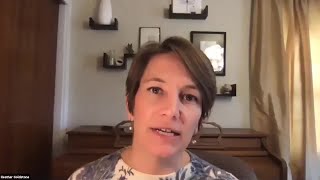
Phil Duffy and Heather Goldstone from Woods Hole Research Center draw parallels between COVID-19 and climate change: listen to experts, act early, mobilize resources. The planet has warmed roughly 1°C since preindustrial times, CO2 has nearly doubled, and the U.S. saw 14 billion-dollar disasters in the prior year.
Questions this video answers
1896
About 30% (roughly one-third) globally; about 10% in the U.S.
About 1°C on average
About one foot globally
14
Chapters
We're slowing down in terms of people still coming. Obviously people can join us in a few minutes, but I think we'll go ahead and get started again if you weren't with us a minute or two ago. I'm Heather Goldstone. I'm the Chief Communications Officer at Woods Hole Research center and I'm really thrilled to be able to welcome you to our first webinar of this series this spring. Of course inspired and prompted by the fact that millions of Americans and people around the globe are at home right now and in many cases looking for something meaningful to do. And meanwhile, we at Woods Hole Research center are passionate about the work that we do trying to understand and combat climate change. And we think that's something that still needs to be on people's minds and a topic of conversation and learning. And so we launched this webinar series and we're really heartened by the response we've gotten for this first one. And we're so glad to have all of you here before we actually get started on our presentations, I want to get to know you, our audience a little bit better because this is something kind of new for us. And I also want to make sure that we're all comfortable with some of the interactive features of Zoom because we are going to try to keep this a little bit more interactive than just a one way transfer of knowledge today. So the first thing that going to do here is I'm actually going to launch a poll and you should see this pop up on your screen. Simple question. We're just wanting to get to know a little bit more about you. And so if you could just let us know how old you are, that would be great. And we'll wait a few seconds here while everybody is taking their their turn answering the poll. Attended a Woods Hole Research center event. Do me a favor and raise your hand. Wow, this is fabulous. I'm watching this number tick up. And welcome to all of those of you who have not attended or participated in a Woods Hole Research center event before. That's great. We've got over 100 of you so far and hands still going up. So. So a special welcome to those of you who haven't been with us before. And that makes me particularly glad to be able to introduce now for some opening comments and a little bit more about the center, who we are and what we do and what we're thinking about right now in the midst of this COVID 19 crisis is our president and executive director, Phil Duffy. And let me actually pause here for a Second, and get his video on as well so that you can see him. All right, Phil, go right ahead.
Okay. Well, welcome everyone and thanks again for joining us again. I'm Phil Duffy, president and executive director of Woods Hole Research Center. Since a number of you, quite a number of you apparently are new to us, I thought that I would spend a minute and just tell you a little bit about us and our work and our history. So Woods Hole Research center was founded in 1985 by a visionary scientist, George Woodwell, who foresaw the dangers of human caused climate change well before most other folks did. He founded us. He founded Woods Hole Research center to have an organization, an independent organization, not only to conduct research into the causes and effects of climate change, but perhaps more importantly, to bring that understanding into the real world where it can have an impact on slowing and eventually stopping climate change. That's what we were founded to do in 1985, and that remains our mission today because we're a small organization, a relatively small organization, because we're a very science focused organization and yet we want to have real world impact. How do we do that? Well, we do that in large part through the use of strategic partnerships. So we work, for example, with governments at every level, not just domestically, but also in the developing world. We work with large conservation organizations. And we also recently have started to work with leaders in the world of business and finance. And we do that because we believe we know that the private sector needs to be an important part of the solution to climate change. So that's our mission. Our mission is to use science as a vehicle for addressing climate change. We think that that mission is more important and more urgent today than ever before. I want to say a few words about climate change and COVID 19 because I've been asked a lot in the past couple of weeks, is there any good that can come of this epidemic in terms of addressing climate change? Is there anything we can learn from this experience in terms of address climate change? And I think that there is. I think that there are a number of important lessons from this experience that we're having that can be applied to addressing climate change. And I'd like to just spend a minute and review what I think those are. And one, of course, is the value of listening to the experts. And the experts have been warning us for decades that pandemics were possible. Apparently we didn't believe that because it certainly seems like we weren't very well prepared. The experts, before 9, 11, the experts warned us that terrorism was a threat. Apparently we didn't believe that either because we weren't very well prepared. Similarly, in the case of climate change, experts have been warning for decades that this is coming, it's a major threat, and yet we've done very little. Listen to the experts. Another lesson that's clearly emerging from this is that it's important to act early. Acting early prevents suffering and death down the road. I think we can see that in the case of jurisdictions like California, which took stronger action earlier and are seeing the curve of the epidemic flat. I mentioned a moment ago that we work with the private sector on climate change. And I think, like climate change, this epidemic requires a massive mobilization of both public and private resources, and neither sector alone, neither the private sector nor public sector alone can solve it. I just want to mention two more things. One is, there's been a lot of conversation recently about, is the cure worse than the disease? Is all this social distancing really worth it? And that implies a trade off between economic health versus physical health and safety. And that same conversation comes up in the context of climate change where folks will say, yes, I recognize this as an issue, but we can't afford to do anything about it. And certainly in the case of climate change, that's a false dichotomy, meaning that there really is no trade off between economic health and physical safety. Quite the contrary. We cannot have a healthy economy without first securing, well, in the case of climate change, a safe and stable climate. I don't know if that's a false trade off in the case of this epidemic because I'm not a public health expert, but I would say be cautious about false trade offs. Finally, you know, I actually think the most important lesson from this experience may be a very simple one, and that is that it tells us that horrible things can actually happen. And all of us have been privileged to grow up in an era where we've never experienced a truly calamitous global event. Unless there's folks here old enough to have experienced World War II. And, and without having experience an event like this, it's difficult to believe on an emotional level that terrible things can happen. And again, the climate experts have been jumping up and down for decades and warning us that terrible things are coming, and in fact, terrible things are starting to happen in the domain of climate change. But I think in some level, folks haven't believed that on a real emotional level. And what I hope is that this pandemic, horrible that it is, helps us to imagine that terrible events from climate change are also possible. Let's not make the same mistakes that we made in the case of pandemics with climate change. With that, I want to turn the floor back over to Heather, and before I do that, I'll just say a couple more words of introduction. Heather Goldstone has been with us with Woods Hole Research center as our Chief Communications Officer for about two months. You may know her from her previous life as a science reporter and science editor at WCAI and wgbh. You may not know that Heather is a very, very legitimate scientist. She holds a doctorate in ocean science from the Joint Program at MIT and the Woods Hole Oceanographic. So we're thrilled to have Heather with us in our organ, and we're thrilled to have her today to give us a little introduction to some of the science of climate change.
Well, thank you very much, Phil, and I apologize. We had a little bit of a technical difficulty there and weren't able to see Phil. I'm not sure what happened there, but thank you, Phil, for those comments. And without further ado, I'm going to to jump into my presentation which will build on some of the lessons learned and parallels between climate change and the COVID 19 crisis that Phil has already touched on, because we do see a lot of parallels and also a lot of opportunity for learning. And as I said, we do think it's important that we keep this issue on our radar and in our thinking as we respond to COVID 19 and move forward. So when we're talking about climate change, we're talking about our planet. And I love this shot of our planet. Such a perspective on our beautiful blue and green planet that is completely unique within our solar system. This is the only place that we know of the, not only in our solar system, but in the universe that supports life. And in part, that is in large part possible because this planet is the right temperature for life. It's the right temperature to have liquid water. And that is, in large part, yes, we're in the right distance from the sun, but in large part, it's due to our atmosphere and the greenhouse effect. It kind of keeps us in that sweet spot of temperatures, a little bit like Goldilocks porridge, not too hot and not too cold. What is the greenhouse effect? I feel like it's gotten a little bit of a bad rap in recent years for reasons that we're about to explore. But it's also incredibly important because as I said, if we didn't have the greenhouse effect, we would have a planet covered in ice. So how does the greenhouse effect actually work? Well, it starts with sunlight that comes toward our planet and hits the atmosphere. And when that happens, a few different things can happen. That light can be reflected back out into space, as you see indicated here by this thick yellow arrow. About a third of incoming light is reflected back out into space by the atmosphere. About another fifth, about 20%, is actually absorbed by the atmosphere. And then that is radiated back into space as heat. That's the red arrow that you see there. But about half of that light from the sun actually does make it through our atmosphere and comes down and hits the surface of the planet and is absorbed by either the land or the water there. And then what can happen is either that it is radiated back into space through the atmosphere as heat, or in some cases, that heat doesn't pass all the way through the atmosphere. It is actually absorbed by greenhouse gases or green things like water vapor or carbon dioxide or methane. And it can be then radiated back out into the atmosphere and back toward the surface of the Earth, Bouncing around between the surface of the earth and this layer of greenhouse gases that has sometimes been compared to a blanket around the planet. And the more greenhouse gases there are in the atmosphere, the thicker and the less permeable that blanket is, the more heat is trapped and the warmer the planet gets. Now, in this era of COVID 19, when we're all thinking about infectious diseases instead of thinking about it like a blanket, I've also been thinking about greenhouse gases, Kind of like people in a mall. If you've got one person with coronavirus in an empty mall, there's no chance of transmission. But if that mall fills up with other people, then you've got plenty of chances for that virus to be transmitted. And likewise, if you've got almost no greenhouse gases in your atmosphere and heat is radiated from the surface of the planet, it's probably just going to pass through to space. But the more greenhouse gases you have in that atmosphere, the more opportunities there are for that heat to be absorbed, trapped, and re radiated into our environment to cause greenhouse warming. So I just gave away the question, the answer to my first poll for you guys. So I'm going to launch a poll here because I think many of us have learned about the greenhouse effect or heard about it in recent years. But I want to ask you guys, how long do you think we've actually known about the greenhouse effect? So that question should be popping up on your screen now. Take your best shot. How long have we known about the greenhouse effect? We'll give everybody a couple more seconds here. Still getting a few answers in. Okay. So I'm going to end this now and share the results. And you guys must have learned something about climate change before this webinar, even if you're new to Woods Hole Research center, because in fact, 59% of you got the right answer. We've known about it for, well, maybe 124 years would be the more precise answer. But we can date the greenhouse effect. And in particular, there was understanding of the greenhouse effect in a limited sense going back to the mid-1800s. But it was in 1896 that Nobel Prize winning scientist Svante Arrhenius published this paper on the influence of carbonic acid. He called it at that point, we now call it carbon dioxide in the air upon the temperature of the ground. So actually looking at the greenhouse effect in the context of our planet, and what's really remarkable is to look at this paper from almost 125 years ago and realize that his predictions about what a doubling of the amount of carbon dioxide in the atmosphere would do to the temperature of the Earth was incredibly accurate. And in this initial paper, he doesn't explicitly call out the burning of fossil fuels, but that is something that he connected the dots on later in his career. He did not live long enough to actually see those predictions really playing out, but we are now. So if we look at emissions of carbon, carbon dioxide from fossil fuel burning, they were already starting to tick up during Arrhenius life. But it wasn't until about 1950 that we start to see this sharp increase in global emissions from fossil fuel burning. And along with that, we can also look at the amount of carbon dioxide that is in the atmosphere. And not surprisingly, as emissions from fossil fuel burning went up, so did the amount of carbon dioxide that's actually in the atmosphere. And you see that same upward trend starting in the mid-1800s, but really turning sharply upward in the mid-1900s. Now, when you look at it in that way, you can see that we've just about doubled the amount of carbon dioxide in the atmosphere. But it doesn't look terribly dramatic. If you zoom out, though, and look at a longer period of history, it starts to become apparent just how unprecedented what we are doing right now really is. So this is 10,000 years worth of data about carbon dioxide in the atmosphere. And what you can see is that at no point in the past 10,000 years in the history of human civilization have we seen carbon dioxide levels anywhere close to this. In fact, you can go back through the entire history of the human species, and we've never seen carbon dioxide Levels this high, you would have to go back millions of years to see that. While it is true that our planet has gone through climatic shifts before, it is also worth noting that when we have seen the few times we've seen carbon dioxide, levels this high tend to be associated with the extinction of a significant portion of life on the planet. So it's not a place that we want to be. And the rate at which carbon dioxide in the atmosphere is increasing is truly unprecedented. So what has that done to the Earth's temperature? Well, this is a visualization that I love that comes from NASA where they took about 130 years worth of temperature data for the globe and turned it into a 30 second video. And kind of intuitively, the blue and white colors are cooler colors. The yellows, oranges and reds, as you'll start to see, are warmer colors. And you can see that as we go through time and get up to the present day, we see more and more of these warm colors, more and more of the globe warming in total. If we average the temperatures across the globe, what we've seen in the past century and since pre industrial times is about 1 degree Celsius on average of warming. But of course, the other thing that looking at the data this way shows is that nobody lives an average. We all live the daily highs and lows in temperature. And so in fact, if we look at things like record high and record low temperatures, we see another indication of climate change. We see that if you go back several decades, you see a mixture of setting record high temperatures with setting record low temperatures, but that since the 90s, we've overwhelmingly been setting record high temperatures and that ratio has been increasing. Now, that heat may not just mean a nice warm day that we can all enjoy. That heat can actually be lethal, of course, and that heat also contributes to things like drought and to more severe wildfires. We of course, in the past year, just most recently, the wildfires in Australia that caught so many people's attention going back a few months before that, we had unprecedented fires in Alaska, in California, in the Amazon, these wildfires are getting more severe. And while it's true that both drought and wildfire and all of the other extreme impacts that I'm about to mention to you have happened before the influence of climate change, the question is not really whether climate change causes these things, but climate change is making them more severe and in many cases more frequent. Perhaps counterintuitively, while heat can contribute to things like drought and wildfire, a warmer atmosphere is also capable of holding more water Vapor. And so we're also seeing more extreme precipitation events. Now we've seen this in the Midwest in the past few years, really dramatically. And what I'm showing here are pictures just from this past spring of the Missouri River. So if you look up here, this beautiful thin blue line is what the Missouri would typically look like. This is right near Omaha and this is what it looked like last spring for a period. And this is an Air Force base near Omaha. Just one example of the extreme flooding that we saw there. We're also seeing the impacts of the warmer, wetter atmosphere in our hurricanes and tropical cyclones. We're seeing more intense hurricanes that tend to move a little bit more slowly, sometimes stall out. And because they're holding more water, they're dumping more water. We're seeing much more precipitation. These are pictures from Hurricane Florence in the Carolinas. But of course we've seen the same trend with Harvey, with Dorian and with other hurricanes in recent years that they tend to move more slowly and dump catastrophic amounts of water. And if we look just even in last year at what the impact of these kinds of extreme weather events can have, the US saw 14 different natural disasters that each caused more than a billion dollars worth of damage. That includes those California and Alaska wildfires and the flooding in the Midwest that we've talked about. That also includes Hurricane Dorian. So we are seeing this have real life impacts, really severe impacts on people's lives and economic impacts. In fact, at this point, it doesn't even take something extreme like a hurricane to see the impacts of climate change. If you go to coastal areas, low lying coastal areas like the Chesapeake Bay or the picture that's shown here, Miami, there are places along our coast now that flood on a regular basis. It's called sunny day flooding. And this is simply the result of warming oceans and melting ice, having raised sea level already about a foot globally. And that means that some of these low lying areas, just on their highest tides a couple of times a month, are already seeing significant flooding. Back to our parallels between climate change and the COVID 19 outbreak. I think we've heard this message in recent days regarding COVID 19, that we are at the beginning of this outbreak, that it is going to get worse. How much worse depends on us and the actions that we take. And that as Phil has already mentioned, early action is really key to averting the worst impacts. That's also true with climate change. So let's dig into this a little bit more. With coronavirus, you've probably seen this graph or a variant of it in the past couple of weeks, we've all gotten to know this idea of flatten the curve. And the idea behind flatten the curve is that without protective measures, we would see the infection spread rapidly within communities until a peak, at which point it would start to decline. But without any measures to control that, that peak would probably be far higher than what our healthcare system could actually handle. That's that line across the middle here, indicating what the health care system could actually handle. What flatten the curve does, what social distancing, hand washing, and the other measures that we've been encouraged to take over the past few weeks does, is it reduces the number of infections and the rate of spread so that we will still see spread of the infection and more cases than we are seeing now. But the hope is that that peak will not overwhelm health care services. All right, so that's flattened the curve for coronavirus. What has flattened the curve for climate change? It's this. So we have models, just as the idea of flatten the curve is based on mathematical models of the spread of coronavirus, we have mathematical models of the greenhouse effect and our climate system and can look at what different emission scenarios would likely mean in terms of temperature increases. And what we see in the red here, just as it was in red on the previous screen, is what happens if we don't do anything more or significantly more than we have been doing to rein in global emissions. And what we see is runaway emissions and runaway warming, a scenario that will cost trillions in damage and millions of lives. How do we flatten the curve? Well, if we cut those greenhouse gas emissions, you see the curve getting flatter, temperature leveling off, and the earlier and the more dramatically we reduce emissions, the flatter that curve gets. The goal in flattening this curve, you'll see it's just like the coronavirus. You won't undo what has already been done. But the goal in flattening the curve is to ensure that we don't overwhelm the ability of both human society and natural systems to adapt to the inevitable impacts of climate change. So here I'm going to ask you, instead of launching a poll, I'd like to see a raising of hands. Raise your hand if you think we have the tools we need to flatten the curve on climate change. Wow, that was an awesome effect from Zoom. My screen was just completely covered in people raising their hands. That's awesome. So, in fact, this is one place where climate change is maybe a bit different than coronavirus, whereas we don't have a vaccine yet, and we are still working on approving treatments for coronavirus. We have tools right now to fight climate change. And in fact, one of the most cost effective tools we have is, is simply preserving forests. As simple as that sounds, it really is true. Globally, forests absorb about 30%, about 1/3 of human carbon dioxide emissions. Again, 30%, about 1/3. I think that's pretty astounding. Here in the U.S. it's a little bit lower. Our emissions per person are higher or per forest area are higher, and our forests account for about 10% of our emissions. But it's still quite significant. And so making sure that those forests stay intact, ideally expanding and able to do that job of absorbing carbon dioxide is critically important. Now, what you're looking at here is a picture from Brazil of where agriculture has been a driver and continues to be a major driver of deforestation. And while it is important to rein in that deforestation, it's also important to recognize that soils are another place where we can see absorption of carbon or we can actually see soils emitting carbon. And that depends in large part on how we treat those soils. There are ways to make agriculture and to work our soils that are more beneficial and can actually lead to those soils being another natural climate solution, another carbon sink sucking carbon dioxide out of the atmosphere. But of course, these natural climate solutions cannot, absolutely cannot do this job on their own. If we continue to burn fossil fuels and put emissions into the atmosphere, they'll be overwhelmed. So where are all those other emissions coming from? And what tools might we have to try to rein them in? Well, we already talked about agriculture a little bit. That's a little bit less than 10%. A little bit less than a tenth of our emissions comes from agriculture. Our homes and our buildings, where we work, where we go to school, those contribute a little bit more than 10%. And then the three biggies that really make up the majority of this pie are industry, our electricity sector, and transportation. So what are the tools we have for those emissions? We've got lots of them. We've got renewable energy, solar panels and wind turbines to generate net neutral electricity. We have insulation and other techniques for making our buildings far more energy efficient and in some cases, net zero, which is great. No net emissions. In terms of our transportation sector, of course, we're seeing more and more electric vehicles. We have mass transit, which can also be electric. And of course we have active transportation. We have the option of walking and biking more. So we have a lot of tools at our disposal. And what needs to be done now is massive deployment, the use of these tools. That's not to say that there isn't also a need for a lot more research and development and the improvement of these tools and the invention of new tools. But we have tools at our disposal right now that we could be utilizing a lot more than we are. I think there's one under recognized tool that I would like to highlight before I wrap up my presentation and open things up to Q and A and that is that we have an under recognized consensus around climate change in this country. We often hear how divided we are on climate change. And to be sure, there is political polarization around climate change. I am not denying that at all. But if we look at polling from recent years, what we see is that more and more Americans are seeing the kinds of impacts that I've talked about in their own daily lives. They're connecting the dots. And we're seeing the highest levels we've ever seen of Americans accepting the science of climate change, understanding that humans are causing it. And I think really powerfully. These statistics from last year, we're also seeing a consensus around acting on climate change. This data from Yale and their collaborators shows that in fact a majority of people in every single county in the United States States support the idea of regulating carbon dioxide as a pollutant. We see similar numbers when it comes to things like deploying more renewable energy, providing incentives for renewable energy and electric vehicles. Before these proposals actually make it into the political sphere and get polarized, we actually have a fairly strong consensus about 70% of Americans who think we should be regulating greenhouse gases and we should be doing more to address climate change. And I think it's worth recognizing that because that's a major tool in our tool belt. So where do we go from here? Well, I think this is one of the biggest potential lessons of this coronavirus crisis. And that is that where we go from here depends on us. And we can learn from the crisis, the immediate crisis that we are facing right now with coronavirus. First of all, as Phil said, we can learn that the unimaginable can happen. We can also learn that we are capable, as we are seeing right now, of dramatic collective action in the face of a crisis. And we need to remember that and continue to act in that way on the climate change crisis when beyond the COVID 19 immediate crisis. So with that, I'm going to stop my screen share here, go back to video and open things up to your questions. You should see, let's see here. You should see. A Q&A feature at the bottom of your screen, and you can use that to type your questions in and we will see how many of these I can get through. So one of the first questions is a little bit of logistics here. Will this presentation be put online? And the answer to that is, yes, that we have been recording this. We're not recording you, obviously, but we have recorded this presentation and we will be putting this online. So we will have that for you as soon as we can. I have a question here. What can we do about the loosening of auto emissions standards? I'm assuming that is referring to a change in federal policy on auto emissions standards that actually just has gone through this week. The standard had been that efficiency of automobiles had increased by, I believe it was 5% per year. And that has now been dropped to an increase in efficiency of one and a half percent per year. So that is a loosening of the standards. And what had been, what is the ratcheting up of efficiency standards for our automobiles? And the answer there, I guess, is that you can get in touch with your representatives, your elected officials and let them know that that's not something that you agree with. We do need to be working toward more and more efficient vehicles and eventually zero carbon vehicles. We need to be according to the best estimates and what are now the goals of the UN we need to be at net zero by 2050, that is that any carbon that we do emit into the atmosphere, we need to be offsetting by absorbing it. And actually the estimate is to get to that goal, we're going to need to be halfway there by 2030 in just 10 years. So we've got a lot of work to do in the next 10 years and beyond. Another question here is what are some little things that we can do to help stop climate change? I love this question for a couple of reasons. Obviously, there are a lot of very big things that need to be done. And in tackling climate change, it is absolutely going to require global coordination and federal policy and the private sector. But it also involves the choices that each of us make in our daily lives. That's in part what drives the choices made in the private sector. And there's also, I think, a real power in, as this question asks, starting with little things. Understanding that little things won't solve the whole problem. But one thing that we know from psychological research is that success in little things can turn into motivation to try bigger things, which success in those. You can see how this just feeds into bigger and bigger things. So starting small is a great way to do it. And I think there are a lot of options because so many parts of our lives create greenhouse gas emissions. That means that we have a lot of places that we can choose to start. So does that mean that you might walk or bike more, if that's something that works for you? Maybe it means investing in more insulation or better windows in your home. Maybe it means thinking about how often you eat meat, because meat, of all of the food that we eat, especially red meat, is the most carbon intensive food that we eat. So could you eat your favorite steak or hamburger one last time or two fewer times per week? Maybe you're somebody who, once you get started on that track, will realize that, in fact, going vegetarian was not as hard as you thought. But I think there are a lot of different ways that you can start small and start taking action in your daily life. And another one of those is it goes back to the same thing as with the emission standards. You can get in touch with your elected officials and let them know how you're feeling about this issue and what you would like to see them doing about the issue as well. So great questions there. Let's see, what else do we have here in the questions? There's a question here. Are you researching the impact of climate change on the incidence of pandemics? And I'm going to say, say here a really quick answer, which is no, that is not an area that we are studying. It is an area that people have studied. And there can be links between viruses and infectious diseases jumping from animals to humans and the spread of certain infectious diseases relating to climate change. But that's not an area of expertise at Woods Hole Research Center. Lots of questions here along those same lines. There's a question here. Are we at Woods Hole Research center finding that policymakers are currently willing to talk about lessons regarding climate disruption from the pandemic? And I might take a stab at that and then might actually ask Phil if he would like to also chime in on an answer to that. I mean, whether or not policymakers are directly willing to talk with us about this right now is one variant of the question. But certainly we are finding that there is public and media interest in connecting the dots and talking about this, that there's certainly a level of interest there. And I think we also saw in the negotiation of the stimulus package that there were lawmakers who were thinking in this way, who were considering climate change and what they were thinking about objecting to pushing for in that stimulus package. Phil, is there anything else you Would like to add to that answer.
Sure. Well, I think it's fair to say that the stimulus package that was passed, well, didn't do much to advance progress on climate change. I think it also didn't do anything to move us backward in the sense that it didn't, for example, have increased subsidies for fossil fuel companies, presumably, and probably there will be additional stimulus packages. And I do think that there are opportunities there to use the stimulus as a way of accelerating some progress on climate change. I think they're win wins.
Yeah. There's another question here. Are there plans to base the recovery of the economy on clean energy and transportation? And I think we've touched on that a little bit. I think there's also a note of caution that it's worth sounding in that renewable energy companies, the clean energy sector is, along with many other parts of our economy right now taking a huge hit during this economic slowdown. And we need to be aware of what that is going to do during this slowdown period. And as we come out of it, you know, with the stimulus package, as Phil was saying, something that was not in there, that some had pushed for, was an extension of tax credits for renewable energy installations and operators. And those tax credits were not extended, which means that as we come out of this, the delay in installing renewable energy now, the economics that they would have been dealing with now in their, you know, their cost equations will be different potentially as we are coming out of this. So we need to be aware of how our response is not only affecting companies and sectors in the short term, but how that might play out is going to do during this slowdown period. And as we come out of it, you know, with the stimulus package, as Phil was saying, something that was not in there, that some had pushed for, was an extension of tax credits for renewable energy installations and operators. And those tax credits were not extended, which means that as we come out of this, the delay in installing renewable energy, now longer term, okay, How does converting gas to electric vehicles impact the reduction of carbon dioxide when both transportation and electricity are big contributors? This is a great question. I think what you're getting at here is how does it help us to switch to electric cars if the electricity sector is itself a huge source of emissions? Obviously the answer there is it doesn't. If the electricity is still coming from fossil fuels, then an electric vehicle is just making that burning of fossil fuels one step removed. What has to happen is that that needs to be renewable energy. It needs to be carbon. The economics that they would have been dealing with now in their, you know, their cost equations will be different potentially as we are coming out of this. So we need to be aware of how our response is not only affecting companies and sectors in the short term, but how that might play out in the longer term. Okay. Zero carbon energy alongside the electric vehicles and electrification of other functions in our society in order to see that benefit there. And in addition, I should say that it's easy to underestimate how important energy efficiency is that we cannot simply continue to to escalate our demands for electricity and expect that renewable energy. How does converting gas to electric vehicles impact the reduction of carbon dioxide when both transportation and electricity are big contributors? This is a great question. I think what you're getting at here is how does it help US installations? We'll keep up with that. We do need to be really conscious of us to switch to electric cars if the electricity sector is itself a huge source of emissions. And obviously the answer there is it doesn't if the electricity is still coming. Efficiency as a really key tool in reducing emissions. Let's see, We've got about 10 more minutes here and plenty more questions. Let me scroll through a few more of these. There have been reports of reduced emissions since people have been self isolating more. Would we predict or see any long term positive impacts on the environment? From COVID19 and it's a really good from fossil fuels. Then an electric vehicle is just making that burning of fossil fuels one step removed. What has to happen is that that needs to be renewable energy, it needs to be carbon. Good question. And it's one that's come up a lot. And I think unfortunately the answer is zero carbon energy alongside the electric vehicles and electrification of long term probably not. We are seeing a reduction in other functions in our society in order to see that benefit there. And in addition I should say emissions that's not taking carbon dioxide out of the atmosphere. It's simply slowing the addition of carbon dioxide to the atmosphere. And there is a real risk as we were just talking about, that as the economy recovers we could see a spike and that in fact even with this dip in emissions short term that over the longer term the net impact on emissions would be greater emissions, not lesser. Now, in addition to greenhouse gas, it's easy to underestimate how important energy efficiency is that we cannot simply continue to escalate our demands for electricity and expect that renewable energy emissions. We're also seeing reductions in air pollution and that might have long term G installations. We'll keep up with that. We do need to be really conscious of efficiency as a really key tool in reducing emissions benefits to human health, even if it's only a short term decrease in the amount of air pollution in the air. But again, in terms of long term impacts on the environment, it's unlikely that the blip in the emissions trajectory caused by a slowdown of a few months or even a year would make a major dent in the amount of carbon dioxide in the atmosphere and the kinds of reductions that we need to see. Let's see, We've got about 10 more minutes here and plenty more questions. Let me scroll through a few more of these. There have been reports of reduced emissions since people have been self isolating more. Would we predict or see any long term positive impacts on the environment? From COVID19 and it's a really good question and it's one that's come up a lot. And I think unfortunately the answer is more questions. Along the same line. Here's an interesting question. Which cities or states have the best plans for lowering greenhouse gases? Is there one state or city that is taking real concrete action on this? And I'm going to answer a variant of this question. I think there are definitely cities and states and you can find rankings of those of the different policies both on energy efficiency and on emissions reductions. Long term, probably not. We are seeing a reduction in because we do not have federal policy. In many cases what we have seen spring up is a patchwork of climate policies at the local and state level. Emissions that's not taking carbon dioxide out of the atmosphere. It's simply slowing the addition of carbon dioxide to the atmosphere. And there is a real risk, as we were just talking about, that as the economy recovers we could see a spike and that in fact even with this dip in and in fact we've even seen mayors and states jumping in to fill the void of the US pulling away from the Paris climate agreement and the UN climate talks forming their own group to go and represent American interests. But what also struck me about this in thinking about which states or cities have perhaps the strongest plans on climate change is one interesting thing that emissions short term that over the longer term the net impact on emissions I saw this week is that there's a very strong correlation between the cities and states that have the strongest climate policies and the cities and states that have taken the earliest and most dramatic action to fight the coronavirus outbreak. And I think that's an interesting link, not necessarily because it suggests that there's some direct connection between climate change and this coronavirus outbreak, but because I think it suggests that those are the mayors and the governors, the cities and the states that are most respecting and adhering to the scientific advice and the scientific expertise that is available to them. We're seeing again, as Phil pointed out in his opening comments, this same pattern of in some cases, denial and rejection of the science and in other cases, acceptance and action based on that science. And unfortunately, we're seeing, you know, in the cases of action, perhaps fortunately, but in the cases of denial and inaction, unfortunately, we are seeing and are going to continue to see really catastrophic and tragic results of that and the true cost of denying that scientific expertise. What are some other questions we have here? Interesting question here. What is the current status of removing carbon from the air? Great question, because there are plenty of experts who say that based on the models and the projections that we have and the action that has or has not been taken to date, that we are going to need to pull carbon dioxide back out of the atmosphere on a large scale. In fact, as I already mentioned, one of the best tools that we have for that is trees is forests, natural climate solutions. Not only forests, they're also certain types of marshes or coastal wetlands. And of course, soils more broadly can also be carbon sinks. And so we need to utilize those as best we can. But there's also a significant effort to develop technologies to pull carbon dioxide back out of the atmosphere. And that's a much more controversial area where you will find experts who say, absolutely, we are going to need that and we must move ahead. And you find others who say it will always take too much energy to make it a really viable option. But so that is one that's, that is more controversial. But certainly that is one place where the private sector is playing a major role. There are companies who are working to develop an in factor, are in the testing, in some cases, testing phases, kind of pilot phases of testing their technologies, Scrolling through. I apologize to all the questions that we're not answering. I'm trying to grab some of the ones that it looks like multiple people have asked because there are so many great questions here. So thank you for all of these great questions. Well, back on the tree theme, we have a question here. What do you think of recent global efforts to plant millions of trees? How long would it take for benefits to be seen from these efforts? And I think that's a great question, and that's one that Woods Hole Research center is very much involved in trying to provide answers around right now. Because in part, we saw earlier this spring President Trump announce a commitment to the Trillion Trees Initiative, which is a global initiative that is based in science and is hoping to both preserve as well as restore and plant, replant or plant anew trees and forests. But we're seeing versions of this commitment that have been introduced in Congress that seem disingenuous in that they are hoping to be able to plant those trees and then harvest them rather quickly. And and unfortunately, getting to the second part of that question, how long would it take for benefits to be seen from these efforts? As soon as you plant a tree, it can start absorbing carbon dioxide. But it's not until a matter of probably 20 or 30 years as that tree grows before you start to see really major uptake because of the size of the tree. And that actually, while the rate at which a tree is sucking up carbon dioxide may at some point, as that tree gets much older, decrease, the total amount that that tree can absorb increases over its lifespan. And so the impacts of planting new trees and of restoring forests is definitely a long term benefit. It starts to work immediately, but those full benefits are not realized for a longer period of time. Phil, would you like to jump in more on that? You've been really active and again, this is something where we're working to have an influence on in D.C. as well.
Sure. I'll add. Well, you said that there are different versions of the trillion trees idea. And as you said, there is some legislation pending in Washington which appears superficially anyway to be less helpful or possibly very little help in addressing climate change. And we're actually working to firstly do an analysis of how would this legislation actually affect climate change. We suspect, as I said, it would do little or nothing. And we're also starting to engage with some legislators about that legislation. Okay.
It'S 3:26. So I think I'm going to grab one last question here. And this is about that map that I showed you of public opinion. And the question is, has additional research been done on that Yale study to compare percentages of buy in on acceptance stated at 72% versus consensus and action? And I would say so I want to be really clear, that map that I showed you in that 72%, that exact figure in that map was stated support for regulating carbon dioxide as a pollutant. So the numbers are slightly different depending on exactly what the question is you ask people. But I would say one of the most interesting things to me that came out of some of this polling which the Yale group and their colleagues at George Mason University have been polling Americans multiple times a year for 11 going on 12 years now. And what they did last year was an interesting experiment. It's been just a little over a year ago. And they asked some of these questions about things like would you support regulating carbon dioxide as a pollutant? Or would you support growing the green energy sector as a means of job creation? Would you support economic incentives for renewable energy and electric vehicles? And they saw this very strong support among Americans for those types of policy actions. And then just a matter of months later, after the Green New Deal had been introduced, they went back and asked people very similar questions. And what they found was that by having that piece of legislation introduced and debated as a partisan piece of legislation, that they saw a partisan gap open up. And so Americans were responding to the, the leadership they were getting, the thought leadership that they were getting from their, the elected officials in D.C. it wasn't necessarily that the public's ideas were shaping the debate in D.C. but perhaps the other way around. And so I think that, to me is is unfortunate. But of course, understanding a problem is the first step to addressing it. And so to me, you know, when we see this underlying consensus that is not being translated into action, that is a tool or an asset that we have waiting to be used, we've got to figure out how to tap into that consensus that we do have and translate that into better political action. So on that note, it is 3:28. I want to thank all of you. We had at one point a little over almost 350 people on this webinar. And I want to thank each of you for joining us. And again, if there's anything in here that you want to go back and check out again or would like to share, we are going to be making this video available online. So look for that. This is also the first of what we hope will be an ongoing series. We hope that this period of social distancing will not be too long. But we are going to be holding more of these webinars next week. We'll be talking about some really interesting research that shows from Woods Hole Research center and collaborators showing that tapirs, these very interesting creatures, you'll have to look one up if you don't know what it looks like, that tapirs can actually be really effective in helping to spread and grow new forests along the edges of existing forest in the Amazon. So join us for that next week and share this. If you enjoyed it, share it with your friends and tell them about the upcoming webinars. And we hope to see you back on a future webinar. Thank you all so much.
More from Tod










WHRC's Sustainable Science Speaker Series - Dr. Toby McGrath speaks on Sustainable Fisheries
