What Climate Action Means to Scientists
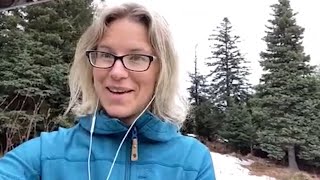
Scientists at Woods Hole Research Center explain what climate action means to them, from phasing out fossil fuels and protecting forests to voting, installing solar panels, and supporting climate policy.
Chapters
The climatic disruption is serious. It marks the end of this civilization unless we manage things appropriately. Managing things appropriately involves abandoning fossil fuels right now, very rapidly. It also involves using the big, great large flows of carbon, natural flows of carbon, of the biotic systems of the Earth, to remove carbon from the atmosphere and store it safely in life. We can do it. It's a new green world, and it's coming very fast. My name is Max Holmes. I'm the deputy director and senior scientist at the Woods Hole Research Center. And to me, one of the most important climate actions a person can take is to vote and to encourage others to do the same. To me, climate action is acting as if the truth is real. It's not an additional bonus we can choose to do if we care. It is a fundamental necessity if we want to live in a compassionate, humane society. I think climate action means thinking about our collective future as humans relying on Earth. But for now, it means doing what you can, when you can. Climate action is everything from a protest to deciding which light bulb to buy at the hardware store. There are a lot of personal choices every day we can be more intentional about, from transportation to energy efficiency to our diet. But to me, honestly, the most important climate action we can take is to vote. Let's get people into office that get it and care about our future generations. So please, be intentional about your decisions. Vote, spread the word, and let us live life and enjoy Earth to the fullest. My name is Nolan Kitz and I'm a research assistant at the Woods Hole Research Center. In environmental economics, we often think about the costs and benefits associated with actions that we do take. And when I think about climate action, I think it's important to understand that there are costs associated with not doing something. And in the case of climate change, we can't afford to not do anything. Hi, I'm Anastasia. I'm a research assistant at the Woods Hill Research center and I contribute to wetlands research projects. To me, climate action means recognizing that every day we make many, many decisions and we have the opportunities in those decisions to prioritize sustainability and reducing greenhouse gas emissions. And it also means recognizing where and how we have privilege and using this privilege to advocate for ourselves and those without as much of a voice for a better future. Hi, I'm Lindsey Scott. I'm a research assistant at the Woods Hole Research Center. To me, climate action means governments taking an active role in adequately and efficiently regulating the fossil fuel industry and moving the energy sector towards clean green infrastructure. Hi, I'm Rich Birdsey, and as a Senior scientist at the Center. My role is ensuring that policies and practices about using forests and wood products as natural climate solutions are based on sound science, not rhetoric and politics. On a personal level, I plant trees, lots of them, every year. I'm Chris Neal. I'm a senior scientist at the Wittzel Research center and an avid birder. And climate action to me is very personal. It means preserving by all the means. My colleagues are eloquently describing a world in which at this time of year, I can walk out into a quiet and dark field, hear the contact calls of migrating tropical birds winging north, and have faith that this magical phenomenon will be there forever. My name is Paula Beckerly. I'm a development associate at the Woods Hole Research Center. For me, climate action personally is whatever I can do my part in guaranteeing a livable planet for my children and my grandchildren, including using solar panels, having an electric car and a hybrid car, and any, any effort that I can make. Hi, my name is Lee Davis and I'm the HR Manager at Woods Hole Research Center. Climate action to me and my family means that we are no longer fertilizing or doing anything for our lawn. For me, with my job, although I can't, I mean, I couldn't do the science because that's not what I'm trained in. But supporting the people who are doing the science feels like it is an impact to climate science as well. Employee care is really my number one thing. Hi, I'm Anna Lilido and I'm a research associate at the Woods Hole Research center and I'm here in Homer, Alaska. Climate action to me is when a community such as Homer comes together to identify and also implement solutions that works for them. And climate action is therefore a process that both strengthens a community and inspires others to follow. On a personal level, I have already with my wife built this zero net energy home that is solar powered and we have an electric vehicle. And during this Covid time, we're finding all kinds of ways to reduce our consumption even more. As a professional scientist and as a board member of Woods Hole Research center, the work I've been doing just demonstrates how essential it is that we reach a period before 2050 when the capacity of natural systems, forests and wetlands remove more carbon dioxide from the atmosphere than we put in from our fossil fuel use. Hi, I'm Glenn Bush. I'm an environmental economist here at Woods Hole Research Centre. And climate action means for me, at home with my family, trying to follow these principles of reduce, reuse and recycle so we try to think very carefully about all of our consumption choices and our travel choices and to try to do the very best we can, just on a personal basis to do better. And it's hard work at times, but in my work as an economist, I'm really interested in how to encourage only people like myself, but others to do the same. And so I'm really interested in how we break down climate science into national conversations and local conversations to connect all of it to social and economic values of people, to help build relevance in their lives and to help them find pathways to make these adjustments themselves at a very local level and also in terms of national policy. So, hi, I'm Tom Lovejoy. I'm a director of the Woods Hole Research Center. And one of my specialties is the interaction between biodiversity and climate change. And so I know it's really important to keep climate change below 1 1/2 degrees to have a manageable planet biologically. And basically, we need to manage this planet as the combined physical and biological system that it is. And if we get aggressive about restoring ecosystems, we can pull a significant amount of that carbon back. In the context of this terrible pandemic which we're now experiencing, the simple question, how are you? To me, at least, takes on new levels of meaning. And while I feel very fortunate that my basic physical needs are met, which is of course not true of a lot of folks right now, it's hard to feel truly secure when the future seems so uncertain again, as it does because of this pandemic. But if you think about it for a moment, the same is true, actually, because of climate change, that is, the future seems very uncertain. Certainly it won't look like today. Research that we've done here recently, for example, shows that within 20 or 30 years, parts of the world will become difficult to inhabit because of things like extreme heat, water scarcity, food scarcity, and so forth. Now, the societal consequences of those physical changes are difficult to predict, but it seems likely that things like migration, political instability, social unrest, and so on do seem likely, if not certain. To me, Climate action is about gaining a safe and secure and predictable future. Returning to Covid, one thing this epidemic reminds us of is that science can help us to understand and prepare for and even manage our future. So it is more important than ever to support science and to support public policies based on that science. Thanks very much.
More from Tod










WHRC's Sustainable Science Speaker Series - Dr. Toby McGrath speaks on Sustainable Fisheries
