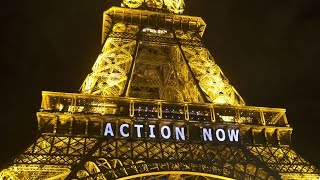
Phil Duffy and Woods Hole Research Center scientists assess the Paris Agreement after COP21. They examine its bottom-up structure covering 195 countries through 2030, the role of forests and reforestation in carbon mitigation, and major risks like Arctic permafrost, which stores roughly 1,500 gigatons of carbon.
Chapters
Hi there. Thank you. Thank you so much for coming. It's wonderful to see so many folks here at Woods Hole Research center. And it's also really great to see so many folks interested in understanding more about the climate agreement that was concluded last month in Paris. And, you know, I'm personally really excited about the agreement. I think that it will, it certainly is a turning point in the history of climate policy and it may not be too strong a statement to say that I think and hope that it will be a turning point in the history of humanity to show that we can work together to control a really serious global threat. So what we're going to do this afternoon is I'm going to open by reviewing what I see as some of the salient features of the agreement, the key elements. I will also give a bit of my interpretation of the agreement, the strengths and limitations and why I think the United nations process which the agreement finally succeeded after 20 years of non success. And then I will introduce a succession of our scientists who were present in Paris and they're going to talk about what they did in Paris and how that relates to the agreement and also to the work that they do here. But before any of that happens, it's my distinct pleasure to introduce our founder, George Woodwell. And don't get up yet. George is, as many of you know, a visionary and a force of nature. And George understood the dangers of deforestation and climate change generally before many of us did. And I'm showing here that George was the author of a report on climate change to the White House, a report to the White House in 1979, George testified about climate change in the United States Senate as early as 1980. And in 1983, George and a number of folks from Woods Hole, actually, one of whom is sitting to my left here, Ski Houghton, wrote the first paper, I think it's the first paper showing that deforestation contributes to the buildup of carbon dioxide in the atmosphere and also contributes to climate change. And it's remarkable to look at this set of authors and of those that I know, all but one, Barry and Moore, are from Woods Hole. It's really remarkable. And as you also know, in 1985, George founded this institution, Woods Holt Research Center. If you've seen the film Merchants of Doubt, you remember, well, George testified again about climate change in the Senate in 1988. And if you did see Merchants of Doubt, you may remember that testimony is shown. And the witness who was highlighted in the film, it's not George, actually, but it's a Climate scientist named James Hansen from NASA. But I remember the first time I saw the film, I thought, wait, that guy behind Hanson looks kind of like Woodwell. And in fact, it is Woodwell. George is a recipient of numerous prizes and awards. And as you all know, George is also. Has also been a very busy author and editor and has a new book, in fact, which is going to come out shortly to be published by MIT Press. So, George, welcome back.
Well, thank you, Phil. Thank you all. Do I need this or can I just.
You need it.
I need it.
All right.
Well, I'm going to talk about the Framework Convention on Climate Change and how it came about. Many, many, many people claim that they produced it and they have varying rights to claim. What I'm going to talk about is what we saw from here, our activities, which were pretty much core to the whole issue. So we claim we produced it. You probably all remember that during the 1980s. Many of you will certainly remember during the 1980s, we had a leader, a presidential leader, who was not high on science. In fact, he had spent his first days in office undoing specifically several of the things that his predecessor, Jimmy Carter, had done in support of addressing the carbon dioxide problem, as we called it at that time. Carter had a good grip on it, and had he continued in office, the world would be a different place right now and the issue handled in a different way much earlier. But during the 80s, the scientific community had a ill fit, especially in the us the people in Europe, the scientists in Europe were ahead of us, and they held a series of meetings late in the 80s in Austria. I came back from one of those meetings fairly well, disgusted with the fact that we were unable to do anything despite our sputtering, and decided that the thing to do was to write a treaty and then push that around and, and make a big noise. So I thought about that, and it happened that at about that moment I ran into a brilliant young lawyer who had a PhD in international environmental law. He'd had a Fulbright at Harvard, he'd spent a year at the Woods Hole Oceanographic Institution, and he was looking for employment for his third year in the US during which his wife was going to finish a Master's degree in Boston. And having no money, I offered him a job, saying, why don't you come and write this treaty? And we don't have any money, but I'll see what I can do if we can find some. And we did. We found some money. And he had a year in which to, as I said, produce a draft of a Treaty? Well, he didn't produce a draft. He produced a statement as to how to get a treaty through the un and he had a considerable background appropriate for that purpose in that he had done his dissertation on the UN system. And so after a year, he produced a document. It wasn't even a year, much less than that, produced a document. And I said, in good academic form, well, we can't propagate this unless it's reviewed. We have to have a really sound review. The next thing I knew, a Rolls Royce was rolling up into my driveway, and three people got out. Among them, Sir Crispin Tickell, who was the British permanent delegate to the UN system, the equivalent of our ambassador to the UN and two of his colleagues. They had come to review the document at Rama's bidding. The Swiss killer party, Ramakrishna, on our staff at that time. And so we sat down in my living room and reviewed the document. They were impressed, and they were impressed, of course, by Rama, the circumstance, the scientific connections. And they hopped back into their Rolls Royce and roared back to New York and got the General assembly to appoint a committee to establish a committee to draft the treaty, which was a big step forward. And, of course, I think that we triggered that. Crispin Tickell was a wonderful person. He had previously written a book on the carbon dioxide problem, and he did manage without any difficulty in persuading the UN to move ahead. They approached Rama to see if he could be the Secretary General. He couldn't be, because the US at that time was not paying its dues to the UN and thanks to Jesse Helms, the good Jesse Helms of North Carolina, who is blessedly dead. Anyway, They appointed a Maltese named Coutier, a wonderful fellow, as the Secretary General of this committee. And he was wise enough to say, this was Michael Zamit Kutiar. I know the UN System. You, Rama, you know the problem. You come and work for me and we'll produce the treaty. And so we paid Rama for a year while he worked with that committee generating the treaty. The treaty, of course, had to be negotiated, brutal negotiations. The US was really not in support of it, even after Mr. Bush came into the presidency. But nonetheless, the treaty was produced and advanced at the summit meeting held in 1992 in Rio, specifically to address the world's environmental problems. That was established and led by Morris Strong, who was a Canadian industrialist.
Turned.
From poison to honey. He really did change his life from running industries into addressing the great issues of environment. Personally was brilliant and pulled it off with great aplomb, great success. Morris died Just a few weeks ago. The eulogy, one eulogy of two, was written by Jim McNeil, a member of our board for several years now emeritus. Jim is also a Canadian, worked for many years running the environmental office of the OECD in Paris. A wonderful person. He wrote a historical document as a eulogy which I sent around. Some of you have seen it, but it was so good as a historical document that we have to preserve it. Morris got that through and it was signed in that meeting by 193 nations, or roughly all the nations in the world at that time taken back to their governments and ratified, universally ratified. It said in some that it is the purpose of the nations of the world to stabilize the greenhouse gas content of the atmosphere at levels that will protect, at levels that will avoid a serious disruption caused by man, anthropogenic disruption of the climate system. So at that time in 19, by then 1994, when the treaty became activated, we had in all the nations authority to proceed to stabilize the composition of the atmosphere. Now, the treaty also included statements suggesting that there be protocols produced saying how to get there. And it was five years, 19. Well, sorry, three years 1997, when the nations met in a conference of the parties in Kyoto and with US leadership produced the Kyoto Protocol, which could not even pass the US Congress and did not get advanced by other nations because the US could not lead. And so that has prevailed for the past 23 years and until the Paris meetings, we go on from there. Thank you.
Thank you, George. Thank you. That was wonderful. I knew if we let you speak that we'd get something interesting. So before I introduce our scientists, what I want to do is, as I said, just cover what are some of the salient features of the Paris Agreement and then give a bit of my interpretation of it. And I'm sure you've all read about it in the media, but sometimes the media cover a lot of the fluff, but they don't actually tell you what's the actual content, where's the beef? And the agreement, as I think I said initially, was, well, there are 195 parties to the agreement, which means that 195 countries unanimously agreed to this agreement. And that is an astonishing fact in itself. To get 195 countries to agree on anything is a remarkable accomplishment. And many of you know that in my, one of my prior existences, I did some of the. I represented the US in some of the international climate discussions. And I can tell you getting 195 countries to agree unanimously on the Most innocuous thing can be remarkably difficult. And so I think that this is really an astonishing diplomatic accomplishment. At the same time, as I'll show you, it doesn't completely solve by any means the problem of climate change. It's a start. So the key element in the agreement is commitments by 188 countries. Commitments pledges to reduce their future emissions of greenhouse gases, which of course are the main drivers of human caused climate change. And these commitments cover the period between now and 2030. And of course, and that fact is critical because what happens after 2030 is very, very important, in fact, will determine whether or not we bring climate change satisfactorily under control. And at this point, what happens after 2030 is unspecified. Okay, so this initial set of commitments only covers a period between now and 2030. But the second key provision in the agreement is that every five years, every country will make a new pledge, a new commitment to further reduce emissions of greenhouse gases. And this is the pivotal, the critical element right here. The success or failure of the agreement depends entirely on whether these, how strong those commitments are. If they're strong enough, life is good. If they're not, well, then climate change is going to continue and will probably eventually be brought under control, but maybe not at a level that will prevent dangerous anthropogenic interference, which I think is the phrase you were looking for a minute ago, George. So how do we measure progress? Well, one way we measure progress, of course, is by looking at physical indicators of climate change. But this agreement measures progress by a self reporting process wherein every two years each country measures its own emissions of greenhouse gases and reports those emissions to the United Nations. Now, we've talked about, and you probably read in the popular press, that the agreement has language in it about limiting global warming to one and a half degrees. And this means limiting the human caused warming of the planet to an average spatial average of a degree and a half. And the agreement has language about the desirability of meeting that goal. And I think it is indeed desirable. But what you can see is that from what's actually in the agreement, there's nothing that guarantees that that goal, or in fact any goal will be met. So what this agreement, I think what you should think of this agreement is as a framework, it's a process, it's an ongoing process. And again, the success or failure will depend on future commitments. So now a little interpretation. What I think is good about the agreement is that we have an agreement. We have, as I said, a framework which, if developed successfully, could be effective in controlling climate change. And this is really a monumental accomplishment. And I have to tell you, I personally was one of the detractors of the United nations process for the simple reason that it had gone on for 20 years and hadn't worked. And I'm glad to see that I was wrong and they pulled it off. And I think this is really a terrific agreement. That said, it does have limitations. And as I said on already, probably the most important is that the commitments that have been made so far which only cover the period between now and 2030, can't be enough to fully control climate change, because what happens after 2030 is really important. I think the self reporting of emissions is also a limitation because in any kind of international agreement, parties want, you want to know that the other guy is really living up to his commitment and it would be better to have some ability to independently measure the greenhouse gas emissions of other countries. And as some of you know, that is one of the things that we are working on here at Woods Hole Research Center. Another limitation has to do with the developing world and the solution to climate change. If I had to describe it in one sense, the solution to climate change or a key part of the solution is to make sure that as the developing world develops and as those populations increase and as those economies grow, that they do it without fossil fuels. That's absolutely critical. It's absolutely critical to them and to us. And the agreement contains language that encourages us, meaning the so called developed countries, the rich countries, to, to help the less developed countries, the developing countries, to grow using renewable energy. But it's weak language. There's no strong mechanism for making sure that that happens. And again, I think that's a limitation. Nonetheless, I really do think it's a monumental accomplishment. And I have to say I feel more optimistic about controlling this problem than I ever have in 25 years of looking at it. So what happened? What made it possible for this process to succeed finally after 21 years? And I think there's a couple of key elements and one is that about five years ago the process was really redesigned and the original conception of the process was that essentially, not exactly, but essentially that every country would sign on to an identical commitment like reduce greenhouse gases by X percent by such and such a year. And that didn't work. But what did work is this new process which I would describe as more of a bottom up process wherein each country designed its own commitment. So each country decides what it thinks it can do by what date, and that's its commitment. And of course the risk with that sort of a process is that the commitments won't be enough. But the good part about that process is that the parties feel more comfortable making a commitment if they design it themselves. So I think that's really, really critical. I think another element that was really critical was some leadership demonstrated by the United States and China. The US And China, as you know, are the two biggest emitters of greenhouse gases. And you may remember in the November 2014, there was a joint announcement in New York where the US And China together announced very, very significant commitments to reduce their own emissions of greenhouse gases. And this joint announcement was the result of about nine months of secret negotiations between the United States and China, which I'm proud to have played a small role in. And I think it's really important because what happened here is the two biggest emitters went on record publicly as saying, we're going to make really major commitments to start addressing this problem. And I know from dealing with subsequent dealings with some of the other countries, in particular India, that this really got their attention and this really raised the bar and this really motivated them to make serious commitments themselves. Finally, I think a key ingredient is.
That.
More and more countries realize that it's in their own self interest to reduce their greenhouse gas emissions. And that's kind of new. And I think that one of the assumptions behind this 195 nation process is that for an individual nation to reduce its own emissions of greenhouse gases is in some sense an act of self sacrifice and something that would put that nation at a competitive disadvantage relative to others. But I think more and more for different reasons, countries again are realizing that it's in their own interest to reduce their greenhouse gas emissions. And for example, China, as you know, has horrible air quality. One of the things they want to do to one of the ways they want to address that air quality problem is by moving away from coal and aggressively into renewable energy. Okay, again, one last thing before I turn it over to our scientists, I just want to say a word about the role of the Woods Hole Research center and organizations like us in these meetings of the United Nations. And these meetings are referred to as cops. COP stands for Conference of the Parties. It's a confusing piece of lingo. So what do we do there? Well, we don't. One thing we don't do is we're not negotiating. We don't represent the United States, we represent ourselves. We're so called observer organizations. And what we do is we call attention to the work that we do and the problems that we care about. And what you're going to hear in the next 20 minutes or so is some of our scientists talking about what they did at the Paris meeting and how that relates again to the work that they do here. And some of that involves the Arctic, some of that involves the role of reforestation in controlling climate change. And so let me start off by introducing Skee Houghton. Many of you know him. Many of you know him better than I know him. Skee is a senior scientist at Woods Hole Research center who's been here since the beginning. And Skee published this paper in Nature Climate Change during the middle of the Paris meeting. And this paper to me was really a really persuasive demonstration, the most persuasive that I have seen, that aggressive reforestation can be important in controlling global climate change. And I'll have more to say about that at the very end. But I want to turn you over now to Skeet.
The Paris Agreement mentions forests a number of times. It really points to this significance, the importance of forests in the climate conundrum, if you will.
There.
In fact, there's one article in the Paris Agreement that is specific to forests. It. And there are two aspects that are important here. First, forests are a natural sink. Sink is something that accumulates carbon. The oceans take up carbon. The oceans are a sink, but forests take it up. Land takes up carbon. And so when I mention sinks, I'm talking about things that take up carbon. Land is one and ocean is another. But the other part of forests that's important, besides their capacity to take up carbon, is that human use of forests is now releasing carbon emitting carbon to the atmosphere. That happens as a result of deforestation and forest degradation. That the carbon held in the vegetation, carbon held in the soils is oxidized and released to the atmosphere as a result of human activities on the land. The center has been involved with something called REDD for a long time. REDD is reduced emissions from deforestation and forest degradation. So that's been talked about, argued about. It's appeared in previous COP meetings. But in the Paris Agreement, it's there. More significantly, after we're encouraged, the countries are encouraged to reduce their emissions from land use, from deforestation and from forest degradation. Those two things, reducing emissions and increasing the sinks or encouraging sinks, conserving sinks of providence land, are both featured in the. In the Paris Agreement. How did we.
That's.
That's what I'd say to Article 5, as I say, is devoted to forests in red. It's the first time developing countries have had Commitments. Up until now, it's been just developed countries. How are they going to pay for implementing red? That's something that Glenn Bush will talk a little bit about in a minute. So how did we get to this agreement? And the short answer to that is through many, many COP meetings over the years. In fact, as George mentioned, there were papers that we were involved with in the late 70s and early 1980s, scientific papers, not policy, but pointing out to the fact that deforestation was a source of carbon, a source of emissions of carbon to the atmosphere. The UNFCCC, the UN Framework Convention on Climate Change, was put together in 91 and 92 and ratified in the next few years. As George mentioned, the Kyoto Protocol, I just want to say one thing about that. It was again aimed at only developed countries. The protocol made it such that by the year 2010, emissions would be 5% lower in these developed countries than they had been in 1990, 5% lower than they had been in 1990. And that was too much for the US to sign on. It's a bit of an unfair comparison.
But.
Two years ago, the last year, we really have information on carbon emissions. The global emissions are 60% higher than they were in 1996, zero percent. So that's a pretty clear indication that we haven't done very much in 21 years. RED was established in the Bali conference. I think again, the center made some presentations there, had some reports. We were lobbying hard for existence at red. Copenhagen was a disappointment. It might have been as good as Paris, but it was not. And it's 16 years somewhat behind now. Then came Paris. So I'm going to end just by talking a little bit about how I think forests could be used in the future. This is a sort of schematic where the boxes above this line are sources, emissions of carbon. So fossil fuels is the big emitter. Per year, about 9 billion tons of carbon are emitted and land management releases about 4. Again, land management, think of deforestation largely in the tropics. The boxes below here are where the carbon that's emitted goes. So you see, land management is a sink for about three. So here we have land management as a source and a sink. What's that all about? Well, think of it as part of land management is logging forests. The wood products are often oxidized as fuel wood or just burned decay. But the regrowing forests, if they are allowed to regrow, will take up what's released. So in fact, the net effect here is a small one. But it's comprised of a large source that we can do something with. We can in fact stop this. And it's composed of sinks that will continue on as forests grow. There's also a natural land sink that land communities are responding to either elevated carbon dioxide in the atmosphere or responding to changes in temperature and moisture. For some reason, land is taking up carbon now and the oceans are taking up carbon. So these are sinks that will continue as these. So in other words, and the difference between the sources and the sinks is what accumulates in the atmosphere in each year. And it's roughly half of the emissions stay in the atmosphere because these sinks take out only about half of what's emitted. So if we're going to stabilize the concentrations of carbon dioxide, other greenhouse gases, but particularly carbon dioxide, we have to reduce these emissions. We have to do it quickly or we have to somehow enhance the sinks. That's much more difficult. We can start to reduce these emissions if we reduce them enough and the sinks stay as they are for a while. This accumulation in the atmosphere goes slower and slower and eventually it has to get to zero. I think it's not enough just to reduce emissions. I think we have to think about taking carbon dioxide out of the atmosphere and that's what these sinks are doing. I'll stop there. Wayne.
Thank you, Steve. Thank you. So you all got a little lesson in carbon cycle science. 101 in five minutes. Next I'm going to introduce one of our remote sensing experts, Wayne Walker. Wayne uses, among other things, uses remote sensing to help measure losses of carbon from deforestation, he and forest degradation. And this gets to the issue I mentioned earlier about the self reporting of emissions in the Paris Agreement. Potentially with remote sensing we can make independent measurements of emissions from the forest sector, at least essentially right here, sitting right here in Woods Hole. And this is actually very important because for many of the developing countries, the primary source of emissions for them is not actually fossil fuels. It is in fact deforestation and forest degradation.
Thank you, Phil. Good afternoon everyone. As Phil has suggested, I am going to be talking to you for the next few minutes about measuring success and the transparency, the accountability and ultimately the compliance that measuring affords, which is so important in terms of the ultimate success of the Paris Agreement and of the Convention. Now, in terms of measurement, where the rubber really meets the road in the context of the agreement is in the process of what's referred to as measurement, reporting and verification. It's one of the favorite acronyms for those of us who work in this domain. And I'm going to be talking about each one of these steps individually, starting with measurement. So what is it actually that countries are required to measure? Well, first of all, they're required to compile what's referred to as a national greenhouse gas or GHG inventory. Okay. What are the principal gases involved? Well, carbon dioxide, methane, nitrous oxide in particular. Ideally, they are to measure the emissions of these gases across the range of economic sectors. So energy, transportation, industry, agriculture, waste, and the land sector, which of course, as Ski has indicated, is perhaps the most important to us and of the sector is the only one where you can actually sequester carbon. Now, how is measurement actually done? Well, there's really just two pieces of information that are required. The math is actually relatively easy. You need activity data and you need emission factors. Okay, well, what are those? Well, let's take an example from the energy sector and let's pick a particular category. Let's pick coal consumption in a given country per year. What does the activity look like? Well, it would be the tonnage of coal consumed by that country in that year. What is the emission factor? Well, it's the CO2 equivalent per ton of coal consumed. If you multiply one by the other, you get the emissions of coal consumed. If you do this across categories, across these sectors, across those greenhouse gases, you can compile your national greenhouse house gas inventory. The next step, of course, is to report that to the convention. And as Phil has already said, while this step is really important in terms of demonstrating progress on the commitments, the pledges that individual countries have made, there are caveats. And the one most important one being the fact that this whole process is basically done on the honor system. Okay? There's self reporting going on. We all know what that could potentially mean. Another important caveat is the fact that of the 195 countries that are part of the convention, 100 fall in a particular category. 48 are referred to as least developing countries. Another 52 are referred to as small island developing states, LDCs and SIDS. Now, in the case of these 100 countries, so more than 50% of the total, they are able to report at their discretion, okay. When they have the capacity, when they have the financial support required to undertake this complex process. Okay? Now, for the most part, this doesn't matter so much because most of these countries are very small and they're very low emitters. But there are exceptions. For example, the Democratic Republic of Congo, where we do a lot of our work, and my colleague Glenn Bush, who will be talking to you in just a moment, spends a lot of his time this is the largest country in Central Africa. It's also home to the second largest remaining expanse of tropical forest in the world. All right, so where land carbon is concerned, it's really important, and it falls in this category. Okay, but in any event, reporting is done. And what happens next? Well, the reports need to be verified as part of some process. And in the context of the Paris Agreement, there are really two steps that are going to be undertaken. The first is an expert technical review by a committee for. Of experts, scientists, and others like ourselves. And secondly, what's referred to in rather highfalutin United nations language, a multilateral consideration of progress. Okay, what does that mean? Well, it's essentially a peer review process by which officials from a group of countries get together and essentially review the efforts of the country in question. So, collectively, the goal here is to ensure that the individual countries have done what they've said they're going to do in terms of their commitments to addressing the problem. Now, there's nothing punitive about this. There's no fines that can come out of this. At best, you can expect public shaming in terms of countries that have not met their commitments. Okay, what happens then with all this information? Well, in the context of the Paris Agreement, this is the next important step. This is a new thing. It's called the global stock take. And this is going to happen every five years. The first one will happen in 2018. What is a global stock take? Well, it's essentially just what it sounds like. Stock will be taken globally across the 195 countries of progress that has been made toward reaching the goals of the convention. And this is also an opportunity not only to just assess progress, but also to revise commitments where the individual countries are concerned. Okay. Countries that have done what they were supposed to do, well, they are expected to ratchet up their commitments in the next five years, in the next round. Those countries that have not done what they were expected, they can reassess, they can retool, they can ask for more capacity, they can ask for better finance and so forth, and the wheel spins anew. Now, I'd like to switch gears for just a moment and talk about the Woods Hole Research Center. In the context of. Of this, where transparency and accountability are concerned, what can we do? What can our science bring to the table in terms of moving this process forward? As Phil has already mentioned, one of our great strengths here is in our capacity to map and monitor stocks of carbon on land across large areas of the globe. This is just an example of a map of above ground carbon storage in Fort forests across the tropics. While I was at the climate change meeting in Paris, one thing that I was involved in was using data like this and working with indigenous communities from across the tropics, from Mesoamerica, from South America, Central Africa and Indonesia, and demonstrating how their territories and the carbon they contain can be used for climate change mitigation. Okay, so there's a lot of different questions, a lot of different applications that data like this can be used for. And particularly in the tropics, these data are useful because as has been indicated, the tropics is a place where emissions from land actually across most countries outpace emissions from fossil fuels.
Alright?
So with data like this, we can begin to answer questions. First, quite simply, how much carbon is being stored on land and where is it being stored? Okay? Whether it be in the tropics or increasingly where it is in the Arctic, alright? Using some new data sets that we're developing that are just sort of coming online now, we can also dig a bit deeper. We can ask where is the carbon being lost and where is the carbon being gained?
All right?
With answers to questions like this, then we can begin to think more carefully about land itself as a mitigation tool, as a mitigation strategy. That, that is to say, where can carbon storage be increased, where can the landscape be restored in terms of its capacity to sequester carbon and to what extent? All right, now there are challenges, okay, because competition for land is steep and we see here in these images that very fact. Over on the left in southwestern Uganda, on the right here in central Mexico, we see forest and competition with, with agriculture in essentially the same space. And the question is, with the sort of data sets that we're capable of generating here, can we determine the best use of these landscapes in terms of, first of all, climate mitigation potential, but also in terms of agricultural production, livestock production, timber production. Can we help to show how this land can be optimized and can that information feed into the the future commitments, the future pledges that countries are going to be making? All right, so with that, I'm going to turn the floor over to my colleague Glenn Bush, who's going to be talking about how we go about paying for all of this. Glenn.
Good evening. So yeah, I'm going to give you a perspective on some of my work, trying to resolve some of these financial issues, how to get money from the international community down to communities. Woodsor Research Centre we work in the drc, we work with the national government trying to help them devise plans and strategies to implement their forest climate program. And so I was fortunate enough to be part of the delegation, which is actually the DRC government group that went to the COP to negotiate from the DRC standpoint. And this is me with the Minister of Environment and our project manager, who's based permanently in the drc. So we spent a lot of time following this guy around, trying to give him advice, holding open doors, just being useful generally. The other aspect was trying to demonstrate the impacts of the projects and programs that we actually work on, and giving presentations and different sort of meetings and plenary sessions to try and show the international community really DRC's readiness to accept some of this international climate finance and what they can really deliver on in the short and medium term. So what is this climate finance? It's by and large funds from developed nations that are put together and transferred to developing nations to help them deal with the impacts of climate change or to change something about the way their economies develop to reduce less emissions in the future. There's this magic figure of about $100 billion a year that needs to be found to annually to finance climate mitigation and adaptation in developing nations. And this was set at the Copenhagen meeting. So that's a moving target and as yet, it hasn't been achieved. The idea is by 2020 we'll have this $100 billion a year in place. It sounds like a staggering amount of money, and it is, particularly where forests are concerned. It's probably 100 fold more than we currently spend on tropical tropical forest management and conservation. But when you look at it in the perspective of sort of other national budgets, like in the US, for example, the annual spend on defence is about 6 or 700 billion a year. It's a similar level in Europe. So, you know, it's not entirely unimaginable to find that level of financing. So generally, this climate finance falls into two categories, adaptation and. And mitigation. And so adaptation is really about dealing with the impacts and effects of climate change. That's, you know, relocating people, in the case of small island nations that are going to go under in the foreseeable future. It's like implementing new and novel agricultural technologies to deal with changing climates, increased incidences of drought and things like this. Mitigation is about really shifting to a more sustainable and equitable development pathway. And, you know, you can think of mitigation finances being spent on things like trying to make factories, trying to make industry less polluting, and also things to avoid releasing Emissions in the first place, such as prevention, preventing forests from being cut down. Why do we do this? Well, interestingly, this agreement, the Paris Agreement, none of the commitments that have been made are actually legally binding in any way, shape or form. Not the commitments to make cuts in emission or the commitments by the international community to finance all of this. So it's all a promise. It's not yet legally binding, yet we still do it. And really, when you look the history of greenhouse gas emissions is that the global north, the developed nations, have to date, created most of the emissions that are causing climate change, and much to the detriment of the global south, the less developed nations. Yet today we see about 80% of the people in the world are living in tropical countries that are going to be most adversely affected by climate change and are also least able to do anything about it because they just don't have the means. On top of that is the fact that most of these nations are tropical countries with all of these forests that are so valuable in the big climate picture, as Ski mentioned earlier on. So how are we going to get this money from the international community down to the ground? So within the context of the United Nations Framework Convention on Climate Change, there are these enormous global financial management institutions. And to date, most of the money's been put out through this, the Global Environment Facility. But with the scale of financing that is envisaged for the future, we need.
New.
New institutions to try and help roll out this money.
And in just a moment, spends a lot of his time. This is the largest country in Central Africa. It's also home to the second largest remaining expanse of tropical forest in the world. All right, so where land carbon is concerned, it's really important and it falls in this category. Okay, but in any event, reporting is done and what happens next? Well, the reports need to be verified as part of some process. And in the context of the Paris Agreement, there are really two steps that are going to be undertaken. The first is an expert technical review by a committee of experts, scientists and others like ourselves. And secondly, what's referred to in rather highfalutin United nations language, a multilateral consideration of progress. Okay, what does that mean? Well, it's essentially a peer review process by which officials from a group of countries get together and essentially review the efforts of the country in question. So collectively, the goal here is to ensure that the individual countries have said, have done what they've said they're going to do in terms of their commitments to addressing the problem. Now, there's no, there's nothing punitive about this. There's no fines that can come out of this. At best, you can expect public shaming in terms of countries that have not met their commitments. Okay, what happens then with all this information? Well, in the context of the Paris Agreement, this is the next important step. This is a new thing. It's called the global stock take. And this is going to happen every five years. The first one will happen in 2018. What is a global stock take? Well, it's essentially just what it sounds like. Stock will be taken globally across the 195 countries of progress that has been made toward reaching the goals of the convention. And this is also an opportunity not only to just assess progress, but also to revise commitments where the individual countries are concerned. Okay. Countries that have done what they were supposed to do, well, they are expected to ratchet up their commitments in the next five years, in the next round. Those countries that have not done what they were expected, they can reassess, they can retool, they can ask for more capacity, they can ask for better finance and so forth, and the wheel spins anew. Now, I'd like to switch gears for just a moment and talk about the Woods Hole Research Center. In the context of this, where transparency and accountability are concerned, what can we do? What can our science bring to the table in terms of moving this process forward? As Phil has already mentioned, one of our great strengths here is in our capacity to map and monitor stocks of carbon on land across large areas of the globe. This is just an example of a map of above ground carbon storage in forests across the tropics. While I was at the climate change meeting in Paris, one thing that I was involved in was using data like this and working with indigenous communities from across the tropics, from Mesoamerica, from South America, Central Africa and Indonesia, in demonstrating how their territories and the carbon they contain can be used for climate change mitigation. Okay, so there's a lot of different questions, a lot of different applications that data like this can be used for. And particularly in the tropics, these data are useful because, as has been indicated, the tropics is a place where emissions from land, actually across most countries, outpace emissions from fossil fuels. So with data like this, we can begin to answer questions. First, quite simply, how much carbon is being stored on land and where is it being stored? Okay. Whether it be in the tropics or increasingly where it is in the Arctic. All right. Using some new data sets that we're developing that are just sort of Coming online now, we can also dig a bit deeper. We can ask, where is the carbon being lost? And where is the carbon being lost, gained? All right, with answers to questions like this, then we can begin to think more carefully about land itself as a mitigation tool, as a mitigation strategy. That is to say, where can carbon storage be increased, where can the landscape be restored in terms of its capacity to sequester carbon, and to what extent? All right, now there are challenges, okay, because competition for land is steep. And we see here in these images that very fact. Over on the left in southwestern Uganda, on the right here in central Mexico, we see forest in competition with agriculture in essentially the same space. And the question is, with the sort of data sets that we're capable of generating here, can we determine the best use of these landscapes in terms of, first of all, climate mitigation potential, but also in terms of agricultural production, livestock production, timber production, can we help to show how this land can be optimized? And can that information feed into the future commitments, the future pledges that countries are going to be making? All right, so with that, I'm going to turn the floor over to my colleague Glenn Bush, who's going to be talking about how we go about paying for all of this. Glenn.
Good evening. So, yeah, I'm going to give you a perspective on some of my work, trying to resolve some of these financial issues, how to get money from the international community down to communities. Woodsore Research Centre, we work in the drc, we work with the national government, trying to help them devise plans and strategies to implement their forest climate program. And so I was fortunate enough to be part of the delegation, which is actually the DRC government group that went to the COP to negotiate from the DRC standpoint. And this is me with the Minister of Environment and our project manager, who's based permanently in the drc. So we spent a lot of time following this guy around, trying to give him advice, holding open doors just being useful generally. The other aspect was trying to demonstrate the impacts of the projects and programs that we actually work on and giving presentations and different sort of meetings and plenary sessions to try and show the international community really DRC's readiness to accept some of this international climate finance and what they can really deliver on in the short and medium term. So what is this climate finance? It's by and large, funds from developed nations that are put together and transferred to developing nations to help them deal with the impacts of climate change or to change something about the way their Economies develop to reduce less emissions in the future. There's this magic figure of about $100 billion a year that needs to be found annually to finance climate mitigation and adaptation in developing nations. And this was set at the Copenhagen meeting. So that's a moving target, and as yet, it hasn't been achieved. The idea is by 2020, we'll have this hundred billion dollars a year in place. It sounds like a staggering amount of money, and it is, particularly where forests are concerned. It's probably a hundredfold more than we currently spend on tropical forest management and conservation. But when you look at it in the perspective of sort of other national budgets, like in the U.S. for example, the annual spend on defense is about 6 or 700 billion a year. Similar level in Europe. So, you know, it's not entirely unimaginable to find that level of financing. So generally, this climate finance falls into two categories, adaptation and mitigation. And so adaptation is really about dealing with the impacts and effects of climate change. That's, you know, relocating people. In the case of small island nations that are going to go under in the foreseeable future, it's like implementing new and novel agricultural technologies to decrease, deal with changing climates, increased incidences of drought, and things like this. Mitigation is about really shifting to a more sustainable and equitable development pathway. And you can think of mitigation finances being spent on things like trying to make factories, trying to make industry less polluting, and also things to avoid releasing emissions in the first place, such as preventing forests from being cut down. Why do we do this? Well, interestingly, this agreement, the Paris agreement, none of the commitments that have been made are actually legally binding in any way, shape or form. Not the commitments to make cuts in a mission or the commitments by the international community to finance all of this. So it's all a promise. It's not yet legally binding, yet we still do it. And really, when you look the history of greenhouse gas emissions is that the global north, the developed nations have to date, created most of the emissions that are causing climate change, and you to much the detriment of the global south, the less developed nations. Yet today we see about 80% of the people in the world are living in tropical countries that are going to be most adversely affected by climate change and are also least able to do anything about it because they just don't have the means. On top of that is the fact that most of these nations are tropical countries with all of these forests that are so valuable in the big climate picture. As Skee mentioned earlier on. So how are we going to get this money from the international community down to the ground? So within the context of the United Nations Framework Convention on Climate Change, there are these enormous global financial management institutions. And to date, most of the money has been put out through the Global Environment Facility. But with the scale of financing that is envisaged for the future, we need new institutions to try and help roll out this money. And this has led to the establishment of the Green Climate Fund. And both of these funds have a board that is made up of members from the contributing nations as well as the recipient nations. And particularly on the Green Climate Fund, this is equally represented between the less developed nations and developed nations. So what do you do with this money once you get it? So at the moment, Woods Hole Research Centre is actually working on a project in the DRC in this province here called Equator. And colloquially we know the name of the project as Project Equartur in French. And this is to demonstrate how you use these type of climate finance, this type of climate finance to have an impact on the ground. So we're working on a number of different initiatives involving national government training, the application of our science to help policymakers make better decisions about how to use resources. And here's some mapping work that actually Wayne led, looking at where biomass is stored in the forests of Equator. So Mbandaka here is the provincial capital. This area here is around about the same size as France. And so the dark green areas are where the forests are richest, are densest and have the most carbon in this. Here is a map showing emissions from 2001 to 2014 in that same province. And the areas of darker red are where the emissions are highest, where we're losing most of the forest. We're also involved in training and capacity building. And here this sort of just demonstrates a few of the activities we're involved in. We're working on sort of with local partners, with a university, working on the development of curriculum for environmental education in schools. We're helping local partners also produce training materials. And you've got to remember that the context for all of this forest change is very, very poor farmers who are really doing slash and burn agriculture, and most people are highly illiterate. So trying to sort of help people understand about climate change, about the context of what they're doing and how they're doing it, and to change the way they do things is quite challenging. And so, you know, we have to sort of resort to trying to simplify messages as much as possible and we can't rely on the written word. And we're looking at just experimenting with very basic but very appropriate technologies. This here is a. It's an improved cook stove made entirely with just locally sourced materials. The sum total of it comes to around about $10 to produce. And that will help to reduce sort of fuel requirements in the average home by about 50% a year. So we're also working on actually implementing some of these activities in a community and looking at the sort of social processes by which we do this, trying to assess the impacts of these technologies. And this is looking at high yielding, the system of rice intensification. Just by managing the planting cycle and management cycle of rice, we can increase yields by about seven times over the way that they currently manage rice in these wetland areas. And here we've got some field experiments looking at how to restore degraded soils using a special type of vine called mucuna. So we organize training and education around those types of issues. And as we're implementing these things, we're also researching them. And so we're working here at community level looking at how to get communities involved in monitoring and managing their resources, finding out more about the context for local development, and also training students and researchers at the local university on, on some of these sort of complex issues to do with how to achieve sustainable development. All of these things together are going to create the environment for making the change necessary to move from our current historic patterns of development into a more sustainable future. So that's all I've got to tell you.
Glenn.
Thank you. So finally, I want to introduce one of our Arctic scientists, Suna Talley. If you read our newsletter, and I know you all read every word of every one of our newsletters, you know that what happens in the Arctic is, as far as climate change goes, is incredibly important. And it's incredibly important not just for the Arctic itself, but for the entire planet and in particular our ability to meet, to control climate change. To meet, in particular to meet the goal of limiting warming to a degree and a half, may ultimately be determined in large part by what happens in the Arctic. And Suna Talley is going to talk about that and her work in the Arctic.
Good evening, everyone. I'm Suna Talley and I'm going to talk briefly about this 1.5 degrees Celsius ambition that was put forth in the COP agreement. And so what the agreement says is that we're going to try to keep warming since pre industrial times below 1.5 degrees Celsius. And I start with this Question. Can we stay below 1.5 degrees Celsius warming? I'll come back to that, but first I'm going to just show you briefly some of the presentation that I gave at the conference. So we had a session that was talking to observers and also to delegates about the changes that are going on in the polar regions as a result of warming. So this includes loss of sea ice, ice sheet melting, and also permafrost thaw, which is what I talked about. This session coincided with the release of a report called Threshold and Closing Windows, which demonstration dealt with the risk of irreversible changes as a result of climate change in the polar regions. So why am I talking about permafrost? And how does permafrost thaw affect global climate? The reason that permafrost thaw is important for these global climate negotiations is because permafrost stores a lot of carbon. Our current estimate is that permafrost stores 1500 billion tons of, of carbon. And that sounds like a large number. And it is. That's about twice as much carbon as is currently contained in the atmosphere. It's three times more carbon than is stored in the world's forest biomass globally. And it's more carbon than is currently estimated to be in our fossil fuel reserves, making permafrost the largest vulnerable carbon pool on the planet. And by vulnerable carbon, I mean, I mean that this is carbon that's currently locked away in permafrost. It's been stored there for tens of thousands of years. And as permafrost thaws, it's at risk of being released to the atmosphere as greenhouse gases, carbon dioxide and methane. So back to this question. Can we stay below 1.5 degrees Celsius? Warming. Okay, so if we want to stay below 1.5 degrees Celsius warming, our carbon budget is, is 650 billion tons. So that means that since pre industrial times, humans can emit 650 billion tons of carbon, we've already used up quite a bit of our budgets. We've already released 550 billion tons. So you see, that green piece of the pie is getting quite small. Now we only have 100 billion tons left to emit to stay below 1.5 degrees Celsius. However, this doesn't incorporate permafrost thaw. If we put permafrost carbon emissions as a result of permafrost into this equation, we're now down to 50 billion tons that we can emit. And so, you know, a couple points. The estimate of carbon emissions as a result of permafrost thaw. I'm telling you now it's 50 billion tons. That's assuming that temperatures stay don't warm more than 1.5 or 2 degrees Celsius. Since pre industrial, we've already warmed close to 1 degree Celsius. So that's likely to be on the low end. The other thing is that's 50 billion tons by 2100. So we expect that to triple by 2300 and probably more beyond. But the models generally don't go beyond that. There's a lot of uncertainty surrounding this number. But one thing we do know is that permafrost carbon emissions need to be accounted for if we want to meet these global emission targets. So this is a big challenge. What are we doing here at Woods Hole Research center to address this challenge? Well, we're talking to international policymakers. We're raising awareness of this additional carbon inputs. Carbon emissions from permafrost currently aren't in the UN climate models and they're not going into the budget. So it's important that these numbers do go into the budgets. We're also talking to policymakers in the U.S. so this is my second. Max Holmes and Scott Goetz. We had a number of visits to congressional office this past year and to members of the State Department, particularly those working in the Arctic. And these meetings led up to and triggered President Obama's speech at the Glacier Conference when he said that when the permafrost is no longer permanent, these gases are released into our atmosphere over time. And that could mean that the Arctic may become a new source of emissions that further accelerates global warming. This is the first time that a US President publicly spoke about the threat of permafrost thaw and carbon emissions as a result of permafrost and the implications for global climate. In addition to bringing attention to policymakers, As I said, there's a lot of uncertainty surrounding just how much carbon will come from permafrost. That's the focus of much of the work we do here. We're working on the ground across the Arctic from Alaska to Siberia, and also panarctic using remote sensing technologies to refine that number. So, you know, we're bringing the problem to the awareness of policymakers. We're identifying the problem. But that really, in some ways doesn't really get us any closer to a solution. I mean, of course, identifying the problem is the first step in finding the solution. You know, but one important thing is that car carbon is a global greenhouse gas. That's why we're in the problem where we are right now. But that also allows us to think about some solutions when we think about permafrost thaw. And that brings us to the work that was mentioned by Ski and the work that's done by a number of scientists here in terms of using the world's forest to take carbon dioxide out of the atmosphere. Thank you.
Thank you, Sue. So in just a minute, we're going to have a few minutes for all you to ask questions of the scientists here. But before we do that, I want to just underscore why I think that the work that we're doing here is incredibly important to helping the success of this agreement. And I. I'll add that if any of you who have talked to me since the Paris meeting know that I'm incredibly motivated, both personally and on behalf of the center to do absolutely everything we can to help make this agreement a success. And so, again, what I want to do is just reiterate some of what sue said and add one little element to it. And as sue explained, in order to, if we want to meet this target of limiting climate change to a degree and a half, humanity can emit only 650 billion tons of carbon, which sounds like a lot, and it is. But as she mentioned, we've already emitted most of that, about 550 billion tons. So that gives us a headroom of about 100 billion tons, which, again, sounds like a lot, but it's actually about 10 years worth of global emissions, which actually makes it sound like not such a lot. And again, as sue mentioned, we expect that permafrost will, between now and the end of the century, will emit about half of that. So that leaves us about 50 billion tons if we want to meet this target. Okay? And that's again, that's about five years worth of global emissions at the current rate. And that just doesn't seem possible. It doesn't seem thinkable that humanity will transition completely away from fossil fuels on a time scale, anything like that. But what I want to show you is how effectively aggressive reforestation of the tropics can be, how effective aggressive reforestation of the tropics could be in buying us some room to work with. Okay? And a paper I mentioned earlier that Ski published during the Paris Climate Agreement shows that in principle, one could, by aggressively reforesting the tropics, one could potentially remove about 150 billion tons of carbon from the atmosphere. Okay? And so if we do that, the simple message is that Instead of having 50 billion tons to work with we now have 200 billion, four times as much, so an incredibly important amount of headroom. So for us then, the way that the agreement shapes our priorities is, first of all, we really do need to understand greenhouse gas emissions from permafrost and work that sue and Max and others here are doing, I think is really at the leading edge of that and is really important. And as sue also mentioned, we're doing a lot in terms of bringing the issue of emissions from permafrost to the radar screen of policymakers. Secondly, we are one of the global leaders in looking at reforestation as a way to limit climate change. And finally, again, the issue of making independent measurements rather than self reported measurements of greenhouse gas emissions, as Wayne talked about, I think is also incredibly important. So thank you, thank you, thank you for coming. I really appreciate your interest. And what I want to do now is call our scientists up to the front of the room and give you all a chance to ask them some questions.
We'd like to ask.
Before you ask a question, we can.
Pass you the microphone because it's being videotaped. I feel like I should say something.
Because I haven't said anything yet except.
I don't know what you said. I was there, but these guys pretty much said, well, most of what I would have wanted to say.
I think they did a great job.
When I was sitting there, I was.
Trying to think, what didn't they cover? And one thing that wasn't covered was what is it like in Paris, what actually happened there? So that's just planting a seed. If anyone has that question, maybe I can contribute to something there. Who has a question? Are there other organizations making the independent measurements you mentioned?
Are you all alone in the world? There are other organizations, but we'd like to think that we're the best there are in terms of the scale at which we are capable of making them continental to global. There are maybe only one or two other scientific groups that they're really working at that scale. But yes, there are some others.
Another interesting part of the answer to that is measuring fossil fuel emissions remotely or independently. And that is at this point an unsolved research problem. I think we know how to, in principle we know how to do it, but not a lot of effort has been dedicated to it. But you may see that change in the wake of this agreement, now that there's a clear need for it. I think.
As the temperatures rise, the plant growth might diminish and the amount of carbonate can be taken up by the oceans will also diminish. And the currents cannot take the carbon.
Down as it is now.
So how do you incorporate that in your calculations in the future as it spirals down as the temperature goes up?
Well, we worry about it for sure. I mean, I'm in love with those boxes, but I won't show them again. But the point is, the whole idea that we can manage the carbon cycle and thereby climate is based. Well, has historically had half of the emissions being taken up by oceans and land. And the remarkable thing to me is that that half has stayed half. So when we were releasing, releasing 6 tons of carbon a year, half of it stayed in the atmosphere. And now we're releasing 10 billion tons of carbon, half of it is still being taken up by ocean and land. And if sue is right about thawing of permafrost and eventually having carbon, and that little box that I had that was labeled natural sink on land, that.
Got smaller.
And it could conceivably reverse and be a source. And then all of the concept of managing carbon just becomes much, much harder. So that's just yet another reason why one and a half degrees is pushing it and two is certainly pushing it. And we haven't even had quite one degree and we can already begin to see the effects on agriculture and storms and so on.
So.
I'm not sure I can answer your specific question about what it's in models as a great big uncertainty. But I think you're right. Most of the mechanisms we know about will diminish those sinks as the ocean warms, as it gets more acidic, as land. Land, maybe. It's hard to know. I mean, there are places where warmer temperatures would increase tree growth as long as moisture is available. So that's a big if. That's more than you wanted to know, brother Steve.
I'd like to follow up with that question.
What kind of vegetation other than trees?
Thank you.
What other vegetation other than trees, which take a while to grow. In other words, fast growing vegetation could be planted in the vast areas that nothing grows today?
Well, trees may take a while to grow, but it's in that growing that carbon is taken out of the atmosphere. So you don't have to wait for it to be a big tree. As it's growing to a big tree, it's taking carbon out. And any, I mean that's, any plant's doing that during the growing season. It's just that if you think of agriculture, it's growing, we harvest it and then that carbon's released again the same year. So, so that's why we come back to trees because the wood does not get recycled, let's say, every year, whereas leaves will. And I also should say something about soil. Soil carbon is something that will accumulate as well if it's taken care of, but it is even slower than what forests can do in the vegetation.
I'm wondering about how much is known about the fate of the CO2 that's taken up by oceans. How much of it winds up in biomass and how much is just decreasing the PH of the ocean, which would have a negative effect on.
Yeah, most of it's in the chemistry. In the bicarbonate of the ocean, there's very little biomass. The oceans may be as productive in terms of cycling carbon, but they don't have trees. So anything that phytoplankton take up goes right back to the ocean and eventually.
But doesn't that predict a decrease in the capacity of the ocean or the algal growth in the ocean? Whatever biomass is there is going to be harmed by the uptake through the H effects.
I think there's. Well, I think that's not a big worry in the sense that there are lots of different species, some less affected by the acidification. I think the acidification is most worrisome, or maybe beyond, and this may not be quite true, but I think with those that calcify, those that have shells made out of calcium carbonate, those become much harder to make in the acidification. But there are algae that don't rely on calcium.
Any question about here? Thank you. I have a question about biology, I.
Think, and of course it involves biology.
Or botany, I should say.
With temperature change, will trees, with its symbiotic understory, move toward an acceptable new.
Climate, but leaving behind an understory that will not survive?
I'll take a shot at it.
Yes.
I mean, I think in a slightly larger picture of that, communities are made up of lots of different species.
And.
They'Ll respond differently to climate, to moisture and temperature. And so the worry is that the communities are not just accidents, they're not just those species that just happen to be there. So as there's a sort of shuffling that goes on with changes in climate, those communities disintegrate. And that's sort of. You think of that as a sort of biological response rather than climatic response. And so it's a worry. You mentioned the mycorrhizae, that's really good example. If you separate the trees from its mycorrhizae, then you're in trouble splitting up species into different assemblages.
Is.
Generally not a good idea. I may have mentioned this before, but.
We'Ve talked about the per capita use of creation of carbon and its problems.
Well, what about the number of per.
Capita that there be population control, empowerment.
Of women, education and this other side of the equation.
Equation, which is the number of people who per capita are producing or maybe creating the problem. To what extent was Paris able to address this? Or were you able to understand what possibilities existed to control or think about the population side of the issue and the problem?
Why?
Okay, let me. You say you want to say something.
No, I'm stupid enough to want to take that on in public. That's, you know, that's the subject nobody wants to talk about.
Political death.
Yeah, it is political death. I mean, but you mentioned one thing that I want to reiterate, which is that my understanding of the literature is that the number one, the best way to limit fertility is to educate women. And you know, I'm, I'm all. I think that's something we can all get behind. I certainly, I certainly can. I don't know that this issue was addressed in the agreement. Does any, any of you folks know?
I don't think so.
Yeah, nobody wants to touch it.
Well, do you have put that kind of money out to address one problem? Look at the other side of it putting money out.
If you frame it as educating women. I'm all in favor of it.
I just, I wanted, I just read today that because China's emissions have been going up so fast, in fact the, the per capita emissions from China have now exceeded those from Europe, which just blew my mind. I thought it's way. It's 43% above the world average. So the Chinese are crank.
Yes. So it's not specifically worded in the agreement because the whole agreement is really framed around individual nations making decisions about what they're going to do in their own countries. And I think if you look at most development policy in less developed nations, they've got very well developed policies or ideas about how to deal with issues like population based on what's culturally acceptable to them. And fortunately on most of the agendas are issues to do with gender relations and empowerment of women, educating young girl children and giving them better access to resources as well, so they can take a more sort of active part in the economy. But then, you know, so within their sort of broad development framework of any nation state, they've got those programs in place and you know, depending on which country you're talking about, some of them are more advanced than others. And this is all brought together in sort of national development planning. So these issues are sort of being looked at and they're in different states of advancement in different places. And it's a critical issue in drc. DRC at the moment is the worst place to be born a woman. They've got the least sort of access to resources for women of any country in the world. But it's on the agenda in the Democratic Republic of Congo.
So maybe what we should do is take a couple more questions and then adjourn for refreshments. We have an urgent question in the back.
You and then her.
Thank you.
I heard that a good part of.
Greece, greenhouse gases, actually comes from agriculture.
Itself and in particular raising.
The meat production. Is that something that you can confirm.
To some extent and that has been discussed.
In Paris?
Because if that is really so, at.
Some point we have to also look.
At that and maybe change the.
Our habits and what we eat. I can give an initial answer and then turn it over to someone who actually knows something. I will say I have seen numbers cited for greenhouse gas emissions from the agricultural sector that are greatly exaggerated. Unfortunately, I can't remember what the accepted, the actual accepted numbers are, but there are some highly exaggerated numbers out there, which is not to say that your point is not correct and that dietary changes certainly could have a significant impact, but not in some cases as much as some folks say. Glenn, do you have anything to add to that? I'm sorry I can't give you a better answer. I mean, your point is right, but I would just add, don't believe everything you read, especially on the Internet.
I had a question that I haven't seen addressed yet, which is sea level rise.
Was that a big part of the Paris talks?
It will evolve a lot of environmental refugees and a lot of feedback loops that you've been talking about.
Sea level rise to me is one of the. One of the major, major global threats. And again, you know, the big threat in terms of sea level rise is the disintegration of the major land ice sheets, which are the Greenland ice sheet and the Antarctic ice sheet. And it's difficult to conceptualize the quantity of ice that those ice sheets hold. I mean, the Antarctic ice sheet is literally two miles thick in places. But, you know, the key issue there in my mind, and this really is something that motivates me greatly personally, is that we. There probably is, or there may be anyway, a point, an amount of warming at which the complete disintegration, the complete melting of those ice sheets becomes inevitable. And to be clear that, you know, there's so much ice in those ice sheets that it will take centuries for them to melt. But the point at which that is unstoppable may be relatively close. And it would be. Well, first of all, it would be good from a scientific point of view if we understood if there is, and there certainly are thresholds where those thresholds are. But secondly, it just troubles me as an issue and honestly as a moral issue, the idea that this generation is going to make the decision that will result in a couple of hundred feet of sea level rise, literally altering the landscape and admittedly hundreds of years down the road, but it's still, it's kind of a mind boggling concept. So it's certainly something that's on my mind. I want to take one more question and George, you wanted to make a question. I think that'd be a great way to.
I'm terrified, but I'd like to hear sue talk about.
Yeah, I, I talked about carbon emissions generally, but that's, I think one of the large uncertainties in how much carbon will be released from permafrost is not just the total amount. It's the total amount, the timing and the form of carbon. And the reason it's so challenging is so when you have wetter areas, you're more likely to get methane production or methane emissions, I should say. And one of the reasons it's so challenging is because permafrost controls the landscape. So you may have an area that's very dry now, but when the permafrost, if the ground collapse as a result of permafrost thaw, it may be very wet in 50 years from now, you may have an area that's very wet now, but if the permafrost is totally gone, this allows drainage and it may be very dry. Yeah. So methane is important because it has a global warming potential. I think it's 28 to 30 times carbon dioxide. And so it's. But there's a lot of uncertainty surrounding methane emissions from the Arctic, partly because we really have very few data points out there. And one of the, you know, there's a recent study that just came out that showed that there's this pulse of methane, like late in the season, October, November, and it has to do with how the ground thaws. And this is a time when nobody's out there measuring methane, like nobody's out in the Arctic in November. And so, you know, moving forward though, there's, you know, these late seasons are hard to get up, but you know, there's been some advances with, like airborne remote sensing. So there's planes say that will fly over the Arctic and they're measuring CO2 and methane concentrations and fluxes to get at better, like where this is coming from and allow us to better predict moving forward. But it's a big unknown.
Why don't you. Or we argue that we should be cooling the Earth, not indulging in one and a half degree rise.
I don't. Yeah, I'm not. I think one and a half degrees is too much. I think one degree is too much. I think 0.1 degrees too much.
So we should be cooling the earth. Let's do it. Okay. Thank you all for coming. We have refreshments upstairs.
More from Tod










WHRC's Sustainable Science Speaker Series - Dr. Toby McGrath speaks on Sustainable Fisheries
