Woodwell Climate Launch Celebration
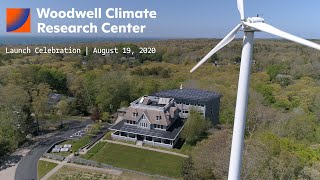
Transcript of a virtual launch event (Aug 2020) marking the renaming of the Woods Hole Research Center to the Woodwell Climate Research Center. Speakers (board chair Joe Mueller; Phil Duffy; George Woodwell; Ed Markey; Cristiana Figueres; partners and staff) highlight the center's history since 1985, its mission to translate climate science into policy and action, urgency of the 2020s decade, and calls to halve emissions by 2030 and to pair energy-system redesign with ecosystem regeneration. The tone is celebratory, urgent, and action-oriented.
Chapters
Good morning. I'm Joe Mueller, Chairman of the Board of Trustees here at what has been known for 35 years as the Woods Hole Research Center. I am honored to welcome you all virtually this morning as we mark a pivotal moment for our organization and begin a new chapter as the Woodwell Climate Research Center. Since our founding in 1985, we have conducted groundbreaking research in critical environments around the globe and have worked tirelessly to provide the information and solutions that we need to address the greatest challenge of our lifetime. We have reached a tipping point when what we do now and in the next several years will determine our collective fate. We believe that this moment calls for an intentional recommitment to the values and the mission at our center's core. Dr. George Woodwell founded this organization with a vision of creating an action oriented center for climate science. A place where top scientists would pursue high impact research aimed at informing and driving meaningful and much needed policy change in countries throughout the world. His vision and his belief in the unique capacity of science to change our future for the better is more important than ever. And so today, in honor of that vision, we are pleased to announce that we will now be known as the Woodwell Climate Research center, signifying a promise and a call to action for that ethos to guide our work as we rise to meet the unprecedented challenges facing us and at this critical period in our history. Now I'd like to share with you a video that we've created to celebrate the launch of our new identity. We hope this video provides a window into our work, our mission and our unique approach to tackling the climate crisis.
Our world is facing unprecedented challenges as we confront a rapidly warming climate. The environments we rely on to survive are sustaining irreversible damage and we have limited time to intervene. Science gives us a roadmap for action. Woodwell Climate Research center is a global leader in understanding the problem and advancing scalable solutions to address the climate crisis. Our work takes us to the earth's most consequential ecosystems, from the Arctic to the tropics, and into the halls of government boardrooms and places where policy is shaped around the world. Our team of renowned researchers works in partnership with a worldwide network of public and private sector leaders. We identify high impact projects, conduct on the ground research, share our knowledge and compel actionable solutions that can slow or reverse the effects of climate change. Founded as the Woods Hole research center in 1985, we changed our name to Woodwell Climate research center in 2020 in honor of our founder, George Woodwell. Dr. Woodwell was one of the first scientists to elevate climate change to the attention of policymakers and believed in carrying the insights of science beyond the walls of academia to impact our society as a whole. It is that ethos that drives our work today as we race to address the greatest challenge of our lifetime. Rising sea levels, droughts, storms are threats to food supplies, housing, water and economic stability. Emissions from fossil fuels are polluting our air, eroding global biodiversity and disrupting our Earth's natural systems. Cities and rural communities in vulnerable climates across the globe are at risk of facing uninhabitable conditions. These challenges are here and now and must be met head on. Science gives us the tools to combat this crisis. A sustainable future is possible. At Woodwell Climate, we're putting science into action, changing minds, policy and the future.
Everything you just saw, the incredible work that takes place within and outside the walls of the center wouldn't be possible without all of your support. I would like to thank the dedicated board, the staff, the researchers and donors, and our partners who have enabled our pursuit of groundbreaking climate science for the past 35 years. It also wouldn't be possible without the thoughtful leadership of our next speaker, Dr. Phil Duffy. Phil has served as President and Executive Director at the Woodwell Climate research center since 2014. He works tirelessly to advance our mission and and elevate the Center's role as an internationally recognized leader of climate science. Phil was the linchpin in the establishment of several critical and important private sector relationships with leaders in the investment and international consulting world. And Phil has been a magnet for attracting some of the top scientists in the world to join our staff here at the Center. Phil has published dozens of academic papers and he has testified before Congress and participated in in international climate negotiations. And he served as a senior policy analyst and science advisor at the Obama White House. He has devoted his entire career to using science to address the societal challenge of climate change. And we couldn't have a better leader to bring the Woodwall Climate Research center into this next and exciting phase.
Thank you, Joe. Thank you all for being here this morning. Thank you. Dr. George Woodwell. I'm especially glad that you're able to be with us on this occasion. We're here, of course, to celebrate the renaming of the Woods Hole Research center to the Woodwell Climate Research Center. It's fitting and proper, as we position this institution for its next phase of impact and success, that we would honor it in the name of our founder, Dr. George Woodwell. George was one of the first people to sound the alarm about the dangers of human caused climate change. And as early as 1986, he testified in the Senate about that threat. And it's truly remarkable to reread that testimony today. And I've done it several times, and every time I do, I find new things to be amazed by. In his testimony in 1986, George very clearly outlined some of the major consequences of human caused climate change. Things like accelerated warming in the Arctic, greenhouse gas emissions from thawing permafrost, increased wildfires, conversion of tropical forests to savannah, and so on. And of course, in 1986, at the time of that testimony, all of those things were purely hypothetical. Now, of course, they're happening. And not only happening, but in George's words, have become profound. Indeed, they threaten terrible global consequences. Perhaps the most dangerous of all is the possibility, or really the likelihood that, in George's words, the climatic changes themselves increase the release of carbon from biotic systems and aggravate the problem. In other words, as George has put it in a different context, the warming feeds the warming. George's testimony in 1986 concluded with a call for urgent policy action. Stopping the burning of fossil fuels and stopping deforestation. And that too could have been written yesterday. And that brings us to why we're here today. And the reason is simple. We need to do more. I could not be more proud of the work that we've done and the impact that we've had at the Woods Hole Research center over the years and decades. And of course, we're not the only institution that has done work in addressing climate change. But it's not enough. And we know that it's not enough from the simple fact that carbon dioxide continues to accumulate in the atmosphere. And that fact tells us that while we may be winning battles, and even some important battles, we're still losing the war.
So.
So we need to do more. And we can do more. Our new name is a critical step towards achieving the visibility that we need to have more impact. To do what we want to do and to do what we need to do, we need a name which is unique and a name which conveys that we're working on the most important problem facing humanity today. Now, you may ask, with the world's attention focused on a global pandemic, is this the right time to call for increased action against climate change? And it is. It's the only time. And the reason partly is that we simply can't wait. The climate challenge is too urgent for us to wait until the pandemic passes. Finally, the experience of COVID shows us reminds us that terrible things can happen on a global scale. Scientists like George Woodwell and myself and many others for decades have been warning that failure to address climate change will result in a fundamentally different and more hostile planetary environment. Now, that message hasn't resonated. And I believe that one of the reasons it hasn't resonated is that until this year, very few of us alive today had ever experienced a truly terrible global scale crisis. Well, now we have. And I hope that this experience helps us to internalize the message that climate change profoundly threatens what we most take for granted, the integrity of the natural world upon which all else chiefly depends. I'll conclude with a short call to action. Nothing is more important than the work that we do here at the Woodwell Climate Research Center. Certainly history will judge us by how well we rise to meet the challenge of global climate change. And right now, we're not passing the test. The institution which George Woodwell founded in 1985 is more important than ever and more necessary than ever. Now, I know that we here can't single handedly fix climate change. No one can do that. But we can have an outsized impact and we can inspire others to do more. And that's exactly what we intend to do with your help and with your support. So thank you for that support, thank you for your interest and let's get to work.
Hello everyone. Just a great day. We're socially distanced because we believe in science. We actually know it's better for us to be apart while we are together here today. So I thank Dr. Phil Duffy, I thank everyone at the Woods Hole Research center for all of the great work you do, going all the way back to 1985 with the first IPCC report. Woods Hole has been the front and center center, providing the information, providing the research, providing the science which our planet needs in order to avoid the worst, most catastrophic consequences of climate change. And today is an important day because we're going to name this center after a man who has done just so much great historic work on this issue. So to be here with you today to commemorate the naming of the Dr. George Woodwell Climate Research center is just such a great honor for me because I know what a fantastic job he has done throughout his life. And I just want to congratulate him, to congratulate his family, to congratulate everyone there who has been collaborating with him on all of his wonderful work. Nothing could be more for him to have this center named after him. So all I can tell you is it's been an honor to partner with all of you throughout my career and I think we actually are at a point where we're entering the area era of the Green New Deal being something next year that is front and center so that we can begin to deploy the remedies which we know have to be put in place to deal with this absolutely existential threat to our planet. So Congratulations to you, Dr. Woodwell, and congratulations to everyone at Woods Hole for all of the work that you've done throughout the years. Congratulations.
I now have the privilege of introducing today's keynote speaker. Cristiana Figueres is a internationally respected leader in climate policy who has devoted her life's work to championing and driving collaborative action to address the climate crisis through serving in a range of renowned roles in public service and international diplomacy, including as Minister Consular at the Embassy of Costa Rica in Bonn, Germany, Director of Renewable Energy in the Americas, and as Founder of the center for Sustainable Development in the Americas, miss Vagaries has worked to build effective and sustainable climate change and energy policies. As Executive Secretary of the United Nations Framework Convention on climate change from 2010 to 2016, Ms. Figaries brought together government, financial and activist stakeholders from around the world to jointly develop the Paris Agreement on Climate Change, a landmark agreement to pursue joint effort to limit the impacts of global warming. Recently, Ms. Figueres partnered with Tom Rivett Karnak to found Global Optimism Limited, a purpose driven enterprise focused on social and environmental change, and she also authored the Future We Surviving the Climate Crisis. At a time when countries around the world are facing unprecedented challenges, at a time when pessimism and individualism threaten to overwhelm, Christiana has been persistent in her calls for optimism and a collaborative global approach to tackling the climate crisis that is rooted in solidarity. Christiana, thank you for joining us today and for your inspirational work to build a better world for the next generation.
Good morning everyone and thank you so much, Joe for that overly generous introduction. I'm delighted to be joining you in this virtual way that we're all having a journey getting together and I'm delighted to be participating in your ceremony to rename the Woods Hole center the Woods Hole center, as such as we used to know it played a critical role for many years in developing the science and fostering action on climate change. But I know that the new center, the Woodwell Climate Research center, is recommitting and refocusing and returbo charging, if I may say so, your commitment to be a part of the growing number of Stakeholders who want to be a very active part of the solution to climate change. Your recommitment and, and your refocusing is coming not one minute too early, because we're already well into the year 2020, and 2020 is the year in which we started the most decisive decade that humanity has ever faced. By the end of this decade, science has been pellucidly clear in showing us that in order to get our ecosystems, our economy, and of course our climate back on track, we need to cut our current level of greenhouse gases by one half over the next 10 years. Globally, all of us, may I say industrialized countries should be aiming to cut more than 50% in order to make room for the growing emerging countries. Now, we know that this decade is the decisive decade, because at the end of this decade, we shall have decided, consciously or not, whether we are on a path to healing the planet, stabilizing climate, and in fact, building a much better world that is safer, it's cleaner, it's healthier, it's more effective, and it's certainly more efficient the world that we all want, or whether we have failed at halving our emissions. And hence, by 2030, we would be on a path toward exponentially destructive forces that will be by that time irreversible, destructive on economy, destructive on infrastructure, and above all, we will be on a path toward a depth of human misery that we can barely imagine right now. A path that we must avoid at all costs. The only way to avoid that path, but also at the same time to construct a so much better future, is to be able to cut our current level of greenhouse gases by one half. That actually means that each one of us individually has to commit to cutting our greenhouse gases. Each one of us individually, each family, each community, each city, its nation, each corporation, each institution, we all have to cut at least by half. And at the very latest, by 2030, we know that some corporations are actually already undertaking a much more bold commitment. We have Microsoft and Apple that have vied to be current climate neutral by 2030. We have Amazon that has vied to be carbon neutral by 2040. This can be done. If you go to Ms. Google and you type in carbon calculator and you answer the questions in any of the carbon calculators that are there, just choose your favorite institution. You will see what your carbon footprint is. And my friends, this is the time when we all should know what, what our personal and family carbon footprint is. And this is the time when we should all be taking the very clear commitment to cut our carbon footprint by at least one half at the very latest in 10 years. The fact is that we overestimate what we can do in one day, and we underestimate what we can do in 10. I am sure that each one of us can cut our carbon footprint much sooner than over 10 years, and in fact, to our own benefit. But the same thing has to be done at all other levels, at the level of our families, our cities, our corporations, our nations. Now, there are two basic areas in which we should focus our attention. One, of course, is the redesign of the energy system and the energy structure at the macro level, including electricity generation, transport and use, as well as transport. And the other is regenerating ecosystems because we have used and abused ecosystems way beyond their point of resilience. If we think of those two buckets as being the ones in which, beyond our individual level of commitment at the macro level, we have to focus on both of those in order to, to be able to get to half emissions by 2030 with a healthy planet that will continue to support us in order to do our job in both of those buckets. Before we go to policies and technologies and capital deployment, before we do any of that, what is absolutely critical and what I invite all of us to do is, is to really shift our mindset around this. Yes, climate change is the most daunting challenge we have ever faced. Yes, it is complex. Yes, it is huge in scope. Yes, we're very light. And we can still do this. We can still do this if we do it in radical collaboration with each other. And we can definitely still do that if, instead of denying what is happening and sticking our head in the sand, and instead of understanding the science and despairing and feeling helpless and hopeless, which leads to paralysis, but certainly not any way forward, instead of all of that, which are options. And I myself find myself being despondent very often because of what we have not done. But we have a third choice. We have a third choice if and only if we choose to activate it. And that choice is optimism. Now, optimism for me is not denying the reality. That's foolishness. And optimism for me is not naively assuming that things are going to be fine even if we don't do anything about it. That's irresponsibility. Optimism for me is a choice that we make and that we have to make every single day to focus our ingenuity, our conviction, certainly our capital, and certainly our intellectual capacity into the solution space. We have to be able to act optimistically and intentionally in order to bring about the transformation that is necessary at the scale and speed that are necessary. And we shouldn't assume wrongly that acting optimistically, this is going to be an easy road. Far from it. We know that the geopolitics right now are not in our favor everywhere. And we also know that some of the factors that we need, technology, speed, shift in capital policy, willingness is also not moving at the speed that we need to. That is not a reason to give up. Every time that we encounter a barrier. We have to take that as an indication that we need to look for a different way forward. It is each of our responsibility as individuals and as an institution to continue to push forward toward what we know is, is not only the morally right and correct path, but the economically and from an ecosystem perspective, the more stable and safer future that we all want. With that, I would like to thank the newly named Woodwell Climate Research center for always having provided groundbreaking science on climate change and for having played such an important bridging role between science and policymakers, between policymakers and business leaders. And back to science. That trilogy, that triangle of science, policy and business or investment, is clearly the winning triangle and the one where we should be focusing and using our using all three points of that triangle to move us forward. So to Woodwell, thank you very much for decades of scientific research. Thank you so much for championing bold, audacious action in the past, but even more emphasized now for the future. And thank you for stepping up at this, the most critical juncture in the history of humankind.
Thank you, Christiana, for your inspiring remarks and for the work you continue to do to advance this important mission. Now we're going to hear from a few of our partners who have been integral to the work that we do here every day at the Center.
Hi, my name is Eileen Lee and I am the Chief Program Officer for Environmental Conservation at the Gordon and Betty Moore Foundation. On behalf of the Moore Foundation, I'm delighted to congratulate Woodwell Climate Research center on this exciting step forward. At Moore, we are proud to fund Woodwell Climate's important research from the Amazon to the Arctic. And over the course of our partnership with Woodwell, we've really been able to see evidence that the science resulting from our support has enhanced our conservation efforts efforts on the ground. As a result, we have a long history of funding programs in the Amazon through our Environmental Conservation program. And more recently, the Moore Foundation Science Program has also funded a multi year project in the Arctic to measure thawing permafrost. We're proud to count Woodwell Climate Research center as an organization that partners with us and others globally to have the most impact. Again, congratulations and we look forward to.
Continuing our work to hello, my name is Jerry Taylor.
I'm president and co founder of the Niscanin Center, a think tank here in Washington D.C. and I'd like to take this opportunity to congratulate the Woodwell Climate Research center on its new name. We named our organization after Bill Niskana because he represented all the qualities that we wanted our think tank and our staff to represent in American politics. And it does me great pleasure to see that George Woodwill's legacy is carrying by an organization with such outstanding scientific capacity and the wisdom to put it to good use. So congratulations and cheers.
Hello friends, my name is Andre Guimares. I'm the Executive Director of epam, the Amazon Environmental Research Institute, a sister organization to the Woodwell Climate Research center, who has been working together these two organizations for about 25 years, doing science, generating information, organizing data that have supported over this period of time many, many governmental decisions in the direction of protecting those forests. And we are very happy to celebrate the final stages of the rebranding process of the center and looking forward to continue the good work that we have been doing in the Amazon and also more recently in the Cerrado, the central savannahs of Brazil. A lot still has to be done. A lot of science is needed in order to drive the political decisions. So, so we are looking forward to continuing the good work that we have done in the past because the future really depends on good science, good information that the center and EPAM are engaged into generating. Thank you for this partnership and looking forward to the future which is promising for us all. Thank you.
We're now going to hear from a few of our staff members who recently spoke about the urgency they feel in their own work and what makes Woodwell Climate unique.
Woodwell Climate is truly a unique place to work.
As a member of the scientific staff for almost 15 years now, I continue to be inspired and motivated by the sense of mission and purpose that is shared by one of the brightest and most dedicated groups of people you will ever encounter. We have the tools to solve climate change, we have that knowledge and I'm part of a really passionate group of researchers here at Woodwell Climate. They're trying to implement those solutions and really communicating those out to the public and policymakers. The center very much sits on this intersection between climate and policy and it's the whole idea of having science inform the climate policy process requires access, it requires A way to scale up the impact of the science, to get it in the hands of, of decision makers and policymakers. And right at that point in this broader space is exactly where the Woodwell Climate Research center sits. We're working with the business community and financial community to find ways to incentivize the right behavior among businesses and broadly across the economic landscape. Our leadership and our people really care.
About what they're doing and they really care about communicating the science that they do and why it matters to everybody. Because at Woodwell, we don't just work.
In the lab and out in the field, but also directly with decision makers. That means that our science is especially.
Targeted to have an influence on those processes. And that gives us a really unique.
Ability to have impact and to really create changes.
I have never worked with a staff as passionate and dedicated as the team here at Woodwell Climate Research center. And I am so grateful for the talent and urgency that they bring to this organization. Many will tell you that they are inspired by the person that I have the pleasure of introducing next, our other honored guest for today's event, Dr. George Woodwell. George has found it rather odd that we would want to rename the center after him, but he has been a gracious sport as we have moved forward with this initiative. George Woodwell is truly a pioneer in action oriented climate science. As you heard Phil Duffy say. He testified to Congress in 1986 about climatic disruption, particularly the need to pay attention to the natural systems that drive our climate. George co founded the Environmental Defense Fund as a founding trustee of the Natural Resources Resource Defense Council. When he founded the Woods Hole Research center, it was with a clear vision of the critical role that science should play in public discourse. His efforts have paved the way for years of essential research that is informing climate policy and solutions around the world. It is not George's style to be the center of attention, so I won't continue to go through his decades of well earned accomplishments and accolades. But I would like to take a moment and sincerely thank you George, for everything that you have done for this field, this center, and our collective pursuit of a greener, more sustainable planet.
Well, thank you Joe for that introduction. I'm delighted to have a chance to chat. So this transition to new great issues in the center and the great issue of climatic disruption is big and it's very important and it focuses on how to regreen the earth well. They have to realize that the greatest threat in the world, the big great issue of environment, politics and economics, is now the crushing issue of climatic disruption on a global scale. And the global scale is so big, the disruption is so bad that it will feed on itself unless we cool the Earth. Science is political. Almost everything we do in science touches on elements of the Earth that are valuable in some way. They work their way into economic systems and important in some other way in that they determine the effectiveness and utility of, of political action and politics and people, politicians. So lives are tied up in what we do in science. Lives and welfare and aspirations, wealth, poverty and the future are all tied together in aspects of research in science. So we're off on a big new adventure. It becomes more intensive and more important by the minute. It has brilliant leadership in Phil, whom you've heard from just now, and brilliant support from other scientists, scientific institutions and colleagues, and from the public. Thank you.
Thank you all for joining us today as we mark this exciting new chapter as the Woodwell Climate Research Center. On behalf of the entire board, we welcome your support and encourage you to learn more about Woodwell Climate and get involved in our work by visiting our new website@woodwellclimate.org Once again, thank you so much for joining us today.
More from Tod










WHRC's Sustainable Science Speaker Series - Dr. Toby McGrath speaks on Sustainable Fisheries
