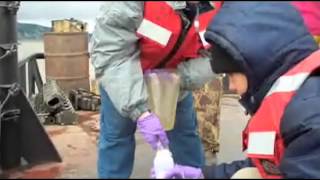
Max Holmes studies how Arctic rivers affect global climate as the region warms from fossil fuels and deforestation. He collects water samples from ships and ice holes, but the real work comes from local communities: a 13-year-old named Anya gathered samples from her father's boat every two weeks, eventually bringing in classmates and teachers to replicate the project across Arctic sites.
Questions this video answers
December 21, 2012
13 years old
Chapters
More and more, the consensus has developed that it's human activities, it's burning of fossil fuels, cutting down of forests, that put more greenhouse gases into the atmosphere that's causing the warming. I work in the Arctic and the Arctic is the part of the Earth that's warming the most. We're working on the six largest rivers flowing into the Arctic Ocean, trying to figure out how changes in those rivers can feed back to influence global climate. And essentially what we were doing was going and collecting water samples to help us understand whether things are changing. We spend a lot of time talking with the elders in these communities and asking them about their observations of change that might be related to climate change. And these people that are 80 years old grew up living entirely off the land almost. We were in the Lane river, where Anya's from, and. And we were on a ship for two weeks all the way down the Atlanta river to just about to the Arctic Ocean. I was traveling with my dad a lot since my childhood and seeing how he does his work. Anya was along. She had just turned 13 and she is the daughter. The captain of the boat that we use for sampling on Molina should be right there. Every time we were sampling and became a part of the crew, it was a big help with the work that we were doing. I explained how more samples would help us figure out how things varied seasonally. They asked me to to make water samples during the winter. And he said that you can make something really good for world. I said, oh, of course, it will be interesting to see what he can do. And I gave her maybe 20 bottles. And then we disappeared for five or six months. It turned out that every two weeks she had been out on her father's boat collecting samples or during the winter drilling holes through the ice to collect these water samples. I didn't understand that Atlanta river is. If you can sample it, you can know something about global change that it gives you so much. Well, it just started with this one girl. It grew to include her classmates and teachers. And finally then we were trying to replicate that at various other sites around the Arctic. Max and Arza scientists came to our school and they were very amazed at children interested in everything. I don't know if it's their formal education that gives them an appreciation of the natural world, but the way they live does so, you know, they see what their parents are doing, which are going out on the land and fishing and hunting or collecting berries. They live in nature. When I first met her, you could just see the twinkle in her eye that she still has. And I've learned probably as much from her and from her parents and from people in her villages as certainly she's learned from me. You can change the world. So do something, Sam.