From $1 in His Bank Account to 1 Billion YouTube Views
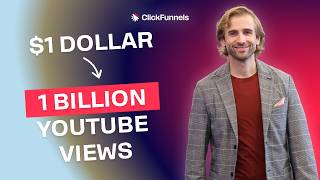
Scott Simpson went from $1 in his bank account to 1 billion YouTube views by automating his business and creating viral content. He shares a 30-day YouTube launch plan using high-production "purple-cow" content and AI tools, plus two strategies for earning a million dollars in a month: high-ticket sales and flipping luxury watches. He runs AI Mavericks and YT School, a cohort-based YouTube training program launching in May.
Chapters
Reels are toilet dopamine, right? You're sitting, sitting on the toilet, swiping to pass time. You're making purchase decisions. When you sit down and commit 15 minutes to a long-form video, you have to watch essentially 100 reels in order to have the same impact that a couple of long-form videos have. The only thing that we can't get back, we can't get more of, is time.
Welcome back out to another episode of ClickFunnels Radio. I'm Chris Cameron, and joined with me is my good pal, Mr. Dante Torelli. What's up, my dude?
Good to be here, Chris. I'm living the dream. How are you?
Oh man, this is fun. This is super, super fun. We have the opportunity today, um, you know, I think— I feel like, Dante, I say this a lot, maybe it's just because we handpick our guests, like, but I feel like I say this a lot, like, these people are not only like good at what they do, but like really good people. And like, I've known our guest today for, I wanna say it was like 2018, maybe early 2019. So it's been a number of years, but I wanna introduce Scott Simpson. This guy is an absolute YouTube expert. I mean, he has been an influencer online, but now what he does, he teaches other people how to do YouTube and actually has an agency to help them. But he's done a lot of things, everything from writing a kid's book. He works with his wife and still has an amazing relationship and marriage, but they still do stuff in business together. I want to welcome Scott Simpson to the program. What's up, Scott?
What is going on, you guys? And the studio upgrades look amazing. The voice— Chris, you've got this like podcaster voice. It's like very— it's like, hey, welcome to the podcast, you guys. It's, it's like, it's perfect, man. You're dialed.
He does. He makes you feel like it's 7 AM and it's Chris on the radio. Welcome to WB3K2.
Wasn't that the Christopher Voss book? The guy who was, uh, he does the late night DJ voice. He's talking about never split the difference. Yeah, and he does that in his hostage negotiation. He's like, somebody asked for something outrageous, and he's like, how do you expect for me to do that? Like, he does this late night DJ voice and all of it. But funny thing, I always do it like in the intro, and then like a half hour in, if you were to like skip ahead and we're really just talking, it's like, oh, all of a sudden the DJ-ness like went out.
The real Chris comes out.
The real, the real Chris. Scott, From Dallas, Texas area, but you didn't start there. You were, it's funny because we do so much stuff in Boise, right? With ClickFunnels and everything else. And you're originally from Boise, right?
I am, yeah. Well, I grew up in Boise. I'm originally from the Bay Area, California, but moved to Boise at 7 and then moved away when I was 25.
There you go. And how long you been married? You and Cambra have been together how long?
21 years. 21 years. And our, uh, our oldest just got married. Yeah, it's, it's crazy. Life just moves fast.
Yeah, hold on, you've got, you've got now like a girl, right? She just got married, that's what you just said, right?
Yeah, yeah, I've got a son-in-law.
Oh, you look way too young.
How crazy is that to say?
We're just getting older.
Yeah, it's great.
Yeah, good for you, man.
Thank you.
Well, okay, here's what I want to do. I want to go back, um, And it was fun, just for everybody on the show, Scott and I met at, he runs this, he ran this event called Video Marketing World and we sponsored it back in like the ClickFunnels speaking days. Talk about a DJ voice, Mark Kay, who was a DJ forever in Jacksonville, we had him speak at that Video Marketing World and he's funny. We actually went live and did his whole show and everything from the event. I wanna say it's 2019, it was probably 2019, am I right?
That was— yep, it was 2019.
Crazy. Well, let's go back a few years before that. You were a financial planner. Like, where did you find your credentials and everything else? And you were doing that like early on, right?
I was, yeah. I got my Series 7 and 66 licensing when I was 21 years old. Very young.
That's a while back.
Yeah, right before 2000. It was right before the big crash. In 2008. So I must have been— so I was closer to 20, must have been closer to 23 then. It was right before the big crash. And, and that's what got me out of it. I was like, in 2008, when the financial crash hit, I was like, I am done with this. This is way too insane, man.
I can relate. That's— that's— I was 28 and I was doing options and futures and I had done it for, you know, at that point, probably 4 or 5 years. And managing other people's money can be super awesome, but it can be the absolute worst, especially in 2008, man.
Oh yeah.
Yeah.
And I was just, you know, I was a kid, like, how do you process that type of emotion? You know, that type of thing. I, I had no experience with anything like that catastrophic, uh, economically in my life up to that point. So it was, that was a, that was a rough, uh, window of time.
Well, Right after that, what did you jump into? Did you just jump into— is that when you started like the vlog stuff? Because I know you and Camber and the kids, you guys did a vlog and got, I don't know, 400,000 or 500,000 followers, something like that. My numbers might be off, so correct me.
Yeah, so that was a few years later. So what happened was in 2008, we, we'd started a business and actually 2007, we started a business. It was called Mega Movie Box. It was a Redbox competitor. And you know, when you think about this now, you're like, what was I thinking? Uh, that means like margins so razor thin, like you have to have locations dialed in. It's a volume game. So you have to have enough money to like really, uh, seed your success over a period of years, not months. And anyway, we bought into this company. Um, and it just completely failed. So 2000, uh, 2008 happened. Uh, we had mortgaged our house to pay for this business and then the market crashed. So we were in all this debt. We were trying to figure out what to do. Uh, then we got an opportunity to move here to Dallas to take over my in-laws' business while they went and served a church mission.
And what was that business?
They had an orthodontic, they had a chain of orthodontic offices here in Dallas called Apple Orthodontics. And I ran their lab. I ran their lab for, well, gosh, from, for about 8 years to 2009 until 2017. And, we were broke. Like, we were broke in 2009. Like, had no money. I think we got down to like a dollar or something in our bank account. And we're like, oh my gosh, we gotta, we gotta fix this.
Legit, like a dollar or something.
It was a dollar. Yeah, it was a dollar or something. I used to give speeches on it. I don't remember the exact number, but, but yeah, it was, we were broke. And I mean, in debt up to our eyeballs too. And we were like, this is kind of the cool part of this story. Like we were in the car driving from, I don't remember, we were driving somewhere. Oh, it was an interview with Mutual of New York. I was going to an interview with Mutual of New York. My wife was with me and in the car ride, we thought about this book and we're like, let's write a book about success when we're broke, right? The best time to write a book about success is when you're broke. Anyway, it became this allegorical fiction for kids. We later turned it into a teen and adult book, but it was about this fox's journey to this insurmountable goal and all of the animals characters that he meets along the way that represented people in our lives on our own paths and journeys to success. And this book ended up becoming a roadmap for our own personal success. Like, we knew everything.
And like an Amazon bestseller too.
Yeah, yeah. I mean, you know, anybody can do that, but okay, let me toot your horn, man.
Come on.
Yeah, I, that— no, I appreciate that. I used to leverage that all the time. It like got me speaking gigs. I was like, hey, listen, we're an Amazon number one bestseller, number one bestseller, children's books. Um, in reality, we, we paid for a bunch of our own books.
Yeah, yeah, yeah.
The secret of success in the book world, right? So it really, it didn't amount to a whole lot, but the main focus, the main takeaway from this was like, we wrote our own roadmap. Like, that's what's crazy about it. Like, I look back on it and think about it now and I'm like, oh man, like we really followed our own path. And, uh, and then I started speaking about the book. I started going to like Chamber of Commerce meetings and Rotary clubs. Went to Toastmasters for a year, learned how to speak on stage, got in front of a bunch of people.
Which you're super good at too, and it seems very natural too, Scott. Like, I've seen it a number of times. Really good.
Yeah, I, you know, I have kind of a self-deprecating way of speaking, and I love kind of pulling the humor out of, like, everyday experiences. And so I weave that stuff into my stuff, and I think it makes me really relatable. At least—
Give us an example, though. Hold on. Pulling the everyday— you got to give us an example.
Oh, you know, I— okay, yeah, here's the prime example. You were actually here when I did this. So it was at our event in 2019, and I was wearing kind of like skinny pants, and I got up on stage and I told the story about how my wife says that I'm pear-shaped and I should never wear skinny pants. And the audience thought it was hilarious. Camber's in the back of the room yelling to me, and she's like, you are pear-shaped, or something like that.
Yeah, yeah, yeah.
I mean, we just have a good time, but it makes I like to be relatable and I don't want to ever feel like I'm on a pedestal. We all know who those people are, right? It's like, you know, they get on stage and they just don't want to talk to you. They're surrounded by like their entourage and they don't have time. Like, that's not who I am. And it's not who I've ever wanted to be. I'm like, there is no such thing as fame, right? We're all, we're all just people. And, um, and so, so anyway, like that's, you know, I learned how to learn how to speak and that was kind of like the beginning of Uh, like building the school, the skills that would eventually take us to a very successful outcome business-wise and speaking-wise and conference-wise.
That's impressive. So in just a short time, he went from being a financial planner to running a dentist's office. And then where did that, where did that all lead you to, Scott, when you finally found your thing, you finally found that foothold that you really wanted to dive into?
Yeah. So 2014, I had been doing these chamber meetings, Rotary clubs, whatever associations I could get in front of. And my wife was pregnant with our son, and she's like, I just gotten home from Portland. I took a trip to Portland. I did, like, a big brand deal out there. They flew me out and had me record a bunch of motivational videos. That is a completely different story. That was an awful experience. Uh, but, but I get home and my wife is like, she's like, uh, I, you know, I need you home. We had two, two daughters, two little girls, and then my son was on the way and she's like, I need you home. And I was like, well, let's figure out how to do this online. And so that's when we started our YouTube channel, you know, about two years into creating YouTube content, our, our, uh, channel just exploded and went from, you know, 10,000 subscribers to hundreds of thousands of subscribers pretty quickly. And then in 2017, we went full time on YouTube where YouTube paid all of our bills. We had brand integrations and AdSense, and it was awesome. We were traveling with a family, pulled our kids out of school, homeschooled them, and we just hung out together all day, every day, which is— it sounds really glamorous. Like, you're like, man, I want that. That sounds amazing. And then you get into it for like a couple months and you're like, I need my space.
The camera's like always on.
Yeah. Yeah. And that was the other thing, camera. By then, you know, YouTube had made some changes algorithmically and they really wanted you to kind of like focus on a niche. And, and for families, they, they like the faker you became, the more you were rewarded from YouTube. And so that was kind of the beginning of the end for us in 2019. It was really like the end of 2018, but by early 2019, we'd really kind of stopped. We're like, this is kind of toxic for our family and let's take all these skills and turn them into something that we can go and benefit businesses with. And that's when I had the opportunity to take over Video Marketing World. And then that's when we launched Rafidi Media, our done-for-you YouTube agency.
This is crazy because you're a serial entrepreneur, man. Like, and there are things that kind of make you pivot and shift. I want you to maybe dive into a little bit of that. Like, okay, 2008 happens. That's something external, right? And you're like, oh my gosh, well, do I wanna fight against this thing? And I know another part of your story, 'cause you've said it in other interviews too, is, you know, you're dealing with some of that stuff on YouTube, but the algo changed as well. Sometimes there's these external things where you say, okay, now as an entrepreneur, I have to pivot. Maybe tell us a little bit more about what goes into those decisions and like, were those game, like killers where you had to pivot? Or tell me more about like the decision-making process to kind of pivot at those points.
So I'm, I'm always kind of on my toes, right? I, I'm always like, I've got a pulse of what's going on. Um, I have a lot of like surface-level knowledge in a lot of different areas, and so I'm kind of always paying attention to things. Benefit of, of ADHD, right? I'm like, there's always things that I'm like, oh, that's interesting, let me, let me dive into that a little bit, let me check this out over here.
The squirrel superpower.
Yeah, well, you know, I was so frustrated with myself for years and years and years because I'm like, why can't I just stick with something? What is going on here? And then it's like, marriage is amazing, but there's also times where it can be challenging, and there can be times where you're like, I'm like, I want to support my wife. I want to support my family. Dude, you got to lock in and just stick with one thing. And I'm so glad I didn't, because what I ended up doing was like, every time I would pivot, evolve, change, I would learn a new set of skills, and it was like anything from like Photoshop to web design to copywriting to video creation and production to sales skills. Like, I worked at a car dealership for a while as a salesman. I had my real estate license as well, right? So I picked up all these skills from all the interests that I had. And then in 2019, you know, I mean, really before that, I incorporated a lot of this into YouTube, and that's what made us successful with YouTube. But in 2019, when it was time to, like, build our business, I was like, I've got all these skills. I can just, I can just put it all together into one business. I know what failure looks like, and I know what to avoid. And so I'm not going to do those things. So let's, let's lock in and rock and roll. And now for the last 7 years, I've been running Rafiti. And of course, we evolve, but we've been doing basically the same thing for the last 7 years. And And it's been tremendous. Now I still have that tendency to want to study these other areas so that way I can pick up more skills and I can learn more, but it's all dedicated to like my key area of focus now, which is YouTube or content. You know, even with like AI Marketing World or conference now, it's really all dedicated to like my, my role in that is AI content systems. So AI content systems for YouTube, AI content systems for Instagram. And I realized that I call it ADD business stacking. So basically like for anybody who's ADD and, you know, most visionaries are, anybody who's ADD who's like, I have such a hard time locking in. I'm like, okay, well, you don't necessarily just have to do one thing. What if you start, you know, for me it was like, I'm going to do thumbnails. I'm going to do video production. I'm going to do channel management and I'm going to do, uh, you know, script writing. And those were kind of like 4 independent businesses that I started doing work around in the beginning, and they all stacked on top of each other. So when, if something popped in thumbnail creation, I could sell them channel management. And if something popped in channel management, I could sell them additional package of video production. So I have all these little independent businesses but they are all cohesively working together. So when something pops, everything pops. And then my ADD also gets satisfied with the dopamine because I have all these other things going on. That make sense?
So it does, but when you say something pops, what does that mean for you?
Like when I start getting momentum in any given area. So it's like I would, I would I would create thumbnails for somebody and then he'd be like, hey, Sam, you got to work with Scott. He creates the best thumbnails. And then Sam would come over and I'd work with Sam creating his thumbnails. And I'd be like, hey, listen, here are the other things that we do as well. And so it was kind of like independent businesses for the departments that have now become the full done-for-you agency.
Right.
It's like you have multiple departments inside of your business. So if I'm understanding, Scott, like Thumbnails start popping, you get results for somebody, they share it with a friend. Now you've gotten results for a couple people. You're just going to like turn that into a case study or marketing material to bring people into the business because that thing is pumping right now. And when they come in, you have all these other departments you can upsell, downsell, or cross-sell to them. Is that how you're playing the game?
Well, so not anymore. Now it's all under one. It's, it's all under one roof. Uh, but when I was starting, right, it was like, I didn't know that I was going to start a done-for-you agency. I was just like, I'm just going to help people. And these were all the areas that I was helping people, even though it was all under a business brand. I didn't have like the agency, the website set up where it's like, we do this and this and this. It was more like, hey, I'm working with so-and-so. These are the things that I can help you with. And it became like independent, like everything was independent, but they all, they all work together. So it was like, it was like starting, uh, independent companies that were all within arm's reach from each other. And as opposed to, let me just give you this example, like a typical, somebody who typically has ADD might be inclined to be like, I'm going to start a tree trimming business and I'm going to start a lawn mowing business and I'm going to start a window washing business. And it's like, those are kind of all independent jobs that are difficult to like bring into one business. With mine, it was just, it just started with these, these different tasks that I was doing for people. That all were within arm's length, within reach.
Yeah, it's interesting though, these relationships I think that you build in these type of things, like it is wild how the relationship turns into another. Talk to me a little bit about Video Marketing World, 'cause this is kind of where some of this started. You're like, okay, and then the agency kind of blossoms from that. But I also wanna talk about the 2 Comma Club came from Video Marketing World, is that right? Like that was the front end for like the funnel, right? Like people came into this and then that expanded. So I want to know real quick because I think more and more people are getting into live events. They kind of went away for a while. They're coming back. I also think it's kind of an effect of AI. People want this human connection. So that's why you're still doing AI Marketing World. But how are you using this? This is tough because I remember like come in, you know, you're doing an offer and you and Camber, like she's running this thing. You're working on the sales side. You guys are both managing the team. How do you ROI that event and then turn that into more business? Like, what was the thing and why do you continue to do live events?
Yeah. So I mean, this kind of goes into like what you were asking before, right? The evolution. So Video Marketing World and Rafiti were kind of intertwined in the beginning and now they're completely separate entities, but they were very much like connected to each other where Video Marketing World was the door that fed clients into Rafiti. And so when you're, when we were talking about the two comma, like it was, it was a combination of both. They were, they were both really under the same entity for a long time. The thing that I realized was that if I wanted to be successful in the YouTube consulting space, I needed to stand out in a very big way. And The circumstances by which we took over Video Marketing World were really interesting, by the way. The guy who owned it prior to us, he had a bunch of debt on the company and he was like, we're done with this, with this, uh, with this conference. And, um, you know, that was probably about 2 months before I reached out to him. And, uh, uh, I ended up reaching out to him and I was like, hey, listen, what if you bring it back? We'll run it. And, uh, I'll pay off your debts with the profits from from our first year and we ended up crushing it. I know Chris, from like a ClickFunnels perspective, you know, it's like, well, we've been to bigger events, but from our perspective, it's like, no, we killed it. We had, I think, 300— for sure, it was like 330 people like checked in at that event for our first year. And we're like, this is awesome. Uh, it ultimately ended up taking over that event completely from the guy. And, um, you know, here we are now. Uh, so Everything has just kind of been this like seamless flow. And whenever I feel inspired, I think that's probably the key to all of this. Like when I feel inspired to make an evolution or a shift, that's when I'll start incorporating these like little, um, these little like seeds of the next evolution into what we're doing so that way we can stay ahead of the game. And prepare for the next shift.
Can I dive a little deeper into, into the event? Because I think a lot of people don't know this and you have some unique expertise in this because I don't know, even post-COVID, like you stopped it for COVID, post-COVID, and then we came back again and did it. So there's maybe a little bit of sponsorship revenue. I think we did like a rev share or something. But what offer are you doing? Maybe this was the dark horse offer. Like you learn, you're like, okay, we structured this event and we created like an offer at this event to like make sure that we're profitable on this. And I think that ended up being a lot of your agency people too, like that worked with Rafiti for years and years and years and then gave referrals started from that event. So what does that look like transactionally?
Yeah, it's such a good question, but it's like, it's almost like a happy accident. And I'd love to be like, there was so much strategy behind it, but in all honesty, like, I am so stubborn when it comes to taking advice from other people and like wanting to, uh, wanting to implement systems. Like, at least I was, you know, when we started Video Marketing World, I'm like, oh, I don't need your, I don't need your advice. I'll figure it out on my own. Um, but, but I will say this and then I'll talk about that. I'll specifically answer your question. I'll say this in 2019 at the event when you guys were there, you gave me a copy of Expert Secrets.
To be fair, I think we sold you like a $4,000 package at the event. You did.
Yeah. I was one of your like 20 sales at that event.
There you go.
But, but I read the book and I'm like, there's no way I'm going to spend this amount of money and I'm not going to just like give it all that I can. I read the book and that book was so insanely valuable to me. Like, as soon as we got where we were going, And then beyond, like, I literally built out our— I built out our funnels. I started diving deep into how to make myself an attractive character, started more content. Yeah, built our funnels. That's when we actually did the Video Marketing World Society, I think is what it was called first before we did Dark Horse. And so that became our offer. We had a backend product where a lot of a lot of training videos and things like that on how to effectively market your business with video.
How much was that offer? Do you remember? Oh my gosh, it was like $10,000, $15,000.
No, no, no, no. It was like $50 a month. Like, I can't remember.
I thought you sold like a continuity program to it as well.
Yeah, no. Yeah, that was the continuity. It was $50 a month. Like, it was, it was dirt cheap.
Yeah, I didn't know if you did like a bulk where you said like $60, you know, 6 months or something at a time, but No, we tried, we tried, but I still didn't have every—
all the pieces weren't like lining up for me. And so I made enough money to obviously like pay for our software. But what I discovered was that it was so much more impactful for me to do agency work than it was for me to try and do a one-to-many at that point in time. I just didn't have the skill set to to sell a one-to-many and then position the value in the offer correctly. Because it was kind of like my value was like, hey, come, this is where you learn how to market your business with videos. Like I didn't know how to sell, you know, sell pain relief. I didn't know how to sell an outcome. I was very like new in the marketing space. And so it was easy for me to say, Hey, uh, for $2,000 a month, I will edit and manage your YouTube channel. And so that's, that's really what the offer was after Video Marketing World 2019. And then as we got better and as I watched you guys sell, uh, I started to learn how to sell more as well. Um, but again, like most of it was the relationships that I built that came to Rafiti. Most of our revenue came, came from the event into the done-for-you agency.
I want to dive into that done-for-you. But first, yeah, do you still make any money from the vlog days?
A little bit.
Like, it's— everybody does this stuff and like, are you still getting residuals from like 2018 and stuff? Like, oh, get a check from these videos people are still watching.
Oh yeah, yeah, yeah. I mean, it's not a lot, you know, it's probably $100 to $200 a month from, from that content. But it's still, you know, every month. Every month I get a deposit.
It's your spider video on the family channel, right? I think that's the most viewed video. And that one seems to be cyclical. Every couple of months, YouTube sends a huge purge of people to it.
Yep.
That's how it works with some of those bigger videos. And this is kind of strategic. I actually teach this now, but there's one in there that's like drowning rescue training drills. I think that's our second highest video. It's got 20 2 or 23 million views. And that video is a, it's a really good video, but it has like a 12% audience retention. So from a, from a YouTube success standpoint, like, hey, this is a really good video. It's a terrible video, but it got into what I call a rabbit hole where somebody comes in, they watch that video and then they look at their suggested column and then they, they just start going down the rabbit hole. And that video became a really good feeder for the rabbit hole. And, uh, and so YouTube rewarded us because it was so, it made, it makes YouTube so much money because when people watch it, they go down the rabbit hole of whatever shows up and suggested. So that's kind of why these videos continue to be successful for, I mean, it's, it's been 10 years. It's been a decade since we released those and they're still cranking.
I get sucked into this every summer. Okay. Ryan Trahan does this thing where he does 50 states, 50 Airbnbs, or he does, you know, the Penny Across America to give to MrBeast. And you, you unlocked something for me is not only like how much retention they're having in that video, but what you just explained is it pushes to the next video. This guy was doing 30 videos or 50 videos, you know, back to back, tune in tomorrow. And then he's got his editors working overnight. But you shared some really cool tips about that. I wonder if you just for a minute, if you dive into some of that strategy, like I know that's what people want to hear is like, what are some tips after listening to Scott? What can I take and like, all right, this is going to up my YouTube game just a bit.
Yeah. So I mean, the real main factors to what makes a YouTube channel successful are number one is your, is your packaging, your title, thumbnail, and hook, right? You have to win the click. And if you don't win, you can have an amazing video. You can have a great audio setup, great video setup. But if you don't win the click, you don't get any views. So that's like number one, you gotta focus on getting good thumbnails, good titles, good hooks. And then from that point, you need to hold their retention. You gotta, you have to hold their attention. And you do that with a process we call retention beats. How many times in your video and at what cadence are you re-engaging them visually, auditory-wise? Like, how frequently are you keeping their— or re-engaging them? And so it could be as simple as saying something along the lines of like, hey, before I get into that, I want to share this with you first. Or you guys, in just a second, I'm going to tell you what happened. But before I do that, I got to— let's do this. Right. It's, it's just re-engaging them all throughout the video. And we found that if you re-engage them every 45 seconds to a minute, it's spaced out with enough time that they're not like, man, why is this so intense? Why am I just like being re-engaged every 5 seconds? Uh, but it's, it's enough that you can hold their attention for those 45 seconds without losing them. Uh, if you can, if you can hold their attention throughout you know, 40 to 50% of the video, that's kind of the sweet spot to when YouTube's like, okay, this is a good video. People are satisfied with this video. So you got packaging, you've got retention and retention beats, and then you have satisfaction, right? Satisfaction is just like, what are they doing when they watch your video and what do they do after the video? If they watch more of your content, They're satisfied. YouTube is signaled, hey, they like this person. Let's share this to more because these audience members are staying not just for one video, but for 2, 3, 4 videos. And we're making a bunch of money. Let's reward them for that. So packaging, retention, satisfaction. If you dial those in, you can launch a channel and crush it within 30 days. You could have tens of thousands of subscribers. Like, no doubt in my mind. We've actually done it before. No doubt in my mind.
Is there an ideal video length? Like, you're like, hey, man, don't go more than 7, or definitely go over 7, but don't go more than 25. Is there anything that's like a good rule of thumb, or does it completely depend?
Yeah, you know, my typical answer for that is usually like, well, you know, make videos for as long as you can hold their attention. And there is like a sweet spot. So oneoften.com came out with a report that was illustrating that there's a sweet spot between, I think it was like 18 and 23 minutes, that's kind of underserved on YouTube. And so there's potential for like big success. And we found like the longer we make our videos, the higher the likelihood that they will get served more. Simply, I think a lot of it has to do with having more ad breaks in it and YouTube saying, hey, we can make more money with this. There's also a case like that. You've seen some of these guys who have made like 10-hour videos where they upload like their entire course. They'll stitch it all together, upload it in one shot. Those videos get millions of views. People will start them and then they'll pause when they get tired and then they'll come back. And so that signals YouTube, hey, this is a really good video because people are coming back. It's got good session time, good satisfaction. I would just say the good rule of thumb is like If you're in it to convert leads or make money from YouTube, you want to be over like 15 to 20 minutes. That's, that's where YouTube's like, okay, we'll, we'll push this out a little bit more. It gives you a little bit of an advantage. And then conversions are higher because they spend more time with you. They get to, they get to know you and trust you.
You talked earlier about thumbnails. How important is that thumbnail in this whole video thing? It's so interesting that you, that you kind of started there. Is that where you start with people? Like, I mean, I guess that's the hook.
That's a, that's a number one reason channels fail, in my opinion. Uh, the channels, the channels that I look at, the channels that I audit, most of our clients that come to us, they don't know how to package their content. And it all starts with the thumbnail because the visual thing is, uh, is what grabs their attention. That's what stops the scroll. If you, uh, if it's two videos with the exact same title, one has a super polished thumbnail that that, that fits with the title, they work together, and then the other one doesn't have a thumbnail, then the one that has the thumbnail is going to crush. That's the one that's going to work. The other one won't. It's always all about the thumbnail.
Any no-nos with thumbnails? Like, just don't ever do that. Don't be that guy that does the pointing this way or the bright pink. Any no-nos? Like, you got to stay away from this in thumbnails.
So thumbnails are always evolving. And so what works today didn't work 5 years ago, and what works 5 years ago might work again in 2 more years. And so trying to stay on top of what's working right now and try to match that vibe, I think is like a fair piece of advice. No-nos, I've seen so many cycles of what works in terms of thumbnails that I wouldn't say that definitively there are any like real no-nos. The big no-no is you need— the big no-no is not having a thun— not having anything or creating a thumbnail and a title that are contradictory or give away too much. So like, for example, if you're, if you have 5 tips, you know, in your video and then on your thumbnail, there's like a checklist with 5 things that you're gonna talk about, or 5 things that you're, uh, or the, the list of the 5 tips, there's a high likelihood they're not gonna click on that video because they can see the tips in the thumbnail. The, the other thing that we talk about a lot is like making sure that you don't say the same thing in your thumbnail that you said in your title. But there's always, um, you know, there's always like reasons to do that. I mean, there, there can be reasons to do that. So again, it's, it's a bit nuanced. I would just say like the people who suck the most at it are the ones who either overcomplicate their stuff or they give away too much or they don't do anything at all.
What I think I'm really hearing there, Scott, is lean into curiosity.
Yeah. Yeah.
You know, curiosity, like, like if we're going to talk marketing, if we're going to talk like sales pages, landing pages, in my opinion, a curiosity-based hook is the greatest hook ever invented because it does, like you just said, it doesn't give people the answer. So like to your example of 5 bullet points, things you need to do, bullet points. I click those thumbnails all the time, but the ones that I click on, the last 3 are usually grayed out.
Yep.
And it feeds into that curiosity, and that's what we should have in our thumbnails. Is that what you're saying?
Yeah. Well, and what'll end up happening, I'm sure a lot of the times too, is like the first 2 that they show are things that are so off the wall or out of the ordinary that you're like, what? What does that mean? And, um, you know, I— there was a, there was a thumbnail, I think, that Hermosi did that was like how to be successful. I don't remember. I'm probably going to butcher this. And it was like, go to the gym and it X'd it out. And it was like coffee and it X'd it out. And I was like, well, he's saying no to all the things that everybody assumes are things that you should be doing in order to be successful. There's a lot of curiosity in that. That's really interesting. So a lot of it can be like contrarian. Throw something in your thumbnail that everybody assumed is wrong and say that it's right. And now you got a bunch of people who are like, wait, what does this mean? Have I been doing it wrong the whole time? I don't want to be wrong.
You know, you're not losing weight because you're doing cardio. Whoa, wait a minute.
What?
I need to learn.
Or you're getting fat because you're eating broccoli, right? Yeah, yeah, yeah, yeah, yeah.
It's like I'm clicking that. Well, what good health-conscious decisions am I making that's actually making me fat? Yes, exactly.
Exactly.
Okay. You talked about packaging, Scott, and I'm curious. I've, um, I've read a lot of books on YouTube and probably the same books that you've read, and you probably heard MrBeast say, I will not make a video unless I know the thumbnail and the title. If I can't come up with a thumbnail and a title for that video, I will not launch it. Do you agree with that?
Uh, in MrBeast's case, yes. Um, in most busy business owners, uh, I think that it's more about the framework, uh, in, in just having something. Well, I, I'm kind of talking in circles here because ultimately I'm going to get back to yes, like titling and thumbnails are the most important, but I think like when it comes to bit to like busy business owners, you don't have to be the difference between MrBeast and a busy business owner is that His whole business is content creation and showing you the purple cow, right? It's showing you something that you've never seen before. As a busy business owner, you're mostly going to be copying the frameworks and structures and thumbnails and titles that other business owners have done, have used, that have a track record of success. That's how you're going to be successful on YouTube. There's not a lot of purple cows purple cow concepts when it comes to teaching, like sales, for example. Like there's only so many ways that you can teach sales before it gets repetitive. And so from that perspective, I think it's more of like, okay, what has worked? You know, take sales, for example, top 10 sales closing techniques. Like that's a video that's out there. So if you're a sales trainer, you know, somebody who's successful, who's like, I want to build a brand. You're a sales trainer. And you're like, I'm going to do a video on top 10 sales closing techniques. The first thing you're going to do is you're going to go to YouTube. You're going to type that in and you're going to find that you're going to look at what, what has been an outlier video. What is a video that has taken off? What's a video that's done well?
And are you going to do that just by sorting the videos, the filters by, are you going to sort by like most viewed or most popular? How, how are you going to find that video?
I literally just type in the keywords that I would assume an audience member would type in to find that video. And that's where I start. And then usually the thing that comes up first is either new and successful or it's 10 years old and it's the best that's out there. And then you can just scroll down and I mean, within 30 seconds, you'll identify a few outliers. That look successful and that have a track record. And there's gonna be, there's probably gonna be some commonalities between how those individual videos are packaged too. And then you're like, okay, well, this is how people package this type of video. I'm gonna use that as my packaging as well. If you do nothing but that, you have a high likelihood of having your video take off and it might take a couple months, but you, you'll, something will pop, like you'll get momentum on something. Now where it gets a little bit more intricate and nuanced is if you're like, okay, I wanna do top 10 sales closing techniques. Um, but I wanna go and, uh, I really like Alex Becker's thumbnail designs and title designs. Now what you're going to do is you're gonna go look at Alex Becker's content and you're gonna find something that he's done in top 10, whatever. And, uh, and then you're going to try to relate it as closely as possible to some random different niche that Alex is talking about. And then your idea or your, your job is to bring it back and spin it in a way that creates a successful outcome for you in your niche. So it's, it's kind of like just taking inspiration that might not be, uh, something that has worked in your topic. But has worked on YouTube and then your job is to spin it.
Absolutely. We're modeling, we're emulating.
That is exactly, exactly, you know, YouTube hacking.
What do you know? We could do, we could do that too. You know, I always think it's interesting. You said you pull this up and you search these things. Maybe just take for a second. I know a lot of people know this and it might be elementary, but I think it's important to hear is one of the biggest reasons that people do YouTube is I guess I don't know if evergreen is the right, the right word for it. But one, it's a search engine, right? It's pulling up everything. Two, yeah, 20 million views on an Instagram reel is not the equivalent or the same as 20 million views like in YouTube. So why YouTube beyond maybe the fact that it's a search engine? Maybe talk to us a little bit about that. Does it continue serving where the others disappear? Maybe dive into that for a second.
Yeah, I mean, there's a number of reasons. Like YouTube, like you said, second largest search engine. It's also an Alphabet product. And so it syncs very harmoniously with Google. So you can search something on Google and your YouTube videos pop up. There's so many different ways to monetize on YouTube. A lot of people, a lot of marketers just like it because like you can liquidate the, like my clients can liquidate my expenses in ad revenue that they're getting from YouTube. And so that's super solid. There's a lot of credibility. It's the only platform, I would say it's the best platform for long-form content. And we all know long-form content is where the conversions happen. Like you have to watch essentially 100 reels in order to have the same impact that a couple of long-form videos have. And you can close somebody, like I launched my Rafini channel, We closed people on day one, like our very first video, we closed people. I just launched a second channel or another channel yesterday where I'm only talking about YouTube-specific tips. And I had one guy in the comments is like, hey, do you do one-on-one coaching? And this is that, that doesn't happen with reels. You have to, reels are, you know, it's like, it's, it's a toilet dopamine, right? You're sitting, sitting on the toilet, swiping to pass time. And you're not super engaged. You're not making purchase decisions while you're sitting on the toilet. You're making purchase decisions when you sit down and commit 15 minutes, potentially 15 minutes to a long-form video. You're like, sell me on this.
I really like how you just put that. It's, uh, what did you say? It's toilet, what?
Toilet dopamine.
Toilet dope. I do love how you say that. But I just want all of our listeners to understand this crystal clear toilet dopamine. Gosh, I love— can I steal that, Scott?
Of course. I love—
no trademarks. I love that because a lot of times short-form content, correct me if I'm wrong, Scott, but we are just using it to pass time. We're using it with the 10-minute interims on the in-between and just something to fill up our brains that are just completely fried with dopamine hits now. But like YouTube, Well, when we go to YouTube, typically it's because I'm in a position of pain currently in the moment, looking at how-to videos or tutorials or trying to learn a skill that's going to get me out of the pain that I'm currently in. But we're not really going to TikTok and Instagram to find those things. So on YouTube, the level of intent is so much higher from every single view that we get. Is that still correct?
Yes. Yep. 100%. 100%. Because like people take their time seriously, right? That's the only thing that we can't get back. We can't get more of is time. And so if you waste people's time, they're going to be mad at you. You have to, you have to get someone who's intentional about watching your video to commit to you. And like the best thing that ever happens is when you have a core group of community members that comment on every single one of your videos. They don't want to miss anything that you do. That's the best feeling in the world because they're coming back for you. They're engaging with you. They're, they're intentional about watching you.
I want to ask about this though. So you do this agency, you're helping other people get results. And I've seen some of these claims and they're pretty dang solid. I mean, like, I want to ask you, one was specifically like people went from spending $20,000 on ads in a month. Yeah, you start working with them, and now rather than spending the $20,000 now, they're starting to use, use the same YouTube tactics you have, and now they're making $15,000 a month. Tell me that story. How does that happen?
Oh, that's another profit center.
Come on.
That was, uh, that was Quasi, uh, Quasi Joe here. He's got a, he's got a big YouTube channel, almost a million subs now.
Wow.
And we started working with him when we— he had 190,000 subscribers. He was about 5,000 to 10,000 views per video. And the very first video that I worked with him on, he went from getting an average of 5,000 to 10,000. And this one has, I think now it has 700,000 or 800,000 views on it. This one exploded. And, um, Kwasi sells a coaching program. Uh, his books, uh, his, uh, booked calls went through the roof. He was getting like 200 book calls a month to, uh, $500,000. His business doubled, just crushed it. And he was, he was doing Facebook ads. Yeah. And actually at his prime, well, I probably shouldn't, I mean, I probably shouldn't tell you his prime, how much he was making from YouTube. It is, I'll just say it was way more, way more, way more than what he said when he gave us that testimonial. That testimonial was kind of early on. Because we just helped him crush it. And then we went like, I mean, we got him millions and millions and millions of views. He was absolutely crushing it.
So to the point where what did he— was he able to just turn off his ads and use YouTube to fuel the business?
Yeah, for a good long time. So there's like, again, like YouTube goes in cycles. It's like pendulum. Pendulums shift. And if you don't stay in front of those shifts, then things can kind of turn on a dime. And we worked with Kwasi. Kwasi and I are on great terms. He's a good friend. We worked with Kwasi for about 2 years and the pendulum started to shift. And it was one of those things where we both kind of had different ideas of what we need to do in order to reengage it. And ultimately, he ended up bringing his stuff in-house and he's been you know, still been crushing it. Not quite where we were when we were working together, but, um, he's, he's still crushing it and, uh, he's just kind of pivoted in a different direction. And, uh, yeah, I turned off his ads, um, and destroyed it. But again, like, it's kind of like a television series, right? Like The Office really peaked in series 7, in season 7 when Michael left and they, the writing was on the wall. Like you, I think everybody knew, like, Hey, we're at the peak of this. And Michael, you know, Steve Carell was like, this is my time. I got to make my exit. He made the exit and then the show kind of went downhill. YouTube does the exact same thing. You rise, rise, rise, rise, rise, and you hit these little plateaus along the way. And if you make little pivots, then you can keep rising. And we see this in channels like Diary of a CEO, and that guy just keeps rising. There's a, you know, a lot of other channels that just keep growing. If you don't make those little micro pivots, those adjustments, those evolutions, when you hit that plateau, then you're gonna settle back down. And that's kind of the, I don't wanna say the kiss of death, but if you settle for too long, it's a very low likelihood that you're going to be able to reengage that fan base. And blow the channel back up. And so that's a whole other topic with YouTube. But the idea is like, you always have to be ready to evolve so that way when you hit that plateau, you can get to that next, you can evolve and then hit that next plateau.
When algo changes, when 2008 hits, right? I mean, you got to read audience.
You reach a total addressable market of everybody who wants to watch you or stay subscribed to you or just like continuously watch you. You hit that market and, or you hit that, that, uh, that, that total addressable, um, uh, you know, market. And then if you, when you evolve, you're branching into a new market. And that's what I think that like, there's a little bit of a misconception there. It's like, is it the algorithm? It's not really, it's that you've saturated this audience and now those people are kind of getting a little bit fatigued. And that's when you have to recognize those signals. That's when you have to make a change. If you don't make a change, then audience is just going to slowly disappear and you're going to end up with maybe 10,000 to 20,000 views. If you get a million subs, you'll end up with 10,000 to 20,000 subscribers who watch everything you produce from that point on forever. But you'll never be able to reengage the million that you, you, uh, uh, the full million that you won over to begin with unless you pivot. And that's when you are essentially engaging a new audience, but you still have enough of a warm audience that you don't lose momentum on your new content. Because that's another signal that sends— I mean, it's, you guys, it gets really complicated, but essentially you need enough viewership to keep your momentum alive. And in order to signal YouTube, it's like, oh, this is a good video. So if you pivot early enough, then you'll capitalize on momentum of your current subscribers and you'll win new subscribers.
I think this is a killer segue though, in like understanding that you have to know when it's time to move. Dante already knows where I'm going with this. I mean, you, you, you did Video Marketing World and there's a real reason that you changed and now you're focusing on AI Marketing World. Yeah. And I think a lot of creators, a lot of influencers are trying to figure out how to surf this wave of AI because if not, you're gonna drown, right? You're gonna get hit with this wave and you're gonna be obsolete, um, you know, and irrelevant. So how then are you right now pivoting and saying, okay, well I wanna do all this, but I'm gonna do 10x. Are you having AI videos that are posting? How are you using AI with YouTube and beyond? Like, I wanna dive into this.
So, so here's my thought on, um, Here's my thought on AI. A lot of people are worried that it's going to replace jobs. I don't think that's like, I don't think that's necessarily—
I mean, you got what, 13 employees? You probably are thinking of this too.
Um, yeah, no. So we're, yeah, we're close to 20. Um, and I, I don't think about—
mouths to feed, right?
Yeah.
And, and my, my whole thought process is like, it's not going to replace people. And I'm teaching my people to use it so that way they become more deadly. I'm like, learn how to use this so you become more efficient and more effective and you can work harder. You can get more done in your day. That's how team members, employees, entrepreneurs are going to survive the AI revolution that we're going through right now. It's using it to make yourself more valuable, to make yourself more efficient. If you do that, then you're going to crush. My thought process with AI though is like, if you don't already know how to make money, you can't go to AI and be like, make me money and it's going to make you money. Like it won't. You have to know what it takes in order to make money in order to use AI to make more money. So it's the same thing with any other skill. If, if, if you, uh, it'll enhance what you already know.
Yeah. People say that's like money. Like it's going to enhance who you already are. Right.
Right, exactly. Exactly. It'll enhance your ability to make more money faster. For me, uh, you know, as soon as we started incorporating AI systems into our business, I went from working about 50 hours a week to about 15 hours a week in my business. Just because I have, like, the speed at which I can deliver the things that I used to take me hours, I can just do it in minutes now. And so rather than rather than saying, hey, okay, we're gonna pull in a whole bunch more clients with this. What I'm saying is I'm gonna take that free time back and I'm gonna build my personal brand and I'm gonna build AI Marketing World and I'm gonna focus on our SaaS software that we are developing. And I'm gonna work on, uh, going to conferences and building relationships with people because I feel like that's the next evolution of where Rafiti is going and where my brand is going. It's less about scaling, uh, the agency and more about scaling kind of the entire ecosystem, the entire enterprise. And AI is just making it a lot easier for us to do that faster and then also create systems that are more efficient and, uh, more, um, uh, the, the more, uh, successful in terms of like what the consistency of outputs that we're getting and we're delivering.
So I gotta, I gotta know, Scott, I just gotta know what tools are you using right now?
My, uh, my most deadly tool that I'm using right now is I've got a Mac mini with OpenCloth set up. Literally right here. And all day long, I'm talking to it through Telegram, asking it to do things. And, um, this is literally why I got 20 million views across social media last month was because of the Open Claw, because of what it produced for us. But I'm just not saying no to any, any tools right now. Now, granted, I'm trying to make sure I'm not wasting my time. But I'm testing everything. I'm trying to stay in front of everything because if something new comes, I want to be the first to implement it so that way I can talk about it. That way I can, I can teach on it in our, in our community. I can teach on it in marketing world.
And so, well, I wonder, okay, so I mean, you've done this for, I don't know, 6.5, 7 years, something like that of agency. What happens with a ton of agencies is they burn out because they're like, oh my gosh, now I have to do it for you, do it for you, do it for you. Is AI how you're staying ahead of the game and still being able to be relevant and take on new clients and get them results? I mean, that's still a pretty darn lean team. 20, you know, I mean, you guys are cranking.
Yeah, we've got— so we have AI systems, like everything is systemized now. And one of the biggest bottlenecks that we've had for years was finding strategists that were at the top of their game, like people who could, like, they could come in on any channel and be like, oh, I recognize this, this channel. This is the strategy that we need to use. Now with AI, we have OpenClaw or Claude do all of the analysis. We'll feed it, you know, we've got frameworks that we use for every client. Everything is very systemized. So My goal has been, I want anybody, a kid to come in and within a couple of hours know what to prompt in order to get an output that will lead to a successful outcome for our client. And we're just about there. Like we have members of our team from all over the world, some that are very good at graphic design, but don't necessarily speak the greatest English. Some that have zero experience on social media and I'm having them do some of these like promptings, you know, having them use some of these prompts and they're getting outcomes that are leading to success. So, uh, like there is a universal, um, like AI is becoming more universal and it's, and it's also pretty easy now to create systems around it that will create those successful outcomes.
Wow. That's, that's, that's really amazing, man. I'm like, I'm almost just shocked. I talk to a lot of people and they definitely have Mac Minis and they have OpenClaw. Nobody's really like, not everybody's using it the right way.
And you guys are, Dante, with the gym bot. That's hilarious.
Well, yeah, so I'll send you a picture later, Scott. We have an OpenClaw as well. We gave him a microphone. We gave him a camera. He's always listening. He's always watching. He actually started up his own podcast. It's incredible.
He disconnected his microphone and he overrode it. Like, it's like, oh no, I fixed the problem.
He disconnected his microphone, he overrode it, and he ended up using the microphone and speaker that was in the Mac Mini itself. So powerful, right? It's unbelievable. But are you using AI for like the whole process? So are you using it to come up with ideas and videos and scripts? Or are you still needed to really be in there working it every single day?
No, no. I mean, I'm finally to the point where I could probably take off a month and nobody would really notice. Things would— things would stay and I wouldn't lose clients. And that's a really good feeling because like I shouldn't admit this, but like, I'll come in on Monday. On Mondays, I have one 30-minute meeting on Monday. On Tuesday, I have a 30-minute meeting and an hour meeting. On Wednesday, I have a 15-minute meeting. Like, this is my, this is my life. And the business operates itself. Now, does that mean I'm not working? No, absolutely not. Like, I'm working every second of the day and I try to squeeze in You know, I try to squeeze in 8 to 10 hours a day still because I love working. But, um, but that's where we're at. You know, that's where we're at with AI. AI is literally, it is touching everything. And, um, like even now, one of my team members, uh, yesterday was like, hey, I figured out a way to do all of our structure cuts, all of our first structure cuts with AI through Claude. And we'll upload a file. Claude will take out all of the fluff. It'll organize the story, it'll lay everything out, and then they'll shoot us back an MP4 that my, that my editing team can then go in and do all the finish work. And so it saves them hours, probably at least an hour of time. Some of these, some of these videos, you know, are 30 or 40 minutes. That's a couple hours of going through to create that structure cut. And that, that process is now done because of AI. Like we, we don't need it. Like I, I could reduce the number of, of editors that we have on staff. I won't, I could. Now I'm just gonna assign them to my personal brand stuff cuz I'm just like, I'm gonna crank out more content.
I'll tell you though, the people who are going to get the promotions are, are gonna be the people who can completely harness this and are the ones that are coming up with the ideas and the automations to keep this thing rolling because those are gonna be the value employees for sure.
Dude, why would I ever want to let somebody go who, who learned how to use it that way? Because it's like, what else could you learn to use it for, for our company? And I'm just like, every day he's like, check this out, check this out, check this out. And I'm like, dude, I love this. This is great. You're speaking my language.
That's how Todd is right now. We just had him at 2CCX and like, he is so prolific, Todd Dickerson, in AI, like it's wild. And I will tell you, Russell too, like you landed an absolute perfect keynote man for AI Marketing World. So congrats because listen, dude, you know, I ran the speaking team and like anytime somebody'd ask, you said it in one of your things, it's like you come to me and be like, hey, what's the chance of us getting Russell? I'm like, it's, it's not gonna happen, but I'll come.
You know what I mean?
That was my job was to say, okay, we'll get somebody else to come. But maybe talk about how you landed that and then some of the things you're looking forward to at AI Marketing World, some of the things that you guys are gonna talk about.
So real quick, did you see my Facebook post last week where I actually talked about that? Where I talked about—
Yeah, I was referring to it.
Yeah. Okay. Okay. So that's—
Yeah, I think you messaged me and you're like, hey dude, I know I'd like— You and I talked about that.
Sorry, man. Yeah, you're 100% right. Um, I did, I did text you on it. Yeah. Uh, so just, I just want to say this story because it's so, it's so powerful and I think your audience will benefit from it. The power of setting an intention and like visualization. So I talked to Chris in 2019 and he's like, I don't remember if it's you or if it's Robbie. I had a conversation with one of you and I'm like, like, what will lead to a successful outcome at Video Marketing World 2019 as a sponsorship? And I'm like, well, I'd love to have Russell speak. And it was kind of like a, you know, I was like, yeah, good luck. Yeah.
Not gonna happen.
Yeah. Not gonna happen. And I was like, it's all right. It'll happen. It'll happen someday. And, um, it took 7 years, man. It took 7 years. And I built a relationship with Russell. You know, we've managed his YouTube for, you know, on and off for years. And I built a relationship with Russell, built trust with Russell, built trust with you guys, built trust with the team. Um, never done anything to like, like, you know, make myself look bad to ClickFunnels. My wife would, you know, beat me up anyway. And here we are, man, 7 years later, and we got Russell as a keynote, and I'm over the moon about it. Like, I'm so stoked because Russell is genuinely one of the best businessmen on the planet. He's got a heart of gold, and he's just such a good example and a good role model. And I've worked with a lot of people in the ClickFunnels community. I can't say that about everybody. Russell's the best, genuinely.
So, um, you're, you're in for a treat too.
Oh, I'm, I'm, I'm so happy, man. I'm just so happy.
Scott, I've never been to one of your events. What, what's, what's AI Marketing World? What's that event look like? What do people learn there?
Um, so I mean, it is basically the, the title, like you, you learn how to use AI to market your business. And so we have some of the top AI speakers in the world come and share their knowledge on how they're using AI to grow their business, what, uh, what their, you know, what tools they're using, what workflows look like, what social media skills they've picked up. Um, and what's, what's crazy about it is last year was our inaugural year and both my business partner Austin and I were like, you know, typically you want slides like a month in advance, right? You're like, we need your slides. AV, we need your slides.
Well, I don't think you could do that with AI right now. It's changing too much.
You can't even— our copy on our website, we're like, hey, you're going to learn this. We had to keep it intentionally broad because like by the time— and I knew it was going to happen. By the time we got to, by the time we got to the event, we started marketing December of 2024. By the time we got to the event, it was a completely different outlook. And even this year I was like, by next year everything's going to be about agents. Like I knew it was going to be all about agents. And then sure enough, like Open Cloud drops the beginning of the year. And every company was like, oh man, they're going to steal market share. We got to get in on this. And then it was like perplexity and madness and Claude, everybody's got their agents now by, by October, like systems are going to be so dialed. I, I don't even know what, what we can expect. Like it changes every week. It makes it really fun from an ADD perspective. I'm, I'm like on cloud nine every day is dope for me. I get that toilet dopamine every single day, all day long.
Dante's favorite, man. Can you order that in a bottle?
That'd be a cool energy drink. Let's get toilet dopamine as an energy drink.
Did we just start a company?
Let's do this, guys.
I might be able to be your gypsy with a crystal ball here, Scott, and read into the future a little bit. It's all going to be about harnesses. And skills. Harnesses and skills.
Yeah.
That is 2026.
Well, so this is one of the other things that, you know, we built a SaaS tool last year because a lot of things were like, oh, look, vibe coding. That was like the thing. And that was our, um, and that the writing on the, was on the wall, like at the beginning of last year, we're like, I think that it's going to be vibe coding. Uh, I think that's what we're going to talk about at the event. And sure enough, like by October, vibe coding was the thing. Everybody was doing it. Look what I could code, software. You know, we coded a software, it's called Yoink It. You just go to websites and you can yoink all the metadata and turn it into content. That was the whole intention behind it. But the more powerful version of Yoink It has been incorporating the API into OpenClaw. Now I just be like, hey, go find me all trending topics and scrape them from any social media platform. And it goes and does the research, finds me all of the trending topics, scrapes them, and turns them into scripts for me. I don't even have to do anything. You know, if you go to Claude directly, it can't do that. It'll say, I don't have access to YouTube. Well, Yoink, it does. And so I think it's going to be, yeah, I think you're 100% dead on. I think it's going to be agentic, and then I think it's going to be API access and skill building for agents. And that's going to be the big thing. And so the subscription model for SaaS is going to convert into a subscription model for skills and that your, your agents are using. Um, and so I think there's all, I think there's billions of dollars of potential revenue and skills that are just waiting to be tapped into. Oh my gosh.
It's going to be fun watching you this year, Scott, because I think Personally, I think you are right on the money.
100%. I'm excited.
One thing I do want to know before we go, what did I already know the story you almost died? What happened? Oh man, you said now you're growing your hair longer. Would you get an accident or something? Maybe I remember, maybe I don't.
No, it's the tale of being stressed and overweight. And I was burning the candle at both ends, ended up getting COVID. It turned into double pneumonia. My O2 levels were dropped. I could not stand without passing out and ended up going to the hospital and was in there for 3 days. And they're like, your kidneys are shutting down. And they're like, we need to keep you in here. We need to get— and that was an eye-opening experience because I'm an athlete, right? Like, I've always identified as an athlete. I played soccer, lacrosse. I'm an athletic dude. I run. I play Ultimate Frisbee multiple times a week.
Real athletes play Ultimate Frisbee.
Dude, Ultimate's the best. But I'm always running. Like, I've been an athlete my whole life. And so I'm like, I got to make a change. And I got out of the hospital and literally everything changed. When I was there, my daughter and I did a TikTok dance. It got 70 million views.
I remember this story. Yeah. Yeah.
So that was like, I was like the switch. I'm like, okay, coming out a new person. And I came out and I was committed to learning how to automate things so that way I could have less stress. Um, cause I don't, I don't like stress. And what's funny about that is revenue's gone up. Uh, automation has kicked in. I work less. I hang out with my family more. Um, I'm in the best shape that I've been in in a long time. I work out every day and everything has changed. So it's, uh, it's hard to be able to understand what that'll do to you until you go through it. Uh, and again, like some people will listen and they'll be like, Be like, dude, you just got sick and went to the hospital. What a weenie. But it was significant for me. It was a pivotal hinge point in my life. And because I've never gone through anything like that before. So here I am now. And yeah, the hair is like, you know what? You got one life. YOLO. I've always wanted long hair.
And yoink and YOLO and toilet dopamine. Toilet dopamine.
Toilet dopamine means let's party. As soon as we get off here, I am going— I'm gonna go get that domain, toiletdopamine.com.
I'm registering it. Um, I want to ask one, uh, one question, which is kind of fun. Um, and we a lot of times do these as segments, uh, segments brought to you by clickfunnels.com. And Dante, I think we still have that thing where you can get 3 months for $99 rather than just doing a 14-day trial. Uh, clickfunnelsradio.com— actually, I think it's clickfunnels.com/cfr. So anyways, you can do I'll put the link in the description if I butchered it. But here's what this one is. This one is called Hero to Zero to Hero. If you remember, like, I think when I spoke at the event, we did that, at your event we did the Back to the Future thing. Like we talked about Biff going back in time and telling his younger self something. And anyways, if you could do this, like you lose everything, okay? But you still have your know-how. You don't have your YouTube name, you don't have your YouTube following, but you know all of your skills and you got a ClickFunnels account and you're ready to rock. How do you— what is the 30-day plan that you would put in place? Like, for Biff, it was just follow the Sports Almanac, right? Okay, I know all this stuff. Talk us through, like, what you would do. Like, how does somebody in their first 30 days, like, start YouTube and actually get some traction? What's your hero to zero back to hero story?
Yeah, if I didn't have anything else going on and I'm just like, I need YouTube to work. Oh yeah, I would absolutely crush it. I would actually create very specific entertaining content that was a little bit higher production value, but was the purple cow content.
Like, I know how to use an AI to give you those ideas to kick those off.
I would use AI to augment that. I wouldn't use AI 100% to just like create the ideas. I would just go do some like heavy research and like, boots on the ground, like I would go and watch the content and really like study it. The only reason, and I get this crap all the time, like people are like, I just started a channel yesterday and it's all about YouTube tips, right? And it's like very much, I brain dumped into Claude, Claude wrote a script and here we are, right? It's like, this is valuable. But I get these like wise guys in the comments who are like, we're like, why would I ever trust you? You only got 100 subs, right? I'm like, well, I started yesterday, dude.
Yeah.
I'm like, I literally just released this video this morning. So maybe you cut me a little slack. Uh, no, no, it's usually like, hey, come back in 6 months.
Yeah.
These wise guys. Uh, that is not, that's not indicative of like what I would do if I were starting from scratch. That's what I would do when I've got 20 minutes that I'm like, I want to talk about this. I know I need to have more of a voice in the YouTube tip space. Claude helped me create a channel with this. And I know this is a 6-month to a year play where I'm like, it's going to need a ramp-up window. That's not indicative of what I do if I were like, no, I need to blow this up. Let's create something and blow it up. Completely different. Business-wise though, Chris, I don't want to answer this because it popped into my head while you were asking me, like, what would I do if I wanted to make $1 million or a significant amount of money to pay my bills in the next 30 days? I would either one, go into high ticket sales. I'd find somebody who's already got an offer and I'd just be like, let me work from you. I've closed millions of dollars of business. I know what I'm doing. Uh, let's get into it. I'd probably make sales in the first few days. Um, that would be one if I, if I wanted to go that route. Uh, number two, which would be way more fun, would be, I'm gonna, I'm going to flip things. Like, and I'd probably start with luxury watches. Because there's a good market for it. And then I work my way into houses. In fact, this is what I'm doing with my son right now. We're starting— he's 11, and I'm like, I'm going to teach you business. And so we're going to flip luxury watches and then turn that into real estate. So that's how I would get offline.
That is really cool, Scott. I do have a closing question, Scott.
Yeah, hit me with it.
As a creative, I find myself hitting creative blocks all the time recently, and it's been personally in the past 2 years. I just hit— there's days where I just— my brain just gets blank on me. Do you have any ways to get yourself out of those funks and back into creating and back into producing?
Yeah, I don't— I really don't have that problem at all anymore, and I'll just use AI to get the train started. Right, to get the wheels rolling. And so every day, I'm like, hey, what's trending? What are some— give me some ideas. And it'll give me ideas. I'm like, I don't like that. I don't like that. Oh, that's really good. Let's go with that. And then my wheels will start turning. And I'll be like, oh, we could do this, we could do this, we could do this. And, and it'll kick in and then I'll start really like snowballing into something that I'll turn into an idea. And I'm, I'm, I have something go viral almost every single day now, which is fantastic. A lot of it is just simply because, because the AI, because AI gets the, gets the thoughts going and then I take it from there.
Great.
So hope that helps. Thank you.
No, that was fantastic.
Before we let you go, Scott, where do you want people to go to learn more about you?
So I would love for people to connect with me. So I connect with almost everybody on Facebook and Messenger. That's where I like— millions of dollars have been made in Facebook Messenger.
True millennial right here.
For me, connect. Yeah, yeah, for real.
Well, you're on the border of Gen X though. I'm with you.
Yeah, well, and it's like I can have sincere conversations really fast and, you know, with YouTube, it's like, yeah, go watch my videos. But then it's like, how do you connect with me? Well, then you got to go fill out a form or you got to find my email and you got to go to your email. It was like, no, connect with me on Facebook. That's where, um, that's where the magic is. And, uh, um, we have two things that, that we're really focused on building this, like right now. Um, number one is our AI community. It's called AI Mavericks. They can go to aimavericks.co. Uh, that's, that's number one. And it's where we teach business owners how to use, how to use AI in their businesses. Um, and then number 2 is, uh, YT School. So YouTube School, YT School is my next, it's, it's my co— it's a cohort. We just finished one. I'm starting another one at the beginning of May. And, um, I don't know when this is going to air, but, uh, if they, I'm going to do them all year, all year round. So whenever they find it, they can go to yt.school. Register there if they're like, I like what you're saying, you seem to know your stuff, I want a cohort where I take YouTube seriously. Go register at YT.school.
Love it, man. Well, you've been an amazing guest and an awesome individual, man. It's been an honor just being in your presence and like having this relationship over the last few years, man. You're just— you're awesome. Tell, tell Camber and the family I said hi, and we'll catch you guys all on The next episode of ClickFunnels Radio.
More from Todd

How to Set Up and Send Your First Newsletter In Daily Draft | Coaching Corner #044








