From Homeless at 15 to IPO at 30 | Sean Osborn's Secret
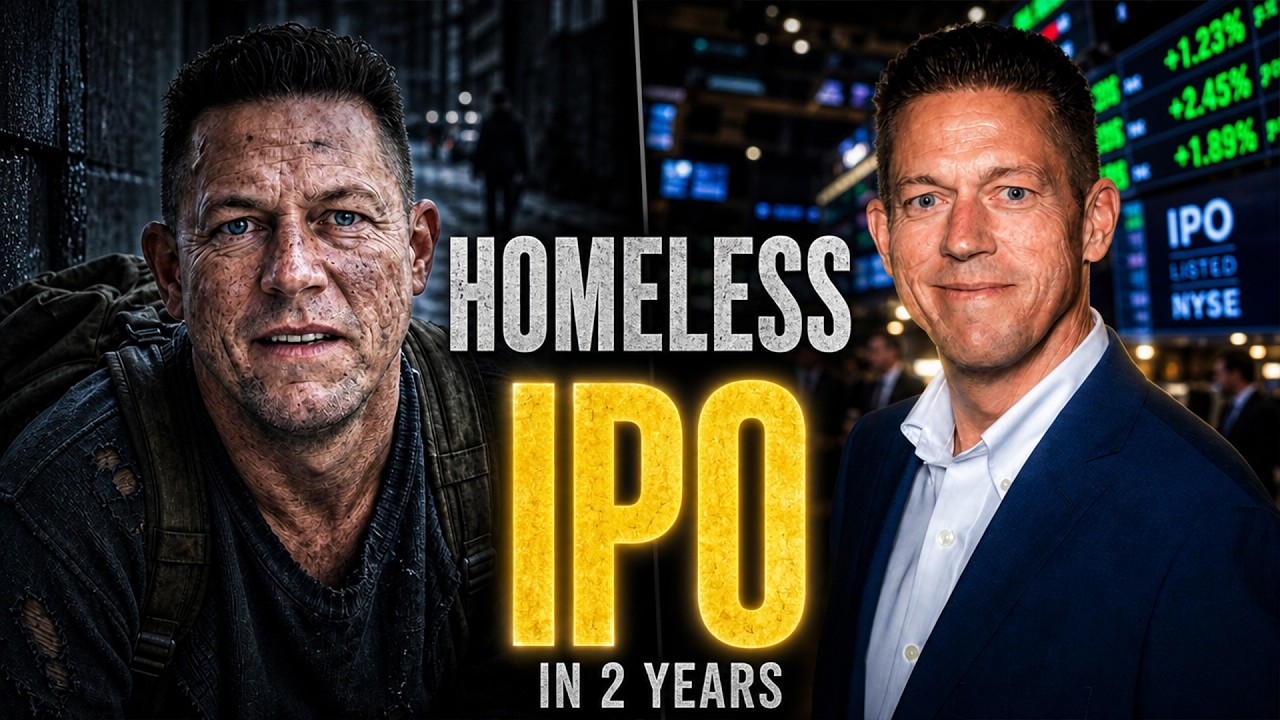
Sean Osborn went from homeless at 15 to taking a company public by 30. He uses a six-step operating system (Recognize, Evaluate, Break Down, Overwrite, Operate, Test) to rewire his subconscious, and builds funnels with email lists, free webinars, and tiered upsells at $47, $97, and $497. His core rule: coach only what you've personally walked.
Chapters
Everything we do as human beings is based on triggers and associations.
Today's guest went from homeless at 15 to taking a company public at the age of 30, and then spent years trying to figure out how he actually did it. He's the founder of Thinking Big Coaching, author of his upcoming Y.O.S. book, Your Operating System. Today he's breaking down the exact 6-step framework that rewired his belief in what he was actually capable of building.
And the reason that you shouldn't fake it till you make it, but act as If you are already successful and why the money is in the list. Shawn dives into how mindset is everything in this episode.
Everything is a trigger for you, right? Every color you see, every picture, the stuff behind me. How do you change the association that when you're triggered with something that you run a different program? And the problem that most of us have is those programs are put into us by the age of 7.
Today's guest is Shawn Osborne.
Welcome back to another episode of ClickFunnels Radio, and joined with us today is the one and only Sean Osborne, as you heard. Sean, the craziest part about your story is like this 15-year gap, okay, that goes from you being homeless at 15 to like selling a company at 30 and not even realizing how that happened. But Todd, take us back to this homeless, like you're 15, you're living on the streets. How did you get out of that?
Yeah, that's a— that, that is a funny, uh, not to say funny, but it's a fun story. It's, uh, uh, it basically came about because I just made some really bad decisions as a kid. Like, I, I got with the wrong people. I started doing drugs. I started, uh, you know, doing things that I should not do. Was, uh, in jail at 15, and, uh, that's when my parents said, you know what, Yeah, my parents said, yeah, we're volunteering you to leave home and said, we can no longer deal with you. It's time for you to go. And so at 15, I found myself, literally went to a new state. I was in Santa Fe, grew up in Santa Fe at the time, and moved to Omaha, Nebraska. Now.
Oh, that's a move.
That's a move. And it looked like it was a good place until I got there. No offense to anybody that's from Omaha, but let me tell you, it is extremely hot in the summer and extremely cold in the wintertime. And that is not the best place to not have a house, to not live.
This is not like homeless in Hawaii. That would have been awesome. Plane ticket.
Yeah, that would have been awesome. So I found myself there and actually the best move of my life. I mean, it was actually— it changed everything. And I, for a long time, I blamed my parents for like the stuff that happens. Like, they didn't care. They like, how could you let your kid just go? And, uh, I can tell you now that it was probably the hardest decision that they've ever made. And so I, I truly, truly, uh, thank them for that. So, and that really changed, uh, you know, changed the trajectory of my life. I ended up in Omaha forced to kind of do things, you know, work in restaurants, do, you know, wait tables— not wait tables. I was too young for that. So I was washing dishes, bussing tables. And at 16, I met my then-girlfriend Amy. And while I was still pretty much homeless, got her pregnant. And if you think about that, I was a 9th grade dropout. I didn't know much. I was living on my own, trying to— couldn't even support myself, really. And then having a kid. And that's— it was that exact moment that, like, boom, that, that one moment when she said she was pregnant. Sorry about that. Uh, still, you can tell it's still, uh, you can still— still pretty fresh. And, uh, that exact moment is what said, John, you better get your shit in gear. It's like, it's time to, you know, you can no longer screw around, and it's time to, uh, uh, get things done and to turn things around and to turn your life around. And it was literally from that moment on. So literally from that moment at 15, uh, and at 30 I was taking my first company public, you know, in, in meetings with Goldman Sachs and, uh, Jones Day. And I remember sitting there thinking, what the hell happened? You know, I'm looking at these, these lawyers from the biggest law firm in the country. Goldman Sachs was, you know, representing us. And I'm thinking, if these people only knew, they would not be taking me public. Like, they don't understand. I'm just a 9th grade dropout. I don't know shit. What did they— I mean, you know, so that was the point that, uh, you know, and in those 15 years, uh, you know, I didn't really understand what I'd done.
Can I back up though? Because I think people maybe need to hear this a little bit more. Of some people toe the line, okay, and they're okay, I'm gonna finish college, I'm gonna be a grade A student, and then I'm gonna go and go to college, I'm gonna pick my career, and I'm just gonna toe the line. Unfortunately, well, or fortunately, a lot of us entrepreneurs don't fit that mold. Can't sit in the classroom, aren't going to listen, or the kid that, you know, might act out in class. And so I'm just saying this because if you're listening to this and you're like, wait a minute, you can raise your hand and say, I'm like you, Shawn. Do you think that that added to it? Like you're just wired more like an entrepreneur and you had to like say, I'm going to go figure out, figure it out on my own. Like I don't fit this mold.
Yeah, I, I, well, I think I was forced into that mentality, uh, young just because of this. And I think that's, uh, maybe it was the mold that I was given. Maybe it's, maybe that's how I truly am regardless of what my, my background was. But I was forced to do what I like. I was forced to have that, uh, figured out attitude because again, I had no education, I had no money, I had, you know, very, you know, not, not a lot of people want to hire a 15-year-old dropout to do anything. And so I had to go and figure out, okay, with what I have, I've got to be an entrepreneur and be able to sell myself. I've got to be able to do what I can to figure things out, like come up with things that other people aren't doing, do things. And that's literally my entire career has been, has been that since that time. And so back then, so I'm going to date myself, but this was back in the '80s. And late '80s, mid-'80s, and computers were just coming out. Like, nobody had home computers, nobody had any of this stuff. And one of the things that I recognized was these companies would hire people for computer stuff. You didn't have to have a degree. You didn't have to— they didn't ask for shit, right? They just said, come in and help me set these damn computers up, right? So it was like, that's my way in. Yeah, that's my way in because they're not going to look at my past. I don't need to have a degree. You do now, but like, you don't need to have a degree. You don't need to have any of this. They're just going to bring you in because you're a hired gun. You're an SME for computers that nobody else knows yet. It's like, so that's— so I've been in technology since the, you know, since the '80s. You know, that's been my whole path is technology. But I chose that, or it chose me because of the situation I was in. And that was the only avenue that I saw that could get me to what I saw other people having that I didn't have. You know, I remember being in, in, you know, waiting table or busing tables, you know, back at 15, and looking around the restaurant and thinking, these people think different than I do. They, they know something that I don't know. Not— it's not that they're better than me. I never thought, oh, this person's better than me, but I thought— I, I would literally sit back in kind of the dark room and look out and say, they're experiencing life different than I'm experiencing life. Why is that? And so literally, that is what drives— the last 15 years, I've been all on mindset, all on how we think the way we think, why we think the way we think. And it all came back from those early times of being forced to look at that.
Well, talking about how we think, Sean, I have just something ringing in my brain right now. And if I don't ask you, it'll consume me the entire podcast. You said a really interesting statement there when you were getting IPO'd or going public, you said, "If these people only knew I'm a 9th grade dropout, I know nothing." I totally see how back then you might think that, but Sean, today, now, do you think that your accolades or degrees you get from schools have anything to do with your person, your potential, or what you are to accomplish in life?
Yeah, and so I've grown a lot since then, part of it was, you know, back then I had no personal development, uh, nothing of that nature. So I didn't understand. All I knew is I just did it. Like, people would literally come to me after I sold my company and, and they would say, how do you do that? You did— that's not what you do. I'm like, yeah, that's what you do. You just— I don't know, I just did it.
You—
that's all you do. It's like any— if I can do it, anybody can do it. You just do it. And I didn't understand really how how big that was and that it wasn't something that everybody just did. But I think I was— and I, I say this and it's kind of jokingly, but I think I was just too stupid to fail. I didn't know back then that you couldn't do those things. Like, like, I remember in— I would— so I started the company in Dallas, Texas, and I would literally go into—
what was the company, Sean?
Internet company. So I helped start, uh, again, I'm gonna date myself, but before cable modems and be all— before all this stuff, uh, there was a DSL.
DSL.
I helped develop and start DSL technology. So I worked with like Southwestern Bell, which is now I think AT&T, and GTE, which is now Verizon. And so I worked with them and I actually beat them at their own game. And they were— those were two of the companies trying to acquire us because I was beating them at their own game of the DSL. I was able to roll that out and help them do that. But again, it all came from my technology background and just seeing what other people were like. I can take things and put them together that the way no one else has puts them together. So DSL, there was nothing new back then. That technology for DSL was like 15 years old, and I was doing it in for businesses for different things. And that's when I had the idea, well, what if I did the same thing but I did it for people at home and I did it for small businesses that couldn't afford T1 and T3 lines? So that was the whole— so I didn't invent anything. I was— I put technologies that were already out there and I married them up in a way that nobody had married them up in a way yet.
Can I back up though? Because I think this is a fascinating story and I want to get into it, but that's a big jump from I'm homeless, you know, in jail or whatever to, hey, this is where I'm setting things up. When did you kind of have this moment where you're like, okay, you find out that you're pregnant and everything else and now I've got to change things. But when did you think like, okay, I'm going to start thinking differently? I know that Think and Grow Rich is a big part of what you do. Sean, like, and I think there was a moment where you're reading this book and had this epiphany. Will you take us there? Yeah.
So here's the thing. I never saw or heard of Think and Grow Rich until after I had sold my company.
Oh, was that right?
Yes. So it's like I had never had any— I had never had any personal— I had never even read a book. Seriously, I don't think I'd ever even read a book before.
And then what got you into telecom stuff then? Because if Think and Grow Rich came later—
Yeah, it came later. So again, I just— I saw that that was my only opportunity to get a job above being a busboy. And I saw— so I, I met people and, and stuff, and like they would have a computer, and I'm like, oh, I don't know. But so I— something said to me, Sean, go look at these— this computer stuff, because that's going to be— that's going to be your way out of where you are. So that got me into computers. And then obviously, you, you know, so then I would go into, you know, my first jobs was, you know, maybe a desktop type person or helping people deploy, you know, desktops. Again, this is the early stages of computers where this is Oregon Trail days. Yes. Yeah, this is, this is back, way back, OG stuff.
And, uh, uh, so I'm talking about Oregon Trail the game, not that you're actual pioneer, Sean.
I mean, in some ways, no, technically he is. Yeah, yeah. So it was the beginning of, of computers back then, especially for companies and obviously home. Uh, so that's— I just there's something that just told me, Sean, go in this direction. I never— it was never an aha. It was like, this is, this is my next step to get me past being a busboy or a dishwasher. And that led to a low-paying, you know, low-paying job. And then that led to— and then eventually, again, it went from building— I actually started building computers back then. Like, nobody— this is before, you know, Dell. This is before, you know, all these companies started doing computer. So I started building computers with parts and so mostly Apples then, huh? This was actually— well, I think this was actually probably after Apple.
Like, so this is like IBM compatibles, you know?
Yes. Yep.
Okay.
Yep. So this was after, you know, the, the Macintosh or Lisa or whatever it was, uh, was called. But, uh, yeah, before the main— before any type of mainstream computers were available to companies and to, uh, especially home, you know, obviously Nothing.
Nobody had them.
So it wasn't like an aha moment. It was just something that I knew inside that this could be a way out of where I was and to pursue it. And it just— one thing led to another. Yes. And so it just kept getting bigger. So within building computers and then running computers and then running computer, running IT departments for companies and, you know, just getting bigger and bigger, becoming, uh, you know, more and more within that same industry until, you know, I obviously quit, did my own entrepreneur stuff, built my own company, and, and took it, uh, you know, took it public.
I, I know your journey fairly well from researching, and you're a big part of our community, so I know your journey pretty well. I'm already seeing a pattern that I want to identify for all of our listeners. You leverage existing technologies, assets, and resources and repackage them to fit the needs and problems that customers are having. And you've been doing this for a long time. So I really want to take some time and make sure we get to tactics on, on how you do and employ these same strategies that have worked for you forever and still work today. But I also really want to I want people to know your story because I think it's just so cool and very unique. Like, one thing you're not unique so far that I've heard is the same thing we hear on every episode of this podcast, which is do. You just did, and you did so unabashedly, whether it's out of ignorance or regardless of the reason, you just did. You went, baby, and you go, baby, go. So that is just entrepreneurialism. That is just business ownership. But as your story goes, 15, homeless. 16, becoming a father. Now I have to go and do. So you went, gone, and did, abashedly built a strong, successful company, exited that company, and then didn't you go to work for somebody else after that?
Yeah. So, uh, okay, this is gonna be some funny stories here. Okay. So in my company, I had hired my— so by the way, that the girl that I got pregnant in Omaha, uh, she's now my wife. We've been married 40-something years. My son is, you know, 40 41, 42 years old now. So now he is a nuclear physicist. So completely opposite of his dad.
Yeah.
Anyways, so as we were going public or as we were looking at going public, there's certain things that they want you to do. Like you have to have certain things in order. Obviously your books need to be in order. You need to have all your employees need to be in order. You have to follow a, you know, a schedule of like performance appraisals and doing all this thing. So I had the wonderful idea of giving my wife a performance appraisal, an annual, because she was working with me. So she got her annual PA. It was a needs improvement.
Sounds too— this sounds dangerous, Sean.
And it was at that exact day that she quit. And she says, I will never, ever work for you again. And she's kept her word. She's honestly kept her word. She's never worked with me a day since. But once we sold the company, 2 things happened. One, I still had really bad imposter syndrome. Remember, I hadn't gotten into any type of personal development, and I thought I was just a fraud, that I was just lucky. I was at the right place at the right time. I didn't know that what I'd done, there was a method to it. I had no idea. All I knew is it happened. We sold it. And so she said, if you ever start another company again, I'm gone. Those were her exact words. I'm gone. If you do this one more— because it was tough. I mean, it was 4 years of nonstop shit for a company like that to go from there to going public. It was 20-hour days for years. And so it was very tough. And I understand. So I understand. And I said, okay, in my mind, I was like, I'll give it 3 years or so. So I started running IT for Chevron in Houston. So we moved to Houston.. And I thought, okay, I'll run IT for Chevron for a few years. I'll get back out and do my own thing during that course. So managing IT, I had other leaders underneath me, and I always wanted to— I've got to become a better leader to have them lead better and so forth. I started getting into personal development a little bit, but it all came from my wife was doing an MLM, like a multilevel marketing thing with one of her friends.
And I got the entrepreneur itch too.
No, she hated it, but.
Okay. All right. She's just like, she was doing— I'm doing it for my friend. Yeah.
Okay. Yeah. She was doing it with her friend and we were on a road trip and I was just a passenger in the car and they had to listen to their personal development crap on the, on the, you know, on the radio or on their, their CD. And I'm sitting there listening to this personal development shit and I'm thinking, huh, that's interesting. Of course, I didn't want to admit it to them, but I was like, hey, there might be something to this. And that literally started an entire movement into getting into personal development and getting into Think and Grow Rich. And once I got into Think and Grow Rich, that book is what gave me the insight of, holy shit, what I did back then at 15, I can trace that through Think and Grow Rich. I did all of the things that Think and Grow Rich talks about. I just didn't know what the hell I was doing. Again, all the people that he interviewed, they didn't follow Think and Grow Rich. They did their thing. And it was at that moment I thought, holy cow, I wasn't lucky. I wasn't a fraud. I followed a process that I had no idea that I was following. And that's one reason why I'm so big into Think and Grow Rich is like, God, I wish I would have had that so many years before that to just understand what the things that I was doing.
Do you think having read Think and Grow Rich early would have actually helped or hindered you?
I think it would have helped at a certain point. I think if I would have read it early when I was developing my company, I might not have understood what I was doing. I might not have been ready for it. I might not have understood it, and I might have just kind of put it away and said, that's just— that's woo-woo crap. That's shit. I don't want to— that's not me. Had I read it earlier, either towards the end of the company or after I sold the company, I think it would've helped me a great deal. So I didn't read them for probably 5 or 6 years after I sold the company. And it was like, so those 5 years was, I was just lucky. And people would ask how you do that. I wouldn't even tell people what I did because it was so— people would either say, oh, that's bullshit, or it just didn't make sense to anybody. And so it was like, I wouldn't even tell people that I started a company or did anything. It just, uh, yeah. So I think Think and Grow Rich is the, the book that helped me unwrap what I did and say, oh, I can do it again.
So yeah, you reverse engineered it. You just went back and said, hold on, there's a framework here that I did, and it wasn't accident. It was something you naturally did, but nevertheless, it's still a framework.
Yeah, yeah. And again, the You know, Napoleon Hill didn't invent anything. He just, you know, again, he was a thought leader. He went and interviewed a whole bunch of successful people and said, here's what all of them seem to be doing. And so none of them used, obviously, Think and Grow Rich to get successful at whatever it is they did. So yeah, it's an absolute framework. It's a law. It's like if you do those things and become those things, you will absolutely be successful. Whatever it is that you consider success, it's not money. It could be whatever you relationships, health. I've used the same process of Think and Grow Rich on my health. I've used it multiple ways. So it's like those things, people go through things in life and they're more than willing to share them. It's like Russell's books, The Secrets, the expert stuff. It's like those things are blood, sweat, and tears that if someone actually sits down and goes through that and embodies it, I don't want to say read it, I want to say embodies those things, those works, they will absolutely work. I mean, it's just a funny thing to understand.
It's a shortcut. They're going to— that's what I love about frameworks is like, yeah, a smart person learns from their own mistakes, right? A smarter person learns from other people's mistakes.
You want to know another smart way?
Yeah.
Tell people, tell people what to do and see how it works for them.
Oh, there you go. You go try it. I think there might be some minds out here in this field, but You go first.
You go try this and let me know how it works out.
I'll follow you.
So, so you read Think and Grow Rich. You just, you're working for Chevron, right? You just run an IT for Chevron. Wife doesn't want you to go back into entrepreneurialism. You end up hearing a little bit about personal development through her own entrepreneurial endeavors. You're like, oh, this is cool. Get Think and Grow Rich. It changes everything. Then what?
So then I started really getting into personal development, uh, much more so than just a, you know, just Think and Grow Rich. I started getting into stuff like even, oh, God, John Maxwell, because of leadership, thought leadership for leaders. So it's like I started getting into that because I had leaders underneath me that I wanted them to be better leaders. And so it was like, it was still personal development, right? It's still personal development. And Think and Grow Rich had such a big impact for me that I actually started teaching Think and Grow Rich stuff. Like, I would do workshops, I would do webinars, I would do various things, not necessarily for the money. It was more for, uh, more for giving back. It's like, this helped, this had such a big impact on me, uh, let me spread the word, you know. Like, let me, you know, let me talk about it, let me, uh, try to, uh, enlighten other people on this framework, this, these laws of, of success. And again, it doesn't matter if it's money, if it's relationships, if It doesn't matter. It will help you navigate all of that. And so I started doing that and that was the start of my community. You asked earlier, Chris, on, you know, list building. Most of my early list, I'd say the first 100,000 people were from Think and Grow Rich type of, you know, opt-ins to get into my webinars, my workshops.
You say that so casually, Shawn, like, and I've watched you win these events and everything else. I mean, we were hanging out at OfferLab and we'll get into all that. But you're like, oh, my first $100,000. Like, dude, you got a list that's like 300,000 plus. Like, this is crazy. And I don't think enough entrepreneurs are diving into this. So you are doing this, this, you know, Think and Grow Rich mentality in this coaching. Meanwhile, though, you're filling this pipeline that you don't even, I don't think, know at that point that you're going to be able to deploy and use later and become just an amazing affiliate too, which we'll get into. But were you intentionally building this list saying, okay, I know we're gonna do this, or that list just kind of happened?
No, I purposely built that list. But, but here's— so here's— yeah, here's the thing. So I, I understand computers, right? I'm— I know backends, I know methodologies, I know what people are doing. I knew exactly what Zuckerberg was doing. And it's like, I understood in my own point, if I want to get people to my stuff, to my events, I can either. And again, I had no idea what list building was. I had no idea what any of this stuff was. And I'm like, but if I can control that, it's not going to cost me as much money to get them into my workshops and stuff.
You own it. You don't got to buy it. I own it.
Got to rent it.
Right.
So I was like, so why don't I start building? And again, I understood algorithms. It's like I'd look at Facebook and I'm like, I completely understand what they're doing. His job is to keep eyes on his platform and to make money. Simple, right? Anything you do on their platform that either pulls eyes or pulls money, they're going to want a piece of it. It's just simple. And the algorithm just proves that out, right? That's, again, that's their business model. And it's— I fault him none. It's like, that's what he, you know, that's, that's what he does. But I understood that if I had my own Facebook, if I had my own platform, which at the time was just, okay, I'm just going to start collecting emails, and that, that, that's my platform, that's, that is my Facebook, because I can go to that that platform anytime I want and send out an offer, send out an engagement. And part of it, I think part of the way I did lists was a little bit different, was I truly treated my list like— when I teach this, like a bank account. It's like a savings account. I can never withdraw more than I put in. So I have to add more value before I withdraw anything and ask for an ask. Say, hey, I want you to do this workshop. So I've got to— so I treated it almost like a community, even though it was an email list. And so I, I probably spent 6 months just before I even made my first offer to my list. Like it was just value, value, value. And then when I had Traffic Secrets framework at this point, I had no idea of anything. So I had no idea.
Nope.
Inherently like, this seems like a good idea.
That's awesome. But, but I understand technology and it's like, so I understand what they're doing and it's like, so I understand and, you know, how I can reverse engineer— like, basically what I was doing is reverse engineering what, uh, what Zuckerberg was doing and pull it in for, you know, pull it in for myself.
For me, not for him.
Yeah, yeah, yeah. It's like, why, why pay him for ads every time I want someone to see my stuff when I can just get their name and send it whenever I want?
Well, how are you getting the name though? So are you putting out like lead grabs or something?
You're just doing like—
I'm foaming at the mouth for this. What, what was like— how'd you get the first 100,000?
So I did a lot of different things. But so this was— God, this was, uh, I want to say 26. I can't remember what year it was, but I'm also, uh, got certified with Tony Robbins. And one of the things that I can do as a certified Tony Robbins coach was I could do his 6 Human Needs test, right? That's one of the things I was— and that's honestly, that's the whole reason I went to get certified, so I could use his I could borrow from his authority. So smart to do things. So I built a completely— yep, I built a completely automated quiz that they came in, they answered some questions and said, this is your, you know, this is your two highest needs. Uh, here's what— here's how it could benefit you, but here's your— here's your blind spots. Here's what you need to look out for. Completely automated. I had—
there was no me involved in that, which people are going to 100% come in and go, Yeah, I'll give you my email address. Look at all the value this guy is giving me. And now the thing that everybody needs to understand is, okay, that small transaction of value that Sean's giving him for exchange for the email address. And I know a lot of people like, Chris, we know this list building thing, but for a lot of people you don't like, now Sean has that name forever and his job as a community, etc., he's nurturing that. He's not just letting that go. He's actually keeping it on his list. He's doing probably Seinfeld or soap opera stuff. Probably didn't even know he was doing it, but he's doing it, right?
Yep. And what's funny is, so we'll go back, but we'll jump ahead a little bit. So after I met Russell and I did the series, we'll go back to that. But I was in a small mastermind with him. It was like 8 of us, I think, and asking questions. And he said a few things to me that I'm like, what are you talking about? He would say, well, how are you doing that? Like what we're doing? How are you doing that? And he said something to me and he goes, well, you need a— it's costing me X to get these now. And he's like, you need to do a self-liquidating funnel. I'm like, What the fuck are you talking about? Self-liquidating funnel. And he explained it to me and I'm like, holy crap, how did I not see this? How did I not understand? And that's really what took me into the ClickFunnels era. So here's the problem that I have. This is a personal problem that I have. I've been in technology a long time, so when I see something pop up again, I was in technology before Russell started, you know, ClickFunnels, Russell and Todd's sort of ClickFunnels. But when I see things pop up, I have the problem of thinking, well, I'm a tech guy, that's just a landing page. He's calling it a funnel. It's just a landing page. So I never really paid much attention to it, which is right.
But considering that it's also saying, okay, I'm going to make this a blue ocean, I'm going to create a new opportunity, landing page or not, just everybody notice what he's doing there. It's still a new opportunity, right?
It's Uber, it's not taxi anymore. Yeah, I had no idea, uh, the, the depth and the width of what ClickFunnels actually did because of my own blind spots, thinking I already know everything. I'm— I've been in IT longer than most people, I know everything. It's like, until I started talking to this company, you know. Yeah, until I talked to him, I'm like, oh shit, I don't know anything about this. So before, before doing any of that, I had never done an affiliate, I had never done My entire list was built for me to be able to communicate my stuff to my community. That's 100%. Never even thought about affiliates. And so we'll get into this a little bit. But so my first working with Russell was when he introduced Secrets of Success. I think that was what, maybe 3 years ago he launched Secrets of Success. And one of my friends who knows I'm huge into Napoleon Hill, called me or sent me an email, said, you've got to get into this thing with Russell. He's doing this Secrets of Success. I'm thinking, no, I'm not interested. Just, you know, go, go ask.
You know Russell's name at that time, or that's your first introduction?
I knew, I knew— no, I knew Russell from just from being a tech person, right? But I, I never— and I knew he started ClickFunnels, but I didn't know really what ClickFunnels was. I had gone up and, and when any new tech comes out, I normally, because I'm just the guy who likes to test stuff. I would go up. I went up and did some things on ClickFunnels early on, I think. Just did some things. Just said, okay, I understand the platform a little bit and moved on. So I knew who he was. And I'm out in the middle of the GNC with one of my best friends. We did a guys week, went to Turkey, and then took—
You're on a boat in the Mediterranean.
Boat in the Mediterranean going between Greece and Turkey. And he sends me another one. I think it was like maybe 5 or 6 days before that Secrets of Success had ended. And now you understand that these affiliates, they'll go for a couple weeks. Like you have a lead time and it's like, so this is like the last 4 days.
Yeah. You're warming up your list and everything else. There's a lot that goes into this.
Yeah. You've done none of that. Yeah. Oh, I've done none of that with this. And he got back with me again. I'm out there and he was like, I think I was in Econos or, I can't remember which city I was, but he, He goes, you have to do this. And I said, okay, to shut you up, I'm just going to send out an email. So I crafted— didn't— I didn't know that there was swipe files. I had no idea of any of that stuff. Crafted an email, sent it to my list, forgot about it, and come get back, and I got second in that entire—
hold on, hold on. How many people are on your list at this point? We talked about 100,000. Are we up to 300,000 at that point?
I probably sent it out. Well, I only sent it to part of my list. So I am one person who I segment the crap out of my list. I know what you came, where you came in on, what you do. So in other words, I have— so I send it out to all of my Think and Grow Rich list, which at the time I think just that alone was probably 85,000 or 90,000 people.
But hyper, like, focused on that particular thing. This is resonating.
Yes, yes. So sent that out, I got second place in, in that. And it was at that time I thought, who took first?
Who's, who, who's making you mad? Who took first?
Doug.
Doug.
Oh, is that Doug Mountain guy?
All right, fair enough. I had to, I had to ask. I knew it was—
no. And now me and Doug are friends. Like, we've done, uh, of course, quite a few things.
How can you not be friends with Doug?
Uh, so got second. And what's funny is, so this is what, maybe 3 years ago, I am still getting money every month from Secrets of Success, from that affiliate. Still to this day, I still get a couple grand in my account every month from that, from that one single launch. And one of my problems back then was like, I am, I've got a big list, but I can only do so much stuff. It's like, so I was doing maybe 2 launches a year and it's like, I just can't do much. And after this, that's what said, oh, hold on, there is something to this whole affiliate thing. This isn't just a— I had the— again, it was wrong, but I always thought affiliates, that's icky. You know, I'm not going to go— I'm not going to go hawk stickers for somebody.
You don't want to dance on TikTok, Sean.
Come on. Yeah, well, I love to dance on TikTok, but selling stickers, no.
Okay, fair enough.
So, you know, so I had a bad taste in my mouth. I didn't understand what affiliates were. I always thought it was just the bro marketers. I'm selling stickers this week. Next week I'm going to sell you some, you know, some, some something to get, you know, get thin quick protein powder or something. So I had a bad taste in my mouth and thought after this, I'm like, hold on. But if I can partner with people that are in alignment with, with my community, then it is an absolute win-win. And so that's when I started doing affiliate stuff. So now half the stuff I do is affiliate. Affiliate work.
So half is coaching, half is affiliate.
Yeah, um, coaching or my programs. Yeah.
So, okay, so that, that Secrets of Success launch was— you get into it, but I know for a fact, listen, because you and I have worked together before, that, that you were getting like your average cart value in another one of these contests was so far above and beyond like 8 or 9 times like what everybody else's was. Yeah, first off, I want to know what— which, uh, which contest was that? Which offer was it? I—
it—
so it wasn't one of Russell's, but it was, it was in the same— let's just say it's in the same Russell's same group. Yeah, yeah, okay, of people, uh, but someone that I don't necessarily respect and I don't want to promote their, their stuff. But I did this, so there's one reason and one reason only I did this launch. It was a huge launch, right? It was very big. And there were a lot of big names that were doing affiliates. I'm talking about people who were, who have like their, what, like not followers, they're influencers, right? So there was people on there that are big names that have 15, 20 million people that follow them. Like these people on their, well, on their social media. And my whole, yeah. And my whole thing is I could give a crap if I've got 10 million people on that are following me, if they don't ever buy anything. It does me absolutely no good for them to follow me if I don't have them on my list. My number one thing is get on my list, follow me, get on my list. It's like, that's the only thing I care about.
Everybody, every good marketer needs to know this because here's what happens. You have one thing that happens and you're like, okay, I grew my list. And then you're going to go try to get them to convert, and then you're not filling that pipeline. Like, Coach Vince and I talk about this all the time, is like, that list has to constantly be growing, for sure.
Yep, growing and engaging, both.
Engaging, yes, because if not, then you lose them, right?
Yep, yep. If you don't add value, you can't get value back. Again, it's like a bank account. You have to add more value than you ask. Like, if you go to your savings account or your bank and you try to withdraw more than you put in, they're going to laugh at you. Value, right? Same, same thing.
Well, but Sean, I don't get a pie chart with blue and red colors on it to let me know like when I've delivered enough value to my list. So how do you know?
Just by how much I— if I spend 4 weeks of adding value to them, I've earned the right to ask for a workshop, like come join my webinar, right? So I— and I rarely ever sell to my list. I invite people on my list to do things that then sell.
Yeah.
So rarely, rarely do I sell directly to the list. So I add value, add value. Oh, and by the way, we're doing this thing.
Come on up. Which is a value add as well. It's not just buy my thing, buy my thing, buy my thing. People unsubscribe immediately.
Yeah. And before I even knew what webinars were, and what's funny is, so I had a couple of friends that helped me out to help moderate my first webinar. I had I sent it out to a portion of my list. I had 2,500 people register and I was on— this was Zoom, like, I think this was even prior to COVID. So Zoom really wasn't that good yet. I mean, it was still— and I had, I think, 400 or 500 people show up live, which is insane. Come on, that's great. Especially nowadays. Nowadays it's getting hard. But this is like my first one. I'm like, how the hell do I do this? I'm a one-man show and I've got 400 people on.
Chat's blowing up asking you all sorts of questions.
Chat, I had someone streaking. I'm like, how do I— oh my gosh, dude, I had, I had some old lady walking around with her phone naked in her— like, you gotta be kidding me.
You probably heard this on OfferLab, or like whenever I MC or whatever, I'm always like, okay, camera's on and clothes on, but in opposite order. Clothes on first, then camera's on. Because we've seen some full moons and everything else.
Yeah. And I had no, like, moderator. Like, what am I—
what—
I had no way of controlling it. So I've learned a lot since then, but yeah. So going back to like the affiliate launch, so I did this launch and my whole—
I want to hear how that average cart value is so much higher.
Yeah. So my whole reason for doing that launch was to my list building course, right? I had a course that was, you know, list building. And the whole, the whole reason I did that affiliate was to show, and with numbers, I've got the proof that my list outperformed people with 10, 20 million people followers. And these are big names, people that you and I and everyone listening, if I said their name, would know exactly who that person is because they're very big influencers. I beat every single one of them. I think I got— I didn't even— what's funny is I didn't even promote the last week, which is the big time to promote. And still, I was in first and came in like third overall.
Listen, you talked about Doug, right? Doug at the time too, he didn't have a huge list. I mean, I've interviewed him and he had like 5,000, 6,000 people on a list, but they're crazy engaged. Like, they're totally in it. So in that launch, did you segment? Talk to us a little bit about segmenting this list. Like, okay, first one that we did, Secrets of Success. All right, I know these are all Napoleon Hill guys. Did you go look at your list? And I love that he said a pie chart. I know Dante, you were talking about this, but like, you go look at your list, you're like, okay, that's the segmented group that I'm going to send to, which is this 50,000 or 80,000. Did you do that again? Do you do that every time?
Every time. I never send out one email to my entire list. Now, they're a lot alike, but like, I sent this one strictly to people who have engaged in entrepreneur-type stuff. Like, not Think and Grow Rich. Like, these were entrepreneur people who had—
make money online kind of people.
So I did that. And so what I'd done is I understood now, after doing some of these launches with Russell and doing these things, like, Oh, so people actually add their own little bonuses on top of things. I'm like, so I never even, I didn't even know the game. It's like, so, so now I understood the game a little bit and I'm like, okay, I'm gonna do this. Send it out to, to my, my, you know, a portion of my list, the entrepreneurs, and said, okay, we're doing this, this launch. And if you sign up, you know, I'm gonna give you, you know, this course. Like I threw in my bonus of this course, but you have to be VIP, right? So it's like, if you sign up VIP, then you're gonna get access to, to my course as well, just for signing up for VIP. And obviously those are upsells. Again, I had never done any upsells. Like before I met Russell, I had a flat page. You take the offer, you don't buy it, or you don't try to figure out the self-liquidating offer.
You're like, this is now— I'm like, oh, liquidating.
Yeah, I'm losing a lot of money by not doing these upsells and downsells. And it's like I'd never done any of those things. So anyways, I do this and my list wanted that course enough to where I think it was like, I don't know, maybe a $20, like a $20, you know, VIP or I don't know, $49 VIP. I'm not sure what it was, but my average cart value for this free event, because you could go up there and sign up for the event for free, like just like Russell does, like, you know, then you've got your upsells, your VIPs and that stuff. My average cart value for that was around $9. And I remember I got a text back from them saying, what the hell are you doing? Your average cart value is $9. Ours, which is— he's a big name— mine is $1.77, and other affiliates are a little lower than that. And I'm like, just sending it to my list. But— and it was— so here's the thing. I had heard Russell say, he's always said this, the person who can spend the most money to acquire a customer wins. And my— I didn't— I did not understand that at all. And my initial thought when he says that is like, Well, no, no shit. If I can spend more money, then of course I'm going to get more customers. I didn't understand until that text that I got from them that said, oh, hold on, I can go and spend $9 again. I didn't do it with any ads, but if I wanted to, I could go spend $9 per acquisition where they can only spend $1.77 per acquisition. I'm like, that's how you spend more money to acquire a customer. It's not just spend more money. Obviously, if you spend $1 billion, And it's like, oh, and it literally was— it wasn't until that text came in, it was like, this is what Russell means by whoever can spend the most money. It's not whoever can spend the most money, it's whoever can spend the most money at a level without losing money wins.
Correct.
So I could spend $9 on ads if I wanted to and still break even for a free event. Again, that's the money's on the backside, right? The money's never on the event. The money's not on the VIP. That's just to hopefully get you even for the, you know, if you're good for the event, the money's on the backside. I'm like, oh man, I could literally— going back, I probably would put $20,000, $30,000 in ads and just crushed them completely. But again, I was just doing only my list. I didn't do any ads for that. Very little ad spend.
Yeah, that's awesome.
Wow. And it's like another thing Russell said all the time, losers focus on the front end, winners focus on the back end, right? Just applying the things that you learned. So tactically though, what is— like, what does that look like? What, what was the funnel that you were running them to and how did you get $9 where nobody else could?
So my funnel was just— so I took them into, and I never knew this, a bridge page. I'm like, what the hell's a bridge page? What are you talking about? I would just send them to here. So send them to a bridge page that actually had my offer in addition to it. So it was like, if you sign up VIP, you get, you know, obviously the thing, but then you're also going to get access to, to this course. I was offering free access to the course. It's yours for life. Just sign up for VIP, which was, you know, $49, whatever. And the course was like a $197 course. But again, I know that I would rather give that course as an upsell to get them into this and make all the money in the back end. Again, that's, that's where the, where the money is.
Yeah.
And I learned, obviously learned that from, from Russell as well, that, uh, but that's how I got the cart value so high. My, my little gift for people signing up was at a value that was worth them paying $49 for the upsell, right? So it was worth it. So that's what— so I had, you know, 25% of the people who opted in actually take the upsell for the VIP, uh, where the others did not. They just said, hey, here's the, here's the link. And that's why they all averaged like $1.77 is because they didn't have anything else. I already had an upsell. I already had an upsell built in for them going into it, which drove the cart value higher.
Yeah. You just attached one of your existing things as a bonus to them going VIP. And really you laid out the path that they should take, right? You didn't just send them to a page. You said, You should get VIP, and when you do, you'll get this added on so you can accomplish and achieve this.
Yeah. Right.
You actually marketed to them. And then what that really— so how you were able to spend more is really you increased conversions to VIPs.
Yep.
Yeah.
You, you increased conversions well above everybody else. I mean, 5x everybody else at a bare minimum.
Yeah. And so the other things that I do that other people people don't like on this one especially is I, I told them I would not do this unless I got a, uh, a, a, an email every night from them with the people who had signed up. Like, so normally you get people who've done certain things, but you don't actually get all the opt-ins.
You wanted to go see who's engaging? Yeah, I want to see my—
yeah. So yep, so I want— I made them send me the opt-in list every night because what I would do with that opt-in list is then I would go back and I would retarget them for VIP if they hadn't done VIP. So that was so simple, but so good. Yeah. Always stay engaged with your list, communicate way more than you think, and add way more value. And it's like, it will— your list, it cracks me up. Even before— so this launch right here was, I think, last year, and this was after everyone said email's dead. Email's dead. You can't email. People come to me, email's dead. I'm like, Well, and that's, again, that's why I did this. I like, email's dead. Then why did I just kick the crap out of someone who's got 25 million followers?
Yeah.
Email's— and here's the thing I did. I did no— and I purposely did it like this so I could use it for my own marketing. I did zero ads for it. I did zero posts on social media for it. Nothing. The only thing I did was my list. So apples to apples.
So cool.
They, they— and I saw them pushing it on their own social media. So one of them was one of their own top speakers at the event that also pushed it, kicked his, you know, beat him as well. And it's like, so that you can't tell me that email is dead because it's different. You've got to do things different. Your opt-ins need to be different nowadays, but email is not dead, especially if you keep them engaged. A cold list. Yeah, that's not very useful. But an engaged list, and there's tricks to use for engaging. Like I did, I'll do this one. So again, part of my thing is, is Think and Grow Rich, right? I love Think and Grow Rich. And I actually built out a 54-week sequence. What do you guys call that?
Yeah, soap opera.
Soap opera.
Well, it depends. Do the emails feed into each other? You got to feed into each email like its own standalone story.
So they're all Each month, so it was actually 13 months, each month had 4 emails with that step of Think and Grow Rich.
Right.
So step 1, step 2, step 3. It was just literally a 1-paragraph thing. It wasn't a big email, it wasn't a call. There was no call to actions. Well, there was a call to action, but here's— so the genius thing was the call to action was reply back because it was almost like a question, like, what's your step? It was almost like an engaging question.
So smart to get them to engage. Yep.
And the thing was, reply back. I am not going to read it. I am not going to look at it. I'm not going to reply to it. You are simply putting it out to the universe that this is what your answer is. You put it out to the universe and it's much more powerful.
Dude, that is a ninja hack right there.
And so I still to this day, I get probably 400 or 500 emails a week from people who get these. It's a one-paragraph thing that's based on that particular chapter. And then send it to the universe. And so that put my engagement, my, my, uh, my sender rating through the roof because everybody, all these people are replying back. But, but here's the thing, they do not expect a reply back from me.
You set expectations.
Yep. They know it's just going to the universe. They're just putting it out there. Uh, you say it, you get it. It's like that is part of the, you know, part of the thing. So it's like if you do things like that Email can absolutely still destroy. You just have to have them engaged. If you get in someone's email box, if in, in the inbox, email is the same as it's always been. It's just getting in the inbox is the, is the game now.
But that is a ninja hack. Like, I love going to like, you know, Russell's masterminds or anything else. You get people like you, Sean, who will literally get up and they're gonna give a one tip and you're like, that could change my entire stinking business. Like if I go in and now I go into my ClickFunnels account and I update one of the sequences that I'm sending to engage that way and say, hey, you're not getting this back from me, but there's something about manifestation, Think and Grow Rich stuff, blah, blah, blah, Strangest Secret, whatever. And now just put it out there to the universe. And now your engagement goes through the roof, your scores are better, and things are landing in the inbox. Like, I hope everybody's paying attention to this, like active listening, not just like, oh, cool, Sean, go do something.
So find— look at, look at how, you know, anybody listening, look at what you do, your, your company, what you provide, what could you do? How could you format something like that, an engagement email sequence like that? Because again, I have it set up for literally 13 months. When someone opts in, they're automatically on it. It's like I do nothing and it just increases 13 months of, of stuff. And, you know, what can you do that resonates with your audience for the same type of results? And it's like, if you can reverse engineer that thought process, that, you know, that, that thinking, you can absolutely get your— my score, my sender score went from like in the 80s to like 99 within like—
that's unheard of—
like a few weeks of doing that because I have hundreds and hundreds of people replying back to emails.
Yeah, massive.
One might argue that a sender score like that is far more important than a social media following. Would you agree?
100%. I can tell you.
Yeah.
What's funny is I know an influencer that has millions of followers that could not sell 35 of her t-shirts. She put it on her social media, she's an influencer, 35 t-shirts she couldn't— she's got millions of followers. I'm like, yeah, that's not very, uh, you know, that's not very good if you can't do that. And it's like, so to me, social media, the, the only reason for me to be on social media is to get you on my list. That's the only— I don't care. I, I could give a crap if you like my stuff. I don't care if you follow me. If you get on my list, that's all that matters. I don't care about likes. I don't care about a number of followers. I don't— my, my, my, uh, Instagram, like 3,500 people. Like, that's— I don't use it for, for that. I use it, you know, it's completely completely different. I do not— I'm not an influencer. I'll dance sometimes naked, but that's not—
not to sell stuff. I want to go back though, like, when you kind of discovered— like, I remember you feeling like, oh my gosh, you mentioned, um, off camera too, that like, man, when you sold this company, you kind of came back and you're working for somebody else, you're like, I still feel homeless. You're like, I don't know what to do with myself. And that's when you kind of came up with a framework, right? And I would love for you to just kind of tell us what that framework is and maybe just tease us with a couple of the steps and the book.
Oh, yeah. So I've got a book that— so for the last 4 or 5 years, I've done this, this workshop called UOS, which is the U Operating System. And it's like how we, how we operate, how our brains operate. It's almost like the user's manual for your brain. Non-techie. I tried to make it non-techy, but how we operate and if we want to— like, if you want to update something on your phone, you basically just click a button and you download a new program and that's updating your phone. Well, you can do the same thing with your brain. Like, you can put whatever you want to run in your brain. You download your own program. So part of what we teach in there is Everything we do as human beings is based on triggers and associations. And we are being triggered 24/7. What you see, what you hear, everything is a trigger for you, right? Every color you see, every picture, the stuff behind me. If I say giraffe, that's a trigger. Dante, you might think of a safari. Chris, you might think, oh, Toys R Us. But that one trigger you run programs. All you do is— so basically it's like, how do you change the association that when you're triggered with something that you run a different program? And the problem that most of us have is those programs that we have are put into us before we know what— before we can actually say yes, we want that program or no, we don't. By the age of 7, it's like— so we are almost fully programmed by the age of 7 before we can even say no, I don't agree with that. You're already programmed. And it's like, so how— the book is about how you can change the associations, the programs that you run when you're triggered or when things happen, is the book. As a matter of fact, I'm pretty sure that Russell is going to do the foreword of that book. That's so cool.
Oh, it's amazing.
He said yes to do the foreword.
So that's— I mean, come on, that's going to be Yeah, incredible.
Congratulations.
So yeah, wow, the framework, the framework. You want to just tease us a little bit with Reboot?
Yeah, yeah. So again, I'm a computer geek, but again, I don't want it to be a computer-like book, so it's, it's, it's not. But the, the framework that I use—
so I don't need to know computers to understand your system?
Nope, not at all.
Okay, thank God.
We have turn it on, turn it off, unplug it, like the reboot thing. I love this, it's super smart.
Yeah, just unplug your yourself and then come back and you'll be good. So, yeah, so I've got a framework in there just called Reboot, which obviously is because computers reboot, and that's basically what you're doing with your thoughts and with how you're thinking. And again, all the stuff that I talk about in that, it's in every personal development book. It's like you look at all these books, they all say basically the same thing. It's just in a way that made sense to the author who put it out. It's like, hopefully that this way resonates with somebody, but it's the same type of stuff that you get in almost any other personal development book. So it's like, you know, so Reboot stands for recognize. The R is recognize. You have to understand what is actually running. And that's one of the hardest things is you don't understand that when you're triggered and you have an automatic response to things, you don't even know that it's happening. And it's like, it's almost like driving a car. You know, you are programmed. You don't even remember how you got to work today. You're on autopilot and you just go, those things are just running and you just go. You have to be able to recognize that and stop doing that. So in other words, if you're driving to work, the only time you're going to stop and recognize something, let's say there's a detour, right? There's a stop. Now you got to go back into your conscious thinking and say, oh, shit, now what do I do? Oh, I've got to go off. And it's like, but other than that, you're on autopilot. So it's recognizing what's happening and what you're responding to and the programs that you're running because you can't change something that you don't actually know is there, right? And then you'd be— yeah. And next one is E, which is just evaluate, uh, which is a big thing. It's like everything you do, you just have to evaluate, is this something that is taking me forward or something that's bringing me back? You know, again, and it goes to me, a computer, because they're designed by humans, a computer runs exactly like a human. It's there. There literally is no difference between a computer and a human. We designed it. There's a reason it runs just like us. But those are like viruses. It's like a virus just sitting there. It's a program and it's not doing you any good. It's hurting you. And those can be both ways. So in other words, if you have— if you're— let's say you're making $50,000 a year. If you have a belief that you're worth $100,000, that's a positive belief. Right? That I'm worth more than I'm doing. But if you're at, let's say, $500,000 a year and you have a limiting belief, or you have a belief that says, I'm only worth $100,000 a year, that's a limiting— it's the same belief. But to that person, that is a limiting belief. That program is hurting them moving forward. It's like me after I sold the company. I didn't think that was me. It's like, so that was a program that ran in me that was a limiting belief that I was not good enough to actually do the stuff that I did. And so that's kind of the gist of the book. And you break it down and then you just override it. There's ways to go in and install new programs that you want to write. And I'll take you through one of them. So one of them is what I call is act as if. And you see a lot of people that say fake it till you make it. Fake it. Anybody listening?
That's an interesting twist on it.
Yeah, delete that out of your language. There is no such thing as fake it till you make it. You act as if you become that person. And I learned that lesson. So I was starting my first company.
That's a Tony Robbins thing. That's change your state, right?
Yep. See, that's the thing. It's like everyone talks about the same thing. So when I was starting the company, I had to go out and get investors, and I had no idea investors. So I was literally walking into— again, this was in Dallas where I started it. Walking into people who were millionaires and billionaires like the Hunt family. Like, the Hunts own— it's a pretty big, pretty wealthy family. I would walk in and say, uh, you're going to want to invest in my company, uh, you're basically an idiot if you don't. It's like, so nowadays I'm like, how did I do that? Like, now, but back then it's like I had no idea. I'd walk in, I didn't give a shit. It's like, you got money, I need money, You want more money?
I get you more money.
Yeah, let's get this done. But I learned very quickly that they saw me of who I thought I was before I even got in the room. We all have vibrations, and it's just like if you're at someplace, you know that someone powerful just entered the room before you even see them. You feel their energy. You know that energy. And I learned very early on that They've got to feel me as a peer before they're going to give me money. So I went through like 60, 70 people trying to get money, didn't it? So I finally figured out, okay, I've got to be one of them. So I, I basically put myself in state, uh, anytime I'd go up to talk to them. And I had, uh, you know, back then, back then the big thing was a Hartman briefcase. I'm not sure if you remember these. They're Hartman. They're like a special special briefcase. All the business guys had them.
Yeah, it's like having a Montblanc pen or something. Like, you got to have that suitcase.
Yep, yep. So I— that was my, uh, my totem. It's like I never used it for anything but my investor meetings. But I can tell you, the second I picked up that Hartmann, I was a different person. I was no longer shy. And it's like, so, so then when I go into these meetings and I got all the money I needed for, you know, for the, uh, capital—
I love that anchor. That's so cool. You trained yourself that way too. Like, no, I pick this up and I'm Superman. It's go time.
Yeah, and it's go time. So it's like, so you act as if before you're ready. If you try to do things when you're ready, you're never going to get there. You've got to do— and here, it's another quote— you've got to do the thing before you get the power to do the thing. You've got to be that person before you can get the power to be that person. It's like, if you understand that's how you overwrite, that's how you reprogram who you are, then that's how it works. It's like one of the— one of my favorite quotes was from Steve Harvey, and he said, just once buy a first-class ticket. Not— don't go break yourself, but next flight, buy a first-class ticket, because what it will do, you're going to love it, and your subconscious mind in the background is going to figure out ways to do it again. It's like you're acting as if you're not faking it till you make it. You are there, you are experiencing it, you are in first class. Your subconscious says, hey, I like this, and it will find ways to get you there again. So that is acting as if.
I love it. And that aligns other opportunities as well. It's kind of like the watch you wear or the car you drive or something like that. And it's how perception is. You know, we can get icky about status, but, but I think understanding what that does for you, I, I love that. So to kind of, um, to kind of recap, I've got them right here: recognize, evaluate, break down, overwrite, operate, and then test. I don't know what we got operate and test too much. We were on override a little bit. Do you have anything for operate and test?
So operate is the act as if, like, that is really the— where I teach the acting as if, like, you're operating as that person, like you're operating as who you want to be, whether you're there or not. It doesn't matter. You operate as that and then you test and you track like what worked, what didn't work, and it's like you evaluate. It's like you're going through code. It's like, well, that didn't work. Now I'm going to try this. It's like you're always evolving and doing it. It's like it's a nonstop reboot. It's like every new level is a new devil. Like every new thing you go through and you reboot, you reboot. You're never going to reboot from version 1 to version 15.
Right?
You always have to go to version 2, then version 3, then version 4. You can't just jump. So it's like this is an ongoing type of sequence. And again, all of the books, probably they all— Tony Robbins, they like— this is— it's not woo-woo. It's not just how it is. It's a law of growing, no matter how you say it.
So I only have one question. I actually love that framework. It's just simple. You're right. It is like all personal development books just made simple. But if one doesn't know who or what they want to act as if, like if somebody doesn't know how they want to act, do you have a practice? Is it as simple as like sitting down and notating what you want to become?
Yeah, it's— and everyone has those what I call silent mentors. It's like we all have people that we look up to no matter what you do, whether again, whether it's in relationships, it's like, oh, that person's got a great relationship, or that person's got a great career, or that person's got great finances, or even that person drives a really nice car. It's like, find out what they do and act as if. So one of my first learnings, and this was going back before that, I had a mentor that that went out to lunch with one time, and he gave like a— and again, I wasn't making much money, and he gave like a 50% tip. And I'm going— he's like— and he did it with a smile. And I asked him, he was like, you've got to— he goes, internally, I tell myself, lucky I'm rich, lucky I have plenty of money. I'm going to give a 50% tip. Lucky I have enough money. All you're doing is you're setting your subconscious up to say, oh, I've got plenty of money. And it doesn't have to be much. Like, now, every time I tip, I always tip another extra 5%, 10% since that day. Like, every time. And it has nothing to do with having money. It has something to do with your subconscious thing. I just make more money. It's just— I just make more. So it's just a subconscious way to act as if I had all the money in the world. And your subconscious mind kind of follows that.
Well, it does. And it's the things that we say, too. Yeah, it's the things that we say, too. Like, it's funny, I was at lunch a few days ago with with some friends too, and we collectively have a boat together, right? Which, by the way, if you're gonna have a boat, like, just do it with friends, because if something bad happens, then everybody collectively pitch in. But they had to take it to the dealer or something like that. And I'm like, you know, it's a good thing we're all rich, you know, we're just kind of teasing around. But getting in the habit of saying those type of things, like, to just resonate instead of— there's power in that. Instead of saying, oh man, I'm so— I just wish I could get by, I wish— like, don't say those things. Like, boy, it is a good thing, lucky I've got some money. You know what? That's so cool. I love this act as if. Like, I'm writing it down. That's my new mantra, man.
Yeah, just act as if. And that's truly— so your subconscious mind gets reprogrammed by these things and by doing it often. It's like you can't do it once and expect— you know, your subconscious mind understands your bullshit. It understands that, Chris, you've told me the last 15 years you're getting your ass to the gym. You've never done it. So don't sit here and say, I'm going to get—
that didn't happen, Sean. Okay? That didn't really happen.
Just for the people that—
but it understands us.
It's like, so We've got to have that repetition in order for it to say, oh shit, yeah, okay, we'll do it now. Yeah, we'll do it. So that's the whole point of the book. And that's truly reverse engineer how I went from 15 to taking a company public was this exact thing. Every revision was a new person. Everything was a new person. And I always, for some reason, I always acted as if for the people that I was following. I always had, and at the time I couldn't afford coaching, I couldn't afford it. So I had silent mentors and I was like, so I would see them and I'm like, what are they doing? They're doing something. And it started in Scribbles Restaurant in Omaha. They're doing something that I'm not doing. They're seeing something that I'm not seeing. And if I act like that, it's like if you saw footsteps going across a snowfield that's full of landmines, and you saw footsteps going across that, and you don't see a dead body that got blown up by, you know, by the mine, you're going to take those exact same footsteps.
Exactly.
You're not gonna— you are not going to deviate one bit. You're going to take the— so if I take the exact same steps as they did, if I use their exact same framework that they did, I'm going to get to the end just like just like they did. And, uh, so that's how I've treated virtually everything. It's like I find someone— Russell, you know, I find someone that— and, and I do what they do. Uh, I, I don't fake it. I actually do it. I act as if.
So, Sean, you've, you've been in, uh, the community, we'll call it, like the Funnel Hacker community, right? Prime Mover, everything else. Um, Talk to us maybe about little things that you've learned or so on that have changed how you've done business. Like, I've heard you talk and that's why I feel okay, you know, setting you up like this. I mean, you credit a lot of this to Russell. Maybe take us there and talk to us about why.
Yeah. So again, I built all of the stuff I do just to sell my, my thing. And again, I was going blind. I didn't, I didn't know what I was doing. I was just creating stuff and, you know, getting stuff done, fairly successful. But once I went through the Secrets of Success, I got to meet Russell on, you know, some several different small masterminds. And the things he said, I'm like, oh, ClickFunnels isn't just a landing page like I thought. Like, again, the way I sold my stuff before is you went to my sales page and at the bottom was buy it or don't buy it. That's it, right? There was nothing else. And I didn't understand the art of actually doing a what he calls a funnel. It was completely foreign to me on down sells and upsells and doing these other things. And again, one of the things he told me about, like I said, okay, it's costing me a lot to get— it's getting more expensive to get people on the list. And he started talking about the self-liquidating offer, and it's like he's speaking alien to me. I'm like, I don't know what the hell you're talking about. So I'd go search what that was. But all the things that he does, that ClickFunnels does, is so different than what I was used to. So I was on another platform. I'll say I'm completely off that. Kajabi. So I was on Kajabi for years, and once I met with Russell and I started seeing the things that ClickFunnels actually does, like it's not a landing page, it is an ecosystem of being able to funnel people. Oh my God. ClickFunnels to funnel people in and do things that I could not do, uh, on the other platform. Uh, the upsells, the downsells, they might have a few gadgets now, but it was, it was never that environment, uh, that, uh, uh, that Russell built with ClickFunnels. And once I moved everything over to ClickFunnels, my, literally my entire, uh, way I do business changed, uh, because it was no longer just a flat sell., right? It was now more being able to launch things and have them pay for themselves where I'm not paying much and upsells and downsells. I never had that before, and that really changed the way that I do things. And what's funny is I recently launched something and it was an AI thing. So I just did it like a little AI payment through— what was it? Stripe, like it was connected to Stripe. And I went there, I'm like, I can't do any of the stuff that I want to do. So I'm pulling— I pulled that back into ClickFunnels. It's like, so it's still doing my front end. So I've moved all of my email. So all of my email stuff goes through ClickFunnels. Like my whole list goes through ClickFunnels, my whole CRM, my landing pages, my everything goes through ClickFunnels because the platform was so different and does so much more than the other platforms that I had, that I'd used in the past. And I literally used every platform, tested every platform out there. And it really did change, you know, his methodology for how you do this changed how I interact and how I sell to my list. And that's a huge thing because that is, you know, a list that size, a little percentage in increase is a huge percentage in the bank. And it's truly changed how I operate all of my inbound and really outbound stuff.
So how, how, how do you operate now, Sean? Let's— what's a value ladder? Like, you're gonna start a new promotion, maybe. How would you operate from, from lead to the top?
So, and again, all of this is stuff that I, I did half-assed for years, but now it's more dialed in, uh, because now I understand, uh, so, uh, my whole thing, so my whole my whole ecosystem will be create a webinar or a, some sort of challenge or whatever we want to, whatever we want, a cohort, however flavor we want for, for that particular thing. Invite people to—
and that'll be free.
Yeah, that'll be free with an upsell.
So that's the opt-in. That's the, that's the free thing of high value. That's the, what they're giving you their email for, this free presentation. Yeah. Or masterclass or challenge.
Yeah. Yes. So do that. Gotcha. Take it into like VIP. So again, I would say 90% of the people who do my stuff— I don't do many ads— are people who are already on my list. So I'm not as worried about building the list. Like, I stopped list building almost a year and a half ago. I need to get back into it. I need to start that again. But I almost stopped because it's like every email going out costs money in a sense, like depending on who you go with, like SendGrid, it's like it would cost me $1,500 a month just to engagement emails. It was insane. Which not now because ClickFunnels, that saved me a lot. ClickFunnels has saved me a lot of money doing this thing. So going into that—
Hey, debt center to profit center.
So then now I do upsells to VIP, which I didn't do before. It was like, come to my event and it was just a flat event. It's like, that's all it was. Now I can do upsells and actually make money off my list because again, I'm sending them there as a free thing. I'm not selling on the list. Even though they're already on my list, I'm sending them here. Hey, I'm doing this thing. You'll learn a lot. It's great. Once they're there, I do an upsell to VIP, which then during that I sell them into the new package that I'm— the new thing I'm promoting, whether it's an affiliate thing or whether it's my own thing. But it's that same cycle regardless of what I'm, what I'm doing. I— you'll never see an ad from me that sells something directly. You'll never— usually not unless it's, unless it's launch. Like launch, you're going to get— you're going to get emails from me that have my offer in it. But in general, that's not like once a quarter. You're, you're gonna understand and you will know that I'm doing a launch, but I've earned the right to tell you I'm doing a launch, right? I've given you enough value.
And it's not every week, once a quarter, right? That's very different. Yep.
Yeah. Now I'll do, I'll do the other things, you know, more often going into webinars, going into things. But again, that's not a sell. The sell is actually in the, in the webinar.
Wow. So that's the, that's literally the ecosystem.
Yeah.
It doesn't matter what the customer, what the promotion, what vertical you're living in inside of your list. Or your sequences. It doesn't matter. It's— I'm gonna have two-step value ladder, opt-in funnel for a webinar, a presentation, a masterclass, or a challenge. Everybody gets to opt in for free. Coming off of that funnel, I'm gonna have a VIP upgrade. So those who pay, pay attention. I'm gonna give them an avenue to pay. They don't have to, they can just opt in, but I give them the avenue to pay right there. And then after that, for general admission and VIP, then we're all— we're just promoting the thing, the affiliate offer. That's it. Rinse and repeat over and over again. Yes.
And then that offer also has the upsells and downsells, which is where I was losing so much money before, is I would just do an offer, buy it. And if they didn't, they didn't. I didn't have the value. I didn't have the upsells, downsells on my offers, even in my, in my webinars or my, my challenges. And I was losing a lot of money before I learned that from Russell. And again, ClickFunnels allows you to build that into the thing, into the page, into the funnel, where before I could not— probably why I didn't do it is I couldn't do it. It's like you go to a page and I didn't have the ability to upsell and downsell based on stuff that was happening in the funnel, like based on their responses to things. I did not have that, where now that's literally built into ClickFunnels. That is ClickFunnels. It's like that. So that, that changed, that changed everything on, on how I sell stuff.
Yeah, the conditional logic is everybody should be doing that. That's what takes it to the next level. You know, you talk about how much I was missing out on. So many people have that revelation. I guarantee there's so many of our listeners right now listening. They're like, well, I haven't really done on the whole upsell downsell thing yet either. So like, let's paint a little picture. What do you expect your upsell to convert at? Because in case you don't know, somebody goes and buys a thing on the order form step, we would immediately take them to an upsell step where, hey, you bought this thing. Now do you want to do that same thing? Big, bigger, better, faster, stronger, whether it's through community coaching, one-on-one done-for-you services, whatever it is. Order form where they buy the main thing, right to the upsell. Hey, do it like a pro. This is your first class ticket, if you will. If they say no to that, then we will conditionally take them to a downsell to still try and grab all the profits and revenues that we can. Oh, first class wasn't right for you. That's okay. Would you like just a nice priority cabin seating? You know, do you want some extra legroom? So, and is that how you run it as well, Sean?
Yeah. And it's— do you remember that movie with, I think it was Kutcher where they're at the drive-thru and then where he's at the end? I love that. And then that's right.
That's right.
So you keep going. But I think even— I think my biggest thing was even besides that. So that's if they buy it, you upsell, downsell. I was losing so much money where people were like, I don't want to pay $4.97 for that. And they were gone. So now my big thing is I can downsell them to a $47 thing or $97 thing, and then from there do the upsell. So I, I actually made more money— I, I was losing more money on people not buying than I was on people buying and then upselling them to, to bigger packages. Because once they bought that package, I had ways to— not in line, not there, but like to— then, then I would sell them to coaching and do other things, but it was all manual stuff after that. I was losing a ton of money for people who weren't ready for that $497 thing or that $297 thing, and then they just leave. And it's like, now I can capture and say, oh, how about a $47 do your DIY for this? What about— so I was losing a lot of money who they would've just left. I would've never seen them again to still get engaged even at a lower value. But now that I have them at that lower value, now it's up to me to get them up those ladders. Like, totally. That's my job. My job is to get you in wherever you're, wherever you're at. My job is to get you to the next level, get you to the next level, get you to the next level. And those are the types of things that I never thought about before for ClickFunnels. I couldn't do them, so I never thought about them. And it's like, it's just— but I'm telling you, I left so much money for years on the table. People who went to my offer didn't take it and were just gone. And losing those people, those are some of the best people you can get because those I mean, you can cycle them up through an entire ladder. Yeah.
Yeah. And what you mean by that is cycle them up. Like somebody goes to your $497 and they say, oh, I'm not ready for that. And we just stop the sale. Well, I find Sean, most times at the $2,000 and less price point, most people do have that money.
Yeah.
Oh, absolutely. And, and so, so they do have the resource to be able to do that thing. So when they're saying no at a sub-$2,000 level, they're really saying no to you. And what they're really truly saying is, I don't know you enough, like you enough, trust you enough, or have enough belief that you can give me the things that I need.
Right.
So having that downsell, having that $47 product is a low price point, low barrier way for people to reengage you as the business owner, your ecosystem, so you can build the no know, like, and trust and belief that you are the way in the vehicle for them to get the results. It gets them back in your ecosystem, back in the emails, back to you delivering. And then what, 60 days after that, when you've delivered more value, then they go up and gotten them over that hurdle that they're currently at, then they're ready for $497. And you still keep them for the next 6 years. They still ascend the rest. They just need a little extra time, a little extra help to get there. So by adding that downsell, you give that to them in the business. They're not leaving and going and finding somebody else who's going to give that to them and joining their list and joining their ecosystem and their world for the next 6 years. You maximize and capitalize on every ounce of traffic that you get to the funnel.
And so I would tell anybody listening to this that the lowest thing on your value ladder is the email list. So it's like that, that's the bottom of my ladder. Get on my list because if you get on my list, I guarantee you will get value. And it might be a month, it might be 3 months, it might be 6 months. You might opt out at some point, I don't know. But at some point you will go up that value ladder. So my, my lowest ticket is my email list. Like, get on my list because now I can control how many times you hear me, see me. And again, that builds the know, like, and trust. And that's, that's where the— and people who don't have names, like, I don't have a big name out there. I'm, you know, I'm not like Russell. It's like people don't know me necessarily until they're in my world. So I've got to do those low-value things to show someone that they can know me, that they can trust me, that what I do will add them value. And again, so that my lowest thing is on the list and then it's just keep going, just keep going up from there.
Yeah.
Worst case scenario, you're going to be on my list. You can try to sign up for the event. My worst case scenario is you're going to be on my list and At some point you will buy something. Might not be today, but it will be.
That's awesome. Well, Sean, before we wrap, this has been incredible, incredible stuff. I hope everybody takes notes. Like you should have a notepad, like, like Dante and I are writing down notes here. Like, my gosh. Um, you should have a notebook ready to go and write notes and then go do what you're actually gonna like that you write notes on. But before we go, we do this segment. Okay, Sean., and it's rapid-fire questions. So we ask really fast questions. Dante's gonna hit you with about 5 or 6 of those. But this segment is brought to you by Funnel Hacking Live. If you don't have your tickets yet for Funnel Hacking Live in Las Vegas, September 21st through 23rd at the Fontainebleau, make sure you go get this because you're gonna hear from people that are amazing. They're maybe 1 or 2 steps ahead of you. Plus also being in the right rooms. We've talked a lot about that. Like this is the room where things happen. Entrepreneurialism Can be a lonely road, but come get in the right room with people who are like-minded. So funnelhackinglive.com/cfr, get your ticket and we will see you in September. Are you ready for rapid fire questions, Dante and Sean?
I'm ready. And by the way, I will be there. So anybody come and see me, I'll be high fives and hugs.
Oh nice.
Oh yeah.
There you go.
All right, Dante, let's get into it. Sean, rapid fire questions. Uh, my first question. I see the trilogy behind you. What's your favorite?
I would say my favorite is going to be DotCom Secrets. It has more in it than—
and why?
I think it was just, it, it showed me a lot of the basics that I had no idea. Uh, like I had been building lists, I'd been doing things, but like I didn't, I didn't put everything together until I read that book and like, oh, they all tie together. So it was kind of, for me it was just kind of a more blanket aha of, of— I don't want to say the industry, but like how, how we operate.
I thought for sure it was gonna be Traffic Secrets.
Actually, you want to know what— you want to know what my favorite book is?
Yeah.
This book was given to me by Russell. This is a first edition, first printing of Think and Grow Rich. So this is my— this is my prized possession right here, by the way. That's so cool.
Well, that was going to be my second question. Out of all the books you've read, What is your favorite? I'd say it's Think and Grow Rich.
Yeah, absolutely. Yeah. Without a doubt.
Can you say why?
Because every time I read it, it changes. It's one of those books that meets you where you are, no matter where you are. If you are at $50,000, if you're homeless on the streets or you're the CEO of a big company, it will meet you where you're at. And that to me is why it is such a powerful book.
Wow, that's a powerful statement about a book. That's, that's, that's something. Okay, I'm curious, what do you think is the best driver for humans? A fear of failure or a passion for success?
Fear of failure. Fear always drives me all day. Yep, that's what drove my last project. Yep, absolutely. Fear will— at least for me, fear gets my ass going.
On the same line, pleasure, uh, move towards pleasure or away from pain?
Away from pain. And if you're selling, I'm just— and from a selling standpoint, if you felt— if you sell to their pain, you will do much better than if you sell to a pleasure.
That's true.
Mm-hmm. Okay. Do you have a favorite headline? And what I mean by that is like curiosity-based headline, shock and awe, bold statement headline. Do you have a favorite that you would go to every time?
If I had my way, it would be sarcasm. I speak fluent sarcasm. So people sometimes will be with me and they're like, I'm just being sarcastic. I'm sorry. I think, and I've tried all different types of headlines. For me, I think the curiosity is probably one of the most powerful that I have for my list is the curiosity of things because they're all they all kind of know, but it's like, that will, uh, for me, that will do better than anything is curiosity.
And that's gonna go on your email subject lines, that's gonna go on your funnel headlines, that'll even go on your social media titles of your videos. Yes, curiosity.
And Russell says this all day long, everyone's like, your headline is the most important thing you will ever write. Because if they don't stop, if they don't open the email, if they don't do, if they don't stop on the scroll, it doesn't matter how good your stuff is. It's not gonna— won't convert. So that is the most important thing that you can, uh, that you can write.
Hmm.
This might be a tough one and it might be because it's a bad question. So let me be fair on that. Is there a most important thing when building a coaching funnel?
Most important thing. One is honesty of what you can do. I see so many people who, who do coaching, but they've never actually done it, and they've never— it's like, to me, the most important thing for a coaching funnel is coaching something that you've actually walked, and, and not theory, not something you read. And I think that's the biggest, uh, and even if you're not where you want to be and you want to start coaching and you haven't done a lot of stuff, you are still one or two steps ahead of a whole bunch of people.
Yeah, or do it for free and get the results.
Yep. Or do it for free and get the results. And it's like, but you have to, you have to be honest in what you deliver and what you do, because if not, one, they won't be on your list for long. And two, it's just not going to be profitable. It's so even if you're not doing stuff at this high, high level and you're just doing some— here's how to write a headline. If you've done headlines that have converted, you can coach on that. But as long as you, as long as you're one or two steps ahead, of somebody, there's someone that will pay you for what you do. Everyone has a gift. Everyone has a genius.
That is a powerful statement, Sean. I've heard it 100 times just in this year, a million times in my life. And I feel like that statement also takes new forms the more times I hear at different points in my life. Gosh, I hope you got that, gang. That was amazing right there. Okay, we talk about OS, your framework on how to change your operating system. What's an operating system that you had running that you really didn't know was running? Maybe like even after you came up with all of this and you really understood how to look at yourself, what's a sneaky one that took you a longer time to find?
I would say the biggest, the biggest one that I had or still have is being homeless. So it was— I, I, so I had best friends up until like maybe 6 years ago. That had no idea of my backstory. I was so ashamed of being, you know, where I was that that was— so again, it's still, it's still a limiting belief that, uh, that controls— it doesn't necessarily control me, I understand it now, but it still, it still affects me. But that, that, that program of you're not enough was, uh, deep, very deep. So that was the biggest one. And here's the thing, we all have that. We all have that to some degree, that we're not— that's what imposter syndrome is. It's like, oh, I've got somewhere— if we've ever done anything outside of your comfort zone, you're going to feel like an imposter because it's outside of your comfort zone. And it's like, just learning that, uh, was probably one of the most powerful lessons, uh, that, uh, the programs that, uh, that we run. Wow.
My final question here, Sean, uh, What's one thing people struggle with a lot when it comes to mindset work when they first get started?
Probably that they don't need it. And you are— and I like to tell people, you are exactly where you are because of the mindset you have. It's literally that simple. If you are— if you want to get to the next level, it's not a tactic. You will learn things by changing who you are. You're going to automatically learn those tactics that you need. But it's all a mindset shift if you want to. Be at the next level, you need to act as if you're at that next level. And you learn— you, you only learn by taking action. You can never do anything without taking— you have to take the action first. That's the biggest thing. It's like, change your mindset. That is the biggest thing you can do in order to grow to that next level is mindset. Everything else will follow.
Wow, great answer, Sean. That's rapid fire. Thank you for that.
Love it. Hey, and remember, that's brought to you by Funnel Hacking Live. If you don't have your ticket yet, you're crazy, go to funnelhackinglive.com/cfr.
If you don't have it yet, just so you know, you can actually pick out your tickets this year. Brand new, super requested. Choose where you want to sit. No run, no rush, no getting there early to get up front. Choose your seats.
Yeah. Awesome. Sean, before we let you go, if somebody wants to follow you, learn more, get on your list, whatever it is, where's the best place for them to go to find you?
Best place is just thinkingbigcoaching.com. I have usually everything's there that I do. Uh, it's not, uh, you know, all the programs I have. It's like everything you can get a hold of me there. You can contact me there. Uh, that's normally the best place, uh, for that.
Love it.
Thanks so much, Sean. What another great episode of ClickFunnels Radio. We will catch you guys on the next one. Thanks a lot, Sean.
Ah, thank you.
More from Todd

How to Set Up and Send Your First Newsletter In Daily Draft | Coaching Corner #044








