He Launched a Mastermind | Here's What Happened
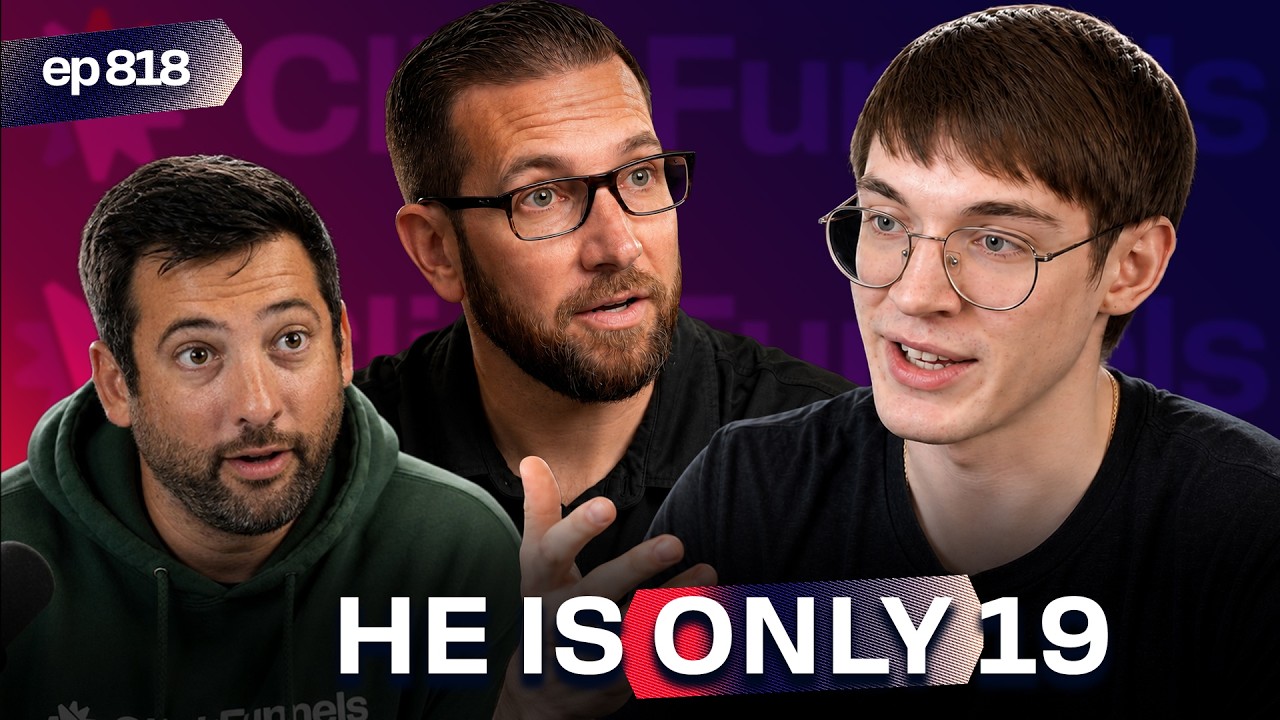
Malcolm Keith, 19, started a paid Teen Mastermind charging $5,000 a year after growing up homeschooled in a business co-op and attending industry conferences as a kid. He read Russell Brunson's Unlock the Secrets at 15, got ClickFunnels certified at 16, and built a Discord community that became weekly Zoom calls and quarterly in-person events where teens learn funnel building and entrepreneurship from established mentors.
Chapters
Today's guest got his ClickFunnels certification at 16, launched a paid mastermind at 17, and now at 19 is running quarterly events across the country.
Probably because of my jiu-jitsu routine. If you take too long to think and don't take action, then, well, you get pinned. We have a kind of reverse of the saying go with the flow. We flow with the go.
He is proof that age is just a number when it comes to business.
This is Malcolm Keith.
Welcome back to another episode of ClickFunnels Radio. This one's gonna be a lot of fun. Welcome Malcolm Keith to the show. Malcolm, you have an interesting background, you know? You mentioned being homeschooled, right? But I don't think your homeschool was similar to most other people's homeschool. I would say that this was like event school or like business school. Maybe talk to us a little bit about how your homeschool was different. It wasn't so much home.
Yeah, for sure. I was part of a, like an organization, uh, and so it was a homeschool co-op. So I would have like a community day where I actually had classmates to, to go and, you know, do school with. But I think I missed probably like half of those event day or half of those community days because I was going to events with my family. So I think we started going, um, and when I was 9, I believe, uh, at first we would just like sit there and play with our toys quietly or read a book or something, but slowly and eventually we started listening to the speakers and even taking notes, and so it was kind of an accidental thing for my parents. They just didn't want to be apart from us, and we had the ability to actually go to all the events together, so they decided and committed to always bring the whole family on every single trip, on every single business trip. And they always tried to make it fun as well. Like, I don't know, we'd go to Disney if we were somewhere there or just do something fun together afterwards so that it wasn't all business, especially when we were little kids.
So how was that like for you? Because I know when I was a kid, I mean, my parents tried to do the same, but also there was a lot of times I was like, oh, they're going to drag me to this thing and I got to wait 4 days before I can finally go do the cool thing I want to do. Or were you like that? Were you just like, You did it the first time. This is cool. And you were really gung-ho.
Uh, I'm sure there were probably some times where I had to be dragged a little bit. Um, I don't really remember. I, I think nowadays I, I'm thinking like, okay, I'm really excited to go and learn and improve my business. So, uh, Vera, uh, my sister is still kind of eh sometimes cuz you know, she, she likes to hang out with her friends, uh, here a lot. And so, Um, it's— yeah, I don't remember if I ever did, uh, have to be dragged. I'm sure I probably did. I mean, who— what kid wouldn't? But right, I think that's kind of what you're supposed to do as a parent. I mean, no kid wants to go to school either, but it's important. So no kid wants to eat, you know, the right food, but it's important. So you kind of just have to do it.
Malcolm, I, I truly do remember seeing you grow up at these events, like especially all these Russell Brunson Mastermind events too. You know, I've been doing this for, you know, with Russell officially for like 8-something years. And so that's a lot of the time that you've been going to these things outside of Russell Brunson Mastermind events. What other events were you guys going to?
The first ones were like martial arts business masterminds. So my parents own a dojo, and so I've been on the mats and in the entrepreneurial world since I was in diapers. So that's kind of my story. So those were the first events that I was going to was those masterminds and learning specifically what's it like to actually run the martial arts business and what were other martial arts business owners doing.
Did you ever go to Martial Arts Super Show in Vegas?
My dad did.
Did he?
I don't remember if I was there. I was probably way too little, but I know he did and he got to see some cool people.
It's funny that you bring up these type events too, because we always talk about this, Dante, like, oh, you know, will this work for my business? Like funnels specifically. And so I think it's interesting that we're talking about martial arts. We actually sponsored a booth at the Martial Arts Super Show a few years ago. And that was it, Malcolm, is like, all these people would come up and be like, what's a ClickFunnels or anything? And they started to realize that like the art of, it's funny that it's martial artists, right? The art of what people do is totally separate than running the business side and the marketing and the client acquisition. Like, once you get them, then yeah, now you move into the art and you're doing this.
Oh, right.
So is that kind of some of the stuff that you were learning? Obviously, you grew up with martial arts, but when did you start learning the business side of this? Like, okay, hold on, there's marketing and there's other things. And I know they wanted you to take over the family business. Maybe talk about that and kind of the direction you're heading.
I don't know if there was ever a specific point where I started learning, like they never like sat me down and told me like, this is how a martial arts business worked. I was just in there in the room, sometimes in the back office, sometimes in the front office when they're doing, uh, the close, um, when they're doing the, the sales, uh, meetings. And so I was just kind of there and in the room and that was the important part was just being exposed to it and constantly being surrounded by it. Um, so I think there was never a defining point where I started learning like, what's it like to be a martial arts business owner or business owner in general? Um, but when I started like taking a specific interest, uh, on my own was probably when I went to Unlock the Secrets and I saw that there were other kids and teens that were not only interested in business, but making money and like doing business already, which was super cool.
Was this Phoenix?
Yes, it was Phoenix.
So I think, yeah, I brought my two boys. I brought my two boys to that. It was incredible. Like seeing all this is, I think, one of the first times Russell brought out like the psychology stuff and the Twinkies and everything else that was like for the groups. What do you remember about that event where you're like, okay, hold on, there was a turning point. I just was like, oh, this is something that I'm interested in. So you were probably 14 or 15 maybe at that point is my guess.
Yeah, I think it was 15. Yeah, it was amazing. And quite a lot of it I'm actually modeling into the Teen Mastermind live event because it was just like, it was so many pieces of it were just perfect. I especially remember the round tables. Those were awesome because they were, you know, still facilitated by adults, But they just kind of sat back and let us talk and just guided the conversation. And that was the best possible thing to do because then I got to meet the other teens for who they truly were and get to really hear their ideas. And that was super inspiring. And I think that's my whole mission with the Teen Mastermind is, uh, learning from mentors who are 10, 20 years ahead of you is amazing. And you need that. You need somebody who's gone on the path before you. But it's kind of hard to get into it when there's nobody around you who are kind of at the same level. But when there are, then it's really motivating because you're on the journey together. And the entrepreneurial journey, as you guys probably already know, can be very lonely sometimes. So you need as much support and as many peers as you can.
Yeah, these events are massive. I think that's really interesting that you kind of had that realization at an event. It's a little bit meta, right? Like, hold on, there's community here. This is where I'm finding my people.. But I want to create a community for these teens as well. Matter of fact, next week we're having an event up in Boise. And the opener that I'm going to do is Malcolm Gladwell in the opening of his book, Outliers. He talks about this town in Italy and all these immigrants that come over to Pennsylvania, and it's Roseto. And they had terrible diets. They would fry meatballs in lard and drink wine and smoke cigars together and everything else. But the interesting thing that people started to notice is these doctors noticed, they noticed that these people had a well under the average, like percentage of heart disease. And they kept trying to research it. And there was nothing that they could do. There's no other magic other than it was like multi-generational houses. These people had love, connection, and community. So when you bring up entrepreneurialism, like as a lonely business, I think what you've created and what, you know, Russell's community and so on have created is a place like this Roseto a little bit, like where you can come together with like-minded people that know and understand you. So you're talking about people who are older, you go and you see all these people older at these events, but how many people were your age? How many teenagers? I mean, Unlock the Secrets is different 'cause it is more teenager and adult focused. How many people were you kind of around these round tables with talking with?
I don't remember who, like, how many specifically were at a roundtable, but like, at Unlock the Secrets specifically, there was, you know, tons, tons of kids and teens, uh, and that was awesome. But, you know, most of the business events, there were like barely, if any, teens. And I think I saw it like later on that there were a couple of teens here and there, which was great. It's kind of a sign of the times changing, which is awesome. But I mean, at the martial arts events, like, nobody— like, nobody brought their kids, which was kind of weird considering most of the, um, martial arts schools do like a kids program and they teach leadership in their kids programs. So why aren't they really doing it with their own kids? It was interesting, uh, to my parents and to me. It's like, aren't you supposed to kind of be the product of the product and be the model for your students? I'm sure they are, but like, you know, nobody else was bringing their kids. And it was, it was only at Unlock the Secrets or, you know, those events that I got to see other teens that were interested in this stuff. Because back, you know, I would go to these events and come back home and realize I couldn't talk about any of the, you know, big ideas or business or marketing or any of that stuff with my classmates and peers at home because they just didn't get it. They just didn't get the same experience that I did. Yeah, I really looked forward to those events.
You had that, your dad always taught you this thing, right? To like about get the skills before having the idea.
Mm-hmm.
And you know, we're talking about going to Unlock the Secrets at 15, but then at 16, you're like, okay, I'm gonna get certified in funnel building. And so talk to us about why, you know, that idea about, okay, skills come before the idea and why you went into funnel building but that's not really what you're doing right now. Maybe just kind of talk about this process of, you know, get the skill first and then the idea will follow and maybe use funnel builders as an example.
Yeah, I think my reason to go through the certification program was just 'cause I didn't know how to use ClickFunnels and, you know, I'm techie. I mean, honestly, using ClickFunnels is like playing a video game except you make money out of it, which is cool. And so I always wanted to learn it, and I think 2.0 had just come out, and so I wanted to experiment with that and maybe be able to help my parents somehow. And then as I was going through the certification, I got, you know, contacted by a few people that we had known to start building funnels for their businesses.
That you had met at like the events or like that your parents had relationships with?
Yeah, that I had met at the events. And yeah, and I think you guys had James Curran on this podcast as well. And so he kind of took me under his wing a little bit and I got to do some funnel building work for him and his clients, which was super fun, super awesome. And that was, that kind of got my start as like, as like a real solopreneur, just like, just me, not necessarily like with my parents. Help, but, you know, just me being my own, you know, funnel builder. I'm a funnel builder now. And that was awesome.
Oh, that's amazing. You know, Malcolm, one thing that I think is just so cool about you, man, is you maximize and capitalize on all the opportunities. So your parents were active business owners and very active parents as well. So they blended business and parenting with homeschooling. They take you to all these events over all the years and really let you learn and grow. Unlock the Secrets was an event that Russell Brunson did where he really promoted bring bring your kids, bring your family. I'm gonna break down for you how they can become great adults, great entrepreneurs if they choose to do so, but also just understand their minds and themselves and make good decisions. And it was a fantastic event, but you were kind of like given an opportunity there, you know, if you will, because you didn't— your parents brought you to that event. And then at the event, while being given that opportunity, you start to notice things, you're learning things, but you notice all these other kids that wanna do the exact same thing your parents want to do. So you're like, oh wow. So you're given an opportunity here, But you maximized on it because then to all those people, you made a community. You started going live with them weekly. And it's so cool what you did because here's a guy that was given opportunities to go to Russell Brunson events and then learned at the events, implemented at the events, started funnel hacking Russell himself and his own events. And now full circle next week, is it next week, Malcolm? You have this event coming up?
Uh, it's in August.
That's right. Thank you. Now, Full circle, gang. Malcolm is gonna be going and doing a, a youth event at the ClickFunnels headquarters with Russell Brunson. And now Russell is gonna be speaking at his own event. And I really applaud you for that, Malcolm, cuz it doesn't matter what age group— this is a trend we see on the podcast. It doesn't matter what age group, it doesn't matter what demographic, it doesn't matter what gene pool, it doesn't— nothing matters except action. How many people have you seen that had the exact same opportunities? Their parents or somebody else brought them into an opportunity, but then they don't maximize maximize on it. They don't capitalize on it, right? They don't take action, but you did, man. So I guess at the end of the day, I just want to applaud you on that. I think your story is awesome. Who else— you know how hard it is to get Russell to do events? And like, not only is he going to speak at your event, but you're doing an event at his HQ, man. Congrats on you. Good job.
Thank you. Thank you.
So, so you talk to Youth all the time. I was telling you before in the green room, we were getting ready for this, like, I come from really great parents and my parents did the same thing yours did. They, they, they tried their best to get me into the right rooms, but I wasn't able to go into the same rooms that you were. My parents tried so hard as many people's parents do. Why, why do you think you took action when so many others don't? At the end of the day, they just don't, right? We drift. They just drift along. They see something, they learn something, a new opportunity, a new way of doing things, and then they drift, and they drift away so far that then they feel like they can't take action. What makes you separate and different?
One, I think the reason I took action versus, um, you know, some other teens who are given this opportunity, I think is probably because of my jiu-jitsu roots. I mean, if you, you know, take too long to think and don't take action, then, well, you get pinned and, uh, and you get— you lose points. Um, so I think that kind of mindset and idea of like, you just have to go and you have to go. Um, we have a kind of reverse of the saying go with the flow. We flow with the go. So, um, I think flow with the go.
So that's great, man.
That is great. As a kid and as teens, we don't know that we can fail yet. Uh, and so it's— we don't have the, the same kind of baggage that adults have because we haven't gotten to experience that yet. And so, and I'll say that my journey wasn't immediately like, oh, I'm gonna unlock the secrets and now I'm gonna start the Teen Mastermind. There was a period of time between that first unlock the secrets and I think I've started the Mastermind at 17. So it took a few years. That's because that idea was slowly brewing and And during that time, I wasn't, you know, trying to focus. Well, my dad kept telling me, um, you know, your idea is gonna come later. Right now you just need to focus on sales and marketing. Two most important parts of being an entrepreneur is learning how to get your idea out there and have people buy it. And so, Dad, most business owners have the idea first and they have like the passion for whatever that their craft is or their art. But they have no idea how to actually sell it. And so I think we kind of mentioned that earlier. Um, and so Dad wanted me to— Mom and Dad wanted me to do the reverse, learn the skills first, so that way whenever I get literally any idea, I'm ready to actually sell it. Between, you know, Unlock the Secrets and when I started the team, Mastermind was when, you know, became a funnel builder, learned like, you know, what are funnels, what is— what does it mean to market, how do you sell. And then eventually when the idea came along, it came out of like, you know, who was I a couple of years ago at Unlock the Secrets. And what I wish I would have done was actually stay connected with those teens that I had met because they were awesome. But after that event, went back home to the ordinary world and kind of lost touch and realized there's nobody locally who can really talk about this entrepreneurial stuff with me. So that's why— that's how the Teen Mastermind was born.
Even before the Teen Mastermind, I remember that, that there was— you did like a Discord group to try to kind of like keep in touch with people. Is that then what kind of turned into like, like, man, we had a Discord group and that kind of accidentally turned into a business, and then we went from there? Yeah, talk to us about the Discord group.
Yeah, so I mean, I had no idea that the Teen Mastering was going to be this big and that we were going to do live events. Like, never could have imagined that.
You just flowed with the go.
Yeah, I just— that's right— was committed to— at that event, like, I've been to some of Russell's events before, and there were— I think there's a lot more kids and teens that come to those events, which is cool. Um, but time and time again, we never really stayed connected, and sometimes I would get their contact information. But even if I did, we just, we weren't committed to staying connected to each other. Um, so that's where I was like, okay, this time is going to be different. So I made a Facebook post, uh, and kind of organized a little meetup in one of the lobbies at Unlock the Secrets in Paradise. Um, and that's, that was the first Teen Mastermind before we even knew that that's what it was going to be called. Uh, and then just created a Discord group because I figured most teens use Discord because that's kind of the platform and then invited everybody that I met and that's how it started.
A simple idea that you took action on. That's the kicker. It didn't live in your brain. It didn't just hypothesize and ruminate for 20 years on how you were going to do this thing. When you were finally— you just flowed with the go, you did the thing. And I think Malcolm Funnels and business and really life, isn't it all iterative processes?
Oh yeah.
Like, you don't just start with everything. You start with something and then you build upon that. Have you found that to be the same in your life so far?
It's kind of, uh, ironic how in order to like really truly learn something, like, you know, being able to look at other people's mistakes and learn from that, uh, like you can always learn from your own mistakes and that's, you know, how most people think of like that's how you learn. Uh, but it's also great to like learn from other people's mistakes so you don't have to. I think my dad has a saying like, we've been bled and been bruised so you don't have to in the dojo. And so he's taken 10 years of experience and condensed it down to a golden nugget that's going to save us 10 years in the dojo. All of that is useful, but you still have to actually go and do the thing. And there are some lessons that you kind of just have to learn the hard way. And that's actually— that's the cool part though, is that out of that creates a story and out of that comes challenges and out of it comes actually the fun part. Of problem solving this stuff. If it was all easy, everyone would do it, and I don't think it'd be that fun.
Oh man, Malcolm, you are like, you are like, I just had, I have 3 kids, they're all fairly young, and I want to create an environment very much similar to your parents and what they did. Dude, I hope my kids are like you. You are so cool. This is, you're like, you're dropping real bombs on here. 19, dropping bombs. Speaking of 19, I was looking into your community a lot. A lot more than I talked to you about in the green room earlier. But then hearing you talk in the green room, you guys are doing things and you're doing things unbelievably quickly. How?
Again, it goes back to that idea of being a teen. We don't know how to fail yet. We don't know that. Yeah, we don't know how to be scared.
Well, you mentioned something too, that like you have different people in this community, right? Like some have a certain skill, others have a different skill, like Maybe talk to us a little bit about how you kind of like help each other out. Are there certain superpowers?
Yeah, that's—
I mean, you know, you remember Hawkeye, right? From the Avengers? He's got this quiver, right? And what one does, one's like a heat-seeking one. The other one's like, you know, a blow up when it hits them or something like this. But depending on the situation, he's gonna grab a certain arrow. And in your mastermind, you got a bunch of different people who are doing a bunch of different things. Maybe talk about some of the different skills they have and how you kind of like help each other out.
Yeah, so there's a couple of funnel builders. Me and, you know, a few of the other teens have gone through the certification program, which is cool, and how I got to meet some of them. And so whenever there's someone needs funnel building advice, we have people, we have teens for that. And then whenever someone needs like content creation advice, we have a few people who have grown their— one kid has grown his Instagram to like 40 or 50K followers, which is amazing. And so there's the teens who know about that stuff. A couple of the teens have written books. Rose has written two of them. Forrest has written one. There's a bunch of other teens working on writing books. And so these guys can go and help their peers with writing a book and publishing, which is amazing. And it's so fun to see all the, you know, how diverse all the skill sets and all the passions are of each of these teens. You know, it's kind of challenging because I somehow have to teach and guide and grab the right speakers for all of them. But it's also, you know, it's a fun challenge because then I get to kind of get to do every kind of business in a way by helping the teens with their businesses.
100%.
Do you have any specific stories where like, okay, this person was lacking in this part, but the mastermind stepped up and this person was able to help because they knew this skill set, maybe where somebody else didn't. Any stories come to mind?
The biggest recurring story is confidence. Um, Rose, for example, she— when I made that Facebook post at Unlock the Secrets in Paradise, she originally did not want to come and, uh, come to that mastermind with us. Uh, her mom made her, which is, you know, good thing that she should have done is make her come just because the mom knows what's best. So Rose came, you know, despite not really wanting to at first, but then, you know, she actually enjoyed it. And then I invited her to the Discord. She joined a little bit later after the event. And so honestly, like, towards the beginning, she kind of flew under the radar a bit, but I knew that she had like, um, she had posted like one episode of a podcast and she wanted to do that like just because like, you know, everybody has something, uh, and so I should have something as well. So she had an episode of a podcast and, uh, but it was only after that event and after being in the Teen Mastermind and getting on our calls for a little while that she was like, okay, I actually want to write a book and I want to get it done before the next Funnel Hacking Live. And she did it. And then she wanted to write another book and she got it done before the first Teen Mastermind Live. And then now she's spoken at, I think, every single one of the events, which has been just so awesome. And it's— that's probably the most fun part is seeing, being able to pull out the true character and the true personality of each of these teens. Because it's, you know, for whatever reason, school or just, you know, social media or whatever the case is, they hide themselves a bit. And so I think that's the most fun part about the Teen Mastermind is really getting to know each of these teens and getting to pull, pull out their confidence and get them to show off, like, you know, who they truly are.
You, you mentioned that, that these teens, for the most part, like, they don't know enough to be scared. Like, we all know fear is a learned behavior, right? Like, what, what is it Dante? Babies are scared of loud noises and falling, like, by default. Everything else is learned. And so we learn more and more, we watch other people fail, and so on. And, and I wonder if in this group, if it's unique to, like, there may be more that are homeschooled or something, or see what other people can do. It's like our Two Comma Club Awards or Funnel Builder Certification. You're like, wait a minute, if they can do it, I can do it. There's a lot more belief, I think, in here, which I think is really, really cool. But you, there was a moment in this Discord group that I think maybe was something that you feared, I don't know, or just hadn't thought of, when somebody's like, hey man, this is actually really, really cool. And this is probably pre-mastermind. Where somebody comes to you and is like, hey, you should be charging for this. Was that difficult for you to do? And when did you decide to be like, okay, this is enough value, the community is worth enough that I'm going to charge? And so what made you start charging and how much did you start charging?
I don't know how early I started getting those comments from the teens themselves, but probably pretty early. And it kind of took me a while to actually do like a founding member launch.
Was that fear?
Yeah. I mean, honestly, I think when I was 17, I think it was, you know, 18 now after FHL. And so, hey, that's kind of the point where the fear starts to creep in.
Do you think it was actually fear or do you think it was imposter syndrome? Because I think those two things are different.
Well, that's interesting.
I think imposter syndrome, actually not— I think I know imposter syndrome because I was thinking like, who am I to, to do this, to be the teen that's leading, you know, a teen mastermind and to, you know, charge my friends money for the thing that they're already part of?
Yeah, it's a tough thing to do, right?
Yeah. Um, but they were telling me to do it, so yeah, I mean, they were literally asking for it.
But, but even still, even though they're saying, please charge me money, please take my money, you still have that imposter syndrome, right? So like, how did you get over it? Because if I could be assumptive, Malcolm, I would assume that finally at the end of like a year-long journey, you finally had the realization of like, oh, an expert is only somebody who's one chapter ahead of the person that he's teaching. And I'm well ahead because I've been doing this since I was 9 years old and I have so many more leadership skills and I have so many more use case and I've already seen so many more things. So I am one chapter ahead and, and these people are the students and I can do this and I'm not an imposter. But so like if I could be assumptive, that's probably the road that you went down. But how did you actually get there?
Honestly, having supporting parents telling me like, hey, no, you actually are the person to do this because look at what you've already done. The reason that you created a teen mastermind, the reason you created this Discord was because it hadn't been done before. Nobody else was brave enough to step up and invite people to the Discord. And most of the teens like at that farewell dinner at Unlock the Secrets in Paradise, most of the teens were sitting with their parents. It was mostly just because of us, because of our group, because of me and because of my parents that we literally pulled other kids, other teens kind of away from their parents to come and sit at the table with all the teens together. And that only happened because I decided to step up and do that. And so just from that action alone, I'm already more than qualified.
Did you start charging for the Discord group before you came up with the price tag for the mastermind? What were you charging for Discord?
Well, the Discord was free. I just invited people. Um, but then after, I think, like, yeah, probably a year in, I was like, okay, you know, for you to join now, you have to, uh, to pay to be in the group. And, you know, that ends up working out even better because the people who pay pay attention. And, you know, totally, I've seen that a lot. Like, the people who were telling me like, hey, you should, you know, charge money for this. And then I started doing that, and then they were like, okay, yes, I'm jumping on board and becoming a founding member. They've been the ones who have stuck through as much as possible. Um, and the people were kind of like, eh, not really for me, weren't really the people anyway. Uh, and so, and hey, that's okay, they have their place as well. And, uh, and we'll we still connect and that's awesome.
So Discord group is free and then how much are you charging now for the mastermind? What's the price tag?
I think I did like, right now it's $5K a year for the Teen Mastermind. So to join the Discord, to be on the Zoom calls, to have all the, to be able to access all the guest speakers and all the recordings and the success path and all that stuff is $5K a year. So I expect mostly the parents to invest, but honestly, the goal is by the end of that year, the kids ideally would be making enough to be able to pay for their own membership. And so that's the goal.
Well, you capitalized on opportunity. You were brought into a room where parents brought their kids to learn about entrepreneurial tactics and how to do life right. So of course you should do that, Malcolm. I just, man, I just think you're so cool for doing this because I talk to so many people so many times. And they're like, oh, I can't do that. Like, they feel like, oh, I was given this thing, so I shouldn't do that. And I don't know why we think that way. And how smart of you. That's exactly what you should do. Provide an opportunity to the parents, because every parent who's, who's like parents in that event, they all want their kids to be in good communities surrounded by good people where they could take chances in business, they could take chances in marketing, they could try things and they could explore their options. But they can do it around people who are also like-minded. A rising A rising tide raises all ships and you just made an ocean that they can put their kids' boat in the ocean and a rising tide will raise it all. And then yeah, you build it up and then they could do it the rest of their lives, man. It's cool, Malcolm. It's really cool. Coach to coach, can it be really lonely sometimes? I don't know if you've experienced this yet. In my perfect world, somebody comes to me and 6 months later I never see them again. That means I did my job. And, but that can be really lonely as a coach, right? And a lot of times it can make you really feel like, am, is what I'm doing good? Am I actually helping people? And it, it, it can bring a lot of inner turmoil sometimes. Right. But dude, how good does it feel when you have a rose? Life changed regardless of what you do with your life, life changed. And I, I say all that because I wanna hear your opinion. I know you've heard Russell say it's a lot cooler to help somebody else do the thing than when you actually do the thing. And have you found that to be the same in your own journey so far?
100%. Yeah, I think this is why I have a shelf, and I hope this shelf grows to have more of my people's books. You know, eventually I'll have one of my books here, maybe, but I don't care as much about that as I care about having these people's books here. And that— this shelf is awesome.
You're just a leader, you know that, Malcolm? You know you're a leader. It just oozes out of you and everything you say. You're just really cool. You definitely are a leader. Do you think that a lot of this stuff that you might not even have noticed about yet in your own life, do you think it just comes from like the dojo upbringing that you had.
100%. Yeah. Yeah.
It's just part of your character trait now.
Yeah, I think, yeah, so much of it comes from the dojo. And I think there's, you know, there's 3 aspects of my life. There's the dojo and homeschooling and business. I think those 3 circles come together to honestly form me and form the Team Mastermind. So, so much of it I pull from the dojo and, you know, the whole business model of like serving families is exactly what we do at the dojo. And so it's just kind of taking that business model but putting it online, which is a little bit challenging but fun at the same time.
Well, we talk a lot about like hero's journey, right? We've covered a lot of your journey and in those hero's journey, there's gonna be an internal desire and there's an external desire. I'll give you an example. External desire is gonna be like, yeah, I wanna make my first dollar online. I wanna make, you know, a million bucks. But then there's an internal desire. It's like, what's your why? You know, why are you doing this? Why are you trying to, you know, meet collectively with other entrepreneurs? Maybe give us both of those desires. Like, what do you want to do? Like, maybe it's monetarily, maybe it's, hey, I wanna serve, you know, 1,000 young entrepreneurs. But then give us the why, like internally, why are you doing it? Give us those two things, the external and the internal.
It's kind of hard to come up with like an external, One, I guess, like, you know, you got a goal?
You have like a monetary goal?
Yeah, I mean, you know, 2 comma club is always the, the kind of—
let's go—
ideal. Um, so honestly, yeah, 2 comma club would be amazing.
Make a million bucks. Okay, cool. Why though?
Why?
Being, you know, even more of an example and a leader for, uh, the teens and like saying like, you know, showing them by, you know, being, you know, leading by example and showing that, hey, a teenager, uh, or, you know, probably by the time I get to Comic Club will probably be 20. But even a 20-year-old is like kind of, you know, in between.
He casually says, Dante, I mean, I'm 19 right now. By the time I get to guys, probably I'll probably be old, like 20.
Yeah, I think, you know, getting to Comic Club and growing the Teen Mastermind in general, I think is just going to be, um me being a leader by example and showing the teens that they can do this by being the kind of peer that, you know, by being the peer that also does this. Because that's what inspired me originally, was because I saw people my age, you know, seeing all the adults speak on stage and, you know, have 10 years of experience in 2 Comma Club and 2 Comma Club X and all that stuff is cool. But I'm a teen, I'm like, okay, I have to wait a while before I can start to do that. And then I, you know, yeah, then I go unlock the secrets, see other teens, they're like, okay, actually I can start right now. Yeah, getting to 2 comma club I think will, um, raise my lid. I think John Maxwell talks about the law of the lid. Um, it'll raise my lid, and by doing that, that means I can, or, you know, raise my ceiling, and then it'll raise the teen ceilings. And so, and Yeah, there's this idea that, you know, my parents are really wanting to have their ceiling be my floor. Wherever they can reach, that's where they want me to start. And then from there, it's just, you know, it's just upwards.
Let's dive into the funnel because I thought we had a really interesting point here. Okay. We have to define our dream customer. Yours is unique. And anybody who's selling to teens or below, I think needs to understand exactly what you described. Okay. Dream customer to work with is the teen. However, the teen sometimes doesn't have the money. So talk to us about the front end of this funnel. Like, okay, this front end of this funnel is designed to attract the parent first. How are you managing that? Like, okay, I'm now— my dream customer, at least the top of funnel dream customer is the parent. But once we get down to the bottom, it's really going to be the teen jumping in here. How do you handle that? What does the funnel look like?
I think the front end and like getting people to know about the Teen Mastermind ironically isn't like a classic like ClickFunnels click funnel or ClickFunnels funnel. It's going to those events and talking to people directly.
So it's a real life organic. It's not an online funnel. It's a real life organic funnel. Okay, keep going.
Yeah. So, you know, just building those relationships and, you know, seeing like Hey, wait, you need this. I have this thing. And they're like, oh wait, I actually, I need that thing. You know, talking to other parents, talking to other families who constantly ask us like, wait, you can bring your kids here? I didn't know you could do that. And, you know, wait, there's a teen mastermind? My kids need to be in that. And so just, you know, just talking to people and seeing like, where are their needs? And can I fulfill those needs? And, you know, if both of those are yes, it's a great fit. And there you go. Now you just, you know, continue the conversation from there. And that's, I mean, sales is a conversation. That's pretty much, that's the simplicity of it. And I think, you know, I still sometimes get scared of like, you know, having a sales talk, but really it's just like the close is just figuring out if it's a yes or no. If it's a maybe, then Like that's, that's not good. You wanna get them to either say yes, cuz then, you know, now they join or they say no. And that means, you know, for sure they're not a good fit. But if they're on the fence and on a maybe, then it's bad for both of you because you don't know whether or not you got a client and they don't know if, you know, your thing is gonna fulfill their needs or, you know, they don't know if your thing is gonna fulfill their needs and it's currently not. Or, you know, so they're kind of just stuck in this ambiguous state. And so that's, that's the point of sales, is just to fulfill their needs and get them to say yes or no. Both answers are fine.
By the way, Malcolm, you are running a classic ClickFunnels funnel. Your acquisition is just in-person networking. I have a lot of buddies who at scale do what you do. They go speak at one event a month and their funnel lights up for 4 days and they're done. And they go speak at another event the next month. They don't run ads, they don't have YouTube channels, that is still perfectly fine. It's traffic to page, and that's a funnel. What you're saying here is we need to make sure that our funnel is our best salesman and it answers the questions that people have and it takes them down the logical track so they can actually make a decision at the end of the day, yes or no. If we leave them in confusion, a confused mind always says no, but that's a no that we really couldn't fight because we made the no. Is that what you're saying there?
Yes. Yeah.
Lovely. And you have a real concept, like Well, let me do this. When you built this funnel, what did the funnel look like? Like page by page, did we have order forms and upsells and downsells and like, what did we have?
Honestly, starting, it was the checkout page. And I think that's as simple as you need at the very beginning. Like just, and that's what I tell all the teens who like haven't started the business and gotten paid yet is just whatever you need to like get that first payment, just do that. Don't focus on the pretty funnels. Are nice and they're useful at some point. When you're starting, not yet. Don't— you don't need to worry about that because that's gonna—
what do I have to worry about, Malcolm, if I'm starting? What do I worry about?
Uh, having a checkout link where they can pay you. And that's, that's the biggest thing, especially when you still have that, you know, ability to message them one-on-one or talk to them in person one-on-one where you're still on that, you know, getting, you know, getting clients one by one. You can still have that really personal connection. Then you just, you just need a way for them to pay you. And then after that, you can, you know, think about, you know, putting a VSL up and filling out, you know, your origin story and all the, you know, hook, story, offer, all that kind of stuff.
But just start simple: headline, subheadline, checkout.
Yeah, so, so you have these conversations, you ask them for the money I want to know, once they say yes and they're in, what does fulfillment look like? Are you guys doing these quarterly? Are you doing monthly things? Like, everybody has a coaching program or they've got a, um, you know, a mastermind, but I want to know specifically how you're fulfilling on this thing to make sure these people keep coming back and getting the things that they need to out of it.
Yeah, so the way I, um, think about, like, you know, what is it that the teens need? Well, what is it that I wanted? Because honestly, I'm serving myself, but a year or two back, or even just a few weeks back, what did I want? What did past me want? And so the first thing that it started with was the Discord, a place where all of us were together, a big group chat that doesn't have all the quirkiness of a group text thread, but actually a good structured group chat. Discord. Perfect. Well, now I actually wanna talk to you guys face to face, or as close to face to face as we can get.
This is like McCall Jones, if you give a mouse a cookie. I hope everybody's paying attention. Like, hey, we needed this. And then all of a sudden they had a cookie and they were thirsty and they needed some milk. And so that's where we're at. Like what, how do we fulfill over and over? Keep going, Malcolm.
And I just thought about like, what did I want? Um, cuz honestly I started the team mastermind for me and then turns out, oh, there's other teams that actually want this too. That's cool. So yeah, Discord, start off with like the community and, you know, having a place to constantly talk with each other. Then like, you know, I want to see you guys weekly and talk, you know, over voice chat because that's easier and better. So we started doing the weekly calls. And then after that, it's like, you know, we can talk with each other as much as we want and have that peer-to-peer connection. But we need, you know, some mentors who are, you know, a few years ahead of us who have been there, done that. Um, both groups are important— having the peers to walk the journey with you and having the mentors who are a few steps ahead of you who can pull you up. Um, and so I think my mom was the one who really initiated this and went to talk to a few people. It's like, hey, there's this, uh, teen mastermind that my son is doing. Do you want to be a I can see your mom doing that.
I've seen your mom do this at events. Olga's awesome.
Yeah, so I think she like, she had the idea for me at FHL to like hold up a cardboard sign and say that, hey, we're doing a teen mastermind in one of the rooms.
That's the funnel, that's the hook right there, Dante. It's the organic funnel.
Yes, it is. It worked. Um, and so I credit my mom with a lot of that like just go do it kind of stuff.
You, you mentioned, you mentioned mentors though too. Um, you, you've had Ryan Pineda speak, you've done stuff like Andy Elliott's. Like, how did you swing those names and get into those groups and like use them and, and have them as mentors? That's pretty awesome.
I think, um, honestly, it's just kind of, it's as simple as asking. And I think we kind of have an advantage because we're kids and, you know, these leaders and these big entrepreneurs want to help the next generation. That's part of how they, you know, continue their own legacy. And it's like, well, who wouldn't want to help out a kid who's interested in entrepreneurship? So that's kind of the unfair advantage that we have. But I think it's as simple as just asking. And if the answer is no, sometimes it's a not right now, maybe later. But I mean, if you don't ask, the answer is always no. And that's how we've, we've thought about things in the Teen Mastermind. We made a video for Russell and sent it to him trying to get on stage at FHL 10. So we put together a video, put in, you know, as many of the things that people say often, like his, like phrases and catchphrases and all those—
his little Russellisms.
Yeah, Russellisms. As many of those as possible. I think we structured it, or at the very end we said like, now, you know, now that we've hooked you and told you our story, it's time to make you an offer. And then we made the offer of like, hey, we'd like to speak at FHL. Here is what value we would bring to your community. And I think we had sent it late, so there was already like no way we would actually get on stage, but it did work to get us to be roundtable hosts at the event. Which was amazing, uh, and probably even better because then we got to talk to other teens and other families face to face. So, and if we never made that video, we never would have been roundtable hosts. So it doesn't hurt to ask. Sometimes, you know, if you don't ask, the answer is always no.
Shoot your shot, 100%, because if you didn't shoot the shot, you wouldn't have got to do the roundtable.
And if you didn't get the roundtable and get to show that you were gonna do good work, I bet you wouldn't have the event coming up at ClickFunnels with Russell You've had, like I said, I mean, you've done events at Andy Elliott's place, you've had Ryan Pineda as a speaker, and you're doing more and more events. And tell us kind of maybe why you decided, hey, I want to get together more often than less often, and maybe kind of talk about where that came from and why you're doing what you're doing.
Yeah, so exactly a year ago, I, um, I think I was watching Ben Hardy at Mastermind in Paradise, and he was talking about 10x goals and stuff. And at that point, I think, you know, Russell— that was after the very last Funnel Hacking Live. And so there was kind of one less event for all of us teens to meet up at together because a lot of us were kind of in the same ClickFunnels circle. But then other teens started joining from other circles as well, so we didn't really have a one place, like, for our group specifically to meet up at. And so I was listening to Ben Hardy, um, and the whole 10X Goals thing. I was thinking that would be cool if we could do our own live event just for the Teen Mastermind. And, uh, why don't we do it like 90 days from now in October? Uh, and then I waited, I think, like 60 days to actually go and ask speakers and put up the VSL and, and actually market the event. But then we got, I think we filled up like 50 people, which was like half of the, the goal that we wanted. But I mean, like 50 people was amazing, and half of them were out of state, which is crazy for a little small town of Roseburg, Oregon, which doesn't even have a local airport. The airport they have to fly into is like at least an hour or two drive, and yet half the people who came were from out of state and It was just awesome. And yeah, the live event came out of the need for like, we want our own unified Team Mastermind live event to come. And after the Oregon event, which was like— your first event is supposed to be super janky and kind of go wrong all over the place. It was as close to perfect as you could ever want it. And it was amazing, but kind of scary because now we have to top it for the next one. Originally, they're kind of— there wasn't a full plan for the next one, but this event was like one of the first times that I had seen some of the Mastermind members cry because an event was over. Like, it was so amazing for them, and they loved it so much that like they were really gonna miss each other after this. So they wanted to do it again very, very soon, within like a few months. And so we're like, okay, why don't we do these events every 3 months and why don't we go to a different state? Because why not? And there's probably a lot of financial reasons why not, but we did it anyway. And so then we went to the second one was in Arizona. We got in contact through a few connections to Andy Elliott's team and they were like, hey, your team mastermind group is amazing. Why don't you guys actually hold the event here at our facility? We were like, what? Okay, that's awesome. And we did that. And, um, they were just such a cool, uh, environment to be in. Like so much, like, you know, of their messaging and all that stuff all over things to model and our businesses as well.
Did you make, uh, did you make the Malcolm Army shirts?
I got, um, I got this award that they put, uh, you can't see it, but they put my logo on it and then they gave me my own dog tag, which was amazing. I did not expect it at all, but they did the whole the whole thing with me, and it was really heartwarming. They, they overdelivered. It was awesome. We did the event there, and then, then we went to Illinois, which is where, uh, some of our members are, and did an amazing event there. And now we're doing it at the ClickFunnels HQ, and Russell Brunson is going to be there, which is such an insane full circle thing. Like You know, it's one thing to like, you know, potentially be on Russell's stage and speak there, but now it's kind of gonna be my stage and Russell's speaking on mine, which is very weird to think about, but also incredibly, uh, like a huge honor and really, really cool.
That's amazing, man. That is, I, I love it. Before we let you go, we always do something that are rapid fire questions. Are you ready, Malcolm? Here's how this works. It's rapid fire. Like Dante asks a question. He asks fast and then you answer fast. And this is a segment that we call Rapid Fire Questions with Dante, and it's brought to you by, we're speaking of community, we're speaking of events, what better event than to throw in here but then Funnel Hacking Live, the Encore AI version. This is happening in September 21st through 23rd at the Fontainebleau in Las Vegas. If you don't have your tickets yet, what are you crazy? There are still amazing tickets. You can actually pick your seat. This year so you don't have to get trampled as you run in. That was always really, really fun. Yeah, that's huge. But, um, yeah, get your tickets at funnelhackinglive.com/cfr. Once again, that is funnelhackinglive.com/cfr. Dante, let's take it away with rapid fire questions.
Let's get it, Malcolm. What's one thing, one thing that your community does that you wish the entire world of entrepreneurs did more of?
I think involve their kids more, honestly. And that's— I hope that the Teen Mastermind kind of grows that movement to where, you know, event organizers are encouraging parents to come with their kids and have them sit in the rooms with them.
What do you think the greatest thing that your parents did to help you along on the journey that other parents could adopt and do for their own kids to get them excited about business and marketing and sales and entrepreneurship?
Todd Dickerson: Put me in the room. That is the single biggest thing because honestly, the third-party credibility, it's not the parents sitting me down and telling me this is what being a business owner, it's like, it's me, it's them sitting me in the room and other people on stage telling me what business owner, but being a business owner is like, because I think most kids don't really listen to their parents. I think it's that law of familiarity thing. But as soon as you can tell your kids the same thing over and over and over again, but as soon as they hear the same idea from somebody else, they think it's gold. Yep.
That's so true.
So true.
Okay. Is there like a wax on, wax off approach that you— if somebody just joins your world, your community, like the bare principles, do you have a wax on, wax on? And if there's somebody new listening right now, maybe they're 16, 17, 18, 22, just wanting to start in this world. What's a little wax on, wax off that they could do every day?
I think just keep it simple and go for it. That's been, that's been the biggest principle is get started now. There's, whenever we ask our students in the dojo, what's the hardest belt to earn? The answer is not the black belt, it's the white belt, because getting in the door and taking that first step is the hardest part. And afterwards it's just sticking with it.
That's amazing. Uh, if I'm young and I'm just trying to start doing things, but I don't really know where to start, should I start with what I'm the most passionate about or the most knowledgeable about?
Oh, that's a good question. I—
that's my job, Malcolm.
I think either is good. Um, I would say maybe passionate about because then you can stick with it a little bit. Um, However, as a teen, you should be trying as many things as you can. And well, I would say don't be afraid to pivot. Stick with it and be committed and don't, you know, give up just because it got hard, because that's where the real— you know, you're going to hit a plateau and that's where the real growth happens. But if you decide, you know, while everything is still going good and you could take it bigger and you decide I actually want to do something else. While you're a teen, that is the perfect time to pivot because you have that safety net.
So how do I know when it's time to pivot and time to lock in and just know this is going to suck for a while, this is going to be hard, but I'm going to stick with this?
I think having peers helps a lot. Having those mentors and having those around you on your same level to like to communicate with and, you know, surround yourself with, you know, surround yourself with good counsel. They can help you decide, you know, should I pivot or do I just need to stick with it?
So we were talking in the green room earlier and you said, when I become a black belt, I become a black belt for life. And that's a real change in identity. That's a real shift in person. There's a lot of personal development, a lot of stuff that, that, that we can talk about that. But if I want to start taking on a new identity, do you have like one thing a day that I could do to start becoming a new person in life?
I think my answer to most of these questions is going to be the same, which is put yourself in the right room and surround yourself with, uh, whoever you want to become like. Surround yourself with those kinds of people. Uh, whatever things that you want, surround yourself with those things and people who have those kinds of things. Um, and things— I don't just mean like physical, like, you know, awards and stuff. I mean principles and values and ways of life and lifestyles. That's, that's more.
Wow. Awesome. Okay. Final one, Malcolm. Do you have a favorite book you've ever read?
I, I got to say, I love Gap in the Game. I think that might be my current favorite. I mean, every time I read a new book, it's my favorite for a while. So.
Dr. Ben Hardy.
I don't know. You can't go wrong with a Ben Hardy book. He's awesome.
You are so cool, Malcolm. That's rapid fire. Thanks for playing, dude. You did great.
Thank you.
Malcolm, you've done an amazing job. I think it's so funny, full circle, like we talk about community and we've talked about this like Rossetto Effect, which is funny that it's from a Malcolm Gladwell book. And we're here, we are interviewing Malcolm Keith, who is literally an outlier. Dante, you refer to this a number of times. Like even if you go to that book over and over, it's people who have been provided some extraordinary circumstances. You know, you have been in the right rooms with the right people and you're taking advantage of those. And that's what outliers do. So congratulations, man. I can't wait to see like in 20 years what, what Malcolm Keith has done. So if people want to come to this event though, Malcolm, or they want to learn more about you, please tell us where they should go.
Yeah, teenmastermindlive.com is the place to go. There'll be a video talking about the whole event and all the speakers and all that stuff. So you can learn all about it at teenmastermindlive.com.
TeenMastermindLive.com.
Well, this is gonna be fun. We'll see you next week in Boise for our event that we're doing. We'll have a little family reunion there, Dante as well, it'll be great. All right, thanks everybody for listening to another episode of ClickFunnels Radio. We'll catch you on the next one.
More from Todd

How to Set Up and Send Your First Newsletter In Daily Draft | Coaching Corner #044








