Unlocking Real Estate Success: Down Payments, Loans, and Smart Strategies | Master Real Estate Ep. 4

In this informal, diarized episode of the Master Real Estate series, Tony Ray Baker (REALTOR®, ABR, CRS, GRI, CLHMS) and his co‑host Charlie walk viewers through a comprehensive playbook for financing real‑estate investments. They begin by outlining multiple ways to amass a down‑payment—traditional savings, home‑equity lines of credit (HELOCs), second mortgages, gifts from family (up to $18,000 per donor per year), and withdrawals from retirement accounts. The conversation then shifts to an overview of loan products (VA, FHA, USDA, conventional, and private money), emphasizing that rates and terms vary by lender and that the “best” loan depends on the buyer’s credit, intended use (owner‑occupied vs. investment), and long‑term strategy. A major theme is the danger of online pre‑qualification scams; the hosts advocate using a trusted, experienced loan officer rather than quick‑fill web forms. They compare HELOCs (revolving credit, interest‑only periods) with second‑mortgage cash‑out loans, explaining when each is advantageous for funding additional purchases. Owner‑occupied loan rules are unpacked, including how rental income from an ADU or duplex can be counted toward qualifying, and why a one‑year occupancy requirement must be honored to avoid fraud. The duo shares unconventional wealth‑building tactics—deliberately postponing marriage or structuring deeds between partners to maximize the number of qualifying loans, and even using divorce filings when necessary. They warn about FBI enforcement of owner‑occupancy fraud and stress meticulous document management (scanning PDFs, re‑using paperwork across lenders). Generational observations highlight younger buyers’ stronger saving habits and the strategic use of retirement funds as a “self‑bank.” The episode closes with a call to action: viewers should contact Tony or Charlie for a vetted loan officer, download a “30 Things to Know” checklist, and stay tuned for the next episode on property‑analysis techniques.
Chapters
Okay. Today we're going to go, this is video number 3, right? Wait, 3.
That's it.
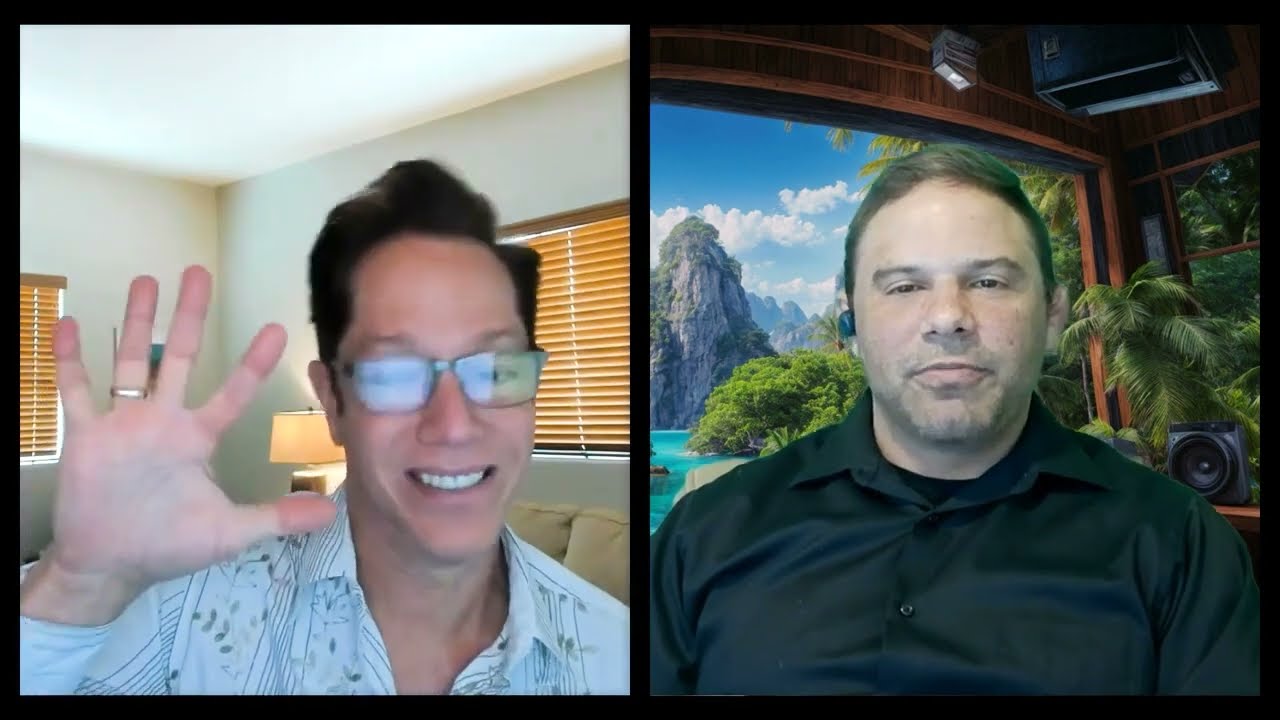
3 fingers. Yeah. And then we're talking about lending, right, Charlie? That what we promised?
Yeah.
Loans, how to get one out. Cool.
How to get money down payment.
So we're going to talk about strategies then for accumulating down payments for the property investments. We'll talk about, that'll include, sorry, savings account, saving money or utilizing home equity loans, which are also called HELOCs, also borrowing against retirement funds or receiving gift funds. We'll also do an overview in this video of loan acquisition techniques and highlighting owner-occupied and investment loan options and the significance of choosing the right loan officer, which is Mike's like favorite part of this. 'Cause I, that's a hot topic for me.
Yeah.
God, there's some horrible loan officers that don't know what they're doing. And man, can they screw up a financial transaction and they can make you lose so much money. Can tell I got my energy right there. Yeah. You could just see it come out. Why are we doing this, Charlie?
Why are we doing this? What's cool about this is there's a bunch of different ways that you can get funding that really solves the issue. Like, How do I save up $400,000 to be able to buy a house? This actually solves that. That's one of the cool things is you, you don't have to save up that much. So we're going to go over different ways to get down payments, different ways to get loans. And then the other thing that we're going to cover are the different types of loans and how to not get hit with a predatory loan, not get into a place where it's a bad loan for you. We're going to protect you, make sure you make a great decision on the right loan and how to save the money that you do put for the down payment.
Cool. Let's dive in. Oh, let's make that real simple sounding too, because you use big words, Charlie. So you're very— we are going—
it's my Nashville drawl with big long words. It just doesn't make sense.
Lost me. I was like, whoa.
Yeah. So in a simple way, we're going to help you not have to save a lot of money to get your first house, and we're going to protect you from getting bad loans.
That's important because not using a lot of money is leveraging other people's money. So it, it's, you can use, if you have $100,000 in the bank, good for you. If you want to use it, there are reasons to do so, to lower the payment or to drop mortgage insurance and for just better financial risk. But leveraging other people's money is where I love it. I think it's at, if you can do it that way, it's very rewarding to know that you didn't use very much to buy a house.
Right.
What was your other thing? Sorry, you just, I lost my—
Those were the two things that, and the other was how to not get in a bad loan, how to make sure you've got a good loan.
Yeah. Okay. And we'll talk, we can talk about that. Let's talk about loans.
Yeah.
We're, we want to do that next. Okay. So types of loans, because everybody hears about different types of loans. So I think we're, I'm going to, we're going to go VA, FHA, USDA, conventional, private money lender. So there's all those different types of loans out there. You're going to hear those talked about and let's unwrap those first.
Yeah. So all of those are loans that have low down payment anywhere from USDA and VA loans have zero down payment, which is great. Really the low interest rates depending on your credit score. FHA is 3.5% down and those are great loans that have 10, 15, 30 years locked in.
Right. And they're not all alike. So just know that. I think it's important to, for example, right now, if I'm trying to remember looking at my numbers, the, as of today, FHA loans have better rates than conventional on the low down payment. So that's always good to know because somebody with a higher FICO score and using conventional may actually have a higher rate right now. I don't know how that happens, but the, remember FHA, VA, and conventional are competitive investors. Trying to compete for your money. So they'll, the rates vary. The rates will also vary from loan officer to loan officer. I'm sorry, not loan officer, but the bank to bank. So one loan officer may quote you completely different than another loan officer just because they have different portfolios and different investors to use. So it's important to know, you don't need to know that, you just need to know how to get the right one. So that you're guided with the right fees and what all of the amounts to.
Yeah. You've got a loan officer that actually listens to what you're looking to accomplish both now and in the future, put you in the right loan for the current market as well as to get you where you want to be.
And maybe it's not, a lot of times it's not about interest rate, right? It's not. And people get so hung up on interest rate because the news media Ignorant as most of them are, really pump all the wrong information out there. It's all about rate. It's not about rate most of the time. I took an interest rate, a higher interest rate on a non-principal mortgage to gain the highest amount of tax deduction I possibly could to cut my income tax. It made sense for me because of the time I was going to own the home and the fact that I was planning to not keep that property. I was moving out of it in a few years. It financially worked out better for me to take a higher interest rate with no money being applied towards principal. Everybody focuses on these things that the media pushes. It's, you gotta break it all down. And like you said, Charlie, with a great loan officer and someone like us monitoring that kind of stuff, you can look at these things and say, wait a second, maybe this is better for you now because you're going to do this in 3 years.
Buyers.
So it's the right loan.
Yeah. And this is where we get into don't get pre-qualified right now. Like that, the opposite of what everyone says. It's true. Why should someone not get pre-qualified?
This is our fault. Okay. So 30 years ago when I started in real estate, I'll tell you that everybody would try to get in your car and they would come in the office and nobody knew about getting pre-qualified. We didn't have internet and we didn't have global information, right? So people would get in the, come into the office and they would say, oh, I'm good, I can buy a house. Not being pre-qualified meant they could run around, they could write an offer, they could literally get into contract, lose money spending it on inspections and stuff, and then not have a loan and not be able to buy. And all they did was spend time and money. And so as the real estate industry grew and we became we found ways to educate the public better and better. We told everybody, get pre-qualified. Okay, so the internet comes to, comes next, and the internet comes along with some very predatory online lending companies, and they came out with lots of competition and they say, fill out the free easy application. It's so simple. It's the easiest way to get a loan. It's quicker than ever comes from a tree and it just money falls in your laugh when you're done filling it out. And they did this and they did it brilliantly because they're great marketers and they got people to get pre-qualified for these loans. And a lot of it was bait and switch. A lot of it was, it cost those poor buyers lots of money when they couldn't get an appraisal because no appraiser would take it from out of town, or they charged them $2,000 instead of $400 for an appraisal. These buyers were left in the lurches at the very end when they said, yeah, no, we couldn't get you that rate. Sure. So if you want to close tomorrow, you're going to have to take 2 points higher and your payment's going up $400 a month. And this stuff has been going on for a very long time. And it really primarily, 99% of it is in the online predatory lending world. To your point, don't get pre-qualified. I, we should be doing the opposite now is no, don't get pre-qualified. Get your trusted real estate buyer's agent to help you with a loan because they'll know where to go to get you to the right place and, and make sure you're not in that predatory stuff because that pre-qualification is, it's junk.
It, it literally doesn't tell you What you can afford, where you're at, it's worse than worthless because it could end up really biting you in the butt.
And here's the other thing. We're busy, right? We're all really super busy and I'm the buyer and I fill out the, the quick, easy money tree quicker loan with a rocket shooting up the sky with confetti. Am I naming too many companies subtly? But I fill all that out and then it's easy and then they come back and say, now we need all this paperwork. Okay, that's true. Every lender is going to need paperwork. But once you, the buyer, go in there and fill out all that, get sent that, get all that paperwork together and get it sent into them, what they found is they've got you captured because 90% or more of all buyers will not go reapply somewhere else. They'll just deal with it and take what they get. And that's the scary part, is that the buyer will it's easier to stay, right? And so if you don't get prequalified up front and you get a trusted advisor to get you to the right loan officer, you won't have to do it twice. However, I still think that sometimes I can go and look at two great loan officers and they might have two different investor packages, and I could find that one works better for you, the buyer. And so I— you may have to do it twice. Right. It's okay. Once you gather the paperwork once, you're just sending it back up the second time. It's the best thing you can do when getting money is do your homework and just put the paperwork in twice if you need it, because it could save you thousands of dollars over the term of the loan. Right. Tony Ray Baker, it's to throw away so much money.
Yeah, it's amazing. Tens of thousands of dollars. Really, and for the first couple of years even. And one of the tips that I've got my clients do is when they get those documents initially, have them scan it to their own email. And so they've got a PDF email of all the documents. So if they need to send it again, you just email the PDF. It's all in one spot.
Which is a brilliant tip. Please write that down. That's—
it really is.
You're so— It's a brilliant tip because it just makes it nice and easy. Some of the lenders have really secured, what do you call it, like a Drive you upload to. So you could easily drag that to desktop, upload it to Drive. It's great that you just have it on hand, like you said. But it, this, the, the stuff going on today, all of the fraud and scams and all that stuff is going on in the fintech world primarily. It's not your traditional world where you go out and hire a trusted advisor. Somebody comes highly referred and has great experience, whether it's lender or real estate agent. There's criteria you should be looking for, like hiring your lawyer or hiring your accountant. You should be doing the same with your real estate agent and your lender. And I, if you can just remember that, don't get pre-qualified, that all that's just wrong. Just cover your ears and don't do it. I'll talk to you in a little bit.
One of that.
Yeah.
And we talked about FHA, VA, conventional. Those are all owner-occupied loans and they've got rules. You've also got multifamily owner-occupied. And how does that work with getting a lease, handling the debt-to-income? Because there's some unique things there, right?
So if it's, so again, the right loan officer is everything on this. If I think you're talking about if you buy a house, if you're going to buy a house and there's a tenant already in place in the guest house, is that what you're talking about?
Exactly.
So if that's the case, yeah. If there's a duplex and you've got one tenant in one side and you're going to move in the other, or there's an ADU, a guest house in the backyard, somebody's renting that. Now they can count, and I believe FHA just came out with that rule too. They can count the amount of the rent towards the mortgage for you. And, or better yet, they, they don't count it against your debt-to-income, your DTI, which means you still qualify for the mortgage because they also use that as income to help you qualify. That's what I'm—
I can get a bigger house or a nicer house if there's a tenant in it, you might be able to get something that fits your needs better. You may not be styped the way you thought you were. Yeah.
So you could buy a house with instant income on an owner occupied, which is one of the things we talk about leveraging money in our strategies here is to buy owner occupied, stay in that property and live there for a year or two, and then plan to move out and rent out the house you were in and go onto the next to build your portfolio. So that's perfect way to do it. And the cool thing is that the income from that renter that's already there gets to be used to help you buy the house. So it's perfect and works really great if the rents are up there high enough to really help pay a little bit of the mortgage payment for you. That's really awesome based on the rate and the payment you have, right?
And exactly. And they've got, those are owner-occupied But you can also, you can just get an investor loan that takes anywhere from 20 to 25%, sometimes more. Usually we recommend, usually if you're going to do that, you want to put at least 25% down because the rate's going to be much better. Of course, your lender at the time will tell you, but generally that's what I've found. Is that what you found is generally true? Yeah.
The difference between 20% down and 25% down is a better rate. And remember the other thing is that in this situation, I believe they still, once you put 25% down or 20% down, whatever it is, I believe on an investment property, you still have to leave 20% equity in the properties to take out a loan against that property is difficult for a while, which is to remember that, right? Because you're tying up the funds into that one property, which is again why I love the strategies of buy owner-occupied, move out, buy owner-occupied, move out and build up a portfolio. But if you're going to do the investment loan, just know also that the money is going to be tied there for a while because even with, let's say you're getting 6% appreciation rate every year for 4 years on $400,000, you're making $100,000 in the next 4 years in equity. That's going to take that long before you could pull that money back out to go and play and buy another property, right?
Yeah, there's a big difference between doing a cash-out refi for 80% or 75% and being able to do a cash-out refi or a HELOC, home equity line of credit, which gets us to the next spot, for 95% or even— I've got one bank that'll do 100% home equity line of credit as long as it's owner-occupied.
There's a difference between— we should also talk about the fact there's a difference between a HELOC and a second mortgage, because you're going to hear those two words a lot. There's companies that'll send you in the mail a fake credit card on it and tell you, we'll give you $100,000, up to $100,000 on a HELOC. And what they're doing is on that product line, and these are legitimate product lines, again, I would not, don't just take something in the mail. Call your trusted advisor, your buyer's agent or your loan officer will know if when that you worked with to get this first property. But the HELOC, they give you a credit line and it's a revolving credit line, which means you can, they, it's basically like a credit card. You can take out the $100,000 that they give you and then you can use it to go buy another property. You can pay it down, use it again. And I think if I'm right, Charlie, you get 5 years on those, 5 years to play with the money or something.
The one that we, we use a lot, they actually have 10 years to be able to use it, which is cool. And so it's interest only for 10 years, and then after the 10 years they lock it out. You can't draw anymore, and then it's amortized for the next 10, which is great.
Okay. Which you either let the tenant pay it off or you close that one down and you can open up a HELOC, I believe on a second property. If you're doing my, one of my favorite strategies is don't get married. Yes.
I missed that boat.
We have to talk about this one at the bottom, at the end of this thing. Remind me to talk about my fun one. Don't get married. So, the second mortgage is different from a HELOC because it's not a revolving line of credit. They're going to give you $100,000. Let's say it's $100,000. They give it to you. It's, it goes, it's a loan against the house. It's a second loan in second place position. And there's no redrawing it out. You're just going to pay it off. That's all. That's the option you get. There's no using it like a revolving credit line.
It's however, like a cash-out refinance. Really?
Yeah. And those may be lower in rate than a HELOC. Something to know, have the trusted— I'm going to say the word trusted 10,000 times till we all get that in our heads. Not online crap, trusted advisors. They will be able to tell you the difference between what the HELOC offers and the second mortgage at that time offers and which one could be better. Maybe you want the HELOC because it's interest only and it's a tax deduction. It's better for you. There's reasons to do both. I have a HELOC at properties I love using.
Yeah, same. And that, that leads into really the HELOC is one of the ways to get the down payment money, right?
Yeah. So if you're going to get ready to move out of this house, take out the HELOC or the second line of credit on the mortgage, and then take those, that money and go buy another house, right? And you could take out a tiny amount. You could take out the very minimum you need to buy the other house. On a $400,000 house in Tucson, I can get you in for under $25,000. So that's not a lot to pull out. That's one year of, that's one year of appreciation on a lot of houses.
Yeah.
In a lot of areas, that's just one year of appreciation. So if I have you moved in there and you, stay there for 1 year and you get that $24,000, you can pull that back out in the equity out on a HELOC, and then we'll run over and buy another house. And your first house made you the money.
Well, how cool is that?
Like most places, I, I've been watching all the, the numbers. Don't watch the weird news. The real numbers, because data tells everything, the real numbers are All across the US, prices are still going up very gradually and steadily. And the interest, the appreciation rates, I know for Tucson have been at around 6%. So some places are higher, of course. That's a very nice steady average to make $25,000 a year on your house. That's great.
That's a pretty nice bonus. It's more than a Jelly Bean of the Month Club.
I joined that and it was not good. No, I'm kidding. The Harry Potter, that gross, your wax, whatever that—
Oh yeah. Yeah.
Yeah.
So that's one way you can get a home equity line of credit. Another way you can just save the money, right? You can save, I love your idea, $400,000 house. You save $25,000. And when you've got that, that's your down payment all in for the next house.
Yeah. Kudos to the new generations of younger people right now, the millennial and the Gen Y, Gen Z. Because I was reading some information about that. Those groups actually watched mom and dads suffer through the crash of '08 and lose houses. And it was interesting because the generation, my generation, I think we were bad at saving money, which is why I got into real estate investment because I was crappy at saving money. And I knew if I had to make the mortgage payment, I was good at doing, being on time and making my payments because I'm an accountable person. I use the first house as a savings account to keep me putting money away. And so the new generations watch this crash and apparently they are good savers, which is awesome. Like they're good at saving money and having a savings account and all of that. So kudos to all of you who are in that generation and to saving money because that really is one of the best ways is to have $25,000 cash saved and then go buy the house for $400,000 and then you're good to go. And then you leverage everybody else's money for the next 15 years to pay off the asset.
Amazing.
I like it. And of course you use that, Charlie, leverage everybody else's money to pay off the asset.
You're like, that is amazing.
Oh, we closed on a house a couple days ago. For a guy named David who we started on this journey a few years ago. And it was the cutest thing ever when he showed up at the office to get his key and he put it on his key ring and he held up his key ring and his 4 keys were side by side and he said, building my empire. And he was just ear to ear smile. And it was so cool to see him so excited because he gets it. He's making money off leveraging everybody else's money and he's becoming a millionaire by doing what's the right thing with money. So it's really cool.
That's amazing. And of course you can use, you can save half of that. You can save $12,500 and use a HELOC for the other $12,500. You can combine these as well.
Yeah. Or my favorite thing, watch this. Hello, mom, dad. Do you have, can I have some money? @Susie, right?
Yeah.
Because we can give a gift up to $18,000 and it's tax-free once a year. I believe you can keep doing it over and over. So here's the cool thing. Why not, if you are going to get married or you are going to have a birthday or you are going to have some sort of holiday where the family is going to chip in, would chip in gifts, why not have the family chip in money? That would be great to help get that savings, right? And get going for the first house. But a lot of times a wealthy parent can give the $18,000. If you got $18,000 from two wealthy family members that have that kind of money that could give you the gift, you've already got your down payment. You're at $20,000. It's tax-free. Yeah. Or $36,000. Sorry. Wait, $8,000 and $8,000 is $16,000.
Yep. You're at $36,000. $36,000.
Well, it's you. It's math. It's J— there you go.
I don't know how to do it. I need more fingers.
Yeah. So even if 2 people gave you $12,000, you would make it. You could buy a $400,000 house. So, right. That's awesome. You can get a gift and you could also, if you, so if you have been saving and putting money away into a retirement account and your employer maybe is helping you, you might have money enough in there. To explore pulling that money out, using it as a down payment. And then the cool thing is you pay yourself back with, on the payments you make back there, you're just paying back your own retirement account. How cool is that? I have many times we have clients pull money outta retirement, use it for the down payment, sell off another house. For example, if they're moving long distance, they'll sell that house, then re— they'll put the money back into their retirement, but they're paying themselves back.
And they can pay themselves back sometimes with interest.
You're right, when most of the time it's interest. So now you're paying— you're your own bank.
And that retirement, a lot of times, right? Because a lot of times you can pull out from your retirement and there's no penalties at a certain amount if you pull it out for a house. Check with your own personal professional, your trusted advisor, to find out what's possible. But a lot of times you don't have to wait till you're 55 if you pull it out for certain reasons, like a house.
I think it's— there's all these different ideas are bright. This is overwhelming. If you are, if you're writing all this down, kudos to you. The, the best thing to know is when you get somebody who's super experienced and knows all of these different options, they're going to go over this with you. So your trusted lender and your trusted real estate agent are going to go through all this with you. They should know all these. If they don't know all these, you might have the wrong person. If they don't have all these options in mind, then you, you probably need to get somebody that's got a little more experience under their belt.
Like that.
Yeah. Like, yeah. What else haven't we covered?
I think we covered all the down payment, a bunch of different ways. We covered the different types of loans, owner occupied and investment. Don't get pre-qualified. And you're going to cover don't get married.
Okay. So I have, I have 3 couples right now that are not getting married because of this strategy. Yep. One buys the house, the first house, the other buys the second house. Then they buy the third house, the fourth house. They want to acquire 10. There's a lending rule of how many loans you can have. And there's benefits tax-wise. So there's some really cool stuff when you talk to a really good EA/CPA about, and it would be specific to you and all of your assets, but it works really well if you're going to do this for the first 8 years, for example, maybe don't get married. Now, a lot of people aren't getting married anyways. I get that part because there's also school debt on one and not on the other, for example. So we have the one without the school debt buy the property the first time and then put the other one on the title. And then we keep doing this back and forth. But for me, it's a matter of, I could, maybe one of you wants to pull a HELOC on one property and then 2 years later you want, the other one pulls HELOC on the other property in their name first, it's very easy to remove you off of the deed real quick to do the HELOC and then have your person put you back on and record you back in as joint tenants with right of survivorship or whatever it is you choose. So there's strategy there by to not get married.
You could buy 2 a year instead of 1. And you've got the ability to use 2 HELOCs instead of 1.
Yeah.
Both of you.
That means marriage. That means not getting married and staying separated. Yes.
That's right.
Loan fraud. That's another thing I would say is be very clear on this. In Tucson, for example, they hired 20 new FBI agents to door knock during the investor COVID years, and they were banging on doors and looking to see that you answer the door because investors were buying them on owner-occupied loans, but they weren't owner-occupied. And so with that, people were, these FBI agents would show up and find out Oh, you're a tenant. That's awesome. Where's the guy who bought the house? Oh, he is never lived here. That's loan fraud. That is a prison time sentence. So yeah, if you look good in orange, it's okay. But I'm just saying I'm terrible in orange. You have to be very clear that you're going to owner-occupy a house for a year. Under the rules, you have to stay in that house for 1 year, but you can then jump quicker and easier if you're not married. So if there's 2 of you partnered, going by doing this. There is strategy to this, and we can unwrap that on another time, but there's a lot of strategy to being single and adding each other to the deed each time. So that's why I said don't get married. For all of you who want to get married, yeah, yeah, end up a family and you just plan it out. Sometimes it's better if you're in your 20s or 25 to 35, don't get married and do these strategies and build a mass, a massive wealth, and then get married and sit back and enjoy the ride because those houses are going to be making you money. That's, it's like revenue streams coming out of everywhere. It's opening floodgates, right?
That's amazing. So true. And plus you, you take all that money you'd spend on a wedding and that's the down payment for one or two houses.
Charlie, I've been to some weddings that's a down payment on a million dollar house.
Sure.
I have been to some weddings where that you could have bought 5 houses for the amount of the wedding and been set for life. So, right?
Yeah.
It's crazy the amount of money that goes into that celebration for the day. So yeah, I totally agree with you.
Yeah.
Yeah.
Yeah.
Which low-key party guy. So. I'm happy with just meeting somebody at a restaurant.
We, 19 years ago, we're about to have our 20th anniversary. Me and Cassie, we got married in the backyard of her parents' farm. We were 22 and 19 and we made it very inexpensive.
And just off this subject, how much more incredible was that experience having it within the family farm? That's more memorable and it's everything it should be. It's all, it's about all the right things. Things, the connection, the love, the family, the farm that feeds people, the home. It's just, that's the way it should be, right? Why did we get away from this? So anyways, another— don't get married. Yeah, don't get pre-qualified, don't get married till you call us. We'll solve it.
That, and if you're ready to not get married or not get pre-qualified, if you're ready to move forward, reach out to me or Tony and we'll get you in touch with the right loan officer and we'll find out where you want to do and make sure you're in the right spot. That's one of the first options. Yep.
And if you're not in one of our areas, we have amazing connections. So, well, we haven't, I guess we never talked about this, but Charlie and I are part of the same really cool group around the United States who live and breathe the same stuff as far as principles, and investment and the way to do business and take care of clients. And so it's a really neat group and we will hook you up with the right people. We'll get you the right loan officer somewhere else, even around the world. So just call one of us before you do anything. Don't get prequalified, don't get married until you call us. Now we're giving wedding advice. Don't get married till you call me.
I love this. And if you've already gotten married, Just call me and I'll tell you how to work around it.
Divorce lawyer, 911. I want to buy a house. Oh yeah. Had a couple get divorced to buy a house. That's funny. Yeah, they're still together, but they had to get divorced to buy the house. They had to get them off paper.
That's amazing. That's amazing.
That's crazy. A lot of strategy. We're going to give a link or something or a landing page or a QR code somewhere down here, and then they can go, you can go and get, fill out a form just so we can send you the 30 Things to Know.
Yeah. Yeah. So we've also got the list of, yeah, 30 Things to Know to Hire the Right Lender and Divorce Attorneys.
We have that list.
We've got you, we've got you perfectly set up. And otherwise in the next video, we're going to talk about how to analyze properties for maximum profit.
That's very fun. But I'm just going to tell you right now, before we sign off on this video, Charlie, they're going to clip out this piece and it's going to be REALTOR® Tony Ray Baker says don't get married. It's going to be our one. Only take out one sentence. They're going to have to make a lot— They're going to have to edit.
Married for 19 years, hypocrite.
Yeah, I can see this now.
Oh yeah. All right.
So video 4, we're going to talk about maximizing profit, analyzing properties. That sounds like fun one. I would definitely have some yerba mate tea or a cup of coffee or a Red Bull or something before we go to that one. Not us, you, because we're getting into numbers.
So, okay. All right, see you guys next time. Bye.
More from Tony

🏡 Stylish Updated Golf Course Home with Scenic Views | 6864 E Vía Dorado, Tucson, AZ 85715
Live the Resort Lifestyle in a Premier 55+ Gated Community - 7278 E Maritime Drive, Tucson, AZ 85756
Luxury Living in Ventana Canyon | Modern Southwestern Elegance in Tucson, AZ Gated Community


Real Estate Investment Basics: A Journey to Financial Freedom | Mastering Real Estate Investment
Legal and Tax Considerations in Real Estate Investment | Mastering Real Estate Ep. 6

Maximizing Real Estate Investment Profits: Strategies and Analysis | Mastering Real Estate Ep. 3

How to Retire a Millionaire with Real Estate | Introduction to Mastering Real Estate Investment

Financing Commercial Real Estate: Leveraging Other People's Money | Mastering Real Estate Ep. 2
Tony Ray Baker's Expert Advice: The Hidden Factors That Influence Real Estate Offers