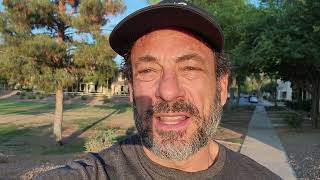
Day 23: You generate your results.

Tony Stark Policci argues that events are neutral and the meanings we assign them shape our results. Lottery winners often face new problems, while setbacks can foster growth. He spent 30 years maintaining a youthful mindset and now uses realistic self-talk to reframe negative thoughts, claiming a 90-day effort can overhaul thinking habits.
Chapters
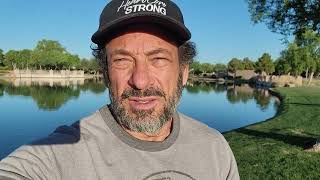
Okay, day 23. It's been an amazing day so far. About an hour on the other side of sunset here, and this morning I had a great start to the day. Slept well last night, got up, you know, took in the morning sunlight almost as soon as the sun was up, did the grounding. Wife and I later on in the morning went on an hour-long walk. It was wonderful, it was peaceful. Also had this great opportunity to have a conversation with a friend of ours. And we got into some really deep discussion around life. You may be familiar with the phrase "life on life's terms." Well, the thing that we got into is, you know, what do you do when bad things happen, right? And there are judgments that some things are good and some things are bad. But there's also this concept of there's no good or there's no bad. Everything is neutral. Now, I don't completely buy into that, but I understand the principle. Alright. The principle is that if we assign judgment to certain events, then there will be an emotional, a mental, a spiritual, and sometimes a physical reaction to that based on the meaning that we assign to it. And You know, sometimes things that appear to be bad actually produce a great result, right? They cause us to grow. They cause us to stretch. They cause us to learn. And sometimes things that are good, that we perceive are good, don't necessarily generate good in our lives down the line. Example: people who win the lottery. You think, "Oh wow, you know, they won the lottery. They got millions of dollars. All their money problems are solved." But that opens up a whole whole new realm of problems for people like that, or for people when that happens. So the idea of, you know, life coming at you and whatever comes at you, whatever occurs in your life, whatever you generate, you know, there's an opportunity for growth and for acceptance and to assign meaning to it. It doesn't necessarily have to be what you think it is. So I know this can be a difficult thing and we could get into all kinds of debate over it, but one of the things that we talked about was, you know, throughout the different stages of our life, right? Young, middle age, moving into our 50s, into our 60s, we have different experiences and the way that we process things and the way that we deal with things can change. Ideally, we gain wisdom as we grow older and we develop coping skills skills and we learn how to do things differently. But then there's also these social implied beliefs and ideas, right? Like, example: Well, I got, you know, I'm getting older now. I've got aches and pains. I don't know that we necessarily have to accept all of those things or expect those things. I really have believed since I was 30 years old that I intend to stay 30 for the rest of my life. That was a decision I made when I was 30. You know what? I think it worked pretty well for me. It did not stop my body from aging. You know, I still have a gray beard. I have a gray beard now. What I meant to say was I still got gray. You know, I've lost hair on the top of the back of my head. But overall, I feel pretty great for being, you know, 61 years old. I'm in really great shape, and it was a decision that I made and just stepped into it. So did I really stop aging? Well, no, but I chose to live young and, and to, and to be young and to think young, and I will continue to do that. For the remainder of my days. The point that I'm making here is that what you believe and what you say to yourself is crucially important. And managing our mind is essential. If there are a lot of bad things going on in your life, stressful things going on in your life, perhaps you have health issues, relationship issues, financial issues, you're living in a place where the weather is terrible, or there's been a natural disaster, you've lost somebody, These things are hard. These things are difficult. And we're going to respond to them in a certain way. But if we do not recognize that we have the ability to impact what we think and what we say to ourselves, right? If you failed at something or if one of your parents told you growing up that you were never going to amount to anything, which, you know, is something that I got a message as a kid, those messages may stay with you. And if you allow them to continue to play in the background, you have to recognize that you have the ability to shift that, to change that message. That's not even your voice in most cases. So I would like to challenge you if you're watching, if you have any of those messages going on that are not serving you, you know, "I'm no good," "I'm afraid," "I can't do this," "I'll never accomplish anything," you have the ability to say something different. Now it's important not to lie to yourself. So for, to me anyway, like I don't believe that all positive thinking and positive affirmations really makes a lot of sense. Example, if I wake up and I am sick, like really sick. If I look in the mirror and say, "I feel great. I feel absolutely great," my brain's gonna be like, "No, you don't." All right. So saying things like that that are a complete contradiction of my, you know, my awareness of lying, it's not going to work for me. So this acting as this or faking it till you make it has its limitations. There are certain places where to use that and where to not. In a case like that, You know, if I'm sick, then the right thing to say is, "This is going to pass. I'll push through this. I'm going to be fine. You know, I'm healing. I'm getting better every day." Those kinds of things. So it's a matter of modifying the message. I hope this is making sense. The crucial point that I want to make is that we have the ability to generate results in our lives. And if we allow our minds to run amok and not manage our thoughts, not make choices about what we say to ourselves, if there are negative things going through your mind, if you have a pattern of negative beliefs or negative self-talk, I would encourage you to stop and just recognize those things. Be like, "Hmm, that's interesting." If you make a mistake and you immediately, the reaction is something, you know, you say it out loud or in your head, "What an idiot. What a dumbass." You know, what a 'a stupid move,' like recognize that because you're berating yourself and that is not going to help you. That's not going to make you do better by berating yourself. I promise you it's not, especially if it's a chronic habit. But if you recognize it and say, 'Hmm, that's interesting,' just sit with it and then start by saying, 'What's true about me?' Right? If the message is, 'You're a screw-up,' then go back through your life and look and say, 'What have I done Well, where are the times that I have shown up with excellence? And start focusing on those, because the default can be focusing on what's negative and what's destructive, and that will not serve you. My whole intention in this 90-day stretch was to completely shift some of the bad habits in thinking that I allowed to creep back into my life, and I recognize with complete certainty that I have the power and the ability to impact what I think, what I say to myself, and how I show up in the world. And it's all about managing my mind. I don't have control over the first thought that comes into my head, but I definitely have control over every one that follows. So it's important. I hope this is helpful. And if there's any feedback, comments, or questions, I would love to hear from you. And that's it for now. I'll talk to you again on maybe day 24.
More from Tony
The FREE AI business Jumpstart Summit runs July 14th through the 22nd. Virtual and on demand.
Day 73: Father’s Day Reflections: Legacy, Presence, and the Power of Slowing Down