
3 Easy Solutions for Climate Change from Home
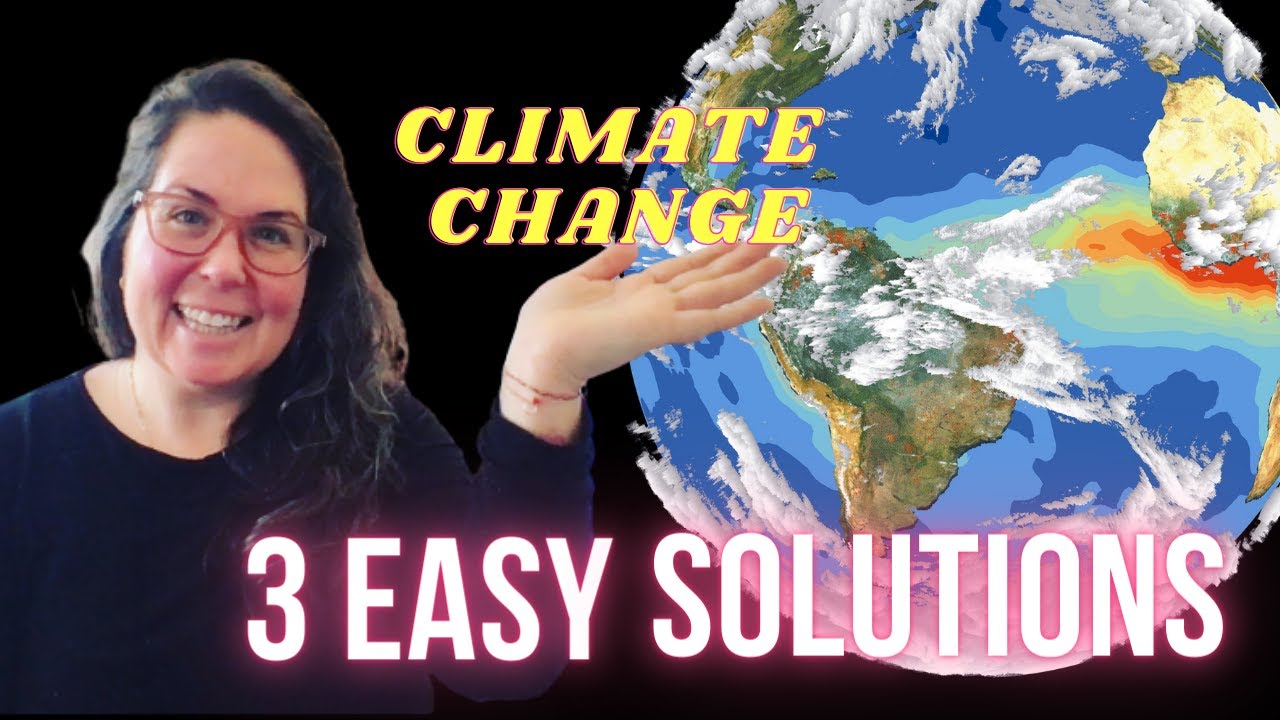
Food waste accounts for 8% of global emissions. Three high-impact climate solutions you can do at home: reduce food waste, eat more plant-based foods, and support girls' education and family planning access. Each cuts tens of billions of tons of CO₂ equivalent by 2050.
Chapters
Hello and welcome back to my channel. Today's video is discussing easy solutions for climate change from home. Is that an oxymoron? I don't know. Stay tuned till the end as we unpack this giant puzzle and create more clarity and hone in on what empowered action that you can take from home easily. Welcome back to my channel. One of the most interesting challenges with sustainability is that it literally covers everything. It's a challenge for me and it's a challenge for you and my community. It's a massive topic that has so many details, and not surprisingly unfortunately, because it continues to show up more and more frequently in mainstream media, a lot of our conversations about sustainability have become very myopic and only focus in on climate change. This has unfortunately made it synonymous with sustainability, which only adds to the confusion around the topic because climate change is just one part of sustainability. I released a previous video called The Real Meaning of Sustainability where I share 4 fundamental ways that we are being unsustainable. And these 4 fundamental ways are science-based and have been studied and agreed upon for decades by physical and social scientists. If you're curious to discover what they are, I really recommend watching this video. You'll see the link, or there's also the description box below link. That video is outlining how we define sustainability based on solving these 4 root problems. Yes, only 4, which include climate change and toxins, environmental destruction, and the systematic undermining of basic human needs. Unsustainable root cause number 1 focuses on the materials that we dig up out of the ground, and very specific to our climate change conversation is the digging up and burning of fossil fuels. The climate change effects we are experiencing, such as intensified and more powerful storms, storms, longer droughts and heat waves, extreme forest fires, and desertification are all showing us symptoms of a society out of alignment with its natural limits. Here's the 30-second nutshell on climate change: we dig up fossil fuels, which is made of ancient carbon, we burn them, and that releases greenhouse gas emissions like methane and carbon dioxide and adds these molecules back up into the atmosphere. Because we live in a closed system with respect to matter, none of those molecules escape our atmosphere, and they become trapped, which in turn creates a warming effect because they block the heat from radiating back out into space. This effect is also referred to as the greenhouse effect. Climate changes result from the Earth's atmosphere warming up. You've likely heard for years now, probably, about how carbon dioxide plays really big role in climate change. And you might have also heard the counterargument that the climate is always changing, so what's the big deal? The counterargument is correct in its most basic form. The climate is always changing, and our ability to measure carbon dioxide levels shows us this. And the challenge that we face is a little bit more complex than that. Up until this point, we've had a stable system with an upper and a lower limit of carbon dioxide, emissions that we can trace all the way back to nearly half a million years in the geological record. And as of 100 years ago, when we discovered fossil fuels, dug them up, and started burning it, we have just blasted through the top stable upper limit of the last half a million years with our CO2 emissions that are created by our human activities. And this is what we're focusing on for climate change. How do we stop that increasing concentration of these gases in our atmosphere. This is also referred to as anthropogenic global warming theory, which is human-induced global warming thanks to the burning of fossil fuels for things like electricity, transportation, and industrial processes. What this has allowed us to do is build big cities, put lots of cars on the road, establish a global trade system. Plus, it has completely modified the face of farming, from small farming to monocultures. All of this has contributed in its own way to this problem and has created unsustainable ways of living on planet Earth. The question at this point is often, what can I do about it? I'm just one person. What is, what is what I can do? How does that make a difference? So if you're watching this video, I know that you believe that something is possible, and perhaps you're struggling with where do I start? Where do I go from what I'm doing already? And does any of this even really matter? Please leave a comment below about what challenges you might personally be struggling with, because together we're stronger. When we think about solutions for climate change, what's the most common thing that pops into your head? Probably like wind turbines or solar panels. I thought I knew a lot about climate change, and I was actually really excited to read this book called Project Drawdown to expand my knowledge on solutions that I now get to summarize in share with you. So the purpose of Project Drawdown was to identify solutions to decrease those concentrations with technology that already exists. No fancy geoengineering, no fingers crossed, oh, I hope this works in the future and we haven't invented it yet technology. And I took suggestions from their most aggressive drawdown goal in Scenario 2, if you happen to read the book. So if we're able to achieve this, what does that mean? We can cap the global temperature rise to only 1.5 degrees Celsius by 2100. And it turns out that these 100 solutions are really accessible, and there's a bunch in their top 10 that are accessible to us. Here I am with the summary of the top 3 solutions for climate change that you can take from home, as presented by Project Drawdown. Action number 1: food waste. Of the top 100, this was the number 3 top solution of their entire entire study and has the potential to reduce 102 gigatons of carbon dioxide or equivalent emissions. Would you be surprised or believe me if I told you that one-third of the food raised or prepared doesn't even make it from the farm or the factory to our forks? This is where we look at large-scale impacts of this waste of food and how our collective and individual actions do actually make a difference, because when we waste food, it It also wastes resources such as seeds, water, energy, land, fertilizer, hours of labor, and the financial capital to do that, all of which has greenhouse gas emissions at every stage, including methane, which is a very powerful greenhouse gas when we bury this food and let it rot in landfills. Now, if you wanna dive further into this massive topic about food, we actually created a 4-part free mini masterclass for you about food security and food sustainability. I've left the link for that below. And then the key takeaway in our time together today is that food waste is responsible for 8% of global emissions. So you can actually address this very easily from home. And how do you do that? Well, you can adopt a fresh market shopping list where you only purchase the food to match your needs. Safe for weekly meal planning. You can look at using recipes that use leftovers, such as creative pizza nights, hearty soups and casseroles. And finally, stop those food scraps from going to the garbage. You can use solutions like this for electric countertop compost machines, backyard composting bins, community garden, municipality has a compost facility or collection service. Okay, number 2, eat more plants. This solution was the top 4 of 100 of Project Drawdown solutions, and it's accessible for us as individuals. If we achieve this, 92 gigatons of carbon dioxide equivalent will be reduced or sequestered by 2050. And I feel like this should have a big trigger warning statement saying something like, bringing about dietary change is not simple because eating is profoundly personal and has deep social and cultural layers. So I'm not gonna sit here and tell you to become vegan or even vegetarian because those choices are very deeply personal, and making broad brushstrokes from my perspective over yours really isn't productive. I truly believe it's my role to present you with a variety of solutions that all address this topic with our climate change lenses on. Simply put, we do have complete control over the food we meat, which is why it's included in this video content. And this is a place where we can easily take action on climate change at home. What choices you make are within your own individual domain. So generally speaking, by eating less meat and dairy, you're gonna reduce your carbon dioxide emissions. Doesn't mean you need to go fully vegan or vegetarian. No, not necessarily. A complex choice that's influenced by your own individual biology, health needs, location, budget, and culture. So to help you with this, Our World in Data mapped out greenhouse gas emissions across the food chain supply and found that things like chocolate and coffee are also really intensive emitters of CO2 emissions. No, God! No, God, please no! These foods are shown to have significant emissions similar to beef and cheese products when we compare them kilogram to kilogram. No! God! Our food is an area that we need to carefully weigh, balance, and consider the complexity of our global food systems when it comes to understanding greenhouse gas emissions. I also believe it shows us that we have options when it comes to our food and that we can use it as a tool to reduce our global warming emissions for our own context. There are other solutions to adopt, such as Meatless Monday, where you only eat plant-based meals on a Monday or whatever day that you choose during the week. Or you can use a strategy like the EAT-Lancet diet, which focuses on a balanced, healthy, caloric, mostly plant-based diet that also still includes meat and dairy. Their goal is trying to answer the question, how do we feed a future population of 10 billion a healthy diet within planetary boundaries? And this diet is their evolving answer. There are many strategies in which to achieve this goal, and collectively we need to make changes across our lives, including food. It all adds up, and there's no doubt this is a huge place to take impact on climate change from at home. Individual action 3: Educate girls. Yay! This was number 5 in the top 100 solutions, and I believe this is totally accessible for us at home. And we have the potential of reducing our emissions by 86 gigatons by 2050 when we address this. According to Project Drawdown's research— I am gonna quote this directly from their report so I get the facts right, in quotes— there are economic, cultural, and safety-related barriers that stop 62 million girls around the world from getting education. Education lays a foundation for for the lives of girls and women and their families and their communities also increases their resilience and equips them to face the impacts of negative climate changes. They can be more effective stewards of the food, soil, trees, and water in their area, even as these natural cycles change. And they have the greater capacity to cope with shocks from natural disasters and extreme weather events when educated. These girls realize higher wages and contribute to their local economic growth. Their rates of maternal mortality drop, as do the mortality rates of their children. They're less likely to marry as children or against their will when they're educated. And in rural farming areas, their agricultural activities are more productive and their families are better nourished. These are all really important and big things from a social sustainability perspective, which is like a gas pedal on all of the other problems problems if we don't address them. When doing this research, I found out that a quarter of a billion— not million, billion— women in low-income countries want the ability to choose whether and when they become pregnant and don't have access to the necessary contraception to make that choice. And this need also persists in some high-income countries as well, including the United States, where 45% of pregnancies are unintended. When we honor the dignity of women and their children through family planning, it's not about governments manipulating the birth rate up or down or some nefarious global population reduction scheme, nor is it about those in rich countries telling people elsewhere to stop having children. This is critical that our human rights are always at the center and that gender equality is the aim and that the benefits to the planet are just amazing positive ripple effects for empowering and promoting the agency of women. So how do we address this solution at home? Look at where you can make schools affordable and help girls overcome health barriers. We can look at reducing the time and distance to get to schools and make schools more girl-friendly. My grandma always used to say charity begins at home. So then you can ask yourself, do you have girls at home? Ask them if they feel Do they face any barriers within their education? Do they feel safe? If they don't, what would they need you to do to help them to feel safe? Help those closest to you first, and then I encourage you to look for places in your local community to remove barriers for other people to access education and family planning resources. Volunteering and donating is a great place to start. And if you don't have access to doing this in your local community, there's some amazing nonprofits out there doing this work. It is all valuable and it all contributes to the top solutions for climate change really easily from our own homes. Now, if you're struggling with sustainable living and this concept in general and how to apply it to your life, I did create a video about this. You'll see the link around. And if you prefer to read, there's a free PDF link below called Sustainability 101 Decoded. It mentions some of the resources that we've covered today, plus a whole lot more, and it's yours for free. You just need to go down below and grab it from the link. I'm so grateful for your time to be with me today. As always, if you found this content valuable, please give me a thumbs up, hit the notification bell, and if you haven't already subscribed to this channel today, I hope that I've earned your subscription. Thanks so much for being with us on the sustainability journey. You're important, and I am so grateful for you. I— take care. I'll see you in the next video. Bye for now.
More from Tracy

Episode 17: Investing with Purpose: A Deep Dive into Responsible Investing in Canada




Episode 13: Get Mouthy Dental Care Box - The Hidden Truths about Toxins in Your Dental Care Products

Episode 12: Waste Knot Weddings - How to Easily Plan Environmentally Conscious Weddings

Episode 11: Rachel and Jesse - Kooshoo: Leading the way for zero-waste hair accessories

Episode 10: Brad Scott - Transmutation: Innovations in Plastic Recycling from Rural Australia


Episode 08: Sonja Picard - Recycling Old Jewelry within an Ethical Luxury Jewelry Brand
