YEAR VLOG CHALLENGE DAY 20 | From Local to Global: Scaling Your Digital Marketing
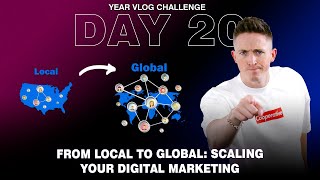
Tanner meets with an e-commerce client and breaks down how to scale digital ads without tanking performance. Consistent ad spend keeps algorithms optimized, while erratic spending kills results. Track customer acquisition cost obsessively, plan inventory monthly, and start with cheap retargeting before spending big on cold traffic.
Chapters
Oh, it's a beautiful day to be alive. Good morning. Welcome to the vlog. Welcome to the channel. If this is the first video that you're seeing, this is just basically me going about my day-to-day life, making a commitment for a year to shoot a vlog every single day, Monday through Friday. So I don't actually shoot on the weekends and documenting everything that goes into running an agency and learning how to sell more stuff online. So this morning I'm actually heading to meet with a local client here. Um, obviously we have clients all around the country and even some outside of the United States at this moment in time, but you know, we do have some local clients here, which is kind of fun to go, uh, meet with them from time to time. And, and, uh, you know, and, um, we're primarily going to be discussing the strategy for them moving over the next, you know, 3 to 4 months. We're coming into the prime time of the year for them, their specific product. It has a little bit of a seasonality, you know, component to it where they kind of have sales drop off in the winter. And so they're really excited to ramp things up, kind of moving here into the spring and summer. But one of the things they've been doing as I was taking a deep dive into their ad account the other day, and I wanted to share this with for you guys, because if you have an e-commerce store or you sell stuff online or you're running ads at all, one of the biggest, um, issues is momentum. No one talks about momentum. No one, no one, no one talks about momentum. And what do I mean by momentum? Momentum is when you start getting sales, when things are rolling and you're actually scaling your ad account. There is definitely component to that, that the algorithms, Meta, Google, you name it, they are seeing that you're increasing your spend, you're growing and you're building, you're growing and you're building. And this particular client has had a really hard time, just fits and starts, um, you know, getting their campaigns going and actually being consistent. They'll go and spend $1,000, you know, then turn it off. And they'll ramp up to, you know, $5,000 a day. And then they'll basically just from one day to the next, cut the, cut the spend back to $900. And part of that is the setup of the actual ad campaign, the actual ad account structure, the way that it's set up. They're not allowing with their audiences and their targeting, it's not broad enough for them to be able to continue to scale into the spend. So that's part of it. But the other part is just them not having the mindset that we need to be consistently spending. We need to have ride the momentum. When we are spending a lot of money and the campaigns are working and working well, we cannot afford for us to just, A, not have inventory and turn the ads off, or B, you know, not understand where we're at from a KPI perspective. And so we don't know exactly how much we should be spending. We don't know how profitable our ads are. There's a lot of different things that go into it, and you got to have the right strategy. So you got to make sure that you know exactly where you're at. Ooh, the orange creamsicle Frosty at Wendy's. Wow, that just, that looks good. Sorry about that. I might need to go snag one of those. Orange Creamsicle Frosty. You know, I've always been like a chocolate Frosty guy, but the orange creamsicle could be, could be deece. But anyways, so the way that you do this, number one, is you have to understand exactly where you are from a KPI perspective. You have to be tracking, you have to be understanding exactly what your customer acquisition costs at all times. A lot of brands, a lot of businesses don't do this. It's a big problem. If you don't know exactly where you're at, exactly what your breakeven could be on an acquisition and exactly what your goal acquisition should be, then you don't know how to really optimize your campaigns. It's pretty simple in, in application and understanding, but it's actually difficult to do. You know, a lot of people, they'll have inventory, they'll blitz through it, they'll, they'll sell through it, and then they'll have lulls and periods of time where then they got to go reorder again. Getting your actual fulfillment and your business in order. From an inventory perspective is one of the best things that you can do. So you can actually project and plan out how much you should be ordering. And if you can afford it, it's better to be ordering every single month than, you know, 3 or 4 times a year. So, you know, getting that consistency predictable with the inventory and the sell-through of that inventory, you can actually, you know, start to order monthly. Now you have orders coming in and you always have fresh inventory to be able to optimize and do things with. So that's one of the things that I would really recommend to But anyways, just definitely some thoughts here. But momentum is really an interesting thing as it comes to your ad spend. We've noticed that the accounts that we can just consistently be spending with over time, over a 12-year slope, over a 12-month slope, the return on ad spend is much more consistent. It's really interesting. Like most of the time businesses are like, hey, I'm getting like a 2 and then I'm getting a 5 and then I'm getting a 1.5 and then I'm getting a 7. And they're like ROAS all over the place. It's all over the board. And it's really tough to predict how much money they can actually spend because they're spending like these really small amounts of money quickly over a short period of time. And then there's, they're sprinting and then they're turning it off. They're sprinting, they're turning it off. It's much better in my opinion to just spend consistently. Build that base, get predictable return and customer acquisition cost in your working in your favor, and then you plan out the inventory and the sell-through on the other side, and you're going to be much, much better off as an e-commerce business. And if you think about that, like, I'm pretty confident that if we do those 3 things, we'll start getting a lot more closes. Because whether or not they know you super well, right, the call— you, if you do a good enough job on the call, I think that you can close them and get them there. And we've seen this with other funnels where they've seen an ad, they've watched the ad, they click on the ad, they come to the funnel, they watch a video, whether it's a video sales letter or a case study funnel, read the testimonials, they actually click to book an appointment with you. They go through, submit all their questions or the questionnaire. Like that's a, that's a very intricate process. We can get people just to do that. At the end of the day too, you are the, you're the person who's having these conversations. So I want you— I don't want to undermine you as the thought leader. As the driver of this ship. I mean, we're just simply here to be your marketing partner and your marketing arm and provide some strategy. And I'm kind of playing devil's advocate here and just giving you the all sides of the story. But at the end of the day, if you come back to us, you say, Tanner, I thought about it, we absolutely— this is this, this— I want to do this video. We'll say 100%. Let's go do it. Let's test it. See how— see what happens. All right. What's up, peeps? On my way home right now and almost home. So Had a couple calls I had to take on the call. I had some thoughts I wanted to cover, but I still, regardless, had to pull the camera out and at least give a little bit of knowledge to you guys, a little bit of value. Today's been crazy, been a whirlwind of a day, but talked to somebody today who has been struggling with their Meta ads. And, uh, you know, one of the things I asked him, I said, hey, where are— how is your, uh, retargeting at? How are your retargeting ads performing? You know, they have a pretty big channel, a pretty big of following across their socials, a lot of followers, and the followers are pretty engaged. But when they're launching their ads, they're having a hard time getting people to purchase and to do so profitably. And they're not really being super effective or efficient there. And they feel like, man, why are we getting so much organic momentum and traction? But like when we launch this thing cold, it's tough for us to duplicate. And one of the things I asked them, I said, hey, listen, are you aware that inside of Meta and even inside of, you know, running YouTube ads and Google ads, You're able to actually run specific campaigns to audiences that are A, engaged in following you, subscribe to your channel, and also engaging with your social media profiles and pages and posts. They said, no, we had no idea. And I said, so rather than trying to go and spend, you know, $10,000 a month on cold traffic ads that aren't performing really well right now, one of the best things to do is if your organic traffic is flowing and you're getting momentum there and traction, spend $50 a day on a retargeting ad just to go to all of the people that have engaged with your socials over the last, you know, 15 to 30 days. And so we'll see how these campaigns perform for them over the next couple of weeks, but I'd be shocked if they didn't immediately add a lift to their business, significant boost, because it's just going to be taking what they're already doing and it's working well and doing more of it. They're not, they don't need to reinvent the wheel here, start a whole new campaign with a whole new offer, whole new, uh, you know, creative and angles and hooks from scratch. They're basically just going to take their existing organic engagement and just get in front of them more frequently to be able to follow them down the funnel. So ultimately, just a quick thought here. I want to just shed some thoughts and give you some insight there on the way home. And sometimes less is more. And if you get momentum there, you get traction doing like a retargeting campaign, then yeah, absolutely. Now you're playing with some house money and it's a lot easier for you to go deploy a significant amount of marketing budget to a totally cold audience, totally cold offer. So anyways, with that being said, pulling in, hope you guys had an enjoyable time watching this and there was something of value, and I'll see you guys in the next one.









