Mastering the Business of Life Science- a Mansfield Bio Event

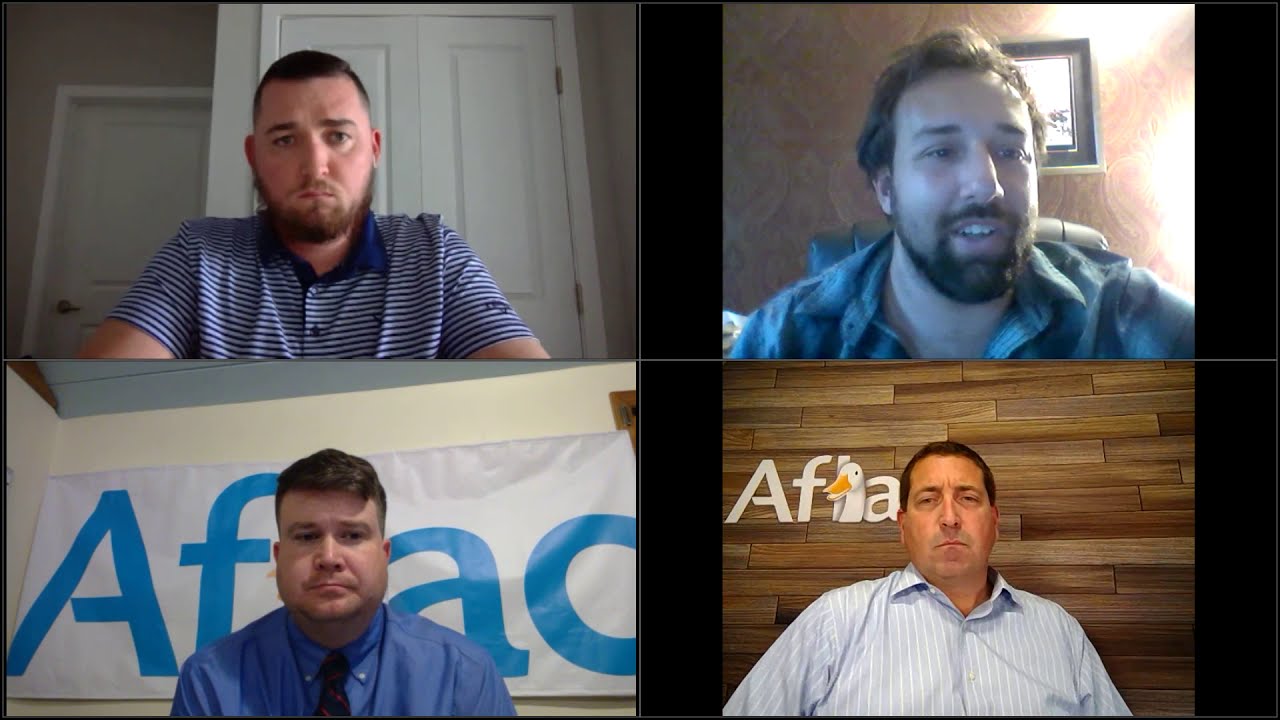
The video records a virtual panel hosted by Mansfield BioIncubator that explores how life‑science startups can build and grow their businesses during the COVID‑19 pandemic. Moderator Tony introduces the session and the incubator’s 63‑acre campus, which offers lab space, a BSL‑2 suite, and plans for pilot‑manufacturing facilities. Panelists – Alex (incubator director), Kristen King (biotech executive and investor), Jason Kraus (partner at EQX Fund and author), Jack Malley (CPA and business consultant), and Wendy Pease (founder of Rapport International, translation and global‑communication specialist) – each share perspectives. Key themes include: the importance of a clear, customer‑focused story; how COVID‑19 reshapes fundraising, valuations, and regulatory pathways; financial planning tools such as PPP loans and 409A valuations; the rise of virtual networking, global collaboration, and multilingual support; decentralized clinical‑trial platforms and patient‑recruitment technologies; and practical advice on leveraging incubator resources, virtual events, and networking platforms. The discussion ends with a Q&A and a reminder to stay healthy.
Chapters
Attendees are in listen-only mode.
Hey, Jason.
Hey, how's it going?
Good, thanks.
How are you?
Good.
Morning, Alex. Morning.
Morning, Jack.
Good morning.
Okay.
Okay.
Morning, everyone.
Good morning.
Good morning.
Good morning. We're just getting things started here.
Perfect.
Now we can see everyone as well.
Just bear with me while I get this PowerPoint where I want it to be. Okay.
Okay.
So whenever you guys are ready, we can get this thing started. Are you ready?
Yeah.
Sounds good.
We may want to wait maybe Couple more minutes. There are only about nine beds so far.
Yeah, no, no problem.
It is only one minute past the hour, so maybe a couple more minutes. Wait, there's a lot of there's a lot of background noise.
Why doesn't everybody mute themselves when they're not talking?
I think that sounds like a good idea.
Yeah, and out of the 10 people we have— oh, here, join in.
Okay, who's controlling the attendees? Because I'm just the one who's doing the— I'm the one presenting, but I'm not the one controlling the attendees, right?
Yeah, I think every— all the attendees are muted. So yeah, it'll just be us talking. And then I'm gonna put a message in the chat right here so people can like ask questions or comment along the way. If we want to, we can unmute people directly, but otherwise they can just ask questions through the chat.
Fantastic. Very good.
Tony, what order are you going in? The ones— oh, you had it as your slides, right?
Yes.
Okay, silly question.
Okay. Okay. Who's that?
What do you mean?
It's not me.
There's a humming. Wait, it went away.
That's probably me.
Okay.
Is it coming back?
Yeah. Yes, it is.
Yeah, I think it's my laptop.
Oh, sounds like you're running a lathe.
Okay.
You guys ready?
Okay, shall we start?
Yeah.
Whenever you're ready. I think we just need to have whoever's making that noise just to go on mute.
Well, that, that wasn't— but that's me. Uh, and that's, uh, we can manage through. Yeah.
Okay.
Very good.
You know, the other thing you can do, Alex, is call in and then mute your computer. So just the video is showing, but then you don't get the back— the computer noise through it, maybe. He's muted. You're muted.
Okay. All right.
Maybe we can just get started then. Okay.
Okay.
I'm ready to roll.
Sounds good.
Okay. Well, here we are, everybody. Thank you for joining us today. So today we are thrilled to bring you an amazing panel, and the discussion today is Mastering the Business of Life Sciences, and this is brought to you by our host, Mansfield BioIncubator. We would love to be in person at the incubator, but of course the times are different, and so therefore we've moved to a virtual setting, and we will do our best to accommodate. Obviously, we've already kind of had some challenges with getting everything up and running, but we're going to make the best. So let's start with a little bit of an overview of what the incubator is all about. So, um, just scrolling through here. As you can see, the incubator is located in Mansfield, and Alex has done a fantastic job of getting this up and running, has made quite an imprint in the area. And here's some specs if you want to learn more about the incubator. Feel free to reach out at the website. And I'm not sure if, Alex, you wanted to offer up any additional information about what's going on currently with—
Sure, sure.
So I can tell you that First of all, Tony, thank you so much for a great introduction about our incubator. What we're trying to do here, we're trying to grow the life science ecosystem southeast of the city. So in this way, provide more opportunities for economic development. And also the main thing is you can start at our incubator, but then we actually are part of a larger initiative within the site where we're located. As you can see here on the bottom, there is a master plan to develop all 63 acres of the space consisting of the buildings, R&D, and what you can do, you can start as an incubator company and then expand into pilot manufacturing suites that we'll be building this year. And then you can actually build a larger space. And like I said, up to 1 million square feet lab space available to build. And more importantly, we're still accepting new companies. And in fact, we have one BSL-2 lab space available currently, which is private. And if you have any questions, this is the contact information, and I'd be happy to talk to you.
Thank you.
Fantastic. Okay, I just think I want to go back to my screen here. So in terms of what we're going to be discussing today, we're going to go through some components of what the strategies are for building a business in life science space, but we're going to really key in on what it is right now, because obviously the impact of the coronavirus, the COVID situation we're in right now, and what does that mean for the different aspects of building a business in this time. And with this panel of experts, which I'm about to introduce to you, we're all very excited about talking about what each of our expertises bring to this space. So let's start by just making an introduction and giving each one of them a chance to speak to what they're seeing has changed in this current environment, and will naturally flow into some questions that will address how the business is flowing. Okay, the first person I want to introduce you to is Kristen King. Kristen is an experienced biotech exec and a serial entrepreneur. And she's invested in several— she's an investor and strategic advisor to startups developing biotech solutions. So I'll let Kristin start and maybe just introduce herself a little further and just tell us what you think is happening with business these days, given the current impact we're in.
OK, thanks so much, Tony, Alex, and this esteemed panel. And all of you in the audience, so excited to be here today and to share some tips and during COVID and post-COVID, really what this means to all of us. So just a little bit about my background. As Tony mentioned, I've kind of had the opportunity, I call it serial entrepreneur, doing entrepreneurial activities inside of large companies, both in med device and pharma, crossing from R&D to commercial, marketing, sales, business development, and strategy, M&A, from a financial perspective, and as an angel investor. It's also given several different lights to help really the goal, share all those experience for startups on what are you really looking to do with your business? What's your story? I think that's some key elements we've touched on. And how is COVID changing some of those landscapes to best prepare you, as you hear across this panel, for the virtual world we're in now, how to leverage that, and then moving forward? So for me, I would really cross 3 bullets. One, I was passionate about all these different avenues to say, what is your story? And it's important, more important now than ever, to differentiate yourself and to really take the time to know that. So if you look at not just the solution that you're creating, but who are you doing that for? Who is your customer? And looking at that as the central part of your story and being able to take that and go deep on what does that mean to the investors you're pitching it to? What does that mean to the buying process? Who's gonna be using this? Is it a physician? Is it a patient? Really know that channel. And I would say, as you look at the future, in working with incubators like Alex has at Mansfield Bio, really be able to leverage the collaboration, the facility, and the network there. So you can really ask these deep questions and be very prepared when you're ready to do the fundraising. So if I go back to having your story, knowing strategically, how does that cross that spectrum of customers, buyers, maybe strategics, you'll look at working with, and then funding. What are you going to be doing for funding? With COVID I would say the other piece is from a regulatory and clinical collaboration. If you look across the globe now and some of the trials and what we're doing to really accelerate vaccine and treatment, how does that impact you? Always be asking yourself, what's the impact? Is there a different pivot you might do where you have some kind of adjacent angle to help in this COVID environment. And virtually, we are all connecting virtually much more, so you can have a global perspective early on. So as you're doing your story, the key piece, be thinking about all that. And then I would say, from kind of a theme of watching out for mistakes, make sure during this time that you have the depth to be prepared When you go to that investor audience, because for the same reasons, you really have to differentiate yourself now more during COVID So what do you do to stand out? Be prepared. When we talk about diligence, don't be doing that at the end when you're ready to pitch. Have your data room ready. So a lot of different perspectives coming to that same theme of it's a new virtual world. Leverage your network to fill in some of those gaps. Reach out to folks that are investors or professional groups. Do a lot of these webinars and follow up afterwards to ask folks questions. We're kind of trapped inside, so take advantage. Pitch your story to anyone that will listen— kids, friends, family. Constantly get that story right and, and practice. We have some abilities we can leverage during this time period.
Yeah, that's great. Okay, I love that. So my key takeaway from that is, is be prepared and practice, practice, practice. And, you know, that proactiveness is going to be the differentiator in terms of being able to, to get your story out there during this time. And it really hasn't changed. That's how it always has been. It's just more magnified at this time. That makes sense.
Thanks.
Jason. Jason's the next person on the panel. So Jason is an investor. He's a startup consultant and advisor, and he works with— he's a partner at EQX Fund. I'll also note that he's an author now. He's just put out his first book, I think it was about 6 months ago, but he could correct me on that. I've read parts of the book, haven't finished it yet. Jason, I got to get that book done. And I'm so glad to welcome Jason to the panel.
Yeah, it's great to be here. Thanks for the introduction. Yeah, so basically my background's on the investing side, partner in EQX Fund, and we work a lot with the Boston Harbor Angels, or basically co-investing in a lot of the Boston Harbor Angel deals and being part of that group as well. So yeah, I actually started out, I went through a master's program at Babson College during normal, I guess, normal times. A lot of the investor meetings for the Boston Harbor Angels group are held at the college there. And Got involved as an intern probably, yeah, about like 6 years ago when I was going through the program and just stuck with it as I was part of several different investment, or I was part of an early-stage venture fund. And then I've been— Or started a consulting firm, Prepare for VC. that works with a lot of early-stage companies on actually preparing their presentations and putting their fundraising strategy together. And now with EQX Fund, it's been— it's a little over 2 years now we've been up and running. So far, it's basically a micro VC model where I'm putting checks into, or basically angel-sized checks into deals, bringing a lot of them through the Boston Harbor angels and sort of co-investing with the group there. I'd say the main— again, talking about where the COVID angle comes in, in the main times, we're looking for that story that Kristin touched on of why is there a real problem that your company is solving and what the market market is looking for there. We're looking for the next phase of the story in terms of, yeah, basically why you're asking for funding and where the company can go to the next level, having some of that capital behind it. And then the last part is what the ending looks like. Is there an exit opportunity where investors are going to make make a return on their investment. That can come from an acquisition by a large pharmaceutical medical device company, it can come from IPO. And an important part for investors, whether you're talking with angel investors or VC investors, is going to be basically, does the exit strategy align with the type of investor they are? So If it's a smaller angel or small VC fund, a lot of times it's more— or the companies that have an exit potential with taking on less capital and being sold in earlier trials or have other ways to get to an exit with less capital behind them are more attractive versus For a VC fund, if fundraising isn't as much of a risk because they can put more capital into the company, they're more looking for what can be the next billion-dollar opportunity, no matter how much capital it takes. And I think where the story changes right now is every investor pitch you go into, they're going to ask how COVID affects your business. So Sometimes, and I think it can fall into 3 categories there, either, either, you know, it's some companies accelerating, accelerating the business. There's new pathways through like the BARDA DRIVE program, other government agencies that are accelerating anything tied to COVID. That can be drug development or like ways to clean hospitals more effectively. You know, other side effects we've seen that are really a hot, hot topic right now. And even the FDA pathway can be faster for, you know, more of the drug developments that weren't necessarily targeting COVID originally, but now have a pathway into— into that market. There's some that just— there's little effect outside of being remote, like, and, you know, they're just continuing on maybe with some delays in clinical trials. And then there's others that are gonna be, you know, more struggling, especially if, you know, if they had a short window on on the amount of capital left in their company, or if there's just less interest overall in their space as more of the focus has just shifted other places. And with some of those, I guess there's been a lot of— the positive side has been there's been a lot of great sort of They could be pivots, but they could just be like twists that companies are doing and finding ways, short-term solutions over the next 3 months or however long it needs to be of finding something they can do in the short term to accelerate and continue their business moving forward while there might be some fundraising delays or clinical trial delays along the way.
Yeah, makes sense. Yeah, so there's a lot being learned, and there's some symptom— some flexing and flow, but there's also seems to be new things happening in terms of new ideas coming into, um, into view to invest in. Um, that's what I'm hearing a lot of. Very interesting. Thank you for sharing that, Jason.
Thank you.
Next, we're going to move into to talk with Jack. So Jack, Jack Malley is a principal at Witham Smith and Brown, and Jack has been in the industry of really helping to advise a lot of businesses, a business consultant for many years. And I'm going to let Jack take it from here in terms of explaining, you know, where— what angle he's coming from, but I'd love to hear your take on what you're seeing in this time.
Thank you and good morning, everybody. Glad to be here. And Tony, I appreciate you using the term many years. Let's just say I've been doing it since sometime in the 20th century, but we won't get any more specific than that. So by training, I'm a CPA, folks, and After serving my time doing the attest work that's required to get this and all, I worked in private industry for a number of years and then eventually got into the business of consulting— excuse me— with emerging companies, um, with everything from their base accounting needs to being their outsourced accounting department to acting as the CFO for them as well and advising them on their strategy, helping them budget, helping them raise money, and so forth. And, um, uh, before I get into the COVID ramifications that are going on right now, what I keenly am aware of and, and try to assist my clients with is their strategic plan and implementation of that plan. And where I find some things lacking in a strategic plan is sometimes you find entrepreneurs who are brilliant in their field, whether it be engineering or in the sciences, and they have basically a solution looking for a problem. And what I mean by that is that they have created something that is fantastic that some people might say, geez, that belongs in the Twilight Zone. It's so fantastic and breathtaking.
Mm-hmm.
But what need is it actually solving? And what market is it solving? So you need to make sure that the product that you have, the solution that you have, really is solving a need. And coincident with that is knowing who your customer base is gonna be. Kristin alluded to that early on here. And, you know, you may oftentimes think of the ultimate customer, you know, the individuals like all of us on this call, but in fact your customer that you may be addressing your product to might be a distributor along the way. So you need to understand that distributor customer segment. What it takes for them to actually acquire your product, assuming that they like your product. What sort of approvals do they have to go through? Is the individual that you're speaking with— do they have enough clout to be able to approve the purchase of your product? So understanding the purchasing limits of the individuals that you're dealing with, and if it's not sufficient for what you're selling, what they need to do then to get the proper approvals in order to acquire your product is very important. There's some basic things also that go along, and it's, you know, out of my training and profession, you know, you need to have a good 3 to 5 year forecast that, you know, balance sheet, P&L, and statement of cash flows, they all have to sing together. And that's really part of what the due diligence that's going to occur when a potential investor or customer is looking at you. They want to make sure that, you know, you've got your ducks in a row and you're well organized, that you can easily put your hands on the various contracts that you have in place with customers, contractors, and others, and they're, they're contracts that don't impede your progress down the road. You really ultimately need to do a SWOT analysis, which is strengths, weaknesses, opportunities, and threats.
Hey, Jack, hang on a second. The background noise is coming in. Alex, can you mute? Thanks. Sorry. So you're talking about—
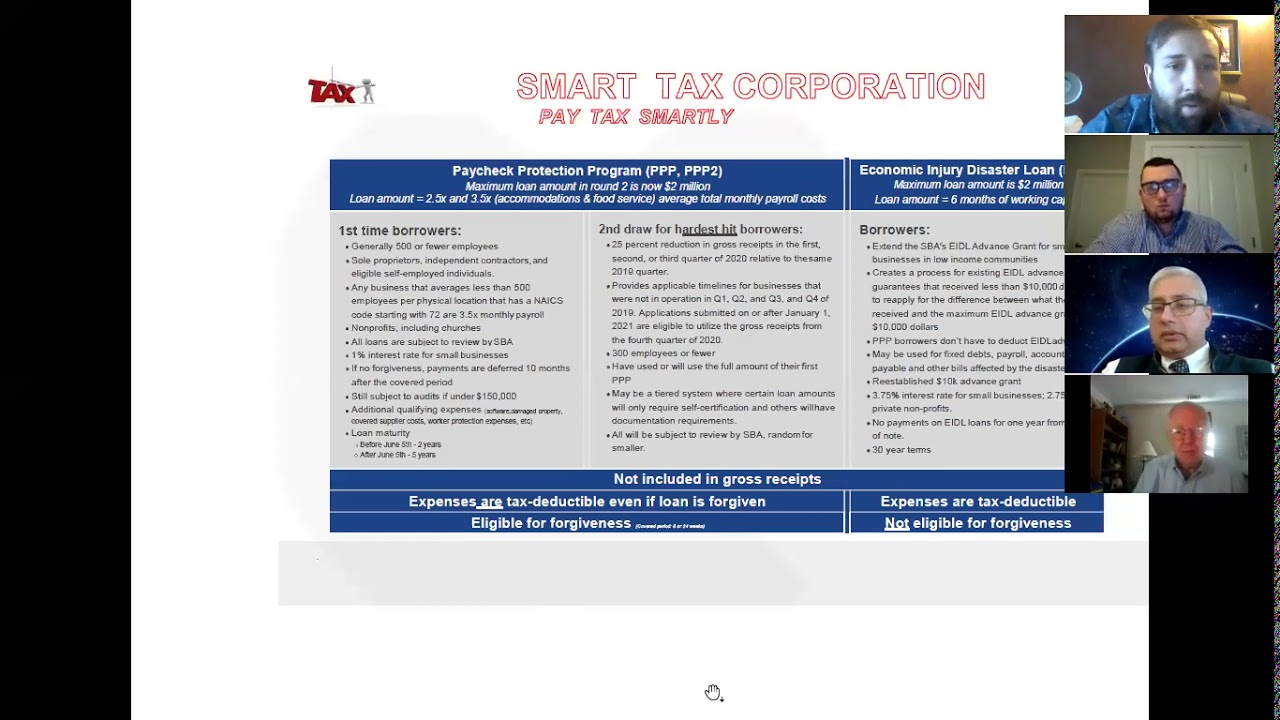
So the SWOT analysis really is The underpinning of your strategic plan. It's your understanding of those 4 things that will help you create a proper plan, one that can be marketed to the investor base. You need to also be realistic, certainly, about your numbers. With respect to how the coronavirus has impacted things, what I've seen lately, It's, it's had multiple impacts. Now, many companies have taken advantage of the PPP loans that are out there that are available through the SBA. And that's another one of those items where the devil's in the details. Wonderful to get the money. If you've received the money, then to apply for the forgiveness at the end of your 8-week term. There are rather honestly complicated schedules that you need to complete in order to prove to the bank that awarded you the PPP loan that you in fact have used the money for appropriate needs. Um, so there's that. Where else have we seen an impact with valuations. So, and I see valuations in 2 areas. Companies who will award stock options or stock to their employees will need to have a Section 409A valuation done, which is an independent valuator will determine the price of your common stock. The IRS requires that kind of thing to ensure that you're issuing the stock or the options at the fair market value.
Yeah.
What we've seen related to that is that those valuations are now coming down because they're doing their realistic checks. So I'll give you an example. I had one client that had a valuation as of December 31st, 2019. The valuation was performed in late January and through parts of February. The valuation actually came down, and the reason being because of what was going on with the coronavirus and the implication that future markets, the near-future markets at least, were going to be depressed because of that activity. It's also having an impact on being able to raise money. Whether it be by convertible debt or by investor stock, whichever the case might be. Investors, I'm finding, generally are taking longer to evaluate what's going on. They're doing it certainly to have more scrutiny on what you're presenting to them, but they're also doing it because, you know, the world is changing day by day. Given what's happening with this virus. So in part they're delaying because they're waiting to see and hear the next best thing about what's going on with our environment. Yeah, so that's, that's all I have to say for now.
Yeah, I mean, it's— there's so many things that you've, you know, you've touched on that are, you know, really powerful. I mean, the things that I see from what you just, you know, talked about is that it's really kind of hunkering down and knowing Knowing the needs of not only your customer, but your customer's customer, and understanding your financial picture very well. Again, more magnified now than ever before. And the financial markets have definitely become more sensitive to— in terms of raising money and things like that. So I'm definitely keen to that. And the PPP situation, challenging for sure. And measuring that and understanding that really well is important. So a lot there, Jack, and I appreciate your insights.
Thank you.
Wendy, Wendy Pease, owner of Rapport International, a company that is very interesting doing translation work. in many different languages. I love your posts that are full of some great insights. So if you haven't followed Wendy yet, you have to start following Wendy. And I'm never going to do justice to what Wendy does, so I'm going to let her explain all the things that she does around global communication, around translation. So Wendy, please take it from here.
All right, thanks so much, Tony. Yes, and thank you for commenting on my post. So definitely, if you're on your computer now, and you're on LinkedIn, go search for me, Wendy Pease at Rapport International, and follow me. We do stuff most every day about fun things about language and culture. And so, if you ever have fun stuff, please share it. So, yeah, and I did have— I spent some time in the life sciences industry. It's still a passion of mine. Everything, you know, from the development stage all the way up to the commercialization, because it's in there. So, we're working across all that. As you can see on my bio, I did an internship at Biogen when I was getting my MBA, and then I worked at ParExcel. So it's, it's a field that I'm always fascinated in and have been following what the changes are. So just to elaborate a little bit more, we do everything from highly technical patent research where there may not be a term in another language, and we'll work with the company to come up on how to do applications. We do regulatory, we do clinical trial patient recruitment, and all the way up to commercialization when we have, you know, authorizations or instructions for use. So all along the developmental stage we work. And last year we had the opportunity to gather at the Mansfield Bio Incubator, and it's a wonderful space. So, you know, right now we don't have the chance to actually be there or see it, but if you have the time to do it, he's got some capacity And there's even enough security where he could do COVID research. So it's so worth checking out if you want to avoid all the traffic and going into more congested areas. It's a, it's a good opportunity. And so in thinking about last year versus this year, I kind of reflected back on that and it reminded me of some discussions that we had in business school about companies that were global. And, you know, we talked about it whether they were going to— whether they were globalized are multinational. And so when you have a multinational company, you have more regional managers or country managers. They do their own marketing. They kind of run their own distribution. So they're running within their country. And a globalized has more of a global head. You know, they've got people that are thinking through the messaging that they're doing and the distribution channels. And they're making sure that it's working across the globe. And there was reasons for picking whether a company was going to operate multinational or globalized. And as I watch what's going on now as compared to last year, last year I would've said we were in a multinational kind of framework on life sciences for developing and launching commercialization and everything, because it really was country by country. Oh, I'm going to recruit patients and I need, you know, somebody— let's go to Russia because they seem to have the people there that we want that would be good to do this research. Or, you know, I'll think about it that way. Well, that's all changing. I mean, I'm looking at patient recruitment and there's companies like, what's the name of it? TrialScope. I made some notes down here. Craig Lipset, who I knew through Par Excel, is on the board of advisors there. They have a platform that are recruiting patients internationally. So, it's no longer just thinking about the country, it's thinking about the global. And over the last couple months, I've seen more and more of a shift to this. And it's been across different ways. So number one is in patient recruitment. And then it's management of clinical trials. There's all sorts of platforms that are coming out where you can manage your clinical trials on a platform. I've seen a lot of fear right now with current clinical trials about patients and how compliant they're being and not being able to meet with the doctors and check in with them. And if there's supposed to be taking medications, are they doing that? So there's platforms that are coming out and that are actually gamifying a lot of this. So patients get rewards and they're engaged and they have ways to ask questions and be parts of community. That's all going on online. And, you know, you do it in one language, you'll capture a certain percentage of the globe, but by doing it in multiple languages, you've just expanded access to patients that can participate. and people who can moderate and then send people to do these platforms. So I'm seeing a shift in all that area. There's other one in security. Life sciences tends to be much more conservative and cautious about information, how it's going out. You've got all the protected health information. People didn't work from home. It was still, you know, in big pharma, you know, you've got to go to a place. Well, boom, that changed like that. We've got so much more work from home and people are trying to figure out how to do videos, how, how to have backgrounds, which I'm cracking up because Tony and Kristen, you both have a globe behind you and I've got a, I've got a flower. You know, here we are in the global business. I guess I'm gonna have to change my background. But people are learning how to function online, how to develop relationships. There's been talk about regulatory. I've even seen some of these posts on social. You know, can you imagine doing regulatory and patents cross-country? I mean, 6 months ago we wouldn't have even talked about that. You would have had to have your patent attorney and they would have had to have the connections in all the countries. But we've seen stuff coming out on the COVID research across patents that are just blowing my mind. And then talk about a global regulatory. So this is all the, what could this change, and what does this mean for healthcare and clinical trials going forward? So if you're starting out on this with strategy, also kind of take the blinders off as to how it has been done, and start following people like Craig Lipset, and, you know, connect with me on LinkedIn. And if you want connections to anything to find out about this information, let me know. And also, So you're all on the chat group. So if you have questions, please post them in there, because after I speak, we're going to get back to questions and we want to hear what you're thinking about this. And so that, that brought me to my last point about networking online. Well, come January, February, I decided I was gonna, I was gonna get more on the LinkedIn platform, do more networking online. And it just— I was just kind of doing it. It wasn't a COVID thing. It was just an area where I wanted to understand more about it. Well, my timing was excellent. I can be grateful about that. I now have connections all over the world that I'm learning about business stuff, what's going on. If you're doing research or need something or creative, rather than thinking about what your network is and who you know here, start breaking down those barriers and don't think by country, start thinking globally about what you can access. And this will not only help you in the development and the fundraising. I mean, there's countries out there that have a lot of fundraising opportunities that are more and more money coming into it. But then also when you launch, you've got the connections there that you can dig down deep. So before, you know, if you wanted to launch something internationally, you had to have a global strategy and how you were going to roll out to countries. Now you can think about that So early on. So I think that is— yeah, the other thing that I wanted to talk about was travel and in-person connections. So we've seen a lot more questions about, you know, how do I talk to a global community, or how do I connect with these? Because the people who used to be traveling and doing the face-to-face meetings are now grounded and they've got that slush time built in there, so they're exploring. I'm seeing a pause on how much movement they're actually going forward, but they're making a lot of plans on how to do this. And as they're learning that they don't have to travel and they can build relationships virtually, they're leveraging. I mean, there's, there's, you know, we're on GoToMeeting, there's platforms to have, and you know, you can have interpreters simultaneous and can text executive over these kind of platforms. So you can have meetings with anybody anywhere in the world, even if you don't speak their language, by including an interpreter onto your call. So we're actually organizing some symposiums where they'll have the speakers and simultaneous interpreters that are on there so they can share information. So just the access to information that you've got right now through different technologies. Yeah, so pass it off to you, and I forgot to watch my timer, so—
No worries.
Well, I just wanted to kind of piggyback on what Wendy said because I really love how you close things out here. So first of all, that virtual network— build it now, build it often, and build it forever— because it's so powerful how much people need each other in to expand their businesses, to grow their businesses in the way that they need to, the way to make it powerful. And I think Wendy's, you know, the way she explained this is just really powerful because it shows the power of networks. And there's something that I've been leaning into a lot because, you know, in my work, I'm a coach and I do a lot of work around thinking differently. And thinking differently is really a great way to look at this situation. And one of the things I've been thinking a lot about is how constraints create opportunities. And that summarizes a lot about what everyone on the panel has just talked about, is that the opportunities that have arisen from the situation have been powerful. Just because we are confined to our homes doesn't mean that business has to stop. It doesn't mean that, you know, we cannot innovate and create new things. We just got to think differently about how we create that. And so that's one of the things that I see as a thread line through all of the conversations and through all of the answers I've heard so far, is that everyone's seeing different ways of creating the magic that the business is going to create. So I'd love to open it up for questions and hear from each person. If you have a question and you'd love to kind of just put it out, and I'd love to hear from you directly if we can. I'm not sure if the technology will allow that, but if not, if you can put it into the chat, I can, I can hear that. I can check the thread. Give me one moment.
So I have a question for Jason. Are you seeing different— seeing some of these different technologies come in for investments or any change in the type of companies you're seeing yet, or is it just too early?
Um, I think, I think there's a definite— so yeah, there's definitely some technologies that are making their way to the front that highlighted or basically are more needed now than ever before. I mean, on the medical side, like, so there was one, or there's some company, there was a company that came through Boston Harbor Angels that was originally targeting influenza that has a path to COVID development. And now it can go like they're projecting out going through their phase 1 and phase 2 clinical trials faster than normally just going through phase 1 because of the accelerated interest in that space. On other sides, like some of these, I mean, there's— A lot more like video or tools to communication tools. There's some that, I mean, in the medical, you know, talking about life sciences, the communication and HIPAA compliance is, you know, a major factor. There's been several different more, or like even the adoption of at-home and virtual meetings with your, with your doctors is Picked up a lot. Uh, you know, most of the, most of the, um, medical practices that weren't offering that, those services before have now, you know, started remote, um, yeah, remote access and trying to keep people at home and still being able to put them in touch with their primary care and other service providers there. Um, and Yeah, I mean, just like also other enabling technologies, like, I mean, we're on, we're on GoToMeeting now, but there's also, and, you know, Zoom's grown a lot in popularity, but there's some other startups too that have been focused more on like live streaming and other services and other ways of even like making some of these meetings more interactive. You know, that are gaining popularity now as well.
Wendy, what I've seen is, um, uh, with, uh, one of my clients in particular that's in the health IT sector, that, um, the follow-up on, uh, clinical trial and drug use is being, uh, now gone virtual, that, um, this organization has a, uh, an ability to create basically a decentralized registry patient engagement software so that they can follow up remotely with how patients are doing with the administration of the drugs that they're taking, whether it be in a clinical trial or post-market acceptance, and allows the pharmaceutical to be able to monitor, number one, how successful their drug continues or is continuing to be, and how that stands up versus the competition. And what happens is that my client works with the pharmaceutical to design the questionnaire, so to speak, that can be administered remotely. The patient is able to respond to the questionnaire. on their cell phone, iPads, PCs, whatever the case might be. And given this current environment, pharmaceuticals are finding it a more attractive way to stay engaged with the patient than they had done previously.
So I think just to follow on that great question, Wendy, and for folks that are looking to really start something, the themes you're hearing across the board are the world's changing, COVID's opening opportunities, and it's even more important to know what others are doing out there. So don't be surprised to get to be asked, what's the impact of COVID How are you managing it? What is the post-COVID environment? Are practices being done? Telemedicine, mobile health? Sure, that's going to be roaring to the front? Are you engaged in that? And I'd bring it back to you, Alex, to say, if I'm sitting here and I'm starting a business today, it's probably overwhelming, right, with all of these different new world aspects. The one thing I would caution, and this is how I started, in addition to knowing your story and all those different angles, don't create that in a vacuum. If there's ever a time to leverage, as Wendy said, that global network, now's the time. And how do you plug in? If you don't know, this is where, you know, Alex, what you're doing with Mansfield Bio, get involved with the incubators that ask these questions. You have to be proactive so that you come prepared. No one person can know all of these things. So it's really important to net that network and be around folks that are plugged into this and can share and help and coach. And that brings joy to all of us on this panel. is to give back. That's why we're here today. And Alex, I'd pass it over to you to kind of talk a little bit about what you're doing in these virtual times. Thank you for today's panel. It's an amazing opportunity just to speak.
Kristin, first of all, thank you so much for your words, and thank everybody for participating in the panel. What I can tell you is this, that as you can imagine, it's been quite a full circle COVID. And what I had seen—
Alex, you're freezing up.
We've got the person.
Can you hear him? I'm losing him.
Certainly, unless you work directly.
You might want to just turn your video off for bandwidth and speak, Alex. I don't know. We, we love to see you, but we want to hear you. Just keep talking.
Okay.
How's it now?
Better?
Is it better now?
Yeah.
Okay, so now what I'm saying is that me personally, I've seen a few companies kind of like postponing their plans moving into the incubator. And with that said, in the medium term, I think there'll be kind of like less of a need to be in a specific place to actually start your company. For example, I don't think the need to be in Kendall Square would be as great as it was before. The trick is to create the kind of like a water cooler environment so you can actually talk with people globally or remotely. The short answer is it's still an evolving process and I think From what I hear, a lot of life science companies are kind of like staying put and still kind of figuring out. There's no really good answers, but again, the fact that you can now network with people globally in the longer term certainly would be a huge help for the startups.
So I see there's a question on the chat. So Steve, tell me your last name and your company. I'm curious where you're from. But you asked me, you directed it to me, that you said you're surprised how many people seem lost at building virtual relationships. You've been in sales and building every kind of relationship your entire career. And do I actually see people struggling with building these relationships? Of course I do. Because number one, people, particularly scientists and people who might work at a bench or be more introverted or are coming up with great discoveries, aren't typically the type of people that are out there networking. You are because you're in sales. And so there's a great book if you have struggle, a hard time with networking. It's called You, You, Me, You by Jayne Mattson. Have you guys— you're nodding. Have you heard of it? I'm so happy to hear that. Yeah, it's an easy read and it gives some really nice suggestions. Alex, can you mute? That background noise is coming back again. Thank you.
Yeah.
So it's You, You, Me, You by Jayne Mattson, J-A-Y-N-E Poor Alex.
I know, Alex.
He's got the bandwidth problem today. Alex, you got to mute yourself, not just turn off the video. Thank you. Okay, so I'll say it again. You, You, Me, You by Jane Mattson, M-A-T-T-S-O-N. You can buy it on Amazon. It's a really good way to talk, to figure out how to network, and you can take those skills. When she wrote it, it was Very much in person, but how to engage in conversation. It's the same thing with virtual or over LinkedIn or chat or email. It's a back and forth. It's not just coming in and dumping what you want, but how do you build a relationship of trust and memorable, like Kristin's description today, which she wants to— she likes diving all over the place. Well, I happen to dive, so I'm going to remember her for that. It's those little nuggets and how you go about building those relationships. And, um, and like you said, Kristin, is that we're all here to help, and I am happy to open my network to, to introduce to everybody. So thanks for the question.
Fantastic.
Uh, yes, this is Alex. I want to add, what I've seen is something very interesting, is that When you— I saw some of the polls with entrepreneur versus business development. And it seems to me that the virtual events, it's a little bit easier for the entrepreneurs and scientists to participate as opposed to in-person events. At least that's what I had seen. Have you seen something similar?
I'm not sure that I've actually noticed, but that's fantastic. Let's go, go get a voice. And there's power in technology. I love hearing that.
Oh, Kristen, by the way, for your information, what I've seen is some events by ENET where Yes, I'm part of ENET.
It's, uh, if you haven't checked it out, it's the Entrepreneurial Network, and it's a great forum to come in. And the other thing I would mention to folks listening, on a budget, a lot because we aren't in person, there's reduced costs and free webinars. So take advantage, get out there and practice, and practice networking. Somebody invited me to a virtual networking, and I remember 2 Yeah, 2 months ago thinking, I'm a pretty social creature, but virtual networking, what's that going to be like? And, and go for it. You know, this is a new world. And what a fantastic way to put a face with networking. And, and then it's practice on shortening up. I'm kind of an elaborate speaker. So I always— life's a learning journey. So less is more. And I learned that.
One thing I've noticed from the virtual networking, which is really interesting, I picked up on it the other day, is Like right now, I see all 6 of us on the screen at one time, and that will occur in a meeting situation or not. And if you think about if you were face-to-face in a meeting room, your field of view is, you know, maybe what, 150 degrees or so? So you see those people within your field of view, and you're seeing their reactions to things that are being said either by you or by others in the meeting. Same in a networking event. However, doing virtual now, instantly, all at once, you can see the reaction on the faces of the people that are there on the screen in front of you, and you can gauge almost immediately the general sentiment around the thought that's just been expressed. And I find that to be actually a nice advantage that wasn't there previously. So for those introverts in the audience, and I count myself among one of them, I find the virtual networking not only to make it a little bit easier to interface with people, but also a lot easier to gauge body language.
Yeah, see, I miss my hugs.
Me too, me too.
I never would have guessed that about myself. I'm excited. On Friday, I'm actually doing a speed networking. Apparently there's a new platform and I'm testing it. I'll let you know how it goes. So it's with entrepreneurs.
Yeah. Yeah.
Oh, great.
Yeah.
When do you actually know how it goes?
What's the name of it?
I can't remember. I have it in my calendar. It's with a business owner network that I'm in. So I'll check it out, and if it works well, I'll, I'll put it all over social media. And Alex, maybe we can set one up.
Because one thing is missing is how do you create the serendipity? And I think that is something that certainly needs to be resolved a little bit better.
Well, the other thing, and I'm noticing with the chat group, chat groups are fantastic for the virtual networking if you're on Um, on any webinar like this, just get the chat going because you start to meet other people. And when I've chatted a lot, I've actually made good connections that I'll connect with on LinkedIn and then develop an individual relationship with them. So always chat, put who you are, what company you're with, what you're looking to get out of this, and, you know, any ask that you might have, and somebody on there might hear it. Um, so, so leverage that.
Yeah, definitely. That's, that's been a huge, huge plus. There's definitely that element that is so different than going to a conference or having that element of being in person where you can have a stream of even the introverts being able to kind of put in just the words as opposed to something that they would maybe be self-conscious about sharing in public. Yeah.
Okay.
Okay, well, that was fantastic, and I know, Tony, that you have to go, right?
Yes, I do.
Well, thank you so much for moderating. That was a fantastic panel. And who has control of the slides?
Jason.
I do.
Oh no, Tony. Tony does.
Yes.
So is it possible To kind of like put the, like, the first slides?
Yes, absolutely. I'll share the first slide so you guys can have a see the first slide.
One second.
And let me just share. Oh, that's not the right one.
Great.
Okay, great. So I just want to apologize for some technical difficulties for people. This is more information about Mansfield Bioincubator. We have memberships available, we've got lab space available. If you are interested, I'd love to talk with you. And I guess, are there any other questions?
Let's check the chat.
Thank you. Thanks so much.
Great to see you.
Thank you.
Thank you so much.
Take care.
Thanks everybody. Stay healthy.
Perfect.
Thank you.
Bye.
Bye.