Iran ORDERS EVACUATION Of Gulf Energy Sites - Vali Nasr On Iran War

In this interview, Vali Nasr, former senior adviser on Iran in the Obama administration, analyses the unfolding war between the United States, Israel and the Islamic Republic of Iran. He explains how the initial US‑Israeli plan – a quick, decisive strike intended to force a regime collapse or a rapid diplomatic settlement – has stalled, leading to a protracted conflict that has expanded from direct attacks on Iranian leadership to a broader war of endurance targeting global energy infrastructure. Nasr details the escalation ladder: decapitation strikes, attacks on Iran’s gas fields, and Iran’s retaliatory campaign against Gulf energy facilities and the Strait of Hormuz. He argues the US mis‑calculated Iran’s resilience, was unprepared for the Gulf fallout, and is now caught in a costly escalation with no clear exit. The conversation moves to the Gulf states, whose economies and security are being collateral damage; Nasr describes their divergent strategies, the erosion of US protection guarantees, and the potential shift toward alternative patrons such as China or Russia. He also assesses Israel’s outsized influence on US policy, especially under Prime Minister Netanyahu, and how that shapes the war’s objectives. Finally, Nasr evaluates the likelihood of a US invasion, the prospects for Iranian regime change, and the broader geopolitical re‑ordering that could leave China and Russia as the primary beneficiaries of a prolonged Middle‑East conflict.
Chapters
Vali, it's a real pleasure speaking with you. I'm really excited for this conversation considering your background, how much you've covered Iran, how well you know Iran, you know, your experience in the Obama administration, and the fact you fled the country, if I understand correctly, after the revolution. So a real pleasure to have you on the show.
Thank you. Thanks for having me. Good to be here.
Um, as someone who's been covering Iran for so long, someone who fled the country someone who shares my views, which are extreme critique of the regime. And I'm put— I don't want to put words in your mouth, but that's my view. Very critical of the regime, extremely, you know, critical, and was so all, all throughout January. But also someone that does not, does not think that military intervention is the best way to solve or to lead to a regime change, or the fantasy of a regime change. And this war is, you know, a terrible idea for the world and the US. That's my stance. But what is your stance on where we are today? Are you surprised? Were you expecting it? And where do you expect it to head over the next few weeks?
Well, I mean, I agree with you. I mean, the Islamic Republic is highly unpopular with its own population. There was a massive protest against it, which was very brutally suppressed. But Iran is now On top of the trauma that the people of Iran went through in January, they're now going through a different kind of a trauma, which is horrendous in its own way. And although the two are related, but they are not the same thing. And then right now we're not talking about a people versus the state situation in Iran. We're talking about war at a very large scale, which is not— even though United States and Israel saying that they are targeting the regime to liberate Iran, But it's very clearly is a war on the country. And ultimately, it's hitting a lot of the infrastructure, lives of people. And Iranians are going through what any people at war are going through, regardless of the political grievances that they have against the Islamic Republic. I think we're in a very fraught moment because the strategy that Israel and the United States had in mind is not working. Particularly America went into this war under the assumption that it would be quick, it would be clean, it would be a repetition of Venezuela. Either the regime would collapse or that some faction of the regime after the Supreme Leader was killed will step forward and agree to cut a deal with President Trump. That hasn't happened. We're now into the third week of the war. The Iranian regime does not look like it's about collapsing. There is no mass-scale popular uprising in Iran. And it is hitting back in ways that I don't think the United States expected. In other words, it opened its own front, which is to wage war on the battlefield of global energy and on the battlefield of global economy, attacking Persian Gulf countries, attacking oil and energy infrastructure. And highly restricting and practically closing the Strait of Hormuz. Now, all of this, I think, caught the US by surprise. It wasn't prepared for this, and it doesn't have an easy way of dealing with it. So the US and Israel are escalating on Iran. Israel is escalating its campaign of assassinating Islamic Republic leaders. It has attacked now a major gas field in Iran. It's been attacking oil depots, electrical infrastructure, all in the hope that the escalation would cause the collapse of the regime. And the United States is escalating to bring Iran to the table. And Iran is right now doing its own escalation by restricting the Straits of Hormuz further. So the war has now become a test of endurance. Who's going to blink first? And every side is trying to escalate, in other words, to bring the other side to the table. And there's a lot of danger that this, this may go off the rails for the US, for Iran, and, and become a much uglier, longer war.
Who's gonna blink first? Because I want to ask you about that. I want to ask you who you think will blink first. But before doing that, I want to talk about the escalation ladder. And we're seeing right now what you're talking about, um, develop right in front of our eyes. So number one, Tulsi Gabbard made the exact point you made, killing the— she said it under oath, she said killing the ayatollah could have backfired on the US. She said, we might have played into their cultural biases earnestly. So that is Tulsi Gabbard essentially saying that it might have not been a good idea to kill the ayatollah. And then you add that to the developments, what we saw today, the strike on the, the biggest, uh, gas facility in the world, and in Iran of course, by Israel, and according to Axios, with Trump's approval, is another massive escalation because Iran made it clear, you strike our energy, we strike the energy of the Gulf nations. And they're doing that already. There's reports of a massive attack in Saudi. It might have made impact. There was a video circulating of a missile and a massive explosion in Riyadh. We haven't been able to verify it yet. What do you make of this escalation? You said this is a war of endurance, almost like a war of attrition. But first, why? Why escalate? Why strike their energy infrastructure? Wouldn't that backfire on American allies? Does the US not care about Asian allies, European allies that suffer? Does it not care about Trump's friends on a personal level and as a president in the Gulf who've been very supportive of his with the border peace, with, you know, investments into his coin. Why do that? It just seems so bizarre to me.
Well, I'm not in the mind of the president, but I think the calculation is that Iran is an oil exporter. I mean, whatever Iran revenue Iran has got left comes from its oil exports, which is on the Kharg Island, which goes through the Kharg Island, which the United States has threatened that it might invade and take over, which would be another escalation. But the gas fields are not important to exports. They're important to actually a lot of the domestic economy, which uses it for electricity, for infrastructure, for heating homes, for cooking. It's a way of impacting the daily lives of Iranians and the state's capability basically to govern. So it's a direct attack on infrastructure. As a whole. I think either the president is not completely aware of the escalation risks here, because all along the US has been surprised by the way Iran has conducted this war, or that the US is largely out of options. In other words, the president feels like he doesn't want to go to the table right now and negotiate an end to the war. He cannot declare victory because the Iranians may not stop fighting. And he needs to come out of this looking like he has won something big. And I don't think the president expected Iran to be such a tough customer, to fight back and to refuse to surrender, because I think he's got used to world leaders surrendering, whether they're in Europe or Venezuela, Cuba, you know, Colombia, they all basically ultimately come to terms with them. So he's not used to basically the situations he's in. He's trying to create leverage. He's trying to escalate with Iran with the assumption that one more escalation will bring them to the table. One more thing will bring them to the table. And that's a risk.
Bring Iran to the table?
Iran to the table. Or in other words, they will surrender.
You agree with the analysis that Iran may not want to end this war to inflict as much damage to the US and Israel to avoid future wars? Do you agree with that analysis?
Well, no, I think Iran is looking for an outcome in which it would be different from the outcome to the last war. You know, Iran thinks, if the US and Israel think war on Iran is very easy, they will do it every 6 months. And Iran will remain under maximum pressure sanctions. It will become economically impoverished. And that US and Israel, Israel may even have more ambitious goals of breaking Iran's back altogether. But the US at least may look at, you know, something like Iraq in 1991, a weak, broken state caged by economic sanctions, open to air attack. And the Iranians have gone into this war believing that they need to build leverage out of this war to convince the US that war with Iran is not easy, is not something you want to do every 6 months. And then if you don't want to do it, you actually, you know, we need to also have a change in Iran's economic circumstance. You know, as Iran wants to get to a much bigger deal, its foreign minister just said today that we're not after ceasefire, we're after end of war. End of war is something a lot bigger. So I think the danger here—
To sanctions as well.
To sanctions as well. And so, and I think the Iranians are kind of like a dog who's got a bone in his mouth and it doesn't need to let go. And he thinks he's got something. So Iran thinks that by choking the Gulf and by escalating against energy, it is building leverage that it can bring the US to the table. President Trump doesn't want that to work that way. He just wants Iran to surrender. So he's escalating as a way of breaking the back of Iranian resistance. But where we don't know is that Iran had prepared for this war. They had prepared for Supreme Leader being killed. They had prepared for Revolutionary Guard commanders being killed. They had prepared for the decapitation. And it's not easy to break their back. One doesn't know, maybe the back of the resistance will break tomorrow. But the reality of it is if they can hang on, ultimately, and if the US escalation doesn't work or backfires in form of creating even a bigger mess that the US has to handle, I think then the Iranians are calculating at some point if the US decides Escalation doesn't work. They either have to consider land invasion of Iran or they would have to come to the table. And so it's a high-stakes game in which Iran, which everybody thought was a much weaker party here confronting two much more advanced, superior nuclear-armed militaries from a position of weakness, has managed to established leverage and is playing a weak hand extremely well in ways that I think suggest that perhaps US went into this war with not only with false assumptions, but with a bit of arrogance of not really looking at all the way in which it might be— there were weaknesses and that Iran may exploit, and Iran is doing exactly that.
How is that possible, though? And I've heard this before, but how Is the administration of the world's biggest military, the world's most effective intelligence group organization, the world's biggest democracy, economy, etc., how could they not understand what we all understand is that historically speaking, bombing a country does not lead to a successful regime change? Not when a regime is ideological like in Iran. And we've seen that happen time and time again. What am I missing here? Is it possible they know something we don't? Is it possible that they're striking the leadership to go down the chain until they get someone that looks at all the leaders above him and says, holy shit, they've literally killed the last 30 levels above me and I'm next, and that person eventually falls? Is that what their strategy is? And could it actually work and surprise me and you? And then tomorrow, as you said, we have a leader in the regime, maybe it's the president who's still alive for some reason. The president goes in and says, we've made a deal. Maybe they don't announce it, maybe it happens behind the scenes and they slowly de-escalate so both can save face.
I think that's still a hope in Washington. That's the purpose of de-escalation, but it hasn't worked so far. President Trump's expectation was that that would work in 2 to 3 days. We're in day 18, 19, and it hasn't worked. It may work on day 20, but it may not work till day 52. But the reality of it is that it looks like The US's assumption about Iran's resilience, how quickly the regime would collapse, what the calculation would be, or whether or not Iran would behave or turn out to be like Venezuela have all proven to be mistaken. Now, either they didn't do their homework or any president, and in this case President Trump, decided not to read, not to listen, dismiss the downsides, and go with his gut. And this war came also very quickly. It came out of nowhere. It's not like the US was dealing with an urgent problem for a year and looking at all the options and considering all the outcomes. We went from June where the US said Iran's nuclear program is obliterated, it didn't want to spend 10 minutes on Iran, to all of a sudden in February, Iran is such an urgent problem There is such an urgent, imminent threat that we must go to war right now without even explaining to the public or to Congress or, you know, to our allies why is this so urgent, why do we need to do this. And so it suggests to you that the decision was made in a way very top-down. You know, the president decided he wants to go to war. And then the objectives, how we do it, everything else fell in place. And in that kind of a circumstance, you sort of have a bias towards the rosy outcome and you dismiss all the ways in which things can go wrong. And this is a classic case of that.
What happens to the— before I ask you about Blinken's comments regarding Israeli influence, the Director of Counterterrorism resigning, the reports of British diplomats saying that Witkoff and Kushner were Israeli assets. So that's a question I want to ask you, because for me, I've always dismissed the influence that Israel had over US policymakers. But it seems that as this progresses, I could be proven wrong. I want to ask about the Gulf. The Gulf are being struck hard today, could be a really bad day or bad night for them as Iran retaliates for the strike on their gas plant. If this war drags on and if Iran continues to exceed expectations in terms of their military capabilities— look what they did to Israel yesterday and to the UAE. Yesterday was a very bad day in the UAE. Today it seems Saudi's being struck, struck hard. Um, what happens to the Gulf? What is the future of the Gulf? And for me, I've always, I always thought, and maybe I'm wrong and I want to get your thoughts, that the, the Trump administration or the US in general would never let the Gulf suffer extensively. But I, I never thought we'd get to this stage. We are at this stage. The Gulf is suffering. Their energy infrastructure is getting struck. Their GDP is shrinking. Expats are leaving those countries, and the war is ongoing. So I'm just trying to understand whether the US really cares what happens in the Gulf, or maybe it's not in their best interest anymore. Maybe because on the American side, oil companies are printing money. The American consumer is suffering when it comes to gas prices, but not as much as You know what Asia is going through, uh, and obviously the military-industrial complex is doing well. So America as a country, uh, if you look at it in a silo, is doing great. But I'm, I, I really want to get your thoughts on how important the Gulf is to the US or to Trump.
Well, I mean, uh, there are sectors in America who will do well, but ultimately if the rest of the world ends up in, in an economic problem, recession, et cetera, ultimately there's a lot of parts of the United States that will not be immune either. To what might be a global scenario. I think for a very long time, the assumptions in business was somehow that the Gulf was immune to the chaos in the rest of the Middle East. So it was a kind of a suspension of disbelief on the part of all the people who dealt with the Gulf. It was the idea being kind of like the Gulf is this serene, perfect, beautiful villa in the middle of a jungle with all kinds of threats out there. But if you sort of had a scene like Jurassic Park in your mind, that all the Tyrannosaurus rexes are outside of an electric fence, and the assumption is that they're never going to come through. Now that they— and I think President Trump also dismissed— I think Gulf leaders understood the risk. That's why they tried to help with the nuclear deal. They tried to avoid war. But when the president in an interview 2 days ago says, I was shocked that they attacked the Gulf, means that either he wasn't briefed or he dismissed what he— the brief that he got. He said, no, it's not going to happen. The regime's fall day 2. Now, all the sort of instability of the Middle East in a massive way, stoked by the United States and Israel's attack on Iran and also Lebanon, has visited on the Gulf. So it is not only threatening the Gulf's immediate security in terms of hitting energy infrastructure, etc., It has really put at risk the way in which the Gulf economy worked, which is attracting a large amount of investment, tourism, services, making the Gulf essentially the hub of the global economy, not just in services. In other words, Dubai ports would be the hub of container traffic across Asia, Africa, that, you know, the Gulf would become a critical node in AI and data center supply chain and economy, in financial services, all of that. All of that now, you could only go back to that if you have true peace in the region, which now doesn't look like a very proximate thing. And so you could say that the Gulf has become a massive collateral damage in this war between the United States, Israel, and Iran. And the United States and Israel did not want to make the Gulf collateral damage, but they didn't do anything to protect the Gulf from becoming collateral damage. Why? Well, because they— for Israel, I don't know, they should know better, but maybe that wasn't their concern. But for the United States, which has so many invest— investments and so much relationship with the Gulf. I think they just basically were completely blindsided. It's almost like strategically— how— sorry, but how?
Iran said in advance, they said, they warned through Oman, we will strike the Gulf if we are attacked and we'll close the Strait of Hormuz. They said it. So what if someone tells you we're going to do this if you attack us? You can't— you can't attack them and they do it and they're like, oh shit, I can't believe you did it. It just doesn't make sense. They've made—
well, there's two things here. One is, one is that I, I think the president dismiss these things because when you want to do something, you emphasize the good picture and the easy outcome and you discount all the things that can go wrong. And I think this was done in a fantastic way here, from the idea that thinking the war would last 2, 3 days, that Iran would quickly give in and there would be no blowback to the Gulf. So they never invested in protecting the Gulf countries. And secondly, I think they were also surprised by Iran's abilities. To use its drones, etc., in a way that the Gulf air defense systems cannot address. And so Iran spent the first 10, 12 days barraging the Gulf with drones and smaller missiles in a way of depleting their air defense systems. So now that they are beginning to attack much larger things in the Gulf, like energy infrastructure, cities, other sorts of infrastructure as the war is escalating, the Gulf really does not have many means to defend itself. It can enter the war, but that won't change the balance of force against Iran. I mean, Saudi or UAE entering the war does not change the firepower capability that Israel and the US already have. But it could also bring the Houthis into the war. In other words, it could actually pile on the situation the Gulf has. So in reality, the Gulf has become collateral damage to this war. And there's no easy solution for them unless the Islamic Republic was to disappear altogether and Iran become a friendly country overnight. Every other scenario will keep the risk on the Gulf. And there are no easy options of getting out of it. Of course, if the war were to end today, it's much better for them than the war continuing for another month and becoming far more more damaging.
Yeah, what I'm trying to understand though is how much influence they have over Trump's decision-making. The more influence they have, I think the earlier the— actually, I don't know. I was going to say the more influence the Gulf countries have, the earlier the war will end. But I'm not so sure anymore because the Gulf countries didn't want the war to start. But now that it started and they're getting struck on a daily basis by Iran— again, I've said this so many times, the UAE was attacked more than Israel. I don't think anyone expected this. But my question is, do you think the Gulf now want Iran defanged, or do they see Iran— I've asked this many times— do they see Iran as a necessary deterrent against Israeli aggression in the region and hegemony in the region?
I think that— what do they prefer?
And will they lean more? Will they continue relying on the US for security, or will they lean more towards China, Russia, Pakistan, as we've seen with Saudi, India?
I think all of these questions will come out in the Gulf. Once the war is over. First of all, their attitudes towards Israel, towards, uh, is not all this, or Iran, is not all the same. I mean, UAE has an alliance with Israel, Qatar, Oman, Kuwait, uh, say UAE and Bahrain have alliance with Israel. Saudi has been fence-sitting, and Oman and Qatar and Kuwait are much farther away from that. On the other hand, Qatar and Oman have had much better relations than the other GCC countries have had over time. So it's not a one-size-fits-all. But also, as far as their influence on Washington goes, I mean, clearly you're right. They didn't have sufficient influence to prevent the war. Now that the war has happened, I think everybody understands that the only thing that has an influence on President Trump's decision-making is the U.S. economy and the prospects of midterm elections and what comes after that.
It was very short-term thinking.
Well, that's American politics. American politics goes around, particularly for presidents, it goes around election cycles. So if President Trump was to think in 4 or 5 years' terms, he may dismiss the rise in the price of oil as a 1-year phenomenon. But if he's really thinking in terms of November, then the Iranian strategy becomes far more effective because that's where the biggest impact is going to be. I think, you know, the other issues you raise is that when the dust settles from this war, depending on what's happened, then the Gulf countries are going to look and say, what is the biggest threat to them? Is Iran still the biggest threat, or Iran has been defanged, for instance? Is Israel the biggest threat? Why? Is terrorism the biggest threat, etc.? And then they basically will decide what's the best scenario for their security. I mean, there's clearly questions now being raised in the Gulf from various quarters about the value of having American bases there because they invested in these sort of having so many American bases there to protect them against Iran. Well, they haven't protected them against Iran. In fact, those bases are the reason why there are collateral damage. Secondly, if Iran is defanged altogether, then you don't need the bases because then the logic of having these bases there won't be there. If Iran, if the Islamic Republic is still standing, the US bases will not clearly be a definitive line of defense. They may be part of the mix, but the Gulf countries have to begin thinking about how do they deal with the reality of the Gulf? How do they bring a sort of a level of trust in Gulf stability that would bring the businesses back? I mean, if you're Gulf countries, and I don't want to speak for them, You would say that the greatest investment these countries have made has not been in military, being a military superpower, being an imperial power, has been in being the hub of global business. It's their economies that they've invested in mostly. So I think their knee-jerk reaction of countries like Saudi Arabia, Qatar, and UAE in particular would be to protect the vision that they have already spent a lot of time, effort, and money creating. So in the short term, the question is, is there a way back for them to get their economies and their visions back? And then the second question becomes, how do they protect—
Is there? Is there in your mind?
Not in the short term. I think the only way this can happen is either that the Islamic Republic completely goes and it's not replaced by something like Libya or Syria. In other words, a different kind of instability. but is replaced with some kind of a stable government, which is not a short-term thing. Because even if you say the US has to invade Iran and remove this regime, that means that the war at some level will go on for another year before US troops can arrive in Tehran, for instance. I'm just sort of saying that if regime change by boots on the ground is the solution, then that's going to keep the Gulf in a limbo for far longer. The only other way is that if there's some kind of an end to this war, which would guarantee that this is not a short-term ceasefire, which is what, you know, the Iranian foreign minister was saying, that it has to be an end to war. An end to war, if it's convincing to the world, if it's convincing to Wall Street, to Silicon Valley, to other sources of global business, could potentially allow going back to where they were. But then the other question is how much damage will be done by the time we get to that point? How much more this sort of cycle of escalation is going to go and how much damage it's going to do to the Gulf countries.
Yeah, while you're speaking as well, I'm trying to get information on the attack that happened on Saudi today and how significant it is, because Al Jazeera just said now, put out a statement saying Saudi intercepted 4 missiles heading to Riyadh and we expect more retaliation from from Iran. And that kind of makes the point on how far Iran will go, not only tonight but throughout this war. If we see the desalination plants struck and we see a water shortage, it's going to be very difficult for those countries that rely solely on these desalination plants for their water supply. As we saw, I think, in Kuwait in the war with Iraq, when their desalination plants got struck, they had to import water, water bottles. Um, it's a massive reputational hit. So is this going to be the case where it's going to be very hard, take a long time to recover, Or is it going to be rapid, a rapid recovery like we saw in the UAE after the financial crisis or after the floods? Um, and it's not only the UAE, the entire Gulf. Now you went through the various Gulf countries very briefly before we continue. Which Gulf countries do you think are going to be more sympathetic to Iran versus the one that will be more sympathetic to the US? Because I know there's a bit of a split right now. Oman, I'm kind of oversimplifying it, but like Oman and Qatar, are very sympathetic to the Iranian cause, and they might be more critical of the US. Saudi is a lot more tricky because Saudi sees Iran as a threat. Dubai is more in the middle, trying to be the neutral country from what I understand. But we'd love to get your understanding on the role of the various Gulf nations before we move to another.
So I think Oman has had a long-running special relationship with Iran which goes back to the time of the Shah when Iranian troops fought in southern Oman against a communist insurgency. But I don't, I wouldn't say any Gulf country is sympathetic to Iran. I would say that they all have a national interest that requires them to be protected against urgent threats, which for the past 4 decades often has come from Iran. But the question is that they've had different philosophies about how do you deal with that threat. So Qatar basically has always believed that you should have relations with the US and with Iran. UAE and Bahrain and Saudi Arabia at some point cut relations with Iran, regardless of the reason for it. But each of them has followed a different kind of Iran policy. So Iran has been a source of anxiety for them since the Iranian Revolution. The nature of that anxiety changed over time. For a period, Iraq also became a problem for them. So these are small countries, very wealthy, very vulnerable, incapable of defending themselves against larger countries like Iraq and Iran. But that doesn't mean that they all follow the same logic or the same reasoning about how they defend themselves. So, you know, they did form like the GCC, which means that, okay, we're a united front, kind of like a NATO, mini NATO of the Persian Gulf. But at the same time, within that GCC framework, they have pursued different policies. Even when the war in Yemen happened, not all of them joined in. Not all of them sent militaries, even though this was positioned as a war on GCC. And then we've seen periods where they actually fought each other, like Saudi Arabia and UAE and Bahrain put a blockade on Qatar. And then more recently, Saudi Arabia and Bahrain and UAE had almost a military confrontation in Yemen and then in the Sudan. So I think we have to look at it that way, that right now they do have an Iran problem. There's no question about it. Now, the Iran problem has become a lot bigger because the US basically poked the bear, if you would, in a way that it cannot manage it. So the dilemma is US followed a policy that that caused Iran to aggressively attack the Gulf economies without being able to protect them against that. So now they have to figure out what's the best way out of this dilemma. Do they go to war with Iran? And some of them might if they are hit very directly. There might be a tipping point where Saudi— after which Saudi and UAE enter. Others might think that you know, they have to try to keep Iran at bay by sort of a much more of a soft velvet touch. But I think the issue is not whether they're sympathetic to Iran or not. The issue is how do they protect themselves and protect their national interest at a time when the old system that protected them, which kept a cold peace with Iran, and they could hide behind U.S. bases has completely collapsed.
Yeah, it is a time of unpredictability now in the region, which hasn't happened in a very, very long time. It's always been volatile but predictable. You know, the blockade of Qatar was just internal power struggle, power dynamic, etc., um, when Iran was seen a threat Even what happened in Yemen, it was just two superpowers going through proxies to fight for more influence. And these are things that are predictable to an extent, but now we just don't know what to expect, however this war ends up, whenever it ends and how it ends. You said who's going to blink first. I think you've already hinted that the US, Trump will blink first due to political reasons and pressure, domestic pressure. Is that true, or do you think Iran could blink first considering how many of their leaders are getting killed and how much pummeling they're going through every day?
I think both of these can happen. I mean, first of all, we don't know where the tipping point is for cohesion and coherence of the Iranian state, how many layers have to be killed before they lose their coherence, or what is it— maybe there's a single big event that leads them to believe that they just no longer can carry on with their strategy. We don't know what that is. And on the other hand, we don't know what goes on in the mind of President Trump. I mean, we can all say that the pressures on him are obvious, but how would he respond to these pressures is very different. I mean, it's kind of like, is he going to be the LBJ as he was in Vietnam of keep escalating to defend US honor? Or is he going to basically try to look for an exit? We're exactly at that point in the war where this is the real critical question, that the US is sort of pushing with Israel, are pushing one or two last huge pushes to break the back of Iran's resistance, either force the regime to collapse or force the regime to give in. And the Iranians basically just think that they have to hold longer and escalate enough to convince, they need to convince Trump that there is no military victory here, right? And this is a subjective point because you can never say when does one side actually see this happening. So I think, you know, this is the war for the future of the Middle East. I mean, everything that started from October 7th, 2023 has steadily changed the balance of power in the Middle East. The Middle East was sort of, with all of its instability, troubles, etc., was locked in a certain balance of power between Iran and Israel, Iran's axis and Israel, between the Arabs and Iran. It was kind of like a static situation. That balance has collapsed. One player in the system which was keeping it, Iran, had a precipitous decline in its regional capability. Israel basically wants to finish the job, finish the job in Lebanon, finish the job with Iran, completely eliminate Iran while it has the advantage. It has come very far, but it's not finishing the job, it's not finished. So one of two things happens. Either Iran collapses, in which we will have a completely new Middle East, and we can talk about what it might look like, or that Iran survives and forces Trump to the table which then will establish its own new regional order. So either way, this war is going to define the next several decades for the Middle East.
And we could end up having a sphere of influence in the Middle East that Trump's policy talked about, the paper he puts out every administration, puts out the national strategy document and talks about spheres of influence. Well, we could have similar to the Russian sphere of influence, Chinese sphere of influence, American sphere of influence, we can have an Israeli sphere of influence in the Middle East. And Netanyahu has already talked about how Israel is no longer a regional superpower but a global superpower. Pretty, pretty odd timing to make the statement now in the middle of war with Iran. I'm talking about Netanyahu. What do you make of the, uh, you know, how big of a role do you think, how much influence do you think Netanyahu is having on the Trump administration, or more broadly, Israel's having on the US foreign policy decisions, because you do have the UK National Security Advisor saying, "We regard Whitcoff and Kushner as Israeli assets," and that the negotiations were working and a diplomatic solution was looking positive. And we have the National Counterterrorism Center Director resigning and saying that Iran did not pose a threat, and Israel pushed or convinced Trump to join this war. How big of a role do you think Israel is playing in Trump's decision-making right now? Again, you've worked under the Obama administration, and I'm sure you've seen the comments by Blinken that Israel was pressuring Obama, telling him that we will attack Iran whether you join us or not, which shows a historical, um, you know, historical precedent of Israel trying to pressure various American presidents.
I mean, without a doubt, we know that Israel has a big influence in America's military, America's Middle East policy. This goes back even to way before Iran, uh, in the 1970s, uh, and the like. There are many reasons for it, but ultimately Israel has been able to align the United States behind what Israel sees as its national interest, national ambitions, and how Israel wants to solve the challenges that it's facing. Now, some of this has— America's ability to actually influence how far Israel would go or how would it pursue its national interest has not completely collapsed. It collapsed under President Biden. It collapsed because Israel's determination to eliminate its enemies changed in a big way after October 7th. And then the US basically began to follow Israel's lead in terms of how it wanted to address the security issues it has or how it wanted to change the Middle East. And that has continued with President Trump. I think the importance of Prime Minister Netanyahu is that he's been particularly good or more effective than any other Israeli leader essentially in managing Israel's influence on US decision-making. That owes also to the fact that of the number of years he's been prime minister, the sort of the larger political role that he has than any other Israeli politician at this point in time, that it allows him to translate what is Israel's vision of how it should pursue its interests in the Middle East into U.S. policy. Now, you know, in this current war, it's obviously very clear that, you know, in June when Israel attacked Iran, the U.S. came in But the June war really never ended because Israel noticed that Iran did not collapse in June of 2025, and it still has ballistic missiles that are a great danger to Israel. And Israel still believes that while the door is open, while Iran is weak, while Israel has the upper hand militarily, that it wants to finish off Iran, bring down the regime, make Iran a much less of a factor in the Middle East. And obviously Israel cannot do this on its own. It needs US support and it needs US help. And so it did persuade the president, in my opinion, regardless of what Blinken says and what the report in Geneva was, it was very clear that Israel was not satisfied with a nuclear deal. There was no nuclear deal that would satisfy Israel because the nuclear issue was pretty much destroyed in June. So why have a nuclear deal with Iran in exchange for which you would give Iran economic respite? So what Israel was after was defanging Iran in a way. And Iran would not be defanged through a deal. Iran only would be defanged if it was defeated, if its regime was broken, brought down, its its missiles, its military-industrial complex that produces those missiles and drones, all of it basically were done away with. And so Israel was much more driven towards the idea that the final solution to Iran is war, not peace, and that the longer you wait, the more Iran has the ability to become stronger and address the vulnerabilities that it has. And so this war essentially is a— it makes more sense if you thought of it that it fit Israel's national security interests and Prime Minister Netanyahu's desires than those of the United States. Because as far as President Trump was concerned, Iran's nuclear program was destroyed in June. There was nothing urgent. He couldn't even make a case, even at the State of the Union, about what's urgent about Iran that requires the United States to go to war. So he made a decision on war based on whatever he decided was not something that came out of news of Iran developing a bomb or anything akin to that.
Yeah. You mentioned the invasion of Iran. How likely do you think that is now?
It cannot happen in the short term. I mean, first of all, it goes against the grain of everything President Trump stood for, the idea that we've had now over 3 different presidents that we need to pivot to Asia, we shouldn't get into endless wars in the Middle East. All of that is there, but also Iran is a vast country. It's 92 million people, its capital city is 2 mountain ranges, and I think 2,000 kilometers from the nearest port. The logistics of attacking, fighting in Iran against Revolutionary Guards as determined as the one we see is not going to be an easy task. And it actually takes a much longer preparation than just sending 2 aircraft carriers to the Gulf or 500 Marine Expeditionary Forces. It actually requires preparing for a major war larger than the one that—
Even for a small invasion of Kharg Island would still require significantly more resources?
Well, that does. I mean, invasion of Khark Island would be much smaller, but invasion of Khark Island would only be the beginning of the war. I mean, again, you know, you may make an assumption that you take Khark Island and then the regime either falls to its knees or falls completely. But what if they start fighting back? What if you don't bring the regime down and ultimately, you know, they continue to, you know, build missiles, shoot at you, etc.? And so ultimately you arrive at a point that, you know, you just have to go and topple this regime, in which case then the US has to be prepared for a very major war and occupation of Iran after the war. In other words, everything we witnessed in Iraq, but at a larger scale for the very simple reason that Iran is larger, its topography, you know, is very different from Iraq, which was a flat country. It is a vast country. It's the size of the entirety of Western Europe. You still have a lot of Revolutionary Guards, Basij forces, military forces inside Iran. So, you know, US would then basically be pivoting back to the Middle East from Asia. I mean, the big winner here in this war, if this continues, would be China and Russia.
China and Russia, yeah. Vali, um, yeah, thank you so much. Really appreciate it. It's like, more I have these discussions, the more I just kind of need to pinch myself and try to figure out how the hell we got here. I just remember the day when I first got woken up with the explosions in Tehran to do an emergency interview, live coverage. I remember when I woke up, I wasn't expecting it because we saw progress according to the Omanis, so I thought that we can— we got a pass. I thought the war would not happen. That was an optimist, always am. But I remember this explosion, in my mind I'm like, all right, this is going to be a short-term war and I get back to normal life. Never in a million years would have I thought would be here, but here we are. Um, again, Vali, thank you so much for the, for the work that you do, and thank you for coming on the show, sir.
Thank you very much for having me.
More from Vali

Trump has no easy solution for Iran's chokehold on global markets, says Vali Nasr

Why This War Could Be a “Turning Point” for the Global Order - Vali Nasr | Endgame #261
Iran Is Playing the Long Game to Exhaust the U.S. — So Far It’s Working | Vali Nasr
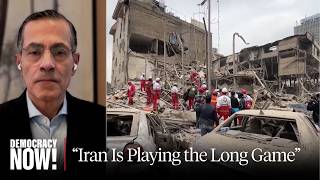
"Iran Is Playing the Long Game": What to Expect from Protracted War in Middle East


Middle East Crossroads: Is Turkey the next target? | Exclusive with Prof. Vali Nasr