What does Iran want? Prof. Vali Nasr
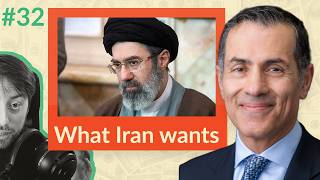
Vali Nasr, professor at Johns Hopkins SAIS, explains Iran's grand strategy since 1979: its conflicts with the US and Israel, the IRGC's role, how the current war affects succession, and what Iran might actually want, from security guarantees to control of the Strait of Hormuz.
Chapters
What does Iran want? Hey everyone, welcome to another episode of Money and Macro Talks. I am your host, Joris Sussworth, and today I'm joined by Vali Nasr, who is professor of international affairs and Middle East studies at the Johns Hopkins School of Advanced International Studies and who has written a fascinating and highly relevant book, Iran's Grand Strategy. And the context today is, of course, that the Iranian regime is in a war with the US and Israel for its very survival. So I think it's now more important important than ever for Westerners like me. I'm from Europe to understand what the regime actually wants. And as the professor has written in this book, there are a lot of misconceptions about this in the West. So Professor Nasr, welcome to the show. I'm dying to know, what does Iran actually want? What is their grand strategy?
So, uh, from its very inception, uh, the, uh, Iranian Revolution, which gave birth to the Islamic Republic, saw itself as liberating Iran from decades of foreign intervention, imperialism, colonialism stretching back to the 19th century, and saw itself as restoring Iran's independence, sovereignty after a long period of it having been denied. It is based on historical grievances and historical wounds that all Iranians carry with the long experience of subjugation, loss of territory, foreign intervention in Iran. But it was also based on an exaggerated reading of Iran's history. For instance, the revolutionaries in Iran in 1979, not just the religious ones, but also the Marxist-Leninist ones, those liberal Democrats who supported it, All believed that the 1953 coup in Iran that toppled the nationalist prime minister and helped restore the monarchy back in power was essentially ended Iran's independence in a way that from that point forward, Iran's government was a puppet of the United States. So the revolution at its very moment of inception, it was not just ideologically Islamic. In a way that the Chinese or the Russian revolutions were ideologically communist, but it saw itself as a savior of Iran's history, if you would, of righting the wrongs of Iran's history.
And it became embedded in its thinking that its mission was to protect Iran's independence and sovereignty. And now, against whom, you may ask? In the 19th century, it would've been the British and the Russians, but in the 20th century, all the way to today, it's against the United States. And that attitude then became endemic to the thinking of the Islamic Republic. And it has conditioned its continued clash with the United States over the past almost half a century. In the middle of this, there are experiences Iran goes through, like a long war with Iraq, like back-and-forth clashes with the US in Lebanon, in Iraq, in the rest of the Middle East, which are also formative in the thinking of its leadership. In a nutshell, Iran's, I would say, the way it has behaved in the past 4 decades, or the way to understand it today, is not to think of it as a theocracy.
It is a theocracy.
Its language is Islamic, but its behavior is not explained by Islam. Its behavior is explained by the way in which it sees itself in a continuous struggle with the United States for protection of Iran's independence and for assertion of Iran's sovereignty and great power status. And its grand strategy has been largely built around this idea.
So its organization of military, its foreign policy, they all have been organized around this issue. And right at this minute, when it's in a war with the United States in particular, it sees this as a grand battle in this long struggle for independence and protection of its sovereignty. Now, it is not the only way Iranians could see their history. There's plenty of Iranians who've seen their history and how they address historical grievances in very, very different ways. But the Islamic Republic has been built around this particular notion.
So this really reminds me, I just did an interview with some academics on what China wants, and I see a lot of parallels here in the sense that there the story was, look, China has gone through this century of humiliation, spheres of influence cut up by the West, was humiliated, and then it never wanted to be put in that situation again. But chose a very different strategy, right? It chose to sort of be quiet, build its economy, integrate it into the US system. And it seems to me that Iran chose the opposite sort of strategy. Do you think that that context and story sort of holds up, to oversimplify it?
No, no, it's not an oversimplification. Actually, a while back, maybe a decade ago, somebody told me that Every time the Iranians meet with the Chinese, there's first this long prologue introduction where they speak about their historical grievances, which is very similar about the long 19th century in which they suffered. Neither one was fully colonized, but it was humiliated. It was wounded, it lost territory, and that ultimately revolutions in both of these countries was done in the name of an ideology, which at face value had to do either with social justice or religion or communism. But one of the main functions of the revolution was to end that history and to start another history, which was based on self-reliance, dignity, empowerment. And so Iranian Revolution in many ways should be understood very much like the early parts of the Chinese Revolution or the Russian Revolution.
But you're correct, there's a point at which revolutions end and something else comes after it.
Now, that also happened in the Soviet Union, ultimately with the era that began with Gorbachev, that Russia was born out of that as a very different kind of a state. That moment has not happened in Iran yet. Now, we cannot say at what point this happens. So in China, we would say the death of Mao was very important. The Soviet threat to China was very important. And then the personality of Deng Xiaoping was pretty important. And in fact, there was a 7-year period in which after Mao died, that Deng Xiaoping was struggling dealing with the Gang of Four for determining the direction that China would take.
You could say in the case of Iran, Iran has never faced, since the collapse of the Soviet Union, it does not have a land threat the way that China saw the Soviet Union, or maybe the way Vietnam saw China, that would compel Iran to get over its anti-Americanism and see a relationship with America as necessary. You could have said that if Ali Khamenei who I would say was equivalent of Brezhnev or let's say latter Mao period in China, had died of natural death and there had been a debate about his succession, it might have been a prolonged debate about the future direction of Iran that a Deng Xiaoping-like person who might have said, you know, it's enough of revolution, it's enough of anti-Americanism, we need to go in a different direction, would not have emerged. But so now this succession has come in the form of a war. And that war is, I think, is going to hang over Iran for far longer. But what I would say, where I would say the similarity is, is that just like the latter part of the Soviet Union or the end of the Mao period, Iran's revolution has really exhausted itself. Its population no longer subscribes to revolutionary values. Either the large number of them don't subscribe to the Islamically part of it, and a large portion of it no longer subscribes to this idea that we have to resist America at all costs.
That it's worth being isolated, it's worth being under sanctions. Majority of them are yearning for exactly the China scenario that you laid out. But we're at that moment where, you know, what does the decline of revolutionary values, how does it translate into phase 2? And this war with the United States has interrupted that process.
But I do think still, that the Islamic Republic in a way has already died in a way.
I mean, in terms of seeing itself in pure revolutionary ways. But the war is actually reemphasizing the anti-Americanism that was at the beginning. The assumption that America's a threat to Iran, America's a threat to Iran's sovereignty, America's a threat to Iran's territorial integrity, that America's out there to deny Iran its global standing, its standing as a great power. All of these have been reemphasized in the case are they wrong?
So yeah, that's very interesting because I listened to a podcast from you about a year ago and then the situation was very different. They were looking weak and their proxies in the Axis of Resistance, so in Lebanon and Syria were looking very weak. And I, you were saying that look, this may be coming to an end at some point. And they were looking weak through an internal revolution, right? We get the story that Trump, started the war maybe partially with that as a hope that, okay, this would do the death blow and then the people would rise up, but that has not happened. So did the opposite then happen? Is that what you're saying? Are people now rallying back around the regime or is that too much to say?
Yeah, that maybe is too much. They're rallying around the country. I mean, I think if Trump had not intervened this time in February of 2026, that the Islamic Republic was going through I think a very, very difficult period from which it might not have survived in its current form. In January, there were massive uprisings in Iran. And even if you blame it on foreign intrigue, et cetera, still they were really, really massive.
And the tenor of the protest across the country, which involved some 170 cities in Iran, was that either that we want the Islamic Republic to go or that we generally want a completely different future and we just are tired of the revolution. And by that, they didn't mean just hijab and religious rules, et cetera. They meant by revolution in the sense that you are pursuing an absolutist maximalist war on America, which is costing the country and is costing us in form of sanctions, poverty, isolation, to a degree that is neither sustainable nor desirable. Go figure out something else. Either you go or you reform yourself. And I would've thought that if this war had not happened, the biggest challenge in front of the Islamic Republic was to how to address this popular protest. Yes, you can suppress it bloodily, then they could kill thousands and thousands of people, but that does not address the fundamental issue. So you either have to reform or make up with America to get more money into the country, or it would be a matter of time before they would've collapsed because the situation was not sustainable.
So in a way, I would say the war changed the political dynamic in Iran. I would say the majority of Iranians don't think all of a sudden that the Islamic Republic is great or that they should love it now. In fact, a lot of them are worried by the fact that the war allowed the succession in Iran to be the Gang of Four rather than the Deng Xiaoping, because the hardest line possible candidate took over.
The decapitation brought to the fore the most hawkish IRGC generals, not the more prudent restrainers, but the more risk-takers, the more aggressive people. All the names that they now see on the top in Iran actually makes them shudder. These are people who've been in charge of massive suppressions of Iranian population going back to 1999 student uprising.
And so in a way, the war disrupted this. And for the reason is that politics during war gets subsumed by the fear of being killed by bombs falling on your country. If before the war there was one line of thinking in Iran, are you for the regime or you're anti-regime? And maybe there's a 15% of the population is for the regime. The other 85%, 80% became very, very focused on getting rid of the regime. During the war, this gets complicated with other priorities like survival of the country. Like nationalist resistance to being invaded, like doubting the fact that US and Israel actually mean well to Iran. And so in a way, the war both settled the succession issue before the Iranians and the regime itself had a chance to really debate succession, right? When Ali Khamenei was killed under very, very sort of secretive set of meetings, the Council of Experts, perhaps even virtually because they couldn't meet in person, resolved on elevating his very hardline hawkish son, very close to IRGC, as the Supreme Leader. And in fact, later on, a few members of the Council of Experts described the process in which they voted. And they said that in the time of war, facing two qualitatively, quantitatively superior military powers, the national security imperative superseded theological one. National security was a more important consideration in choosing a supreme leader, a religious figure, than theology. And so in a way, the war very quickly settled that 7-year period after Mao, not in favor of Deng Xiaoping, but in favor of a gang of four. Now, you know, I still think that the Islamic Republic in its old form had entered its last chapter. That chapter may have been prolonged by this war. And, you know, all revolutions obviously go through the same process, but the particular denouement of each one of them is different, like in the Soviet Union, the whole Soviet state fell apart and it never found its footing in terms of a clear direction like China did.
So in Iran, I don't know whether it'd be 2 years after the war, 5 years after the war, that the system will have to either collapse or would have to completely reinvent itself into something different. And also, I think it greatly depends on how the war finishes.
Does this leadership claim victory and actually get major economic concessions that can address some of the popular grievances, or it's defeated, further broken, weakened, and then left to face an angry population, which after the war will not be concerned with bombs and will return to its concerns with governance and politics.
So do you think, and maybe this is outside your expertise, but let me know. So do you think that, given what you know about the regime and the people who are now in charge, more hawkish people that you've mentioned, do you think that the regime will want to keep the war going for a long time now?
Yes, but not for political reasons. Largely because Iran is fighting this war as an asymmetric war. It's fighting it as a guerrilla army, as a guerrilla force. Time is on their side. Because they also calculate that the US and Israel were counting on a short war. Their munitions, offensive munitions, defensive munitions were not built up for a long war. They went into this war very quickly expecting a quick knockout. You know, now that we're into a month into the bombing, they're running out of interceptors and air defense systems, anti-missile systems and also that even the number of Tomahawk missiles, et cetera, are gonna become an issue. And so Iran, it reminds me of something the Taliban used to say about the United States, that you have all the watches, but we have all the time.
And so Iran's strategy is actually the longer this goes, the more things will be in their advantage. The longer there is pressure on global inflation, global recession, energy prices, global economy, et cetera, the more that they will gain leverage.
I think when this war started and when they elected Mojtaba Khamenei as Supreme Leader, it was a time when Iran at the beginning had to survive. It was a strategy of survival. But now actually they see that the war is actually giving them more and more leverage. They're winning strategic advantage in the war. And so you see their demands for stopping the war are not like We want a ceasefire. They want to renegotiate the balance of power in the Gulf. They want to renegotiate Iran's national security. In other words, not to be attacked. They want to renegotiate sanctions, access to global economy, being able to export oil, et cetera. And so I think, yes, not that Iran wants an indefinitely long war, but I think to come out of this war undefeated and perhaps being able to get certain advantages out of it, they are using two elements which are very key. One is time, the other is geography. Technology and weapons is the advantage of the other side, although the Iranians have also had their own missiles and drones that are notable. But the distinct advantage they have is geography and time.
Yeah. And what do you think, like, you've already answered the question, like, what do they want as being sovereignty? And they've followed the strategy of resistance and You could say that they've now been proven right, that the US was an existential threat and that the war has made the people think more about bombs than about how good the government is right now, maybe strengthening their position a little bit. So what do you think? I know they've already, I think, made some demands like the US should pull back from their bases in the Middle East and and other things. But for me as an outsider, it's always difficult to see, okay, what's a negotiating tactic and what do they really want? Do you maybe also have an idea if we talk about an end to this war and if we assume that they are somewhat in the driver's seat, what do you think they want in order for them to say, okay, we also want to stop the war now?
So, I mean, if you whittle down all the demands and set aside their bombast, they essentially are trying to basically secure, they want security and economic access. Security means we don't, we don't want to be attacked. Once upon a time, they had these proxies that would provide them deterrence. Hezbollah was sitting on Israel's borders. Israel would not attack Iran because Hezbollah would attack it. All that calculus changed after October 7th. They lost Hezbollah, they lost Lebanon. Israel is no longer bound by the same deterrence rules. Now they're trying to establish deterrence. So right now, the way they're establishing deterrence is by making themselves as indigestible as possible, make US and Israel basically give up on the idea that another war with Iran is worth it economically, politically, et cetera. Secondly, they, they're using the Strait of Hormuz as a far more, they think it would be a far more effective deterrence tool than let's say threatening to go nuclear in a way, which is a longer-term thing. Because right now they could basically tell the US, if you attack us again, we'll choke it again. So they're playing with all of these tools, but end of it, they're saying, we don't want to be attacked again. We want guarantees there will be no war on Iran. We want your bases to be gone because these bases are here in order to attack us and encircle us. And we want basically economic relief, which is we want to be able to sell oil. We want you to lift sanctions. And perhaps we want to be able to toll, maybe along with other countries, but we want to be able to toll a passage of ships through the Strait of Hormuz. So all of it, when you put together, is a security plan.
Now, the way the grand strategy fit into this is that this is still a war with America. They're not conceiving of a peace with America.
They're not changing their worldview. They're trying to arrive at the fact that the collapse of the proxies meant that their old system of protecting themselves against the US, which allowed them a kind of a status quo with the US and Israel, has collapsed.
It has brought two wars onto the country. Now they're trying to, through what they're doing in the Gulf and with their missiles, to establish a new sort of status quo with the US and trying to dictate the terms of that status quo.
But fundamental to this status quo is that we don't want to have anything to do with you. Leave us alone. So don't attack us and lift your economic chokehold on our neck, and then we'll be fine, right? In other words, that's what they're really fighting for. Now, what's the advantage? One is the defense of the country, so they don't get attacked. Secondly is that the economics actually allows them to address a lot of their social problems, which they believe was the root cause of the scale of opposition they met. In January. You know, there's a large, there's a significant amount of Iranians who just still don't like the Islamic Republic, period. That's not the kind of government they like. But there's a lot of others who could live with it if they could live. You know, if they're not dealing with 72% inflation, if they're not living with endemic shortages, if they actually can travel, if they can actually do business. So they think that, they can manage the country better if they're not facing 80% of it who's supremely angry. They're dealing, they would have 20% who love them, 30%, 40% who absolutely hate them. But then there is this middle that could become more non-committal if they can feed their families, right? And so that's also a strategy of survival. In other words, what they really are trying to negotiate in this war as the end is basically, again, survival of the regime. But, you know, in the eyes of the Islamic Republic, there is no distinction between regime and country. I mean, this is obviously the way we look at it, but they basically see it as, for them, it's much more of a gray area. In other words, the country, the regime, to them is the same thing. Why? Because at the very beginning, in the mind of the IRGC, in the mind of the Khomeinis, et cetera, the revolution was the savior of Iran. It's not like revolution occupied Iran or something else. The revolution was the savior of Iran. So they see themselves as the same thing as Iran's sovereignty and independence, because their argument is, if we go and let's say the Pahlavis come back or somebody else comes back, if America comes back in the country, then Iran goes back to the pre-revolutionary subjugation. And I'll just give an example that when these massive protests happened in Iran in January, and then there was the massacres happened after it, in his first public comments, the Supreme Leader Ali Khamenei said that for 47 years, the United States has been trying to swallow this country. And it's trying to swallow it again. In other words, he saw the protest again as basically an effort to undo the revolution.
So they think that the Islamic Republic and the Iranian Revolution is all that stands between Iran and being colonized, between independence and colonialism.
Right?
That is real to them, right?
That is, that has been drilled into them. That's what they see.
So out of this war, they want to create a situation in which Iran's independence would be guaranteed, which means no war and economic independence.
Now, if you take these, and I know President Trump is not ready to give that, et cetera, and that's why I think the war may go on for a bit longer.
But if you took these essential elements here, As that's what really this ask is about, then the mechanisms can be negotiated over, right?
So what does guarantee of no war mean? Then you can think about modalities. Would it be a UN Security Council resolution? Do you bring China and Russia as some form of guarantors into the process? Do you think about some form of holding of the Suez Canal, sorry, of the Strait of Hormuz would be part of this. And then you would say, okay, what does economic relief mean here? Iranians say war compensation, but war compensation can mean many things. We could say, okay, you know, we give you waivers to sell 2 million barrels of oil, or these sets of companies can actually explore your gas and we give them waivers to do that and for 10 years to sell gas, for instance. So then you would end up with modalities of about what they want, but at the core of it, they essentially still are trying to secure Iran's independence and prevent what we see as regime collapse to then also means Iran going back to being subjugated.
Yeah. And in a way, they may have a point in the sense that if Venezuela was the prelude to this US adventure in Iran, they are using again, very imperialistic language with Venezuela, right? Venezuela is now ours, showing it on a map with an American flag on it and as a puppet state, et cetera. So it's interesting that the Trump government in a way really has played into their narrative. But what I, or do you want to comment on that?
No, you're absolutely right. And I think they do see, you see that even starting with the Gaza War, that the Islamic Republic also discovered that it can actually tap into The entire world movement at this moment, which is anti-imperialistic within the United States, is opposed to the Trump administration. And you see in their language, even going back to the Gaza War, there's much, much less emphasis on Islamic ideology and much more emphasis on this notion of resistance, right? Which is something that is a much more of a universal concept. That the progressives in the US, many people around the developing world, et cetera, can relate to. So they don't talk about jihad. Even right now, there is no call to jihad in Iran. There is no call to these sets of issues. It is basically, it's the language of resistance. And they call the grand alliance against Israel the Axis of Resistance. As opposed to some kind of an Islamic organization. And yes, so they think that they are tapping into that. And very much to understand the Iranian Revolution, you also, sometimes we overfocused on Islam and we didn't take into account that its leaders were reading Islam through the lens of Che Guevara and Frantz Fanon and the like. That yes, Islam was their language. It was the reference points. It was the justification for actions. but the mindset and the mental construct was actually very familiar to us. Ali Khamenei, Iran's Supreme Leader, was very well read in the Third World literature of Fanon, you know, all of those. He would quote them. He knew them extremely well. And in a way, he thought like that. He thought like a Ho Chi Minh. He thought like a Che Guevara. He thought like Castro. They understood each other extremely well. At one point I wrote years ago that the The only two people in the world who best understand each other is Putin and Khamenei. They have nothing in common when it comes to religion, et cetera. But they very well understand this idea that United States is preventing their, you know, them assuming the rightful place in their neighborhoods, is bullying them. They could speak to each other very, very well. I mean, there's the arch-conservative Russian thinker, Alexander Dugin. You know, he used to travel to Iran. He hosted in Qom conferences, and there was a sort of a common argument about the importance of tradition and culture in resisting Western imperialism and capitalism. And so yes, that's part of their tool. And to them, this is not a war about Iran's nuclear issues, et cetera. This is an anti-colonial war. This is a war to prevent the US from subjugating Iran.
Yeah, because this was something that was very enlightening to me when I read your book, that you said, look, okay, if we keep that in the back of our mind, the sovereignty thing, this, we don't want to be colonized or put into spheres of influence ever again. And then the acts of resistance that you just already mentioned a little bit in the interview, these, the Houthis and the Hezbollah and all of these fighters in Iraq and Syria. I think that that's part of the story never really reached Europe, for example, or most of America, that it is, that it was actually part of keeping the US at bay. And you wrote, write in your book that this was potentially a very costly strategy, but because, you know, it's very expensive to have all of these foreign militias running around, of course. But now I, I'm just listening to you talk about the Strait of Hormuz. It sounds to me like Trump has forced them to switch towards a much more effective strategy, which is, no, okay, our leverage is no longer militias in Yemen, but our leverage is the Strait of Hormuz, which is right next door, which is much cheaper to hold hostage in a certain— and this also relates to the nuclear program then, right? Like they, okay, that's the ultimate form of deterrence. but it failed and now they have a new, cheaper, much more effective deterrence. So it even sounds to me like that, you know, they could maybe pull it off to then actually not be on their last legs to go against your thesis from a couple of years ago. Because if they get a really good deal from Trump, no more sanctions, you know, getting, being part of, being able to sell much of their oil again and getting maybe some revenue share from Strait of Hormuz. Then they could maybe feed again Iranians and have renewed legitimacy.
Yes, I mean, I think they've adapted incredibly well. And I think there has been a part of US and Israel that underestimated them, underestimated not only their staying power and their willingness to fight to stay, and also underestimated their ability to adapt and be able to respond to the challenges that they faced. The rate at which they adapted between the June 2025 war, 12-day war with Israel, and the war that we're in is actually quite astonishing in the sense of how quickly they rebuilt their missile program, how quickly they diversified or decentralized not only their military operations, but also their government structures so that you could kill the Supreme Leader. And the system continues to go on. You kill commanders and the system continues to go on. So that, you know, I continuously hear that they prepared for this war.
They prepared for all kinds of scenarios in terms of where they put their missiles, where they put their launchers, how do they unveil things.
So in a way, But I think, you know, unless this war takes a direction that ultimately forces them to collapse, which is possible in every war, one cannot write the scenario off, but you and I are speaking close to a month into this war and they have survived a month. We could predict that maybe they can survive another month or two months. They may not have the capability to keep hitting Israel with missiles, but they definitely would have the capability of absorbing aerial attacks because that's something that they just are doing, but they could continue to put pressure on the Gulf by shooting a drone here and there and keep the risk factor present on shipping, on the rest of the economy of the Persian Gulf. So yes, it's possible. We don't know, you know, after the war. I mean, there's a lot of other things on the table. They could become an extremely reclusive state. I don't think it is possible for them to become North Korea because North Korea is possible because North Korea's population is North Korea's population. What is different about Iran is actually its population is highly educated. It's highly middle class. It's extremely versatile. That's why it's so restless. You cannot rule over Iran the way Kim Jong-un rules over North Korea. You cannot indefinitely in a peacetime keep the lid on that. Part of Iran's success is exactly the level of education in the society. It's the level of diversity in the society. I think when the war ends, yes, the Islamic Republic can get some lease of life, but if it's going to have a longer lease of life, it has to successfully negotiate a new social political contract with the population. If the current leadership refuses to do that, then it's going to be unstable. It won't be able to be stable domestically. And then the question becomes that does the leadership in the Islamic Republic today, does Mojtaba Khamenei have the wisdom and the wherewithal to actually do that, to see that stability requires a completely new formula in Iran.
Yeah. Yeah. And so this has been extremely enlightening for me as someone who hasn't dived that deeply into Iran and its history and what it wants. But there's still two things that I'm puzzling about. So these are Israel and the Arab countries. So, okay, you've made the case, look, the big baddie for Iran in their story is the US, and that makes sense in the light of the revolution. But then does Israel fit into this story as an extension of the US? Do they view it just as like the US mini, or is there something more going on here?
Well, for a very long time, the Islamic Republic looked at Israel as basically an instrument of the US. So they had this phrase, America was the Great Satan, Israel was the Little Satan. And then there were other smaller, basically instruments of the US, Saudi Arabia, the Gulf countries, GCC, et cetera, who basically were part of this US cordon around Iran. So Iran viewed the United States as refusing to accept that Iran had won its independence from the US. The US and that it was an independent country and that the US was determined to subjugate Iran again. And all of these countries were part of that formulation. However, in reality now, I mean, you might still have this as kind of like the higher level theory, but in reality now they're saying that Israel is actually the near enemy, which is not only perfectly capable of attacking them and has its own independent hostility towards Hezbollah and towards Iran, but also is now capable of determining American policy, right? So in many ways, Iranians are saying, even their foreign minister says, why are Americans going to die here? This is Israel's war. So, you know, there is a certain degree of dissonance between this grand view that it's all America and now the realization that Israel may be an independent actor here, which is not an instrument of the United States, but actually the United States could be the instrument of Israel. But this hasn't been completely internalized in refashioning Iran's grand theory for Middle East politics.
So I think at some point it will, but right now, you know, they still see Israel, they see simultaneously Israel as the one that is responsible for these two wars. That has brought the US into these two wars.
But still the rhetoric and the language and the way they think about grand strategy is all focused on keeping the United States at bay, as if the US is holding all the levers. But, you know, I would also say this, that this war, if the Islamic Republic survives, and even if any other regime comes to power in Iran, a completely different regime or a reformulation of the Islamic Republic, in the end, this war will be extremely decisive in how the country thinks about its grand strategy, about security going forward. I mean, major wars shape countries. I would say, for instance, the Shah's regime was forged by the experience of World War II, occupation of Iran, the Soviet control of Iran's northern provinces that he didn't want to give up. And then, you know, for the Islamic Republic, the Iran-Iraq War was also an incredibly powerful, both theoretical and practical lesson in statecraft and military craft. So this war will, I think, reshape how Iran thinks about the region as well as the United States. If the Islamic Republic stays in place, I think there would be a recalibration of how it thinks about America and about Israel, about which is a greater threat to it and why and how to handle each.
And then finally, what about the Arab states? Because look, the recent strikes, it makes sense to me, like economic sense that they would hit these countries as an extension of the US, even if they, some of them like Qatar seem to be relatively friendly at first, and even if they had somewhat of a deal with Saudi Arabia. But I'm just wondering, a couple of years back, the big story was the Middle East is being divided by this rivalry between Saudi Arabia and Iran. Is there more agency there? Like, just as you said that there was more agency and there was nuance as there was with Israel, is that the case for Saudi Arabia and the other Gulf countries as well? Or is it really just an extension of the US?
Well, you know, first of all, there had been different schools of thought in Iran about the Arab countries. I mean, there was the more pragmatic side of the regime which was reflect maybe the current Iranian president is still in that level, or the foreign minister who believed that Iran needs to repair its relations with its neighbors and it cannot be at war with the Persian Gulf countries. But then there was that side of Iran, which is now in power, the hawkish IRGC, who believed that these countries are basically agents of the US. That they've been hostile to Iran. They supported Iraq during the Iran-Iraq War. They undermined the nuclear deal. They supported maximum pressure. And yes, they pretend to be our friends, quote unquote, but they're actually hosting bases that are being used to target Iran. And one of them actually has now a tight intelligence and military relationship with Israelis, and two of them are in alliance with Israel. And so, They basically, in a war situation, there is no politeness. Diplomatic niceties go away. And if you get hit from those territories, you hit back. And if your interests dictate hitting their oil facilities, desalination, etc., or Qatari gas fields, you hit them back. In war, you know, they cannot enter the war because the Houthis can then enter the war against them. If they entered the war, they don't bring any additional offensive capabilities that the US and Israel already don't have. Iran is a much bigger state, and even after the war, they won't have many choices but to coexist with Iran. I mean, that mindset is the one that dominates among the hawkish people. But I think they are also trying to drive a point home to Iran at a sort of a longer level, sorry, to the Gulf countries. One is that the United States will not protect you. This alliance that you have built for 47 years is now being proven to be hollow. That the US bases have invited war, but they have not provided you with protection. And that ultimately your security will not come with alliances with US or normalization with Israel. Your security will come from being far more neutral and engaging with us. So they're basically are trying to bully the Arab countries into a realization that you know, well, you hate us, but you hated us anyways, except pragmatically, you don't have a choice but to deal with us because the alternative is even worse for you. And so that's the message that they are sending. And we'll see whether it works or not, but gone are the people who argued for a very different approach to the Gulf countries that argued that Iran's president, I heard, maybe 2 years ago, maybe a year ago, told the Iranian generals and the Supreme Leader that if you inflame relations with the Gulf, I'm gonna resign. And we saw after the war, he went off message and apologized to Iran's neighbors, right? But he's not the dominant voice anymore. The kinds of people who were sort of pursuing a de-escalation normalization path, have been sidelined by people who say, we've gained nothing from alliance with the normalization with Saudi Arabia. Normalization with Saudi Arabia brought security to Saudi Arabia, but brought no security to Iran. So it had zero benefits. They got peace with the Houthis. They're not being shelled by the Houthis, but we still are being attacked. We didn't get any economic relief. And so why are we observing this deal? Deal. And so these are the kinds of people who are now in charge in Iran. And I think one of the tragedies of this war is that Israel's decapitation system has systematically removed the more prudent restraints in the Iranian system, including the Supreme Leader, previous Supreme Leader, and has replaced them by the most risk-taking hawkish elements of the regime, which actually had been kept at bay. They were not being appointed as commanders of the IRGC before. Israel eliminated the commanders that Ali Khamenei appointed, and they're being replaced by commanders that Mostaba Khamenei is placing at the top. And these are a very different breed of people. And so we're seeing their policy now in action, which is much, much more aggressive towards Iran's neighbors.
Yeah. Okay. Yeah. My goodness. No, thank you so much, Professor Nasr. This has been super enlightening for someone like me who just, you know, wasn't an expert at all on the Middle East and now as an economist is forced to think about this as many of us are. And for me, some of the key takeaways are that, what does Iran want? It wants sovereignty given its history of humiliation and some imperialism, even if it's a while ago now. And that a lot of the things that they've done that were difficult for Westerners to understand, like maybe, okay, Is it really smart to get this nuclear program? Or why are you having all of these militias running around in the Middle East? It starts falling into place if you think about it like that, that they were just looking for leverage to secure themselves against the US and its allies. And ironically, it seems like they found the biggest piece of security was actually right next door all along in the form of the Strait of Hormuz.
Well, and in addition, you know, one man's defense is another man's offense. And there's also a very, very sort of a thin line between aggressive defense turning into offense. I mean, you know, even Israel in the region is always defending itself, but in the eyes of the Arabs, you know, it crosses the line into offense. And so I could very well understand that, you know, Iran's use of these militias in the Arab world was highly threatening to Arab order. It was highly threatening to Israel, to the US, and it was seen as imperial expansion. Which at some points it may have actually turned to imperial expansion. But at the core of it, it was an insecure state, isolated by sanctions, that had no defense, came up with this idea, this innovation that we can defend ourselves by organizing and supporting these militias far away from our borders. And so one of the interesting things about Iran as an isolated country trying to defend itself in a region that is hostile to it before a superpower, It's a strategic innovation. I mean, even as ugly and as horrible as this idea of forward defense, defending yourself with militias was, it was an innovation for a country that nobody sold it air force, nobody gave it tanks, nobody gave it artillery. It couldn't build those things. It's a cheap man's defense system. And even the way they're handling the the closure of the Strait of Hormuz is not with massive multibillion-dollar frigates and warships. It's again with guerrilla warfare. And so this has now become part of the entire strategy of the way they fight war and they defend Iran.
Yeah. Yeah. And then I will have to see, huh? Like it all depends on the outcome of this war then what happens next. Exactly.
How it ends. Exactly.
Well, I'm very curious what will happen. Also quite sad about it. Like I would never want to use the words I'm looking forward to see what happens, but we will see what happens anyway. And I'm very grateful that you were willing to come on and share your insights on this. And I will link your book in the description of the podcast for anyone who wants to follow up. So thank you so much, Professor.
Thank you very much. Thanks for inviting me.
More from Vali

Trump has no easy solution for Iran's chokehold on global markets, says Vali Nasr
Why This War Could Be a “Turning Point” for the Global Order - Vali Nasr | Endgame #261
Iran Is Playing the Long Game to Exhaust the U.S. — So Far It’s Working | Vali Nasr
"Iran Is Playing the Long Game": What to Expect from Protracted War in Middle East



Middle East Crossroads: Is Turkey the next target? | Exclusive with Prof. Vali Nasr