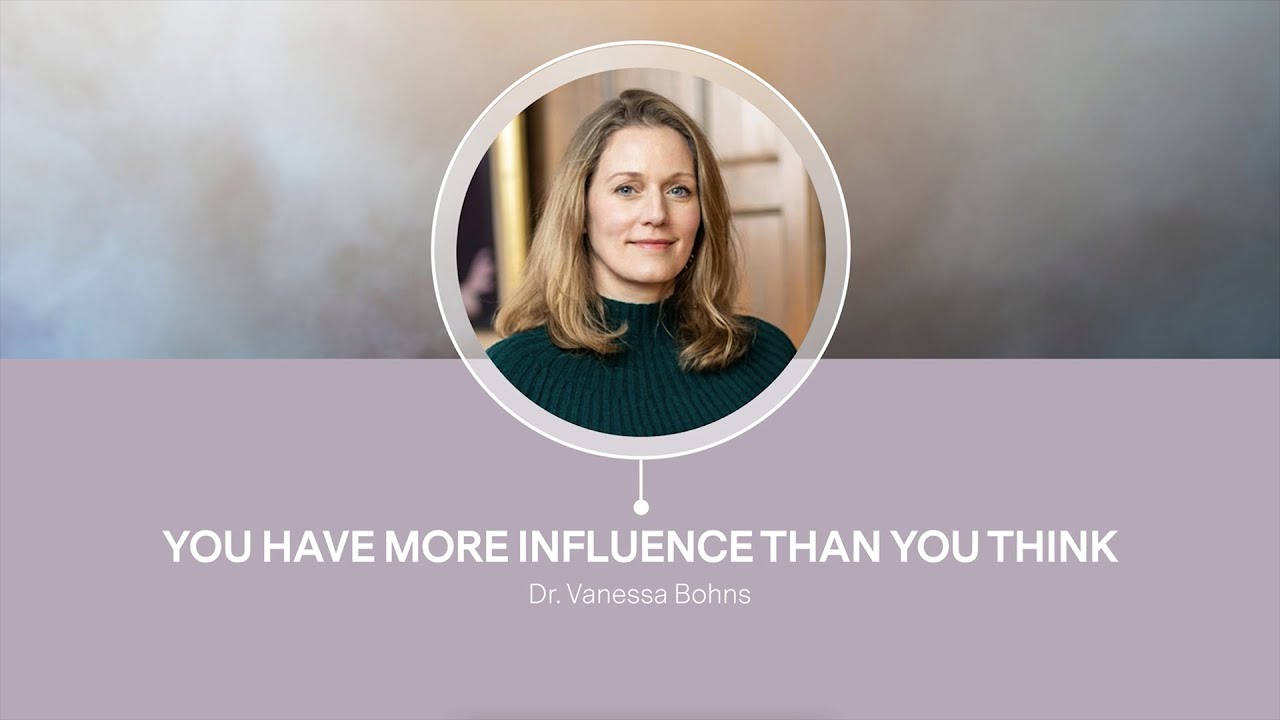
Vanessa Bohns: You Have More Influence Than You Think, How We Underestimate Our Power of Persuasion

Social psychologist Vanessa Bohns explains why we underestimate how much others like us and listen to us. A Penn Station survey showed people are kinder than we expect. She breaks down the liking gap, the invisibility-cloak illusion, and simple tactics like asking for help and giving compliments.
Chapters
Hi again, everybody. I'm Jamie Allison, and this is the Big Idea, Big Moves podcast. This is the destination for high performers. We talk to people from different genres, different niches, people just doing really cool things in their space. We've talked to CEOs, we've talked to authors, we've talked to athletes, all people that have done a few things and are doing things that I think we can take a little bit away from their stories and their journeys. to apply to our own lives. And I know we have one of those today, really interesting, you know, discussion that I know we're going to have today. Just before we jump into that, if you've been listening to the podcast for a little while, you'll know that we have a relationship with Athletic Brewing now. And we know that a lot of people who are listening are either people that, you know, do spend a lot of time in an active lifestyle and also people that are doing things such socially, but maybe don't want to have kind of the effects of alcohol in their beer, but still enjoy their kind of craft beer taste. So we've connected with Bill and John at Athletic Brewing, and all of their beer is between 50 and 70 calories a can, which is pretty cool. So it means that you are able to still have the social life that you're used to, or be able to use it directly after a race or whatever it is that you're doing from your athletic pursuits as well. So if you go to our Instagram profile, which is bigidea_ Big Moves, go into our bio and you can see that we have a special deal there for it as well. And just find Athletic and see if it's something that you'd enjoy as well. And so now, I'm really happy. I've been reading this book for the last little while. I'll kind of throw that out there to start with. But Dr. Vanessa Bohns is a social psychologist and professor of organizational behavior at Cornell University. She holds a PhD in psychology from Columbia and an AB from Brown as well. Her writing has appeared in the New York Times, Harvard Business Review. Her research has been featured by The Wall Street Journal and New York Times. It's all over the place right now, which is pretty cool. Her new book is You Have More Influence Than You Think: How We Underestimate Our Power of Persuasion and Why It Matters. So, again, something that I think crosses our entire audience. So, thanks very much, Vanessa. I know you've been doing a lot lately with your book. So, thanks for taking the time to talk to us today.
Thank you. It's my pleasure. Happy to be here.
Well, you know, maybe we start— I mean, before we jump into some of the great stuff that's in the book, I know that obviously you've had a really interesting kind of career path getting to where you are now. And why don't you tell us a little bit about that just to start things off?
Yeah, for sure. You know, and I really like starting out this way because I think if you just read my credentials, it sounds like, oh, you know, she clearly went to these like top schools and studied psychology, and now she teaches psychology. What a straightforward path with no ups and downs and total clarity. And from my perspective, it's just not really like that. And so, I like to start by sort of the very beginning, which is that I grew up on a farm in New Jersey, of all places, where there are actually farms. And my dad was a mechanic and my mom was a teacher. And the idea of like an Ivy League school was very distant. me. And my dad, you know, didn't even really know much about college at all. You know, his dream was really to send his kids to college.
Mm-hmm.
And so showing up at Brown when I went to undergrad, I really had a lot of imposter syndrome. I also tend to be an introvert for the most part. And so, you know, I feel like that gave me this perspective that made me sort of notice things in my surroundings that in, you know, years and years and years later, I've studied and put into this book that they kind of allowed me to pick up on some misconceptions that I had that it turns out lots of people have. So, you know, I always felt like a fish out of water because everyone else around me seemed to, you know, come from fancy schools and pick up on things and, you know, have this great educational background. But in fact, I did fine. I did well, you know, and I went on to get my PhD. And so I just really had this misperception, this kind of inaccurate sense of my impact and my ability to do things. And so anyway, I graduated from Brown. I was a psychology major, but I thought I would go into advertising and marketing. And I got my first job at Ogilvy& Mather in New York City and thought that was like my dream job.
Yeah.
But I pretty quickly learned that I actually didn't like Advertising and marketing. And so I tried out a bunch of other things. I tried out elder care. I worked in a sleep lab, which I had also done as an undergrad. I had a bunch of different kind of random jobs. And I always kind of liked the idea of market research in advertising. So it wasn't just the idea of marketing I didn't like, but I liked certain parts of it. And everyone in market research had a PhD. So eventually I was like, maybe I'll just go get my PhD and try advertising again. I went to Columbia, you know, started doing research and pretty quickly stumbled on the findings that are the basis for a lot of the research I've done and put into the book. I was working with a professor there. I was collecting data in Penn Station to do this study where we were collecting surveys basically from random people.
Yeah.
And I hated so much going up to people and having to ask over and over and over, like 100 times, you know, will you fill out this questionnaire? And I had this idea in my head that it was going to be this horrible experience walking up to people. But in fact, it wasn't that bad. People were pretty kind. And a lot more people said yes to me than I expected. I expected people to like yell at me and reject me in a huff, you know?
Yeah.
And so when I brought the survey data back to the professor I was working with, we were kind of less interested and our findings didn't really— our initial sort of predictions didn't come out. So we're less interested in what we originally were predicting. And instead, we kind of focused on my own experience, the idea I had in my head about how this was going to go and how it actually went. And we wound up testing this in the lab, sending other people out to go ask for things and guess how hard it would be and how uncomfortable it would be in advance. And they all seemed to discover the same thing, that more people said yes to them than they expected, that in the end, people were kinder and warmer than they expected.
Yeah.
And so that discovery and being able to sort of put my own aha moment, right, test it out, make sure it wasn't just me, it was like a general thing, really just made me excited about social psychology and research. And so that became a thing where I just followed through with that. until I wound up here as a professor.
Yeah, it's interesting that you have said that's flowed into the book because it's obvious that when you read the book that that's an extreme theme through it is that there's this idea, our perception of either the impact of something or how difficult something will be is not necessarily founded. It's more in our head. And I thought you actually said We often overestimate how much other people's attention is on us when we're self-conscious about something. But we also underestimate how many things we do kind of influence and people see when it's just our normal going through a normal day and we don't have that kind of self-conscious piece. Can you talk a little bit about that? I just found that really, really interesting. And I think most people can understand how that might be.
Yeah. So, and they, the 2 effects that describe that have nice names that are very memorable and sticky. So the first is the invisibility cloak illusion. So I'll start with the one that people actually are paying more attention to us than we tend to think. And so this is done by a researcher at Wharton, Erika Boothby, and her colleagues who basically have described this experience we have as we walk about our daily lives as feeling like we are draped in an invisibility cloak. Mm-hmm. So basically, you know, you can imagine yourself like walking walking around, maybe you have headphones on, maybe you have sunglasses on, maybe you're just reading the paper on the subway, whatever you're doing, and going about your daily life. And when she asked people basically in these kinds of scenes, when you're going about your daily life, if you're just eating out at lunch, for example, you know, how many people were paying attention to you, people underestimate how many people are actually paying attention to them in those moments, right? And then she'll survey the rest of the people coming out and find out that in fact more people were paying attention to you than you think. And so that is interesting because it means that the things that we do have the potential to impact people more than we realize. If people are noticing the things we do, they may mimic them because we know people mimic the things they see. And so we really do have this potential impact that we're less aware of than is actually the case. But at the same time, you know, often if I say that, people are like, I knew it, like everyone was paying attention to this stupid thing I did. But in fact, there's kind of this other phenomenon, which is nice and comforting, called the spotlight effect. And that's the idea that we think that everyone's noticing the things we're most embarrassed about and insecure about, right? More so than they actually are. And so this was done by Tom Gilovich, one of my colleagues here at Cornell. And he did this by having people wear this Barry Manilow concert t-shirt, which at the time people were embarrassed to wear. Nowadays, I feel like people would just think it was funny and cool.
That's retro cool.
Yeah, exactly. But they did pretest it back then and people were genuinely embarrassed. And then he led them to a room and led them back out of the room under this, you know, whole cover story. And he said, how many people do you think noticed what you were wearing in that room? And then he actually had the people in the room say, did you know what was on that person's t-shirt? And people actually thought more people had noticed what was on their t-shirt than actually had. So when you're sort of acutely self-conscious about something, we show the opposite. We think everyone's looking, right? And so actually, Erica Boothby sort of reconciled these 2 things because you're like, how can they both exist? And showed that when she brought people into the lab and just had them wear their ordinary clothes and ask them how many people noticed what you were wearing and what you were doing, they underestimated how many people noticed them. But when she actually gave them an embarrassing t-shirt, then they showed the same effect as the spotlight effect. They overestimated. So, in the very same study, she found both of these effects. And so, it's a happy story, right? It's that we have this impact. People are paying attention to what we do, which can in fact influence people. But they aren't paying attention to the things that we hope that they're not paying attention to, you know, our bad hair days and our embarrassing stumbles and things like that.
So how does that, I mean, you mentioned that you in most cases are kind of have introverted tendencies. And I think most people who are introverted, myself being one of them, would kind of automatically assume that extroverts may, there may be a different kind of approach there and there may be more ability to influence because of that personality trait. Have you found that that's the case? Is there something that, you know, that is there a difference really between the two?
Yeah, so what some of the, the research has found that I talk about in the book is that introverts do show this to a greater extent than extroverts. So there's another finding called the liking gap, where if you talk to another person, and then afterwards a researcher says, how much do you think that other person enjoyed your conversation? How much do you think they liked you? We tend to underestimate how much the other person liked talking to us. And in those series of studies, they show that everybody does this, right? But introverts do it more. And so it is the case that if you're more shy, if you're more introverted, basically you're doing even better than you think. You have more, even more influence than you think. But at the same time, it does seem to be a general phenomenon where, you know, everybody does it at the same time.
Yeah, I think most should find that interesting because I think most, I'm sure introverts, but also everybody has this general worry when they go into a room, I would assume, about being perceived a certain way, or, oh, I'm gonna screw up what I say and that's the brush that everyone will paint me with after that. And what you're saying is, in most, like, from a research background standpoint, that doesn't hold true and might be a little unfounded for those people listening that think that way.
Yeah, absolutely. And you know what I love about this research is that you can have friends and family tell you this all they want, right? Yeah. No one was paying attention to that. You're being too hard on yourself. But in fact, having the actual research where hundreds to thousands, in some cases, of participants have shown this kind of bias where we all are harder on ourselves than other people are on us, I find really reassuring. Because there's nothing better than saying there's actual data out there that shows you that people aren't judging you as harshly as you might think, that actually we're kind of wired to give people the benefit of the doubt and we aren't paying that much attention to their sort of foibles as we tend to think.
And now, some of this, because there's almost an innate influence that comes with that, that I know you talk about in your book, but then if people are looking at it even just in how they start to use that a little bit, and this could, I guess, work positively and/or negatively depending on how you use it, but I think of, you talk a little bit about that kind of reciprocity part and how that That influences, you know, if there's something that's been offered to me, there's almost this kind of feeling like I need to be able to give something in return, and that can be used from an influence standpoint, but it probably could be used negatively and positively. Is that something that you really kind of delved into this?
Yeah. So, I mean, a major takeaway I'd say from the book and from all these findings is that there are positive and negative conclusions that you can draw from them. Right. So on the positive side, when we say things, people are listening to them, believing them, not judging us as much, all more than we think, right? And on the positive side, that means we have more impact. We don't have to try so hard. People aren't vetting the things we say as much as we might think. On the flip side, right, that means even when we say things that aren't true or maybe are, you know, negatively impactful at the same time, People aren't vetting those things as much as we think. And people feel obligated to agree with things and do things for us more than we think. And the reciprocity element for sure as well could be used for positive or negative reasons. You can use any of these kinds of tactics. So reciprocity is one of Bob Cialdini, who wrote the book Influence, one of his sort of tactics. He has several principles of influence. And You know, those as well. You can use reciprocity to make someone feel obligated to do something potentially sketchy down the road because you got them, you know, you did something for them. Or it could be a nice positive social exchange where you're kind of exchanging favors. I think that's true for any kind of influence tactic.
Yeah. And so why do you think, I mean, obviously the response has been very positive about kind of what what's in your book. And I think people are seeing things that are quite a bit different than maybe what's been said before. Why do you think it's resonating so well with readers and listeners and people like that? Why do you think it's become such a positive thing for people?
I think there's a couple of things. I think, for one, there's just so many books out there on how to gain influence, on all the tactics that you could use to get influence. And They're perennially popular, right? People are— there's this just great appetite for those kinds of books. And that makes me think that everyone kind of feels like they want more influence, that they don't have enough. And yet they keep gravitating towards books to learn tactics, and those still don't feel quite like they've done enough, and so they need another one. And so I think it's just this constant sort of battle to want to have more influence. And I think this book actually tells people to first, let's take a step back. Let's do kind of an influence audit. Let's actually think about the influence you have already and all the barriers that might be causing you to miss it, to not see it, to underestimate it before you go out and think that you need to get yet another tactic to figure out how to have more influence. And I think that's a really helpful, reassuring message for people. And I think it is because so many people, not just the introverts or the shy people, you know, and even people in power, right? People who actually have a lot of influence, they also are, you know, unable to see it at times. And so I think there is this sort of general across-the-board feeling of, you know, I never quite have enough influence. I always feel like I'm the one who doesn't have the power and someone else has the power. And this is taking a step back. Like, let's reassess. Let's see what's actually going on in this situation.
I do find it interesting that you said even people sometimes who have the power, or maybe positional power and things like that, don't realize it themselves. And I think of how many people that are CEOs and maybe don't realize when you talk about when they come into a room, the little things that they say, the little things that they do to acknowledge somebody, and all of those things. how impactful that can be and probably even compounded because of their positional power. And I'm assuming that that's something as well that, you know, maybe hits home with some of those people who are already in those influential positions as well.
Yeah, absolutely. It's interesting because, you know, when you have positional power, that's a time when you have so much more influence and people find it difficult to say no to you. They find it difficult to voice opinions that are opposed to your opinion. And yet it's also the same period of time when you're especially sort of unable to recognize the influence that you have, interestingly. So there's these psychological effects of having power that lead us to, first of all, be less likely to take the perspective of other people. So when we're in a position of power, we are in control of things, right? And so we don't have to worry so much about how someone feels about the things that we said. We're not constantly checking in like, oh, were you offended by something I said? How did you take that? Right? We just do it less when we're in a position of power. And so we miss the way our words come across because we're not sort of trying to take someone's perspective as much and get that information, get into their heads. Yeah. At the same time, when we're in a position of power, we can say no to things. We can kind of just say what we think and feel okay about that. And we have a tendency, a very human tendency, to overapply that and assume other people also feel a similar way. And so, we may look around and still feel like the little guy and feel connected to the people who are below us and think, oh yeah, I'm just one of the group, and they can easily go against what I say or say no if they feel uncomfortable with that. But in fact, they can't. And it's a time when we really miss that, the time when it's the hardest for people to do that.
Yeah, yeah. That self-awareness can sometimes be difficult, and books like this really help that. For you going through this process, I mean, obviously, I'm sure a lot of work has went into this over time, but maybe just, have you found that you've adjusted the way you do things because of the research that you've done and putting this book together? Has it impacted you that way?
It has for sure. I definitely reflect on it a lot. And to some extent, I reflect on the power piece because I as well, As you make your way, I think for many people, you make your way up the ranks, and at each point, it takes time to sink in that, oh, now I am the person in power, right? So I'm a tenured professor now, but at times I still feel like a grad student, and so I interact with grad students and I feel like, oh, maybe we're kind of buddies, but I've definitely learned to sort of check myself on that, and when I suggest something, make sure that they're clear clear that they don't have to follow it, right? And try to make sure I understand how they're taking the things that I say. And if I want them to feel free to either argue with me or say no to me, I try to create the space for them to do that. And also, you know, on the flip side, I, as I talked about, you know, people are more likely to agree to do things for us than we think. And that can be a really helpful, empowering kind of thing where I feel like if I needed help with something, I feel more comfortable asking for it. I know that I won't be judged as harshly as I used to think. I know people are less likely to say no than I used to think. But that doesn't necessarily mean that I ask for things more. But what's interesting is that the feeling of if I did ask, I know that I could get the help I need. Yeah. Sometimes that is enough. And there's research showing that actually an awareness that you could get help can be just as good for self-efficacy as actually getting that help. And so in that way, you know, it's kind of just a different mindset that has been really helpful.
So, you know, you've talked about the, you know, asking for things, that there's not as much of a barrier as there— and some of that is probably also as you've grown over time. But I'm thinking, you know, people that are listening right now, and anytime I'm asked, a lot of kind of high performers or people that are, you know, the perception is they're doing very well, almost all of them will say, you know, there's no harm in asking. And that's often what's created door openings for them and opportunities for them. And I guess, can you expand on that a little bit? Is that in your research, I know that, you know, you've really talked about that more often than not, people will help. And, you know, is that something, is that a tactic people can use? And maybe if you can get past that barrier a little bit in your head, that it does open a lot of doors and opportunity to you, as well as, you know, the possibility of things coming back to you later. But
I really do think that it, it is. And as you said, you know, we found people tend to think that when they ask for something, they're trying to get past no, right? That they're— that people's initial inclination is going to be no, is going to be to reject them, and they have to find a way to sort of break through that glass or that barrier and get to yes. Yeah. When in fact, in many, many cases, people's initial inclination is actually yes. There's studies that show that when people are asked something mindlessly, just like a small favor, that the vast majority of them without thinking default to yes, which suggests that, you know, our default isn't just no, it's actually yes. And it's harder to say no, right? And so I think that it's really helpful to keep that in mind when we do need help and when we're asking for things that in fact, most people's initial inclination when we're going to ask for something is to say yes, and we don't necessarily have to come barreling in trying to get past a no. And at the same time, that doesn't mean we should hold back. That means that we should go ahead and ask if it's something like for help. On the other hand, you know, I know people who are in a position to maybe mentor other people. We have some other research showing that people in mentorship positions tend to forget how hard it is to ask for help. And so, on the flip side, if you are someone who could be helpful, who could be a mentor or an advisor in some way or a coach in some way, you know, making sure that you are actually actively reaching out and offering your help and assuming— not assuming that the other person will just ask for it if they need it can also be really helpful just to make sure that these help exchanges happen from both directions.
Now, do you in your career, has there been Is there somebody in particular that has been that kind of key mentor for you? Is there somebody that kind of has been your role model going along your journey so far?
I definitely think Frank Flynn, who I did a lot of this early research and was the professor, the Columbia Penn Station professor, he was always very sort of engaging in terms of making sure that I felt comfortable asking for help. I would never feel judged if I were to ask for help. I think that's another aspect is when someone does ask, making them feel good about having asked, even if you have to say no. So I will try to do that now in my career. Whenever an undergraduate or a graduate student asks me for something, my first response is, thanks so much for asking. Right? So, and then I try to either tell them I'll do it and I say it enthusiastically. Mm-hmm. Or, I'm really sorry, but here is another place you can go, so that they know that what they're asking for is okay, that someone is going to help them even if it's not me. And so, I think that also helps people, recognizing how hard it is for people to get over that barrier of asking and making it actually feel good and okay that they did ask. And I definitely think Frank was one of those people who always made me feel sort of totally fine about asking, like it was never an issue.
Yeah, important for sure. So, people at home, I mean, obviously, we're going to really ask them to buy the book because there's tons of great strategies and things like that in here. But if someone's listening right now and deciding, you know what, there's some really interesting information that obviously I'm feeling maybe a little bit more comfortable. If there were 2 or 3 things a listener could do right away that might help them take stock of their own influence and maybe kind of leverage it a little more than they are today, Do you have a couple of kind of tips or actions that they could do right away?
Yeah, definitely. I'd say the first one, and this is nice and easy and it seems to be really effective, is anytime you're feeling like you don't have impact or you're feeling insecure about something, think about what you would tell a friend. So a friend with that same concern. The research shows that when we can get out of our own heads And think about things from this objective third-party perspective, we're much more accurate about what happened. We're better able to see the impact that we had. We're better able to see the positive things we may be doing and the fact that actually no one is judging you that harshly. We can also better see the negative things, the ways in which we may be doing things that people are reacting to, right? And that could be contributing to some sort of negative sort of environment or culture interaction. And so I'd say step one is in tough situations, try to take a third-party perspective. Imagine what you would say to a friend in that same situation. And that can help us get out of our own heads and get out of that sort of stuck place where we can only see from our own perspective. And then I'd say the second thing is try out little forms of influence just to sort of dip your toe in it and get more comfortable. So some things I talk about in the book are give someone a compliment if you like what they did. You know, someone who you might have held back, or you might assume like, oh, everyone's telling them that they're so great and they're going to get bored of it. They're not. And research shows they appreciate those compliments more than you think. So actually make an effort to compliment someone. Express gratitude to someone who's helped you along the way. And if you do need help with something, ask for it. So these little things, asking for a little favor, giving a little compliment, expressing gratitude to people who've helped you. We tend to underestimate the power of all those things, but they actually impact people in really profound ways that we don't always see.
Wow. I mean, some great actionable things. Really appreciate it. And I will remind everybody, we're going to put right in the show notes the information for your book because I really have enjoyed the material in there. And I know everybody will probably be ready to read the whole thing after hearing this as well. So, if people are looking to follow what's happening with you, Dr. Bohns, and maybe even just see information about your book, what are some of the best ways to do that?
Sure. So, the book is everywhere now. You can buy it at any bookstore, Amazon, all those places. I have a website, vanessabohns.com, and Bohns is B-O-H-N-S. And you can follow me on Twitter, Instagram, @ProfBohns.
Awesome. Okay. Well, and we will, for everybody there, we'll put it right in the show notes. If you can connect on all of those different platforms. If you haven't hit subscribe on the podcast, make sure you do that right now. We have great guests every week. And again, just, I know you're very busy and doing the rounds for this new book. So thank you so much for taking the time, Vanessa. We really appreciate your time.
Thank you so much for having me. It's been a pleasure.
More from Vanessa
303. The Science of Getting Past Small Talk (And What To Share on Dates) w/ Vanessa Bohns


Human Element Series - Ep. 167 - Paying Attention To The Human Side with Vanessa Bohns