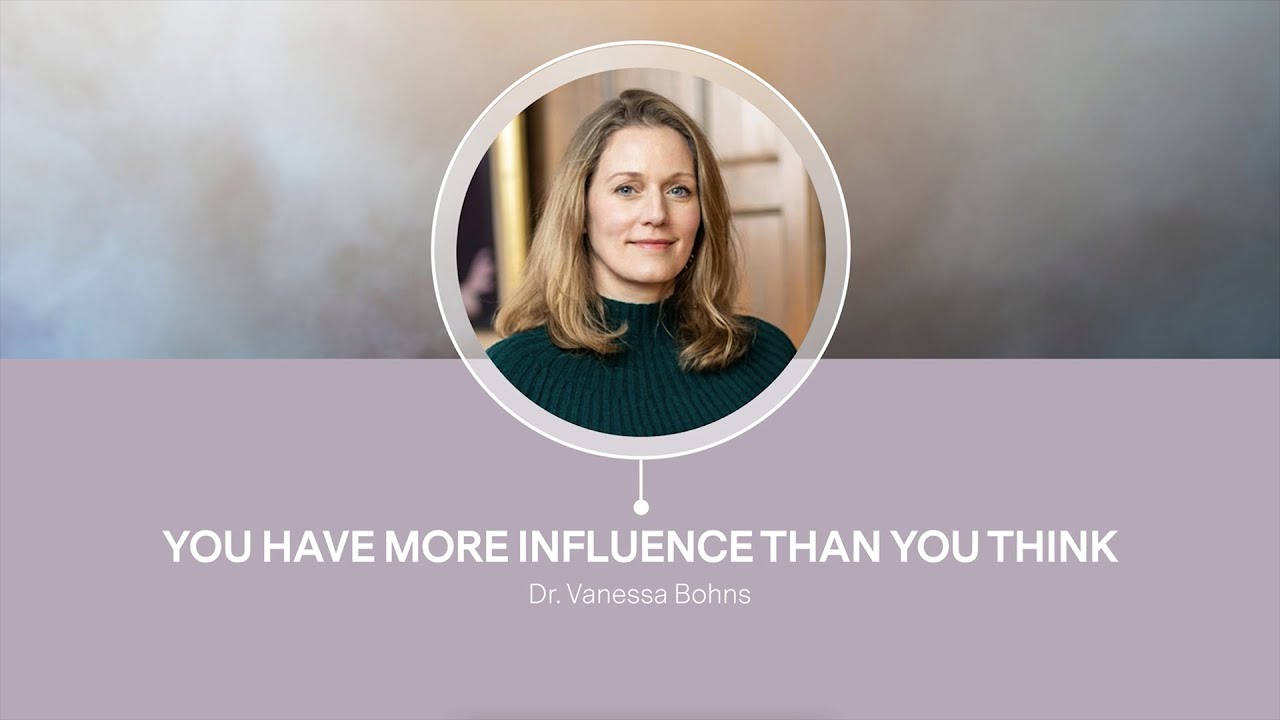
You Have More Influence Than You Think with Vanessa Bohns

Vanessa Bohns, a Cornell professor, explains why people systematically underestimate their own persuasive power. She presents the underestimation of compliance effect: people agree to requests far more often than requesters predict. For entrepreneurs, this means being direct works better than expected, email alone fails, and influence comes with responsibility.
Chapters
Good morning, good afternoon, and good evening, everyone, and welcome to You Have More Influence Than You Think with Vanessa Bohns. My name is Colin Mahon, and I'm a program manager with the Nasdaq Entrepreneurial Center. For those of you who may not know, the Nasdaq Center is a nonprofit dedicated to enabling entrepreneurs from all over the world to realize their maximum potentials and grow. As you may have just seen in the chat, the Nasdaq Center, along with our partner MentorCloud, launched a free mentor matching platform for entrepreneurs called MentorMakers. You can create your own advisory board to guide and inspire you with in-the-moment mentorship from topic experts and professionals dedicated to providing exceptional mentorship to entrepreneurs across all races, industries, and geographies. So find or become a mentor today by using the link in the chat. Mentorship matters to all entrepreneurs. Their success is dependent on it. Now, none of what we do here at the Center could be possible without all the amazing support from our sponsors, including NASDAQ, Lehigh University, Bank of the West, KPMG, Wilson Sonsini, Woodruff Sawyer, and BPM. We are grateful and humbled by their contributions. Quick housekeeping, we're going to open up for live Q&A at the end of the event, so please submit your questions in the Q&A function at the bottom of your screen throughout the presentation. We'll hope to get to them all. Now, during these still unique times on Zoom, we're curious on how sentiment is among the entrepreneurs that we work with. So we're going to start by taking a quick poll to let us know how you're feeling about your business right now. So, are you optimistic? Are you just in survival mode? Let us know. By tracking the sentiment, we hope to increase the optimism out there in the marketplace through the education that we do, but totally understand that there's a little bit of anxiety and a little fear and just survival mode through the entrepreneurs and your businesses that you're growing and building. So I'm gonna end this poll and share those results. Looks like optimism's at the top of the key, but totally understand that some anxiety and survival modes out there and a little bit of fear. So hopefully, through our conversation today, we will help alleviate some of that anxiety. So without any further delay, please join me in giving a warm welcome in the chat to our special guest. Vanessa Bohns is a social psychologist and professional— professor of organizational behavior at Cornell University, and author of You Have More Influence Than You Think: How We Underestimate Our Power of Persuasion. Vanessa, welcome.
Hi, thank you so much for having me. It's lovely to be here.
Very excited to have you and to deep, uh, to dive deep into your book. Um, it's really interesting, and I know the entrepreneurs that we have on the call are real interested in learning more about this subject. So we're going to dive in. Vanessa, like the entrepreneurs that we work with, your journey is pretty unique. Can you talk a little bit about the path that led you to where you are today?
Sure, yeah, you know, if you were to just look at my CV, it looks like this direct path, and it's very deceptive. I was an undergrad at Brown in psychology, and now, you know, I'm a PhD in psychology. I do psychology research. I teach psychology at work. It kind of looks like, oh, clearly she always knew what she wanted to do. But in fact, academia was kind of never on my radar for a long time. I I grew up in rural New Jersey, and there is actually rural New Jersey, on a farm, and my dad was a mechanic. And I think by the time I went to college, I just, you know, I was nervous enough around my professors and sort of intimidated by them as a student. I couldn't have imagined actually being one. And so I kind of had this idea that I wanted to go into marketing and advertising. And when I graduated from Brown, I got my dream job at Ogilvy& Mather in New York City. And I got to work in advertising, and I realized it really wasn't my thing. And the thing I liked most about it was market research, and you kind of needed a PhD for that. And so I spent a few years bouncing around at different sort of psychology-related fields and eventually decided to go back and get my PhD, thinking I might go back into industry or do marketing or advertising or something like that. And then I just— fell so much in love with research and teaching that I continued on that path.
Awesome. Always a learner. Um, so what was the aha moment that drew you to write You Have More Influence Than You Think?
Yeah, I— early on in my graduate career, my graduate school career, um, a professor I was working with, Frank Flynn, and I discovered this effect that we call the underestimation of compliance effect. Which basically is like big words for saying people agree to things more than we think they will when we ask for them. And I— that effect was so strong, we replicated it over and over. You know, we had— at this point, we've had participants in our studies ask 15,000 people for different requests and looked at how they tend to think that people are more likely to reject them than they are. And it was such a huge effect. And so important that I kept studying it. And then that really got me into the influence literature. And I got to see what other people were doing in the domain of social influence. And what I saw in all these other areas as well was that other people were finding similar things, that people really had a lot of influence over people. And they didn't tend to see that. So I saw, you know, in some research by Erica Boothby, for example, she has found that we think people are paying less attention to us than they actually are. She and I teamed up and did some studies where we had people give compliments, and people underestimated the power of their kind words on somebody else. And so I was kind of introduced pretty early on, and even doing these deep dives, saw constantly how much influence we have over other people that we miss. And the thing that made me want to write a book about that was twofold. First of all, that made me feel really reassured So all the times that, you know, I was worried about asking for something because I thought I might be rejected, or anytime I thought, you know, something nice about someone but wasn't sure if I should say it, you know, it made me realize that it wasn't gonna be bothersome to the other person, they were actually gonna enjoy it. And so it really did make me feel better. And I felt like people would resonate with that sort of reassuring story. And the other thing is that when I looked at all the influence books out there, and there are a lot, you know, in contrast to the academic literature, which is just— there's just tons of evidence for the influence we have on one another. The pop psychology influence literature is like, hey, try this, Hydra, try this to get influence. And it's all about, you know, here's another trick, here's another tip. And it just seemed like people were kind of gravitating towards all these instruction manuals to gain influence, when in fact they seem to have it all along. So I wanted to write a book that was kind of a counterargument to that. to say, you know, we see all the time in this research the influence that we have over other people, but we have these psychological biases that cause us to overlook it. And influence is actually probably in many ways less complicated than we think it is. You don't need all these tricks and tips. And so that was sort of the thinking behind the book.
I love that. And you heard it here, folks, you have more influence than you think. Um, what are the biggest mistakes people make when we're trying to influence people?
So I'd say a couple of note, uh, that kind of have different consequences are, one is that we kind of assume going into an attempt at influencing somebody that we're going to get all this pushback. So if we're going to ask for something, we assume someone's going to say no to us, or, you know, we'll kind of balk at what we're asking for. If we're going to try to persuade someone, we kind of assume that they're going to dig in their heels. And what that does is it, it makes us kind of strike the wrong tone in one of two directions. Either we expect this pushback, and so we come in way too hard, right, because we're trying to overcompensate for this pushback that we're expecting. Or we negotiate ourselves down before we even try. We expect this pushback, and so we convince ourselves, We should ask for less because they would never agree to that. Or maybe we shouldn't even ask because they probably will just say no anyway. And so we do one of these 2 sorts of things. And in the end, neither one is an effective way at influencing other people. So that's one. And I'd say another big one that we see in our research that people do is thinking that trying to persuade someone over email, like writing the perfectly crafted email where you can lay out your argument, is going to be just as effective as talking to them face to face. And we see that people really prefer that. They think, you know, it's more comfortable in some ways to make a case over email. But we— they also, when we ask our participants, they also think that that's going to be just as effective as if I called up somebody and talked to them, or if I, you know, talked to them in person. And what we find is they're drastically different. So actual influence, you're much more influential in person than you are over email. And so that's another sort of mistake people tend to make.
That's so interesting. And so when we do want to influence people, how do you, uh, get them to follow a new rule or persuade them to change in some way? Many of our entrepreneurs are selling, they're trying to get investor interest. So any tips there?
Sure. Yeah. And so I'd say there's kind of a couple ways. One approach is this general sort of messaging. Like, if we're just going to put a message out there, what should that message look like? And again, I'm really interested in the mistakes people make when they try to message or influence. And so one mistake that we see a lot is that people don't follow actually one of Bob Cialdini's sort of suggestions. He's one of the godfathers of influence, his book Influence. One of his suggestions and a lot of his work shows that social proof is a really powerful form of influence. So that's seeing what other people are doing, basically. And then you want to, especially people like you, you want to emulate them. You want to do the things that they're doing. And what you see in a lot of messaging, and we even saw this in some of the vaccination and masking messaging, is that you get this contradiction. You have a message that says, you should do this, right? Here's all these reasons you should wear a mask. Here's all the, you know, doctors and authority figures saying that you should get vaccinated. But then they immediately undermine their message by saying, and nobody's doing it, or very few people are doing it. Right, and so you're kind of getting these 2 messages. You're getting this message that I'm supposed to do this, okay, but no one's actually doing it, right? And so you kind of feel like you're more at liberty to also not do it. And so one big thing to keep in mind with messaging that people forget is to make sure that the 2 messages are aligned, that you're not undermining your message in that same sort of argument. So you don't say, do this thing, not enough people are doing it. You say, do this thing, and actually a lot of people like you are doing it, or look at this other person like you who's doing it, and you make it consistent, right? So that both those things are pointing towards do it. Another thing is, you know, when we're face-to-face with someone, sometimes we do want to influence them to do something that could provoke a negative response. It's almost like a confrontation, and so there, there's kind of some other suggestions, and one of those is to do what you can to save face for that person. People often balk at suggestions we give them because they feel like we're kind of insinuating that they're a bad person if they're not wearing a mask, for example, or that we don't like them if they're not wearing a mask. And so when you ask someone to do something, for example, if you're at work and you want to ask someone to mask up, you want to sort of have a script in place because it's an awkward thing. It's easier if you know what you're going to say. And you want that script to suggest, you know, that it's not that I think you're a bad person, you probably forgot. It's not that there's anything about you and me, you know, I know we're good. You want to sort of convey those things and take the pressure off of them and anything that you might insinuate that's negative about them. And then you directly ask them to do something. So, for example, it could be, you know, I have someone at home who can't be vaccinated, right? So the attribution is like, it's me, it's not you. Would you please wear a mask? And then you're direct with that request. And we often forget to kind of couple those things— safe face for the person so that they don't feel like you're attacking them, but be direct when you ask for something.
Yeah, that's great advice. And so you've been mentioning a little bit about, uh, you know, don't load it up— load up too much on email, and now in person is more influential. Um, but how is it different to try to influence someone In person versus virtually, because a lot of us are still on Zoom.
Yeah, and it is. So that's kind of unfortunate, but we can work with that. So when you're in person, there's a lot of nonverbal information that gets communicated that we lose. Even on Zoom, when you can see someone's face, you lose a lot of the nonverbals. You even lose the nonverbals of different people, you know, looking at one another, sort of the nonverbals of the whole room. And so, and another thing you lose is attention, the sort of natural attention we give to the people in our environment, and the natural sort of trust we give to the people in our environment. Like, we wouldn't jump down someone's throat who's right in front of us, usually, in a way that when we have that distance, we might feel more comfortable doing. So there's a little extra effort you have to make to influence someone virtually, even if it's over Zoom, where you have some nonverbals. So you have to be more cognizant of your actual message in a way that isn't as important when you're in person. You have to do other things that get people to pay attention to you. So you could— you've probably seen on Zoom, like, people— you could just forget people are there. But if there's someone you already have a preexisting relationship with, because you've cultivated that before you tried to influence someone over Zoom, for example, they're more likely to notice that you're there, to To listen the times you do speak up. And so you have to do some work off of the virtual sort of platform if you can, you know, either having like virtual coffees and then getting into like a more, I'm going to try to influence you kind of session. And you have to plan out what you're going to say a little more carefully.
Yeah, I mean, a lot of us— some people are returning back to normal, but a lot of us are still in their homes like I am. And you look like you're in an office. So that's awesome.
I am. Yeah, we're teaching in person. Yeah, a little different.
Great. Well, we're, we're getting back to normal-ish. Um, so why is it so hard for people to ask for help? And, uh, for those who are struggling, we got a couple questions in the, uh, in the chat and in this pre-submitted ones. Um, what's the best way to go about asking for help?
Yeah, so I— asking for help is something we all struggle with. It really is, you know, a time that you make yourself vulnerable. You're putting yourself out there, you're admitting you can't do something, and so you worry about being judged. And when you ask somebody, you're kind of testing that relationship, and you're worried that, you know, they might think less of you, or they might not even help you. And this idea that you have of your relationship might be, you know, not as strong as you originally thought. There's— so there's a lot of anxieties. We worry about imposing on the person, for example. One of the things I sort of suggest that people do is to flip the script, because a lot of the reason we think like that is because we're in our own, in our own head and sort of facing our own anxieties, and we forget what it feels like to be on the other side. And so before you have to ask someone for help for whatever reason, because usually we do it when we have to, not because we want to, think about if the case was reversed and that person was going to ask you. Or somebody else who is in a similar position to you is going to ask you for help. For the most part, most of us wouldn't judge that person, right? And we'd feel quite happy to help. We might even feel sort of honored that they came to us. And usually when you remember what you— what it feels like when you're the one who's being asked, it can help you. So it can remind you that the other person is not going to sort of balk at this request. The other thing that I suggest goes back to this idea of being direct. Again, a lot of times When we ask for help, we think that it's okay to just sort of hint at what we need. You know, I could really use some help on this, or I'm struggling with this, you know. But the most effective way to ask is to have a specific ask in mind and be direct about it. I'm going to need this to solve my problem, or this is the specific problem I need to solve. Sometimes we don't even know how to solve it. But the more direct we can be, the better. And we tend to sort of, out of anxiety, out of our sort of self-consciousness, we hint, we're indirect, as opposed to being clear and direct about what we need.
Yeah, you were talking a little bit about that on the delivery part where it's like not enough or way too much. So there's got to be a happy medium.
Yep.
And so ask— speaking of asking for help, mentorship's at the core of the mission at the Center. And we provide a lot of it through our MentorMakers platform. How has mentorship impacted you when asking for help to colleagues and mentors?
Yeah, you know, I am incredibly aware of how fortunate I've been to have amazing mentors in my life because I know it's, you know, it's the luck of the draw and I have been very lucky along those lines. I'd say in terms of mentorship, The big things that I always found the most helpful— I think we think of mentors as people who are, you know, kind of pushing us through our career advancement and trajectory, and it's very forward-thinking. And I think that's great, and my mentors definitely did quite a bit of that. But when I think about the things that really stuck that I try to do in my own mentorship now, it's first of all dealing with, with setbacks. I think that's a really hard thing that a lot of people struggle with, and that's a place where mentors can be really helpful. So I had mentors who really modeled a growth mindset. You know, something— we'd have a rejection. I mean, in academia, you get a lot of rejection. You get a lot of things that don't work. You have a lot of failure to confront. And my mentors were really good at emulating this learning growth mindset. You know, we didn't, you know, lick our wounds for too long. It was pretty Forward, learning, next. And then the other thing I really appreciate that, again, I tried to pay forward is that they always knew where their priorities were and allowed me to also prioritize things like life, you know, over work. There was a sense of like, we love our job, we work hard, we care about what we're doing for sure, we wanted to have impact, all that was there. And yet, at the end of the day, it's a job. And, you know, if there's a priority, if someone in your family gets sick, you take time to do that. You know, if you need a break, if you need to be able to take weekends off, whatever it is, they were really good at modeling this sort of work-life balance and work-life prioritization in a way that was super helpful and has, I think, allowed me to have a more sustained career because I'm able to do that and to help other people do that as well.
Yeah, if you're sprinting all the time, you got no, you got no room to jog.
Yeah, you burn out.
Yeah. So back— so staying on the topic of mentorship, what's your advice to our founders who are looking to cultivate more mentor relationships through their influence?
Yeah, so I actually did a study a number of years ago on mentorship and on what mentors think is going to get more people to come talk to them and take advantage of their mentorship and what actually works. And we found that there was this disconnect between what mentors thought would work and what people actually responded to. And the big thing we saw was that in the end, as mentors, we forget that we can be intimidating. And this is part of underestimating our influence. And that just like it's hard for us maybe to ask for things, it's hard for other people to come and ask us for things and to take advantage of our mentorship. Just like asking for help, you know, there's this worry about imposing, annoying the person, about, you know, being too vulnerable. And so what we found was that when we asked people in a mentorship position, we told them, like, imagine you're the mentor. People thought that other people would come ask them for their mentorship if they really highlighted how much there was to gain, like the practical sort of gains that they would get from mentorship. And so they really thought, that's the thing I should emphasize, like, take advantage of it, it's going to help you in your career. But we had this other alternative that they thought was going to be less effective, and that was one that really focused on Don't feel embarrassed to come to me with your questions. Just, I want you to feel comfortable. I know that it can be hard to approach a mentor. And it really addressed the sort of emotional concerns, those barriers that people felt towards, you know, approaching a mentor. And the mentors, when they were given the 2 options, thought the practical side would be most useful. But when we asked people what if a mentor said one or the other, what they would respond better to, They overwhelmingly said that if someone actually addressed those emotional barriers to help-seeking, that they'd be more likely to approach a mentor. So it's really, you know, we tend to focus on all that you can gain from mentorship, but the people who would use it are more focused on the things they might lose. And so we really have to kind of remove those barriers at the same time as highlighting what a great resource mentorship is.
Oh, wow, that is so interesting. And I'm sure we could host a whole other session on mentorship. With you based on your research. But that's so great. Speaking of influence and asks, why is it so hard to say no?
Yeah, it's funny. I get asked a lot about asking, and then I get asked about saying no. And, you know, there's advice on both sides, which kind of are the exact opposite. It's really hard for people to say no at the end of the day because we care about our relationships. And saying no is a rejection. And when we're asking for something, you know, we know how hard it is to be rejected. That, that we're able to sort of conjure that feeling of rejection and how awful it feels really easily. But we forget when we're not in the other person's position how hard it is to say no, to be the one doing the rejecting. You know, if you kind of again flip the script and imagine you're on the other side and someone's asking you to do something, even something you don't want to do, you know, You have to find the words to say no. You have to come up with an excuse. You feel guilty. You worry about insinuating something negative about the other person or your relationship. And at the end of the day, you know, a lot of our concerns are about preserving relationships and saying no feels like a way of, you know, hurting a relationship. And so it's really hard in the end. It's just really uncomfortable in the moment.
So how do you— so back to the ask, what's some advice around how to make an ask land better? For customers, for sales, for even, yeah, again, back to like the mentorship and asking for help.
Yeah. So in the end, I mean, I'd say for asking, again, I think we overcomplicate it to some extent, right? We, we think that there's some special way to ask when in fact the biggest thing is actually doing the ask, like making that request. And in the end, most people are happy to agree. Doesn't really matter. You don't have to come up with a big argument. You don't need to promise something. A lot of us feel like we need to offer some reciprocation, right? So we have these studies where we allow our participants to offer money to people in exchange for a favor, and it's no more effective, but it makes the people— the participant feel better. It makes us feel like, okay, I don't feel so bad because I'm offering something in exchange. So in the end, I'd say Just actually doing the ask is the most important thing. It doesn't really matter how, but actually making the ask. Again, not hinting or being indirect or beating around the bush, but actually having a clear request that you ask for.
And this is a way oversimplification of that, but they, you know, there's that old saying, you miss every shot you don't take.
Yep. Wayne Gretzky, right?
Yeah. So Can you talk a little bit about the underappreciated power of embarrassment in our lives when it comes to influence?
Sure. So this, this one is also very interesting because we think of embarrassment as this sort of trivial emotion, like how could it really play an important role in, you know, major events in our lives and things? Um, we think of it as about, you know, oh, I tripped, I had something in my teeth, and I got embarrassed. But in fact, embarrassment is an incredibly powerful emotion. So just to give sort of a very visceral example, you can imagine, like, you start choking at the table. And many people's initial response is to feel embarrassed. All of a sudden, you know, you're turning red, you can't breathe, like you feel like people are looking at you, and to leave the table out of embarrassment. And that's actually incredibly dangerous because you're leaving all the people who could actually help you from choking. So that embarrassment can sort of take over. And there are situations such as if we see someone make a racist comment or a questionable comment, or we see someone who says something that's borderline inappropriate, right? The same kind of feeling, that feeling of embarrassment, can take over. And even though in theory, hypothetically, if we ask people, you know, what would you do in a situation like that, we'd say, of course I would speak up, of course I would do this. And we say, like, if I was choking, of course I wouldn't leave the table. That's so— silly, you know, over— out of embarrassment. But in fact, the studies show that we feel so embarrassed in the moment that we, you know, don't want to speak up against, you know, a comment that might or might not be racist. We're not really sure. We don't want to say something, you know, if it's ambiguous. And so there's a lot of moments where we could voice things that could be really important and be a positive influence that we don't do because we feel embarrassed.
So how do you— how do they use that fuel?
How do you actually speak up then in the face of embarrassment? Yeah, one of the things I talk about a lot is having a script. So a lot of times, just like if we see somebody who's not wearing a mask, that's another time, you know, we might feel too embarrassed to actually say something right in the moment. It's just too awkward. And so it's just like with a mask, I recommend having a script, you know, If there's a moment where you see something inappropriate, have a sense of like, I would say this if I saw something, and then you don't have to find the words in the moment. Hopefully it's something that again can save face for the person so that it doesn't become a major escalated event, but also is clear that, you know, I, I was worried about what you said for this reason, you know, where you can be direct, face-saving, and actually have planned out what you might say.
Yeah, that reminds me of like when people are asked a tough question and they say, that's a great question. Like that's part of their script. They're like, I know it's a great question, I asked it, right? Um, so now, when— why do we hold back from giving compliments and positive feedback, and why does this matter?
Yeah, so I mentioned this at the beginning, that one reason we hold back Is that, again, we underestimate how good compliments feel to the other person. So I've done some studies with Erica Boothby, who's another psychologist, and we've had people go out and give compliments. And before they do it, we ask them, how good do you think this is going to make someone feel? And we also ask them, like, how annoyed is this person going to be that you stopped them, right, or bothered them? And people actually think that people might be annoyed at being stopped and interrupted or just approached by a stranger, when in fact they're much more happy and they enjoy that interaction much more than our participants expect. Right. So they underestimate how good it's going to feel to another person. And again, we tend to think that things like material incentives are more important for people. And it's not an argument to not care about those things. People should be paid well, and those things obviously matter. But there is research showing that even just kind words, expressing gratitude, expressing, you know, giving compliments when someone's doing a good job actually has in some cases as much, if not more, of an effect on employee morale than, you know, bonuses and things like that.
I personally need to work on receiving them, but that's a whole different story. So when you get, I guess, to double-click onto the compliment category, what's like the— I don't know, I guess the appropriate amount, right? Like, what's like the fine line of like, based on your research, on like enough to do what you're trying to do, which is warm the person up to help with your influence, but not too much?
You know, it's funny, some other researchers, Xuan Zhao and Nick Epley, have done research also on compliments, and they did a similar thing. They had people give compliments, in this case to friends or people they actually knew better than— in our studies, they were strangers. These are like people you know pretty well. And they were people you see on a regular basis. And they had them list a bunch of compliments. And instead of giving, you know, one or giving a bunch in a row, each day they gave their friend a compliment. And they asked them, you know, how good do you think these compliments are going to feel? They underestimated it, just like in our studies. And they thought over time that the compliments, you know, would be less appreciated. So people would basically kind of just acclimate to these compliments, or it'd be too much, or they'd be annoyed. Like you said, like, oh, this is just too much, right? It turns out people don't acclimate to compliments. People love getting compliments. And if you're going to tell them something nice every day, it doesn't actually fade, right? It just continues to feel good. And so what I like to say is that doesn't mean you can compliment them on anything. So in our studies, we do use appearance and things like that. I think in the workplace, you want to be careful about appearance compliments. But there's so many other compliments that convey this respect. That's, that's really what compliments are supposed to do, like say, like, I respect you, right? And so if someone works with a difficult client and does a really nice job, tell them that. If someone gave a great presentation, tell them that. If someone made a really sharp comment in a meeting, tell them that. So things that show that they are valued and respected in a sort of appropriate workplace context. And again, people don't get bored of it.
Yeah. And what about like you're— so you did a lot of research around the stranger compliments. Like what if it's somebody that you're trying to do business with? Right. Like I would imagine Like an investor meeting or like a sales meeting. Any advice around like how to stay in the, in the good zone there?
Well, so this is a place where, again, Bob Cialdini, the guy who wrote Influence, he talks about one of the sort of principles of influence is liking, that we are more influenced by people that we like. And one really simple way to get someone to like you is to give them a compliment. As long as you can find something genuine that you like about them. And so this is one of the things that we did. We asked people to find something genuine, right? So it doesn't come across as staged, although it's unclear how much that really matters. But hopefully, you know, you can find something you genuinely like about someone, and that can in turn make them feel closer and like you more and sort of open them up.
Yeah, that's, that's good advice. So How can underestimating our influence over others impact just employee burnout? I mean, all the entrepreneurs that are on this call, I'm sure, work crazy hours. So some advice there?
Sure. So we actually have some other studies on this question. And we look at what happens when people send emails during off-work hours. So for example, we all work on our own hours these days at home, especially those of us working from home. And so my hours might not be the same as your hours, and that's fine. But when I send an email that's your work-off hours, you tend to feel more obligated to respond right away than I expect you to be, right? So I think, you know, you can get to this when you need to. It's not urgent, you know, maybe a day or two. But you feel like, oh my God, now my inbox is filling up. I hear the ding. It's now part of my to-do list. I have to respond right away. And that can contribute to burnout. People feel, you know, already burnout is a lot of— a big part of it is that we can't disconnect from work, right? We have our work email on our phone, we put it by our bed, we carry it everywhere we go when we go out with our kids. And so we never really disconnect. And the more we're getting emails from people on work when we're trying to disconnect, the harder it is. And so we actually find this really simple fix. Which is that because you're, you're basically underestimating the pressure you're putting on someone else to respond, and they're overestimating how quickly they need to respond to you. So the fix that we suggest that seems to work is simply saying something along the lines of, my work hours may differ from yours. If this is your off time, take your time, you know, get back to me when you can, right? Or something that signals, you know, this isn't an urgent need, you know, get back to me whenever you can. Because we're so good at signaling urgency. Like, I regularly get emails in my inbox with that little red exclamation point that says like urgent, you know, but we're much— we're not as good at signaling non-urgency, right? At saying like, get to this when you can. And so the more we can explicitly communicate that and not assume the other person knows, the less we sort of put unintentional pressure on other people and cause their burnout.
Yeah, that's a really important point. I think, uh, with the technology enabling us to be more connected than ever, people expect immediate responses to almost everything these days.
Yeah.
Um, so how— um, before we jump into Q&A, because I'm sure a bunch of our founders have a ton of questions on your book and just some of your research and some of your wisdom from it, we're gonna launch a quick poll. To let us know what's keeping you up at night, folks. So give us a moment to let us know what sort of responsive programming we are going to be hosting in the future for you. So give us a moment, and I will also give this moment to have you all drop some questions in the Q&A. Hopefully we'll get to them all. So it looks like marketing's bouncing around, finance, sales, marketing are all around the same. I'm going to end this and share those results. Marketing and sales are right at the top. So awesome. Thank you for that. And we hope that we will be hosting those topics. We actually have a couple of those topics coming up. Um, all right, jumping into Q&A. So as Isis mentioned in the chat, drop your questions for Vanessa. Try to get to them all. So question from Rosa, thanks for the question. They say, one of my biggest problems/fears is the judgment from family. I tend to hold back when it comes to social influence in fear of family will criticize you and/or when you work for family, they will undermine your influence. Any advice there? That's a tough one.
That is a tough one. Yeah, I don't You know, I don't know of any data on family versus workplace sorts of contexts and how it might be different. I will say this, I'm going to broaden that question to just that first part. So I know I'm not addressing the family issue, but, you know, Rosa says that she's really worried about judgment. And one of the things that I talk about, which is very reassuring in general, is that we actually tend to overestimate the extent to which people are going to judge us negatively. We have this harshness bias. So there's studies showing that when we interact with another person and we walk away from that interaction, if you ask one person, you know, how did that person feel about you, we, we focus on all the negative and we tend to think, oh, they thought all these terrible things, right? Or I did all these stupid things I wish I didn't do. But when you ask that other person, like, how much did you enjoy talking to that person? They're actually quite positive and they're not thinking of all those things that we're sort of being extra hard on ourselves about. So again, not sure, you know, this seems maybe like a specific family issue, but, um, in general, more broadly, it seems like people do tend to feel more judged than they, they tend to be by other people.
And then to dive a little bit into that, um, going off the Q&A script for one moment, folks, but I know this will be valuable to all of you. Imposter syndrome is talked about a lot in entrepreneurship. And so just as a thought leader and expert in this category, any advice to our founders and entrepreneurs around how to overcome imposter syndrome, or at least approach the feeling of?
Yeah, I mean, so a lot of it actually is similar to some of the recommendations I make in my book. So I mean, first of all, I have reassured myself for a long time with these sorts of findings, these findings that show that, first of all, lots of people have imposter syndrome. The better you are and the higher you rise, the more likely you are to have imposter syndrome, because part of it comes from looking around at the people in your sort of network and seeing, wait a minute, these people are great, you know, I don't feel like I'm as great as them. But in fact, that just means that you're surrounded by great people because you rose to that sort of level. So that always makes me feel better as well, this idea that the people who are most successful are the most likely to have imposter syndrome. But then also, you know, again, a lot of my advice tends to be about flipping the script and trying to pay attention to how you judge other people. And most of us are not really judging other people and thinking that, you know, most of the people around us are terrible. In fact, imposter syndrome Partly comes from the fact that we admire so many of the people around us. And remembering that just like we're not judging those people especially harshly and we're admiring them, that they're probably looking at us in a similar way. But we just tend to, when we're in our own heads, we tend to be extra hard on ourselves.
Yeah, that's tough, but hopefully good advice out there for those of you who have risen. I think that's a good point. You got to celebrate the wins that put you where you are, feeling imposterish. Question from Michelle. Hey, Michelle. How would you apply your findings to marketing to influence many? Any thoughts or suggestions? And then she also says, yay, go Big Red,
Cornell. So in general, one of the things I do talk about in the book is that we're people, not ads. And so that means that people command a certain amount of attention and trust that traditional advertising or marketing doesn't. And so it is a different kind of thing. Mm-hmm. I mean, a lot of the things that I wind up suggesting are more one-on-one, interpersonal, whenever possible, face-to-face marketing. You don't get as much reach, but at the same time, you get a lot more impact. Another thing is that, though, even when you do do these sorts of big— like if you do social media posts and things like that, You know, a lot of people tend to judge how well their posts are doing by engagement, by likes, by comments, and things like that. And because of that, we tend to forget all the people who are seeing it and might be impacted by it, you know, without actually engaging. And so, you know, there's something called the invisible audience that I talk about in the book as well, which is basically we judge how many people are seeing our posts based on the engagement, When in fact, that means that we tend to underestimate because we're basing it on that. And so many more people are seeing it. And we actually underestimate by 3 times the number of people who actually see the things that we post. And so just keeping that in mind that people are paying attention, but especially anything you can make, you can do to sort of humanize interactions and make them more interpersonal, I'd say the better.
That's amazing advice because yeah, Social media these days, and we hope— we will host tons of stuff on how you can craft that engagement and do the ads and all that. So don't worry, folks, we got some stuff on that coming up. But, um, yeah, I mean, it's, it's a, it's a, it's the wild, wild west, and, uh, the, the likes don't mean dollar signs and/or, you know, much these days. But back to your point from the book, if you don't make the ask, you can't make the sale. So I think that's a valuable takeaway. All right, so question. Dear Vanessa, we would like your advice. Is there any chance or opportunity for developing countries or low-income countries to make a good impact for the world? Mostly thought we feel inferior because they're in an up-and-coming country. So how can they influence people in the US to see them as an entrepreneur?
Yeah, that's a, that's a great question. I'm not sure I have a specific answer to that. So one of the things— so again, I'll broaden it a little bit to sort of like, when we're talking about influence and underestimating influence, does that mean everybody does it equally? So I get asked about, you know, like gender, race. So this could be, you know, country of origin, for example, age. So I get asked about all these sorts of differentiators. and individual differences and cultural differences. And what I would say is that it's definitely true that you kind of have to think of 3 things. You have to think of the influence people actually have. Then the question I'm always interested in is our perception of our influence. And then what it actually means to perceive our influence in a certain way. So there are actual differences. You know, it's true that, you know, especially in this Western-centric sort of world, that US entrepreneurs are given this sort of premium. Same thing with, you know, other things. There's research showing that, you know, in certain contexts, women actually have less influence. In certain, you know, not all, but certain contexts. In certain contexts, you know, there are racial differences in influence. And that's all an actual influence. And that's something I don't really know how to fix, but that's something we can all work on in all different ways. I'm really interested in this perception of influence. And what we find is that even across all these different cultural differences and individual differences, that we find that most people still underestimate their influence. So even if there are these actual differences, you're still probably doing better than you think you are, which is nice and reassuring. So it's obviously we want to equalize actual influence, but you can still feel sort of reassured that you're probably doing better than you actually— than you feel like you are. And then the last thing I talk about is like what that means. So if you're underestimating your influence, for women, that may mean, you know, holding back from asking more. It may mean sort of doubting our likability, which can be really problematic, and particularly for women who are supposed to be communal, like according to prescriptive stereotypes. And it can mean different things depending on your country of origin, you know, feeling that lack, that underconfidence can be specific, like particularly discouraging. And so I think it's particularly helpful to kind of hear that you're probably doing better than You think?
That's amazing. Yeah, give yourself more credit. I think back to that age-old corny saying, I don't know, I'm full of them today, I guess, which is artists are their greatest critic, right? Like, so yeah, I think that's sound advice. Give yourself more credit. You have more influence than you think, to use the title of the book. All right, great questions. Keep them coming, y'all. Let's see, if someone wants you to be their mentor, but you're unable to, how do you turn them down without ruining the relationship?
Hmm, that's a really good question. Um, yeah, you know, actually, there was a question we didn't get to earlier, which is, you know, it's hard to say no, right, or reject someone for all these reasons. Like, you don't want to ruin the relationship, right, as in this case. So then how do you say no? And so that was sort of one of the follow-ups to that question. So one thing is, first of all, when I— when someone's asking for something, so say someone was asking you to be their mentor. I would suggest doing it in person, right? Because that's the place where someone actually has to say no to you. There's more of a social connection. It's hard to say no to someone standing right there. I give someone who wants to say no the exact opposite advice, which is say that no not in person, or at least buy yourself time if you want to actually have a sit down and kind of do it in a, in a nicer sort of way face to face. At least buy yourself some time to think of how you're going to say it. So saying no on the spot is really hard. If someone's asking you right there face to face, I always say, let me think about it, you know, send me an email, follow up, and then I can take some time to really think, right? And then I can formulate my response that's going to let them down easy. We talked earlier about saving face, right? You want to assure them it's not about them, right? It's not about mentorship. They will find another mentor, and it's not about the relationship. So you want to find the words to make sure That all of that is conveyed as you're letting someone down. And then, so I've been working on this project. We're in the very initial stages with some other researchers on something we call no and. So, you know, in improv there's yes and, and you're supposed to say yes and add. So we think that it could really help people to be able to say no if they think about saying no as no and. Like, I'm going to say no to this because I can't do it, and I'm still going to add something. I'm going to solve this problem in another way. Maybe there's someone else who would be a great mentor who doesn't get asked as much, right, who maybe is a little bit more junior, who could use some mentorship, you know, experience, right? So you create an opportunity for both that person and you sort of help to solve the other person's problem. And again, that shows them, I do care about your welfare. I just don't have time to do that right now. And you will be able to find mentorship. It's not that you're asking for something you shouldn't be, because I think people tend to doubt themselves when they get that no.
Yeah, that's, that's super interesting and valuable advice. Another question: founder of a very small company with few employees, how do you help— how do we help foster a culture of positive and constructive feedback and the ability for those working for us, especially new hires, admitting things that they don't know Or need help with. So how do they encourage their employees to realize how much influence they have?
Yeah. So this also comes back to something that, like in organizational behavior, we call psychological safety. And that is one of the things that allows people to feel like they can admit that, you know, they don't know something, for example. And I think a lot of it is, first of all, not undermining, you know, your request. Like a lot of people will say, or a lot of organizations will say, we value your input, we value your voice, we want to hear what you're going to say. And then they might do things, though, later on that sort of undermine that and make it clear they don't value you. They never actually take that advice, right? You know, you do this big survey, you convey, you do everything right, you tell everyone what the survey said, like it said that this is what you guys care about. And then you never actually implement that thing, right? Or you somehow undermine it in some other way. So Part of getting people to have voice is showing that when they do voice things, that they do have impact, right? And actually sort of reflecting that impact to them in some way.
Yeah, practice what you preach. I love it. Um, so I think you touched base on this one, but it came— the question came up again. So what do you suggest in dealing with internalized misogyny?
Internalized misogyny?
Yeah, we might need a follow-up question there, but I thought you had— I thought you had addressed it with your question about the international founders' reach and gender and influence. But
yeah, I mean, so yeah, I think to some extent that probably if it's referring to sort of, you know, people aren't listening to the women of the group, for example.
Oh yeah, boom, we got it. Women who bring other women down.
Oh, okay, I see, I see. Um, yeah, I mean, that is a real issue, because I think that one of the things that can be really useful, especially for women, as I said, there are certain contexts where women actually do have less influence, right? So there's sort of the classic examples of like a woman states something in a meeting and it gets forgotten, and then a man states it later, and now we're talking about it, right? And so having women amplify other women's voices and going back to, oh yeah, you know what she said earlier, I'm just going to repeat it and play off that, is actually a major part of making or sort of creating more equity of influence when there are other situations where there is this inequity of influence. And so when that's not happening, I'd say, I mean, one possibility would be to create this sort of overarching goal that, you know, we all are going to have more influence if we all sort of work together and try to do this, you know, prop each other up. But in terms of, you know, if there are specific people who are just not that way, I'm not exactly sure how you would deal with them specifically.
Yeah, she followed up too, and sorry that you're experiencing this, but when women above you try to extinguish your flame. Any advice there?
Hmm. Yeah, I mean, so this is just a suggestion anytime, I guess, with a boss. So I don't know if it matters that it would be a woman above you. With bosses, I'd say one way to sort of try to influence up is always to solve their problems, to figure out like what will make them look good. And the more you kind of think about like, what are their problems that you can solve for them? How can you help them, right? can sometimes help you achieve that influence, that sort of upward influence. But this might be a very specific kind of situation, which I am sorry you're dealing with that.
Yeah, well, it's— people are hard. That's why we do things like this research. And she followed up and said, LOL, made it— made her feel more threatened. Oh, by doing what? By Well, just keep, just keep on keeping on, and I'm sure at some point you will be able to prove your influence in other departments or find another opportunity. If it's not working, it might not work. Resources and recommendations for learning negotiating needs personally and professionally. Not sure if you've got one there, but a question came up.
Sure. I mean, so in terms of Reading and resources for negotiations. These are classic, but like Getting to Yes is amazing. Difficult Conversations, those are all from like the Harvard Negotiation Group. I do recommend Bob Cialdini. This is the 3rd time I'm mentioning him. His book Influence is really great. And then, I mean, and of course my book. But I think the point I like to make when I— so I actually teach negotiation sometimes here at Cornell. And one of the points I like to make early on is that so many people hate negotiating, right? There's so much anxiety around negotiating, and because of it, we don't see opportunities that we could negotiate in, or we don't take advantage of them. And so I really do sort of suggest that people practice it in their everyday lives, you know, as much as possible. We do that in my course and in many negotiation courses. You know, you have people go out and Sort of just practice these little negotiations at random times when you might not think there was an opportunity to negotiate. And pretty quickly you realize that people are open to it, that situations you thought were non-negotiable actually are. And I think that gives you a new sort of confidence when it comes to negotiating.
Yeah, and that's interesting, right? Like, I don't think people would think that you can negotiate discounting your coffee at the coffee shop, but I bet you you could do that if you tried. There's an angle there. Everything's negotiable, as they say.
Yep.
We got a question from Andrea that I like. What's your favorite weird factoid about influence?
Weird factoid. I mean, can I just tell a weird study that I've run, which is my favorite study? I also talk about it in the book. But so, you know, I said that I study this phenomenon where people are more likely to agree to do things for us than we think. And so we started out with people asking for favors, kind of innocuous requests, but we eventually wanted to see how far we could push it. And we thought it could be important to look at whether people are willing to agree to unethical things, right, and other types of things. And so we ran a study where we took books off my bookshelf— actually, there's still a bunch on there with this— and we put library codes on the spine, and we had participants go into libraries and ask them to vandalize library books. So they would hand people a pen and say, I'm playing a prank on a friend, will you just write the word pickle in this library book? And before they did this, they guessed how many people they would have to ask before they can get 3 to do it. They went out and actually did it. They recorded people's responses. People were like, this doesn't feel right, we probably shouldn't be doing this, you know, we're probably going to get into trouble. but they still did it. Most people agreed to do this, over 60% in our studies, and our participants thought way fewer would agree. So they thought only like a quarter of the people they asked would agree. So even with this sort of crazy, weird, unethical request that participants felt, or the people they approached felt really uncomfortable with, it was so hard for them to say no in the moment that people were even more likely to agree to things like that. And so that actually is a nice sort of encapsulation of the main takeaways from my research is that you should ask for things like favors. You should see what you can negotiate, you know, anything that's not going to harm somebody. But actually, people find it really hard to say no to lots of things. And so you should also, like, understand the responsibility that comes with that power and be mindful of it.
Wow, what a way to end the webinar on a perfect, on a perfect crescendo to to your book and sort of the takeaways there. What's one thing that you— if anybody was going to listen to you for 30 seconds or a minute, what's one thing you want our audience to take away from the book today?
I would say reassurance and mindfulness. So feel reassured that you do have more influence than you think in so many ways. And be mindful of that. Realize that that means you also have more responsibility than you might realize.
Great. Well, thank you so much, Vanessa. For those of you who want to check out her book, we've dropped a link in the chat, so check it out. And we really appreciate you sharing some of your influential research with us, Vanessa, and we really look forward to seeing what's next for you. For those of you who are still on, appreciate you all joining us. We've got some great events coming up online, so we hope you can join those. Vanessa, again, on behalf of everyone on our team, thank you so much for joining us, and we look forward to seeing everyone and you online soon.
Wonderful. It was such a pleasure. Thank you, and thank you everyone, everyone for joining.
Thanks so much.
More from Vanessa
303. The Science of Getting Past Small Talk (And What To Share on Dates) w/ Vanessa Bohns


Human Element Series - Ep. 167 - Paying Attention To The Human Side with Vanessa Bohns

Vanessa Bohns: You Have More Influence Than You Think, How We Underestimate Our Power of Persuasion