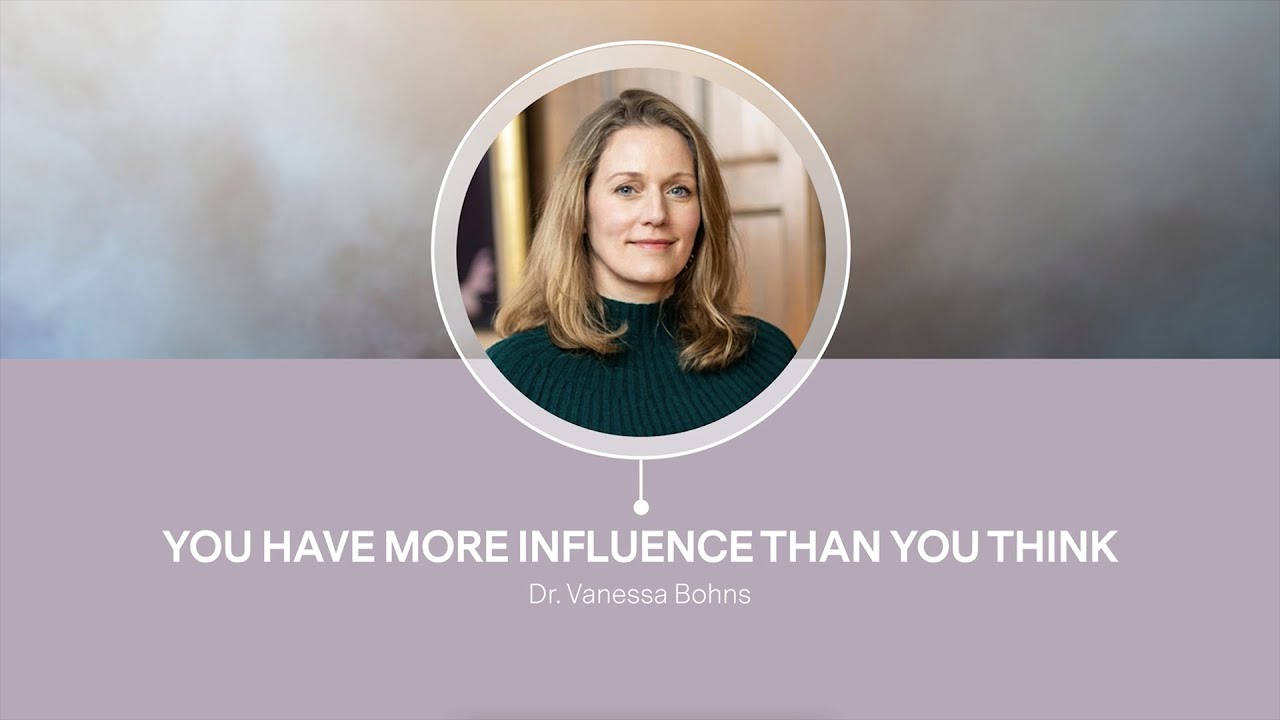
Vanessa Bohns, a social psychologist, found that people wildly underestimate how much others appreciate a compliment. Negativity bias makes us expect awkwardness that never comes. Recipients actually feel uplifted, but we're too focused on what could go wrong to notice our own influence.
We found that people really underestimated how good their kind words would make that other person feel. So even in just these really simple sort of everyday interactions that any of us could do at any point, like just, you know, say something nice to another person when we notice that they, you know, did a really great job at a presentation or they handled a difficult client really well. even these sorts of really minor sorts of things have a much bigger impact on people than we tend to realize.
That's so fascinating. First of all, great answer. Great job tonight. Great compliments deserved to you. But I'm trying to understand, what is it about our interactions that makes us forecast this poorly? Or how— why is it that we underestimate our impact of compliments or these other interactions?
Yeah, there's a couple of sort of psychological biases that we have that make us think that things are going to go worse than they actually are when we interact with another person, or make us feel sort of less effective and less influential than we actually are. So one is something called negativity bias, which we've heard about in all sorts of domains. Probably many people watching have heard of negativity bias. If not, it's basically the tendency to sort of focus on the negative that's happened over the positive. So, you know, You know, I remember that sort of negative comment that someone made for a really long time. It's so much more intense than those 10 positive things that that person might have said. And so we really focus on any negative experiences we, we've had, and we sort of forecast out based on those experiences and think, oh, you know, I'm really scared of having that negative thing happen again. And so, for example, in the compliment studies, what we find is that people think that that interaction is going to be really awkward. They think the other person is going to be bothered by being interrupted. And so they're really more focused on the negative and how annoyed someone might be, as opposed to the positive, which is clearly like, if you're stopped to get a compliment, people usually aren't too bothered being stopped by a stranger. The other piece is something called egocentrism. Mm-hmm. And that's basically our inability to sort of get out of our own heads and and really fully appreciate how somebody else feels in the moment. So we tend to focus on all those worries that we have. For example, we're worried about being awkward. We're worried about delivering our compliments sort of in a clumsy way that we might come across kind of weird. In some cases, in other studies that I've done where instead of giving something, people ask for something, we are so focused on the anxiety of asking that we fail to sort of get in someone else's head in that moment, even though we've been complimented before, even though we've been asked for things before. We just have a really hard time remembering what that feels like in the moment. And so those 2 things, the fact that we're focusing on the negative and we're not very good at getting an accurate read of how somebody else feels or is likely to feel in the moment, really makes us miss all the things that we might do that impact other people.