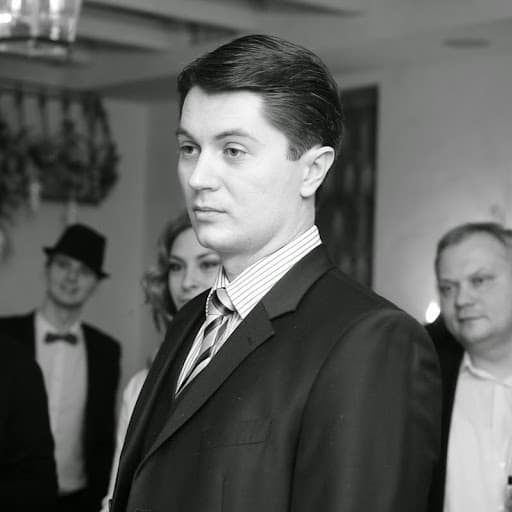
Episode 59 with Dr Marwan Chahayed: Business & Brand Development and Health.

This content was created by Victor Migalchan. This content was uploaded by Victor Migalchan. This is a YouTube interview (Episode 59) titled "Episode 59 with Dr Marwan Chahayed: Business & Brand Development and Health." Recorded/posted on 2024-08-12, the video features Victor Migalchan hosting Dr. Marwan (Dr. C) from MLC. The conversation covers Dr. Chahayed's brand and clinic development, chiropractic philosophy and patient education, sports-related injuries and conditioning, nutrition and supplements (including magnesium, vitamin D3, zinc, peptides like BPC-157/TB-500), the impact of social media on health and parenting, and business/branding advice for practitioners and entrepreneurs.
Chapters
And we are back on air. Today our guest is our big friend, Dr. Maron Shahed from MLC. Dr. C, thank you for coming to the show and for helping us host the show today at your clinic.
Thank you for choosing me and It was a pleasure having you.
Well, always, always. Thank you. You're number one when we look up to the brand development, to the business development, to health, nutrition, exercising. Through multiple media projects, you've done quite a, I would say, huge impact on the youth. And remember, Jocelyn came and she felt really excited to meet you finally. You've seen her development?
Yes.
From a little, little munchkin.
Yes. Now she's up and coming and becoming somebody really, uh, somebody who's making an impact on social media, like, and in her field as well.
I told her, look up to Dr. C and you will learn a lot, and she does that. Um, before we discuss sports, which is a, you know, huge part of your life, of my life now, of Jocelyn's and other kids, I would like to dive and discuss your brand. You know, we've done quite a few TV shows with you, quite a few publications, but what stands out always and what impressed me when I met you first time, it's, it's your brand. Could you please share with us your vision when you started working as a doctor? What was your vision on development of your personal brand? And also your clinic, MLC?
Well, I started back early 1990, actually a while back, where I wanted to be the best doctor I can be and learn the business aspect of chiropractic and medicine in general. So I wanted to be unique and just different than other chiros. Or specialist in my area. So I wanted to call my company MLC Health Group, where MLC stands for my initials. So, and until now, after all these years, we're people known by MLC. So, or Dr. MLC, or MLC Health Group, which took off as a brand. And fortunately, we all these years, we had a A good reputation and good reviews with our patients and all the people we helped throughout the years.
Well, you started way before social media era kicked in. How did you build your brand? Because brand is not just how professional you are, how great of, you know, the specialist you are, but also people, they have to know you. And this amount of knowing you, people, they have to convert into your either partners or clients. Just today I witnessed your call. You got a call from a doctor.
Orthopedic surgery.
Right. So it's your brand. They're not sending their patients to someone else.
So true. I mean, I do get, like I said, the referral from different specialists, subspecialists, orthopedic surgeons, neurosurgeons, general practitioners, who even a lot of nurses who are actually my patients or refer their patients to our offices. Because the type of care that we provide, and we're hands-on, we are not about numbers, we are about quality of care.
Right.
So I feel fortunate that I have a good name out there where not just chiropractors know me and also different physicians, multi-specialty. They, like I said, they are actually their patients themselves and referred me their patients. Or their clients if they were personal injury lawyers, since we do personal injury, because they know the name has been around for a while and they can trust sending their clients— excuse me— become my patients. And we take excellent care of these patients and they report back to their lawyers and say, thank you for sending us to MLC. we, we feel the, the progress, the improvement, and also we, we provided great service. So, uh, so the reputation is, is really a key for me to, uh, throughout these years and, and keep, keep flourishing and keeping the name polished and, uh, more out there. So to go back to your question, there was no social media. That's correct. So, uh, but I was— I started getting involved in the eye of the media, of course. So like in conferences where I would speak, conventions, any occasion, big occasion at churches where they asked me to be a speaker. And I've done TV shows. One of them is called You and the World of Medicine, hosted by a neurosurgeon. Mm-hmm. So he invited me to his show several times to speak about the natural approach to back pain and alleviate sciatic pain and headaches and migraines. So I was always exposing myself and my brand to the people out there and where they got to know me even on a first-name basis. Also being in the fitness industry, bodybuilding, So my name got out there quick where anybody who needed treatment as a bodybuilder or lifter, go see Dr. Marwa, he knows what he's doing. Right. The reason why I— my knowledge and background in chiropractic and biomechanics and also the bodybuilding and fitness, so I combine all these experiences to provide the best care possible for an athlete.
Right.
Even all the way up to— I had patients who are in the Olympics, getting ready to compete in the Olympics, or when they come back from the Olympics, they needed my care. So I feel I've been blessed all along.
Well, definitely, and you also worked for it. There was a Quite a titanic job. How did you feel this transition of the media world with more and more like growing impact of social media? How did you feel this change on you, on your business? Did it help?
Did it actually impact impacted me in a positive way? I was able to. show the product, what I do, what I have on social media where people are hungry for information and on a regular basis, including me, where I'm always looking for articles or new research or new development in medicine and science. So anything that I discover and I think it has a lot of value, I would share it with with the people who follow me or whoever's out there.
Right.
So whether it's on Instagram or YouTube or anything I can imagine, you know, that's just to help people understand nutrition, understand what type of supplementation to take and when and why. So you can say That I'm an influencer, but not in that sense. I like to influence people so they can open their eyes to what's going on in the world of medicine and the nutrition and pollution and what's going on these days. So I am very happy to say that I have made some impact on some people's lives.
Right, well, about your comment that you're an influencer, you're the type of a real-world influencer who picks up the phone and calls the president and president answers the call, not necessarily the Instagram content creator influencer. However, you do have some cool, cool stuff. Thank you. It's good that you mentioned about the nutrition. To me, all the athletic part, nutrition part, how you look, is a big part of your brand. And even like in one of my previous podcasts, I mentioned I would trust the person who looks fit way more than the person who doesn't look fit.
True.
And you see right now in the media, we have this some kind of a trend of persuading people that being out of shape is okay.
Unfortunately true.
What is your take on that?
I mean, I really don't like it because what happened is now we're taking freedom into different content where, you know, listen, there's— anybody's free to do what they want, but preach and educate people into wellness and fitness, not push junk food or that toxic product into their diet, or especially with kids these days who don't know. It tastes great, so it must be good for me, you know. Unfortunately, so there's, there's, I would say, about 70% of the product or product generally sold at health and nutrition stores, even regular grocery stores, are really a waste. They're junk, I would say. And maybe 30% is decent. So, and unfortunately, United States allows such pollution in the food industry where it's banned in Europe and South America, you know. So—
Well, we are a capitalist country. You're free to choose whatever you want, and we're free to choose education.
Exactly.
You know, if people are smart enough and they educate themselves enough, I think they won't be buying that stuff. Yes.
Or I mean, like I said also, I mean, I feel I'm responsible to provide all the data, all the information that I know or I research to help people pick and choose and become healthier people. You know, like, because most of them don't know, like If I buy it from a health food store, it must be healthy. It's not the fact, you know.
It's branding. It's marketing.
Yeah, that's right.
I think 2 weeks ago I happened to— I found a new channel on YouTube. I think the gentleman is a surgeon. I am not sure which type of, because you have many. He talks about spinal surgeries and neuro something like that. He graduated from top surgeon schools, and he says that his work got him depressed because he saw that he's not healing people; he's just keeping them on the roster, keeping them client. He brought up an example that. If a patient to them is like a house with a leak, so what they do, they don't fix up the leak, they change the walls, they paint it, but—
Oh, exactly. They treat the symptoms, not the cause.
Right. And that thing got him depressed, he got overweight, he quit. And now he's traveling, he's hiking, he's back spiritually and And when I watched that show, I— and that wasn't a show, it was just this gentleman talking to a camera out of somewhere in the field, you know. And I remember when we recorded, when we filmed a documentary, you said you wanted to be a healer. And what you do, you actually fix the issue that causes all the issues.
Correct.
Now, taking This example and his example, if he treated the cause, he and the clinic were out of business.
Correct.
With you, it's the opposite. So how do you manage to run the business and actually fix people's health?
Very good question. Yeah, I actually absolutely hit the nail on the head. My approach and my philosophy in treating people and getting them well is not about money. Mm-hmm. Money comes, you know, no matter what if you're working. But for me, I'm a very honest physician. I tell patients how it is. If it takes 2 to 3 visits, tell them. If it takes 10 visits, tell them it takes 10 visits. If it takes 1 visit, so I don't give them false hopes, or I don't overshoot when it comes to giving promises. So for me, again, it's not a numbers game, it's quality. So I might not have 100 patients a day, but I might have 40, but they're all well taken care of. And they— because they see that we are genuine when it comes to To their care. Mm-hmm. So they refer their families, friends, the bosses, and whatnot. So my business is word of mouth. So the branding is about how well I'm doing, my reputation as a good doctor. So I feel blessed that way where I don't have to even advertise anywhere. I just— word of mouth, I think I'm doing okay with that.
Well, I would say you're doing way, way better than okay. I think that if we take medical sphere or we take business in general, I see you and your brand as a Rolls-Royce, a brand that doesn't need to be advertised because the clients are too busy to watch television. True. You know, and I definitely wish you to have more clients of the Rolls-Royce buyer level. It's, it's way easier to deal with them. We are back and we were talking with Dr. C about the medical system. how it works and that you managed to develop your own system which heals the issue that causes the problems in the body and at the same time develop your own business. Would you mind sharing more details on how you built this and what's your vision?
Okay, thank you. Like I said, I started early since 1990.
Yeah.
And My vision at that time was just to help all the people I knew, actually, since I come from a big family. So a lot of people were just waiting for me, say they want my care, you know. So I would see patients, friends, their families, their friends, and then I got really busy. Mm-hmm. where there was demand to open another office.
Right.
So I could take the load off the one office which I opened in Woodland Hills, California. Then the same thing, word of mouth, where the second office got busier and start market for personal injury where we do car accidents and injuries, whatnot. And started working with different lawyers where they, were willingly going to send their patients, their clients, their patients to get treated for their car accidents and injuries. And they saw that we do good work in terms of we're not about numbers, I said, we're all about quality of care. So I developed my own routine, or what, if you might say, or treatment plan plan for treating personal injury cases. Yeah. And I taught it to the chiropractors and doctors who worked for me, who they still actually work for me after all these years. And so they followed my system where apparently it worked and then all the I have 5 locations after all these years. They do very much the same type of care for the injury patients and even treating minors or pediatric chiropractic. I see a lot of children. And I passed it on to the chiropractors who work for me and they became interested in doing pediatric chiropractic as well.
Right. In that video of the surgeon that I mentioned earlier, he said that what pushed him to get out of that system, and now he's just hiking, he saw that when people were thinking positively, where people were eating correctly, they were healing themselves.
True.
Now, how does this work? In your practical sphere.
Very good. So, in chiropractic, the philosophy of chiropractic, we learn something called the innate intelligence. So that's your own body's strength and power to heal.
Right.
We all have that. But how to tap into it, that's the secret. So what chiropractic does, especially me, I know how to tap into that innate or life. we can say like subconscious mind as well, because since I do hypnosis, where assist the patient to deal with their condition once they understand what it is. So the, the, the fault was a lot with a lot of doctors who they do not explain enough about what the patient's condition is to them. So they're in the dark, they don't know what's what's happening to them. Like, I've seen patients from other doctors come in and said, what did the doctor say? I don't know, he said he needs to crack me. Oh my God. So what I do is I use, I use actual spine model, I use visual aid like charts to explain to the patient what's going on, what they have, whether it's all has to do with nerves, all has to do with their digestive system, With their brain, whatever it is, so the patient understands their condition, understands their diagnosis, so they can cope with it much better. And I give them the tools to help them get involved with their treatment. So that's the fault with other doctors, or they don't want to say, all right, come back when you're not in pain. What, come— you're in pain? Come back when you're in pain. Come back one more time. That's no good. In my opinion, these are not physicians. They're technicians. They just treat the pain and they leave. So what I'm trying to say, I'm not trying to say I'm better than other doctors, but I like my protocol a little bit more because I educate every patient and they educate their families too. I educate them, for instance, ergonomic teaching. Right. How to sit properly, how to use like a cushion behind their back when they sit to keep their Posture, straight. Posture. How to sleep properly, what type of pillow, what type of mattress, what type of supplements. Take magnesium, and why magnesium? You know, it's crucial for the nerve system, crucial for the bones, for sleep, for digestive system. So that's just an example. So I teach them about nutrition so they're aware also what they eat. You know, so what I like to do, a more rounded type of protocol approach to their health. Right. So this way I feel better, at least I did my job and they can cope with the issues. So next time they have something, oh, Dr. Marwan told me this is that, this is this. So they call me on my cell, which is fine, and for any questions that has to do with nutrition Has to do with supplementation, or if they get injured and should I go to the hospital or come see me. So, so I have a lot of my patients, they have a lot of trust in me because I'm knowledgeable enough and I taught them enough. They have the tools and also how to tap into their innate intelligence to, to heal faster, to heal better.
Right. Speaking of that, Right now we have so many different sports that people can choose and go, you know, play or whatever. What I would like to ask is your opinion and your advice on, for example, people like jogging. To me, jogging is not actual exercise, it's actually harming. True. Because, you know, and especially when people are, let's say, overweight.
True.
They press so much pressure on the joints.
The knees, the ankles, the joints, yes.
Now we have sports like I came from wushu, which transitioned into sports wushu, and it's all right-sided. Right kicks, nothing left side. And when you land, always right leg. Golf, baseball, they're all one-sided for left-sided or right-sided depends on the person. Is it healthy golf or baseball or even like Jogging. What is your perspective as a professional athlete and doctor on these activities?
Well, you know, I know people have various interests in sports. Something like you said, they like soccer, something like baseball, ping pong, or whatever the sport is. I'm not saying they should avoid these sports. However, if they know the proper stretches, the proper Maybe be ambidextrous, learn to use both sides, so to keep the body as aligned and balanced as possible.
Right.
But also, especially with baseball, there's so much twisting, so much torque on the spine and the joints, especially one side. So I see that in my practice, people swing baseball, golf,
softball,
yeah, so all that. Exactly. This is one type of swing. So I educate them how to stretch properly and stretch both sides, how to strengthen the weak side, and I just come in for alignment on a regular basis because once they go out of alignment and they don't get the right care, they grind and their condition becomes more degenerative and worsens with time.
Right. Except for stretches in these cases when people Especially kids, they play hockey or golf again. It's a lot of pressure on the spine. It's, to me, I'm not a medical professional, so please correct me if I'm wrong, but when they play golf, it's muscular development in one specific way. What do we do to balance that up except for playing the other side?
In my opinion, always, not necessarily me, but if you can go on YouTube, the proper form of proper strengthening exercise for, let's say, baseball. How to strengthen balance of both sides, the musculature, it's a key.
Right.
And if you don't, you can, like I said, you keep grinding one side and eventually you have a degenerative disease or joint disease on one side mainly. So, but when it's degenerative or more progressed, it's difficult to treat because we're treating arthritis and wear and tear. But like you said, exactly what— for a younger person or a teen, they are starting the sport, they should learn the proper form, right? Right. Proper strengthening of both sides so to avoid injuries, of course, and Make sure they get checked out on a regular basis.
In terms of nutrition, I assume that nutrition is and should be an important part of this balancing and actual, you know, general healthy upbringing. Taking that professional athletic side of you apart and with this world of marketing and so many, you know, products Bothering our eyes. What would you suggest us all to have in our nutrition regimen per day?
Well, I mean, the macros are like— we all have macros, of course, and it's essential. The protein, the carbs, and the fats, you know. These, in terms of percentage, they vary person to person for what's, you your goal. Your goal, you want to build muscle, you want to lose fat, so that's to be discussed with a nutritionist or medical professional like me who understands nutrition.
Right.
So, but there are several supplements that are really crucial that has to be taken. One of them, like I mentioned, magnesium is the most important mineral that the body can use because it's in every cell. The nervous system, the skin, your liver, your bones, blood vessels. So it's extremely, extremely vital type of supplement that we should take. There's others, of course, you know, like we can list. For instance, like the D3 vitamins is good for bone, for bones. Mm-hmm. Of course, the zinc and the copper, that's of course for immunity, for strengthening the connective tissue like nails and hair and skin. So it's always good to know like what is the proper supplements in general actually, you know, so for every person out there, young or old.
Right. Well, we definitely will I would advise everyone who's watching to adhere to this advice. Now, you mentioned that it might be beneficial to sometimes check on YouTube and stuff like that. To me, I work a lot in the media and I see so, so many people are producing so much of the content, which I would say just a fraction of which is quality. It could be in sports, it could be in anything, even in our content creation, how to, you know, build a podcast studio, how to do this and that. And the majority of these video pieces are just— Wrong
information,
maybe. Wrong information, or it's just a way for the creators to make their money. How do you navigate yourself and how do you advise people to navigate in these waters full of junk information?
Yes, yes, unfortunately, unfortunately it's not easy, you know, and like I said, word of mouth in terms of care. If I want to find a good orthopedic surgeon, I would definitely ask around, you know, word of mouth, and look at the reviews and see what his style is, either old-fashioned or is it new wave. So simply with chiropractors, like people look me up on social media, like whether it's Instagram or Yelp and whatnot, and they see the reviews, 5 stars and whatnot. So that helps and makes it easier for them to look me up and come Feeling comfortable, you know, reading all these reviews and knowing. So, um, like I said, word of mouth for me, it works the best.
Yeah.
Yeah. And now with the social media, I mean, you're the expert. So, uh, if it's out there on Instagram, I get a lot of comments. I post a lot of articles and studies about nutrition and fitness. So So I get a lot of response and feedback, you know, so I don't mind answering Q&As.
Oh, that's wonderful. Thank you. We'll make sure to list your social media links. Sure. My guess is that physical health, and especially the spinal health, is somehow connected to the mental health.
100%.
And now that the kids are all always in the phones and they get so much mental influence of the social media. What would you advise them, their parents, how to not become dependent, how to avoid this social media dependency, how to avoid getting all these anxiety, depressions, and stuff like that? Because media world is created to sell, it's fake.
So true. Well, it's a very valid question. And in my opinion, my kids are 24 years of age, so they're up there, they're attending medical school, so I cannot tell them, hey, don't use your phone, or they know exactly what's going on. Since they were at young age, I use a method of rewarding. So the phone is a privilege, or the social media is a privilege, not that you have to have it. So I would tell them, We allowed 1 hour per day for social media. You can look, you can learn. Look up good information, useful information. Don't look at things that waste your time, you know. And the other times, I pushed physical activities. Being outdoors, play soccer, play basketball, running, swimming. I think every parent out there who Who is able to provide that to their kids, I think that the kids will appreciate you guys down the line. And like I said, reward them with a— if they do something good, reward them with 1 hour a day of social media/phone. That's it. Then take it away. I know people, even some far family, where they want to pacify the kids, maybe because they're moody or whatever, here's the phone, go play video games. That's not good. You're rewarding for bad behavior or for behavior that does not deserve it, you know. So my suggestion is the physical activities, the outdoor.
Right.
Provide that. And that's how we grew up when we were kids, as you know. Like, we grew up playing soccer on the street, playing volleyball. ride horses, whatever you had to do, you know, or make our own bow and arrow, you know.
Yep.
So we grew up on the street learning and becoming independent, and we gathered knowledge about a little bit of everything in life out there, you know. So we appreciate our upbringing and, and, and the way our parents raised us, raised us without social media, you know. Like I said, I'm not condemning social media, as you know, you know, you're the expert, but to limit the exposure, especially for kids. Not to mention also that their posture— I mean, I've seen, I see a lot of pictures of kids who are literally on their phones, literally like this. So imagine the posture that for an an hour or 2, whatever their parents allow, and then the kids start developing back problems, headaches, difficulty sleeping, not to mention the radiation. I mean, radiation is from the 5G these days, you know, it's definitely, it's out there. It's very harmful, and people don't see it because they don't feel it.
Yeah.
You know, unfortunately, a few years down the line, that develop like a skin lesion or becomes cancerous. So from having the phone stuck to the ear for hours and hours. Yeah. And I, I know actually of politicians who develop skin cancer on their— the side of their head from the phone.
So from the phone or from corruption? Well,
yeah, but yeah, or being corrupted on the phone.
Dr. C, also what I wanted to discuss with you, there are many entrepreneurs turned influencers on social media, and I would say that I could divide them into 2 sides. Side one says that you have to, when you gain momentum of success in your business that you do, you have to diversify, you have to invest in, I don't know, stocks or gold or silver, real estate. Some on the other side says that you have to focus on one thing and be the best at one thing and not— and don't waste your time and resources on other stuff. What would your experience tell us? Which way works better for you? Which way would you recommend, let's say, to a younger person who comes to you and asks, please be my mentor?
Very good. I always say invest in what you know best. Mm-hmm. And I know people, because one person goes, hey, invest in this stock. Okay, here's a few thousand. Invest in there. They're stabbing in the dark and they would be losing here, there without knowing. They're just praying that something's gonna stick. So in my opinion, I invest in what I know and what I know best, which is medicine, which is Healthcare, fitness. So, so I decided to open my own surgery center slash center for injection for cosmetics.
Right. Pain, probably pain management.
Well, yeah, pain management using stem cell. Wow. Stem cell and PRP for healing pre-surgery or post-surgery. And use a lot of peptides because I'm big on peptides for healing.
Right.
Peptides are cheap, they're natural, they're your body, your gut makes the peptides. So if you use them as supplements, you're supplementing what your body is making and stuff works. It's amazing. So I'll mention 2 of the most important ones for healing is the BPC-157 and the TB-500. They come as a As a combination in one vial, as injectable or capsules. I recommend injectable because it goes straight to your bloodstream.
Right.
And speed up the healing.
Yeah, and please make sure to address a medical professional. Don't do these injections by yourself.
Yeah, well, actually, since they're natural, they're not like steroidal or harmful since there's no side effect.
Right.
So it's like injecting vitamins and using very— using insulin syringes, the thinnest syringe out there. I recommend it, but I don't— again, you can conference with your medical professional. I think it would help, but peptides
Right, well, again, we'll leave your contact information, the website, social media. That's, that's a really good phrase that you mentioned, invest in what you know the best. The way I share, and again, I'm not comparing my experience with yours, obviously, but to me, one of the most important investments is to keep investing in your name, in your brand name.
Exactly.
One day a person can lose the business, can lose the real estate investment, whatever, but if the name is there,
okay, so
the whole thing, it will be rebuilt back pretty fast.
100% true.
Right. Well, Dr. C, thank you so much for this conversation. We will keep bothering you in a good way.
That was my pleasure. Thank you, as always.
And I would love to share more of what do with all the communities from, you know, South California to North California and other states. I think that the Asian community will appreciate you a lot because they're all for healing.
Yes,
it connects with the Chinese medicine. So we'll stay in touch, we'll develop more, and I'll be always looking forward to our new meetings.
I would look forward as well. Thank you very much. Appreciate it.
More from Victor

Episode 117: Options Trading, Risk Management & Financial Discipline with Jeff McAllister

Episode 99: The Jeweler of the People: Mahmud Sharif’s Story of Legacy, Grit, and Community

Episode 95: Excellence, Innovation & Impact with King Lei, Founder of Punch King World

