Episode 95: Excellence, Innovation & Impact with King Lei, Founder of Punch King World
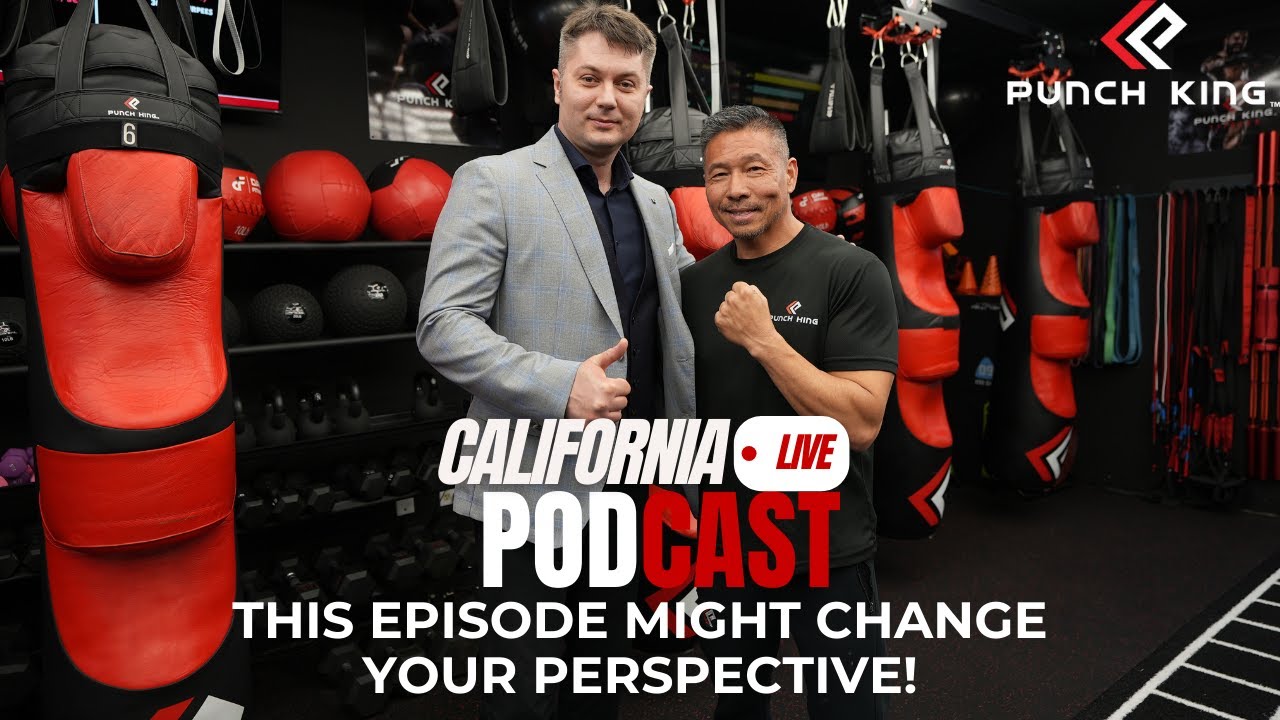
This content was created by Victor Migalchan. This content was uploaded by Victor Migalchan. This is a YouTube podcast interview (Episode 95: "Excellence, Innovation & Impact with King Lei, Founder of Punch King World") recorded May 1, 2025. Host Victor Migalchan interviews the co‑founder of Punch King Fitness (Speaker B / King Lei) on-site in San Francisco. The conversation covers the founder's background (engineering/integration experience, family roots), product development and patents for novel punching bags and gear, prototype and manufacturing challenges, gym operations and programming (smart‑gym sensors, heart‑rate tracking, HIIT boxing routines, strength/cardio integration), community impact, marketing/collaboration strategy, and trainer/student outcomes.
Chapters
Welcome to California Life Podcast. Today we are at the headquarters of the Punch King Fitness with one of the co-founders, Mr. King. Thank you for coming to the show and thank you for inviting us to your beautiful, beautiful fitness place.
Thank you. Thanks for having me on your show. I'm excited to be here today. Yeah, well, talking to you,
we are excited. We are in the heart of San Francisco, very beautiful area, uh, despite all different Messages about San Francisco. I enjoyed the drive. We took a few laps with the crew, and you were just in the in the heart of it. So again, very beautiful place. Except for the innovation that we'll be talking about, you have a great taste. It looks fantastic. It looks luxury, yet very practical. You are known for innovation in fitness. Could you please share with us a little bit of your background first? What brought you also into this field?
I kind of jumped into the fitness side by chance. I started more as a products person. So again, you spoke about innovation. I created my own bags that you probably see in the background there. A little bit different. I thought maybe giving it a little bit spin on the traditional round heavy bag, giving it targeting points, being able to actually uppercut a bag. That's kind of how we started, right? The fitness side just started from San Jose where there was a person out there that wanted to do a gym and someone introduced us and wanted to buy the bags from us. He was looking at doing a couple other franchises. I won't mention their names, but that didn't work out for him. And he said, hey, what if we just did something called Punch King Fitness? Again, nothing. I wasn't even thinking about that. I just wanted to be products, you know. I was like, okay, let's just do it. You put up the money, you build the space, and I'll provide the brand and everything else. Mm-hmm. Kind of went on from there. So that was a good one. San Jose, I think you were in San Jose maybe one time or two times. It was a pretty big facility. Since then, the lease has kind of gone away from that space. So we're trying to find something else. But we moved over to Sunset, San Francisco, which is— this is my neighborhood. I'm local. I'm born and raised. So I really wanted to be in this area because I love this area so much. I only live 5 blocks away from it, you know, and kind of helping out the community here. It's more community more than a fitness gym, right? Mm-hmm. We help people get fit here. Everyone is local. People are pretty much walking distance that come to this gym. Memberships are going really, really good. Mm-hmm. And people are liking it. I don't think you can find something like this. The colors, the looks, the bags, you know. Some people might get put off and say, oh, that looks a little too fancy, you know, I don't wanna go in. But once they come in, they try out a free demo class, they fall in love with it, they join. You know, we're not here to train fighters. We're here to get people healthy, you know, get their mentality right, you know, make them happy and everything. So that's kind of how we started on this whole fitness journey of Punch King Fitness.
Let's dive a little bit into your product development. You saw something that was missing, obviously. That's how you created all of these beautiful pieces. What was your first step in this field and specifically with the bags?
Yeah, so kind of started again. I had a daughter. She was 5 years old at the time, and I wanted to get her into fitness. You know, there's a lot of bullying, you know, and I really didn't want that for her in school. So I wanted So I took her to her first Muay Thai class, which was with one of my crew masters too. He was doing like a parent-kid class together. So it kind of broke the ice so she could get into it. And then there I started to work out again. I did Muay Thai for about 8, 10 years myself. Wow. And having a child, you kind of stop working out. Everything goes out the door. So I started to hit the bag again and just kind of in my head, I'm like, what if this had like, again, targeted punching points? And went home, threw a bunch of butcher paper on the wall. My wife is like, what are you doing? What the hell are you doing now? And I was sitting there drawing on the wall, hitting the wall. You know, if you see the curves on the bag, I was trying to get the perfect angle so you can actually do uppercuts so you don't hit the body. Knees down at the bottom. Right. So, you know, everything was coming together. You know, a lot of people have told me, oh, add this, add that. I'm like, no, it's supposed to just replace what you have already as a regular punching bag. And that's kind of where this whole thing came up with. So from there, you know, again, I don't know if I would say there was a need for it. If you talk to a lot of old-school coaches, They won't touch the bag. You know, they're old school. They're not gonna, you know, they don't need nothing new or anything. But I'm kind of creating for the new generation of people that wanna learn how to fight. Have 'em do proper uppercuts, have 'em do proper hooks, you know, everything proper form. And that's what I'm trying to teach the new generation, or not even just the new generation, the new, the people that wanna just learn how to box or just, you know, just get into shape, right? Right. I don't want them just aimlessly hitting a bag. I want them to hit the bag with a purpose correctly. You know, make sure, you know, the height's correct, that, you know, hit the head. You know, so it's really important to make sure that form, and that's where my bag, I think, helps out a lot. And I think the challenge for me is just breaking into this industry, you know, as a newcomer in the products world with all old-school equipment. Again, that's a big challenge. Trainers, old-school trainers, just like, oh no, I don't need that thing, I don't need that, you know. But other people love it, they think it's great. Big challenge was just trying to figure out how to stitch it, how to get it done, how— Right. How to stop it from ripping, 'cause we have so many stitching points on my bag. So it's been a long 6, 6 and a half year process, especially COVID, shipping, all that. So I kind of still consider ourselves a startup after all that, you know, 5 years gone to hell. And now, you know, this year or two, everything's been kind of coming together. The fitness side is exploding right now. People are just coming back to the gym and just, we're capitalizing on it right now. So it's really important. Not only that, I've come up, I have like 6 or 7 patents on different items, you know? Wow. So I just like to tinker, like you said, innovation, like, Different kind of paddles, different kind of mitts, you know. There's room for innovation in this whole field, which has been kind of stagnant for a while. And there's been a lot of different products, but no one's really expanded it that much. And I'm trying to, like, see what else I can make to make training more fun, to make training more easier and more flexible for real fighters to really get better at what they're doing, right? That's what they're looking for.
Well, All of these details that you're sharing, it tells me a little bit that you have pretty rich educational, cultural background. Would you mind sharing a little bit about your family, your roots, your cultural background? And do you have any engineering education or something like that?
Well, by trade, the last 25 years I've been an integration engineer for healthcare supply chain company. So I integrated some big CRM systems for PeopleSoft, Salesforce, all that. So I've done that remotely. I've been lucky. I had a remote job for like over 26 years. 7 years, same company out of Denver. So it allowed me to, you know, do my work in the morning and then gave me opportunities. I've been in restaurant field, I've been everything. Wow. So it always gives me a chance to do like a second job opportunity. Or business. Like, yeah, so you're right, I have that kind of background. Everything was instilled for me from my dad. He was always someone that always kind of made stuff. He was a locksmith, he used to build houses. So he did a little bit of— Jay was jack of all trades and he used to take me to all that. So that's really important. I think that's what's missing with these kids these they're on their phones and everything and not getting hands-on experience doing something, a trade at least, right? So, you know, that's kind of how I grew up and I was just always with my dad all the time. My brothers were in the motorcycle field. I was a motorcycle mechanic. So they grew up building bikes from scratch. Wow. Right? And they were older than me. So I learned how to do that too as well. Cars, muscle cars and everything too. So I always had something going on throughout my whole life up until, you know, I graduated from UC Davis and then got a job after the dot-com boom and everything. So I hit that sweet spot, but I just never made that, Yeah, you know, it happens.
Well, you will definitely with this company. I would say 6 years plus, it's definitely, if you want to call it a startup, it's a very mature fruit.
Yeah, definitely.
But I'll be excited to see you guys grow. You've mentioned that you and your family, your brothers, they were all very tech savvy and They work with the bikes and stuff like that. How do you raise your kids to keep them interested in hands-on things and not just the phone?
Again, for— so what my dad did with me, I do with my daughter. I bring her out, she sees me building the stores, laying the turf, like I'm doing everything from end to end. And I think that's really important. A lot of these kids don't have that. And again, that's how I was taught. And, you know, I don't baby her. I make sure she does her own thing. She does— and the busy part of it, she does art, she does hip-hop. Wow. She does boxing with me. So she's been doing boxing with some of my high-level trainers as well. So, you know, you gotta just keep her engaged, you know, and make sure that they're just always doing something. And not just like computer stuff or anything. I know that's all important and they should have it, but trade stuff, like just, you know, art, putting things together. So now I see her, she's developed and she's always at home making stuff. stuff coming up. Oh, look at, look at this fan she made like with rubber bands that opens up. I'm like, oh my God, that's— I can't even make that. That's kind of cool. So her mind is like kind of going there. I'm trying to develop that and hone that for her as she grows older.
And how old is she?
Uh, she's gonna, uh, she's 11 now, 11 and a half.
11 and a half doing these, uh, amazing things. Wow, that's impressive.
I'm really impressed by her. So, well, she's doing well.
You are very talented, so no, no wonder.
Yeah, thanks.
So, uh, back to you. Uh, you've noticed this, uh, little disconnect between practicality of the bags, punching bags, and you started designing your own. How many prototypes have you been through until you got to this point?
I don't think this is the last one. I think we're on version 6 right now. Always finding little, you know, stitching errors or anything like that. But I have to tell myself, you know, if you ever watch videos of real gyms and stuff, what's the most— what's the biggest thing you see on the bags there? duct tape. They all fall apart at some time, so I can't really— I can't make an indestructible bag. Yeah, but I want to make them last as long as they can so people can get their money's worth. Because again, our bags are not like the ones in the Big 5 or Century or anything like that. They're not $99. Ours are a lot more because of the look, the feel, and everything.
Well, also the work. Yeah.
Yeah, and I want to make sure that they last, you know, a year out of the bag. If it's getting consistent use in the gym and it's being hit every day, that's pretty good. Even 6 months. If it's a home bag, it should last 5, 6 years, you know, because the use isn't gonna get— the traffic isn't gonna be as high traffic as the gym.
Right. Except for bags, which other products or items in the gym you're working on, you've developed?
So I've made some hand wraps. So I know hand wraps have been around for a long time. There's the ones where you have the cushion on the top, the wrap on the side. I integrated it together with just a piece of Velcro, which I have a utility patent on. that's a little bit different than everybody else. You can wrap 'em 3 different ways. I made sure because of the way people are wrapping, especially beginners, that was the biggest challenge of any gym. And that's why I created it was because I wanna make a wrap that instead of just letting kids use like a regular wrap and all of a sudden after you wrap your hands, they're like this, they're super bulky because they're made for adults. Yeah. I made 'em thinner just for a small kid's hands or just a small adult's hands and being able to wrap 3 different ways. There's a beginner wrap where you could just wrap wrist, knuckle, wrist, knuckle. There's through the fingers if you're looking to wrap real, like a real fighter. And once you wrap that way, I swear, if you do it correctly, it's almost like you're wrapping your hands for a fight. Tape, everything. You're so solid. My heavyweights that use them, they love them. It protects their hands so much 'cause there's so much wrap for the wrist and the padding, the gel padding that we have on there. That's one of them. Fighting sticks, paddles, everything. I made double-ended. Mm-hmm. I thought it was just more being creative. I have fun with them. You know, I don't know if you've seen You've seen HIIT paddles before, just the paddles, but it's a 2-ended one. And I kind of got the inspiration from like Star Wars and Return of the Jedi where, you know, you have the Return of the Jedi with one lightsaber, but then, you know, Darth Maul comes out with a double and it goes zoom, zoom. So I thought that was cool. It's a cool play on it. So I'm always trying to come up with different kind of things. It's just that the fitness and the training coaches, everything, they haven't caught up to me yet. They don't know what to do with some of the things I've made. Mm-hmm. And, you know, a good testament, I have another bag that's on the other side of the gym. It's called— it's an uppercut bag. Okay. But I have the same— my patented curves that I put on everything, right? Um, I made it and I know what I want with it, but it's been hard to translate it to people, right? And I've started working with another coach, Jairo Escobar, top-level trainer. If you've seen his videos, you've seen that, you know, the flow stuff, Floyd Mayweather hit mid-style. This guy's a savant. He's so good. He came the other day, brought his whole crew, got on the bag and he was— he loved it. He was doing things with the bag that I'd never even thought of because he's a real true trainer, right? Right. He said, oh, you can do this, you can do this. And all his guys were all excited. They stayed. They came for like 30 minutes. They stayed for like 4 hours because they just— they were sweating, but they were having so much fun with it. So they're gonna help me market this bag next because I need— I kind of look at it from a Nike perspective where Nike was Nike, but But they had Jordan. Jordan was Jordan. Nobody really yet. So, but then when they collaborated, all of a sudden they exploded. So I'm hoping he's my Jordan to my brand, that we can start promoting some of these products because now I have a legitimate coach saying this is a good product, this is how to use it. Not just saying it's good, showing, making videos, showing, you know, tutorials. Mm-hmm. Use this bag. Because, um, we— he came over, we just did a couple of small videos and he posted them. I, I, we have— I have more hits from those couple posts than I had trying to spend thousands and thousands in marketing and myself trying to show the bag. And he was just a couple things, oh, what bag is that? What's he hitting on? I love that bag. That's amazing. I'm like, oh my God, this is kind of all I needed. So my hopes are our collaboration is gonna be pretty deep. He came up with a new mitt idea because he's a high-level trainer. I made it for him. And now that's the next thing we're gonna try to do is we're gonna try to promote this new mitt that he has. Mm-hmm. I filed for a utility patent already. So pretty soon we're gonna start putting it on the market, preselling it. And I think it's going to be a pretty, pretty hot item that we're going to come up with. So hopefully that one's a good one.
Well, it will definitely. You have the quality, you have the story, you have your background in not just engineering but also healthcare. So it's done very well from different perspectives. Now, in my humble opinion, I'm not a professional. When I just entered your facility, it's not just about innovation in your products that you've designed, but also The other machines that you have here. It also is about the routine that you've created for the gym.
Yeah.
Would you mind sharing a little bit of that information with our audience?
Yeah. So one thing, we call ourselves a smart gym. So we have heart rate monitors tracking. So in real time, you see all the TV screens behind me. We actually will have video integration. So it can be video-led, you know, we can have a trainer. We don't have to have a trainer. But the big thing is we have sensors on the bags that track. It's kind of like gamification. So every time you hit the bag, you get points from 0 to 100. However hard you hit the bag, you'll get 5 points, 10 points, 30 points. And let's just say you and I were on the bag, and if you're competitive, I'm competitive, we're not fighting each other, but we're hitting the bag and we're seeing the points together. Mm-hmm. You're like, oh my God, he's 100 points away from me. I'm gonna go harder. Even though you're tired, it's kind of like a mental thing where you can push somebody. So it gives you stats there, how many times you hit the bag, how hard you hit the bag, average impact force. So again, we have a lot of information that's kind of being tracked throughout the whole gym, all throughout everything. We have screens that show the workout of the day because I've been, you know, there's gyms that just do stuff and I kind of like learn from every class and I'm always trying to update the programs. And we have about 100 different programs out there that we've used that I created. So basically we are a HIIT fitness boxing gym and there's a lot out there. But, a lot of them aren't teaching the form in boxing either. And, I found in the beginning when I first started, oh, people just want to work out, they want big 1,000-calorie burn during the hour. But now, I'm seeing people really want to learn boxing. They don't want to look ugly where a lot of gyms is just— I mean, you can hit back like this a whole hour, you'll be tired. Yeah. You'll be winded, right? But again, the form, being correct jabs, punches, everything, good footwork, we integrate that all into our workout along with the HIIT. So, we do warm-ups, HIIT, cardio, calisthenics, boxing, calisthenics, boxing, calisthenics, and a finisher. That's pretty much our program that we laid out. But every single workout's different. So we'll do shoulders, we'll do biceps, we'll do a lot, we do a lot of core. So we integrate all that into one workout. 'Cause a lot of the people we have are working professionals. And they, 6, 7, 8 o'clock classes are really, in the morning, are really popular. Yeah. 'Cause they come in, they work out, they're gone. We have doctors, we have engineers, we have a lot of different— our demographic's really wide here, and it's really good. Like I said, the community here is really good at the same time. So that's what we do here, and I think we're doing it really well. People are— it's a testament. Our membership rates are kind of skyrocketing right now. Biggest challenge right now is just bringing on good talent, trainers to come on and kind of do the style that you want, you know, because you have to have that energy as a trainer. Yeah. You can have a bad day, but you have to leave that at the door. These people want to see smiles, engagement. You can't just stand there. Even though I have so much integration that they can just watch the screen and run the whole— they could do that at home if they wanted, but they still need that one trainer. Now we call ourselves— I'm kind of like the hype man, but I walk around. Doing that kind of video integration allows me to walk around and work on form more for people. Okay, I don't have to sit there, oh, what's next? Oh, jab, cross, hook. Then I come back and work on it. You see me, right now it's just me because I can't afford too many top-level celebrity trainers to be up on the screen. They'll say jab, cross, hook, and it'll just be going on in the loop, and it'll go on the next 30 seconds. 1, 2, 3, 4, jab, cross, hook, hook. Then I can just sit there and say, okay, hey Victor, all right, sit down. Your punches aren't being, you know, you're not throwing your 2 right. You know, your feet placement isn't correct, right? So again, that allows me to do a lot more form corrections. Mm-hmm. during the class. So I'm not sitting there having to just blurt out what's the next thing for the next round kind of thing, you know? So again, I'm finding it really well. The dumbbells, the HIIT fitness, everything's really, really ramping up. And all the cardio equipment is big, big too. I mean, you have to change it up. We have the treadmills in the back. Mm-hmm. We have the stair climbers. So we're always trying to make the workouts different for people. And I think that's what they like and appreciate about what we do. Unfortunately, there's some people that come every day, which is good, but I'm like, hey, I can't make the program different every day for you. 'Cause usually we do like Monday, Tuesday will be the same program, and then Wednesday, Thursday, Friday, Saturday kind of thing. But once in a while I'll be nice and I'll change it up, you know, because there's some people that do have unlimited memberships with us and they come all the time. But I'm like, just go harder for that class or do better.
Wow.
Yeah, yeah, and achieve— go heavier or something like that, you know. But again, it's doing really well. I'm finding that sweet spot Yeah. Of what works, 'cause all of our members come in. We are about 80% women here. Average age, I would say, is about 45, right? And, you know, our ladies come in, even our guys come in, you know, overweight, you know, unhealthy, and they stay with us 2, 3 months and, you know, their energy level's up. You see big results from them. You know, I'm not here to do the nutrition part for you. Right. I can tell you, I mean, everyone should know how to eat. I know that nutritionists are important, but you should know what you're doing at home, you know, 'cause I can't watch you at home. Just eat decent, come in and work out. See, for me, I work out so I can eat.
Okay.
That's me. You know, I'm 52 now, so I'm not trying to look to have that body no more. I just wanna stay healthy and be around for my child for hopefully as long as it can be, 20, 30, 40 more years.
Well, you look a lot younger than you just mentioned. I wouldn't believe you.
It is like the Asian gene or something.
Well, you also are healthy. Yeah. If you just eat junk food and you wouldn't work out, you would have probably had a different look. Yeah. What are these machines for? You mentioned it's cardio, so I assume that you combine somehow the workout on the bags with these machines.
So like in the beginning, we have warm-ups. So a lot of times we have just regular lightweight warm-ups. You know, we'll do like jumping jacks, high knees. It's just kind of You know, get the body warmed up a little bit. Then we go into intense cardio. Maybe it could be 3 minutes on the Assault Bike. They call this the devil's tricycle 'cause it's so hard. People don't like it. Mm-hmm. 'Cause it's— there's no electricity on these machines. These are all by air, right? Mm-hmm. So that's the Assault Fitness Bike, the Concept2 rowers, the Concept2 skiers over there. And then they've come out with some new equipment that I wanna buy too that are kinda like chest and everything. So, you know, we have to follow and keep up to date the gym. You know, a lot of gyms don't keep up. They don't even clean their gym. That's a big thing. A lot of people— what's the big thing about our gym? They say they like it because it's clean, it's organized.
That's why I asked, should I take my shoes off?
Yeah, yeah, yeah, yeah, yeah, yeah. We're not tatami mats here, you know, so we leave them on here. But it's just the gym gets dirty quick. I mean, there's dust all over, the doors are open all the time, but you just gotta stay on top of it.
Plus, it's a place where you sweat Yeah, yeah, yeah.
And we gotta clean that up. We have to make sure we sanitize and everything, you know, 'cause again, we have a lot, we have doctors here too, you know, and they're important. A big testament, like I had 2 pregnant ladies that worked out with us all the way up to like the last day. And I was scared. I was like, okay, just don't have the baby here, please. I'm not ready for that. I got ambulance on standby. So 2 ladies, one is actually going through chemo. She started with me. Wow. breast cancer. Wow. And she's stronger than ever. She started with me, she came in really weak and stuff, but man, she is super strong right now and she's still going through treatments, right? And another one, not as intense as her, but, you know, if you do the right workouts, you can still prolong whatever illnesses you have. You know, everything everyone thinks is pills, going to the doctor, getting, you know, That doesn't work sometimes. You have to work out. You have to apply yourself and engage yourself into like cardio or strength. Walking is great, but it's only gonna get you so far. You have to do, you know, I tell some of my friends, you can walk, okay, throw some ankle weights on or go upstairs or challenge yourself a little bit more. Don't just think, oh, I'm gonna go on a 5-mile walk. That's nothing. Mm-hmm. You have to get your heart rate up there. You have to burn calories and stuff. There's a big difference in weighted cardio to me is way better than going out and running 5 miles around the lake or swimming. Because I have people— we have a demo class that's 15 minutes. Some people, oh, is that enough for me? You know, just come try it out. You know, I have guys come in, oh, I run the lake, I swim, I do this. They're on the ground in 15— in just my demo class, they can't even get through that. And I'm like, this is a different class. You know, they're trying to punch at the end, they're like, oh, they can't keep their hands up. Yeah. I was like, boxing mixed with HIIT fitness, This is a totally different beast, right? You teach correct form in boxing instead of just letting people— we don't even have to throw a punch and I'll make people stand in a form and they squat the whole time and move around. You know, they didn't even wanna stand no more 'cause they're like, oh my God, I'm so tired. I can't squat no more. That's what boxing is. You're in this position all day long. Just like martial arts and like a lion dance and you have the horse stance. If you don't build this, you don't build anything down here, it's not gonna work. And I used to be one when I was younger. It was all upper body, skinny legs, upper body, big chest. That's all I wanted, big arms. But, you know, it's the core that you need, you know, from down here. If you don't build your legs, nothing else is gonna get stronger. And I try to apply that to people, let people know, hey, we do a lot of burpees here. We do a lot of stuff that you hate, and I used to hate it too, but those are the best things for you. Yeah. Right? So you'll learn to love it because you're gonna get stronger. So, you know, again, I am not certified in any physical training, NASM or anything like that. Everything, I'm self-taught in everything. I've tried to take those courses, but I'm so busy, I can't get through all the courses all day long. And I want to, I'll finish it one day. But again, being self-taught, learning from other people, learning from other trainers, just expanding your mind and not being like closed-minded to stuff is real big for me. I listen to everybody and I like to share. And I found in this industry, a lot of people don't like to share. Trainers don't like to share. Trainers are pretty cocky, arrogant, you know? And I'm like, we're just trying to teach people, you know, how to be better in life. And that's what I wanna do. And I wanna share my technology. Oh, what about your bags? Oh, I sell 'em to people, you know? we— let's collaborate. And a lot of people don't want to collaborate, and that's unfortunate. You know, there's a lot of room in this, in this industry to, to really grow together. But, you know, that, that's what, that's what I've seen, you know, just being new. Because I come from a— I'm not, I'm not ingrained. I didn't live— I didn't grow up in fitness, right? I'm, again, engineer, you know, doing other things and stuff, coming into this from the out. I still feel like I'm from the outside, which is actually good because I can kind of step And say, okay, let me see what I can change here instead of, oh, this is my day-to-day, this is what we're doing every day. No, change it.
We have a fresh look.
Yeah.
Instead of being, you know, stuck in all of the older frames, let's put it this way, you have a fresher look.
Yeah, yeah. And again, I try to apply that all the time, and hopefully I don't— I don't want to fall into that hole, you know. Maybe 20 years from now I might fall into that hole, but, you know, I don't want to. I want to hopefully pass this along to my kids Or whoever wants to do it, you know, at some point in time.
Yeah. The thing which you mentioned that you are self-taught to me actually means a lot more than the certified trainer because anyone can get a certification. And I see, being from athletic world a little bit, I see what they do at the gym with their clients, which is just nonsense. Let's be honest. And one of the best examples to me is and always was Dorian Yates. He was self-taught in bodybuilding, in nutrition, in steroids which he took. He didn't have a whole crew around him. Everything is his own work on his own skin. So that's what makes you, well, unique in the best way possible. And what you mentioned that, well, a lot of people are very self-centered, especially where I'm coming from, you know, LA, it's 99% probably.
Definitely.
That's why they are whining that they have no job. Yeah, yeah. But also you don't want to get involved with the wrong person. Yeah. Right? So actually, when it's a no, sometimes it's good. Yeah. It's minus one wrong.
Yeah, exactly.
Which brings you closer to the right one. You've told us a little bit about what's happening in here. What is happening in that room? I've seen some weights.
Yeah.
How do you combine those with your focus on cardio and boxing?
Yeah, so basically what I wanted, if the space that we have can accommodate weights, that's more of an open gym concept where people So we can still hold classes here and we can still hold 8, 9 people doing weights over there. So I kind of wanted to expand maybe the open gym concept. So if you're a monthly member, you can add on like $30, you can come in, use the gym anytime you want. And what we're gonna do is we're gonna have a facial rack in the front once I build a new doorway for ourselves. So people— we don't have to have someone here all the time. We just— someone comes in, beep, I have cameras, they come in, work out. It makes it easier. They can do anything they want. They don't have to join group classes if they don't want to. So that's more for Personal training. So when we have personals, we integrate the personal training with the Smith machines, the stair climbers, with this at the same time. Because some people don't want to box, they just want strength and conditioning, right? So we— well, I'm trying to make that different. Before it was just more this here because we had a smaller gym before. Now we have the bigger size here, so I wanted to give it a more look, fresh outlook on strength and conditioning at the same time.
Right. Um, you know, sometimes, uh, people have this debate, uh, weights with Strong cardio. What is your perspective again, based on your experience on yourself and the gym? How do you advise people to combine these trainings to you know if you want to build a few muscle, you might lose them when you box.
Yeah.
How do you guys do it here so it's all going more organically?
Yeah. So we we start with the cardio and then we always go into strength and conditioning. So strength conditioning like today was arms, right? So it was I call it I give my workouts name. So if you see up there, it's called the gun show. Obviously that's guns, right? We're gonna build our guns today. So it was all concentrated on biceps today. But at the same time, there was a lot of squats that we did. So I burned them pretty hard. So we did boxing exercises today where they were kind of, they would, today they used every bag. So there was 4 of them and they would have to do a hop every time to the left and do a punch on every bag, back up, come around. And now— Okay. It's sitting, they're burning their legs. They're going back and forth. So I call that hop where they go right, a side is where they go left and then we go back and forth. They're burning, burning, but I wasn't done there. They would need, you know, so have you done, you've done wall sits before where you sit on the wall and you kind of sit in a seated position? So right after that, they do that. From there, and it's actually a partner one 'cause I need, so let's just say you're on one side of the bag, I'm on the other. So now it's a trust thing that we have to hold each other up. Okay. So if I move, you're gonna fall. If I'm moving around, you're making the other person work more. Right after that's done, then I have them go into jump squats with weights, not just some regular jump squats where with, without any weights. They have to hold 15, 20-pound weights and jump, jump 20, 30 times, almost for 30 seconds. Okay. Then they go into plank jacks and plank in and out. So that right there with weights, so I don't just do it without weights sometimes, and that really burns. And they're like dead. They're dead tired from there. They didn't wanna punch anymore. But if you don't push yourself, you don't get to the point where you're growing. You know, if you're comfortable, I tell everybody like pushups, one of the big things with pushups is people think they'll do a pushup and they go like that, like 2 inches down. I'm like, that's not a push-up. You're not gonna get anywhere. If you can't do a full push-up fully up, not on your knees, go to your knees. It's okay. 'Cause you need to go down to the floor and build those muscles down here to be able to push yourself up. Once you get to a point where you can do 20 like that good, then always start out with the push-ups. When we were in the push-ups, when I'm asking for 15, 20, just gimme one full push-up. Full push-up. Just teach yourself. Next time, gimme 2, gimme 3. Just build up to it. Now some of these ladies are doing 15, 20 straight pushups, right? And that's big. A lot of people, a lot of trainers just let you do what you wanna do, flared out, you know, ugly pushups. You know, even if they're on their knees, they're going the wrong way. And I'm like, okay, you can't do that. I'm really, really strict on making sure you build your muscles so you could do the extra. If you're doing your squats, get low. Don't just do like a small little squat. You know, if you're doing a burpee, do it correctly, right? You know, 'cause form is everything. Yeah. Every time I correct someone's form, when they're doing, let's just say, an Arnold press. They're not coming around too much. They're just going like this on the thruster. When I say, oh, widen up. Oh, well, okay, that feels different, right? Yeah. Yeah, of course. When you have good form, the exercise is gonna be harder and heavier, but it's better for you at the same time. So it's really the cardio with the weight training and the boxing as a third component is the best I've ever seen. I've done a lot. And this by far, not just because I do it and I own it, I love it at the same time. Now, everything else is different too. I mean, Pilates is hard. Right. You know, but it's a different muscle group. It's slow but intense. Yoga, again, another hard— same as the same, you know. Zumba, I'm not a Zumba person, but that's a lot of dancing and jumping around kind of thing. But yeah, I'm trying to integrate all those elements from Zumba to Pilates to yoga, you know, to boxing, and encompass it into one workout. You know, to give someone really a high-impact, high-intensity interval training workout at the same time.
In your training system, you mentioned that each, let's call it round, has 30 seconds, whether it's a push-up or a burpee. How many of these rounds do you have to go through until you get a 30-second break or something like that?
Yeah, so in the— after you do the warm-ups, there's usually— so today was like 2 warm-ups, 30 seconds each. You do 4 different exercises and that's 1 round. So you do that 2 times, get warmed up. Then you do a cardio. We'll go on the bike 3 minutes, rower 3 minutes, skier and jump rope or treadmill. So usually we do 3 or 4 of those at 3 minutes each. You always get like a 30-second break. After all that whole round's done, you get 1 minute. So we're going pretty fast. Yeah. We keep going. I'm trying to keep your heart rate up at the same time. Then we go into strength. Same thing with the strength. But then when we come to the boxing and calisthenics, so we go boxing. So it's 30 seconds, It's 3 minutes. So it's 30 seconds of jabs, 30 seconds of crosses, 30 seconds of jab-cross, 1-2. So we go with different combos: 1-2-3-4, 1-2-7-8, body-body, 1-2 rear kick. So we do kicking too. 1-2 rear kick, rear knee at the same time. So that's 3 minutes straight of that. But we're always doing different punches every 30 seconds. Then right after that, short break, 30 seconds, we go into calisthenics. Okay. Sometimes calisthenics could be 2 exercises or 3 exercises. We always try to incorporate a core in the calisthenics at the same time. After that's done, depends on the level. So we have level 1, level 2, level 3, level 4. So it could be 3 rounds of strength, 3 rounds of boxing, or 2 rounds depending on the class and if it's a beginner, intermediate. So that's kind of how we layer everything into one. And then at the end, there's always some kind of finisher. Today was 30 full burpees. Oh. So yeah. Not too bad. Yeah. So they have to bang out 30, or sometimes it's 30 squats, 30 pushups, 30 sets of 30, 30, 30. Sometimes we have a pyramid, which is called a— you start at 10 for it. So you have the 3 different exercises: jump squats, push-ups, and sit-ups. Mm-hmm. So you start at 10, then after that 10, you stand up, then you do 9 of all 3, then you do 8 of all 3, all the way down to 1. I learned that from my boxing coach. And everyone here complains when we go from 8 to 10. My boxing coach actually started off from— I think he started off at 50 one time. Mhm. From 50, 50, 50. And I'm like, this is insane. Tried to do that with my members and yeah, that didn't go well. So yeah, we start at, you know, I think 6 or 7, maybe 10's the max. And a lot of times we have them count themselves too. Like, okay, you start 10, you start to count 10, 9. So you have to make it fun and engaging at the same time, you know, get them involved instead of them just sit there, you know. And it kind of teaches them like trying to talk and work out is really hard, right? Yeah. Yeah, so they kind of, oh my God, I gotta count too and everything and I gotta think, especially with combinations. with mitt work and stuff, you know, oh, I can't, 1, 2, 3, 4, 8, 7, roll, 2, 3, 5, you know, they're like lost, you know? Mm-hmm. So it's, and on the flip side, we have them hold once in a while too, right? So they can see the other side of what I do. Like, oh my God, that's so hard too, you know? And the other thing is having southpaws, orthodox, you know, now as a mitt holder, you have to hold this way, you have to hold this way, you have to know your numbers. So there's a lot. And I, again, I'm self-taught from a lot of these trainers that I see online, but I love it. It's so fun. I wanna be like, I wanna be I wanna be just like Coach Escobar. I wanna be one, like a high-level mitt trainer. 'Cause those actually, those people command huge money. A 1-hour session, if you're really good, you can command $150, $200 an hour just to teach someone boxing when you're that good. So it's actually a really good trade too. You know, even if I didn't have all this and I just wanted to fall back and just teach people boxing. And that's what I'm trying to teach my daughter right now. She holds, at 11, she holds mitts for, she's my assistant. Mm-hmm. She holds for everybody else 'cause I've been teaching her. And now I'm like, when you go away to college, She could just put up some flyers and say, who wants to learn boxing? And you could teach them in the gym, make $25, $30, $40 an hour, um, you know, as side money, you know, because she knows how to do it, right? So I'm trying to teach her that side of it too, not just to be working out and learning boxing,
right? Well, that's, that's a fantastic business plan. Good investment. Um, you've talked a lot about your love for boxing, and you practice a lot of boxing, but you also mentioned you do kicking. Which kicking techniques do you like, uh, and which techniques do you So basically,
you know, there's always debate. There's like right kick, right roundhouse, you know. So, you know, and you're talking about different disciplines now. So, you know, kickboxers do different kind of kicks. Muay Thai does it more of a snappier kick. So it's a lot different. We just go simple here. We're not here trying to teach people really kicking, but we still make sure they kick properly, right? Pivoting the foot, make sure you get your hips over, you know. Depending whether you snap or not, it doesn't matter. Just switch stance. Then you do a lead, you know, there's a lead kick, there's a rear kick. And then for me, we always make sure that we encompass some kind of self-defense when we're doing a lot of this, especially for the women. I tell them like, hey, if you're doing a knee on the bag, drive that knee, right? Because if you do that 100,000 times here, an attacker— let's just say you're tall and someone came at you like this, I'm hoping instinctively you've done it in our class so much that that knee just comes up and hopefully you get them in the groin and run, right? Yeah. I'm not saying stay there. Just because I taught you how to do a 1-2, I don't want you to punch them, right? You don't have gloves on, you don't have wraps on, you're gonna hurt your hands. But a knee is one of the best things you're ever gonna get from someone. But do it correctly. Grab them by the head or the side and knee them right in the groin and run away. Or a throat chop. If you see on the bag, I have that bottom. Mm-hmm. You know, you could do a throat chop there or an eye gouge or something. So that's another thing I like to just drive into our ladies here is just say, you gotta make sure, don't just give me a lazy knee where you— drive it, right? Again, someone comes after you, you know what to do, you know, or it's not even know what to do. Hopefully it just comes up right away and you run away. You know, again, you get them good. So another element to making sure, you know, and that's something we're trying to do here. I'm trying to bring on some of the best self-defense teachers. I wanna do like a once a month thing here. Mm-hmm. So people could come in from the community, older people can learn. 'Cause again, like you said, you know, you hear San Francisco, all the stuff going around. And I was just gonna mention to you, I see all this high-tech camera stuff. Don't leave them in your car. Not here, please. They're gonna break into it and steal it. But you have to be ready for anything around there at any age. It doesn't matter. All the, you know, I'm Asian, so it hurts me to watch all this stuff in Oakland, San Francisco, you know, these older people getting beat. You know, it's like, it's sad. It's sad. But, you know, we got to equip ourselves.
Right.
And hopefully what we can do here is help the neighborhood, help the people, help our kids. You know, our kids classes, we're trying to build that too at the same time, and we're growing pretty quickly on that too. So it's fun. They're hard to teach. Kids classes are tough, but it's fun.
Well, as long as it's fun and you still keep smiling, that's great. For the gym, for the business, you have a really cool system with innovation, with all the items. You also have a system to train for amateurs or even for professionals. I believe you have a few locations. Do you do something like a franchise for your business, for your brand, or it's still in plan?
So right now we are set up as a franchise. We have expanded to a few places already. One is in Vietnam. We're on the East Coast. For me, you know, I'll be honest, that was a little premature when we started that collaboration with the group over there. We stopped it. They weren't doing things quite the way we were seeing eye to eye. But not their fault, not my fault. Um, I kind of— I pulled back from all that, and now I'm just— that's why I expanded to this location. Now I'm really going to refine the brand, refine the programs. Okay. Refine everything as much as possible, you know. Um, get the membership numbers up because people want to see info like, oh, how much money are you making? Because that's how much money they want to make, right? So there's a lot of concepts, you know, because this isn't my first rodeo in the franchise world. I had a hot dog franchise when Okay. A long time ago. So I understand franchises, but again, the fitness side, I was so new to fitness, I didn't understand it. You mentioned people, fighters that I first— when I first started the bag, oh yeah, okay, here, here, let me give you some money, sponsorship, all this stuff. And that's just like money being wasted. It's going down the tubes because some of these fighters are fly-by-night, you know, what you're gonna do. And again, there's egos and stuff. So I totally stopped any sponsorships with any fighters. Now it's about— I think I have a really good product. It's more about branding. I'm a brand nut, so I try to brand everything with Punch King as much as possible. Whatever I can see, I'll brand, you know, because I love branding. My shoes, everything, socks, you know. We'll get down to it. Punch King shoes? I'm not— no, not yet. I do have my Punch King boxing shoes somewhere. Okay. Yeah, so I try, I try. I think it's really important for the brand, especially if we're gonna grow as a franchise. So hopefully Hopefully as we get developed a little bit more and I hone the programs down, the video integration down, and now whenever a new franchise comes aboard, oh, what do you get? Well, you get all this. I'll push all the programs to you remotely and you'll have everything that way, everything in the video, everything's done for you. You know, it's kind of like mindless. You don't have to really think about everything. You just got to go ahead and you got to do your own marketing. You got to do whatever demographic because Demographics different, right? We command a higher price in our area here. Some places probably can't command what we command here, but it's still good money because San Francisco is pretty expensive to live in as well.
Yeah, well, that's true. So for— because we do cater for a lot of small businesses, let's say someone like myself or someone else would want to collaborate with you to have your franchise at their location, which What kind of demands, let's put it this way, do you have for a person to qualify to get to work with you?
So, you know, in the beginning I was thinking like, oh, you don't really need too much experience, but now I kind of changed that mindset. You know, you have to have some fitness experience in the gym. We can teach you as much as we can. Obviously monetary, you have to have enough money to be able to build a gym out, right, with everything. But for me, making sure that the fit is right, you're going to be an owner-operator at the same time because, you know, There's margins here, decent margins. It's not like the food business, but you'll make good money. But if you're set on being absentee owner and you just wanna hire trainers to run your business, yeah, you're not really gonna make that much. You have to, one, I want, if I had a franchisee come to me, I want them to be passionate. I'm gonna run it. I'm gonna be teaching the students. All you need is 1 or 2 trainers to help you out on those times you don't wanna train. But you're the main person, you're the main face. I've done that with a lot of my trainers too, where I hire 2, 3 trainers trainers and things just weren't going to where you're going. Demo classes, close rate 50%. Now I take over, I'm at 90% close rate. Wow. Yeah, either they do by drop-ins, they do monthly because it's the whole package. And, um, you know, I have to say it's not because I'm really good, it's just I know my program, I know my bags, I know everything about the business that I can sell it a lot easier as some of my trainers. But some of them just kind of just do it and, you know, next thing you know, they— people don't come back. And that's why we only offer A lot of places do like a whole week, and I'm like, they're not gonna buy within that first time. There's no reason to give a week, and you're giving all your resources away for another 6 more classes. And a lot of people, I'll be honest, come, they know how to— oh, I'm gonna go to this gym, get 6 free classes. I'm gonna go over here, get 6 free classes. And they just cop around all day long. Do it. Yep. One and done for me. If I can't get you in that first one, yeah, then I probably—
Probably not the—
Then you don't want us, and we probably don't want you at the same time. Well,
that makes sense. Actually, what you are saying, I know you're a very humble person, but you are actually good at what you do because closing at 90% without even a need, it's good.
Yeah, yeah. You know, I'm happy, I'm lucky, I'm blessed that it is that way. You know, I'm like, okay, we're doing pretty well on that.
Well, if you look at the whole system, you have a really good spot for the community. You're bringing value. It's it's not in a in a like easy easy way, but it's it's easy to sell because it's real. It's it's value, and who isn't into it or who doesn't get it? Well, they don't get it. Yeah, it's fine. How do you again back to the conditions? Do you have any rules except for you have to be in the business, you have to be involved, and what is the let's say minimum or average amount that you require your potential franchisee to have in order to So there's
one, so there's a franchise fee, right, that you have to pay into. And then after that, you need to have at least a minimum of at least $100,000 working capital on hand. That's outside of the build-out, right? Because if you don't have any money, if you pay everything to your build-out, you have nothing to run the business, that doesn't work either. So I've seen a lot of people where they failed because of that, right? So you have to kind of go through through the very beginning of the first 6 or 7 to a year. Yeah. You could probably not even make money for the whole year. Your goal is to break even. Yeah. Right? And the good thing about us, you know, if you hit a certain amount of memberships, it's recurring revenue. So it's really good, right? Again, we have a lot of ladies that come here. That's the most important thing. Fighters? Yeah, forget it. You're not making no money, right? But these ladies come in, men, whoever's ready to work out in this kind of style, They put their credit card down and they just— unless they want to cancel, it just keeps going and going. And, you know, I hate to say it, this business is great because some people might use their membership 2, 3 times a month. Some people might use it every day. So you get a mixed bag of people. And as long as you keep your membership rates and attrition low as possible, Right. you're gonna keep needing members coming in all the time. And marketing is really important too. Being in Google, making sure your gym comes up first on Google is really important. So we We've taken a long time to make sure that our team, the marketing team, pushes us up to whenever you say fitness or boxing, we pop up, you know, within the neighborhood. And, the big thing for me, I think that made us, that's making us successful here is because you can't get something like this in the Inner Sunset residential area. You usually have to go to the Marina District, downtown, you know, over by Pac Bell Park or AT&T Park or over now at Stonestown or some mall to get more of a big gym feel like Crunch and all that. Right. So, we're bringing a smaller feel, more boutique style into this area. And if you just look, you know, this, you know, 4-block or 1-block radius here, there could be 200 people just living on this block alone, and then 200 here, 200, there's already 1,000 people. I get 10% of that, you know, I have a good membership base of 100 already, right? So that's kind of my thought process on coming in local in these areas.
So not just an engineer and a developer, but also a very good sales analyst.
Right, yeah, I try to think it through, you know, and not always right all the time, but— Well,
but pretty, pretty, Decent and impressive results. So back to the finance, you need to have around $100,000 in operational capital.
Yeah, working capital.
What about the fee that you mentioned?
Regular, our fee is $50,000 to have the franchise.
Is it per year or it's—
That's just a one-time initial franchise fee. The royalties are 5% of gross and 2% ad cost. We can play with the initial franchise fees a little bit, you know, because, you know, we're We're still new, so we understand. We're not like them, the big companies that can command that money. You know, I'm just trying to make sure— that's why I took a step back to make sure, like, I need to build this out correctly too. So when someone comes in and wants to do it, they'll see everything and be sold. Just hopefully I can close them like I closed the members that come in here, right? Right. So again, $50,000 for initial franchise fee. Your royalties are 5% of gross, 2% ad cost per month. The franchises are— they remain intact for about 15 years. Then you have your Build out. Build out could be any different type. Minimum, I will require 1,500 square feet. You can go up to 2,500, 3,000 if you want. I think that's a good, good solid number. Here's about maybe 1,800, 2,000 here. I would love to be at 2,500 if we can. We have a ring on the other side there, but if you can have a ring, that'd be good. A lot of people have a stigma about rings, especially people wanting to do fitness, especially boxing. They'll see a ring, oh no, that's a box, they're boxing in there. I don't want to, I don't want to box, you know. And, and that, that, that you got to be careful sometimes. So sometimes people put it in the front, you put it in the back. But once they join and they see, oh, then you get them in the ring, they kind of have fun with it, you know. So, um, again, the layout could be a number of things. Uh, we, we, we've been on the corner there for about 4 years ourselves. We built it pretty well, and it was only like 8 bags in there. That was it. Just kind of half of— less than half of the space. And we did really Well, now after we built this space, I think that kind of helps with the close rate because they see like a full gym now. Everything, the lights, the colors, you know, everything just, okay, yeah, where do I sign up? So now they're saying, oh, why am I paying $150 for one time a week or, you know, $300 for 3 times a week? You know, now they see the value of the gym part as well. Yeah.
Well, that's a fantastic story. What is your goal for the business for this 2025 and maybe next year,
I wanna— I'm really passionate about my product side, so I really wanna kind of get back to that as well. But at the same time, still build this brand up stronger than it is now, right? I wanna fill all the gaps that— because I was being pulled away from the East Coast to Vietnam to San Jose, I was being pulled too many directions that I couldn't focus on the very important part of building the brand, which I lost track of. Yeah. But now I see that, and that's why I have one in Richmond, which is on the other side of the park, 5 minutes away. I built that a year ago. I let it go because I was like, I, I can make more money here than I can trying to do 2 studios because I don't have the trainers. I don't have— I don't have another me over there, right? Which— and it was doing well. It's just that I, I'm a bigger picture kind of guy, right? I don't, I don't just want to want 2 studios. I want to have 100, 200 one day, right? But if I don't build it correctly from the first one, which I've learned, um, it's not going to go anywhere.
Right.
Yeah, it's gonna fall dead in the water.
You know, we've, as our podcast, our media crew, we've worked with quite a few business owners and you are a very rare who always talks about the brand. I need to build the brand, I need to focus on the brand. I think that is a very important message for all of you to remember. It's not about all the fluffy and fuzzy stuff, but it's the brand. This is where people, this is the why, why you So since you are aware of that and you know it so well, could you please express or share with us what is Punch King brand? What is it?
Punch King brand is— there's so many different things. One, there's the product side, which is Punch King. So there's Punch King World, there's Punch King Fitness, 2 separate entities. But that's the product side where I sell the bags, sell all the equipment and everything. And there's the Punch King Fitness side, which is this side. So, you know, they obviously, they mix because of the components of it. Right. And that's what makes us a little different franchise than the rest because we actually have our own products that we created. Not everything, but these are really important to us. So we can kind of boast that we have our own bags, you know, our own innovation that we bring to the table. So I think that makes us a lot different than other companies, and I need to get that message messaging out, figure out that messaging and getting it out there a little bit more. And it takes a lot of, as you well know, you're in videos and videos are some of the biggest key social media, everything, and getting that messaging out there. You know, whether it be through the correct influencers or anything like that, you know, that's really, really important. We had a Netflix star the other day, an Asian guy was here doing a workout that he, I think it was a nonprofit that they sold like, oh, work out with this guy Scott Yu or something. Well, I forgot his name. Yeah. He had like 30 people in here and they It all came because of him. So that was kind of fun. And that actually helped us with our brand because, you know, there was a few people here and these guys, this whole group, you know, they all came from money. Everyone was interested and they loved what we were doing here. And they're like, how come you're not in San Mateo? I'm like, oh yeah, I'm just waiting for someone that wants to franchise it there. And they're like, oh, you franchise it? So that kind of gained interest 'cause they were like, ooh, yeah, I might be interested in doing this. You know, Walnut Creek, I think will be fantastic in Walnut Creek. You know, the area there, I hate to use the word soccer moms out there, but there's a lot, They take kids to school, they need something to do, they need to work out. This program that we have would kill it out there. So we'll get out there soon, whether it be me opening it ourselves or finding someone to do it. But Walnut Creek can have 5, 10, 15. There's Alamo, Walnut Creek, Danville, Blackhawk. It's really affluent area and we have something that will fit perfectly into that demographic. And San Mateo and Burlingame. All those areas. areas. So that's my goal. I want to stay local where I can actually touch these still. East Coast, that was too tough, right? Learned that. Now I can say, oh yeah, if I want to go down there, check out a store, I can at least see what's going on, make sure things are going right. And they get to see me, right, the brand owner as well, right? Okay. Oh yeah, cool, you know, he's here. Or go teach a couple classes myself there at all these locations. So again, building within our community, our local Bay Area, is important for me first, again, to be able to touch. I need to be able to have a high touch on a lot of my stuff. Now, I want to stay focused on that.
So, for— in order to describe the brand, I would use probably a few words that you mentioned. It's focused. Obviously, it's quality. It's quality over everything. You have a very personal touch. It's community-oriented, so it's not diffused. It's not like mass production or fast food chain. In fitness as well, we have so many fast food chains. So, it's taking from a lot and it's bringing focus like not a lens. What is this? It looks like a lens, right? But you can— it's a piece of glass which you—
Oh, I think that the more—
You use the— yeah, yeah, right. You use The solar power to lighten up the piece of paper.
Yeah, yeah, yeah.
Right, so it's something like that. You take everything, you put it in one, you focus on quality and you deliver the fire which burns your calories.
Yeah, exactly, exactly. Yeah, no, again, like you said, you hit it right on the nose. You have to build everything around it first. You know, again, people were coming at me like I said, oh, let's open here, let's open there. Oh great, yeah, I'm getting Bigger, but you lose sight so fast after that, you know, and things just don't go correctly. And I mean, you spend more time and energy trying to fix things, and that's where I got lost. I couldn't go back to my products anymore. I couldn't do any other stuff. So that's why I was like, okay, let's clean house. Let's get everything right. Let me just stay here. Let me stay put and let me just focus, focus, focus. And like you said, focus is the most important thing. You know, it's discipline, making sure that we follow through on everything that we do, right? So I think we're in a good place for this year, 2025. We'll go into 2026 pretty strong. I feel, I think things, especially on the product side, you know, with some of the stuff that we're having coming out, it's going to be massive.
Right. Well, we align on multiple values, life-wise, person-wise, business-wise. We'll be more than happy to report all your developments, successes, news to our audience and more. Thank you. I think it's a great Beginning with just our episode on the podcast, which actually we've achieved 100,000+ in subscription already. Oh, nice. So, it's growing and it'll be a very important thing for me to share. And I can foresee even, let's say, documentary, more publications. So, we'll be happy to bring all the value, all the resources that we have to help you grow because It's not just you pocketing the money, but you are actually helping the community with your heart and with the quality.
Thank you.
Thank you for that. Thank you for the episode today. It was an exciting moment for me. I learned a lot.
Thank you.
I'm sure that our audience did as well. And I look forward to recording with you again, maybe infomercials, maybe just informational blocks, maybe some of your trainings. So let's do as much as we can because it helps communities. community with, you know, it's a good purpose.
No, definitely. I look forward to it. Thank you so much, Victor.
Thank you.
Yeah.
More from Victor

Episode 117: Options Trading, Risk Management & Financial Discipline with Jeff McAllister

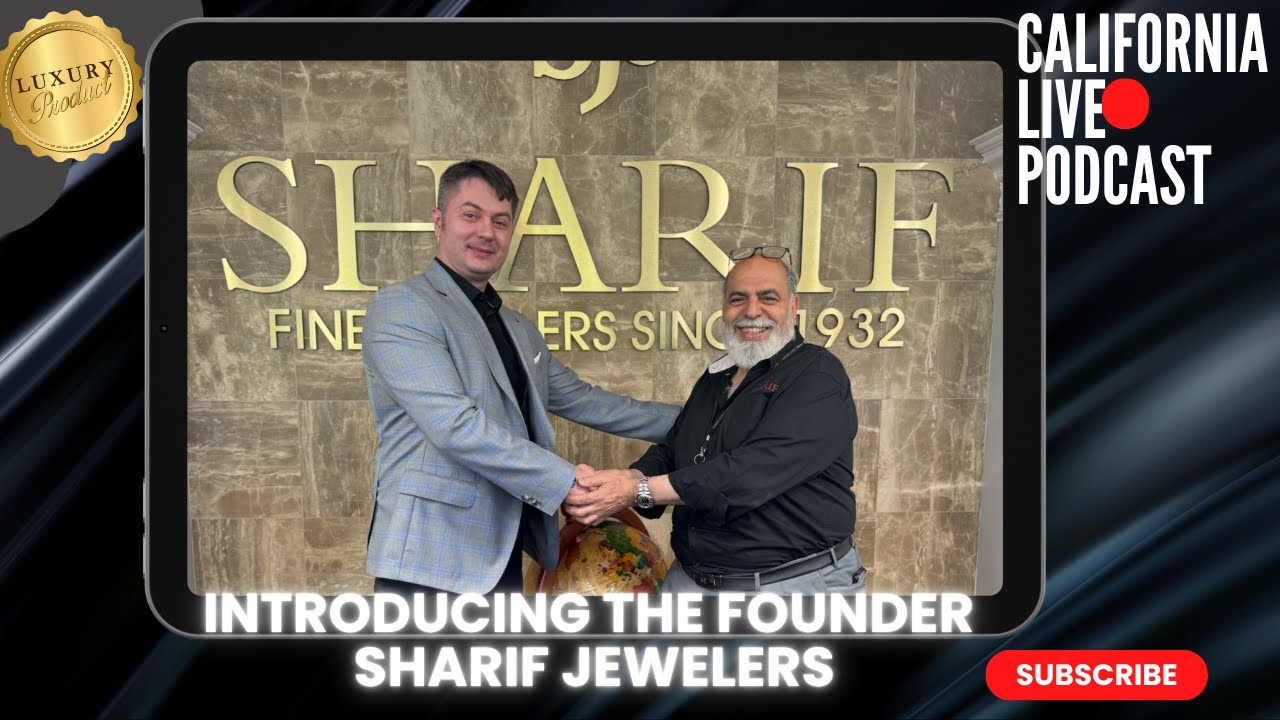
Episode 99: The Jeweler of the People: Mahmud Sharif’s Story of Legacy, Grit, and Community


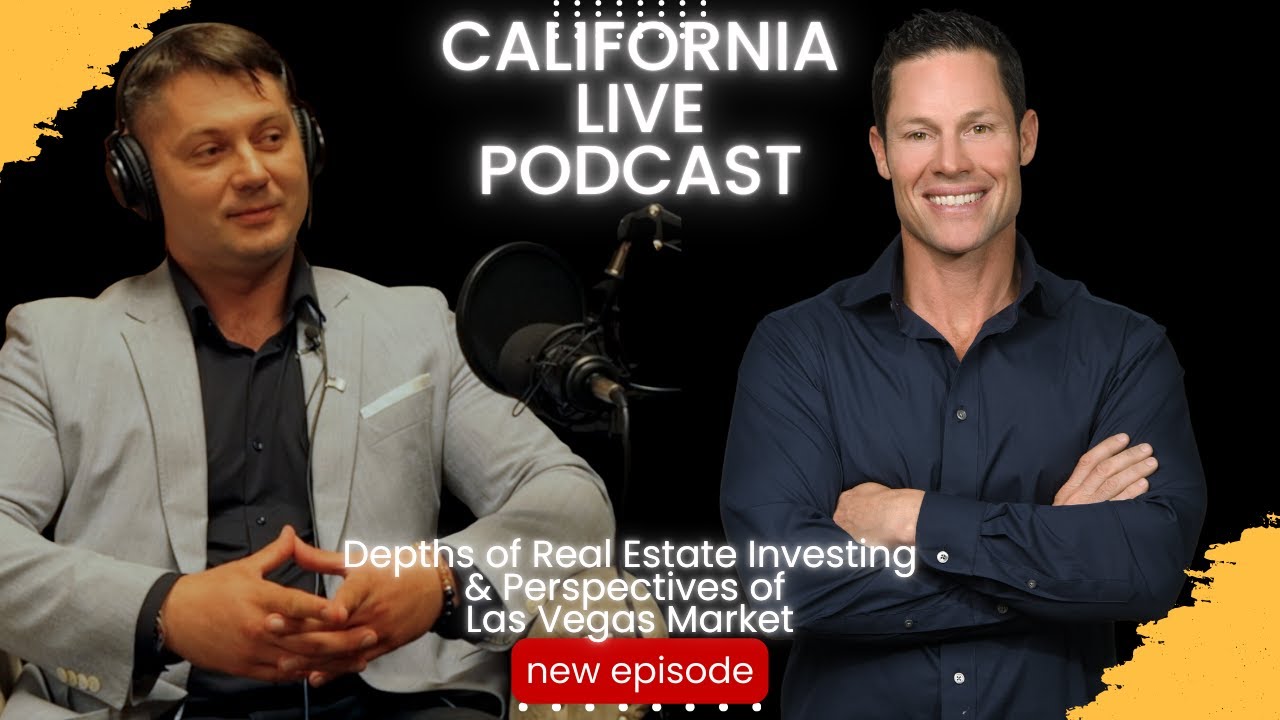
Episode 67 with Denny Seybert: Depths of Real Estate Investing & Perspectives of Las Vegas Market