
Episode 67 with Denny Seybert: Depths of Real Estate Investing & Perspectives of Las Vegas Market
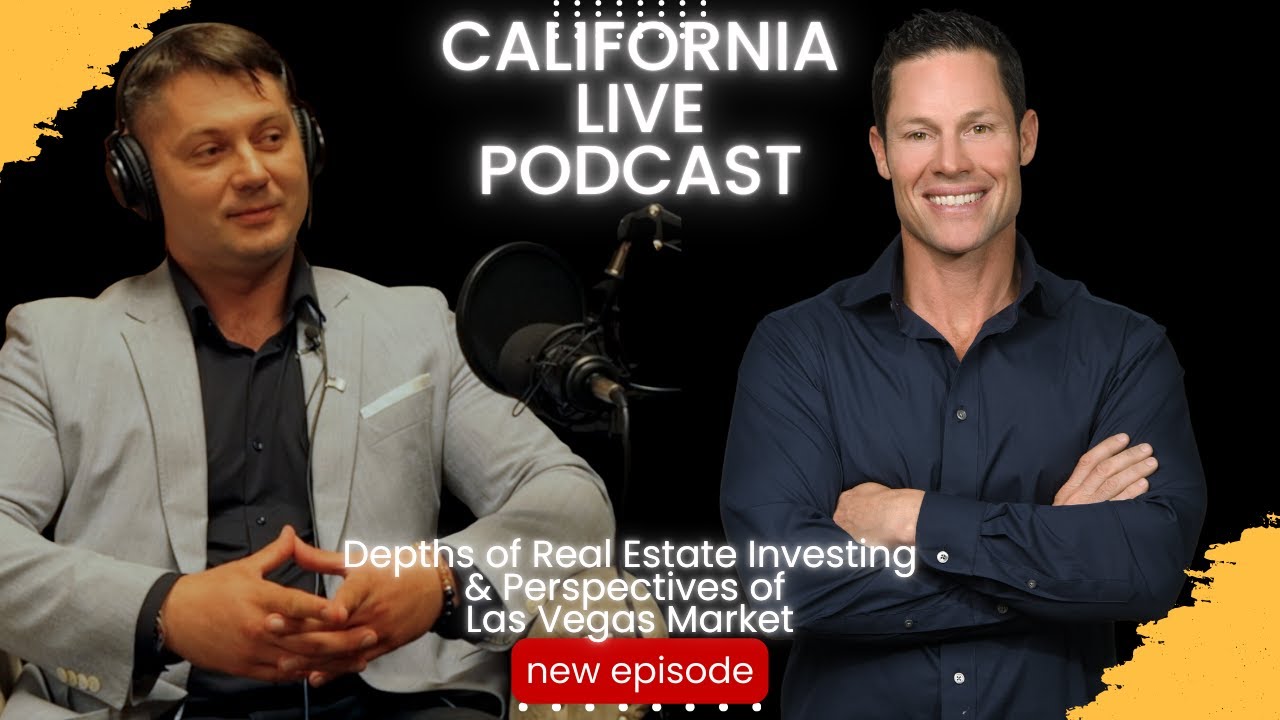
This content was created by Victor Migalchan. This content was uploaded by Victor Migalchan. This is a YouTube interview episode titled "Episode 67 with Denny Seybert: Depths of Real Estate Investing & Perspectives of Las Vegas Market" (created 2024-10-23). It is an English interview-style conversation between a host (SPEAKER A) and guest Denny Seybert. The discussion focuses on Las Vegas real estate investing: market history since 2001, lessons from 2008, cash-flow vs. appreciation strategies, builder incentives and timing, neighborhood comparisons (Summerlin, Green Valley, Southern Highlands, northwest and north Las Vegas), land supply issues, taxes and insurance, school districts, choosing agents, and anecdotes about investing outside Nevada (Puerto Rico, Houston). The episode aims to give practical guidance for different investor profiles and to inform viewers—especially those from California—about opportunities and risks in the Las Vegas market.
Chapters
Welcome back. And we are back on air. Today we'll be not only discovering a new personality, but also we'll be talking about safe ways to invest, and our main topic is real estate. And today I am extremely excited and blessed to be in this episode together with a real professional, not only in sports but also in real estate investing. Mr. Danny Siebert. Mr. Danny, thank you for, thank you for coming to the show, and also thank you for hosting us at your beautiful mansion.
Hey, you're welcome. Thank you for asking me, and thank you for coming over. Looking forward to hanging out with you and discussing some things today about real estate.
Absolutely. Well, I have a few reasons why we are making this episode, and I would really love to make it into a series of episodes, and I will share with you my reasons.
Okay.
And if you like them, You can kick me out. First,
okay,
internet, social media is filled with some sort of influencers and they're promoting real estate. Invest in this, invest in condos, invest in townhouses, invest in commercial, invest in land. Everyone is pushing some sort of agenda.
Okay.
And to me, it gives me a vibe that they mislead people. By having their own agenda, right? I, with my team, we, with our podcast platform, we're trying to help small businesses and individuals to actually play better and safer so everybody in the community is doing well.
Okay.
You've done quite successful in real estate for yourself, and I've got a lot of questions from our Hollywood community. how to stay, how to do better financially. Mm-hmm. You probably have heard of strikes in Hollywood, and that they were struggling to pay the bills, pay the rent. Mm-hmm. And when I heard some of them saying that, hey, I've been in this business for over 10 years and I can't pay my rent, that raised a question in my head, like, what were you doing in the business? You were an employee and you didn't really manage your financials. So before we dive into the whole thing, how did you get involved in real estate? Why? And how did you develop your career? Some highlights.
So I got back in, in real estate back in 2001, and, uh, and 2001 is a much different time than in 2024. I guess the great thing, or the, the thing about being In real estate since '01 is you learn a lot. And, you know, Las Vegas in particular oftentimes is always on a going up, a good market. It's always done really, really well. In fact, it's often quite weird or challenging when the market changes. And a lot of— in the real estate business, as real estate agents go, a lot of them don't make it or can't survive. Heck, a lot of them can't survive even when the market's going up because there's a short supply of inventory. Right. And they don't know how to do anything different to set themselves apart, to stay consistent and make sure that they are successful. This business has a lot of rewards. It has a lot of opportunity for people, especially if they want it. It's out there. But unfortunately, you made up a good point. A lot of people get stuck and go into these classes or paying for these seminars and basically Those people, in my opinion, they're just taking their money. You want to get with people that have boots on the ground and that understand their area, like the Las Vegas market. I've lived here my whole life. I was born and raised here. I've seen this town go from 200,000 to 250,000 people to 2.5 million people, and I've been here the whole time. I only was gone a little bit for college, but other than that, I've been here. So I've watched it blossom and grow, and I've seen what can happen. The thing is, is you want to, you know, when you find a market you're interested in, you want to jump into the market but you want to be smart about it, right? When I did my best investing in Las Vegas, I bought the most real estate in a down, down market, not when the market was up, going up, going up. I bought in the down market. But here's what I started saying, this market for many, many, many years is always going up and up and up, so when do you buy? When is the right time? And the keys to that is, you know, What are interest rates doing? What is the market doing? What does the future look like? What is the job situation? And what's changed Vegas a lot over the last 5 or 7 years is the Golden Knights came here, the NHL hockey team. And then right after that, the Raiders came here. And now Mark Wahlberg is investing, and now they want to bring the movie business over here. And that's bringing different kinds of buyers here. California has been very difficult as far as taxes and— Everything. Everything. And so people are looking for a way out. A lot of people are coming this way. And so I think those things and COVID just constantly made jumps. We're right now in some interesting times because interest rates a little over a year ago, 18 months ago, started going up. And you have some people on the sidelines. We're in an election year right now, so people are waiting to see what's going on there. But all in all, Vegas is taking care of itself, and I believe it'll continue to do that. Right.
You just mentioned we are in Las Vegas right now at your mansion, and the reason why is because most of our viewers are in California. Okay. We're getting viewers from Florida, from New York, from the East Coast as well. I'm glad that our podcast is developing, but one of the main reasons why we're having this podcast today with you in Las Vegas is that we want to open up more information and more opportunities, because as you said, California is not the greatest place to invest in real estate. The taxes are extremely high, the properties are extremely old, you don't know what's gonna break tomorrow. And in one of our conversations, you mentioned to me that when you started, you worked for a developer.
I did.
And you basically were making money out of air when the prices were going up. You also said that now the time is different. What can we still possibly get if we invest in Las Vegas?
What can you get? So you can get a lot more of a home, a lot more square footage for a lot cheaper still than you can in California. But the key is, with the interest rates right now and investor interest rates, so the game has changed quite a bit. You know, you could, not too long ago, an investor could get in at 3% or 5% or 10% down. Now an investor is looking at 25% down minimum. minimum, right? And their interest rate is still going to be probably north of 8% or higher. Right. And that makes it, with what the rents are in Vegas, it almost makes it— it's not worth doing it, right? So typically, 1031 exchanges, if somebody wants to exit a market and they're paying cash or putting at least 50% down, now the numbers start making sense. But the play, in my opinion, still is the appreciation.
Right.
If you can get in the game and play the game where the home is taking care of itself and you're not going in your pocket, you know, like, you know, my mortgage payment is $2,200 and I can only get $1,900 in rent, then I wouldn't touch it. I wouldn't touch the investment. You have to be cash positive. You have to be putting money in your pocket every month and then you can build from that. I also think, depending on who's listening, What's the age of our investor or our buyer? Mm-hmm. You know, I would tell a younger person, you know, mid-20s, late 20s, early 20s, to be a little more aggressive and go ahead and take a little bit more risks. Take the loan, work hard, hopefully you have a decent job. Maybe it's okay to take a little bit of loss for a young person because they're going to start building their wealth or their portfolio. Other investors are just looking for a safe haven where they can plant some money. And it will grow. And I believe Vegas will grow, but once again, you have to buy right. Like, I wouldn't just come in town and say, hey, I want to be in Summerlin. What's the going rate for Summerlin? I'm just going to go buy a house there. I wouldn't recommend that. If I was going to come into Summerlin, I would first look, hey, has there been a death, a divorce, a bankruptcy, a loss of job? And I would look for those particular houses. Typically, those particular houses you can get a discount on. And if you start getting a discount, then if you have some bumps in the road as you're holding that property, it makes it more worthwhile because now you're not losing money right away from your investment. You're losing— you bought at the right time, so you have a little bit of spread, you know, if things don't go your way, instead of if things don't go your way, you automatically start losing money.
Right, right. You mentioned about the cash flow, and all of the influencers are talking about you have to build cash flow. I've researched California. It's almost impossible. You're always in the minus, especially with the difference that you are paying upfront and the bank's estimate. Now, in Las Vegas, in my calculations, you're still— you could be in a bit of a positive, depending obviously on the deal. Mm-hmm. When you have clients working with you, how do you advise them to strategize? which steps to make in order to actually get some positive cash flow.
So right now in our particular market, it's probably gonna be like this for the next probably 3, maybe 6 months. So for years and years and years, if you came to buy a new build, a builder, and I've never understood this, but you can go into a community and say the homes are selling for $500,000, right? And if you can't show a comparable, you're not gonna get an appraisal above $500,000. But you can go to a new builder community further away from the city, because that's where most of the new development is, and a builder can sell the same square footage of the home in that master-planned community in town, and they can sell it for another $100,000 more, right? It's a further drive, it's not as convenient, there's less stores, and they can get an appraisal up to $600,000. Mm-hmm. And because they create their own comps and they kind of control their own market, and it's just amazing to me how they get away with that. But what has happened now is the builders have always been able to push the market up, push the market up, push the market up, and in my opinion, take advantage of buyers, take advantage of buyers. But we're in an interesting market right now where a lot of buyers are sitting on the sideline. Mm-hmm. As I said, maybe the election year, 'cause of high interest rates. So as they sit on the sideline, you know, the builders now are, are, are, uh, offering, uh, 3-1 buydowns where basically They're given a 2.99% interest rate the first year, a 3.99%, and then a 4.99% for life. Mm-hmm. Right? They're also paying for the buyer's closing costs, and if you catch them at the right time, you can get $20,000, $50,000, $60,000 off at the design center or upgrades into the home. Now, if I'm a particular buyer in this particular market, then I'm, I'm, I'm gonna be tracking those builders that are the most desperate, and each builder has a fiscal year, and it's not always ends in December 31st. Some of them end here this fall, and those builders get even more incentivized or give more incentives to the buyers to buy. So I would be looking at those if I'm a 5 to 10-year hold buyer, and I would be looking at those in desirable areas and looking just to beat up the builder, because right now they're kind of allowing it, and these builders do not allow it for very long. As soon as the market switches, as soon as these interest rates go away, And the buyers come back, you're not gonna see a penny from the builder. You're only gonna see them jack the prices, increase the prices. 'Cause at the end of the day, they're big corporations and they're in the business to make money. And that's what they do. So I actually would recommend to a buyer in this market to look for new homes and not so much look for the resales unless you're looking for that divorce situation, unless you're looking for, unfortunately, a death in the family or a loss of job. And that would be the other thing. And how do you say, well, how do I find that? Well, you have to find the right agent that's willing to go look for that and find that. And most agents don't know how to find that. Most agents don't even— wouldn't even bring this up in a conversation. They wouldn't even know it. They would just say, hey, let's just go to, you know, Summerlin or Green Valley and I'll find you a house.
Right. It's great that you brought up the topic of the agents. What characteristics would What would you recommend for the people to look into these agents in order to choose a good one?
So, in my opinion, a good agent has some experience and has kind of been in the trenches, you know, sold some houses, negotiated some deals, sold some new homes, you know, sold some multiplexes. They've got a little experience in everything. They're not just, you know, just a person that's just like, I just got my license, or I've had my license for 4 years and I've sold 3 houses. And you gotta find somebody that's hungry because when I started and I was young, I didn't know everything but I was willing to learn, I was willing to investigate, I was willing to show up, I was willing to follow up, and I was willing to do what I said I was gonna do. I was willing to do it. Right. So those are some characteristics that I would look for in a real estate agent. You know, I've bought homes outside of Las Vegas and I About a year and a half ago, I bought one in Montana. Mm-hmm. And I found a younger gentleman that was hungry, but he was an expert in that particular city and town. Like, he knew everything and he knew people. And in fact, I went to buy the house and it had 3 offers on it. And he said, oh man, the listing agent is my good friend from high school's dad. I would have never got that house. He told me exactly what I had to do to get that house and I got the house. So he's from the area. He knows people in the area. That's what I'm looking for. I'm not looking to come to Vegas and— I'm not trying to be a jerk— and hire the guy that moved here from Miami 2 years ago. Nothing against the guy in Miami, but there's a reason why he's here. Why is he not in Miami, right?
Right.
I'm born and raised in Vegas. I'm gonna be 47 years old. This is my town. You know, I know the agents. I know the brokers. I know the owners of these companies. You know, I've, you know, sweated, tears, hard work. You know, all that stuff is valuable. And that's the only reason why you're sitting here at my house and you gave me a few compliments and I appreciate that. But it all comes from hard work. And it all comes because I started investing at the age of 22, 23. And I just started buying houses and when the market crashed, I doubled, tripled down and bought more and bought more and now all the houses have come You know, I was paying $60,000, $80,000, $90,000 for houses that are now worth, you know, $350,000, $500,000, $600,000. All I did was hold them. That's it. Wow. All I did was have the courage to go buy one and then buy the second one. But I wasn't afraid because it was my hometown. If I was in San Diego right now or San Francisco or Dallas, Texas, I would feel insecure because I don't know all that, you know? And I don't know what's hidden behind those walls. The cool thing about Vegas, these homes are just Like, you know, they're just some lumber and some stucco and paint. You know, there's not a whole lot of expenses. There's really not termites here. I'm not gonna say that we've never had any, but there's really not. There's no major disasters. Right. There's no floods. The insurance here is bearable, more so than, you know, other cities that are by the ocean, right, that have storms. So all that plays in favor. And now that you have people continually moving here, it doesn't You know, it doesn't stop. It just— people just keep coming.
Indeed, it's the truth. And you mentioned about education and getting knowledge about the place that you want to invest in. I've spoken with and I've dealt with quite a few successful engineers or specialists in the Silicon Valley, and just because of some harsh life circumstances, they started looking into building their wealth outside of their paycheck. Where would you advise our viewers to go for knowledge?
Go for knowledge on real estate knowledge? Right. So, you know, a lot of knowledge is learned by going through it, and most people unfortunately, you know, They'd rather just be told and then be a winner, right? I've, over the years, have made some big mistakes. There was a time I used to sell a lot of foreclosed homes and I used to work with the banks. Mm-hmm. And I learned a lot how the banks work, basically how you can buy bank-owned homes, what incentivizes banks. And I decided that, you know what, back about in 2017, Puerto Rico was going through a financial collapse.
Right.
And I spent 75 days in Puerto Rico and I was traveling back and forth because I thought I could buy homes like I did in Las Vegas. And then I realized Puerto Rico, they play by a whole set of different rules. They sell houses at different prices to different people depending on who you are and what language you speak. And it's just totally different than anything I've ever seen before. And then a hurricane came and wiped out most of Puerto Rico. Back in like about '17, '18, right? So that sent me to Houston and I started buying flooded homes from Hurricane Harvey. Mm-hmm. And I bought 13 houses with a couple of friends in one month, 13 houses. And I thought I was going to make a ton of money. But then I realized all the rules on the construction is different down there, the construction pricing is different down there. So what I decided to do was I was gonna take my guys from Vegas to Houston, and I did just that. And one of my guys got into a fight with a worker, and he said to him— this is what I was told, I wasn't there— Right. He said, oh, I'm gonna kill you. He was mad, right? So the police came, and one guy said he said he's gonna kill him, and they put it in writing. So they arrested my foreman, the guy that was managing my project, and they took him to jail, and he sat in jail for 8 months. Wow. So now I had to go find people in Houston and all the prices, if I was willing to pay $50,000 on the rehab, it became $110,000 or if it was $80,000, it became $140,000 and now my budget was all whacked up, all whacked out and basically at the end of the day, I lost money and I went to an area that I didn't know, right? And the only reason why I looked outside of Vegas is because it was so hard to get a house here. You know, it was one of those times where everybody was coming and everybody's bidding up the house and bidding up the house and I got frustrated. So I went and learned the hard way, right? So here, that stuff, that doesn't happen to me here, you know, just because of what I know. But I don't press, you know, I don't press, press, press and, oh, I'm gonna buy everything. You know, not every market is a time to buy. Right. It kind of is in the right situation.
How to choose the right situation?
So how to choose it is understand what situation you're in. So right now, builders are giving the deals. People are stuck on the fact that we have a shortage of inventory. They watch the news, they read the newspaper, so they think, if say their home, they think, you know, it's really worth $500,000, they think it's worth $580,000. And by the way, they'll sell it to you for $580,000. The carpet's nasty, the home needs to be painted, right? It smells in there, the cabinets are 20 years old. Right. And they still want $580,000. And the poor buyer's like, I gotta overpay by $80,000 and then spend another $50,000 or $60,000 to fix it up. You know, I see that a lot and I wouldn't buy those houses. So I would look for deals from the builders in this particular market and then slow and steady. Pick up a home, get comfortable with it, understand how, you know, you're renting it out, cash flow it, and then buy another one. All right, but if you come over and you tell me I have an investor that That's small potatoes for him, you know? He wants to go big. Right. Then at that point in time, how much money are we talking? What's his or her comfort level? And then you just pick the area that they're the most comfortable in and then you aggressively, you know, you go in there.
Right.
At this point in time, I don't know. I mean, most real estate agents would probably slap me right now by saying this, but I don't think today is the time to be unloading a whole bunch of money into real estate. You know, at this particular time. And people will be like, man, he's crazy. What are you doing this podcast for? But that doesn't mean in 3 or 6 or 9 months I wouldn't change my tone, right? Right. But if you're a person that needs a home, you're moving to Vegas, you have a family, it's a great time. You're not gonna try to sell it in, you know, 5 years or less, it's a great time. You'll win, you won't lose. But if you're coming here to force it, I need to make money in 1 to 3 years, Or 1 to 5 years, I couldn't guarantee that you could do that. You know, I just, I just couldn't do that. I mean, we've had a market that's gone like this for so long. It, you know, it's maybe we're gonna bump around for a minute, or maybe we'll have a little correction,
right?
In time it'll work itself out, and in the end, the people are still going to come. So you're banking and betting on the people coming, which, which they are.
They are, definitely. I see myself Vegas growing since 2021 when I became a resident. And how do you see with this expansion of the city— and you mentioned to me that you've known Vegas from 200,000 people to over 2 million— yeah, how is the city with its capacity dealing with so many new residents?
I actually feel the city's doing a really good job about that. You know, for the last year and a half, 2 years, it's felt like every freeway is being torn down and redone or built on, and they're getting prepared for the growth. There's also, one of the issues here is we don't have a lot of our land that you see, you drive into Vegas, you see all this land, and you think people own it or corporations own it. Our government, the BLM, owns it, and it's a very hard and difficult process for the government to release that land, and it typically is auctioned off, and typically the builders will get it. And they don't do it often enough, so we really have kind of a shortage of land here in Las Vegas. And that's another issue why prices will continue to go up in time.
Right. You've mentioned that you got a little frustrated with the situation in the market and you went to Texas and you went to Puerto Rico to check markets over there. Why didn't you decide to build
So I've never built a home from scratch, and I oftentimes, you know, beat myself up on why didn't I do that. And in fact, that's something that me and my business partner and broker that I've done a lot of business with, you know, him and I talk about, is that that's most likely our next step. Len, you have to Land is expensive too. So one of the issues, and I understand this, is a piece of land that I could have bought a half acre or even an acre for $100,000 to $250,000, you know, 10, 15 years ago, you know, once again, people know there's a shortage of land, so now they want $350,000 to $600,000. And now the price of construction has gone up so much. Yeah. So it would be my first time doing it. I consider myself somewhat sharp, but I'm probably gonna make some mistakes, right? Mm-hmm. Because it's my first time building the home. And if I'm gonna overpay for the land and then I'm gonna do the construction, you know, maybe, maybe I would break even, lose some money, or make, make a little bit of money. That's the stuff when I went to Houston and got beat up a little bit, it makes me a little more cautious. Mm-hmm. You know, for, for many, many years, whatever I touched, it just went up. I just won. A lot of my friends, they laugh at me and give me a hard time because they're like, wow, I've taken some licks over the last 5 to 7 years. And I think that's why you have me here talking because you're trying to help your friends and your viewers not take these losses. And that helps a good real estate agent too. If somebody looks at you and tells you every story that he's always been a winner and he won, and he never failed and he never lost money, man, he's full of shit. And that may be somebody you may not want to do business with. I'm just being straight with you, you know?
Absolutely. Well, that's why I love having conversations with you, because you are straightforward. You are not going around the corner.
I don't have a hidden agenda.
Yeah, exactly. You've mentioned also about the market growth and corrections which happen. Sometimes, uh, in our private conversation, you also shared with me how you overcame crisis in 2008. Mm-hmm. Now a lot of people are talking and having fears that the same thing could happen again, maybe bigger, maybe smaller. What is your perspective? And if something like that you believe could happen, there is a possibility, what are the chances What are your predictions for the Las Vegas market?
I don't think we'll ever see what we saw back in '07, '08 ever again or in our lifetime. Part of the reason why that won't happen is the banks and everybody, they've gotten smarter. And the second thing, probably the biggest thing, is a lot of hedge funds have come in and bought a lot of houses. And then you have that land shortage thing I was telling you about where the government, you know, it's owned by the BLM. And it's not, you know, being released quick enough. So you have a lot of challenges. So I think, you know, you may see some little bumps with the real estate market. It may go down 5% or 10%, and then I think when the interest rates get corrected, I think it shoots up like crazy. You know, it's gonna get that 10% back and probably another 10%. Yeah. I just can't tell you because, you know, I'm not, I'm not the— I'm not with the Fed and the chairman. I don't dictate what the interest rates are, and I'm not behind all that. I just have to accept what they put out there and work with it, right? So, you know, I think, you know, with that, I think I answered your question, right? I think I did. I think my mind's just racing to try to answer it too.
Yeah. Well, the way I read about the crisis in 2007, 2008, that Las Vegas got beaten the most out of other places in, in the US. And now I'm checking different apps and I do see the shortage of supply in Las Vegas and around Las Vegas. However, for example, in Florida they have too many options and I see a lot of price cuts.
Tickets are killed in Florida, right? I was just talking to a broker here in town last week about this. Homes for $2 million going to $1.5 million. Yeah, you know, homes $1.5 million down to $1.1 million. A lot, a lot. He was explaining to me a lot of the issues with that is the insurance. Those became so much, and you know, they're so vulnerable down there in the Americas. Insurance, HOAs.
HOAs, yeah. A lot of, a lot of the same thing is in taxes. A lot of price cuts, and I would say quite a few states, maybe with a few exceptions, they have too many options of the inventory, and we see a lot of price Price cuts versus Las Vegas is in blue. It's the low.
Well, my understanding also in Florida is that there was so much land and they just started building like crazy on all this land, right? And, and, and you can't do that here in Vegas. So, so, so it's, it's restricted. It's not just build, build, build whatever you want all the time. So I think that's a reason. And then the hedge funds, as I said a moment ago, you know, they own, they own so much, they took a lot of homes off the market. And then in that crash in 2008, the builders were building, I think in that year, '06, they built over 50,000 new homes. And then after the crash, it went down to like 7,000 or 8,000, 10,000 homes. So it dropped so much. And then the builders kind of like were trying to figure out how to build and when to build again and when to be aggressive again. And because they kind of slacked off for so many years, then all of a sudden, this demand came like crazy. And so really my understanding is, is we have a— we have a— the builders can continue to build, you know, 20,000, 30,000 homes and it's still— we need a lot of time to absorb those homes.
Right. In your knowledge of Las Vegas market and maybe the surrounding area, which types of properties are the most popular here? Single families, duplexes, multifamily?
So, in my opinion, multiplexes in Vegas, that's a tough gig. I've been to other places of the country where I see a duplex, a fourplex, a sixplex, and I'm like, man, this is beautiful. The surrounding area is beautiful. You've got shopping stores. The freeway's not too far away. You have beautiful landscaping. Here, I can take you to where a lot of those fourplexes are, and you may ask me, let's just head back the other way. They're older. Mm-hmm. They're just not very desirable. They're just not. So people here typically like the new home community that the builders offer, and people then do like— some people like the custom homes, right, where people build those as well on usually a little bit bigger lots. So yeah.
Las Vegas consists of a few different areas. For example, Southern Highlands, Henderson, Summerlin.
Master Plan communities,
yeah. Right. Which of those, in your experience, are growing faster and are— they make more sense to invest in?
So Summerlin is probably the most, or one of the most expensive and most desirable. It's also huge, and it makes up a lot of the west and northwest part of the valley, mostly the west. And it's well done. It's beautiful. They've done a great job with that. So Summerlin is very desirable. And then if you come into the south, there's Green Valley Ranch, Anthem Seven Hills area, and MacDonald Ranch is very desirable. But the issue is all that has been built out, so you have to go further, further south. And when you go further south, you're further away from the freeway, from the airport, from the casinos, and from a lot of the action. So you find yourself— Isolated. Driving up and down hills to, you know, to—
Well, it's still 20 minutes versus 2 hours in Los Angeles.
I know. When you live here and you do make that drive, you're like, this is miserable. When you come from California, people are like, man, this is nothing. Yeah, I hear that all the time.
Right. Which areas do you believe will continue developing relatively more aggressive? For example, Summerlin?
The Northwest. The Northwest is going to continue to be aggressive. And north Las Vegas also, there's some land there and they'll continue to go out into the north. So, you know, I think the city is going to continue just going out. I don't think as much you're going to see going south or towards California.
Why not?
I don't think so because that land is not— you can't— the builders can't build on it. They don't have enough of it. It's not released. You drive by thousands and thousands or millions of acres coming into Vegas and you think it's all You know, to be built on, and it's not. It's all held by the government, so there's nothing you can do. So there's a lot of available land in the northwest. Yeah. And the northwest, you know, it's just a further drive, but they're doing a good job with the communities and putting the parks in and building the schools over there. But what's a little bit inconvenient, and some people, you know, if they don't mind, is sometimes the stores and the shopping's not there. So you may find yourself buying a home and then you have to travel to get to the grocery store or whatnot. But it all comes, you know, within a few years. Eventually the builders get it all built out.
You've mentioned the infrastructure and especially schools, school districts. I know in California it's a big thing. Everybody wants to get a place in a good school district so their kids could go to a good school, or even just to play with the price because it will go up in price. How is the situation with School districts. I've learned that in Nevada, in Las Vegas, schools are maybe on the 49th place or something like that in the US. How is the situation with education?
Yeah, so oftentimes that's another reason why when people come here, they look in the Summerlin area. Summerlin has a lot of good schools, and also in that Green Valley, Anthem, Seven Hills area. They're highly desirable, sought-after communities. And in my opinion, those newer areas where it's mostly desert and the builders are, they'll get there. They'll get there and they'll get some good scores. But Vegas is a relatively— it's a big place but a small place. And there's a lot of older areas. They don't score as well, you know. I don't really know how to say it. I mean, I can drive you over there and we can— I can show you in one morning and you can figure it all out with your own eyes and I don't have to say anything, you know, if that helps answer your question, you know.
Definitely. Except for Summerlin, which is quite known that it's a sort of luxury area, so I assume the schools would be better and maybe they have private schools. What about Spring Valley? Southern Highlands, Enterprise.
Yeah, they also have a lot of private schools within that area, and, and, uh, they're very desirable. Those master-planned communities, typically with the schools, they're all dialed in, and, and, uh, people go after them. But in those master-planned communities, you're gonna, you're gonna pay, you're gonna pay more, you know, and that, that's part of it. They bring the schools, the parks, the stores, They make it very convenient and you pay for it. But to be honest, when California people come over and see the prices, they typically don't care because they're like, oh, this is nothing. We're used to paying 3 times this. So it's not, it's not really a big deal. So then they'll, if they have kids and schools are important to them, they'll zone in on that. But I gotta tell you, in the 24 years I've had my real estate license, once you spend time with people and you go into those communities, Once they pick a community, you know, then they just settle in on the school. Very, very, very few times it was adamant, it had to be that school, it had to be that school, because sometimes when you have to be that school, you kind of pigeonhole yourself. Mm-hmm. And then, and then you pigeonhole, maybe you have to spend a lot more for a home, then you realize it's a lot less square footage, and sometimes it's the bedroom count's not there, you have no backyard. So then people catch on real quick, and then they're like, okay, we'll go over to that other master-planned community. I like that better, and the schools will be just fine.
Right. In many cities in California, I don't know about all of them, but I know quite a few cities, they are now pushing plans to have homeowners build ADUs, JADU or something like that, and then even divide that lot and possibly sell one of them. Increasing the amount of homes like this. How is the situation with this in Vegas?
I haven't heard of it. I haven't seen it. Yeah, so I think that's, that's, that's in very populated areas, right, where they're trying to add on some homes on lots that were zoned a certain way for many, many years. Yeah, it may happen and exist out there, but I personally haven't seen it. We haven't gotten there yet.
Another pains which, which have in California, except for taxes, high taxes on real estate, which are just— again, they are adding more and more and more. Insurance companies are leaving California, and those which are still there, their prices are skyrocketing. Home warranty, all these services are going up. How is the situation here in Las Vegas with the taxes, with all of these
So fortunately, our tax situation isn't bad at all. You pay just under 1%. It's like 0.92%. And when you buy the home, you know, it goes off the value of the home the day you bought it. Mm-hmm. So like, say for example, when I was buying my homes back during the crash and after the crash, they came up with some law back then that only allows them— they limited it. They limited it. So every year, the home value can only go up 3%. So if I bought that home for $80,000, every year it only goes up by 3%, even if the homes are selling for $400,000 or $500,000. Mm-hmm. So for me, it's— and investors that bought back then— huge tax savings. But at the end of the day, Nevada's not bad for that. You know, it's under 1%. It's a fair number. Now, the insurance, I've noticed on my rentals and my homeowners and stuff, Everything has gone up. Everything has. And I would, I would say a good 20% on average it's gone up. And, and it doesn't make it where the numbers don't make sense, but, but it does— it, it is a difference, you know. You, you notice that,
right? What about home warranties and all the other add-ons?
Yeah, every— ever since, since the COVID happened and we got through that, everything has got the bump, you know. Whether it should have gotten a bump or not, everybody just kind of said, hey, I can raise my prices even if I'm the bug spray guy or I'm the landscaper. Everybody raised their prices. So it's just par for the course and you have to just understand that that happened and it's there. But it's nothing where it should kill your deal or make you, you know, not be able to be a winner or make money off your investment.
Right. Well, Mr. Denny, thank you so much for your time today. I'm hoping that we'll be able to record many more episodes and bring more investments into the city. I enjoy always having conversations with you. You're very knowledgeable, you're very professional at what you do. You've mentioned that back then when you just started, you were hungry for results. I hope you still are.
Yeah.
And everything about you tells, at least tells me, that you are going good at what you do because of your shape. You are very disciplined, and these are very important characteristics for me when I'm looking for someone to work with, especially when it's—
well, thank you—
concerning my money, my investment.
I appreciate that.
Well, I appreciate you, your hospitality, your time. As a closing remark for today, maybe adding like a little cliffhanger, your message to the viewers and to hopefully your future potential clients?
You know, a message that I would leave you with is, you know, investing is, it can be challenging, it can be frustrating, and you gotta do your due diligence, and you gotta be willing to sometimes get out of your comfort box. So sometimes you may have to make, you know, you may have to fly into town and do some interviews, spend some time with some people, and just be cautious. You know, right now, every situation is different, right? Everything's different. So when I mean that, you know, it depends, like investors, how much money they're investing, why they're buying, why they may want to buy, what their goals are. And those are things they have to understand and somebody like myself would have to understand to best help them. But take the time and I find when I put the time into something, that's when I do my best. When I make decisions and I jump at things, And I assume things are going to be a certain way, a lot of times that's when I get stung. So that's what I would like to leave you guys with, is don't be lazy and don't be shy and take the time to get out there and interview people. And if you'd like to call me and pick my brain, I'd be happy to help at any time.
Well, we'll definitely leave your contact information, which you would provide us, under this interview. Mr. Denny, thank you so much for your time again, again for your hospitality. You're welcome. So please welcome to our next episodes. Let's share more. Let's open more opportunities to our viewers and bring more investment to your business.
Let's do that. All right. Thank you so much.
More from Victor


Episode 117: Options Trading, Risk Management & Financial Discipline with Jeff McAllister


Episode 99: The Jeweler of the People: Mahmud Sharif’s Story of Legacy, Grit, and Community


Episode 95: Excellence, Innovation & Impact with King Lei, Founder of Punch King World

