
Episode 86 with Dr Chahayed: "Taboo Talk: Risks, Myths & Realities Uncovered"

This content was created by Victor Migalchan. This content was uploaded by Victor Migalchan. This is a YouTube podcast episode titled "Episode 86 with Dr Chahayed: 'Taboo Talk: Risks, Myths & Realities Uncovered'" (published/edited 2025-03-11). It is an interview-style conversation between the host (labeled SPEAKER A) and Dr. C (Dr. Chahayed). The discussion is educational and covers medical and lifestyle topics: abortion (legal context and trimester-specific physical and psychological risks, and potential spine-related effects), pregnancy-related back/spine issues and the impact of breast size, nutrition (breakfast, intermittent fasting, egg recommendations, processed meats), coffee (timing, organic preference, effects on nutrient absorption), supplements (probiotics, pancreatic enzymes, magnesium glycinate, vitamin D3, zinc, shilajit, medicinal mushrooms), and exercise timing (morning weight training, cardio post-workout). Metadata: YouTube content, Episode 86, created/last edited 2025-03-11.
Chapters
Welcome back to California Life Podcast, and we are back with Dr. C at MLC headquarters. Dr. C, thank you for coming to the show and hosting us again.
Thank you, I appreciate your time and always look forward to doing some nice work with you.
Likewise, likewise. And as I mentioned to you, today I have a few topics and I would like to discuss and The first one might seem a little bit controversial, might seem a little bit heated up because of the media, elections, politics. Thank God the elections are over and everything is calming down.
True.
And one of the big agendas in the media space while the elections were, you know, in their phase was abortion.
Yes.
Now, the goal of our episode today is not an agenda, but more of educational thing. I would like to learn myself and hopefully help our viewers who needs that. I would like to learn from a medical professional. So, Dr. C, question 1 would be, what was the dialogue in the conflict about this question of abortion? Was it the timing? Was it the actual just the fact of having it or not having it. What is that in your perspective and understanding?
Very good question. So from my understanding, it was the debate or the conflict initially is about having and not having it. And then one of the parties was modifying, actually Mr. Trump modified his outlook on abortion. And he said, you know, I mean, I allow it as long as there's within the first gestation period, which is first 3 months or 4 months even. And if there's a valid reason for it, so like there's a rape or there's incest or a crime involved. So I think eventually the issue was ironed out. So now it's just a federal law that's by the Supreme Court that The law was issued that abortion is not legal, except of course there's a caveat which includes what I mentioned earlier.
Right. Now, what I've learned about some other aspects of our lives, for example, different types of medications which were advertised as good, but they tend to have some really bad side effects.
Yes.
What side effects could ladies face if they decide to go through this procedure? I mean, we don't discuss that it's their right or not right, but what do they face?
Okay, another good question. I mean, there's no side effects per se for abortion, like, except there's a psychological— there's a little bit of physical, but more psychological component. In terms of physical component, the very first gestation period, the first trimester, first 3 months, there's a very, very minimal side effect unless there's the age which plays a part. For instance, the lady is over 40 years of age, so some complication will be in place. For instance, there will be risk of hemorrhage. Risk of psychological impact like depression. But for the first gestational period, usually there isn't any. So it's a perfectly safe thing.
Right. What about the second trimester?
Second trimester gets a little bit more different. Like I said, they're more psychological than physical. So Depression. There's other psychological issues that, I mean, I can get into it, but depression is the main one. Physically, the risk of infection, because of course there's more complication that goes on with the second trimester or second gestational period. Risk of infection, risk of having a cervical injury or damage to the cervix, that is. And of course, the psychological component gets more drastic, of course, with that.
Right. And the longer we go into it—
Yeah, to the third trimester is usually a bit more risky for the patient, even if they're young of age, between the age of 15 to to 25, which is usually safe to have abortion. However, the third trimester usually becomes very high risk. There's a very high risk of bleeding, infection, cervical trauma, cervical injury, and of course there's a psychological component of depression and the guilt and whatnot.
Right. I've learned online, again, I don't know which articles we can or cannot or should not believe, But as I mentioned to you behind the scenes, behind the camera, let's say we're holding in our hands a watermelon of five pounds. True. The actual pressure on the spine would be a lot more than that.
Very true.
Now, does that correlate somehow with the pregnancy?
I mean, like pregnancy in general. I mean, it adds extra weight on the body, extra weight on the joints. Taking into consideration for that the swelling that the the the the woman. gets from pregnancy. So it'd be swelling in the joints, swelling even around the spine, swelling around the lungs, and of course the belly. So that extra swelling, extra weight, will add a little bit of pressure on the spine, just like somebody who is overweight, even a male, would have pressure on the spine.
Right.
Another example is a lady who has very large-sized breasts. This would have adverse effect on her middle upper back. You would have a back pain. So many of patients of mine, I would definitely have them undergo breast augmentation to reduce the size to alleviate the pressure on the spine, alleviate the pain.
Or maybe go to the gym and strengthen their back.
Well, that's— of course, there's definitely the supplementation. The strength in the back also plays a part. I mean, definitely, it's a person who is in really good shape, exercises all the time, would have less side effect in terms of tension, some nerve pinched nerves and whatnot. You know, so I agree.
Right, because I mean, if you have nice size, you wouldn't want to lose it.
I mean, yes, but you'll be surprised. You know, like when we look at a woman with a large breast, we would say, "Hey, you know, congratulations." No, I'm not happy. Like, what do you mean? Like, it's a lot of pressure on my back. We as males, we don't understand that. Yeah. But for a woman, there's so much pressure on the spine. And for instance, the shoulders would be rounded because to accommodate the weight and constantly stretching and stressing the spinal discs and the soft tissue surrounding the spine. So, you take off 8 to 10 pounds. I mean, that's 8 to 10 pounds of like holding like this and walking around with it all day, you know. So it makes a big difference.
That's very true. I haven't thought of that that way, but it's a great insight. Dr. C, if a lady— again, back to the pregnancy question or set of questions— if the lady decides to go through this procedure for whatever reasons she decides, do we or do we not expect any impact on the spine, spinal health?
Like I said, it's very minimal and it's very rare to have any adverse effect or side effect on the spine from abortion. I would say maybe 200,000 women would have some adverse effect since they have a preexisting condition in the spine. So going through that procedure and Will affect the structure slightly, but in the majority, there's no side effect.
Right. Well, that's very important to know because at least some ladies who need or they feel like they want to go through that, they could listen to your advice and at least be sure that they will be safe.
Yes. And I always say, you know, like always Consult with a medical professional, right? So they explain everything. You know, like, I have patients before, they think of— they come in and I explain the same thing to them. So anybody's out there thinking about getting an abortion, consult with a medical professional to know the ins and outs, to know the pros and cons. But from my own knowledge, on the spine and the joint, there's very, very minimal of any side effect.
But it also depends on the month. Yeah, exactly.
The gestational period, also the of the patient. Right. And if the patient has a preexisting condition on the spine.
Right.
For instance, like somebody who has a, like a lady who has a blown up disc in the lower back and she gets pregnant, all that weight will add a tremendous amount of pressure on the structure there of that disc and the nerve. So there'll be a lot of pain. So I do see a lot of patients who are pregnant with disc problems and I I take care of them all the way through our pregnancies to make their delivery easier and no complications, and it works. So,
right.
So yeah, I see them running.
You mentioned to have a medical professional consult them. Why I wanted to record with you because I know that you would give truthful information. We have a very unique and not necessarily the healthiest environment when everyone sells something, sells a service.
That's true.
And I know you're not running.
No, no.
At birth clinics.
And
you're always helping very holistically in multiple ways. Another question which I— another block of questions which I wanted to discuss with you today. Again, marketing and how it impacts people's lives. I'm very deep into research and marketing, and I've learned that quite a few decades ago breakfast was marketed to the people in order to help companies sell Bacon or eggs or milk.
Or cereals, exactly.
And there is this debate in between people, do I have breakfast, do I not have breakfast? Some people advocate for breakfast as the main meal of the day comparing to you have to fill in the fuel and then your car goes. Some people advocate and they say that they feel a lot better if they have their meal later, like brunch or lunchtime instead of having— what is the actual fact behind breakfast and meals per day?
Great question. And, in my opinion, so there's a very convoluted topic, a little bit complicated because first of all, I don't believe in cereals because the companies out there that try to sell and push cereal, to, you know, say this is the healthiest, this is multigrain. Most of it is coloring, and there's a lot of added sugar, and I don't recommend. So, like, again, there's so many different facets of having breakfast, whether it's good or bad. Personally, I do. I do have breakfast, but my breakfast— so what the word breakfast is, breaking the fast. So you're eating at night, maybe you Late dinner at 10 p.m. So you wait till the next morning to break that fast. So it's a key how you break that fast. If you just eat sugary cereal and donuts and bagel, that's junk. Is no good. The body started the day with that. So you're gonna feel queasy, maybe lethargic. You have that spike of sugar, then then the drop. So it's not advisable. So. In my opinion, it has to be high-protein breakfast and some good fat and hardly any carbohydrates. The only carbohydrate I recommend, maybe slices of fruits. You can have cottage cheese with avocado, or which is even more beneficial is eggs, whole eggs. So, the whole eggs, the benefit is in the yolk more than the albumin, which is the egg white. Okay. The egg white is all protein, but the albumin— I'm sorry, the egg yolk is where all the vitamins and the minerals and the amazing enzymes. So, I recommend 3 whole eggs in the morning. If you can do 2, fine, but 3 or 4 is even better. It depends on your goal. If you're a bodybuilder, you can have 10 like me. Yeah. 10 whole eggs. And, you don't have to worry about cholesterol because that's a myth. So, egg yolk is actually extremely healthy for you. It's good for the brain. It's a brain food.
Yeah. Also for testosterone.
For testosterone. Excellent. I was going to say that. And so, the fat. So, you have to balance out the good protein with fats in the morning. For me, I do olive oil, like 2 tablespoons of olive oil with my eggs or half an avocado with maybe 4 eggs. I do do a lot of carbs like fruits, but I take that back. I do low glycemic fruits like blueberry, which is amazing antioxidant, as you know. Okay. And, that's got to be organic because unfortunately, those fruits are sprayed and it's hard to get the pesticide out of there. So, organic, even though you wash it really good, it's much better for you. So, the breakfast, again, It's an important meal in my opinion, unless you're doing what's called intermittent fasting. You know, if you want to lose weight, then you don't break that fast. You keep fasting from 10 PM or 9 PM until 12 PM the next day. That's when you start your first meal. Mm-hmm. So what happens is in that time, your body is burning fat, correct? And you don't want to interrupt that cycle. So, you keep burning fat. But, if you eat carbs, the body say, oh, wait, let's leave the fat alone. We're gonna burn whatever's coming in, like sugary stuff, you know, donut, cereal, orange juice, all that is not very good. So, if you want— pardon me. If you wanna do the intermittent fasting, you can still do that, but eat eggs and fats, for instance, or—
Right.
With no carbs. And then, 12 o'clock, you start your Any meal that you like, you know, as long as it's healthy, of course.
Right. So, it also depends on your, let's say, lifestyle if you are in athletic field. It's not about breakfast just as a meal, it's just you're following your own plan to achieve a goal.
Absolutely. That's why I said it's convoluted. It's not like a set something whether you have it or you don't. There's more to it than that. Correct.
Would you say it would be correct to describe this whole thing about meals as you have to have a certain goal, then you can talk about the meals. It's not just breakfast for everybody.
True.
If your goal is to, let's say, build your muscle, then you have your meals and that's just the first meal of the day.
True.
Just tied to your plan.
True.
If you are just, let's say, a blue-collar worker, again, it's just fuel to fuel your body.
Right.
It's more of that way. It's very personal. It's not general for everybody to have Eggs and bacon, which I don't think it's the best choice, but— I
don't advise bacon. I don't want to interrupt you, but I want to mention that a lot of people say, yeah, I'm on a keto diet, for instance, no carbohydrate, but eat bacon, eat eggs. Wait, eggs are good, but bacon, sausage, very bad, very bad meat because all processed. The processed meat is what's going to make you gain the weight even though you're trying to lose the weight.
Yeah.
Because all the additives, the nitrate, everything that's gonna alter your protein synthesis and protein production and absorption in your body. So I don't advise any processed meat whatsoever, any bacon, sausage, hams. A lot of hams you could have, they're also processed.
Right.
So anything natural, if you wanna do it. Sometimes I mix my protein in the morning with portion eggs and chicken, eggs and steak, lean steak. Yeah, but no bacon or anything of that sort. Right.
No, that's perfect combination of the information. The next topic would be another very highly marketed product is coffee.
Yes.
A lot of people, they drink a lot of coffee. My question would be to them about the quality. Different brands represent different quality.
Yes.
But the question which I wanted to address to you, I read that coffee is not just making us urinate more often.
Right.
It also flushes multiple elements from our body. That's true. Magnesium and—
Magnesium and all this stuff. Yes.
How do we— and also on the other end, if we take these vitamins, They're not absorbing really well when you drink coffee.
Very true.
So, for those who like coffee like myself, I try to have maybe maximum 2 cups a day, usually 1, but why I'm drinking it? Because it stops my hunger. I always want to eat.
Yeah.
So, for people like myself and for those who love coffee, what can—
I love coffee too.
What can we do to If not—
Take it the right way.
Yeah, cancel it or at least to have these elements in the body like calcium.
Excellent question. I'm going to start by saying coffee, it's essential natural drug that the body needs. Actually, it's good for the brain, good for the heart. However, organic coffee only. The reason why, because coffee is the most sprayed by pesticide of any grain or product out there. More than fruits, you know, they spray it because there's so many bugs get in there and kill the crops. So, they spray tons of pesticide. So, always ask for organic coffee, then you're safe. So, the way to drink coffee in my opinion, because coffee is very acidic as you know. So, you wake up in the morning, a lot of people wake up in the morning and said, I ask them, what do you— first thing, I make a cup of coffee and I drink it. Wrong. Yeah. The reason why, it's extremely acidic. You can— like pouring acid into your gut, and the gut will say, oh my God, what's going on? You know, and all the gastric juices, everything will start being messed up. So never drink coffee on empty stomach. The first thing you need to drink is water in the morning. Warm water, a little bit of warm water with lemon is amazing. It's a great cleanser and it prepares your gut for whatever's coming in food. Okay. So, you drink even, I mean, maybe room temperature water, maybe 6 to 8 ounces is amazing. Then, you prepare your breakfast and last thing would be coffee. So, the coffee should be an hour to an hour and a half after you drink the water.
Right.
This way, your body is prepared for the coffee, for the acidity. But, the coffee has amazing benefits for the brain, for the heart, like I said. So, again, it's organic and you can have 2 cups a day is plenty. More than that, it affects your vasculature because it's a vasodilator. It makes your blood vessels constrict, increases your blood pressure. But, besides that, it's very good. It's also good for digestion. So, as you know, when you drink coffee, 20 minutes later, you want to go to the bathroom. Yeah. So, it really affects your gut in many ways. But, I think more 2, 3 cups maximum per day, I think, is ideal. And, preferably black coffee. So, you don't You don't alter the oils in the coffee. That's extremely beneficial. If you want to do maybe milk, milk is okay, but the creamers are very bad for you. All the creamers are all additives, all toxic in my opinion. So milk, or sometimes there's called the MCT oil, MCT coffee creamer. It's made from MCT oil, derivative of coconut oil, coconut butter. It's extremely healthy for you. So, they sell it in the packets and you add it as a creamer. That's very healthy. So, you're getting 2-in-1 benefit.
Right. How do we help our bodies with this flushing calcium and other elements?
So, yeah, you're right. When you drink your coffee, you don't want to take your vitamins with the coffee. The reason why, because of the acidity of the coffee, it alters the absorption of certain vitamins. like magnesium, copper, and many of those. So, taking maybe another topic next time, we'll talk about when to take certain vitamins separate or together. Because they take certain 2 vitamins, let's say copper and iron, they interact in a negative way. And so, you don't absorb either one. You just go down the tube, down the drain. Mm-hmm. So, when you drink coffee, you wait half an hour, then you can take the vitamins, okay? Or half an hour or an hour before, it's fine. So, but that's okay. Let the coffee do its thing by itself. But as long as there's food or especially water before that, before in your stomach.
Right. So then, they will be absorbed properly.
They
will be absorbed properly. Back to nutrition, back to the question when people are trying to Get rid of the the weight that they don't need.
Yes.
Last time we touched to talk this topic a little bit. Which basic supplements would you recommend them to add to their normal food, which is a necessity
for weight loss? That is. Yeah. Okay. Yeah. Well, weight loss is again it's a convoluted product. Process and topic. That's what I tried to say is, so what supplements to take? I mean, 2 major supplements that the body needs, the gut. As you know, the gut is the center of health in your body. If the gut is healthy, the brain is healthy, the whole joints, everything is healthy. So whatever you take in is here that affects your whole system. And that's an actual truth. So, probiotic is very important. So, those are the healthy bacteria that your gut already has, but maybe smaller amounts because you're taking so much stuff. So, they fight, but you need that supplement. So, 60 billion per day is good. Like, one capsule, 60 billion. That's amazing.
Right.
And pancreatic enzymes. So, enzymes that help with digestion and absorption. So, again, those are capsules. You take one 10 minutes before your meal. So, 3 meals a day, one before each meal. Those are the most essential that would help with digestion absorption. Of course, there's other stuff that, you know, it's really important, like magnesium we're talking about. Magnesium is the most important mineral the body needs because it's involved in every single function of every cell in the body. So, if some people say, I don't take anything, anybody, so take magnesium then. Yeah. Magnesium, 1,000 milligrams of magnesium glycinate is the most mostly absorbed and the most beneficial. There's like 10 other type of magnesium, but in my opinion, magnesium glycinate is the best. So, in my opinion, those are really, really essential. Of course, there's also, there's liver and kidney supplements that you'll take along. Those you take with your vitamins. They will help with your digestion and everything else in the body. But, in terms of take with food, the probiotic and the pancreatic enzymes.
Another few popular in the media world, and again, it's a lot of marketing. Another supplements that I've heard of were Shilajit,
a
few other, I'm I wouldn't remember zinc.
Yes.
What is your?
Yeah, I agree. I mean, they're great. Great product. You know, zinc is very essential for the immune system. Also for the extremity, for your nails, for your hair is very crucial. Shilajit and other mushroom products, the wild mushroom products, that's also good for muscle growth, for energy. There's so many. You know, like there's also lion's mane. Lion's mane is a mushroom, they extract from that mushroom product that's excellent for memory. So, there's so many— that's another topic because there's so many mushrooms I know about that we take this for that. But again, you'll be taking 50 capsules, tablets a day. It's okay. But, as long as you pick the most essential, that's— I mean, I think this is best. I might as well continue with advice. Vitamin D is very, very essential for your bone health, also for your immune system.
Right.
D3, 10,000 units per day, which is a small capsule times 2.
Right, right. Dr. C, and my last question, which is again very highly debated, whether I'm training in the morning, daytime, or evening, people debate I mean, I don't want to speculate a lot on which way is better. In my personal feeling of my body, right, it's still personal. Mornings are way better than evenings because the body is getting ready for rest and you stress it. But what is your professional opinion on—
I mean, I agree with what you said, but there's a very, very excellent reason, which is your testosterone levels is highest in the morning. When you wake up, your testosterone is at optimum. Levels for men and women. So, as you know, women have testosterone for a smaller amount. So, for men, especially if they want to build and get the maximum benefit out of the workout in the morning, the best is training in the morning.
Right.
So, you maximize whatever the body is already giving you, which is high testosterone, and utilize it, and you have better muscle hypertrophy, better growth, and better energy as well. It's okay to work out in the evening, but you won't get as much benefits. But, still work out. I'm pro-workout. I do morning and evening sometimes. But, what I do is I split the morning for weight training and strenuous exercises. The evening, I assign it for cardio mainly. So, cardio, you don't need much testosterone.
Right. And, I'm glad you mentioned about the cardio. You're splitting your trainings and I've I was lucky enough to join quite a few trainings of yours. You do a little bit of warm-up, but you don't do cardio before your weights.
Very good, very good.
This is another topic which a lot of people are debating about. Cardio before, cardio after, split. Why and which ways are better?
The best way to utilize your cardio It's post-workout. So what happened is when you wake up in the morning, your body doesn't have the glycogen. They have the sugar in the muscles. They already— excuse me— already burned out throughout the night, movement, whatever. So the body is ready for breakfast, right? So you want to take in glycogen or sugar, I mean good sugar or carbohydrate. If you don't, if you eat the way we suggested, you do weight training, your body is going to utilize whatever's left from the glycogen or the ATP in the muscle cord and the cells. So, you utilize whatever's left, then you do cardio after. What's left? There's no carbohydrate, it's going to dig into the fat.
Right.
So, the cardio after is all fat burning. So, my recommendation, if you do warm-up, maybe, 8 to 10 minutes, just light stuff before that weight training. It's okay. You're not utilizing much fuel, but the actual heavy-duty cardio would be post-workout, post-weight training.
Right. Why is it not beneficial to do cardio before weight training?
Oh, just like I mentioned before, that if you do cardio before weight, you're utilizing A little bit of glycogen, whatever's left in glycogen, you're not burning fat.
Right.
So, by the time you start burning fat, it will be toward the end of the cardio workout.
Right.
So, when it comes to weight training, you want to utilize— with weight training, the body utilizes more sugar or carbohydrate than fat. So, and there wouldn't be much there because a lot of it's utilized by the cardio. So, you're there like in your 30s, oh, I don't have much energy. And, people tell me, I don't know why after I do cardio, I don't have much energy to do weights. I said, because you're doing it in reverse. Right. So, cardio in the morning utilizing the little bit of glycogen or sugar from the muscle, cardio in the evening, Or after the weight training, you're actually burning fat.
Right, right. Well, that's a great clarification. I'm sure that it will be helpful to our viewers. Dr. C, thank you very much for your time for this episode. I'm looking forward to recording your own show tomorrow. I've been envisioning for quite some time. It's going to be exciting. That's going to be good. Well, thanks again. Thank you. We hope to get back and learn from you soon again.
Thank you. I appreciate you. Any questions, I'm sure you can reach out to us down the line. So
definitely, definitely. Thank you.
More from Victor

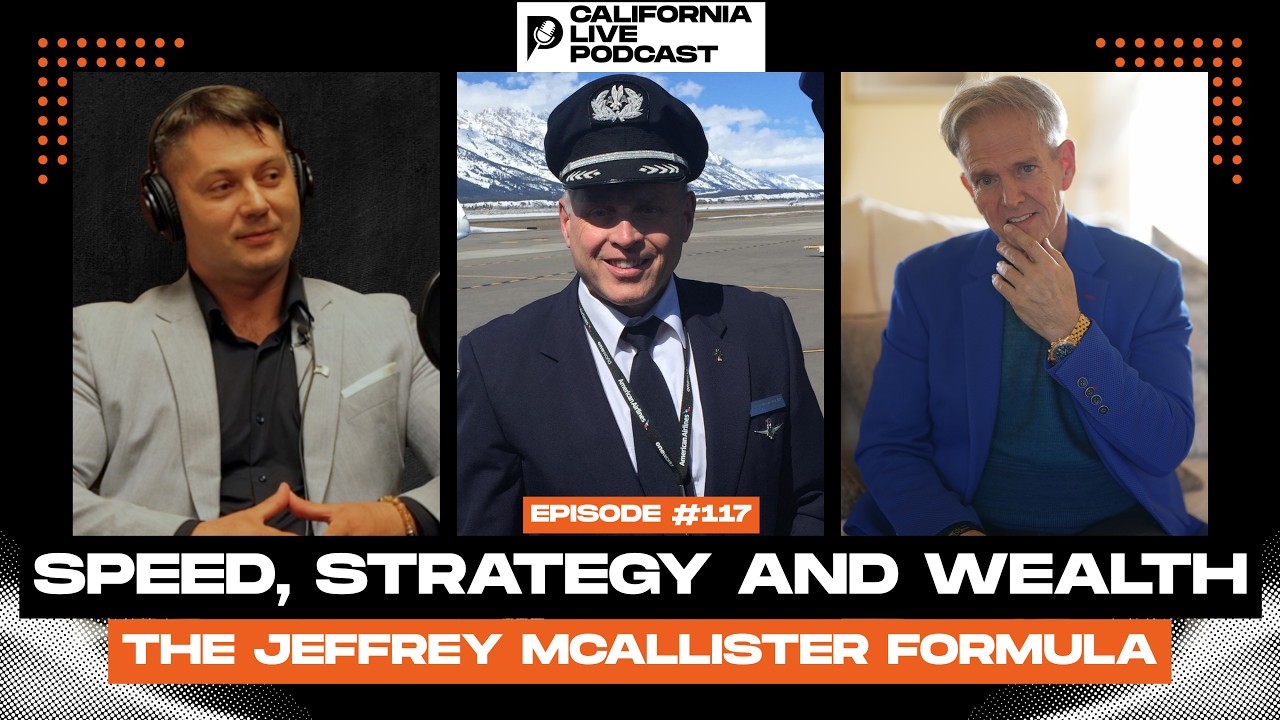
Episode 117: Options Trading, Risk Management & Financial Discipline with Jeff McAllister



Episode 99: The Jeweler of the People: Mahmud Sharif’s Story of Legacy, Grit, and Community

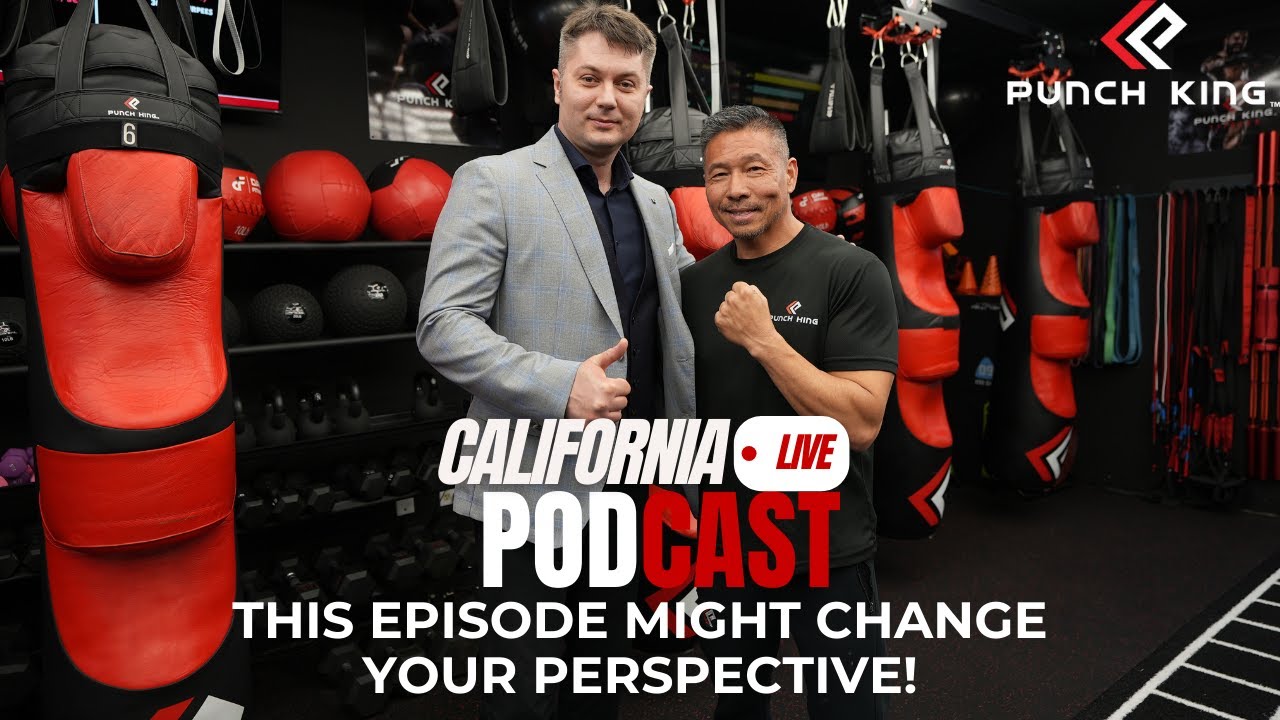
Episode 95: Excellence, Innovation & Impact with King Lei, Founder of Punch King World


Episode 67 with Denny Seybert: Depths of Real Estate Investing & Perspectives of Las Vegas Market