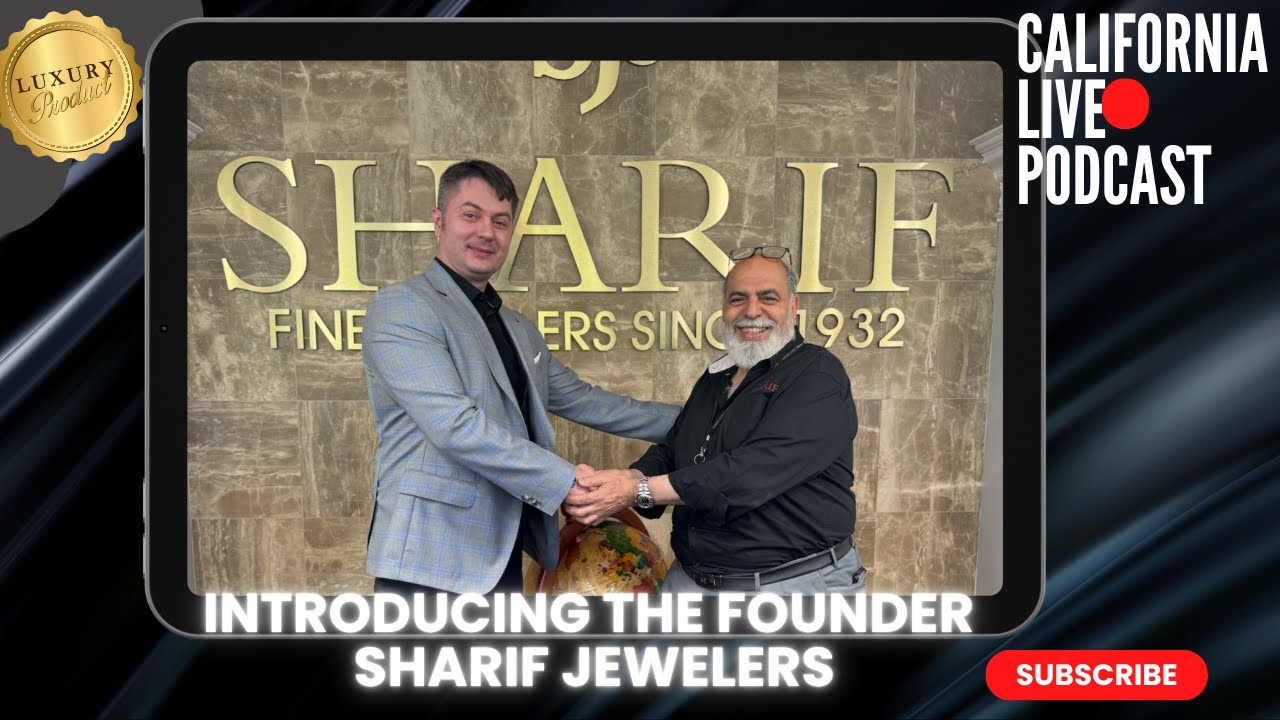
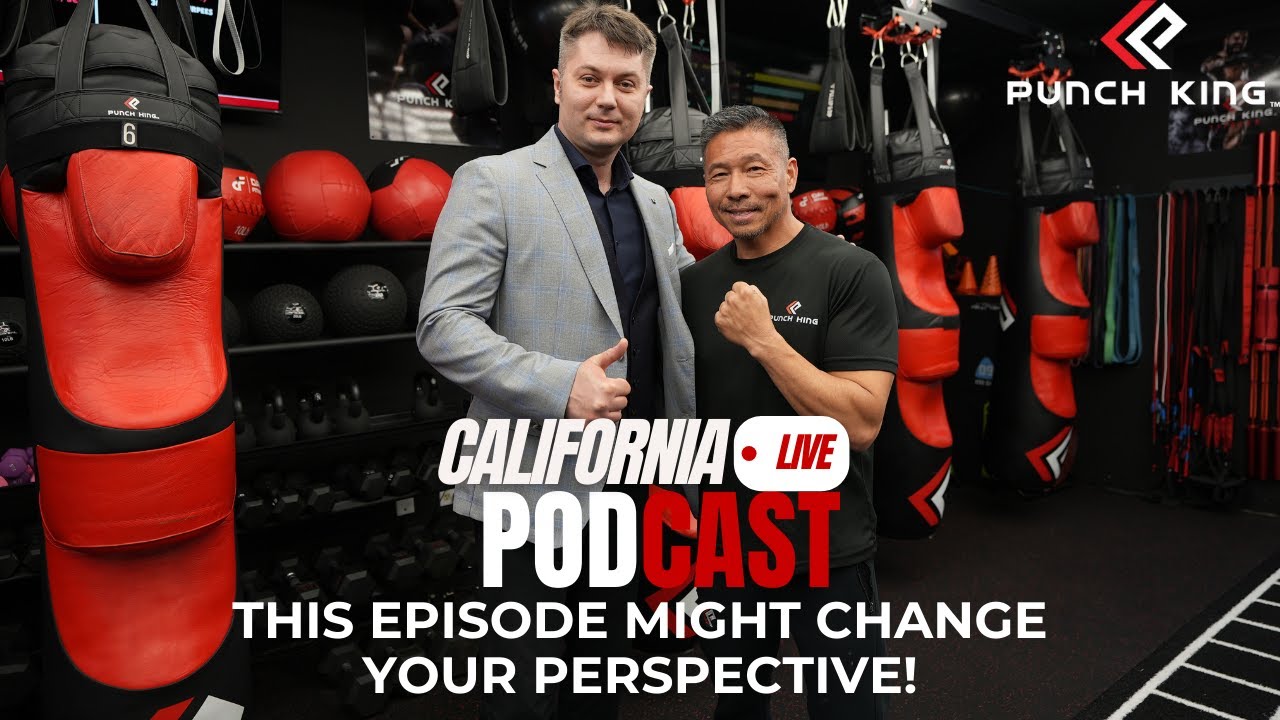
In this California Life Podcast episode, host Victor Migalchan interviews Mahmud Sharif, a third‑generation jeweler who immigrated to the United States and built a thriving family‑run jewelry business. Sharif recounts his personal journey from engineering student working out of a garage to opening a flagship store, highlighting the challenges of starting a business as an immigrant. He explains how the family transitioned from traditional hand‑crafting to modern CAD/CAM design and 3D printing, emphasizing the efficiency and cost benefits of digital production while still valuing the artistry of master jewelers. The conversation moves to the evolution of the business model, with Sharif describing a shift from mom‑and‑pop locations to a larger, one‑stop flagship supported by online sales, a change driven in part by his children’s perspectives. Sharif’s four children—Ali, Nas, Mo, and Sammy—are all gemology‑trained and now handle management, marketing, and finance, allowing Sharif to focus on design and mentorship. He shares his parenting philosophy: planting seeds of guidance, encouragement, and responsibility rather than force, which he credits for keeping his family cohesive and successful. The episode concludes with Sharif offering advice to other parents on nurturing healthy, engaged children in the context of wealth and modern social media pressures. Key takeaways include the importance of embracing technology, the value of family‑centered mentorship, and the strategic benefits of consolidating retail presence while leveraging e‑commerce.
Chapters
Welcome to California Life Podcast. Today we are joined by the living legend, Mr. Sharif, the legend of the jewelry world, of the luxury world, and the man who knows what to invest in and he knows what he's doing. Sir, thank you so much for joining us today.
Of course, thank you for being here and we'll have a great conversation today, I hope.
We will, definitely. There's no maybe.
Yes.
Especially with you.
Yes.
You know, I would love to have actually a documentary on you because of how many things you've done for the community, your amazing life story. We'll begin slowly with a few interviews and podcast episodes. Let's begin with your pre-story. How you decided, why you decided to become a jeweler? What attracted you to this profession?
Well, we're fortunate. I born in the family, the old jewelers. I am a 3rd generation. My grandfather, a jeweler, my dad, a jeweler. And when I have the chance and we came to the United States to do my high education, I really want to follow the steps of my father and grandfather. And now We're very fortunate again. My kids is following the foot, you know, my— following us in the same business. They'll be the 4th generation. You know, Ali and Nas and Mo and Sammy, they're all jewelers. They all went to school. They did their, you know, high education and they did the gemology.
Right.
So they're all gemologists.
Right.
And that will help us in the business. Great, great time.
Right, right. One thing that Ali mentioned to me in one of our previous episodes, that you are an engineer jeweler and they didn't do the same course as you've done. You can actually produce a piece of jewelry. How is it different from your perspective and why you decided your Kids not to be jeweler engineer, but—
I really want them to be in the finance, in management, in marketing more than the actual work. And now things are changing. Now we have the CAD/CAM design, all the computer digitals, and it's a lot easier. Now when we create a beautiful jewelry piece, we don't have to go back to the bench and cut the wax and do all the old-fashioned way. Now everything done by computers.
Right.
Done by digital and the 3D printers. So it's a whole different—
Right.
And I want them to get a lot more in management, in marketing, and they're doing a great job.
Well, absolutely. I could tell by all the things that I'm following in the media and marketing world that your team is doing. To me, these things that you've described, the old way, the old-school way, they keep more story in it. They're more precious versus you're designing in a computer, you're having a 3D model printed on a 3D printer, and boom, done.
Yes.
It is easier. It makes the production cycle easier, maybe makes it less costly. But that to me, as a person who knows nothing about what's behind the—
Yes.
It keeps the value. How is it for you?
I really, myself, I'm thankful that I really did it and I know how it's done and I appreciate it. And in a way, I mean, the kids will know what it is. I always mention to them, I always, they watch the jewelers, the master jewelers, how things are done. So they— I don't want them to sit behind the bench and do the handwork because we have really a special designer and special jewelers and master jewelers who do the work.
Right.
But they do the marketing, the management, and they do a lot better job in that way.
Right, right. Well, that's absolutely— I'm not challenging that question. I'm just asking your opinion whether you personally like the old way better. Or the new way better?
I really tell you the truth, I like the new way better because more efficient, more faster. I mean, you know, at the end of the way, the jewelry piece will be beautiful. If you do it by hand or you do it by the machine, the computer, I think, let's ride the wave and be, you know, in the new phase of designing and doing things a lot faster and better, more efficient.
Right. Okay. When you and your family moved to the States and you started everything from scratch, how was it? And maybe you could share some challenges.
Well, it was to me because it's in me and I love to do it. It was difficult in the beginning, of course. I was going to school, doing my engineering, and at the same time, I have a setup in my garage. And I went out and I had a chance to meet a lot of the jewelers in town, and I did some work for them. And just till I graduated from the university, Mm-hmm. I went ahead and I opened a business, opened my store. And at the same time, it's not as easy to establish and start a business. But with time, you know, I really love what I did and it takes time, but I enjoyed it. And thank God we are here now.
And you have beautiful stores and this setup, we felt like we're in a museum.
Well, thank you.
Thank you. Beautiful selection. If someone— I asked Ali this question our last episode. If someone would want to open a store, a smaller, obviously from scratch, in the same business, is it more challenging than it was when you started right now?
Yes, yes it is. And believe it or not, we had a chance to discuss this with the kids. I am a believer in the mom-and-pop store and business, but they are believers in the mega store, a bigger, One big store and you could do everything in one-stop shop. And I think they won. You know, now we're doing a bigger store, more services. And of course, now with the sales on the internet, it makes it a lot easier. You don't have to have multi-small stores. You could do one large store and it'll do all the services.
Right.
So, I am a fan now of bigger store.
Well, that was probably, that was Ali's easy persuasion. Another thing which I wanted to discuss with you, you have really great kids. And I've met people with wealth like yourself and Some of them have their kids failed in life a little bit because of different reasons, drugs, and, you know, you kept your family really, really well. How?
Well, we really, we thank God and we are blessed. I planted the seeds when they young and they're growing. Like, I grew up in a business when I was growing up. You know, my dad, he opens the doors and he encouraging us to be there with him. And I watch him, you know, helping the customers and building the business. So when I did almost the same, I did what we call to, when they're around me, I reward them for the things, the good things they do and encourage them. Mm-hmm. So it's really encouragement, rewarding, And that's what it is. It's just you keep, you know, you don't want to use force. You don't want to say, hey, you do this or that. You let them decide, but you planted the seeds. And when they grew up, you know, we bless that they're all in the business.
Yeah, they're all in the business, very active, very responsive on the messages and phone calls.
That's right. You know, especially Ali.
Yeah, yeah. I think he's the best with responding. That's right. If we could use, because your kids are of my age, give it or take, what would your advice be for younger parents who would watch our show to help their kids grow in a healthy way like you did for yours right now? It's different time, different era, wealth, Elements of wealth are perceived differently. Social media impact is a little crazy. What pieces of advice you could give to these parents in order to keep their families and kids healthy?
You know what? Guidance is the most important and to show them the rope the right way and encouragement. But you really should be— your first place is guidance. If you guide, guide them right, you know that's what happened.
Right.
And you watch him to grow and encourage him.
Right, right. Well, Mr. Ali, I know your time is a lot more precious than gold. Thank you so much for your time. I'm hoping that we'll have more and more episodes with you, and God bless you. Thank you for all the work.
Thank you. It's always a pleasure.
Thank you. Thank you for all the work you do for the communities, for the whole state.
Of course, we'll always be there.
You always are. Thank you. You always are. Thank you, sir.