3 daily habits that reduced my knee pain after ACL surgery
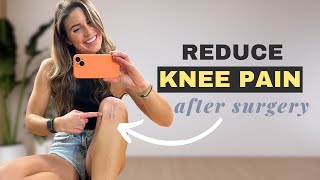
In this personal‑recovery video, Victoria S. Dorsano shares three non‑traditional habits that helped her significantly reduce knee pain after ACL reconstruction. She begins with a disclaimer that the advice is not medical and should be cleared with a surgeon. The first habit is the use of a Continuous Passive Motion (CPM) device (specifically the Camoped) multiple times per day for 15‑20 minute blocks, which she says improves early range of motion and provides lasting pain relief; she also offers heel‑slide alternatives for those without a CPM. The second habit is regular muscle massage around the knee, starting with gentle effleurage and progressing to a massage gun (Bob & Brad’s Air 2) to target quads, calves, hamstrings, and soleus, explaining how mechanoreceptor activation can inhibit nociceptor pain signals. The third habit is spending time outdoors in nature, which she reports both distracts from and physiologically reduces pain, citing studies on nature exposure and postoperative pain medication use. Throughout, she emphasizes consistency, surgeon clearance, and the cumulative benefit of these habits on sleep, therapy performance, and overall recovery.
Chapters
Got ACL surgery? Well, you'll probably need a little bit more than just some good R&R to recover with as little pain as possible, which that's the goal for most of us. Who likes pain? So I'm going to go over 3 unexpected habits that really helped me mitigate some knee pain post-op. So you've done it, you've made it through ACL surgery, and now the real journey begins. But if you're anything like me, that post-op pain can sometimes feel relentless, and it really can implicate how you move through your rehab. So in this video, I'm going to go even beyond the basics of the resting, the NSAIDs, the icing, the stuff that, you know, we're all kind of told to do to help with pain. Because even with those things, it's likely you'll still experience some pain. And I want to share some of the things that really helped me to reduce the pain as I continued through the rehab process. And as a disclaimer, guys, before I jump into this video, this is not medical advice. You should always talk to your doctor or your surgeon before you implement any of these things and make sure you're cleared to do this, because everybody's circumstance is different. These are things that helped me in my personal story going through ACL surgery and recovery and helped me with my pain. Most of these things are going to be like harmless, but you know, it's always, always, always important to check with your medical provider and make sure that this— these tips that I'm recommending and habits that I implemented are going to be applicable for you. So let's go ahead and dive into those 3 habits that really helped me out. First up, a rehab machine that became my best friend: the CPM machine. Now, throughout the past few decades, the CPM, or continuous passive motion device, has kind of been up for debate whether this really helps with range of motion and pain pain mitigation in the early post-op phase of recovery. But one of the most recent meta-analyses on the use of CPM post-op actually kind of proves that it does really work for pain mitigation and improving range of motion. And this is something that I personally experienced. And if you don't have a CPM, that's okay, there's ways to work around it, which I'll get into in a sec. So I was lucky enough that my surgeon suggested that I have a CPM, and I got it rented through a company, of which my insurance covered part of the cost of that, which was really great. But if you do not have insurance, you can always rent it company directly, they'll give you a cash pay rate. That's a whole separate, you know, discussion. But anyways, the CPM itself, very, very helpful. I had one called Camoped. A lot of people ask me when I show it in the videos in my B-roll, like, what is this device? What is it they use? It's called the Camoped. And basically it's kind of this bike pedaler where you're pushing one foot and then the other foot, and you pushing your non-operative foot forces your operative leg to actually bend into flexion passively. So this was something I was encouraged to do right after surgery. The day of if I felt comfortable enough to do that, and to do it multiple times a day. Now, is it uncomfortable when you first get on, and it doesn't feel like 100% pain-free when you're on it? Of course, because you're just out of surgery and it's going to feel uncomfortable to do some range of motion work. However, when I got off of the Camoped, I noticed a significant decrease in my pain throughout the day. So I just kept on doing it, you know, at least 4 times a a day for 15 to 20 minute blocks and would just do it passively. And again, it's a little uncomfy, but the payoff is you are getting better range of motion early on, and you're also decreasing your pain throughout the rest of the day, both of which improve long-term recovery outcomes. Now, of course, this is important to discuss with your surgeon and have that conversation whether this is right for you in your particular surgery, because obviously every single ACL surgery is different. Sometimes there's other things being worked on at the same time, like your meniscus or your MCL or your LCL, right? So it's important to have that discussion. There be reasons why your surgeon might not recommend this, but it's worth having a discussion about and saying, hey, I heard this could be helpful, what do you think? But like I said, personally, I got so much pain relief from using the CPM, I just— I didn't want to give it up at the end of the 2 weeks that I had it for rental. I was like, no, I wanna— I wanna keep this. And it was kind of fun. It gave me something to do right after surgery that I could, you know, feel like I was working towards something. But if you do not have access to a camo pad or a CPM at all, you can always do heel slides and kind of do a different version of flexion and extension exercises. The important thing is to try to work on your range of motion so long as your surgeon has cleared you to do so. But working on your range of motion early on, if that is okay to do, can really, really help with pain throughout the day and throughout the early phase of your recovery, and also helps your recovery outcomes because you're getting more range of motion early on. All right, so the second habit that really, really helped me to improve my knee pain throughout the course of my recovery, and still to this day really helps if my knee is acting up a little bit is massaging the muscles around the knee. ACL rehab is not only difficult on the knee joint itself, but the muscles around the knee, because you are going and you're working on the stability of your quad and your, your calf and all the muscles around supporting the knee, right? And I remember coming back from some PT sessions where I just felt completely worked. Like, I felt so sore, my muscles were so fatigued, and you know, the following day after therapy, my— I just felt like my leg was so, so sore, both of them really. And then I'd feel really, really tight too. So all that combined actually kind of make my knee pain go up a little bit because I feel like all the other muscles around the knee were also tight and tense. When— and when we have like tight and tense muscles, sometimes that can amplify our perception of pain. So helping my other muscles around my knee to relax helped me to really modulate the pain that I was experiencing from the surgery itself. So there's a few reasons why getting into the habit of massaging the muscles around your knee and your knee itself very gently can actually be very, very helpful for pain. One of the reasons is that we have these pain receptors called nociceptors, which detect pain signals and send that to the brain. And when we are experiencing that, it's uncomfortable, right? But we also have these other receptors called mechanoreceptors, which sense touch, physical touch like vibration and pressure on the skin and around the muscle tissue. And it's really cool because when you actually activate the mechanoreceptors, it kind of inhibits the ability for the nociceptors, those pain receptors, to send signals up to the brain. So if you think about it, when you knock your knee on, you know, the corner of a table, or if you knock your elbow on something, your first instinct is to rub that area. Why? It's because you are unconsciously kind of activating these mechanoreceptors that block some of the pain receptors from sending signals to the brain. So it's kind of temporarily like confusing your brain and being like, the pain's not there. We're just feeling the mechanoreceptors firing off. Pretty cool, right? I think it's fascinating. Anyways, that's just a very, very, very basic version of that explanation of of some pain receptor science, but I'm, you know, I'm no neuroscientist and there's probably way more layers underneath that. So just take that base layer for what it is. I think it's, it's pretty cool. All right, so how did I implement this into like a habit that I would do week after week to improve my pain? So massaging the knee itself, I would actually do something called effleurage, which is a gentle way to reduce swelling. And you kind of just grab around the knee and move any kind of fluid or swelling upwards towards the thigh. I would just gently do that throughout the early phases, like let's say month 1 of recovery, and just that kind of sense of touch and gentle movement really, really helped to mitigate some of the pain. But then as my rehab progressed and the muscles around my knee were getting more and more fatigued and sore, I would actually start to use a massage gun. I would be very, very careful not to actually put the massage gun head anywhere close to my actual knee joint itself, but I would get into the top of the thigh, to the calf, to the shin, hamstring, that sort of thing. And thanks to today's sponsor, Bob and Brad, I get to tell you guys about a really, really awesome new massage gun they have called the Air 2. By the way, if you don't know Bob and Brad, they are awesome. Huge fans of their channel, and, uh, the jingle's pretty catchy. Bob and Brad, the two most famous physical therapists on the internet. Anyways, the Air 2 massage gun from Bob and Brad has actually become one of my favorites lately because it's actually one of the only massage guns on the market that is under $100 that has a 12mm amplitude, meaning it actually reaches deeper into the tissue than most massage guns do, especially the cheaper ones on the market. And I can absolutely tell the difference. I actually have a cheaper version of a massage gun I found on Amazon And as soon as I started using the Bob and Brad Massage Gun, I recognized that this one really has a much deeper reach into the tissue that you're massaging. And it's just so cute and portable because of its size. It's actually really great to just bring with you in your gym bag or wherever you're going. I've even brought mine on vacations because it's so easy and portable and it's TSA approved for carry-ons, which is great. But using a massage gun just really helped me to prevent my fingers from getting tired, helped me reach deeper into the tissues and really get a more effective massaging into those muscles that were just so fatigued and tired and tense and sore from the rehab process. The Air 2 Massage Gun actually has 5 different attachments, which is really great. You can have a larger attachment to reach bigger muscles like your quads and smaller ones to get into smaller areas. For me, I love using the smaller attachments for like my soleus, which really gets nice and tense, especially throughout the rehab process. It did because your calves are activating to stabilize and all that stuff. And the device is actually ergonomically designed to make it easier to grip, which is really, really nice. And the massage gun also has 3 levels of speed, making it easier to modify what speed you need for different muscle tissues. So you can have it go a little harder and faster when you are getting into bigger muscle groups like the glutes or the quads, and then you can change it for more sensitive muscles like my calves. Which are so, so sensitive and very ticklish. And despite its small and cute size, it still packs a punch, like I said, with its 12mm amplitude, which is really great for the size of a massage gun while also being very durable and long-lasting. Its charge can last up to 4 hours of use. And if you are interested in getting your own Air 2 massage gun, I will put the link down below in the description as well as a 10% off discount code. For you guys to use. And thank you again to Bob and Brad for sponsoring today's video. But yes, using a massage gun has been such a great part of the longer part of a rehab process and something that I have made a habit, especially after longer or harder workouts or where I just feel like my knee pain is starting to come back a little bit. Even to this day, sometimes that happens if you overload your knee. I will make sure to use the massage gun around the muscles of the knee that are, you know, around the calves, the quads, the hammies, like I mentioned. Get those nice and relaxed, and oftentimes that'll help the knee pain start to ease up as well, because my brain goes, oh, it's relax time, I get to feel good. And then that can boost some serotonin and all the good neurotransmitters and things that make your body feel relaxed and happy and pain-free. Okay, the last habit I want to mention that really, really helped with my pain after my ACL recovery was getting outside in nature. And I know that might seem like the last thing you want to do after you've you've just had surgery is to go outside. But this was actually something my surgeon recommended, and I'm very, very glad that he did. Now, getting outside not only distracts you a little bit from the pain that you may be experiencing post-op, but it also helps to actually decrease the pain itself. It's not just distracting it, but it's also decreasing. There's actually been a lot of studies on this recently, just in terms of pain science and even post-operative pain, but also chronic pain sufferers as well, and how nature and getting outside and sunlight can play a role in pain modulation. I'll link a few of those down below in the description. I thought they were super interesting, but a lot of them studied the need for pain medication and how much less pain medication was needed once patients were able to get outside versus ones that were not allowed to be outside, or even just viewing nature. So if you live in a place that is like cold and not easy for you to get outside, and it be risky for you to like crutch around outside or even have somebody push you in a wheelchair if it's snowy, I get it. But even just viewing something like a television show or something on your computer that has like a picture of nature and sounds of nature can actually help to decrease your body's stress and help to promote pain relief. So I started going outside, I think the day I got back from surgery. I had my now husband pushing me around in a wheelchair outside because I tried crutching around and I was getting exhausted because, you know, crutching far distances is kind of difficult. So he pushed me around, which was really great. And then the second day I did a little bit more crutch walking and then started to do a little bit of weight-bearing as tolerated and all that good stuff. All that's dependent on what your surgeon recommends, so please don't start, you know, walking around if you are not cleared for weight-bearing. But if you are, and you can weight bear as tolerated, try to do that outside if you can, if it's safe to. Do not do it on ice. That's dumb, and you don't want to get reinjured. And the cool thing about establishing this habit about going outside is I actually have become somebody that really craves going outside even to this day. So it really did actually become a true habit, not only during the early and mid phases of my recovery, but something that I kept doing and taking longer walks outside as I progressed throughout my recovery and even to this day. And it's something that I now use as a skill for when I'm feeling stressed or when my knee is hurting a little bit more than usual. I will try to take a walk outside and really enjoy being out in nature. The whole ACL recovery process can feel like a very long journey sometimes, and I get that, but you don't have to suffer in pain the whole time. That's why I wanted to share these 3 habits that were different than your traditional pieces of advice that really did help me not only to mitigate pain in the early phases of recovery, but continue to, to this day. These things like working my range of motion daily and using something like a CPM multiple times a day and massaging the muscles around my leg to make sure that everything's relaxed and not adding to my pain, and also getting outside in nature were things that I personally did not expect to make that significant of a difference, but they absolutely did. And sticking to some of these habits made the good days far outnumber the bad. I was able to push harder in physical therapy because I was in less pain, and I was able to actually get really good rest on my days off and get good sleep because I didn't have pain keeping me up. So hopefully instilling these 3 habits will help you resolve some knee pain and continue to be good things that you can pull from your toolbox as you move forward throughout the recovery process. And like with anything, the key to this is really just consistency. So really trying to instill these as part of your day can be amazing. So what do you think? Have you tried any of these 3 tips? Have they helped you? I'd love to hear your thoughts in the comments below. And here's to smooth sailing through your recovery process. And right now I'm going to enjoy this massage. Until next time, guys. Bye.
More from Victoria






3 things you should do to make sure you get the most out of your fish oil #legion
