4 Years Post-ACL Surgery: Your Burning Questions Answered!
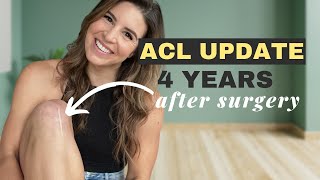
Victoria S. Dorsano reviews four years after ACL reconstruction, detailing setbacks like Hoffa's fat-pad impingement and a calf tear, plus a year of sports including volleyball, CrossFit, and Ninja Warrior. She shares the maintenance exercises that keep her knee stable and explains why full ligamentization takes up to two years.
Questions this video answers
I feel pretty okay hopping into activities without many mental barriers; my injury was a collision rather than a twist‑and‑plant, so I don’t have the same fear that some athletes do.
My explosiveness is solid; I worked on quad brain‑muscle connection in PT, and it’s trainable, so stick with it to develop that fast‑twitch response.
Mostly I feel it on the inside of the knee where the Hoffa’s fat pad gets pinched; after a lot of jumping I sometimes notice a mild patellar‑tendon strain, but it’s not significant.
It’s activity‑dependent – it feels 100% for a run, about 90% after a long volleyball tournament, and around 80% if I hyperextend. Averaging out, I’d say roughly 95%.
My overall mobility (full extension and flexion) is the same as before, but I still experience Hoffa’s fat‑pad impingement when I accidentally hyperextend the knee.
Chapters
Guys, it's my birthday! Well, not my actual birthday, but it's my post-op birthday. It has officially been 4 years since my ACL surgery, so that means it's time for another ACL update. You guys, I cannot believe it has been 4 years. Man, time flies. And this past year of my ACL journey has probably been one of the more interesting ones. I stopped doing just the ATG program as my main program for workouts and transitioned to using it for more like accessory work. and that came with some pitfalls for sure. But beyond that, there were definitely some ups and there were definitely some downs. And make sure to stick around towards the end of this video where I answer a lot of your questions about ACL recovery and where I'm at 4 years post-op. So let's get into year 4. So first off, I wanna talk about some of the struggles that I experienced in this 4th year of ACL recovery and what it's been like 4 years post-op. And some of these struggles I feel like are kind of unique to the point in recovery that I'm at. And honestly, some of these struggles were kind of unexpected. So first things first, This past year I had a lot of knee anxiety, and I think a lot of that was due to the fact that there wasn't too much more ground for me to make as far as like really some big landmarks of recovery. I had already accomplished those 3 years post-op, and even some of them 2 years post-op. It felt like there wasn't much more room to go, but it also felt like I wasn't where I wanted to be yet. Last year, up till my 3 years of post-op, I felt like I really made leaps and bounds with my knee progress from doing ATG program and really dedicating a lot of my time to doing that program. And this year I felt like there wasn't all that much more to improve upon. I was just kind of at this stage of like maintain or get worse, which for someone like myself, and I'm assuming for a lot of athletes, is kind of a scary phase to be in because athletes are always looking to get better and to improve on things. And once you kind of meet this like plateau of, well, your knee may not feel all that much better than this, it's pretty damn good, but it's not going to get all that much more better. It's really just about the game of maintenance. It's kind of blah. And trust me, if I was going through this like fresh out of surgery, I would be excited for blah. I would be excited to get to a point where my knee felt pretty normal. And I'm not saying you shouldn't be, but I just want to provide a realistic and authentic viewpoint of what I'm currently feeling without any filters on it. And despite year 4 being year where I was just focusing on maintenance, I felt like it was really easy to slip backwards and to have my knee feel worse at times. There are a few key moments I remember feeling like this in this past year, one of those being the time I decided to do a century bike ride, which for those of you who aren't cyclists, that's 100 miles. So it's not huge, and you usually take it at a pace that is sustainable for you. It's— so it's not like racing per se, but during that whole bike ride, for about 75 miles of it, my knee was not feeling great. There was definitely a very sharp jabbing pain on the inside of my knee, kind of right where the screw was placed in the femur and tibia. I felt like it just was very uncomfortable and I really had to just kind of grit through it, which again, I know you're not supposed to do that, but I was on the course already and I was going to finish that race. Now, the good news about that circumstance is that really once I got off the bike, the pain went away. It was pretty unique to just the pedaling motion, and I have a feeling it has to do with the positioning of my shoes. However, that was definitely pretty disheartening, and it definitely gave me this anxiety of, is there something else wrong with my knee? Anyways, another kind of general occurrence that I kept having over this past year was that anytime I'd land when I was playing beach volleyball in the sand and my knee would extend a little bit too far, I would get a very sharp pinching sensation. Now I know I've talked about this in previous videos with the Hoffa's fat pad impingement I tend to get, but it was happening more frequently than I would have liked it to, and that was really frustrating because about halfway through certain tournaments I'd have to really taper back the extent at which I was playing. There were definitely some tournaments where I was not able to straighten my knee at all because of how much pain I was in after having that hyperextension. Another instance of struggle that I was having, which again isn't 100% unique to this year, but I feel like it happened just more often this year than in previous years was that any kind of sudden increase or ramping up in my training schedule would make my knee not so happy, and I'd get some Hoffa's fat pad inflam— inflammation and impingement as a result. So that was also a little bit of a bummer. And lastly, another thing that I felt really sad about this year and have had trouble coming to terms with— and some of you guys may know this from past videos, some of you may not— is that I really severely tore my calf on that same side that I had my ACL surgery on. And this was maybe a year prior to having the ACL surgery. And, you know, they, they originally thought it was just a grade 2 strain, but once the inflammation subsided, it was pretty evident that like a good part of my calf muscle had like receded on up and is pretty much non-functional in part. So that I know it's not like 100% knee related, but I know, you know, just from understanding anatomy and how the body works, the calf supports the knee. So I also know that there's a certain capacity that I do not have physically for that calf to be able to support the knee. And my knee is going to continue to take more pounding than I'd really like it to if I continue playing and really using my body, playing sports and using my body in the capacity that I want to. So that's been, in all transparency, really hard to cope with too, and feeling like there's not much I can do. Other than continuously strengthening my knee and my, my calf and continuing to maintain what I can. So I wanted to get those out of the way because I know it's not easy to hear if you're somebody who is going through ACL surgery, you know, that whole process, maybe about to or going through the recovery process, and you're looking at some of these videos and wondering if you can get back to where you want to be. I know it's hard to hear some of these realities, but I feel like it's important to share that. A lot of my page has been dedicated to showing and sharing a lot of the wins and the good stuff that's happened. And there's been so many beautiful, amazing things that have happened in this recovery process that I'm so grateful for and wouldn't change the world for. But I would be amiss to not share some of the realities of these struggles that I've at least had this past year in particular. And again, a lot of that's just due to the fact that I feel like I've really progressed and made a lot of great progress throughout this journey, and I've just kind of reached this precipice where I'm not going to see all that much more improvement. It's just about maintaining and learning what my body's capable of and being able to support that. And all of that leads me into some of the wins from this past year, now 4 years post-op, that I'd love to share with you guys because I know you didn't click on this video for just a whole bunch of doom and gloom. So This past year has really been the year that I feel like I fully unleashed my inner athlete and was doing all the things that I wanted to do without that much caution, like not that much psychological caution or physical caution. I feel like I tried all these new activities. I did Ninja Warrior classes, I tried CrossFit, I did tons and tons of both hardcore and beach volleyball, I played tennis, I played basketball, I ran, I swam, I did, you know, rollerblading, roller skating, a bunch of different activities across the board that typically wouldn't be like joint friendly that I threw myself into and absolutely loved it and just felt like fully back to my inner athlete. Now, of course, like I said, I did feel slightly limited in certain capacities, but to be able to dive into these activities again and really, really enjoy them and not have all this fear while jumping into them is great. And even despite having some of these setbacks while diving into all my athletic activities full force and, you know, having some of that anxiety as a result of it, just kind of wondering like what else I can do, how else I can better maintain my knee. All of these setbacks have given me data points. They've given me information about how to better care for my joints, better care for my knee, better care for my body in general moving forward. You know, I can look at these and be mopey about these setbacks and these things that I felt a little limited by when I have dove into playing my sports and doing all these, these activities. Or I can look at these things and be like, wow, okay, this is good to know. When I do X, Y, and Z without doing, you know, ABC beforehand, this is what the result is. And how can I tweak this moving forward? What do I need to do differently? And it really is empowering to think about it that way. So I will say, like, incurring some of these setbacks and some of the anxiety that comes along with that has also created a gift of being able to know my body better and adapt and become a better athlete moving forward. And out of that data, I've really learned like, what are my non-negotiables for knee maintenance? What are the things that make the biggest impact that when I do them, I get, you know, the best kind of maintenance results and I'm able to perform better doing all the athletic activities that I wanna do. And everybody's different in finding what those non-negotiables are for you. Like for me, a backwards sled pull or backwards incline walk on a treadmill, that's non-negotiable for me. Tib raises, pretty much non-negotiable for me. ATG split squats and VMO squats, non-negotiable for me. Making sure my hip flexors aren't tight, non-negotiable for me. So there's all these things that I've kind of learned that are really non-negotiables now that have fine-tuned my maintenance this past year. Another win I would say from this past year is that I've been able to develop a different skill set, in particular as a volleyball player, than I have beforehand. I've always been like a big power athlete, like strength, force, power, like hard-hitting. I've always had a very aggressive style of playing. Like, I will go all out on the court. I will reach for the ball. I will dive. I will kind of toss my body around. But since having some of these hyperextension issues and some of this fat pad stuff and having to like basically adjust my gait and adjust how I'm carrying my body on the volleyball court mid-tournament, I've had to learn how to adjust my playing style and develop a different skill set as a player. I've had to develop a whole different, like, game IQ in being able to conserve energy and play smarter, not harder. And I've really been able to refine that this past year, and I'm grateful for it because there's gonna be a time where I'm not going to be able to be, you know, even a fraction as physical and aggressive of a player as I am now, even with this limitation of my knee. And I'm going to need to fall back on some these more technical skills. So again, I'm trying to look at some of these things as a gift, and I hope this encourages you to do the same. All right, you guys, that's about it for my update, but I also want to dedicate a portion of this video to answering your questions. And a lot of you guys submitted some awesome questions about where I'm at and just understanding a little bit of this journey, you know, as far as being 4 years post-op now. All right, so here's a question: do you still have any mental barriers blocking you from doing certain movements and walking with the same confidence in case it goes out. I'm assuming it is the knee. So going into a little bit of what I was speaking to earlier, I feel like this past year, 4 years post-op, that I've been able to really dive into activities like all out without really thinking about it or having all that much thought about like, oh my gosh, I don't know if I should be doing this. Which I think maybe there's like a fraction of it, like very little, 'cause you know, there's a scar reminding me too that I've had the surgery. But I don't feel like I have that many mental barriers in the way. I know that's unique too, and I want to like also embrace the nuance of this question because you have to take into consideration that my injury is different from some other people's injuries in the sense that I, you know, my injury was not a twisted plant. It was something where somebody collided with me midair and actually popped my ACL midair from their knee colliding into my knee. So I feel like Personally, if I had had a twist and plant injury, I would have a different feeling around this question, possibly a little bit more of a mental barrier to get over because it would have been a little bit more of an injury that would have been kind of more in my control of my body versus somebody else running into me. However, for me, like I said, I feel pretty okay hopping into activities without really thinking all that much about it. All right, so another question is, what is your explosiveness overall And how fast is your brain-muscle connection during fast moves? Okay, good question. I feel like my explosiveness is pretty solid. I really did work on a lot of like that mind-to-muscle connection of my quad, especially in physical therapy. I was really lucky to have somebody great along my side in that process and really making sure that my quad was like fully up to strength and we were developing some of that explosiveness in therapy too. We did some of like athletic work to make sure I was ready back for sport and all that stuff. So I do feel like I have pretty solid explosiveness, and I think that's definitely trainable. So, you know, stick in there with it if you are trying to work on that. It can take some time definitely to develop that connection. Another question is, do you still experience any inflammation or discomfort on the front of the knee? Yes. Well, I wouldn't say the front of the knee, it's definitely more like the inside of the knee where the Hoffa's fat pad is getting pinched. Front of the knee, sometimes if I've done a lot of jumping, like, I'll start to feel my patellar tendon be a little bit strained, but not too significant there. And again, I think it's just— they're data points, right? And I think it's just knowing what are some of your tells of your body and being able to listen to those and to train for those and to make sure that you're responding accordingly. Okay, another question is, what would you say in percent is your knee back to? Meaning, is it 100%? Is it 95%? I'd say— oh, this is such a tough question because it really depends on my training. Like, if you ask me now, feels like it's 100%. If I go for a run, probably feels like it's 100% too. Like, nothing really bothers me in that. It really is activity dependent. So I feel like after a long volleyball tournament, my knee probably feels like at 90%, or if I've hyperextended it, I'd say 80%. It doesn't feel so hot, but it's really just dependent on the activity these days. So if I had to create an average for you, I'd say 95%. All right, so another question I have is about the Hoffa's fat pad, if I'm still having issues with that scarring and what my mobility is in comparison to what it was before. My mobility is pretty much the same as it was before. I've always been very mobile, so I had no issue gaining back my full range of motion, you know, full extension, full flexion, all that's great. There's no stiffness in the knee. I didn't have any issues with scarring. I do still have issues with the Hoffa's fat pad. So that is something I am still trying to manage and figure out, like how to mitigate that extension, how to make sure my knee is not in a position to hyperextend when I'm playing a sport. So yeah, unfortunately still dealing with that. However, it's solely just when I accidentally hyperextend it in some odd position. Another question I have is, can I wear heels? Yes, I can wear heels. I was actually able to wear heels pretty comfortably, maybe 8 months post-op even, or sooner. I got married at that time, like pretty much just as I was, you know, getting back to some sort of sport activity very gently and like hiking a little bit more. And then probably around like 8 months or even sooner, maybe 6 months post-op, I was getting married. So I did wear heels and I walked in them totally fine. It did take practice. And it— I was very cautious with how I walked. You know, keep that in mind. I wasn't like dancing with my heels on or doing anything crazy. I was just walking down an aisle. And as soon as I got off that aisle, I took my heels off because I don't like to walk in heels anyways. So maybe I'm not the best person to talk to you on that. But as far as capability, I was definitely capable of walking in heels just fine. Two more questions I wanna answer. There are so many good ones that I will respond back to individually in comments, but As far as this video goes, I think there are two more that'll be really pertinent for where I'm at in this 4-year post-op mark. One of the questions is about if I still wear my brace often or at all, and I'm assuming they're talking about my sport brace, not the really long one that you get right after surgery. So I did get a, an ACL sport brace to wear for, you know, return to sport, and they're smaller, they're more mobile, and it basically basically, you know, stops at a hinge to prevent you from hyperextending. So that has actually been a really helpful tool for me to use when I do feel like I'm going to be in a position where I'm going to be, you know, vulnerable to hyperextension. Like sometimes when playing sand volleyball, I will put that on if I feel like my knee and my quad and like the muscles around my knee are starting to get tired. I'll do that to prevent any hyperextending from happening. I'll also put that SportBrace on for indoor court volleyball. It's really for me a security from that hyper extension that happens. For me, at this point, it's really just preventing me from having any kind of Hoffa's fat pad inflammation after playing and making sure my knee doesn't hyperextend and pinch that fat pad. So I feel like that's where really the Sport Brace comes into play. And anything where I'm jumping and locking out my legs or landing and having the potential to hyperextend, I will wear that brace. And last question: what do you wish you knew or did then that I know now? I wish I knew how long of a process this would be, and I've said this before. I think we're sold the lie that it's gonna be a 6 to 9 month or 12 month journey. It really goes beyond that, you know, as far as getting back to full functionality if you're an athlete. Now, if you're not trying to get back to athletics, I think it's a little bit different, but I wish I would've known just mentally how long of a process it would be. Not that it would've changed anything about how I went about things and and how I did things. But I think just to know what I was in for a little bit and not to get discouraged about the timeline. So I think that's the only thing. And I try to do a good job of sharing that and being honest about that, that it does take like 2 years for the whole ligamentization process for your tendon graft to turn into a ligament in your knee and to actually be fortified and all that jazz. And you know, for everything to feel feel like you can get back to 100%. It takes some time. So I think I would have wished I knew that. All right, you guys, so at the end of the day, year 4 was a huge learning year for me. I feel like I learned a lot more about how to maintain my knee, how to upkeep, how to respond to certain circumstances and situations that came about when I am fully returning back to everything that I want to be doing. And I learned even more how resilient I can be. And I think that's a beautiful thing to pay attention to, because we can get so stuck in the feelings of anxiety and the, the negative mindset that it can put you in when you are struggling. But when you look at it and be like, how can I turn this into a win? How can I learn how to be a more resilient athlete, a more resilient person from this experience? I really feel like this past year, as challenging as it had been in like these kind of small annoying ways, it really forced me to grow as an athlete, as a volleyball player, as a person, and I'm really grateful for it. So again, I wouldn't take anything back. I feel like the struggle was all worth it, and I'm sure there'll be some new things in store for this upcoming year, and I'll keep you guys updated. But so far so good, and thank you guys for following along with this journey. I hope to continue to provide more of these ACL updates along with some of my other content. I will be making a video on the Hoffa's Fat Pad thing because I've had a few of you guys, a good many of you guys, actually reach out about having some of the same things, and I feel like there's not much out there about it. But anywho, I appreciate you guys for watching and for coming along with me in this journey. And if you haven't yet, go ahead and like this video if you found it helpful. Subscribe to the channel, I'd greatly appreciate it. And I will see you guys next time. Bye!
More from Victoria






3 things you should do to make sure you get the most out of your fish oil #legion
