5 Biggest ACL Mistakes After Surgery
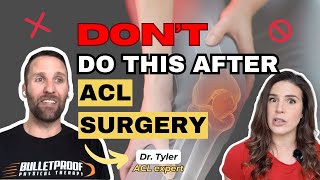
Victoria S. Dorsano and ACL specialist Dr. Tyler Humphrey identify five critical mistakes after ACL surgery: avoiding early knee motion, skipping quad activation, running too soon, neglecting mental health, and ignoring nutrition. Returning to sport before nine months dramatically raises re-tear risk.
Chapters
So you've had ACL surgery. That means the hard part is over, right? Hate to tell you this, but wrong. The surgery is really just the beginning, and rehab is where the magic happens. That is, if you avoid these 5 main mistakes that a lot of people make. Having gone through ACL surgery and rehab myself in 2020, I saw how important the rehab process really was and how easily you can ruin that process. I've talked to some athletes who one day were crushing it at their sport and the next had their ACL tear, and unfortunately they weren't able to return to their previous level of sport. And that's not because the surgery failed, it's because the rehab did. So today I've actually brought on Dr. Tyler Humphrey. He is the founder of Bulletproof Physical Therapy and an ACL specialist, and he's going to help us navigate the main things to not do after ACL surgery to have the best chances of a solid outcome. Seriously, these mistakes could cost you months of rehab time and at worst lead to reinjury. And before we dive in, guys, make sure to hit that subscribe button and the notification bell for more evidence-based health, fitness, and wellness content coming your way. And lastly, guys, before we dive into today's content, I want to thank our sponsor Halara for making this video possible. What I love most about Halara is their community-driven approach to design. Their philosophy centers on the idea that your voice matters and that every piece they create incorporates feedback from real people like you and me. I've actually been testing out some of their pieces lately, and I am super impressed with a couple of them that have become my fan faves. I'm really impressed with their Ultra Sculpt So Cinched High-Waisted Biker Shorts. The tummy control waistband is incredibly comfortable, and at 5 inches, they are the perfect length for workouts. Plus, the side pockets are deep enough to actually be functional. And for days that I've been heading to meetings or just out and about, I've been loving these high-waisted tapered work pants. They're super stretchy and comfortable, but they look professional enough for a business casual setting. Halara has actually created something really special called the Halara Circle. It's their monthly initiative that fosters co-creation through community-driven design. You can actually sign up during open enrollment to choose a product to test and keep for free. And after receiving your item, you can share feedback via an emailed survey, and your input then helps them to create styles that you and other people love. Also, exciting news for my California viewers: Halara is going to be launching two exclusive pop-up stores near you. You can visit them at The Grove in LA from April 11th to May 26th, or at the Stanford Shopping Center in Palo Alto from April 17th to May 26th. And if you're shopping online, you can use my code Victoria155 for 15% off full-priced items. I'll make sure to include the links of all my faves down in the description below. All right, now let's get back to ACL recovery. The first major mistake that people make after their ACL surgery is that they are afraid to bend and extend their knee. It makes sense, you're 'My knee just went through a very traumatic surgery and it's swollen and it kind of hurts to move.' But here's where that thought pattern can lead you astray. Not moving your knee after ACL surgery can lead to something called arthrofibrosis, which is essentially just excessive scar tissue that ends up limiting your range of motion kind of permanently unless you get it broken up later on. Now here's Dr. Tyler to explain why early movement after ACL surgery is absolutely crucial.
It may seem counterintuitive, but the most important thing early on is to get range of motion back in that knee as early as possible. The big 3 things we're trying to do early in the rehab process are decrease pain and swelling, regain a good quad contraction, and increase range of motion, both in flexion and extension. Getting the knee in full extension is most important for getting back to things like walking, and then getting the knee to bend is important for just simple day-to-day tasks like being able to get up and down from a chair. Now, a lot of people might worry that a little bit of discomfort is a bad thing or causing damage to the graft. When we're getting range of motion back, we don't want it to be really aggressive and painful. The term we like to use is introducing movement. So feeling a little bit pain on like a 1 or 2 out of 10 on the pain scale can be okay. And as far as the fixation of that graft, it is totally fixated as soon as you come out of surgery. And doing things like range of motion exercises, even things like squats, show virtually no strain on that ACL graft. So you're not doing any damage to it with those early-level exercises.
I know a lot of people worry that they might damage their graft if they move their knee too much too soon. As Dr. Tyler explained, modern surgical techniques actually create a very strong initial surgical fixation with that new graft tissue. And of course, your surgeon and PT will give you specific guidelines, but generally speaking, controlled progressive movement won't just damage the graft, it will actually help it to mature properly. Mistake number 2 is overlooking quad activation. After ACL surgery, your quadriceps essentially go on vacation. It's actually a phenomenon called arthrogenic muscle inhibition. The brain actually just kind of shuts down the activation of the quad muscles to protect the injured area, but the problem is your brain doesn't know when to turn that back on. Let's hear from Dr. Tyler about why quad activation is so important in ACL surgery recovery.
Quadricep strength is the number 1 predictor of a second ACL tear. So starting by getting that good strong contraction as soon as we can after surgery sets up our foundation for our entire rehab process. Things like walking, running, stairs, jumping, all the things that we want to eventually get to. If we don't get that good solid quad contraction early, we're going to have trouble getting the knee straight. We're going to have trouble getting the swelling out of the knee because that's what our quad helps do. So you can do things like use a biofeedback machine, Russian stimulation to help kind of override that inhibition that happens after the surgery and really establish that solid quad contraction early on.
The third mistake that I hear of a lot is somebody trying to run too early in their ACL rehabilitation process. As athletes and active people, we are eager to get back to running. I remember feeling the exact same way, but here's what actually happens. Each step that you take when running puts a force of about 2.5 times your body weight on that knee. If you are 180 pounds, that's about 450 pounds worth of force going into that knee as you're taking a stride. So let's turn it over to Dr. Tyler on what criteria you should be meeting before you start running and the risks of rushing this phase.
Getting back to running is a huge milestone in ACL rehab, so there are two things that go into it. One is strictly time, so 3 months is normally the time when most doctors will clear you to run. That just looks at the, the health and structure of the graft, whether it can handle those demands. So you could lay in bed for 3 months and not do anything, and the ACL graft will be able to handle running, but the knee's not ready. So the other thing we look at are objective measurements. So we want your glutes, your quads, your hamstrings, your calves, everything to be strong enough to protect that knee joint to handle all of the impact that goes through a knee with running. So some things we like to see are a 70 to 80%, uh, strength compared to the uninvolved side. But also some objective tests that we like to use are forward step-downs, single-leg bridges, single-leg squats. Are you absorbing force through that quad well to protect that knee joint so that you're not getting a lot of swelling, stiffness, pain, all those things that come from running on a knee that the muscles aren't ready to support?
So what should you do if you're an athlete that's craving that cardiovascular conditioning and that stimulus and that just like rush of endorphins, but you're not ready to run yet? Here's Dr. Tyler with some alternatives.
There's a bunch of other alternatives you can do to get your cardiovascular fitness, especially if you're playing a sport like soccer or basketball that you have to get back to that require a lot of cardiovascular fitness. So things like rowing, biking, swimming, even like a SkiErg or upper body ergometer can be really good for maintaining that, that cardiovascular fitness while you're rehabbing your knee, and that can make bridging the gap back to getting on the field or on the court a lot smoother.
So the fourth mistake, in my opinion, is probably one of the most overlooked and one of the toughest things to deal with: the psychological side of ACL rehab. This journey isn't just about physical recovery. For many of us, our identity is wrapped up in being an active individual or an athlete, or simply just enjoying physical activities that now seem so far out of reach. When I tore my ACL in 2020, this was the hardest part of my recovery process. There were several days that I questioned if I would ever get back to playing my sport or doing the other activities that I love. To me, the The physical pain was something that I knew was temporary, but the mental and emotional angst and frustration that I had was something that felt like it was going to last forever. From my own experience and research, here's what helped me the most: setting process-oriented goals rather than just outcomes, focusing on how you're doing and feeling and incorporating things in the process of recovery rather than trying to get to a milestone, staying connected to your sport and your team in modified ways during your recovery process. Working with mental health professionals who understand the impact of athletic injuries, and finally, building confidence through just focusing on the progressive achievements that you're making in your rehab process. Here are a few more pieces of advice that Dr. Tyler has in addressing the psychological component of ACL recovery.
To recap, the best advice I can give is to treat ACL rehab like a marathon, not a sprint, but don't look at it as a year-long journey. Take it day by day, focus on your, your small milestones. Continue to spend time with your team. A lot of times, especially if you're a high school or college age athlete, you're only in the training room. You're not seeing your team on the practice field or in the locker room as much. Take time to get some of that normal kind of day-to-day life back. Even if you're not a full participant in practice or in the weight room, still be around your teammates. It can help so much with the psychological side of things, but expect a long journey with plenty of ups and downs, but know that if you trust the process and attack rehab one day at a time, you'll set yourself up for a successful return to sport.
The fifth and final mistake that people commonly make during their ACL recovery process is something that starts here right at home. It's neglecting the proper nutrition for recovery. During the recovery process, your body is literally rebuilding new tissue, and this is a biologically demanding process that usually requires about 10 to 25% more energy than typical. Yet many people still underestimate how much nutrition impacts healing speed and quality. During my recovery process, I felt a measurable difference in the quality of my rehab sessions with my physical therapist when I focused on proper nutrition. I also remember that there were days that I felt absolutely ravenous, which again is normal because your body has more energy demands now that it's allocating resources to creating new tissue. I have more videos focused on this full scope of nutrition for optimal healing after surgery. But in short, some important things to focus on are both anti-inflammatory foods and high-quality protein sources through the duration of your recovery. Personally, I prioritize a lot of foods rich in omega-3s like salmon and walnuts, while also making sure I was getting other lean protein sources from like poultry, eggs, even protein powders, making sure that I was really focusing on meeting my daily needs for protein. Also, I was getting tons of antioxidant-rich fruits and vegetables in my diet too. Let's hear a little bit more from Dr. Tyler on his experience with proper nutrition and the ACL recovery process.
A lot of times after an ACL injury, a lot of athletes will neglect the other areas of their health such as sleep and nutrition that play a role in their recovery. So we still want to see 1.6 to 2 times body weight in grams of protein. That's going to help you rebuild muscle and gain the strength that you need. To get back on the field or get back on the court. So neglecting your nutrition is one of the worst things you can do as far as your ACL recovery goes.
So guys, before we wrap up, there's actually a bonus mistake that I want to add in here that I think is equally important as the rest, and that is returning to sport too early. The stats on this are actually very alarming. Athletes who return to sports before 9 months end up having a retear rate 4 times higher than those who wait. Now, this is something I was also very guilty of. I wanted to rush back into my sport as soon as possible, and when you start feeling good and things start feeling somewhat normal, there's a temptation to jump back into your sport. But I learned that feeling 80% recovered versus being truly ready for the demands of my sport were two very different things. Let's hear from Dr. Tyler on what testing or criteria you should meet before considering returning back to sport.
Similar to returning to running, returning to sport should be an objective-based decision, not a time-based decision. So just because a surgeon says 6 months or 9 months you'll be ready to go back, that doesn't mean you are. You need to pass a really rigorous return to sport testing. So at an absolute minimum, 90% quad strength. We ideally like to see closer to 100, as well as some different sport-specific tests like cutting, jumping, depending on the sport you're going back to. There's a series of hop tests we like to use. The 6-month mark, I couldn't disagree with more. For every month, if you return before 9 months back to your sport, there's about a 7-fold likelihood of a second ACL tear. More and more research is pointing closer to a year for return to sport. 9 months is currently kind of the gold standard, but anything before 9 months, you are significantly increasing your chance of a second ACL injury.
So there you guys have it, the 5 biggest mistakes you can make after your ACL surgery. And for those of you guys interested in learning more about my ACL journey and recovery process, I've linked some of those videos down below and frankly wish I had this video for myself back then. But that's what it's all about, is sharing all the things that I wish I knew with you guys. And guys, as always, if you found this video helpful, please hit that like button, subscribe to the channel, and share this video with somebody you know who is currently going through ACL rehab. And in the comments, let us know what other recovery challenges you've had along the way, and if you have any questions for myself or Dr. Tyler. And don't forget, if you're looking for comfortable and versatile clothing for your rehab sessions, you have to check out Halara. That code to get 15% off again is Victoria155. Highly recommend the biker shorts. They have been amazing. And for more evidence-based health and performance content without the fluff, please hit subscribe. Thanks again for watching, and here's to your strongest comeback yet. Catch you in the next video. Bye!
More from Victoria






3 things you should do to make sure you get the most out of your fish oil #legion
