5 TikTok Health Trends That I'll NEVER Try
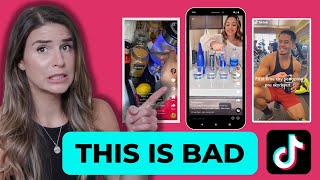
In this video, health coach Victoria S. Dorsano walks viewers through five TikTok‑originated wellness trends she refuses to try, explaining why each is scientifically unfounded, potentially unsafe, or simply unnecessary. She begins by noting TikTok’s outsized influence on fitness advice and then critiques: (1) dry‑scooping pre‑workout powders, which she says increases choking risk, caffeine overdose, and offers no performance benefit; (2) lemon‑infused coffee marketed for weight loss, which she argues provides no metabolic advantage and can irritate the stomach; (3) alkaline/Kangen water, which she dismantles by describing the body’s tightly regulated pH system and exposing the marketing hype, while acknowledging a limited use for acid‑reflux relief; (4) products promising a permanently flat stomach—diet fads, waist trainers, and supplements—highlighting that normal bloating is a sign of healthy digestion and that obsessing over a flat midsection fuels toxic diet culture; and (5) continuous glucose monitors (CGMs) for non‑diabetics, which she warns can lead to unhealthy micromanagement, offering instead simple dietary strategies (more whole‑grain carbs, pairing carbs with protein/fat, reducing refined carbs). Throughout, she stresses the importance of weighing anecdotal TikTok claims against scientific research and professional medical advice, and she ends with a call to subscribe.
Chapters
Love it or hate it, TikTok has become such an influential place in the health, wellness, and fitness space that I get clients all the time asking me about trying this or that or the new trends that are on TikTok. And I just have to talk about some of these things, in particular 5 things, 5 health trends on TikTok that I personally would never, ever, ever try. I'm gonna keep this video short and sweet, so we're gonna dive in right away on this. So first, health and fitness trend on TikTok that I would never try is dry scooping your pre-workout, or any powder for that matter, to be honest. It just sounds terrible. And if you don't know what dry scooping is, it pretty much is self-explanatory, but it basically means consuming pre-workout without any water and just taking a scoop and just popping it back.
So I got my scoop. I don't even know how to do this. Like, this is my little synthetic water that I have to like wash it down. And y'all, this was supposed to be a whole vlog. I was going to go to the gym and then tell y'all how it was, but I'm gonna do that in another part.
scooping.
I don't even get how to do this. Like, I'm really—
first of all, just gross. Like, do you enjoy feeling like you're chewing a dry cotton ball in your mouth? Cool, because I definitely don't. This doesn't even sound appealing in the first place to me, so I don't know why people would want to do this. But I think there's been some stuff on TikTok about it being more efficient, or it's delivering the pre-workout more effectively. But some people don't really think that this is a big deal either, because they're just going to be consuming it anyways, just mixed in water, right? So why not just take a dry scoop of it and and wash it down a little bit with some— a sip of water afterwards. But consuming pre-workout without diluting it in enough water definitely increases your choking risk, number one, and it heightens the risk of having a caffeine overdose, which can cause vomiting and anxiety and GI upset and even heart palpitations and sometimes even a heart attack. So none of those sound fun personally, and definitely not worth the agony of taking a dry scoop of pre-workout in the first place. Like, it just doesn't sound like a win-win in any circumstance. In addition, taking your pre-workout powder without water alongside of it or mixed in water does not help it in terms of its delivery or its effectiveness. I know some people on TikTok talk about it feeling more like it's, it's hitting you quicker or more effectively or whatever. That's not the case. It works better when it's mixed in its appropriate amount of liquid, and you're also then getting the hydration along with it, which is going to help you perform better in your workout anyway. So just stay hydrated, mix it with water, don't dry scoop. It's dumb. The next one we're going to talk about is drinking lemon coffee, in particular drinking lemon coffee for weight loss.
This is your sign to start drinking coffee and lemon every morning on an empty stomach. Thank me later.
I'll make a cup of coffee for your head, I'll get you up and going out of bed.
Make sure you squeeze out all that lemon juice. After 10 minutes, it should be fine to drink. Day 1 of lemon and coffee weight loss.
If you can't be right, I do the same thing. I told you that I never— yes, the taste. Even when I knew I never could, my mouth like tastes bitter after just watching that. The acidity of this drink just sounds so unappealing to me just from the get-go. But the taste aside, the touted benefits of drinking this beverage are not really what they're cracked up to be. Many wellness influencers are squeezing lemon juice into their morning cup of coffee to kickstart the weight loss process and burn more fat. And honestly, adding lemon juice to your coffee doesn't magically make you burn more fat. Like, biochemically speaking, that just doesn't add up. And it also doesn't balance your body's pH levels. Like, that's another thing that a lot of TikTokers are promoting, saying that lemon juice in your coffee balances your pH, and that's just not possible. Your pHs are very, very, very tightly regulated in your body. And that's going to bring me to my next TikTok health trend that I would not recommend trying. But all that aside to say that lemon coffee, do not try it. I mean, if you want to taste what it tastes like to have lemon in your coffee, like, like extra acidity in your acid already, but if you wanna try it, go for it. But I, I can definitely see how that would cause some potential issues in the stomach over time if you're drinking it on a daily basis. And if you already have existing issues with like acid reflux or um, you know, ulcers or anything like that. It just sounds like it would really make your stomach not feel so hot after some time. So speaking of pH levels in the body, let's talk about the next TikTok health trend that I personally will never try because I don't believe in spending that much on water when I have a great Berkey filtration system that I can filter out my tap water and it tastes delicious. But let's talk about alkaline water.
Now let me give you some of the side effects of the Kangen water. They're very minor. One is it hydrates your brain in 30 seconds. The water is microcluster, so it goes all over the body, which means sometimes people get a head rush and they think they have, you know, a slight headache that goes away in a few seconds. If it doesn't happen, it's probably not going to happen. That's the first side effect. Next, you're going to detox, which means the water is going to start cleaning your body. You might go to the restroom a little bit more. Okay. Third is you're going to sleep better. The reason why is because the water hydrates your brain. Your brain produces melatonin. Melatonin helps you sleep. And the last side effect is your energy is going to skyrocket. If you're drinking the water on a daily basis, what the water does is it allows your body to produce serotonin. And serotonin, by the way, increases your energy. Those are the 4 minor side effects of the Kangen alkaline water.
Okay, okay, all right, all right, that was a lot. So just to clarify, Kangen, what he's talking about in the video is, is it's basically a machine that turns your water into alkaline water. But okay, you cannot change your body's pH through food or alkaline water. Our bodies tightly, tightly, tightly regulate the pH of our blood and try to stay at 7.4. And this process is very, very, very regulated by organs like our kidneys and our lungs. We have an entire acid-base buffering system in our body dedicated to keeping our pH at 7.4. And what alkaline water is, is it's, it's more on the base side of the scale, right? So acidic is lower on the scale, basic is higher on the scale. So it's It's claiming that by drinking alkaline water that is more basic, that you are going to bring your body's pH to a more basic pH, which would actually kill us if we did that. Um, so that principle is just like not even scientifically sound in the least bit. But I digress. Unless you have certain conditions that affect your kidneys or lungs, like kidney disease or respiratory disease, your body is going to maintain a healthy pH balance on its own, and it's going to try to keep you at that 7.4 range because that's where it's happiest at. And again, like I said, anything outside of that range, you pretty much go into shock and die. And in addition to that, once you drink alkaline water and it hits your stomach and the gastric juices inside your stomach, it's going to get neutralized by it. And I think why this bothers me the most is just because people spend so much money on alkaline water, and there's just so much marketing pushed behind this that, that you have to drink alkaline water if you want to be healthy, if you want to kill cancer, if you want to decrease inflammation in the body, and in like cancer thrives in an acidic environment. If you're eating meat, then you're going to have an acidic environment in your body. No, no, no, like that's just— it doesn't work that way. Our body pH does not work that way. If we eat meat, it doesn't change our blood pH and then create cancer in that environment because of our blood pH changing. That's not the way that that works. Like, this is just— it's just a very misconstrued logical fallacy that's brought through this argument over time, smack some nice marketing onto it, make people feel like they need to have this alkaline water to be healthy. And then there's this whole disparity between who can afford it and who can't. And it's just, I have so much wrong with the, that bothers me about like the wellness industry and marketing around it. But that'll be a whole separate video if I keep going on that tangent. Anyways, now I will say this, that there is some research supporting that alkaline water can be really good for acid reflux because it is directly going into the stomach. So if you have a very acidic stomach environment and you're having acid reflux, taking something that is alkaline, which is basically like, for example, like Tums, right? Um, that is basically an alkaline, you know, tablet, let's call it, that's going to help neutralize some of the excess acid in the stomach. So that is a case where alkaline water can help, but it's not going to change your blood pH. It's not going to get rid of cancer. It's not going to decrease an entire systemic inflammation in the body. It's definitely not going to wash your brain and help you produce more serotonin. Sure, staying hydrated is going to be great, and that's going to help your body flush out things that it needs to and get better blood flow in other areas. But it, it just, mm, you get where I'm going with it. All right, onto the next thing. Next TikTok health trend that I will never touch is anything that's promising me a flat stomach. And you're probably asking me like, why wouldn't you want a flat stomach, Victoria? Why isn't that something that you would promote? You're a health coach, you help people with weight loss. Like, That's probably a good thing, right? Well, there are several things that fall into this category, and this can be like a diet that has you cutting out certain foods. This can be, you know, something that's a waist trainer promoting a flat stomach. This can be a supplement that's promoting a flat stomach. All those things. So personally, why I wouldn't recommend anything that is promising a flat stomach and why I wouldn't try anything of that myself was because it's not normal to have a flat stomach 24/7. And I think this is something that diet culture has really kind of persisted with, this idea that, you know, a flat stomach is good, and if you have anything aside from that, like a bloated stomach or anything that's like creating any kind of shape outside of just flat that it's not good, it's not healthy, or something like that. But it's completely normal to have a degree of bloating in your stomach at some point in the day, especially after a meal. It's actually a sign of a healthy digestive system if you were getting some bloating after you eat or throughout the day at different times. We have this obsession with having this flat stomach when that's not actually healthy to have all the time. Sure, when you first get up in the morning and you have a flat stomach, cool, like that's one thing, but It's not sustainable and it's not something that should be sought after to have a flat stomach 24/7. And that's just a result of toxic diet culture, to be honest. Now I will say, like I mentioned, bloating normal, should be normalized. Having some bloating after you eat or throughout the day, very normal sign of a good digestive system. Painful bloating is a different story. If you have painful bloating that is making you feel like your stomach is distended and is creating like sharp stabbing pain in your stomach or your GI tract at all, that's a different story, guys, and you should definitely go see a doctor. And then that doctor should be able to help you navigate the potential cause of why you're having this kind of painful bloating, because there could be several things, like from IBS to Crohn's to, you know, a bunch of different GI tract stuff that could be going on. So please, if you are experiencing like that type of bloating, it is highly recommended to go see a regular doctor and try not to immediately go to an alternative health practitioner. And again, I have nothing against alternative health practitioners for a lot of things. They do a lot of good in the space, especially in complementary medicine and all that stuff. But a lot of alternative health practitioners, if you go see them first for gut health, anything really, are, you know, typically will prescribe something called a food sensitivity test, which is not supported by scientific literature at all and can lead to overly and unnecessarily restrictive diets. I could go on a rant for a very long time on food sensitivity tests. And why I don't support them, why I don't use them with clients, and why I recommend my clients don't do them. If you guys want to know more about that, more than happy to do a video on that. Just let me know in the comments down below. I actually have a post on Instagram about that too. If you want to read more, I'll link that down below too. So again, to reiterate, a flat stomach 24/7 is not the aesthetic of health that you want to go for. If you're getting enough fiber in your diet, you will naturally have some bloat factor going on after meals, and a sign of your gut bacteria doing its job, and they're being happy and eating and producing more byproducts of them getting the fiber that they need and proliferating their bacteria into your microbiome and all the good stuff. So yay, that's a good thing to have some bloating. So let's celebrate the bloat. I should make a coffee cup with that on it. That'd be kind of cool. And last but not least, uh, the fifth thing that I will say that I will never try, uh, that's been trending as a health trend on TikTok is wearing a CGM or continuous glucose monitor if you are not diabetic. Now, if you're diabetic or pre-diabetic, cool. I think that's a great tool to use a CGM. Some doctors will even prescribe it to you. However, there's this insane kind of hype and push to get a CGM in the, the wellness space and kind of more the biohacking space too, which is a whole different category of things that I have a beef with. But basically where people who are not diabetic, they're wearing these CGM monitors on their arms.
All right, I'm now going to test honey on my Nutrisense continuous glucose monitor. A lot of people requested this. This is Desert Creek raw and unfiltered Texas honey. I'm gonna take 2 spoonfuls.
2 hours later.
Okay, so as you can see here, it raised my blood sugar pretty high. 140 is the danger zone, so we came pretty close.
As a non-diabetic person, your body is naturally going to have glucose spikes and dips. And the body isn't really meant to be hacked or micromanaged, and this can really just start to turn into an unhealthy obsession. Keeping your blood sugar in check is actually fairly simple to do without having a CGM and without micromanaging all the foods that come into your mouth and figuring out how much they raise your blood sugar and all that stuff. And here's what you can do to actually help manage your blood sugar without having a CGM on and without getting too too strict about it. Number 1 is just eating fewer refined carbs, and you know, that just means incorporating more complex carbs, more things like whole grain sources, things that are less processed. If we're looking at like quinoa, amaranth, farro, oats, you know, even multigrain bread— Ezekiel bread is one of my favorites for a really great whole grain source if you do like bread. Of course bread is processed, but that's okay. Like, I think it's a matter of not getting too It's not Wonder Bread, right? Like, you don't want to get too finicky with it and just try to, try to completely eliminate bread altogether because it's processed. But if you try to find more, um, whole grain sources of bread, that's going to be better. So that's what I'm talking about. That's point 1. Point 2 is going to be eating all carbs that you have with a source of fat or protein. Uh, in the video I showed you, he was eating honey. So how often do you do a spoon of honey on its own? I don't know. That's not something that I consider normal to do. Um, typically, you know, if you're having honey, it's drizzled on something, right? Like, for example, if I was going to have that much honey, I would have it with a slice of Ezekiel bread, which is a sprouted grain bread, maybe a smear of almond butter or peanut butter, which would be my fat, right? And then I'd put the honey on top. So that's going to help slow down some of the absorption of the honey. It's going to level out my glycemic load— not necessarily the glycemic index of the food, but the glycemic load. So combined together, and that's how you can help to manage your blood sugar. So eating fewer refined carbs, eating more whole grain sources of carbs, and then when you do eat carbs, try mix them with fat or protein at the same time, uh, the best you can. And that's gonna be the best way to do it, as opposed to having a continuous glucose monitor on yourself and being freaked out about every single piece of food that you eat and watching your blood sugar spike. And that's all I have for you guys. But honestly, there are plenty, plenty, plenty more health trends on TikTok that are worth mentioning that I would personally never ever try. Um, but those were just a few that stood out and that were like more persistently being shared and mentioned that I was hearing a lot from my clients about. And I just really think it's important to try to dispel some of the disinformation, misinformation out there, especially on sources like TikTok where things can spread really fast. And hopefully this was educational and offered you guys some good insight as to, you know, what to not follow when it comes to health advice on TikTok. I'd say as a like healthy rule of thumb, if somebody is just sharing what worked for them and they don't have any kind of credentials, you know, whether that's a background in nutrition or any kind of scientific background at all or medical background, and they're just sharing their personal experience, I would always weigh that against research and like medical opinions and see like, is this consistent across, across the board? Because somebody's anecdotal story, cool. If something worked for them or had the perception that it worked for them, that's one thing. But that they're, they're a survey group of one. They're one, one person. I hope this is helpful. And as always, if you can go ahead and subscribe to this channel and like this video, it helps a lot with the algorithm. We're currently on our way to 1,000 subscribers, so Every last subscriber matters. Thank you. Thank you. Thank you for all the support. For those of you guys who have subscribed so far and been liking all my videos and commenting, it means a lot. And as always, I will see you guys next time.
Bye.
More from Victoria






3 things you should do to make sure you get the most out of your fish oil #legion
