Addicted to your phone? WATCH THIS TO HELP 📱
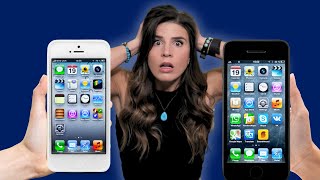
In this instructional vlog, Victoria S. Dorsano explains how excessive smartphone use—averaging about 45 days per year for the average American and even more for heavy users—can harm sleep, mental health, and productivity. She outlines the built‑in iPhone Screen Time suite as a practical solution, walking viewers through every key setting: turning on Screen Time, reviewing activity reports, configuring Downtime (including custom schedules and the "Block at Downtime" toggle), selecting Always Allowed apps for essential communication, setting App Limits for high‑distraction apps like TikTok and YouTube, adjusting Communication Limits to control who can reach you, briefly mentioning Content & Privacy Restrictions for families, and using a Screen Time passcode (including the option to delegate the password to a trusted friend) as a pattern‑interrupt accountability tool. Throughout, she mixes personal anecdotes about her own 5‑hour‑plus daily usage with data on pandemic‑driven usage spikes and research linking screen time to anxiety, depression, and insomnia. The video ends with a call to action to apply these settings for better sleep, focus, and healthier offline relationships.
Chapters
So if you were to total up all the hours that you spend on your phone and add them up, how many days do you think that would end up totaling up to for the whole year? What do you think? If you had to take a guess, maybe think about it for a second. Would you say 45 days? Because roughly that's what the average American spends in terms of how many cumulative hours, if you calculate that into days spent on your phone throughout the entire year, the average American spends 45 days on their phone. That's crazy. And honestly, for myself, I think it might be more if I'm being honest, because that's based on like a 3.5 to 4 hour per day usage, and I'm well over 5 hours given that I'm a business owner and I'm using my phone consistently throughout the day for phone calls and different video editing apps and things like that. So yikes. And even worse than that, most Americans spend about almost an hour on their phones before bedtime, which we all know it's not good to do, right? We know it keeps us up. We know we start doing the scrolling thing through social media, and then like 2 hours goes by and we're like, whoops, well, guess I'm gonna be tired tomorrow. And the crazy thing is that these kind of bad phone habits of spending so much time on our phones has drastically increased since the pandemic. It's went up about I think 30% from 2019 to 2020, and probably even more as the years of the pandemic have gone on. And also, unfortunately, most of the apps that we use on our phone are geared to make us wanna stay on them longer, especially social media apps, things like TikTok that have an algorithm that, I mean, most apps actually have an algorithm that are geared content towards you. So it, all of it is geared to make you wanna stay on it longer with the colors, the likes, the validation, all that stuff. And even if you kind of take the apps aside, because we use our phones as a means for social connection and communication, we're using them for texting and emailing and phone calls and FaceTimes and, you know, different medias of communication like that. We as human beings are geared to get dopamine and all sorts of different neurotransmitters, neurochemicals that are going to make us feel good. Things like serotonin, even from relationship bonding. And we're going to get those kind of good feedback neurotransmitters, neurochemicals, and all that stuff that's gonna happen from using our phones as a method of communication with people that are important to us. So even that in itself is kind of using our own biology kind of against us to use this technology more and more and more. And yes, technology can be a great thing, right? I mean, it's great that we can pick up our phones and communicate with so many people all the time and be able to use them for anything under the sun nowadays, really. But there are some detrimental side effects that happen from using our phone too much and being on our phone having that screen time be so high. Multiple studies have been done on this, and every year that we increase our screen time usage and we, we're using our phones more and more and more, we start to have detrimental side effects like more anxiety, more depression, more feelings of isolation, more insomnia and sleep deficit issues, and the list goes on and on. But trust me, I'm not here to shame you guys about your phone usage because like I said, I use my phone a lot too. But I have found that there are a lot of features, especially in the iPhone, that you can use to help you reduce your screen time and keep it to a healthy limit. And I'm going to go through how to find those functions, how to utilize that and really optimize your phone to help you be a better person, to help you feel better, and to eliminate some of these detrimental side effects of utilizing your phone so much. Because if you're anything like me, it's really easy to want to stay on your phone late into the night, especially if you had a stressful work day. All you really want to do is kind of like mindlessly scroll through Instagram over and over until you drift off, and then you have a dream about your friends hanging out with a squirrel, listening to some music that a cat made, or something ridiculous that you saw on Instagram, right? But like I said, that can really affect your sleep. So today I'm going to go through all those functions that we can use step by step and how you can set them up on your phone. And since we're talking about phones, since you're probably on one right now, or a computer, something with a screen, if you could like this video and subscribe to my channel, I would greatly appreciate it. So what is the Screen Time feature? If you don't have it turned on, it's super easy to turn on. You go to your phone settings and you go down to Screen Time. And basically from Screen Time, if it's not on, you'll have a little button that'll say turn on Screen Time. It's going to analyze throughout the week and the day what your phone usage is like, where you're spending your most time. And how you can actually see where you're spending the most time is you go over to See All Activity, and it might need some time to analyze that if you just turned this feature on. And it'll show you where you're at for the day, where you've spent the most time, what apps you're utilizing the most, and all of that. So it gives you an idea of where most of your time is going in the day. And again, this is gonna vary person to person depending on what they got going on. Again, I clearly am utilizing my phone quite a bit for, for work, for communication, for talking with clients, for getting back to friends and family and all that stuff. So my communication on— if you go over to app categories or show categories, you'll see like my social, you know, meaning like my communication apps like texting and even I think it's qualifying YouTube and other apps too, pretty high. That's pretty high for me, but it makes sense and I'm okay with that given what I do for work. And again, screen time is really just something that gives you just an analysis of what you're doing and how to kind of taper that down a little bit, how you can utilize the tools on your phone to optimize your time spent on your phone and really block you out of certain apps that maybe you spend a little bit too much time on and set different parameters around the time that you want your phone to kind of like shut down and not be able to like be fully usable around a certain time, right? So we're going to go through that. All right. So let's start with talking about this downtime feature and what downtime actually is on the phone. So If we go to downtime, you click on that little button, you'll need to set a screen time. This is your screen time password that you— when you turned on screen time, that it'll prompt you to enter in. So this is something that, you know, you'll set on your own. All right. And from here, you'll see I have a scheduled downtime set from 10:00 PM to 5:00 AM. So really, this— what this does is it is going to not allow me to use certain apps at a certain point in the day, you know, and only allow certain ones to be usable, the ones that I allow personally. So you'll see I scheduled mine for every day, 10 p.m. to 5 a.m., and then I have turn on the block the device at downtime. And really what that is, is it's going to block out usage of most of my apps unless I've allowed them to come through when downtime is happening, which is kind of nice because just an extra barrier to utilizing something like Instagram, which I know I shouldn't be on past 10:00 PM. I know if I'm on Instagram past 10:00 PM, I'm not going to be using it for work. I'm going to be using it to kind of like numb my brain, and eventually it's going to harm my sleep at some point because then I'm kind of wired and staying up too late and all that jazz. So if you want to actually give yourself some leeway, maybe you have a Monday through Friday job. You can customize the days too and really select what that's going to look like on a day-to-day basis, Sunday through Saturday, and you can change the windows depending on like maybe Maybe on a Saturday and a Friday you want to not have a downtime schedule or you want the downtime schedule to start at like midnight. Totally cool. So you can adjust this depending on what your schedule needs. So as far as allowing certain apps to come through during your downtime, like if I still want to make sure I'm getting text messages or phone calls from certain people, or, you know, maybe I want to utilize an app that I read on, on my phone or something like that, or a calendar app if I need to check my calendar for the next day. So those are things where you actually go to You'll go hit that back button off of downtime. You're going to go to Always Allowed, and then you're going to allow certain apps to come through. So basically what you're going to do is here you can see this section where it says Allowed Apps. Right here is where these are the apps that I've enabled to still be able to come through, right? I can choose any of these apps that I have there's quite a bit that I have on my phone, right? There's a lot of these apps. I could choose any one of these to also be allowed, but I don't really need any of these apps to be usable past 10 p.m. I'm not really looking to use any of these apps. There's so many. So the main ones I need would be, you know, group messages with WhatsApp and text messages that I get through my normal messaging app, you know, phone calls, my Whoop, because that only works if it's you know, allowed and connected to my Whoop band. If you don't know what a Whoop is, it's pretty cool. Maybe I'll make a video about that soon. So, and then as far as allowed contacts, I'm just going to allow everyone to come through. Like, there's really nobody that's going to be calling me past that point unless it's an emergency or somebody needs me for something, and I'm okay with that. So I have everyone. Um, the situation really hasn't come up where people have needed to call me unless my husband's gotten locked out, which has happened before, and I still didn't hear him calling because I had my earplugs in, but that's a whole nother story for you to go through the window. Anyways, so that's a nice feature where you can allow certain apps to be accessible during that time frame. Now let's talk about app limits, right? So we learned on the screen time feature you can actually see how much time you're spending on each app. And like I was saying, what if I was spending and noticing I was spending maybe a little bit too long on TikTok or a little bit too long on YouTube even during the day before downtime even started, before my app started to actually lock me from using those apps. So that is what this app limit setting is for. It is really great. So if you go to app limits and then you go over to add limit, let's say I want to, again, let's go for TikTok. Let's choose TikTok. I'm gonna add that app, boom. And let's say like, yeah, let's just add TikTok to start. I'm gonna hit next. And I'm gonna say maybe I wanna limit myself to just, 30 minutes maybe a day. Probably should be less. Let's say 20. I don't need more than 20 minutes on TikTok. Anything other than that is just too much for me right now. So, um, block at end of limit, right? So then I want to toggle this on where it says once the app— once I've reached that 20-minute mark, it's going to say, hey, you've reached that 20-minute mark, um, you know, get off the app or else. No, your iPhone isn't going to threaten you like that. It's going to say, hey, do you want to use this app? Uh, if you do, you have to enter the screen time password. Do you want to use it for 15 minutes, 1 minute, or do you want to disable this block all along? So just extra steps. Like, of course you can disable it and continue to use it. I've had it happen where I've been editing something in Instagram or TikTok and it's popped up and I'm like, oh my gosh, am I going to lose it? And I can just disable it and continue editing. Um, but you know, it's just an extra step. So it kind of makes you think twice, like, do I really want to? I set this for a reason, you know. So we're going to add that, that limit. Bam, that's in there. Um, and you can continue to add limits for each different type. So let's say like, eh, I want to add a limit for— let's just say I don't play any games. Let's say entertainment. Let's just do YouTube. Why not? Because YouTube's another one where you can kind of get lost on it. Let's say I want to do 20 minutes too. Why not? Let's do that. Add that. And you can also customize schedule, right? It doesn't have to be every day. You can customize the days. So let's say like Saturday, I want to give myself some slack. Like, let's give ourselves— like, let's just make this— oops, whoops, whoops, whoops, whoops. Let's just say 3 hours and 1 minute. Sure, sounds good. So I can customize that, right? So this is how you can kind of utilize your app limits, and that's a really great feature as well. So speaking of app limits, you can also limit communication And that is of course under the communication limits section. So again, during screen time, if I want to, you know, allow everybody to come through, contacts and groups with at least one contact, contacts only, meaning like I'm not going to allow any unknown calls. For me, that doesn't really work because I get unknown calls from referrals for business and things like that. So I kind of have to let those come through. So you can also do that during downtime. I still allow everyone come through. If I want to allow only specific contacts, I can choose who is allowed to speak, like to speak to me. Who am I? No, I can, I can choose who I allow to come through in terms of like it popping through an alert. So I'm just going to say everyone and leave it like that for me for right now. But you can of course specify that like if somebody just is continuously texting you past a certain point, you're like, eh, I just, I don't, I don't need to be getting these. You can, you can have that cut out at a certain point. So the content and privacy restrictions, you can obviously assume what that's for. Like if you have kids or, you know, other members of your family that are on your iCloud account and things like that, that you want to restrict certain content with, if you know what I mean. That's what you can use that for. I mean, you can use it for other things too, but I know a lot of families that utilize it for that feature in particular. But we're not going to dive too much into that. This is more about just how to utilize this feature in general, how to gain more efficiency in how you're using your phone and really just make sure it's not taking over your life. But Victoria, you're using your phone like 8 hours a day. I know, I— business, okay? It's for business. I get it, I get it, I get it. The last thing I want to talk about is that Screen Time passcode. So anytime you want to again access an app that has been blocked due to, you know, again, time— a time restriction, or it's downtime, or anything like that, uh, you're gonna have to enter in your Screen Time password to override it if you need to. If you really want to be like good with not utilizing certain apps at a certain point, and it's not going to like harm you to not use them, like you're not going to miss out again on like business coming through or something like that, I can hypothetically have like a friend or a family member have— be the only one that has my screen time password to override it. That's an option if you're really struggling with using your phone too much late at night, or it's really implicating your workday performance, or you find yourself just glued to your phone way too much, that is an option that you can utilize where you can have a friend set your Screen Time password and only they will have that for you to override it. So that's an option you can keep that in mind. Um, for me personally, just having the extra steps of having to walk through of like, are you sure you want to use this app, enter the password, that's enough usually for me to be like, eh, and I'm over it at that point. Kind of like pattern interrupt. But overall you know, do, do with it as you may. I think these are really helpful settings. I talk about this a lot with my health coaching clients of how you can optimize your phone for something like this and really make sure that you're setting parameters to get good sleep, to not be distracted at work. There's so many other functions. Obviously, we're just going through the screen time function today, but I hope this is helpful to explore a little bit about the specifics of what screen time is, how to set up your downtime schedule, how to set app limits, and communication limits and all that good stuff so that you can really just optimize your phone to perform well, to sleep better, and to just be a little bit more disciplined with it. Because I tell you guys, I really don't want to spend 44 days of my year on my phone. And for me, it's probably more than that. And it's making me reevaluate how I can do business differently. But that's neither here nor there. That's like an existential crisis, but we'll talk about that another time. Well, I hope you guys found this useful and are able to implement some of these tips right away into your phone and be able to just have a healthier relationship with your phone, feel less addicted to it, get better sleep, perform better at work, and all that great stuff. Just have better relationships in person too. Phones can be great, but we also need to be smart with how we use them, right? So I hope this was helpful. And if you did find this helpful, feel free to subscribe to my channel, like this video. I would greatly, greatly, greatly appreciate it. And until next time, bye.
More from Victoria






3 things you should do to make sure you get the most out of your fish oil #legion
