Athlete's Guide to Preparing for ACL Surgery: Tips & Advice
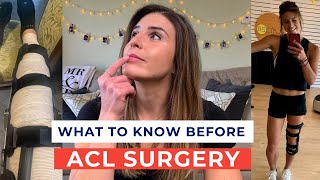
In this instructional video, Victoria S. Dorsano shares a comprehensive, experience‑based checklist for anyone preparing for anterior cruciate ligament (ACL) surgery, with a focus on athletes. She begins by listing concrete items to acquire before the operation—an apron with pockets for hands‑free carrying, a wedge pillow for leg elevation, an ice sleeve or portable icy roller for continuous cooling, an IncrediWear compression sleeve for scar‑tissue healing, pre‑made nutritious meals, stool softeners or laxatives to counteract anesthesia‑induced constipation, and proper crutch‑walking technique. Dorsano then emphasizes the importance of a reliable support system: a caregiver to handle transportation, medication schedules, and emotional companionship during the first painful days. She advises selecting a physical therapist or athletic trainer who understands the patient’s athletic goals and can tailor post‑op rehabilitation accordingly. Finally, she outlines a pre‑hab regimen—targeted quad, hamstring, and calf strengthening—to build knee‑surrounding muscle strength before surgery, which can accelerate post‑op weight‑bearing, bike use, and overall recovery. Throughout, she intersperses personal anecdotes, product links, and practical “what‑if” advice, aiming to reduce uncertainty and improve outcomes for viewers facing ACL surgery.
Chapters
What's up everyone, Victoria S. Dorsano here, and today I'm gonna share with you guys some tips to help you get ready for ACL surgery. So if you haven't already seen some previous videos down on my channel, I've made a few ACL videos about my story, my journey. So I've gone through ACL surgery about a year and a half ago, and there's just some things that I've learned that would have been really helpful to have on hand before the surgery, and some things that I lucked out and did do my research and get before the surgery too, to get me prepared for when I do come out postoperatively, and I'm ready to begin that recovery process. So I really wanted to share that with you guys, especially those of you that had seen that previous ACL story video that I had posted. I got a lot of comments with people sharing that they're, you know, about to go through ACL surgery themselves and are asking questions. So I really wanted to make this for you guys, or for if you maybe didn't see my previous ACL story video and you just landed on this video and want to learn some things too. To get prepared for your surgery. So you're in the right place and let's get started. And if you could just go ahead and give this video a like and subscribe to my channel before we start so I can keep providing awesome content like this to you guys. All right, so the first thing I really wanted to go over was a list of items that you should get before the surgery so that when you come back from surgery that you have all these ready to go and you're not having to think about having to order things from Amazon last minute because you need your leg elevated or you need X, Y, and Z. So these are some items that I really found super, super helpful. And the first one on the list is gonna sound ridiculous, but it proved to be extremely helpful, and this was an apron. So if you don't have an apron, borrow an apron from a friend, order one online if you have to, but an apron with pockets. And this is because you're gonna be crutching around, and if you need to carry things with you like your water bottle to go refill that, or even put snacks in there like I did, the apron's really, really, really helpful because it just, like, you know, obviously is like latched onto your body and in a way that's not going to get in the way of your crutches like a purse will. So an apron was extremely helpful for just getting up, picking up things, putting things in the pockets, and getting back down onto the couch to rest, rest during the day. The next item that was really helpful was getting a wedge pillow to incline my legs on when I was sleeping at night, because there's nothing worse than having to stack like pillows on pillows on pillows that are just kind of falling down in the middle of the night, and the next thing you know, your legs kind of stuck in between a bunch of pillows while you're sleeping. Keeping your leg elevated is super, super, super important when you come outta surgery to help some of that inflammation go down, to make sure that the bruising isn't gonna go down to your foot and to prevent you from getting anything like a DVT or a blood clot. So it's really important to elevate that leg, especially while you're sleeping the first few nights. So getting a wedge pillow, and I'll actually link the one that I got down below that was recommended to me by the ACL Club, and it was super helpful, so comfortable, and to this day we still use it. For propping ourselves up on the bed if we're watching a video or something like that. So it's still a very useful pillow, but it was so great to have to elevate your leg on while you're sleeping, 'cause your leg's gonna be, you know, in a brace, and you're gonna want to have your leg up comfortably. So that was a really, really helpful find. The next thing is having some sort of ice sleeve, like icing sleeve. Some surgeons in some hospitals or surgery centers will set you up with this preemptively before your surgery date, and they'll set you up with like an ice machine or something to, you know, to keep your knee cold and circulate cold water through this ice, this like kind of ice sleeve or knee sleeve as I call it. But sometimes you don't. It depends on a lot of different things like your health insurance or again, the surgery center that you're going to or hospital that you're going to to get your ACL surgery done. So if you aren't given an ice machine and you don't wanna have to continuously make trips to put your ice pack back in, you know, the freezer or get some kind of, you know, wrap around the ice pack so it's not directly on the skin and kind of fuss about it. Getting an ice sleeve is really, really helpful. And there's one I'll drop down in the, in the description below that I recommend. And this will just kind of wrap on around the knee. You can keep it there. It stays nice and cold for a good while, so you don't have to keep taking multiple trips back and forth. And then the other thing is for more precise icing, because there's sometimes you don't want to ice your entire knee. Maybe if it's right before bed, you really don't feel feel like putting an ice pack on and getting all chilly. I remember fighting my husband on this and being like, no, not the ice pack, I don't want it. So I would get this icy roller ball, and it's like a small size, but it stays cold for up to 6 hours. So I would even, like, if we were going out and about, I would bring that with me. And it's just, it kind of fits in the nooks and crannies of the knee, and specifically on the edges laterally and medially. And it just feels really good, and it's not super, like, super intense like the ice machine or the ice packs can be. So I really loved having that around as well. The next item that I thought was really helpful to have on hand, and you guys have heard me talk about this probably in a few other videos, is the Incrediwear knee sleeve. This thing was so great, especially for when, you know, after the first few days when I was able to take the leg bandaging off, I still wanted something to help, you know, with the healing of the scar tissue on the knee from the, from the closure, and to decrease inflammation too, and decrease pain. And that's where the IncrediWear knee sleeve came in handy, like super, super clutch. I'll actually put a link up here to the video where you can watch that about my IncrediWear knee sleeve review and all the great results I had with that. The next thing is you're really going to want to have some meals handy, so maybe pre-making some meals before your surgery date and having those ready to go in the fridge, or buying some frozen meals, just stuff that's going to be really easy for you to pull out and not have to fuss about. Ideally, you know, hopefully you're going to have somebody staying with you for the first few days that can help you with getting some snacks or getting some food to you so you're not constantly up and down off of the couch or off your bed or chair to go, you know, get food or make food for yourself because you're going to be in some pain. You're obviously going to be on some pain medication, though I do not advise chopping or trying to cook while you're on pain medication. So that's why it's good to have these meals prepared ahead of time and to really think about, you know, what's going to be nourishing for your body too. What's going to be good nutrition? How can I get good protein and a lot of different nutrient-dense veggies and greens and vitamins in? So really think like whole foods and fresh vegetables and good hearty proteins to fill you up that are going to help your body heal even faster. This next item is just something you can pick up at a drugstore, you know, maybe while you're picking up your, your pain medications for surgery. Laxatives or stool softeners. Preferably try stool softeners first and then go to laxatives if you really need to. But they don't usually tell you this, but the anesthesia and all the medication they give you while you go under for surgery can really make you backed up, and the pain pain medication can really make you backed up too. So there's nothing worse than feeling backed up or constipated, especially when you're already uncomfortable because of, you know, you're healing from a massive knee surgery. So having some stool softeners or laxatives handy in case you get to that point where you're like, I do not feel good, I really need to take something— that's something I wish somebody had told me. Um, and then I was talking to the ACL community about this and they're like, oh yeah, no, that's definitely a thing, like you should definitely have those handy after surgery. And I was I wish somebody told me this, but now I'm telling you so you don't have to experience that. And the last thing isn't really like an item— well, I guess it is— well, to get crutches, but also to learn how to use the crutches before you actually are forced to use them. I did not know I was using crutches the wrong way for a long time until my armpits really hurt. I was putting all my weight into my armpits as opposed to locking out my arms and actually supporting myself. And I know that sounds really silly that I didn't figure that out, but I mean, I never went to crutch walking school, or nobody ever taught me how to use crutches. I never had an injury where I really had to use them and use them for a long period of time. So that is definitely something to learn ahead of time. Learn how to use those crutches so you're not doing that and risking hurting your knee by, you know, weight-bearing too soon after, you know, not being able to use the crutches well. Okay, so that pretty much completes the list for like items and things that you should get ahead of time and be prepared for before your ACL surgery. But the other thing that's really important to talk about is your support system. You really want to have a great support system like lined up and ready to go as soon as the surgery happens, even before the surgery, just checking in on you, making sure you're doing okay, you know, also going over the schedule with you because there's a lot of paperwork you're going to get from your surgeon. I, again, nobody really told me this, but there's like a huge packet of information of like before the surgery what not to eat and, you know, what time you should stop eating at and all these things. And then You know, after the surgery, all the different medications, the schedules and things like that, it's a lot to keep track of. And the appointments that you're going to have, it really helps to have, you know, a second set of eyes or somebody there supporting you, at least for the first few days after surgery. And somebody that can, you know, drive you to surgery, pick you up, take care of you for the first few days, and really make sure that everything's okay, that you come off the anesthesia okay, that you're not feeling super nauseous. That you're taking your, your pain medication at the right increments and all that stuff. It's super, super important. And then somebody that just can chill with you. I was really, really lucky to have my husband here who sat and watched tons of movies and binge-watched shows with me for like 3 days straight to just kind of keep me company and keep me, you know, in, in cheery spirits. Because the first few days are— they're a little tough. You're kind of not able to do too much, and all you can really do is just to rest up and heal and avoid being in pain. And that's just the reality of it, but there's certainly ways to do that, especially when you have, you know, an amazing supportive person in your life that can come help you and just keep an eye out on you. Another really critical member of your support team that you want to have kind of in mind before you go into surgery so that you know what the protocol is when you come out is a really awesome physical therapist or you know, clinical athletic trainer, or a team. You know, sometimes they work on teams together. That's so, so, so important that you have a good, uh, a good relationship with your physical therapist that you're going to be working with after surgery, because you're going to be with them a lot. They're going to be giving you a lot of direction, and you're going to have to trust them a lot in that process. It's really, really important. But more specifically, you want to make sure that you have a physical therapist that understands and is in line with your ultimate end goal, especially if you're an athlete. Like for me, for example, there was a clinic full of athletic trainers and sports performance specialists and physical therapists because they were keeping in mind that I'm an athlete, I'm an active person, and I needed to get back to the sports that I love playing, right? So I think it's really important to find somebody that has a background or an understanding of where you want to go. And if you're not an athlete, that's okay, but especially if you're an athlete, you want to make sure that that person has trained and worked with patients that are, you know, in your line of sport or have worked with athletes in general so that you know that they can take you to those advanced stages of physical therapy because you're going to need a little bit more specialized training when you do get to, you know, month 4, 5, 6, 7, 8 in those later stages of recovery to get you back to playing your sport. And I just want to note, all physical therapists are trained and capable of working with, you know, post-operative ACL patients, but there are some that just have a little bit more specialty in working with athletes in particular and have a specialty in working with the men— like, the mentality of an athlete. Because if you're an athlete and you're watching this, you know as soon as you get out of surgery, you're going to want to go gung-ho, like, all in, like, working as hard as you can to get back into your sport as soon as possible. And sometimes that doesn't benefit you in the process of healing from an ACL. You can use me as a perfect example. You can watch my previous ACL story video where I talk a little bit about how my kneecap broke in half because I was a little bit too gung-ho. So it's something to keep in mind that that physical therapist should also have an idea of, you know, an athlete's mentality and be able to educate you and be like, hey, take it easy, you've been working really hard, let's give you a few rest days in there. And all this talk about physical therapy and athletic training leads me to my next really important category, which is your prehab, so your pre, you know, ACL rehab. So you're doing it before your ACL surgery to get the muscles of your leg and your, the, you know, muscles around your knee really strong and prepared for surgery. The stronger you can get your quad, your hamstring, and your calf before surgery, the better it's going to be in your recovery because you're going to be able to activate those muscles a little quicker. Sooner, a little bit, um, just stronger than you would otherwise. And it's really going to make an impact for how soon you get started with a little bit more of those physical therapy exercises, a little bit harder physical therapy exercises, and get you advanced a little faster. Mind you, everybody's journey is a little bit different, and you could have the strongest quads in the world and still have some complications that might hold you back a little bit. So, you know, take this all with a grain of salt, but I found it to be incredibly helpful to focus on my prehab and to really do a lot of quad strengthening exercises before surgery, um, a lot of hamstring strengthening and a lot of calf strengthening. All the things that are really help support my knee as I'm building back up the stability in my knee. So I thought that was super, super important, and I think it should definitely be focused on is like, ask your physical therapist or your surgeon what are some prehab exercises I can be doing to really build this up before I go into surgery. Or I can of course make a video showing you guys some of the exercises that I did personally. But I really do think prehab played a really important role for my ability to bear weight pretty soon the day after surgery and to, um, you know, be able to get on the bike a little bit sooner and do things in my ACL protocol a little bit faster because I had really good quad strength already. All right guys, so that's all I got in terms of the tips that I have to help you get prepared for your ACL surgery so you can have the most successful outcome and the most comfortable time healing and recovering for those first few days when you come out of surgery. I really hope this video was helpful for you, and, um, please don't forget to give this video a thumbs up and subscribe to my channel so I can keep providing awesome content like this to you guys. And until then, see you later!
More from Victoria






3 things you should do to make sure you get the most out of your fish oil #legion
